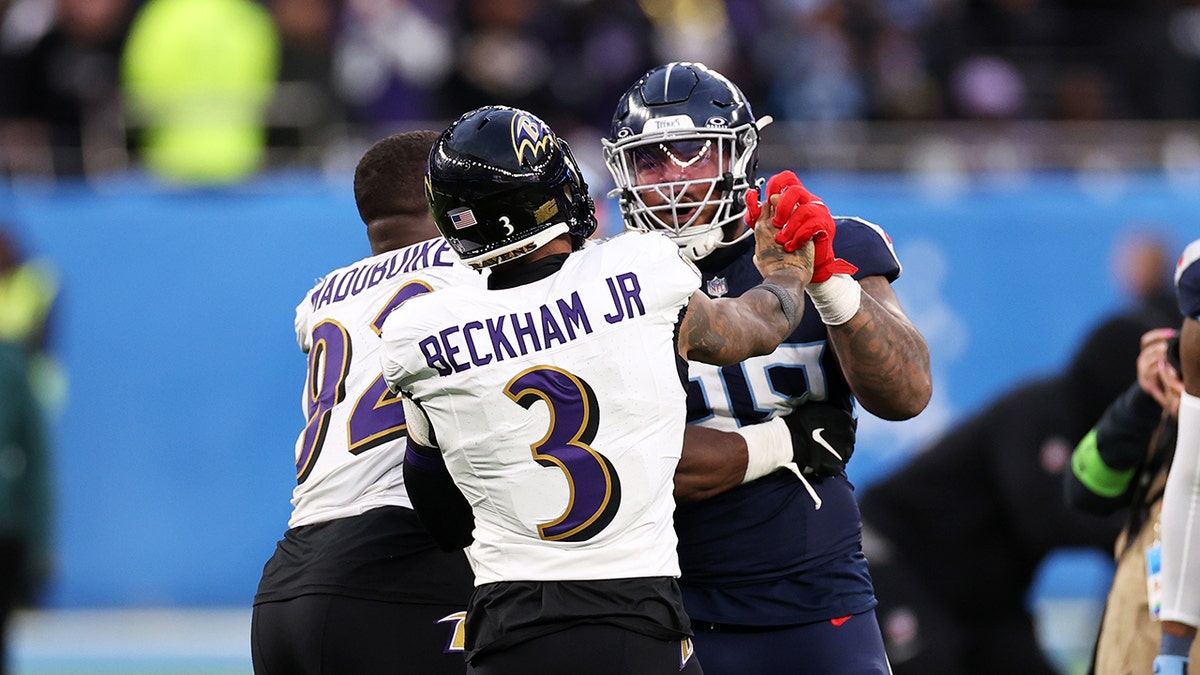
Tempers flared during last week’s game between the Baltimore Ravens and Tennessee Titans in London.
Three-time Pro Bowl wide receiver Odell Beckham Jr. faces $33,317 in fines for two unnecessary roughness violations, NFL Media’s Tom Pelissero reported Saturday.
Beckham was slapped with a $11,473 fine for a second-quarter altercation with Tennessee Titans defender Jeffery Simmons. Beckham was also fined $21,844 for an incident later in the Week 6 game.
Odell Beckham Jr. of the Baltimore Ravens in the first quarter during a game against the Tennessee Titans at Tottenham Hotspur Stadium Oct. 15, 2023, in London.(Ryan Pierse/Getty Images)
Beckham was one of multiple players the NFL punished for incidents last Sunday.
Ravens defensive back Kyle Hamilton was fined $20,524 for unnecessary roughness, per Pelissero. Titans wide receiver Chris Moore was hit in the head during the game, which resulted in Hamilton’s ejection.
Jeffery Simmons (98) of the Tennessee Titans clashes with Odell Beckham Jr. (3) of the Baltimore Ravens during a game at Tottenham Hotspur Stadium Oct. 15, 2023, in London.(Ryan Pierse/Getty Images)
Ravens defensive back Marlon Humphrey suggested on his podcast that Beckham and Simmons also had some sort of altercation after the game.
Beckham appeared to take exception to a hit by Simmons on wide receiver Zay Flowers. Beckham suggested Simmons delivered a low hit.
“It’s nothing really to talk about,” Beckham said.
“It’s probably a small hot topic right now, but it’s good. We got a helmet, shoulder pads. We’re out here playing football. This is not MMA. I watched him look at the play, then look at Zay’s legs and kind of dive on it. I just didn’t like that. I’m going to protect him.
“This is my guy. This is my little bro, love him to death. I’m going to always have his back, period. And if that leads me into trouble, it is what it is. I just didn’t like that.”
Chantz Martin is a sports writer for Fox News Digital.
Texas quarterback Quinn Ewers exited a game with an apparent shoulder injury after he was tackled Saturday against the Houston Cougars.
Houston defender David Ugwoegbu delivered a big hit late in the third quarter. Ewers scrambled and picked up a few yards on third and 6 before he collided with Ugwoegbu.
The Cougars defensive lineman remained on the turf after the hit.
The Longhorns’ training staff evaluated Ewers, and he later made his way to the locker room. The sophomore signal-caller eventually emerged from the tunnel with an arm in a sling.
Quinn Ewers of the Texas Longhorns warms up before a game against the Houston Cougars at TDECU Stadium Oct. 21, 2023, in Houston.(Tim Warner/Getty Images)
Maalik Murphy took over at quarterback when Texas got the ball back early in the fourth quarter.
Ewers threw for 211 yards and two touchdowns before he left the game. He threw a 42-yard touchdown to Xavier Worthy with 6:56 remaining in the first quarter to give the Longhorns a 14-0 lead over the Cougars.
Houston rallied from a 21-0 deficit and tied the game early in the third quarter.
Quinn Ewers of the Texas Longhorns throws a pass in the first quarter against the Houston Cougars at TDECU Stadium Oct. 21, 2023, in Houston.(Tim Warner/Getty Images)
Saturday’s game was the first meeting since 2002 between the former Southwest Conference foes, and the Longhorns have won seven straight in the series.
Houston quarterback Donovan Smith has faced the Longhorns before. Last season while at Texas Tech, he threw for 331 yards and two touchdowns and ran for another score as the Red Raiders upset Texas 37-34 in overtime.
Xavier Worthy (1) of the Texas Longhorns catches a pass for a touchdown in front of Brian George (16) of the Houston Cougars in the first quarter at TDECU Stadium Oct. 21, 2023, in Houston.(Tim Warner/Getty Images)
The Longhorns were coming off a disappointing loss to Oklahoma. The Sooners capped a 75-yard drive with a 3-yard TD pass with 15 seconds left to get a 34-30 win over Texas.
In 2021, the Australian branch of the Red Cross received $90 million to aid the victims of the bushfires that plagued various regions of New South Wales and Victoria.
However, the organization soon came under fire for its lack of transparency when it revealed that it would only distribute around one-third of the intended funds on immediate assistance and that it could take up to three years to distribute the total amount.
One resident who lost his home to the fires told local media, “They made a lot of promises that they’re going to this, that and other, (but) I’ve received nothing, I have no idea where the money is going.”
This one example highlights a common problem among charities: The processes for distributing charitable giving are often obscured by bureaucracy and prone to mismanagement. Without robust accountability mechanisms, charities risk mismanaging or misusing funds and, at worst, committing outright fraud.
Jack Vinijtrongjit, CEO of AAG — a venture capital firm that heads the AAG Charity DAO — told Cointelegraph, “Statistically, a lot of money goes to waste when it comes to charity. For example, in some cases, only fifty cents out of a dollar ends up at the destination. Very few can achieve efficiency in the 83% range, like Oxfam.”
Blockchain technology can provide tangible benefits for both donors and charities. It offers greater accountability and transparency for contributors, enabling them to follow their donations and see the results of their generosity.
How blockchain can provide transparency
Blockchain technology provides real-time tracking of donations and transactions. This level of transparency helps to build trust and confidence among donors, as they can verify that their funds are being used for the intended purpose.
In addition, it allows charities to provide donors with a detailed breakdown of their contributions, showing how each dollar is allocated to various projects or initiatives. Vinijtrongjit said, “With blockchain, the fund flow can be seen easily, and if the organization expects people to keep donating, they need to make sure as many funds as possible are delivered as intended.”
How blockchain can help provide more transparency. Source: OpenLedger
He said this transparency can reduce fraud and misuse of funds, as “there can be cases where corrupt local officials would take the funds and misuse them.”
Blockchain technology also has the important property of being immutable. A blockchain record or transaction cannot be changed or removed without the agreement of all nodes in the network. Because of its immutability, the charity’s financial records, donation histories and other data are safe from alteration.
This function is especially important for nonprofit organizations since it guarantees that any donations made to their cause will be permanently documented and easily audited by third parties.
Smart contracts, self-executing contracts with the terms of the agreement directly written into code, are another valuable aspect of blockchain technology for charities. These contracts can be used to automate processes such as distributing funds or verifying the completion of specific tasks.
Smart contracts help ensure that funds are used for their designated purposes, as they only release funds when predefined conditions are met. This enhances transparency by eliminating the need for intermediaries and reducing the risk of misusing funds.
Charities using blockchain technology
One notable example of a charity using blockchain technology is the United Nations World Food Programme’s (WFP) Building Blocks project. WFP deployed blockchain when providing food assistance to Syrian refugees in Jordan.
Each transaction, from food purchases to distribution, was recorded on a blockchain, allowing refugees to access their entitlements via a biometrically verified account.
The World Food Programme also extended its use of blockchain to Yemen, where it employed the technology to provide food assistance to vulnerable populations amid the ongoing Yemeni civil war. By providing digital vouchers through blockchain, the WFP could ensure that aid reached those in need while minimizing the risk of diversion or fraud.
In 2022, Binance launched the Ukraine Emergency Relief Fund, a cryptocurrency-focused crowdfunding platform that allowed people to make contributions to emergency relief efforts aimed at assisting refugees and children in need. This initiative also aims to provide crucial logistical support — including food, fuel and essential supplies — for refugees on the ground. Additionally, Binance donated 16,042 BNB (BNB), equal to $6 million at the time, to the fund.
Donations can be tracked via the official fundraising page, which shows a list of donors, the amount donated by each donor, the total amount raised, and allocations. For example, 2.5 million Binance USD (BUSD) (worth $2.5 million) was allocated to UNICEF and Mercy Corps each, out of the $11.3 million raised so far.
Allocation records of dispersed funds. Source: Binance Charity
Smaller charities such as GiveDirectly have also adopted blockchain technology. GiveDirectly, which recently provided direct cash transfers to survivors of the earthquake in Morocco and children living in poverty in Flint, Michigan, uses blockchain to record and verify every transaction.
Key considerations for charities
For charities looking to incorporate blockchain technology, there are several best practices to follow. First, it is imperative to establish clear objectives when integrating blockchain into charitable operations.
These objectives should be well-defined, including enhancing transparency, streamlining administrative processes or optimizing aid distribution.
Selecting the most suitable blockchain platform is of paramount importance. Choices like Ethereum or Hyperledger should be made judiciously, considering factors such as scalability, security and the unique requirements of the charitable organization.
Marina Zibareva, a spokesperson for Binance Charity — a nonprofit organization that uses blockchain technology for crypto donations — told Cointelegraph, “Charities need to adhere to some critical best practices when adopting blockchain technology to improve transparency in charitable operations. Among these is gaining a comprehensive understanding of how blockchain and cryptocurrency function. Acquiring this foundational knowledge is a pivotal first step in the integration process.”
Understanding how blockchain technology works is important for charities since blockchain technology isn’t a one-size-fits-all solution. There are different implementations and platforms, each with unique features. For instance, layer-2 networks like Polygon have faster speeds and lower transaction costs. To select the most suitable solution, charities must understand these differences and how they align with their specific goals and donor preferences.
Jerry Lopez, founder and CEO of Philcoin — a blockchain-based philanthropy platform — told Cointelegraph:
“It is important for the organization to conduct an internal analysis to assess capabilities and resources. Is the organization ready for innovation and/or adaptation? Are the main stakeholders ready for the shift?”
“This sounds like an obvious point, but it’s essential. Charitable organizations can be slower to accept change. Understanding what’s necessary to make the leap to blockchain solutions will require additional resources and investments to ensure credible, trusted and functioning solutions are implemented,” he said.
Lopez also stressed the importance of the organization knowing if it’s “fully committed to seeing through the transition,” which can take time, research, understanding and a dedicated team to help manage and oversee the development. “Very often, organizations will learn through trial and error,” Lopez said.
Good security practices and maintaining data accuracy are fundamental principles to building and maintaining trust with both donors and beneficiaries. This involves the continuous upkeep of precise, up-to-date records on the blockchain. Regular audits and verification of transactions are essential measures to prevent errors or fraudulent activities.
Zibareva said, “Charities must prioritize security as they venture into the blockchain realm. Adopting cutting-edge security measures and technologies is vital to safeguard the system’s integrity. Putting safety at the forefront ensures the protection of the organization and its donors from potential fraud and bolsters the overall trust in the transparency mechanisms in place.”
Adhering to data protection regulations and preserving the privacy of sensitive beneficiary information are nonnegotiable elements. These data security considerations should be balanced with the necessity of allowing accessibility for verification purposes.
Planning for scalability is another critical aspect, particularly when anticipating a growing volume of transactions and beneficiaries over time. The long-term sustainability of the blockchain infrastructure should be a central concern, ensuring that it can adapt to the evolving needs of the charitable organization.
Zibareva added that charities “should evaluate their technical readiness, considering their capacity to manage cryptocurrency wallets and other blockchain-related infrastructures.”
“By comparing their operational needs with blockchain’s capabilities and leveraging expert insights, charitable organizations can decide whether blockchain integration aligns with their transparency goals.”
It’s also necessary for charities to assess whether their community (donors, partners, etc.) are ready to accept using blockchain platforms for charitable purposes.
Lopez said, “Is the community ready to accept blockchain? How will blockchain solutions impact the supplier chain, for example? Is the community able to accept, receive or interact with the new solutions, or will this require additional infrastructure, education, training and development to ensure the full charitable cycle is onboarded?”
The adoption of blockchain technology in the charitable sector is a complex process that goes beyond just the technology itself. It involves organizational preparedness, supplier relationships and the broader community’s ability to adapt. Transparency in charities is a noble goal, but it requires a comprehensive and well-planned approach to ensure that the full potential of blockchain is realized without leaving any stakeholders behind.
What else can charities do to increase transparency?
While blockchain technology can indeed help track the flow of funds, it can be combined with additional organizational processes to ensure that charitable donations are used effectively.
Vinijtrongjit said, “I don’t believe blockchain alone can help fix these issues since tracking the use of funds is much more complex. For example, local charities at the destination may be forced to use a vendor overcharging them as part of the corruption scheme. An independent audit must still be carried out, but at least blockchain can be used to ensure the fund gets to the destination.”
Independent audits are another important aspect of ensuring transparency, as they can thoroughly examine a charity’s financial records, operations and compliance with regulations. They provide an objective evaluation of the organization’s financial health and adherence to best practices.
Vinijtrongjit also believes that organizations must fully adopt blockchain in every part of their operations, as charities providing comprehensive, accessible and regular reports that detail their activities and financial information can be beneficial.
This includes information such as the allocation of funds and the amount of money raised, which can be gathered from the blockchain and added to these reports. Vinijtrongjit said:
“This will be like providing insights to the potential donors so they can decide not just what cause to contribute to but also based on how well the organization can carry out the mission.”
Just two servings of red meat per week can increase the risk of developing type 2 diabetes, a new study published in The American Journal of Clinical Nutrition revealed.
Swapping the red meat for plant-based proteins, by comparison, was linked to reduced diabetes risk, the study found.
Researchers from the Harvard T.H. Chan School of Public Health analyzed more than 30 years of health data and dietary choices for 216,695 participants.
Around 22,000 of them developed type 2 diabetes, according to a press release from the university.
Those who consumed the highest amount of red meat were 62% more likely to develop type 2 diabetes compared to those who ate the least amount.
A new study published in The American Journal of Clinical Nutrition has revealed which food could more than double the risk of type 2 diabetes.(iStock)
Although all red meats drove up the risk, processed meats did so more than their unprocessed counterparts.
For every daily serving of processed red meat, the diabetes risk increased by 46%, compared to 24% for each serving of unprocessed meat.
“Our findings strongly support that limiting intake of red meat and instead choosing mainly plant sources of protein will help reduce an individual’s risk of developing type 2 diabetes and its consequences,” said first author Xiao Gu, postdoctoral research fellow in the Department of Nutrition at Harvard in Boston, in a statement to Fox News Digital.
By comparison, eating one serving of nuts and legumes reduced the risk of type 2 diabetes by 30%.
A serving of dairy products drove down the risk by 22%.
Those who consumed the highest amount of red meat were 62% more likely to develop type 2 diabetes compared to those who ate the least amount, the study found.(iStock)
As Gu pointed out, there are many different viewpoints about whether people should limit consumption of red meat.
“We employed advanced methods to take into account possible errors in reporting dietary intake, and we controlled in detail for extraneous factors that might account for our findings,” he told Fox News Digital.
“Our findings provide a greater level of certainty about this important relationship.”
Among people who consume the traditional Mediterranean diet, which limits red meat intake, “abundant evidence” has shown health benefits, said Gu.
Based on the study findings, the researchers recommend limiting red meat consumption to no more than two servings per week — “and once would be better,” Gu said.
Some 37.3 million Americans — 11.3% of the U.S. population — had diabetes as of 2019, per the latest data from the American Diabetes Association.(iStock)
“We would also suggest people replace red meat with healthy plant-based protein sources, such as nuts and legumes,” he continued.
“Adopting this dietary strategy will help reduce individuals’ risk of developing type 2 diabetes and its consequences, which will ultimately improve the health and well-being of people worldwide.”
Therefore, he said, adopting a dietary pattern with limited amounts of red meat intake is healthy and realistic.
Approximately 37.3 million Americans — 11.3% of the U.S. population — had diabetes as of 2019, per the latest data from the American Diabetes Association.
If your smoke alarms are going off in Tuscaloosa, it might be from the cigars at Bryant-Denny Stadium.
Alabama was in danger of losing its second straight game to Tennessee, something that hadn’t happened since the early 2000s. But that stretch lives on thanks to Alabama’s dominant second half.
The 11th-ranked Crimson Tide wrecked No. 17 Tennessee in the final 30 minutes of the game to take a 34-20 victory home.
At the half, the Volunteers led 20-7, and all momentum was on their side as they scored a touchdown just before the first half ended. But Bama came out firing.
Alabama quarterback Jalen Milroe (4) runs the ball against Tennessee during the first half of a game Saturday, Oct. 21, 2023, in Tuscaloosa, Ala. (AP Photo/Vasha Hunt)
It took just two plays for Alabama to swing the momentum back its way in the second half. The first play was a 29-yard rush by Jase McClellan. The next was a 46-yard touchdown pass from Jalen Milroe to Isaiah Bond to cut their deficit to six.
Bama forced a three-and-out, kicked a field goal and then forced a turnover on downs. In good field position, the Tide needed just five plays to take the lead. McClellan ran for a 5-yard score, and the ensuing PAT gave them a 24-20 lead.
Alabama wide receiver Isaiah Bond (17) makes a touchdown reception during a game against Tennessee at Bryant-Denny Stadium in Tuscaloosa, Ala., Saturday, Oct. 21, 2023.(Brianna Paciorka/News Sentinel/USA Today Network)
After another three-and-out, Bama responded with another field goal after a 15-play drive, going up seven with 8:17 left in the game. But the big blow came on the defensive side of the ball.
On Tennessee’s third play of its ensuing drive, Joe Milton was sacked by Chris Braswell, lost the football and Jihaad Campbell recovered and took it to the end zone for another Bama touchdown. It put the Crimson Tide up 34-20 with just over seven minutes to go.
Alabama wide receiver Kendrick Law (19) signals a first down against Tennessee during the first half of a game Saturday, Oct. 21, 2023, in Tuscaloosa, Ala. (AP Photo/Vasha Hunt)
The Air Force Falcons are in the midst of an undefeated season. And Saturday’s win over the Navy Midshipmen will likely be remembered for some time.
In the second quarter, Air Force wide receiver Dane Kinamon hauled in a pass from quarterback Zac Larrier and sprinted into the end zone.
The play went 94 yards, the longest passing play in Air Force football history.
Air Force typically is a run-heavy offense and entered the game as one of the lowest-ranked teams in passing yardage per game. Navy football also frequently features the triple option offense, which limits passing plays.
Entering the game, Larrier had 20 completions for 468 yards on the season. He also had four passing touchdowns, which made Saturday’s feat even more unexpected.
The touchdown gave the No. 22 Falcons a 7-0 lead in the second quarter, and they increased that lead to 10-0 in the third quarter en route to a 17-6 victory.
Two F-35a and two F-35C jets split the uprights during a flyover before a game between the Navy Midshipmen and the Air Force Falcons at Navy-Marine Corps Memorial Stadium in Annapolis, Md., Oct. 21, 2023.(Tommy Gilligan/USA Today Sports)
The win over the Midshipmen improved the Falcons to 7-0.
Air Force ended Saturday’s game with more passing yards (151) than rushing yards (137) yards, and Navy was sluggish on offense, producing 124 total yards.
Tether Holdings, the issuer of the world’s largest stablecoin by market capitalization, Tether (USDT), is reportedly working on instant updates of its reserve data reports.
Paolo Ardoino, Tether’s chief technical officer and also upcoming CEO, disclosed that the firm plans to start publishing reserve data in real time in 2024, Bloomberg reported on Oct. 20. Soon after the article was published, Tether said that it had no “hard-and-fast deadline by which to achieve this goal,” according to the updated article.
Tether did not immediately respond to Cointelegraph’s request for comment.
According to the Tether transparency page, the stablecoin issuer currently publishes and updates its reserves data at least once per day. Tether also issues monthly reserve reports in addition to quarterly reserve reviews.
Tether transparency page update as of Oct. 19, 2023 at 11:30 pm UTC. Source: Tether
Despite many cryptocurrency markets seeing some slump in 2023, the USDT issuing company has gained momentum over the past year. According to Tether’s Q2 update, the company’s assets rose 5.7% to $86.5 billion. The firm made more than $1 billion in “operational profit,” which is a 30% increase from the previous quarter.
Tether has also seen a increase in its stablecoin lending in 2023, which came despite the firm having cut such loans down to zero in December 2022.
According to Tether’s Q2 attestation from accounting firm BDO, the firm increased its excess reserves by $850 million, bringing total excess reserves to $3.3 billion. The company also disclosed that it had $72 billion worth of indirect exposure to United States Treasurys held by money market funds, as well as U.S. Treasurys collateralizing its overnight repo.
Update Oct. 21, 11:00 AM UTC: The article was updated to reflect that Tether had no “hard-and-fast deadline” for publishing reserve reports in real time.
Major League Baseball announced Saturday Bryan Abreu has been suspended two games for hitting Adolis Garcia with a pitch in Game 5 of the ALCS in an at-bat after his three-run home run.
Garcia hit a three-run home run in the bottom of the sixth inning Friday night that gave his Texas Rangers a 4-2 lead. The next pitch Garcia saw in the eighth drilled him in his right elbow pad.
Garcia’s immediately got in catcher Martin Maldonado’s face, and the two had to be separated.
Adolis Garcia (53) of the Texas Rangers argues with Martin Maldonado (15) of the Houston Astros after being hit by a pitch by Bryan Abreu of the Houston Astros, prompting benches to clear during the eighth inning in Game 5 of the American League Championship Series at Globe Life Field Oct. 20, 2023, in Arlington, Texas. (Carmen Mandato/Getty Images)
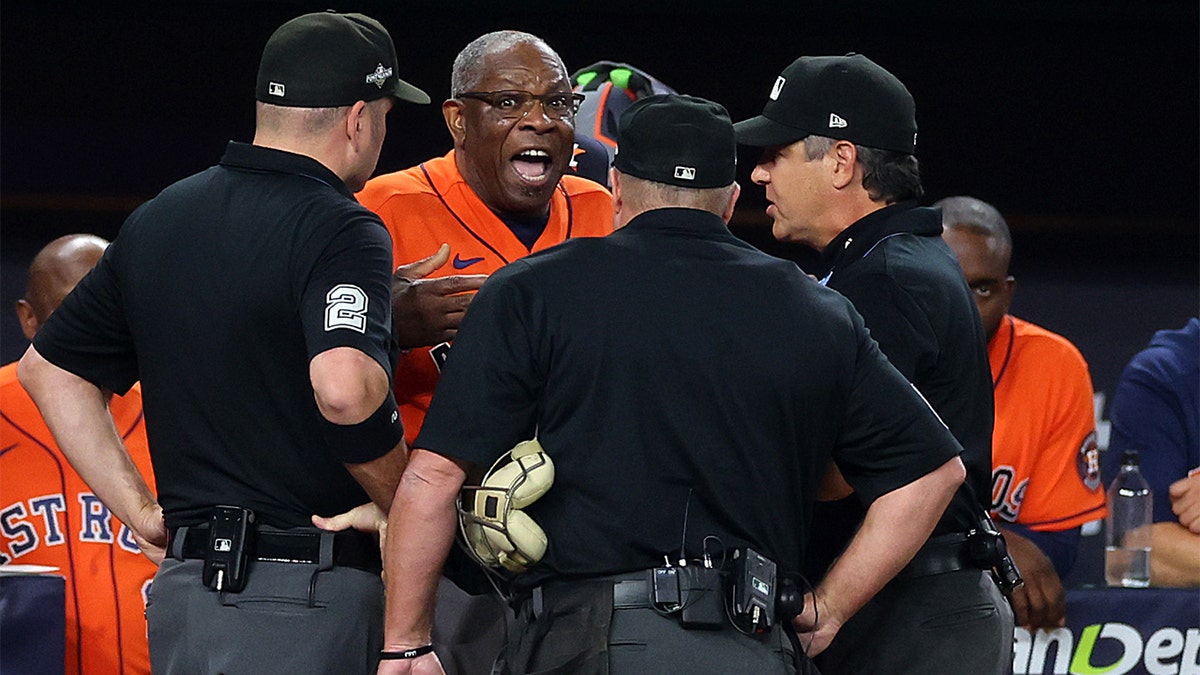
Abreu and Garcia were both ejected, as was Houston Astros manager Dusty Baker.
The suspension will begin Game 6 Sunday, but Abreu is expected to appeal, and that would likely push the suspension to the 2024 regular season.
Baker was ejected after arguing with umpires shortly after Abreu was tossed, saying he hadn’t been “that mad in a long time.”
“It didn’t make any sense to me,” Baker said after the game of Abreu’s ejection. “We got a two-run game, and they explained to me that the guy just hit a three-run homer, but that was a mistake that he hit a three-run homer. The ball was down and in, and he wasn’t trying to go down and in.
Manger Dusty Baker of the Houston Astros, center, argues with the umpires after Bryan Abreu was ejected against the Texas Rangers during the eighth inning of Game 5 of the American League Championship Series at Globe Life Field Oct. 20, 2023, in Arlington, Texas. (Stacy Revere/Getty Images)
“We pitch him up. We pitch him up and in. And anytime you’re throwing a projectile 97 miles an hour, some of them are going to get away. I don’t care if you’re big league, Hall of Fame, I don’t care who you are.”
Garcia admired his homer, taking over 30 seconds to round the bases and spiking his bat to the ground.
“I think we’re in the postseason. It’s the moment,” Garcia said after the game. “You hit a ball like that, you’re going to celebrate. It’s where we’re at right now. If they’re trying to react to that, I don’t think that’s the correct way.
“I felt like that hit by pitch could’ve been worse,” he added, “and I told [Maldonado] that was not right.”
Abreu, Garcia and Baker were all issued undisclosed fines.
Adolis Garcia of the Texas Rangers, left, argues with Martin Maldonado of the Houston Astros after being hit by a pitch by Bryan Abreu during the eighth inning in Game 5 of the American League Championship Series at Globe Life Field Oct. 20, 2023, in Arlington, Texas. (Carmen Mandato/Getty Images)
The Astros got the last laugh after Jose Altuve’s three-run home run in the ninth inning gave Houston its third straight win, all on the road, to take a 3-2 lead in the best-of-7 ALCS.
Houston is one win away from making its third consecutive World Series and its fifth in the last seven years.
Grayscale files for new spot Bitcoin ETF on NYSE Arca
Major cryptocurrency investment firm Grayscale Investments has filed a new application with the U.S. Securities and Exchange Commission for a new spot Bitcoin exchange-traded fund (ETF). The new filing aligns with Grayscale’s ongoing effort to convert its Grayscale Bitcoin Trust into a spot Bitcoin ETF, according to a statement from the firm. The news comes weeks after Grayscale won an SEC lawsuit for its spot Bitcoin ETF review, with a court of appeals ordering the SEC to explain why it rejected Grayscale’s application in June 2023. The company also filed with the SEC to list an Ether futures ETF in September.
New York Attorney General sues Gemini, Genesis, DGC for allegedly defrauding investors
New York’s attorney general has filed a lawsuit against cryptocurrency firms Gemini, Genesis and Digital Currency Group (DCG) for allegedly defrauding more than 23,000 investors through the Gemini Earn investment program. The suit claims that Gemini assured investors that the program was a low-risk investment, while investigations carried out by the office of New York State Attorney General Letitia James found that Genesis’ financials “were risky.” The lawsuit also charges Genesis’ former CEO, Soichiro Moro, and its parent company’s CEO, Barry Silbert, with defrauding investors by attempting to conceal more than $1.1 billion in losses. In addition, the court case looks to ban Gemini, Genesis and DCG from operating in the financial investment industry in New York.
Former FTX engineering director faces up to 75 years in prison following guilty plea
Nishad Singh, the former engineering director at now-defunct crypto exchange FTX, faces up to 75 years in prison for charges related to defrauding users of the crypto exchange. He pleaded guilty to fraud charges as part of his cooperation agreement with the U.S. prosecutors. During his testimony this week, Singh said that when liquidity issues at FTX began in November 2022, he felt “suicidal for some days” while dealing with alleged inconsistencies between the exchange’s public statements and its activities behind the scenes. Singh also claimed that Bankman-Fried had the habit of deciding on purchases through Alameda Research by himself.
Binance shutting down European Visa debit card in December
Elon Musk, Mark Cuban team up to contest SEC trial strategies
Elon Musk, Mark Cuban and others have collaboratively submitted a shared amicus brief to the Supreme Court of the United States to raise concerns about the U.S. Securities and Exchange Commission’s (SEC) approach to conducting internal proceedings without the inclusion of juries. The context of this legal challenge centers around the SEC vs. Jarkesy case. George Jarkesy argues that the SEC’s internal adjudication process, which lacks a jury and is overseen by an administrative law judge appointed by the commission, contradicts his Seventh Amendment rights. Effectively resulting in a single entity fulfilling the roles of judge, jury and enforcer.
NY sues crypto firms, FTX's Nishad faces 75 years in jail, and Grayscale... 43
Winners and Losers
NY sues crypto firms, FTX's Nishad faces 75 years in jail, and Grayscale... 44
At the end of the week, Bitcoin (BTC) is at $29,590, Ether (ETH) at $1,607 and XRP at $0.52. The total market cap is at $1.12 trillion, according to CoinMarketCap.
Among the biggest 100 cryptocurrencies, the top three altcoin gainers of the week are Bitcoin SV (BSV) at 59.00%, Stacks (STX) at 25.91% and MX TOKEN (MX) at 25.26%.
The top three altcoin losers of the week are Conflux (CFX) at -8.03%, Frax Share (FXS) and Sui (SUI) at -6.35%.
“Using publicly available information to learn is not stealing. Nor is it an invasion of privacy, conversion, negligence, unfair competition, or copyright infringement.”
“After extensive DAO forum discussion followed by community vote, the sunsetting of the Lido on Solana protocol was approved by Lido token holders and the process will begin shortly.”
BTC price hits 2-month high amid bet Bitcoin will break $32K ‘soon’
On Oct. 20, data from Cointelegraph Markets Pro and TradingView captured new two-month Bitcoin highs of $30,233 on Bitstamp. BTC price showed continued strength during the Asia trading session on the same day, with a slight comedown taking the spot price back below $29,500.
With volatility still evident, market participants argued that a weekly candle close was needed in order to establish the rally’s true staying power. For Keith Alan, co-founder of monitoring resource Material Indicators, the 100-week moving average (MA) at $28,627 was of particular importance.
“This move is one to watch, but what I’m watching for right now is to see if this Weekly candle closes above the 100-Week MA and if next week’s candle can stay above it with no wicks below,” Alan wrote in part of an X post on the day. “Some might consider that a confirmation of a bull breakout, but this market is known for squeezes and fake outs so I’m looking for more confirmations. For me BTC will also need to take out prior resistance at $30.5k, $31.5k and ultimately $33k to call a bull breakout confirmed and validated.”
FUD of the Week
NY sues crypto firms, FTX's Nishad faces 75 years in jail, and Grayscale... 45
Fantom Foundation hot wallet hacked for $550K
The Fantom Foundation, the developer of the Fantom network, has been hacked for over $550,000 worth of cryptocurrency. The foundation confirmed the attack on X, claiming that most of the funds stolen belonged to other users and that 99% of the foundation’s funds remain safe. Blockchain security researchers initially reported that the attacker stole approximately $7 million in crypto. The Fantom Foundation later released an official statement saying that some of the wallets labeled “Fantom: Foundation wallet” were mislabeled by block explorers and that not all the stolen funds were from the foundation.
TrueCoin’s third-party vendor breach potentially leaks TUSD user data
TrueUSD (TUSD) announced a potential leak of certain Know Your Customer (KYC) and transaction history data after one of TrueCoin’s third-party vendors was compromised. The company was the operator of the TUSD stablecoin until July 13, 2023. The impact of the attack and the resultant data leak is yet to be identified, as the total number of users’ data was not revealed during the announcement. Data collected from such breaches — names, email addresses and phone numbers, among others — are typically used for phishing attacks. Attackers reach out to unwary investors by mimicking various crypto services, often promising high profits in short amounts of time.
Web3 game project allegedly hired actors to pose as executives in $1.6M exit scam
The development team for gaming project FinSoul carried out an alleged exit scam, siphoning away $1.6 million from investors through market manipulation, according to a recent report from blockchain security platform CertiK shared with Cointelegraph. The FinSoul team allegedly hired paid actors to pretend to be its executives, then raised funds for the sole purpose of developing a gaming platform. However, instead of actually creating the platform, the FinSoul team allegedly transferred $1.6 million in bridged Tether from investors to itself. Blockchain data indicates developers then laundered the funds through cryptocurrency mixer Tornado Cash.
NY sues crypto firms, FTX's Nishad faces 75 years in jail, and Grayscale... 46
Big Questions: What did Satoshi Nakamoto think about ZK-proofs?
What was once a passing interest of Bitcoin inventor Satoshi Nakamoto, zero-knowledge-proof technology is now a major part of the crypto world.
Ethereum restaking: Blockchain innovation or dangerous house of cards?
“Restaking” involves reusing staked Ether to earn fees and rewards. The restaked tokens can then help secure and validate other protocols. But many fear restaking could disrupt Ethereum’s chain itself.
Bitmain’s revenge, Hong Kong’s crypto rollercoaster: Asia Express
Bitmain allegedly fires staff for speaking out against salary cuts, Hong Kong investors lose faith in crypto after JPEX scandal, Bitget gets a new crypto credit card and more.
Subscribe
The most engaging reads in blockchain. Delivered once a
week.
Editorial Staff
Cointelegraph Magazine writers and reporters contributed to this article.
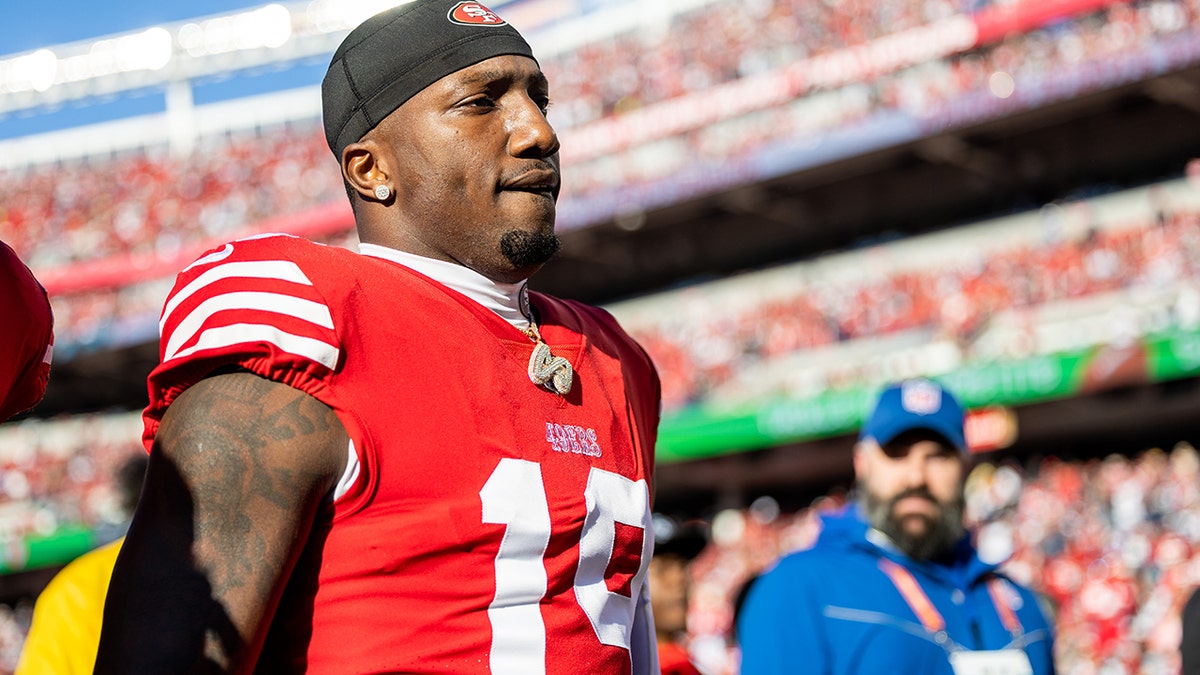
Deebo Samuel of the San Francisco 49ers stands on the sidelines during the second quarter of the NFC championship game against the Philadelphia Eagles at Lincoln Financial Field Jan. 29, 2023, in Philadelphia.(Kevin Sabitus/Getty Images)
Head coach Kyle Shanahan told reporters Samuel won’t return until after the team’s bye week, so the receiver will be out until at least mid-November.
The 49ers had won 15 consecutive regular season games dating to last season.
The Browns were without Deshaun Watson in the win. He was also dealing with a shoulder injury.
Samuel missed four games last year with a hamstring and ankle injury.
Deebo Samuel of the San Francisco 49ers lines up during a game against the Arizona Cardinals at Levi’s Stadium Oct. 1, 2023, in Santa Clara, Calif.(Michael Owens/Getty Images)
The Niners face the Minnesota Vikings Monday night before taking on the Cincinnati Bengals in Week 8. San Fran has a Week 9 bye
After a campaign that earned him his first first-team All-Pro nod, Samuel had somewhat of a down season in 2022, which was plagued by injuries. He had just 632 receiving yards after racking up 1,405 the previous year. His 18.2 yards per reception were a league-high in 2021.
San Francisco 49ers wide receiver Deebo Samuel walks off the field after warmups before an NFC divisional playoff game against the Dallas Cowboys at Levi’s Stadium in Santa Clara, Calif.(Bob Kupbens/Icon Sportswire via Getty Images)