2.9 C
New York
Thursday, December 25, 2025
Home Blog Page 1054

Three Shots for Fall: What You Need to Know

0

Most Americans have had one or more shots of the flu and Covid vaccines. New this year are the first shots to protect older adults and infants from respiratory syncytial virus, a lesser-known threat whose toll in hospitalizations and deaths may rival that of the flu.

Federal health officials are hoping that widespread adoption of these immunizations will head off another “tripledemic” of respiratory illnesses, like the one seen last winter. For people with insurance, all of the vaccines should be available at no cost.

“This is an embarrassment of riches,” said Dr. Ofer Levy, director of the precision vaccines program at Boston Children’s Hospital and an adviser to the Food and Drug Administration.

Here’s what he and other experts say about who should receive which immunizations, and when.

The coronavirus, the flu and R.S.V. are all likely to send thousands of Americans to the hospital this year, but exactly when, and how severe the toll will be, is unknown. That’s in part because the restrictions in place during the pandemic altered the seasonal patterns of the viruses.

Last winter, the flu peaked in December instead of in February, as it typically does. Covid kept up a steady number of infections and deaths most of the season, with a peak in January.

Compared with its pattern before the pandemic, R.S.V. peaked several weeks earlier last year, and it circulated for longer than usual. But this year, it is now beginning to pick up in the South, suggesting that the virus may return to its prepandemic patterns.

R.S.V. is the least familiar of the three viruses, but increasingly it is recognized as a major respiratory threat, particularly to older adults, immunocompromised people and young children. “R.S.V. has a burden of disease similar to flu in older adults — it can make you very, very sick,” said Dr. Helen Chu, a physician and immunologist at the University of Washington.

Everyone should have at least the flu and Covid shots this fall, experts said.

The annual flu vaccine is recommended for everyone aged 6 months and older, but is most important for adults ages 65 and older, children under 5, and people with weak immune systems.

Updated Covid shots from Pfizer and Moderna are now endorsed by the F.D.A. and the C.D.C. (A third, from Novavax, is expected to arrive in the next few weeks.) The recommendations:

  • Americans aged 5 and older may receive one dose, at least 2 months after their last dose of any Covid vaccine.

  • Children aged 6 months through 4 years who have already been vaccinated may receive one, or two, doses of the new vaccines. The timing and number of doses depends on the previous vaccine received.

  • Unvaccinated children aged 6 months through 4 years may receive three doses of the new Pfizer-BioNTech vaccine or two doses of the new Moderna vaccine.

Federal health officials aren’t talking about a primary series of shots followed by boosters. (Officials aren’t even calling the shots “boosters” anymore.) Instead, they are trying to steer Americans toward the idea of a single annual immunization with the latest version of the vaccine.

“Like a seatbelt in a car, it’s a good idea to keep using it,” Dr. Camille Kotton, a physician at Massachusetts General Hospital and an adviser to the C.D.C., said of the Covid vaccine.

Two vaccines are now available for adults aged 60 and older: Abrysvo, by Pfizer, and Arexvy, by GSK. They are not universally recommended; patients may choose to get them in consultation with their doctors. The vaccines, which may have rare but serious side effects, are mostly likely to benefit older people with such underlying conditions as heart disease and asthma.

Abrysvo and Arexvy are not yet approved for most Americans younger than 60.

The C.D.C. now recommends another new shot against R.S.V. — Beyfortus, a monoclonal antibody — to protect infants less than 8 months old, as well as infants 8 months to 19 months old if they are at risk for severe illness.

In August, the F.D.A. approved Abrysvo for pregnant women as a way to protect infants from the virus. The vaccine, to be given in the last weeks of pregnancy, may prevent severe respiratory illness in infants up to 6 months.

While risks posed by any of these respiratory viruses increase with age, remember that “65 is not a magical cutoff point,” Dr. Chu said.

“Even those with no pre-existing conditions can become quite sick with all three of these viruses.”

You should get the shots early enough to build immunity against the pathogens, but the timing may depend on your particular circumstances.

If you do not want or are unable to make multiple trips to a clinic or pharmacy to space the shots apart, experts recommend getting the shots together. But if at all possible, it may be wise to time the shots to provide maximum protection.

Covid is already on the rise, so getting that shot as soon as possible makes sense. Flu may not peak until December, so getting the flu vaccine in October may be wisest — your antibodies will not have waned so much by the time the virus comes most prevalent.

Adults aged 50 and older should also get the vaccine for shingles, if they haven’t already, and those 65 and older should sign up for the pneumococcal vaccine. But those vaccines don’t need to be given in the fall and can be scheduled for different times, Dr. Chu said.

Getting the Covid and flu shots all at once does not significantly affect the protection or produce worse side effects compared with getting either one alone, according to a recent study by Israeli scientists.

“F.D.A. and C.D.C. systems monitor vaccine safety year round and will remain in place,” the Department of Health and Human Services said in a statement to The Times. “If any new potential safety signals are identified, the F.D.A. and C.D.C. will conduct further assessment and inform the public.”

Some research suggests that the R.S.V. and flu vaccines produce lower levels of antibodies when given together than when delivered one at a time. But those levels are probably still high enough to protect people from the viruses, experts said.

Because the R.S.V. vaccine is new, however, there is little information on how it might interact with the other two vaccines.

There is also limited data on the safety of the two R.S.V. vaccines. Clinical trials recorded six cases of neurological problems, including Guillain-Barré syndrome, compared with none in the placebo groups.

But the numbers were too small to determine whether the cases were a result of the inoculations. More clarity will come from surveillance while the vaccines are administered on a large scale, Dr. Chu said.

Christina Jewett contributed reporting.

Decongestant in Cold Medicines Doesn’t Work, Panel Says

0

An advisory panel to the Food and Drug Administration agreed unanimously on Tuesday that a common decongestant ingredient used in many over-the-counter cold medicines is ineffective.

The panel’s vote tees up a likely decision by the agency on whether to essentially ban the ingredient, phenylephrine, which would result in pulling hundreds of products containing it from store shelves.

If the F.D.A. ordered their removal, a trade group warned that numerous popular products — including Tylenol, Mucinex and Benadryl cold and flu remedies — might become unavailable as companies race to reformulate them.

Agency officials generally follow the recommendations of the advisory panels, though not always, and it could take some months before a final decision is made. And the findings could be contested, prolonging any move toward product substitutions or removing certain stock at stores.

In the meantime, experts advised consumers not to panic or toss out all the drugs in their medicine cabinet. Even though the agency’s advisers have decided the ingredient, phenylephrine, doesn’t work to relieve nasal congestion when taken orally, it is not dangerous, and the products do contain other ingredients that will work to ease cold symptoms.

The panel’s vote followed its review on Monday and Tuesday of several existing studies, with the advisers largely concluding that the research settled the question that the ingredient was useless and no better than a placebo.

Several advisers noted that patients taking the drug were merely delaying their journey to a useful remedy.

“I think we clearly have better options in the over-the-counter space to help our patients, and the studies do not support that this is an effective drug,” said Maria Coyle, the chairwoman of the panel and an associate professor of pharmacy at Ohio State University.

“If you have a stuffy nose and you take this medicine, you will still have a stuffy nose,” said Dr. Leslie Hendeles, a pharmacist from the University of Florida in Gainesville who, along with colleagues, first petitioned the F.D.A. in 2007 to remove the drug from the market.

Every cold and flu season, millions of Americans reach for these products, some over decades. The decongestant is in at least 250 products that were worth nearly $1.8 billion in sales last year, according to an agency presentation. Among the products: Sudafed Sinus Congestion, Tylenol Cold & Flu Severe, NyQuil Severe Cold & Flu, Theraflu Severe Cold Relief, Mucinex Sinus Max and others.

There are two main oral decongestants in products on store shelves — phenylephrine and pseudoephedrine.

Under old, outdated agency standards, phenylephrine, which constricts blood vessels in the nasal passages, had long been considered safe and effective, and the F.D.A. still says that it is safe.

Nasal sprays that contain the ingredient are still considered effective, as well as when it is used in surgery or to dilate the eyes. Nasal sprays containing another ingredient, oxymetazoline, are also effective for a stuffy nose.

Other medicines to ease congestion for the common cold include those containing oral pseudoephedrine, and for hay fever or allergic rhinitis, nasal steroids, such as Flonase, as well as nasal antihistamines and oral pseudoephedrine.

Many popular cold and flu products that don’t specifically target congestion do not include the ingredient.

If the agency decides the decongestant should be eliminated from products, it could significantly disrupt the market for the makers of cold medicines if they do not have enough time to replace it in popular items.

What’s more: It could possibly renew widespread use of an alternative, pseudoephedrine, whose sales are restricted — placed behind store counters or in locked cabinets because it was often used in illicit meth labs.

As a result, buying pseudoephedrine products can be a clunky, time-consuming process. Even though they don’t require a prescription, they are kept out of customers’ reach, the number of tablets that can be purchased at one time is capped, and consumers must be 18 or over and show identification.

There are also side effects associated with pseudoephedrine, which can raise blood pressure, and cause jitters and wakefulness, Dr. Hendeles said.

This issue has been simmering at the F.D.A. for decades.

Now an emeritus professor, Dr. Hendeles said in an interview on Tuesday that he had been evaluating the ingredient since 1993.

“The bottom line is quality research has told the true story about phenylephrine,” he said.

For consumers, the potential benefits of ending use of the ingredient, the agency suggested, would include avoiding unnecessary costs or delays in care by “taking a drug that has no benefit.”

Although there is no known health risk associated with taking a combination cold medicine that contains phenylephrine, consumers unable to get relief from a single dose should not take additional doses in a short span of time to feel better. Higher levels of the other ingredients may be dangerous when taken in excess, experts cautioned.

The Consumer Healthcare Products Association, which represents companies that make over-the-counter drugs, took issue with the panel’s recommendation on Tuesday, issuing a statement that the ingredient was both safe and effective. The organization said pulling the ingredient would have the “negative unintended consequences” of sending patients to doctors and pharmacists for problems they might otherwise treat themselves — or of getting no treatment at all.

“Simply put, the burdens created from decreased choice and availability of these products would be placed directly onto consumers and an already-strained U.S. health care system,” according to the statement from Marcia D. Howard, the group’s vice president of regulatory and scientific affairs.

It could be a while before any changes are announced.

But the agency has already shown its hand, by declaring the ingredient ineffective. But now, F.D.A. officials will mull the comments and opinions of its panel experts before preparing a final decision.

As often happens whenever the F.D.A. is poised to impose a regulatory move that will affect the bottom line of major corporations, efforts to delay a decision, including lawsuits and lobbying Congress and the White House, will probably occur. The agency also may give the drug companies a grace period to swap ingredients in products, if required.

Why Are So Many Millennials Going to Mongolia?

0

It was near midnight, in a storm, on a dirt road in the middle of Mongolia. Still, the river seemed manageable.

My cousin Cole Paullin and I were searching for a place to camp, and I was exhausted from a long day of fording streams in our rented four-by-four truck.

“Seems fine,” I said. “Go for it.”

Cole accelerated and the front tires plunged off an unseen embankment, slamming onto the rocks below. We were perched at a precarious angle, and the front half of the truck was submerged. Water intruded through a crack in the door, lapping onto my feet. I imagined our rental deposit draining downstream.

Drawn by the noise, two young men came over from a nearby tent camp. One waded toward the car into the waist-deep water with a message typed on Google Translate: “This is dangerous.” I was too embarrassed to be scared.

I lent him my rain jacket as he made some calls. Thankfully, there was cellular service. Within an hour, a man with a truck and a tow strap arrived. We reversed at full speed while he accelerated, extricating us from the river.

“That was Disneyland, dude,” said Cole, 27, channeling the slang of his native Los Angeles. “What a ride.”

Cole and I live on different continents — he’s in Philadelphia and I’m in London — but once a year, we convene somewhere new for an outdoors trip. This year, we decided to take a weeklong drive across Mongolia.

Over the past decade, millennials like me — those born between roughly 1981 and 1996 — have been seeking out remote places like Mongolia, while other tourists crowd Santorini, the Eiffel Tower and the Colosseum. It may be a reaction to a world that’s increasingly condensed into our phones, where the same few destinations pop up again and again on Instagram grids and travel blogs. What we have gained in accessibility, we have lost in serendipity.

The Mongolian government has been trying to capitalize on this desire for less curated travel. It has invested in a digital marketing campaign targeting people ages 23 to 40. It has also invited social media influencers to come to Mongolia and post videos of the country’s verdant valleys, Caribbean-blue lakes and orange sand dunes. According to a 2019 survey cited by Mongolia’s tourism ministry, 49 percent of visitors to the country were under 40.

Tour operators are catering to this growing interest, helping young people see the Golden Eagle Festival, an annual gathering of nomadic hunters — male and female — and their eagles; join the Mongol Rally, a driving odyssey across Europe and Asia; or ride in the Mongol Derby, a roughly 600-mile horse race.

“The world is getting smaller, and everyone’s looking for the new frontier,” said Sangjay Choegyal, a 36-year-old living in Bali who has visited Mongolia eight times. “The next place is Mongolia.”

When Cole and I arrived in Ulaanbaatar, the capital, in late July, the line for foreign arrivals crowded the new immigration hall at the airport.

Olivia Hankel, a 25-year-old woman from Oregon, had come to train for the Mongol Derby. Willie Freimuth, a 28-year-old paleontology student from North Carolina, had returned for a second year to study fossils. And Mr. Choegyal had flown in with friends for a road trip to the Orkhon Valley, a lush expanse of central Mongolia.

“When you talk about a trip to Mongolia, it always fills up pretty quick,” Mr. Choegyal said.

Last year, Mongolia had nearly 250,000 visitors, more than six times as many as the year before, when the country was emerging from pandemic isolation. The majority of those visitors were from nearby countries, including Russia, South Korea and Kazakhstan. But the number of visitors from Europe and the United States rose more than 500 percent between 2021 and 2022.

“I think you can have a much more interesting, transformative and engaging experience in a Mongolian outhouse than you can at the Taj Mahal,” said Tom Morgan, the founder of the Adventurists, a company that hosts extreme trips in the country. And, he advised, “It’s better not to plan.”

Cole and I hadn’t planned much. We arrived with only our backpacks and a rental car booking from Sixt — one we weren’t sure was real. Sixt’s Mongolian offices operate by bank transfer, and before we arrived, we had sent more than $2,000 to their account. I worried it could be a scam.

We were relieved when we arrived at Sixt and found it had our booking. Then we got the bad news: A previous group had wrecked the S.U.V. we had requested. A 3,000-mile trip on the country’s many dirt tracks had destroyed the bottom of the car. The agent offered us a Russian-made UAZ pickup truck equipped with a rooftop tent. It didn’t have a stereo and the air-conditioning was a faint stream of hot air, but it was sturdy.

We were lucky to get it. Sixt was almost fully booked — as were other providers in the city.

“We sold out three times this season. So we added more dates,” Max Muench, 31, a co-founder of the travel company Follow the Tracks, said. His company, which started running tours last year, helps clients book cars and gives them tablets loaded with maps they can use to navigate while offline. “Especially now after Covid, people want to feel a sense of freedom again,” he said. “And they’re looking for it in the vast emptiness of Mongolia.”

We soon discovered what that emptiness looked like.

Roughly half of the country’s more than 3.2 million people live in the overcrowded capital, a tangle of roads and new high-rises fraying in every direction. But around a quarter of Mongolia remains nomadic, living on the edgeless steppe in gers, round tents made of wood, tarp, and animal skins or fabric. They move with their herds as many as four times a year.

As we drove out of the city, guided by Google Maps, the sky stretched so wide the horizon seemed to curve. A herd of horses gnawed at the grass, swishing their tails at flies. We were seeking out the herd’s distant relatives as we aimed the truck toward Hustai National Park, a refuge for what the Smithsonian calls the last truly wild horses left in the world.

After nearly an hour on a dirt road, we pulled up to a small, dusty entrance gate. I asked the national park manager, Batzaya Batchuluun, if visitors ever had a hard time finding the place. “Most people come with a guide. But young people like you are starting to show up on their own,” he said. “They have phones. They get here eventually.”

Mongolia is surprisingly connected. Despite the long stretches between villages, we got cellular internet service on much of our drive (using a Mongolian SIM card). One day as I was watching camels in the desert, I was even able to do something absurd: Try my luck with Ticketmaster for Taylor Swift’s Eras Tour tickets. (Like so many others, I was disappointed.)

The Mongolian government has been working to expand online access to citizens and tourists. An estimated 84 percent of the country has access to the internet, and gers often have solar panels, keeping each family’s cellphones charged. The government has also been working to pave the roads from Ulaanbaatar to popular destinations.

All that development has allowed young travelers to roam the country more freely, bringing a different kind of nomad to the steppe. The day after our visit to the wild horses, as we explored Genghis Khan’s ancient capital, Karakorum, we met a group of European women, friends from college on a two-week road trip. They, too, chose to eschew a guide and navigate with their phones.

“We didn’t want a trip where everything is organized for you,” Maria Galí Reniu, a 31-year-old from Spain, said. Hanna Winkler, a 30-year-old from Austria, chimed in: “On our own, we can just pull off anywhere we decide is a nice camp spot.”

Cole and I also pulled off where we liked. At night, we camped under the Milky Way, arching bright above our rooftop tent. During the day, we made lunch in golden canola fields or next to winding rivers. In Elsen Tasarkhai, a long stretch of sand known as the mini-Gobi Desert, we rode two-humped Bactrian camels.

Halfway through our trip, I persuaded Cole to detour to Tsenkher hot springs, a popular destination for Mongolians. Nearly an hour down a dirt road, we came across a crowd of children, bobbing on horses. Drawing closer, we saw they had numbers pinned to their shirts.

One girl and 41 boys, ages 8 and up, gathered for a race. The families used their cars and motorcycles to herd the horses to the starting line. Parents smiled and motioned for us to follow as they lined up their cars next to the horses. When the horses took off, we did too, speeding across the grass alongside the racers at nearly 50 miles per hour.

Just as the first horse crossed the finish line, it began to hail. What would have been a celebration turned into an exodus. Some of the riders crossed the finish line and then headed straight into the hills, braving pellets of ice.

As we drove on toward the hot springs, torrential rain overpowered the windshield wipers, and we began to slide. We passed Priuses, a favorite car in Mongolia, mired on the roadsides. Each time we forded a swollen river, the water rose closer to the cab, until we got stuck and it finally leaked in.

The storm had also flooded the hot springs. As we shivered in a tepid pool, one English-speaking boy commiserated: “Sorry you missed the hot water.”

After days of slow, off-road driving, we finally arrived at sparkling blue Khuvsgul Lake — our final destination. We wanted to spend the night in a ger, so we called Erdenesukh Tserendash, a 43-year-old horse herder who goes by the nickname Umbaa. His number was on Facebook.

Umbaa, his wife and two sons welcomed us into one of his family’s tents, lit by bulbs hooked to car batteries. For dinner, the family served boiled sheep and horse meat on a communal tray with carrots and potatoes. After dinner, they cracked open the bones and sucked out the marrow, and before bed, we sipped tea with yak milk. As I lay there scrolling, in the light of my phone, I noticed something on my face and swatted. It was a spider the size of a quarter.

The next day, Umbaa took us on a full-day horse ride. We cantered across meadows of wildflowers, saw reindeer and climbed a mountain overlooking the lake, lazing in the sun for lunch, an idyllic finale to our journey.

Back in Ulaanbaatar, the wildflowers seemed far away as I stood with the Sixt agent and worried about the truck. Was there any damage from getting stuck in the river? The truck was so covered in mud and dust, it was hard to tell.

I thought back to the wrecked S.U.V. we were originally supposed to rent and braced myself to lose our deposit, more than $1,400. The agent waved away my fears. Everything was fine, he said. Getting stuck was just standard driving in Mongolia.

His shift was over, so he offered us a ride to the airport. We thought we had plenty of time to make it, but the grinding traffic in Ulaanbaatar almost made us miss our flight. It was one last reminder that in Mongolia, little goes as planned.

Follow New York Times Travel on Instagram and sign up for our weekly Travel Dispatch newsletter to get expert tips on traveling smarter and inspiration for your next vacation. Dreaming up a future getaway or just armchair traveling? Check out our 52 Places to Go in 2023.

Morocco Earthquake Rescue Efforts Enter 4th Day as Toll Surpasses 2,900

0

Hopes were fading of finding survivors in the rubble of a powerful earthquake that struck Morocco as rescue efforts stretched into a fourth day on Tuesday, with the death toll surpassing 2,900.

The quake on Friday night, with a magnitude of at least 6.8, was centered in the High Atlas Mountains not far from the major city of Marrakesh. It was the most powerful to strike that area in at least a century, flattening fragile mud brick houses in the poor, rural villages that were the hardest hit.

Morocco’s government has drawn some criticism for what has been seen as a sluggish response and a seeming reluctance to accept a deluge of offers to send in expert international teams and aid. But a government spokesman pushed back against that criticism late on Sunday, saying the authorities “were working to intervene quickly, effectively and successfully.”

King Mohammad VI, who makes decisions on all the most important matters of state in Morocco, and other authorities have released little information since the earthquake struck, updating casualty figures infrequently and making few public statements.

Ordinary Moroccans, many of them frustrated at the government’s response, have begun their own makeshift relief efforts to send donated aid. On Tuesday morning, the roads winding through the Atlas Mountains remained largely empty of rescue crews, but civilian vehicles loaded with water, food and blankets sped toward the devastation.

In another stricken area of southern Morocco around the city of Taroudant, cars and trucks packed with supplies prepared to begin the ascent into the mountains from a gas station. The impromptu aid convoy has been going nonstop since Saturday, residents said.

“People from all over Morocco have come to help,” said Said Boukhlik, a local resident.

Farther north, the roads outside of Marrakesh are now dotted with hastily built tent cities housing people displaced by the quake. In Marrakesh itself, many are still sleeping in parking lots next to their cars or on the grass along the roadside, either because their homes were damaged or because they were afraid of aftershocks.

“The streets have collapsed,” said Erez Gollan, an Israeli paramedic with the relief group United Hatzalah, who was surveying the damage in the mountainous region southeast of Marrakesh that was hard-hit. “Buildings of clay and stone have been wiped out, people are living in the streets — these are sights that are difficult to comprehend,” he added.

The Atlas Mountain town of Ouirgane was a hive of activity on Tuesday, with military trucks and ambulances crowding the roads, excavators working at the rubble of several houses and police whistles sounding every few minutes.

White tents had sprung up near the road, courtesy of a film production company that had extra. A mobile clinic, one of six the Ministry of Health had set up across the earthquake zone, was treating patients, and four more were to be set up. Doctors at the clinic said the military was using helicopters to fly more doctors into remote hamlets.

Dr. Marwane Bouhabr said the clinic in Ouirgane had seen about 600 patients since opening on Saturday, sending the most severe cases to the nearest hospital. People came in with trauma, fractures and deep gashes they had sustained in the earthquake and when they helped rescue others, but also with infections from living in the open, among corpses and stray dogs. Chronic patients needed their medication. A woman who had lost her entire family had come to the clinic suffering from a nervous breakdown on Tuesday.

“It’s hard, especially the emotional side of it, because we see patients who say they lost three kids or other relatives,” Dr. Bouhabr said as two SUV ambulances raced up. “I just wish I could have been here a little bit earlier. When you’re in the rubble, surviving is a matter of minutes, not of hours.”

Most people being pulled from the debris have already died, he said, though he also saw some miraculous rescues. Some who made it out alive later asphyxiated on the dust they had breathed in while trapped and died because there were no medics to give them oxygen in time, he said.

The needs of the living were becoming more urgent by the day: sturdier, warmer shelters, hot food and places to wash. Six families were sharing a single large tent across the road from their former neighborhood, where several dozen people had died. The women and children slept inside at night, the men wherever they could — in cars, in the back of a motorcycle-powered cart. It was chillier at night, and any rain that might come would turn the entire encampment to mud.

Though the residents were grateful for donated food like canned tuna and cheese, they hoped for fresh vegetables and fruit and items they could cook themselves, said Abdel Ali Ait Mbarek, 21, whose family was staying in the tent.

All but a few people in the village were missing their identity papers and other valuables, since the houses were too dangerous to enter. Most were focusing on getting through the day. “We don’t even know what’s going to happen tomorrow,” Mr. Ait Mbarek said.

But many villages and survivors remain beyond the reach of rescue teams. Emergency workers have faced steep terrain, with roads glutted with rubble and torn up by the quake. On Tuesday, the Moroccan military published footage of a Chinook helicopter dropping aid packets in isolated areas.

“A few more relief teams have begun arriving, but they haven’t reached the highest villages,” Mr. Gollan said.

Mr. Gollan said the window of time to save those trapped under the rubble was rapidly dwindling. Others dwelling in the improvised tent camps were at risk of disease and heat exposure, he warned.

The death toll reached at least 2,901 on Tuesday, with more than 5,530 injured, according to the Moroccan interior ministry. The toll is expected to rise further as residents and relief workers dig through the rubble. The bulk of the deaths were concentrated in the mountainous, rural region of Al Haouz just southeast of Marrakesh.

About 300,000 people were affected by the quake, according to the United Nations. The authorities have urged caution in the coming days as aftershocks, including a 4.2 magnitude tremor on Sunday, continue to ripple through the area.

Aid workers on Tuesday carried on digging out victims from under the ruins of towns nearly wiped out by the disaster. Some, including British and Spanish aid workers, used rescue dogs trained to sniff out survivors trapped under the rubble.

As of Tuesday, some governments and aid groups said they were still waiting for Morocco to give them permission to enter the country, even as rural hospitals were overwhelmed.

Survivors, many living in the far-flung towns high up in the Atlas Mountains, said running water, cellular service and stable electricity remained scarce. Many said they had waited fruitlessly for days for government aid workers to reach the disaster zone.

The relief efforts are a race against the clock. Experts say the first three days after a deadly earthquake are a critical window for rescuing survivors. And dozens of countries, including the United States, were quick to offer aid after the quake.

But Morocco has officially accepted assistance only from Britain, Spain, Qatar and the United Arab Emirates, according to the interior ministry, although some teams operated by nonprofits like Doctors Without Borders have entered the country.

Governments are sometimes reluctant to accept too much help for fear it cannot be coordinated effectively, said Mark Lowcock, who served as the top relief official for the United Nations from 2017 to 2021. Governments are also sometimes unwilling to accept help because it could signal to their own populations that they can’t cope, he added.

“Search and rescue can save lives in the first few days, and there are occasional miraculous examples of people surviving under collapsed buildings for a week or a bit or more,” Mr. Lowcock said, adding that “speed is of the essence.”

Aida Alami contributed reporting from Ouirgane, Morocco, and Matthew Mpoke Bigg from London.

Legal Actions Seek Guarantee of Abortion Access for Patients in Medical Emergencies

0

Early in her pregnancy, Jaci Statton was in her kitchen when she felt like she was going to pass out and saw that her jeans had become soaked with blood. Doctors told her the pregnancy was not viable and that it could threaten her life if an abortion was not performed soon, she said.

But Ms. Statton lives in Oklahoma, a state that bans most abortions. Three hospitals declined to provide the procedure, she said. At the third, “they said, ‘We can’t touch you unless you’re like crashing in front of us,’” Ms. Statton, 26, said in an interview. The hospital’s only suggestion, she said, was “we should wait in the parking lot until I was about to die.”

On Tuesday, Ms. Statton filed a legal complaint with the U.S. Department of Health and Human Services asserting that the third institution, Oklahoma Children’s Hospital, had violated a federal law that requires hospitals with emergency departments to provide abortions in urgent situations, regardless of state abortion restrictions.

Her case is part of several legal challenges filed Tuesday involving patients and doctors in three states — Idaho, Tennessee and Oklahoma — who claim that those states’ abortion bans are preventing women with serious pregnancy complications from getting abortions, even in cases where the medical need is clear.

The cases, filed by the Center for Reproductive Rights, a legal advocacy organization, represent a broadening of legal strategies that abortions rights groups have initiated in recent months, after last year’s Supreme Court decision overturning the national right to abortion.

Jaci Statton and her husband, Dennis, before her pregnancy.Credit…Rachel Meagan Photography

With 14 states to date enacting laws that outlaw most abortions, some abortion rights advocacy groups are focusing on cases involving patients with desired pregnancies that developed serious complications or abnormalities. The cases don’t seek to strike down the bans but instead to gain legal clarity ensuring that patients in these situations should be exempt from state abortion bans.

The groups argue that the vague wording in the laws and the widespread confusion and fear among doctors that they could be prosecuted or penalized has resulted in the denial of care, with sometimes dire consequences to patients’ health or ability to become pregnant in the future.

Officials from two anti-abortion groups said that state abortion bans already allowed exceptions in life-threatening emergencies and that abortion rights advocates were trying to sow confusion. Dr. Ingrid Skop, vice president and director of medical affairs at the Charlotte Lozier Institute, said that although she never performed elective abortions, “there have been times I have needed to separate a mother from her unborn child in order to preserve her life in an emergency.”

One legal strategy, initiated earlier this year with a lawsuit filed against the State of Texas on behalf of patients and doctors, seeks clarification about state abortion restrictions to allow doctors to terminate pregnancies for patients with medical emergencies or severe fetal anomalies. The lawsuits filed Tuesday against Tennessee and Idaho echo that approach.

Another strategy — invoked in Ms. Statton’s case — asks the federal government to investigate hospitals that have denied abortions to patients with medical emergencies in states with abortion bans.

This spring, in a first-of-its-kind action, the federal government told a hospital in Missouri and another in Kansas that they had violated the federal law, the Emergency Medical Treatment and Labor Act, or EMTALA, when they denied an abortion to a woman whose water broke 17 weeks into her pregnancy. That law requires hospitals that receive Medicare funding and have emergency rooms to provide treatment including abortions if necessary to stabilize patients. Ms. Statton’s complaint asks the federal agency responsible for enforcing EMTALA, the Centers for Medicare & Medicaid Services, to investigate Oklahoma Children’s Hospital and issue a finding that it violated that law. The potential consequences include fines and exclusion from Medicare funding.

OU Health, which includes Children’s Hospital, said in a statement: “Our health care complies with state and federal laws and regulatory compliance standards.”

The Centers for Medicare & Medicaid Services declined to say whether they are investigating the Oklahoma claim and said the administration was committed to “protecting people’s access to the health care that they need, including abortion care.”

In a news conference on Tuesday, leaders of the Center for Reproductive Rights said that the limited exceptions in state abortion bans were written with terminology doctors do not use and that they made it unclear when doctors might be at risk of punishment.

“What these laws are forcing physicians to do is to weigh the very real threats of criminal prosecution against the health and well-being of their patients,” said Nancy Northup, the group’s president.

In the Texas case, after a hearing in July in which several women gave tear-filled testimony, a judge issued a temporary exemption to the state’s abortion ban that would allow patients with serious pregnancy complications to obtain abortions, but the exemption was blocked when the state immediately appealed. The case is scheduled for trial next year.

The lawsuits filed Tuesday against Tennessee and Idaho — which include eight patients, four doctors and an Idaho medical organization — not only ask for clarification about which situations qualify as medical emergencies eligible for abortions but also ask the states’ courts to expand the exemptions so that pregnancies with lethal fetal anomalies can be legally aborted.

The plaintiffs in the Tennessee case include Nicole Blackmon, who said she was 15 weeks pregnant when she learned that the fetus had a fatal medical condition. Tennessee’s abortion ban does not include exceptions for severe fetal anomalies, so she could not receive an abortion in the state. Ms. Blackmon could not afford to travel to another state, and at seven months into her pregnancy, after her health was worsening, gave birth to a stillborn baby, she said at Tuesday’s news conference.

“That law forced me to carry a baby for months that was never going to live and easily could have killed me,” said Ms. Blackmon, who said that shortly before she became pregnant last year, her 14-year-old son Daniel was killed in a drive-by shooting. “I was left with waiting to lose another child in the same year,” she said.

Tennessee’s attorney general’s office said it had not yet received the center’s lawsuit and will review it when it does.

In Oklahoma, Ms. Statton, a mother of three, first went to a local Catholic hospital, which told her she was having a miscarriage. The next day she visited her obstetrician-gynecologist, who determined that she had a partial molar pregnancy, a condition in which an egg has been fertilized by two sperm, creating an embryo with too many chromosomes, which cannot survive. The condition can cause the development of precancerous sacs or cysts in the uterus, which can rupture and cause severe bleeding or can develop into cancer.

Ms. Statton said the doctor told her “it will get worse” unless she had an abortion to remove the tissue, but because the hospital was Catholic, the doctor could not perform the procedure.

She transferred Ms. Statton to University of Oklahoma Medical Center, about an hour away in Oklahoma City.

There, Ms. Statton, who was about nine weeks pregnant, said doctors told her she should have the abortion immediately, but an ultrasound technician told them that they could not provide it because fetal cardiac activity could still be detected. “They were arguing with the ultrasound tech,” Ms. Statton said, and the doctors ultimately “came back in the room and said ‘We can’t.’”

They transferred her to Oklahoma Children’s Hospital, part of the same health system, saying that it had specialty care that might allow it to treat her. When staff at that hospital said they could not provide an abortion until her condition became worse, her husband began to cry, saying, “‘I’m going to lose you, I’m going to lose our baby,’” Ms. Statton said.

They drove 180 miles to have the abortion at a clinic in Kansas, afraid that on the way her condition would deteriorate, Ms. Statton said. She still feels sad and angry, she said. In May, she had a tubal ligation to prevent future pregnancies and she recently began taking antidepressants for the first time, she said.

Ms. Statton said that when her state banned abortion she didn’t think about it much because “I would keep my baby so I wouldn’t need that.”

Now, she said, “I just want other women to know that if they go through something like this, they’re not alone and it’s not their fault.”

After the Earthquake in Morocco, Tourists Grapple With the Ethics of Travel

0

Some of the world’s most popular tourist destinations — Turkey, Greece, Hawaii and, now, Morocco — have been ravaged by disaster this year, with earthquakes, wildfires and floods razing entire towns and villages, killing residents, and destroying or damaging cultural monuments.

The series of catastrophic events has left many tourists in a conundrum over how to respond. Those already in a country in the wake of a disaster debate whether they should stay or leave. Those with upcoming trips wonder if they should cancel. Can they and the revenue they bring in be of any real help, or will they be a burden? How appropriate is it to let tourism go on while a nation is in a state of collective mourning and rescue efforts are underway?

There are no easy answers, travel experts say. Each disaster’s impact is unique, and while travelers are advised to follow the guidance of government officials in the aftermath of such events, local communities don’t always agree on the best course of action. After the Maui wildfires destroyed much of the town of Lahaina in August, killing at least 115 people, residents on the island, which depends on tourist dollars, clashed over the decision to allow tourism to continue while locals grieved for all that was lost.

In Morocco, however, where a powerful 6.8-magnitude earthquake struck the Atlas Mountains southwest of Marrakesh on Friday, killing thousands, the outlook is more unified. With the high tourism season underway and most of the destruction affecting rural areas far from tourist hot spots, many locals are eager for foreign visitors to keep coming so that they can support the economy and bring in funds for relief efforts.

“After Covid, the abandonment of tourists would be terrible for Marrakesh, where so many resources come from tourism,” said Mouna Anajjar, the editor in chief of I Came for Couscous, a local feature magazine. “Directly or indirectly, all the inhabitants are linked to this resource and would be terribly affected.”

Here’s what travelers faced with the prospect of visiting a country where devastation has struck should think about.

Check official government guidance and local media reports to assess the situation on the ground. When the deadly wildfires swept through parts of Maui last month, the local authorities urged tourists to stay home. So far, the Moroccan government hasn’t issued any statements beyond the status of rescue efforts, and the country’s tourism office did not respond to multiple requests for comment. The British Foreign Office advised its citizens planning to travel to the country to check with their tour providers about any disruptions.

While the U.S. State Department has not updated its travel advisory to Morocco, it is a good idea to check the website before traveling to any country that has been struck by disaster.

Establish exactly where the disaster hit and which areas have been affected. When Greece was ravaged by wildfires in July and thousands of tourists were evacuated from the islands of Rhodes and Corfu, many tourists canceled their vacations, even those traveling to unaffected areas. The Greek tourism minister issued a response, highlighting that the majority of the country, including parts of the affected islands, remained safe for tourists.

When the earthquake struck Morocco on Friday, it was felt in many popular tourist destinations, including Marrakesh and the towns of Imsouane and Essaouira, but most of the damage is concentrated close to the epicenter in Al Haouz Province. In the immediate aftermath of the quake, most Morocco tours were canceled as operators scrambled to make critical safety assessments, making sure that all their clients and staff were accounted for and that tourists were not hindering rescue efforts.

But now, having established that the damage is localized in rural areas and following government guidance, most tours are up and running with some amended itineraries. Hotels have largely been unaffected, according to Morocco’s hotel association.

“There are areas inside the Marrakesh medina that have been damaged, some historical monuments are closed, but most areas inside the cities are totally OK to be visited,” said Zina Bencheikh, the managing director of Intrepid Travel’s Europe, Middle East and Africa operations, who was born in Marrakesh. “The majority of the country is open, with airports, schools, hotels, shops and restaurants operating as normal under the shock of the incident.”

Intrepid Travel had 600 customers in Morocco on the night of the earthquake, and only 17 have cut their trips short. TUI, Europe’s largest travel operator, said that some of its itineraries were under review, but that the majority of its guests had decided to stay on after the company carried out safety inspections and chose to support keeping Morocco open.

When a 7.8-magnitude earthquake struck southern Turkey in February, Turkish Airlines, the country’s national carrier, canceled dozens of flights across the country to open up resources for rescue efforts. During the Maui wildfires, airlines also canceled flights to Hawaii so that they could use the planes to fly passengers back to the mainland. Most of West Maui is still closed to tourists but is expected to reopen on Oct. 8.

In Morocco, the hardest-hit areas in the Atlas Mountains are currently cordoned off as rescue efforts are underway, and tourists are not advised to go into those areas. But tourism activities are encouraged in other areas of the country that haven’t been affected.

Hafida Hdoubane, a guide based in Marrakesh who takes visitors on hiking and trekking excursions, urged visitors to come, arguing that the danger from the earthquake had long passed and that the authorities in Marrakesh were carefully cordoning off any buildings showing signs of damage.

She said those who called to cancel their expeditions felt uneasy about vacationing in a country that had just experienced such devastation, but that locals did not share that view. “I think it’s best to come and show that life goes on,” she said. “What a mountain tourist can do to help is come, show that they are here and that they stand in solidarity.”

Most locals will not expect you to, but it is important to be receptive and mindful of the mood around you.

In Maui, the sight of tourists sunbathing on the beach as rescue teams searched for survivors outraged grieving residents, setting off a social media campaign calling for them to leave.

“The people of Morocco will say don’t switch Morocco off,” said Ms. Bencheikh of Intrepid Travel.

Ángel Esquinas, the regional director of the Barceló Hotel Group, which has properties in Marrakesh, Casablanca and Fez, said there was no immediate need for tourists to cut their trips short unless they felt it necessary.

“It is absolutely acceptable for tourists to continue with their planned activities, such as going on tours, lounging by the pool or enjoying nightlife. Morocco remains a vibrant and welcoming destination,” he said. “However, we encourage visitors to be mindful of their surroundings and exercise respect for the local communities’ particular circumstances. It’s important to strike a balance between supporting the local economy and not overwhelm the community.”

Cassandra Karinsky, a co-founder of Plus-61, a popular restaurant in Marrakesh, said she reopened a day after the earthquake to provide an environment for locals to unite at a difficult time. “We’ve had a lot of cancellations, but we’re coming together now to raise money and support our local communities and it’s starting to get busy again.”

She said the mood was more somber than usual and people were still in shock, but that tourists were mindful and respectful of locals.

“People still need to eat, and every day there’s a more optimistic atmosphere to come together to help and move forward,” she said.

Visiting a country can be a big support to disaster relief efforts, as many locals depend on tourism revenue for their livelihoods. In Morocco, tourism accounts for 7.1 percent of the gross domestic product and is a crucial source of income for low- to middle-income families. Many restaurants and hotels have started funding campaigns to help their employees and their families in the most affected areas.

You can donate to some of the aid organizations like the International Federation of Red Cross and Red Crescent Societies that are responding to the disaster. And Intrepid Foundation, the travel company’s charity, has begun an earthquake appeal campaign for Morocco to support efforts to provide food, shelter, clean water and medical assistance to local communities.

In Hawaii, the Hawaii Community Foundation continues to run a fund supporting the long-term needs of those affected by the wildfires.

If you are a tourist already in a country that has been hit by a disaster, consider donating blood at blood banks, which are often set up in the aftermath of natural disasters.

“We just came out of a big lunch and saw a blood donation center, and it felt like the right thing to do,” said Tony Osborne, a 52-year-old tennis coach from London who was visiting Marrakesh with his family during the earthquake. “The Moroccans have been so welcoming. I just wish we could do even more to help.”

Aurelien Breeden contributed reporting.


Follow New York Times Travel on Instagram and sign up for our weekly Travel Dispatch newsletter to get expert tips on traveling smarter and inspiration for your next vacation. Dreaming up a future getaway or just armchair traveling? Check out our 52 Places to Go in 2023.

Washington University Stops Offering Gender Medications to Minors

0

In June, Gov. Mike Parson, Republican of Missouri, signed into law the ban on gender-affirming care for new patients under 18, part of a wave of more than 20 laws across the country severely restricting such care.

Under the new law, existing patients of Washington University’s youth gender clinic were still allowed to receive the treatments. But the law includes a provision allowing patients to make legal claims against doctors who prescribe hormonal medications to minors. The university said this part of the law made it “untenable” to continue providing this care.

Since it opened in 2017, the St. Louis clinic had seen a sharp increase in patient demand, overwhelming its small staff, The New York Times reported last month. Many patients and their families told The Times that the clinic’s doctors provided excellent care, and that the hormonal treatments profoundly improved patients’ mental health.

But the clinic’s staff members struggled to give thorough psychological evaluations to patients with serious mental health problems, highlighting tensions among experts over how much screening should be required before giving adolescents access to hormones.

This nuanced medical debate has run in parallel to a sweeping political movement to ban gender treatments for minors. Major medical groups have opposed bans on gender-affirming care for minors, as have many of the clinicians who have raised concerns that some children are being rushed into treatment.

Washington University said that its gender clinic would still provide hormonal treatments to adult patients, and that it would offer education and mental health support to patients of all ages.

“Our medical practitioners have cared for these patients with skill and dedication,” the school’s statement said. “They have continually provided treatment in accordance with the standard of care and with informed consent of patients and their parents or guardians.”

After the clinic’s former employee, Jamie Reed, went public, Missouri’s attorney general, a Republican, opened an investigation into the clinic’s operations, which is continuing. Senator Josh Hawley, Republican of Missouri, is conducting a similar inquiry.

Civil rights groups are challenging Missouri’s ban, which has a “sunset” provision and will be in effect for four years. Last month, a judge declined the groups’ request for an injunction that would have temporarily blocked enforcement of the law.

A Tradition Going Strong: Brides Who Take Their Husbands’ Names

0

When Irene Evran, formerly Irene Yuan, married Colin Evran three years ago — in a civil ceremony on Zoom during the depths of the pandemic — the decision to take his name felt like a natural one.

Her mother had kept her maiden name, as is traditional in China, where they are from. But Ms. Evran thought it would be easier to share a name with her husband and their future children. It was important to him, she said, and she liked how his name sounded with hers.

“It wasn’t a difficult decision,” said Ms. Evran, 35, of San Francisco. “There may be deep-rooted traditional influence, but it felt pretty simple and straightforward.”

The bridal tradition of taking a husband’s last name remains strong. Among women in opposite-sex marriages in the United States, four in five changed their names, according to a new survey by Pew Research Center.

Fourteen percent kept their last names, the survey found. The youngest women were most likely to have done so: A quarter of respondents who were 18 to 34 kept their names.

Hyphenated last names were less common — about 5 percent of couples across age groups took that approach — and less than 1 percent said they did something different, like creating a new last name.

Marital naming has become yet another way in which Americans’ lives diverge along lines of politics and education. Among conservative Republican women, 90 percent took their husbands’ name, compared with 66 percent of liberal Democrats, Pew found. Eighty-three percent of women without a college degree changed their names, while 68 percent of those with a postgraduate degree did.

The women who keep their names are likely to be older when they marry, research shows, and to have established careers and high incomes. They have invested in “making their name” professionally, said Claudia Goldin, an economist studying gender at Harvard who co-wrote a paper with that title with Maria Shim.

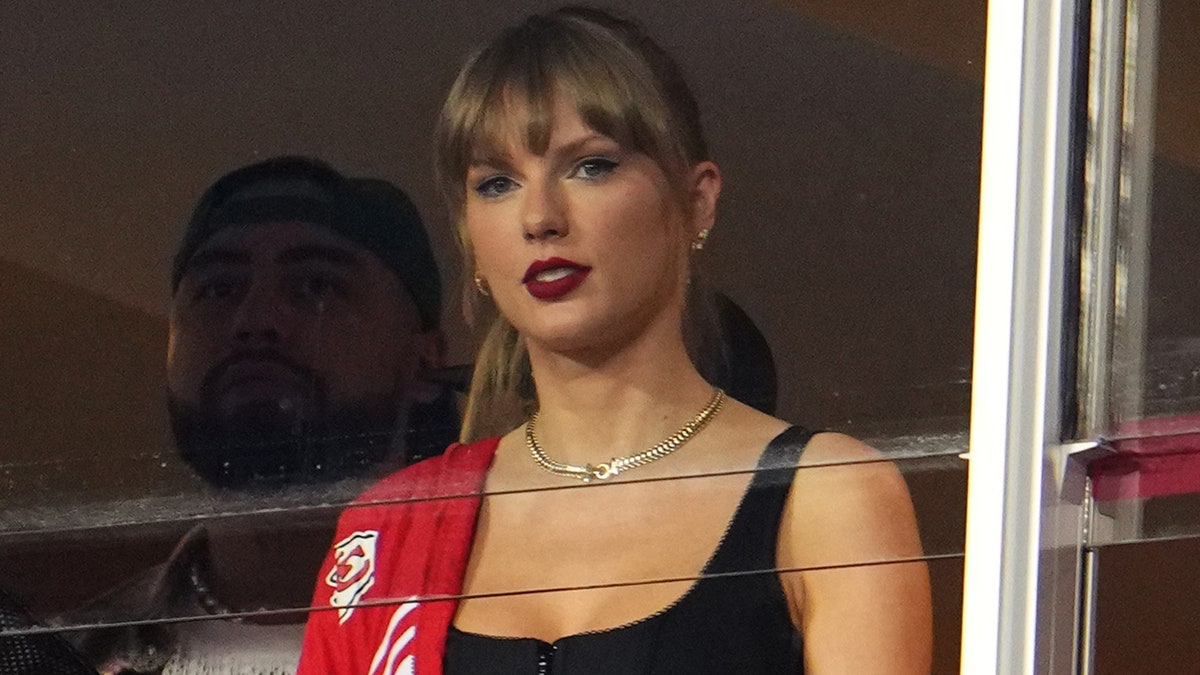
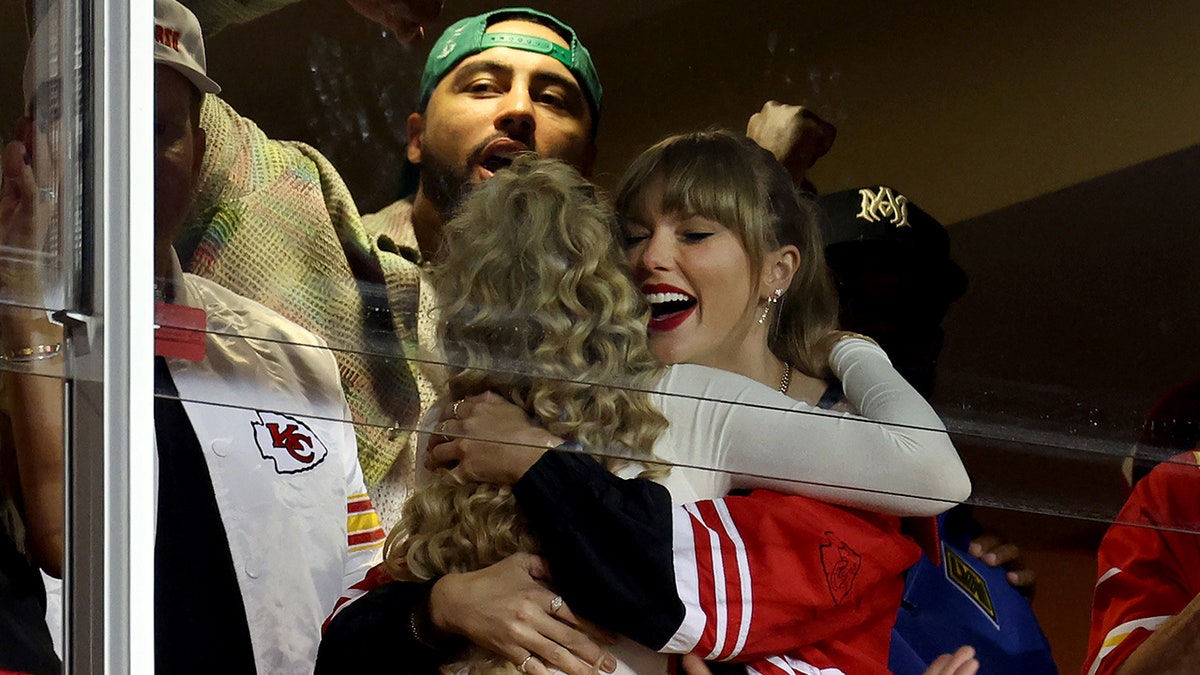
As Taylor Swift sang about an ex-boyfriend on “Midnight Rain”: “He wanted a bride, I was making my own name.” Even so, Jennifer Lopez represented a much more common experience when she became Mrs. Affleck last year, long after she had made her own name.

People are marrying later than in previous generations, and highly educated people are more likely to marry. That would suggest that more women would be keeping their names, said Sharon Sassler, a sociologist at Cornell who studies young people’s transitions into adulthood.

“However, we adjust to the gender norms of our time, which, ‘Barbie’ notwithstanding, is not a very pro-feminist time period,” she said.

Also, she said, weddings are a time of highly gendered traditions: “I don’t think a lot of women want to talk about, ‘How is marriage a patriarchal institution?’ especially as they’re making the decision to enter into marriage.”

Some younger women say the decision has become more practical than political — they find it easier to have the same name as their future children, and to simplify dinner reservations or utility bills.

Immigrants to the United States and Black and Hispanic women are least likely to take a spouse’s name. Eighty-six percent of white women did, Pew found, compared with 73 percent of Black women and 60 percent of Hispanic women. There were not enough Asian American women in the sample to analyze.

When Olivia Castor, 28, a corporate lawyer in Chicago, married three weeks ago, she decided to take both routes. She is in the process of legally changing her last name to that of her husband, Austin McNair, but she will continue to use Castor professionally.

She is the daughter of Haitian immigrants, and wanted to keep her Haitian last name and honor her family’s role in her education and career success.

“It meant a lot to me to have that family name, a legacy of accomplishment in the U.S., and I didn’t want to let go of that,” she said. “But I also wanted to embrace the new life and family I’m starting with my husband.”

Pew’s findings, from a poll of 2,740 married people, conducted in April, are consistent with other data showing that roughly 20 percent of women have kept their names since the practice took hold in the 1970s. But it’s hard to know how it’s changed over time because there has been so little research on it. (It’s seen as a “women’s issue,” and thus “not seen as valuable by people who fund research,” said Laurie Scheuble, a professor emeritus at Penn State who co-wrote a paper on name changing in 2012.)

Pew’s survey did not include enough same-sex couples to draw conclusions. Some said that because of the lack of a tradition, same-sex couples felt freer in their choice.

For Rosemary and Christena Kalonaros-Pyle — who work in marketing in New York and celebrated their July marriage with 115 family members and friends in Mexico — the solution was to hyphenate.

“We wanted to both have the same last name as our children would have, just because legally it’s a lot more prudent, especially as a same-sex couple, where in certain states and certain countries things are recognized differently,” Rosemary Kalonaros-Pyle said.

They also wanted to keep her Greek last name — and honor the last name of Christena Kalonaros-Pyle’s father, who died before her wife could meet him.

“It was a little bit of legal logistics,” she said, “and a little bit of emotions.”

GOP Lawmaker Scorched For Her ‘Mental Gymnastics’ About Biden Impeachment Inquiry

0

Rep. Nancy Mace (R-S.C.) was slammed online over her argument for an impeachment inquiry into President Joe Biden.

Mace told CNN’s Kaitlan Collins she supports opening an inquiry because “it would give us another tool in the toolbox, specifically to look at Joe Biden’s bank records.”

“Any piece of evidence, right or wrong, I want the American people to see all of it, whether it backs us up or not,” she said.

“But isn’t it supposed to be the evidence that leads you to pursue impeachment? An impeachment inquiry?” Collins asked.

“Well that’s what the inquiry is for, is to get more evidence,” Mace replied.

The Republican-led House Oversight and Accountability Committee has been investigating Biden for months, looking to substantiate allegations he engaged in corruption and bribery linked to his son Hunter Biden’s foreign business deals.

They have not yet produced evidence indicating wrongdoing by Joe Biden.

Some far-right House Republicans are threatening to force a government shutdown unless an impeachment inquiry is opened, despite objections from within their own ranks and skepticism from Senate Republicans that there’s not enough evidence to move forward.

On Monday, Rep. Jamie Raskin (Md.), the top Democrat on the oversight committee, released a report on the committee’s findings, arguing that they had come up empty and in fact “conclusively disproven the Republican allegations against President Biden.”

He portrayed the investigation as an attempt by Donald Trump sycophants to seek revenge for the twice-impeached former president and establish a “false moral equivalency” between Trump and Biden.

Mace was criticized online as viewers pointed out there should be evidence to justify opening another inquiry, not the other way around.

Related…

C.D.C. Advisers to Decide Who Should Receive New Covid Vaccines

0

Americans may be able to receive the next Covid shots as early as Wednesday, the last of a trifecta of vaccines intended to prevent respiratory infections this fall and winter.

On Monday, the Food and Drug Administration authorized updated Covid vaccines by Pfizer and Moderna. A scientific advisory committee to the Centers for Disease Control and Prevention will meet on Tuesday to review the data and make more specific recommendations about who should get the shots and when.

“I expect them to come out and recommend it for everyone,” said Dr. Ashish Jha, dean of the Brown University School of Public Health, who served as the White House’s Covid czar until June.

Large pharmacies will most likely have vaccines on offer later this week, assuming Dr. Mandy Cohen, the new C.D.C. director, signs off on the recommendations.

For some Americans, the vaccines cannot come soon enough. Hospital admissions and deaths associated with Covid have been steadily rising since July, although the numbers are still low compared with the same period in recent years.

But many others now view Covid as only a mild threat. Fewer than half of adults older than 65, and just about one in five American adults overall, opted for the bivalent booster shot offered last fall.

Vaccines against flu and the respiratory syncytial virus are already available. The flu vaccine is recommended for everyone 6 months and older, and the R.S.V. vaccine for everyone 60 and older, in consultation with a health care provider.

The most vulnerable — older adults, immunocompromised people and pregnant women — should receive both the Covid and flu vaccines, experts said.

Adults 65 and older accounted for up to 85 percent of flu-related deaths in recent years, according to the C.D.C. Those 75 and older also account for the vast majority of hospitalizations and deaths from Covid.

The C.D.C.’s advisers will need to decide whether to recommend the new Covid vaccines for younger people who have built up strong immunity through previous shots or infections. (The F.D.A. has authorized the shots for almost everyone, but the C.D.C. makes the recommendations on clinical use.)

Officials in Britain are offering the new Covid vaccines only to those at high risk, including older adults, those with chronic medical conditions and frontline workers. But that decision was made not because of a calculation about who would most benefit, but because of the prohibitive costs to the British government of offering the shots to everyone, Dr. Jha said.

As with the flu vaccine, the greatest benefits of Covid immunization may accrue to those at highest risk. Nonetheless, the shots may help even those with reduced risk recover sooner after an infection, or miss fewer days of work, Dr. Jha said.

And even among the relatively young and healthy, Covid poses risks that are harder to define, including long-term effects on the heart and long Covid. “I don’t want to diminish the tragedy of younger people who may be hospitalized,” said Gigi Gronvall, a biosecurity expert at the Johns Hopkins Center for Health Security.

The shots will be available for free to most Americans through private insurers and through a new federal program for uninsured people.