2.2 C
New York
Thursday, December 25, 2025
Home Blog Page 1055

100 Yoga Teachers, 100 Countries, 100 Podcast Episodes

0

“Wild Yoga Tribe” marks 100th podcast with Native American Yoga

Des Moines, Iowa – September 12, 2023) – Wild Yoga Tribe, a podcast that explores yoga around the world, returns home to its North American roots to mark its 100th episode on September 15, 2023. Host Lily Allen-Dueñas interviews Kate Herrera Jenkins (nativestrengthrevolution.org), a renowned Native American yoga teacher and a member of the Cochiti Pueblo, on how she weaves together indigenous traditions with ancient Indian practice. The sacred world of Native American yoga reminds us that yoga is not just a practice but a living ceremony that unites us all.

“I felt like every time I stepped onto my mat, it was ceremony. It was this time of surrender,” Herrera Jenkins told Wild Yoga Tribe host Allen-Dueñas. The Birmingham, Alabama-based Herrera Jenkins is also the founder of Native Strength Revolution, a nonprofit that equips a new generation of Indigenous healers through yoga certification.

In the previous 99 episodes, Iowan Allen-Dueñas has traveled the world, literally and metaphorically, to feature yoga teachers from every corner of the globe, from Ukraine to Uganda. They have shared their insight, expertise, and experience in the field of yoga, health, and wellness. While each conversation covers a range of topics, there’s one consistent question that every teacher is asked: “What is your definition of yoga?”

Jannice Strand, a yoga teacher from Norway, says: “Yoga is a place where you can come home.” Mugisha Ali Allan, a yoga teacher from Uganda, says: “Yoga is the art and science of well-being.” Roxana Corojan, a yoga teacher from Romania, says: “Yoga is the place where I never question myself.” Dariya Kolodiy, a yoga teacher from Ukraine says, “Yoga overloads the brain and earns you the body.”

Each episode inspires and shares a personal journey. “After finding yoga. I stopped doing drugs,” said Kenyan yogi Samuel Muthama. “I was able to get my daily needs, my family needs met. Yoga transformed me from the path of crime… It really transformed my life and my family’s. My brother and I teach yoga and the money we get we give to our parents and our siblings.” It literally saved Muthama’s life.

Yoga has also threatened lives. Afghani yoga teacher Fakhria Momtaz, had to flee her country. As the first yoga studio owner in Afghanistan, she received multiple death threats for teaching yoga. “It wasn’t safe,” Momtaz said. “It was not just necessary or important for women and Afghanistan. It was important for me too. Everyone has to play their part in the world. Therefore, I should share my knowledge of yoga with other people to keep the body and mind healthy, especially for women in Afghanistan, who are struggling, so much violence and challenges by their culture, their families, their society.”

Wild Yoga Tribe is a podcast for yoga students and teachers alike. Listening to the back catalog of episodes will give everyone a new focus for their daily yoga practice, and a deeper understanding of what yoga truly is.

“Yoga transcends boundaries, borders, and language,” Wild Yoga Tribe founder and podcast host Lily Allen-Duenas, says. “It is a universal sanctuary where individuals find healing, well-being, self-acceptance, and even transformation.”                         

About The Wild Yoga Tribe:

The Wild Yoga Tribe podcast is hosted by Wild Yoga Tribe founder and international yoga teacher, Lily Allen-Duenas. With well over 650 hours of training under her wing and thousands of hours of teaching in Bali, the Philippines, Sri Lanka, and more, Allen-Duenas is a celebrated global yoga presence.

The Wild Yoga Tribe’s mission is to shine a light on the global yoga ecosystem and all the interconnected aspects of the path of yoga while helping others on their paths of wellness and wholeness. The podcast widely covers the topics of yoga methodologies, philosophies, and stories around the yoga journey. Allen-Duenas and her guests have powerful conversations, which serve as a catalyst for expansion and connection to the global yoga community.

Tune into the Wild Yoga Tribe podcast on Apple, Spotify, Google Podcasts, and more.

Media Kit for the 100th podcast episode: drive.google.com/drive/folders/1LPhfAzf6DnReaNwe9MGt6Bxv2FCOe_Vv

For complete information, visit: wildyogatribe.com

Media Contact:

Wild Yoga Tribe
Attn: Lily Allen-Duenas
Des Moines, Iowa
hello@wildyogatribe.com

A Horrible Loss for the Giants, but Not the Worst Ever

0

The Giants got the kickoff at home on Sunday night and advanced to the Dallas Cowboys’ 8-yard line in nine plays. What a start to the season!

What a start indeed. Graham Gano’s field goal try was blocked and returned for a touchdown by the Cowboys’ Noah Igbinoghene. The reversal seemed somehow to bless Dallas and curse the Giants. After 60 minutes, the Giants had scored 0 points, and the visiting Cowboys had scored 40.

“We got beat all the way around, from coaching to playing,” Giants Coach Brian Daboll said. “Don’t sugarcoat it, it was a bad game,” he added, showing a keen ability to read a scoreboard.

Daniel Jones passed for only 104 yards for the Giants, had two interceptions and two fumbles (both were recovered) and was sacked seven times. Saquon Barkley could do little to help: He managed only 51 yards on 12 carries.

Dallas took a 26-0 halftime lead without even putting together a long touchdown drive, instead scoring on the blocked field goal return, a field goal, an interception return, another field goal and a 38-yard drive following another pick. Cowboys quarterback Dak Prescott had only 143 yards passing. He didn’t need any more and could have won the game with far less.

It was the fifth lowest passing total for a team winning by 40 or more points. (In 2005, the Seattle Seahawks defense overwhelmed the Philadelphia Eagles by 42-0, while Matt Hasselbeck passed for 98 yards for the winners.)

Coming off a 9-7-1 playoff season, the Giants were not necessarily expected to win the N.F.C. East. But they also weren’t expected to be flat-out bad. And they were on Sunday night.

“This wasn’t our best game, there’s no doubt about it,” Jones said. On the plus side, it also was not their worst.

As awful as it seemed, the game was not biggest shutout loss for the Giants. That was a 45-0 shellacking in 1948 against the Eagles. “The New York Football Giants had little going for them today,” The Times sports section helpfully pointed out the next morning.

But among games in Week 1, when hopes tend to be high even for the most pessimistic fan bases, it was the worst for the Giants and fifth worst overall.

If there is a sign of hope for the Giants, and their fans might need an electron microscope to spot one today, it might be found in history. Two of the four teams with worse opening week shutout losses ended up having good seasons.

Bad can still portend bad, of course: The 1954 Baltimore Colts, who lost to the Los Angeles Rams in their first game by 48-0, ended up 3-9, and the 1999 Cleveland Browns, who lost by 43-0 to the Pittsburgh Steelers, finished 2-14.

But the 1989 Steelers rebounded from a 51-0 loss to the Browns to finish 9-7, and in 1991 Detroit lost by 45-0 to Washington but finished 12-4. Both those teams won a playoff game as well. (The Lions have not won one since.)

As bad as Sunday was, it was far from the worst shutout loss in N.F.L. regular season history That came in 1934 when a team called the Cincinnati Reds lost to the Eagles, 64-0.

The Reds were kicked out of the league after that game and never played again. Say what you want about the Giants’ effort on Sunday night, but they will line up in Arizona to face the Cardinals next Sunday.

Right?

Russians opened fire on a Ukrainian flag tied to balloons, revealing their position for a counterattack, Ukraine says

0
Ukraine flag
Ukraine’s military releases balloons carrying the national flag into the sky in Avdiyivka, eastern Ukraine, on September 9, 2023Europe
  • A Ukrainian flag attached to helium balloons flew into occupied territory, Kyiv’s military said.
  • Russian soldiers tried to shoot it down but revealed their firing positions, an official said.
  • Ukraine was able to use this information to launch an attack on the soldiers, the official added.

Russian soldiers accidentally revealed their positions after they tried to shoot down a Ukrainian flag suspended from balloons flying over occupied territory, a Ukrainian official said.

The large flag, attached to dozens of helium balloons, was released from the Ukrainian-controlled town of Avdiyivka on Sunday by the military.

The launch was to commemorate the 245th anniversary of the city’s founding, according to Vitalii Barabash, the head of the Avdiivka city military administration.

It eventually flew over Russian-occupied Donetsk City in eastern Ukraine, where Russian soldiers attempted to shoot it down, Barabash told national television, The Kyiv Independent reported.

“When the Ukrainian flag flew from Avdiyivka to Donetsk, the Russians tried to shoot it down with all the means at their disposal and revealed all their firing positions,” he said, according to a translation by the Ukrainian NGO Euromaidan Press.

Barabash said that Ukraine’s 110th brigade then “worked effectively to attack the Russian soldiers.”

He didn’t give specifics of the attack or how successful it was. Ukraine’s defense ministry did not immediately respond to Insider’s request for comment.

“To be honest, it was probably the most successful flag launch [from Avdiyivka to Donetsk ] ever,” Barabash added. “For several hours, the Ukrainian flag was flying over occupied Donetsk. I had a lot of messages from people living in the occupied territory, who told me they are waiting for the liberation of Donetsk.”

Footage of the flag flying over various parts of the Russian-occupied city was published by the Telegram channel Typical Donetsk.

Donetsk City has been occupied by Russia since 2014 when fighting in eastern Ukraine began.

Barabash’s comments come amid elections in other Moscow-occupied territories, including Donetsk, Luhansk, Kherson, and Zaporizhzhia.

The Kremlin is expected to claim a heavy victory in the elections, which have been dismissed as “fake elections” and a “sham” by Kyiv and the West, The Guardian reported.

Read the original article on Business Insider

Covid Vaccines May Roll Out Within Days

0

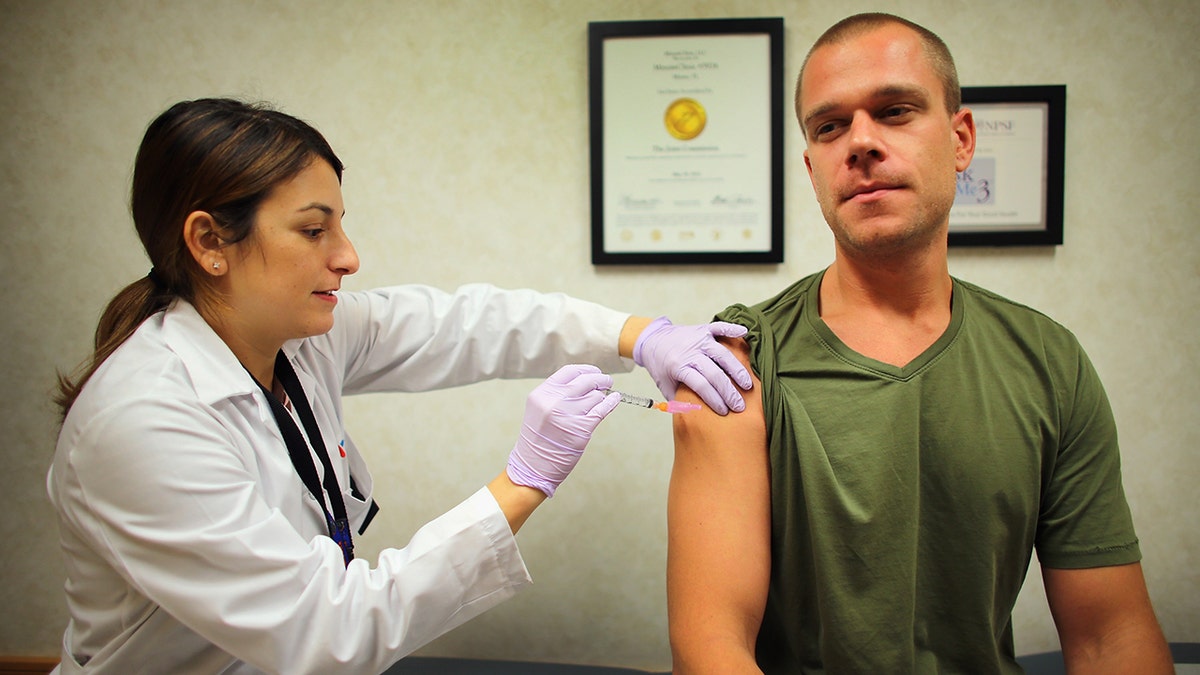
The latest Covid boosters are expected to be approved by the Food and Drug Administration as early as Monday, arriving alongside the seasonal flu vaccine and shots to protect infants and older adults from R.S.V., a potentially lethal respiratory virus.

The Centers for Disease Control and Prevention is expected to follow up on Tuesday with an advisory meeting to discuss who should get the new shots, by Pfizer-BioNTech and Moderna. After a final decision by the C.D.C.’s director, millions of doses will be shipped to pharmacies, clinics and health systems nationwide within days.

As Covid cases creep up, the prevention measures could portend the first winter of the decade without a crush of patients pushing hospitals beyond capacity. But a healthy winter is far from a lock: Last year, the updated Covid vaccine made it into the arms of only 20 percent of adults in the United States.

Some experts view that statistic with little alarm because the number of Covid deaths slowed over the last year, thanks to an increasingly immune population and higher vaccine rates among older Americans. Others see this year as an opportunity to protect more vulnerable people from severe illness or death.

“We now have some really good tools,” said Dr. Marcus Plescia, chief medical officer of the Association of State and Territorial Health Officials, a public health group. “It’s just — what is it going to take to get people comfortable with using them?”

Federal officials have been retreating from labeling the new formulation as boosters to previous shots, preferring to recast them as an annual immunization effort akin to the flu vaccine. That shift may reflect concern over the fatigue that some Americans have expressed about yet another round of shots against the virus.

The vaccine campaign will also be the first since the end of the public health emergency, which expired in May. In previous years, the U.S. government bought hundreds of millions of vaccine doses and distributed them for free. This year, private insurance and government payers like Medicare that cover the vast majority of Americans are expected to provide the vaccines to people for no fee.

But the question remains whether the private market of hospitals, clinics and pharmacies will be able to calibrate their vaccine orders to stock a realistic supply. Experts are uncertain how much demand there will be for the latest shots.

“There could be a period in here where things are a little bit chaotic, and that’s never a good situation,” Dr. Plescia said.

Also of concern in the handoff to the private market: the nation’s 23 million adults with no health insurance. The Biden administration has made plans to cover costs and offer the Covid vaccine through local clinics and major pharmacies, but some experts are worried about whether people who lack insurance will be aware of the new shots — or where to get them.

“They don’t have an insurer sending them leaflets — they may not have a usual source of care,” said Anthony Wright, executive director of Health Access, a California advocacy group. “And so the trusted messenger of their health plan, their doctor, their clinic, is not there saying, ‘It’s no cost. It’s really easy.’”

Vaccine manufacturers are expected to donate doses for the uninsured. Kelly Cunningham, a spokeswoman for Moderna, said the company had no cap on the number of Covid vaccine doses it planned to donate.

The latest shots are becoming available as Covid hospitalizations and deaths are rising slightly, albeit not to the levels of past years. In the week ending Aug. 26, there were 17,400 people admitted to the hospital — more than about 6,000 at a low point this summer. Deaths were also up to about 600 a week last month, though far lower than the weekly average of 14,000 deaths of 2021.

Once the vaccines are approved and the C.D.C. signs off, the Biden administration plans to urge the public to get their Covid and flu shots at the same time, a practice that has been studied and deemed safe, an administration official said. It’s a messaging effort they expect to share with major vaccine makers, which will be marketing the Covid doses commercially for the first time.

Walgreens and CVS said they both already have the updated flu and R.S.V. shots available in stores. Once Covid vaccine approvals are in place, Dr. Kevin Ban, Walgreens’ chief medical officer, said the chain would have the new shots on hand “as soon as possible.” A CVS spokesperson said doses could be arriving later this week. Representatives of both chains said the Covid shot would be available at no cost to all who are eligible under the C.D.C. guidelines expected Tuesday.

Targeted populations most certainly will include people 65 and older as well as those who are immunocompromised or have serious underlying medical conditions that leave them more susceptible to severe illness from the virus.

Nursing homes, some of which were host to inoculation teams from the major drugstore chains when vaccines first became available, are now relying on their usual long-term-care pharmacies to supply most vaccines. But many homes have fallen behind on booster rates: Recent Medicare data show that about 62 percent of residents are up-to-date on their shots even though older adults are among the most vulnerable to severe disease and death from the virus.

The new Covid vaccines target the XBB.1.5 variant, which was dominant when vaccine makers began to formulate and test a new version. Though the virus has had a rotating cast of variants, experts say the new Covid jab should fortify protections against severe infection.

Recent fears that one newer, highly mutated variant would escape the vaccine proved unfounded by reputable independent labs, said Fikadu Tafesse, an associate professor of molecular microbiology and immunology at Oregon Health & Science University. The C.D.C. also reviewed studies on the matter and confirmed Friday that the vaccine was holding strong.

“We were really getting ready for no response at all, but the data is very, very promising,” Dr. Tafesse said.

As with earlier shots, the updated ones are not expected to eliminate the chances of contracting a mild case of Covid. Instead, they are expected to reduce the chances of severe illness, hospitalization or death. The first Covid vaccines, given in early 2021 and targeting the initial form of the virus that emerged in Wuhan, had an efficacy rate of about 95 percent, meaning that far fewer vaccinated people became sick than those who were not immunized.

As the first vaccine’s potency waned with newer Omicron variants, a bivalent booster was approved in August 2022 that targeted the initial virus and BA.5, which was dominant at the time. That shot led to fewer people with Covid being hospitalized, dropping over several months to 25 percent from 60 percent..

The latest mRNA vaccines by Pfizer and Moderna is called a monovalent because it was aimed at one variant of Omicron, XBB.1.5., and unlike earlier boosters does not include protection against the original virus that caused widespread infections in China more than three years ago. But experts and researchers say that it should provide protection against many of Omicron’s variants.

Pfizer and Moderna reported that their vaccines had a potent response to the newest circulating variants, though only Moderna posted its initial data on Thursday.

But researchers continue to discuss how well it will stand up to new variants. The F.D.A. has mainly reviewed results submitted by the companies of animal or smaller human studies of immune response.

Jerica Pitts, a spokeswoman for Pfizer, said the data submitted by the company to the F.D.A. in June involved tests in animals. Trials following people who received the shot are continuing, she said.

Moderna submitted data to the F.D.A. on the immune response of 100 people to the new shots, which the company said in June “robustly elicit neutralizing antibodies” against XBB variants.

John Moore, a professor of virology and immunology at Weill Cornell Medicine, said he was not impressed with the latest results. He said the new shot showed an immune response similar to last fall’s booster. That means that although the new shot will be worth getting, “it’s nothing remotely like a game changer.”

Regulators are also considering whether to authorize a booster dose from Novavax, which employs a different but widely used technology for its coronavirus vaccine. That shot could be authorized in the coming weeks, giving some Americans who may prefer Novavax’s formulation as an alternative to the vaccines offered by Moderna and Pfizer-BioNTech.

Dr. Daniel Griffin, an infectious disease physician at Columbia University in New York, said getting the Covid shot in late October would provide robust protection at a time when people gather for holidays, and would help stop the virus’s spread to the most vulnerable, including older adults, pregnant people and those with compromised immune systems.

And while many might be weary of the social-protection argument, he said they could lessen their own odds of a more serious outcome.

“So a younger individual may say, ‘I’m not going to get a booster for the public health,’” Dr. Griffin said, “‘but I am going to get a booster because if I can reduce my chance of getting Covid, I can reduce my chance of long Covid.’”

Noah Weiland and Carl Zimmer contributed to this report.

Paddle Boarding Florida’s ‘Spring Runs’

0

“That sounds like a baby gator. Did you hear it?” We stopped paddling and listened. Leaves rustled, there was the splash of a turtle sliding into water, and then “pew, pew,” the dainty call of a baby alligator sounding like a video game laser. We saw the hatchling’s mother hauled out on muddy ground. She watched us pass. Giving due deference we moved away, quietly thrilled by the encounter.

We were standup paddle boarding on Silver Glen Run, in Central Florida, an hour and 15 minutes’ drive north of Orlando. Here, water from the underlying aquifer, flowing to the surface through caves and rock tunnels, creates “spring runs,” short, clear creeks and rivers that flow into a larger river or lake.

In Florida, navigable waterways are held in public trust, even if the surrounding land is privately owned. Clear water and navigation rights are invitations to explore these riparian pathways, and paddle boards, which combine portability and a quiet approach, are the perfect vessels for slow travel on them, a way to enjoy wildlife — otters, cormorants, garfish and snapping turtles.

While the waterways are public, access to them is via boat launches on private or state-owned land. Some state parks, such as Weeki Wachee Springs, have limited launching slots, in order to control the number of visitors and protect the habitat, that need to be booked in advance online. Others, like Silver Glen Spring, are popular and have limited parking, which should be booked in advance to guarantee entry. Staying in waterfront accommodations is another way to ensure access. Paddling upstream and drifting back to your parking spot removes the need for a shuttle ride back to your vehicle.

Myles, my boyfriend, and I have explored Florida’s springs over many years. This year his 19-year-old daughter, Lili, had free time between studies and internships, so we brought her to our favorites. We had our inflatable boards, which are lightweight, easy to launch and pack down to check-in size for flights. In a circular route, starting and ending at Orlando, over the course of a week we stayed in three places and paddled on six spring runs. Our trip took place in the spring, but peak paddle-boarding season runs through October, though it’s possible to do year-round.

We started our week with two nights in the town of Homosassa, at the Chassahowitzka Hotel, a bed-and-breakfast with shared bathrooms that suits families or friends staying as a group. It provided the convenience of offering breakfast, while letting us cook dinner on the grill outdoors, and being close enough to the Chassahowitzka River that we could carry our boards to and from the launch. At a nearby campground you can rent kayaks and paddle boards. Just upstream , on the north side of the Chassahowitzka River, is Seven Sisters Spring.

We soon joined a gaggle of people who had tethered their kayaks and boards to trees while they splashed and dived. One man swam through a tunnel in the rock with my GoPro. On the video you can see air pockets like liquid mercury pressed against the tunnel roof, and forest framed by the opening as he reaches the surface.

Swimming through submerged tunnels carries the risk of getting trapped underwater, and I was too timid to try. After getting tips and a demonstration from a local swimmer, Lili swam into a short tunnel. She disappeared beneath the rock for four seconds, and then emerged a few yards away to a high five from her impromptu coach.

To paddle on the Weeki Wachee River, we drove half an hour south to Rogers Park, where we could park and launch our boards without advance booking. Here we saw our first manatee, its tail frayed by an encounter with a boat propeller. Yet it had survived, with wounds healed into scar tissue. We watched it grazing, steering to avoid drifting above it. Kim Kulch, our host at the Chassahowitzka Hotel, told us, “if manatees get spooked, they’ll flip their tails, and they are powerful. Once, someone who had been out paddling told me they’d been tipped over by a manatee, but it was wonderful.”

Heading north the next day, we stopped to spend an afternoon on the Rainbow River, which begins at Rainbow Springs and flows for 5.7 miles until it merges with the Withlacoochee River at the city of Dunnellon. We parked at KP Hole Park, 1.5 miles downstream from Rainbow Springs where, if you have your own paddle craft, you can launch in the afternoon and return in the evening, avoiding flotillas of tubers.

This river is heavily carpeted with strap-leaf sagittaria, its linear leaf blades interspersed with white flowers that open underwater. Looking down from our boards the view was rippling green, punctuated by passing fish and cormorants chasing them.

A little further on, we saw fluid bodies diving and resurfacing: a pair of otters catching fish. Unbothered by our presence they ate their fish, and then vanished up a creek into the forest.

On our return downstream from Rainbow Springs State Park, we pulled over for a swim about half a mile upstream from KP Hole Park, our starting point. A cormorant surfaced next to me. I ducked underwater and got a close-up view of the bird swimming with silver bubbles slipping off its feathers.

Our next stop was a house on stilts we’d rented on Vrbo for three nights near the junction of two rivers, a 10-minute drive from the town of Fort White. Walking across the lawn we put our boards into the Santa Fe, a black-water river tinted by tannins from decaying vegetation. After 350 yards we turned into the Ichetucknee River, where the water under our boards shifted to turquoise. We paddled upstream, past houses set back from the river with raised wooden walkways over waterlogged ground and bald cypress tree knees leading to their riverside docks.

Two boys were snorkeling, bringing up handfuls of small black shells and sifting through them. The man with them said they were looking for fossilized shark teeth. Sandy clay on the riverbed and banks erodes to release an abundance of fossils. The Florida Museum in Gainesville has more than 11,000 from the Ichetucknee River.

Defeated by strong current where the Ichetucknee flows through a culvert under Highway 27, we let ourselves float downstream. Nearing the junction with the Santa Fe River we could hear music; a crowd of boats was anchored along the forest edge. People gave us friendly waves and we were offered beer.

The next day we drove 10 minutes to Ichetucknee Springs State Parks south entrance, and started our paddle from Dampiers Landing, a canoe and tube launch. We went upstream, the opposite direction of tubers floating down to South Takeout, the last exit within the park.

Above the tubing section the Ichetucknee widens and its current steadily increases. Around Grassy Hole Spring, where the river threads through islands of vegetation, we saw scattered canoes, each with a band of snorkelers. I accidentally nudged one who had been zigzagging across the river. My apology was overridden by his exclamation, “I didn’t catch it!” He explained that the group was catching turtles for the annual survey carried out by the Santa Fe River Turtle Project.

Close to two miles after starting, we passed the outflow from Blue Hole Spring, the largest spring in the group that feeds the Ichetucknee, and paddling became less strenuous. We reached North End launch, where the river begins with water from its headspring. It was an easy drift back to our rented house, lingering over views of gar, popping through the culvert under Highway 27 and loitering to watch a grazing manatee.

The next day, on our way to Ocala National Forest where we would be staying for two nights, we stopped at Silver River. After days spent on spring-fed rivers, I thought that my sense of wonder would have run dry. But wide aquatic panoramas bordered by red cardinal flowers and blue spikes of pickerel weed flowers were a heady combination.

Someone passing in the opposite direction described where to see a group of manatees. In the lee of a submerged tree were three adults and a calf resting on the bottom. One of the adult manatees slowly surfaced to breathe and we listened to its exhalation.

Reaching an island swinging with monkeys — rhesus macaques deliberately released in the 1930s — I heard familiar voices. In the heart of the Ocala National Forest, there is a cabin built by the Civilian Conservation Corps called Sweetwater Cabin. Because of its popularity, you have to enter a lottery months in advance to get a permit to rent it. My friends Cassy and Marco won and we’d planned our trip to overlap with the week they would be at the cabin and arranged to meet at Silver River.

Because of lack of coordination, Cassy and Marco had booked kayak rentals with Silver River Kayak Rentals an hour before our launch slot at Silver Springs State Park. They deliberately dawdled on their journey and we caught up with them on Silver River. Marco excelled at snake spotting, pointing out water moccasins camouflaged among tree roots on the water’s edge. We got out at Ray Wayside Park, approximately six miles downstream from the Silver Springs State Park’s canoe launch and were taken back to our cars by shuttle service, booked with our launch slots.

As dusk fell, we sat next to Sweetwater Spring with cocktails and listened to a barred owl, which Cassy and Marco said had been there every evening. At Sweetwater cabin, with its plain décor and without TV or Wi-Fi, nature is entertainment and ornamentation; watching fish in the bright turquoise spring, seeing a stripy Eastern coral snake crossing the path, listening to the songs of unseen birds.

After a morning at Silver Glen Spring, we returned to the cabin and used its metal canoes to explore Juniper Creek, a spring run that flows from Juniper Spring to Lake George. Sweetwater Spring has a short and shallow run, just enough to lead a canoe into Juniper Creek. It would have been difficult to navigate the tree branches that cross the creek on paddle boards.

Cassy and Marco thought there was a hiking trail near the cabin as they heard people talking and passing by. Out on Juniper Creek, they realized it was paddlers they had been hearing. Meeting other people while out on the water is as much a part of the experience of Florida’s spring fed rivers as seeing wildlife.

In Silver Glen Run I saw cages of eelgrass planted by the Florida Fish and Wildlife Conservation Commission to restore aquatic vegetation after Hurricane Irma. Next time I’m there it might have spread outside of its protective enclosures. If you’re on these rivers in fall, leaves on the bald cypress trees will be a tawny contrast to the blue spring water. With each visit to Florida’s spring-fed rivers, there is something new to see.


Follow New York Times Travel on Instagram and sign up for our weekly Travel Dispatch newsletter to get expert tips on traveling smarter and inspiration for your next vacation. Dreaming up a future getaway or just armchair traveling? Check out our 52 Places to Go in 2023.

Luis Rubiales, Spain’s Top Soccer Official, Resigns Over World Cup Kiss

0

The head of the Spanish soccer federation, Luis Rubiales, resigned on Sunday, weeks after kissing a member of Spain’s women’s team on the lips after the team won the World Cup last month, setting off a national scandal and drawing accusations of abusing his power and perpetuating sexism in the sport.

In a statement posted to X, formerly known as Twitter, on Sunday, Mr. Rubiales said he had submitted his resignation as the federation’s president and as vice president of UEFA, European soccer’s governing body.

“After the rapid suspension carried out by FIFA, plus the rest of proceedings open against me, it is evident that I will not be able to return to my position,” he wrote. “My daughters, my family and the people who love me have suffered the effects of persecution excessively, as well as many falsehoods, but it is also true that in the street, the truth is prevailing more every day.”

Mr. Rubiales, 46, was largely unrepentant about his actions, but pressure had grown on him and the group he leads, known formally as the Royal Spanish Football Federation, and it became clear that his position was untenable as the outrage against him showed no signs of abating.

Spanish prosecutors opened a sexual assault case on Friday after the player Jennifer Hermoso, who said she was made to feel “vulnerable” and a “victim of an attack” when he kissed her, filed a formal complaint, and there were signs of opposition to his continued presence at the top of Spanish soccer at every turn.

The soccer federation had called for him to resign “immediately,” female players had said they would not take the field for the national team as long as he was in charge, the men’s team had condemned his actions, and FIFA, soccer’s governing body, had suspended him for 90 days.

Some commentators have described the events as a watershed moment in Spain’s #MeToo movement, as they put a spotlight on a divide between traditions of machismo and more recent progressivism that placed Spain in the European vanguard on issues of feminism and equality.

The controversy centers on the conduct of Mr. Rubiales, who kissed Ms. Hermoso, one of the team’s star players, after Spain defeated England, 1-0, at the World Cup final in Sydney, Australia, on Aug. 20.

He offered a tepid apology the next day, but by the end of that week he had dug in his heels and reversed course, insisting that Ms. Hermoso had “moved me close to her body” during their encounter onstage, feet from the Spanish queen. He also accused his critics of targeting him in a “social assassination” and declared that he would not step down.

Ms. Hermoso has vigorously disputed his account and has received support far and wide, with players and others — including the United Nations’ human rights office — using the hashtag “se acabó,” or “it’s over.”

The Spanish government was limited in its ability to punish Mr. Rubiales, but Prime Minister Pedro Sánchez described the soccer chief’s actions as “unacceptable,” and the secretary of the opposition People’s Party, Cuca Gamarra, described them as “shameful.”

The scandal has taken some of the shine off the national team’s World Cup triumph, diverting attention from the rapid ascent to soccer glory by a squad that qualified for the tournament for the first time eight years ago after decades of mediocrity.

On Sunday evening, Mr. Rubiales gave an interview on “Piers Morgan Uncensored,” in which he said he came to the decision to resign after speaking to friends and family. “They say to me, ‘Luis, now you have to focus on your dignity and to continue your life, because if not, probably, you are going to damage people you love,’” he said.

Víctor Francos, the president of Spain’s National Sports Council, said on Onda Cero radio that Mr. Rubiales’s resignation was “good news for the government” and “what the citizens were asking for.” Minutes earlier on Cadena Ser radio, he said the government was considering “legislative changes that can improve, strengthen and enrich public control over the federations.”

“We must reflect so that certain things that have happened don’t happen again,” he said.

But Mr. Rubiales was not without his supporters.

When he spoke at a federation meeting in late August, his robust defense was met with loud applause by some in attendance, and his mother locked herself in a church and began a hunger strike to protest what she considered a witch hunt of her son.

Before Mr. Rubiales was punished, the controversy led to the ouster of another high-profile figure in the world of Spanish women’s soccer: Jorge Vilda, the coach of the World Cup winning squad but a polarizing figure, who was fired on Tuesday.

Mr. Vilda, who was hired in 2015 when his predecessor was ousted amid accusations of sexism, had been dogged by scandal in recent months. And last year, 15 star players refused to play on the national team, complaining about controlling behavior by Mr. Vilda and a general culture of sexism.

A Race to Rescue Survivors

0

Rescuers in Morocco are racing to dig survivors out of rubble after the country’s worst earthquake in a century flattened homes and buildings, killing at least 2,000 people.

The magnitude-6.8 quake struck in the mountains south of Marrakesh, an ancient city that is a popular tourist destination. Buildings crumbled and caked its cobblestone streets with mounds of red dust from the walled old city.

The quake particularly devastated communities in the Atlas Mountains, where the full extent of the damage is still unknown. Debris has blocked some of the region’s roads, making it difficult for rescue crews to reach remote communities. The quake also knocked out power and cell service in some areas. The death toll is expected to rise: Most homes there are made of mud bricks, a traditional construction method that is vulnerable to earthquakes and heavy rains.

In some remote areas, people sifted through debris with their bare hands to search for survivors. Others climbed through the canyons between collapsed homes to retrieve bodies. The U.N. said that more than 300,000 people in Marrakesh and its outskirts had been affected by the earthquake.

Emergency teams from around the world are arriving to help. One of the first countries to offer aid was Turkey, which experienced its own earthquake in February that killed tens of thousands of people there and in neighboring Syria. Spain’s foreign affairs minister said the country would send search and rescue teams to try to “find the greatest number of people alive.” The Moroccan Army said the air force was evacuating casualties from a hard-hit region to a military hospital in Marrakesh.

Still, some foreign crews complained that the government approvals process for rescue efforts had been slow. Some villages have not yet received any aid, according to reports on social media. One man who said he was volunteering as a rescuer in a province southwest of the epicenter begged for more assistance in an Instagram video. “We don’t have any food or water. There are still people underground. Some of them are still alive,” he said, adding, “There are some villages that we couldn’t reach.”

Here are the latest updates:

  • Aftershock: A 3.9-magnitude earthquake, almost certainly an aftershock, struck Morocco this morning, the U.S. Geological Survey said. Afraid of aftershocks, many people spent the weekend sleeping outside on grassy medians and roundabouts near one road heading into Marrakesh.

  • Housing: The office of Morocco’s leader, King Mohammed VI, said he had ordered the government to rapidly provide shelter and rebuild houses for those in distress, “particularly orphans and the vulnerable.”

  • See maps of where the quake struck and photos of the destruction.

  • The authorities announced three days of national mourning to honor victims. Here’s how you can help.

  • “My husband and four children died,” one woman told Moroccan state television. “Mustapha, Hassan, Ilhem, Ghizlaine, Ilyes. Everything I had is gone. I am all alone.”

  • Moroccan news media reported that no deaths had been recorded in hotels in Marrakesh and that there had not been any major damage to the airport there.

  • Some Biden allies say that he is too deferential to his son Hunter Biden and that their closeness has created political peril for the president.

  • A former Secret Service agent present at John F. Kennedy’s assassination contradicted the official conclusion about the “magic bullet” thought to have both hit Kennedy and wounded Gov. John Connally of Texas.

  • California’s governor, Gavin Newsom, a Democrat, said he was not running for president and urged his party to line up behind Biden.

  • Gun owners denounced a gun safe manufacturer after it acknowledged that it gave the F.B.I. the access code to one of its safes to help an investigation.

  • After acquiring Twitter, Elon Musk looked for signs of disloyalty in employees’ internal communications. Read more takeaways from a new biography of Musk.

  • Facebook and Google built tools years ago that could recognize any face but declined to release them, deciding it was too dangerous to make widely available.

  • The 19-year-old American Coco Gauff beat Aryna Sabalenka in three sets to win her first Grand Slam tennis title.

  • Just over a decade ago, Gauff was a young tennis fan dancing in the U.S. Open stands. See the video.

  • Novak Djokovic will play Daniil Medvedev in the men’s singles final today.

The Chinese Communist Party’s only plan to deal with its disillusioned youth is repression, Ho-Fung Hung writes.

Even though we don’t understand why obesity drugs work, people who need them should take them anyway, Aaron E. Carroll argues.

Here’s a column by Farhad Manjoo on Vivek Ramaswamy.


The Sunday question: Can India lead developing nations in addressing climate change?

India has already taken the lead as the holder of this year’s Group of 20 presidency, and officials have met with other countries’ energy ministers to stress the importance of an “equitable transition” away from fossil fuels, Syed Munir Khasru writes for The South China Morning Post. But combating global warming is extremely difficult, and India’s own ambitious energy goals are “looking even less achievable,” David Fickling of Bloomberg writes.

Vows: The popular guy meets the academic girl.

Lives Lived: Mangosuthu Buthelezi was a Zulu chief who was a strong voice for tribal rights as apartheid ended in South Africa. He died at 95.

I spoke with the great cartoonist Roz Chast, who grew up in New York and whose work is deeply associated with the city, about the irritation of moving to the suburbs.

You’ve written about feeling as if you didn’t fit in as a kid. Do you remember when you first thought, I do fit in?

When I got my first apartment in the city. When I got out of art school [at the Rhode Island School of Design], I thought: “My cartoons, they’re weird. They make me laugh, but this doesn’t look like anything that I see.” Then I decided to start taking my cartoons around, and that was when things started to change. That has a lot to do with why I love New York. It was the first time in my life that I didn’t feel like I was in the wrong place, in the wrong clothes, at the wrong time.

How did moving to the suburbs change that?

I did not feel like I fit in. I remember going to a P.T.A. meeting and thinking, I hate this so much. I can’t stand any of these people. There was a field day — you know field day?

Oh yes.

I had decided to be one of the parents who helped out, and somebody gave me a bag of ice to break up and I didn’t know how. I was hitting it with a branch! This woman, she took it from me with this “tsk!” and she drops the bag of ice on the floor. She acted like, “You’re an idiot” — and I sort of knew I was.

Will my own lingering sense that somehow moving to the suburbs represents a personal failing ever go away?

You have to repress it. (Laughs.) Deeply repress it.

Read more of the interview here.

Dishy: Read a tell-all about the beauty brand Glossier.

Our editors’ picks: “Play to Win,” a book about winning the lottery, and eight other books.

Times best sellers: Hannah Nicole Maehrer’s TikTok series has been turned into the novel “Assistant to the Villain,” which is a No. 1 debut on the paperback trade fiction list.

Pick the right leaf blower for fall.

Wear these cheap but durable leggings.

Maximize credit card points.

Take a long walk on Prince Edward Island, in Canada’s smallest province.

A US Navy veteran got unexpected help while jailed in Iran. Once released, he repaid the favor

0

WASHINGTON (AP) — Michael White had only recently arrived in a grim Iranian jail when a curious fellow prisoner, an English-speaking Iranian, approached him in the courtyard for a conversation.

The American did not reveal much at first, but it was the beginning of an unlikely friendship between White, a Navy veteran imprisoned on spying charges he says were unfounded, and Mahdi Vatankhah, a young Iranian political activist whose positions on social issues had drawn his government’s ire.

As the men connected behind bars over a shared interest in politics and human rights, they developed a bond that proved vital for both.

Vatankhah, while in custody and after his release, helped White by providing White’s mother with crucial, firsthand accounts about her son’s status in prison and by passing along letters White had written while he was locked up. Once freed, White did not forget. He pushed successfully this year for Vatankhah’s admission to the United States, allowing the men to be reunited last spring inside a Los Angeles airport, something neither could have envisioned when they first met in prison years earlier.

“He risked his life to get the information out for me when I was in the prison in Iran. He really, really did,” White said in an interview alongside Vatankhah. “I told him I would do everything I could in my power to get him here because I felt, one, that would be for his safety in his own life. And I also felt he could get a great contributing member of society here.”

This year, White received permission for Vatankhah to live temporarily in the U.S. under a government program known as humanitarian parole, which allows people in for urgent humanitarian reasons or if there is a significant public benefit.

Vatankhah told AP he had dreamed about coming to the U.S. ever since he could remember. When he landed, “It was like the best moment of my life. My whole life changed.”

White, 50, a Southern California native who spent 13 years in the Navy, was arrested in Iran in 2018 after traveling to the country to pursue a romantic relationship with a woman he met online. He was jailed on various charges, including espionage accusations that he calls bogus, as well as allegations of insulting Iran’s supreme leader.

He endured what he says was torture and sexual abuse, an ordeal he documented in a handwritten diary that he secretly maintained behind bars, and was sentenced to 10 years in prison in what the U.S. government has said was a wrongful detention.

Vatankhah, now 24, said he had been in and out of prison since he was a teenager because of his involvement in left-leaning causes and vocal criticism of the Iranian government, including through protests, social media posts and university newspaper pieces. He met White in 2018 after one such arrest when Vatankhah faced accusations of spreading propaganda against Tehran’s government.

Though Vatankhah was later released, he was arrested again, this time winding up in the same cell as White in Iran’s Mashhad prison.

During the course of their friendship, Vatankhah helped White navigate his imprisonment and better understand the judicial system, functioning as an interpreter to help him communicate with guards and inmates. In early 2020, while Vatankhah was out on furlough, he also became a vital conduit to the outside world for White.

Using contact information White had given him, Vatankhah got in touch with Jonathan Franks, a consultant in the U.S. for families of American hostages and detainees who was working on White’s case and later helped spearhead the humanitarian parole process for Vatankhah. He also spoke with White’s mother and smuggled out White’s letters.

The detailed information about White, his status and his health — he suffered from cancer and COVID-19 in prison — came at a crucial time, providing a proof-of-life of sorts at a time of heightened tensions between the U.S. and Iran due to a U.S. drone strike that killed Iranian Gen. Qassem Soleimani, who led the expeditionary Quds Force of the paramilitary Revolutionary Guard.

White was released in a June 2020 prisoner swap, exchanged for an American-Iranian physician imprisoned in the U.S. for violating American sanctions laws. Vatankhah, released the same year, made his way to Turkey.

White argued in his March application on Vatankhah’s behalf that his friend met the criteria for humanitarian parole because, despite having relocated to Turkey, he was continuing to face harassment on account of his political viewpoints. Vatankhah wrote in his own petition that the situation was unsafe for him in Turkey. He noted that Turkish police had raided his home and that he remained at risk of deportation to Iran.

Paris Etemadi Scott, a California lawyer who has worked with White and Vatankhah and filed the humanitarian parole application on the Iranian’s behalf, said Vatankhah’s assistance to an American — a veteran, no less — enhanced the legitimacy and urgency of his petition because it added to the potential that Vatankhah could face imminent harm.

While many applicants do not have significant supporting documentation, “Mahdi had this amazing amount of evidence to show that he was in fact incarcerated over and over again,” she said.

U.S. Citizenship and Immigration Services said it does not discuss individual humanitarian parole cases. A State Department spokesman said in a statement that the office of the department’s special presidential envoy for hostage affairs had worked hard to secure White’s release in 2020, and after learning of Vatankhah’s case, “worked hand-in-hand with multiple partners in the U.S. government” to secure the parole.

Vatankhah is now living in San Diego, where White is from. Vatankhah said his humanitarian parole is good for one year, but he already has applied for asylum, which would allow him to remain in the U.S. He’s obtained a work permit and has found work as a caregiver.

He’s also enjoying freedom to share his political views freely without fear of retribution.

“I like to express my ideas here where I can. I can continue to use my freedom to talk against the Iranian regime,:”

_____

Follow Eric Tucker on Twitter at http://www.twitter.com/etuckerAP

Statin May Lower Heart Disease Risk for H.I.V. Patients

0

Americans with H.I.V. are achieving the once unthinkable: a steady march into older age. But beginning around age 50, many people living with the virus face a host of health problems, from heart disease and diabetes to social isolation and cognitive decline.

And so the medical research community, which some three decades ago developed lifesaving drugs to keep the virus at bay, is now hunting for new ways to keep people with H.I.V. healthier in their later years.

A recent study, for example, showed that a statin drug significantly lowered the risk of heart attacks and strokes among middle-aged and older adults with H.I.V., and may reveal biological insights into why this group tends to age faster than others. And a crop of academic hospitals have established specialized clinics for older people with the virus, offering medical experts as well as social workers, substance abuse counselors, psychologists and nutritionists.

“I have been unbelievably impressed at how care for the older H.I.V. population has really exploded,” said Dr. Nathan Goldstein, who heads one such clinic at Mount Sinai in New York City. “I get emails every day about new models, new grant funding. People are paying so much attention to this.” More than two dozen H.I.V. and aging experts also expressed optimism, in contrast to the more grim perspective many held a decade ago.

Researchers have often referred to a looming “silver tsunami” of older people with H.I.V. needing better care. In 2021, there were 572,000 Americans aged 50 and older diagnosed with H.I.V., up 73 percent from 2011.

Today, two-thirds of deaths in the H.I.V. population are from causes other than the virus. This aging group faces an increased risk of diabetes, liver and kidney disease, osteoporosis, cognitive decline and various cancers.

But perhaps their most pressing health concern is a doubled risk of cardiovascular disease compared with people who do not carry the virus. Researchers in the Netherlands estimated that by 2030, more than three-quarters of that country’s H.I.V. population will have cardiovascular disease, including high blood pressure, high cholesterol, heart attacks or strokes.

Seeking a bulwark against this mounting threat, the National Institutes of Health invested $100 million in a randomized controlled trial, called Reprieve, that tested a statin medication against a placebo among 7,769 people with H.I.V. 40 to 75 years old. The volunteers were relatively healthy and on stable antiretroviral treatment, so they typically would not have been recommended a statin. But the results of that trial, published in The New England Journal of Medicine, showed that the drug lowered the volunteers’ risk of major cardiovascular events by more than one-third.

“This is really an important study,” said Dr. Anthony S. Fauci, who as the former director of the National Institute of Allergy and Infectious Diseases — he retired in December — was among the N.I.H.’s leaders who approved Reprieve’s mammoth budget. “The results, in some respects — they’re even better than I would have expected.”

Donté Smith, a health consultant from Kansas City, Mo., is 37 but began taking a statin earlier this year. Mx. Smith, who is genderqueer and uses gender-neutral pronouns, said they were motivated to take the medication because, in addition to H.I.V., they had a family history of cardiovascular disease and diabetes and had smoked on and off.

Mx. Smith also noted that the virus took an extra toll on Black and L.G.B.T.Q. people. Of the nearly 1.1 million Americans diagnosed with H.I.V., 63 percent are gay and bisexual men, and 40 percent are Black.

“A lot of us don’t make it,” Mx. Smith said. “It’s important to buck that trend. The best revenge for me is being an elder and being able to share and exist and to still be here.”

Heart disease and other conditions occur disproportionately among H.I.V.-positive people in part because of environmental risk factors that are more common among this group.

“People aging with H.I.V. are more likely to continue to smoke cigarettes, consume unhealthy amounts of alcohol and use cocaine than people aging without H.I.V.,” said Dr. Amy Justice, a clinical epidemiologist at Yale School of Medicine who studies this population. “Each of these behaviors adds to the excess risk of cardiovascular disease.”

Even without those risk factors, aging is accelerated in people with H.I.V. Researchers have long believed the reason to be chronic inflammation and immune dysregulation spawned by the virus, even when it is controlled by antiretroviral drugs.

Dr. Steven Grinspoon, Reprieve’s lead author and a professor at Harvard Medical School, said that the clinical trial also measured many chemical markers of inflammation in the volunteers’ blood and scanned their coronary arteries. The researchers are now looking at whether these data can help explain why the statin lowered cardiovascular events. The researchers will present their findings at a meeting in November.

Dr. Fauci suspected that this analysis will likely reveal that the statin tamped down the volunteers’ chronic inflammation, and in turn prevented the plaque buildup in the arteries that can precipitate a heart attack or stroke.

But experts said that the long-term care of people with H.I.V. will depend on much more than prescription drugs. An array of social problems are especially prevalent among older people with H.I.V. and can exacerbate the perils of aging, including poverty, loneliness, addiction, mental illness, stigma and housing insecurity.

Paul Aguilar, 60, was given five years to live when he was diagnosed with H.I.V. in 1988. He has survived, but not without struggle. The fat has drained from his face, a side effect of the toxic early generation of antiretroviral drugs. And he has weathered waves of lost peers in San Francisco: first from AIDS and more recently from other illnesses.

Last year, he began going to the “Golden Compass” program for aging H.I.V. patients at the University of California, San Francisco, which provides a panoply of services, including cardiology, exercise classes and dental, vision and mental health care. He said that the psychological counseling and support he received there helped him cope with his closest friend’s death by suicide and his own subsequent mental health crisis.

The university’s program is “really a godsend,” Mr. Aguilar said, noting that he has no out-of-pocket costs, thanks to his coverage from Medicare and Medicaid.

But the vast majority of older people with the virus still lack the type of high-quality care that has helped Mr. Aguilar thrive, experts said. Such programs are often prohibitively expensive and pose staffing and space demands that many clinics, especially in resource-poor areas, cannot hope to meet.

“Patients are falling through the cracks,” said Jules Levin, 73, a leading activist holding the bullhorn on behalf of H.I.V.-positive seniors such as himself.

After learning about the Reprieve study’s findings, Mr. Aguilar asked his doctor about starting a statin.

“I’m going to be crotchety and telling kids to get off my lawn,” he quipped.

Mangosuthu Buthelezi, Zulu Nationalist and a Mandela Rival, Dies at 98

0

Controlling the police, the legislature, the courts and other levers of power, he repressed anti-apartheid groups with policies critics said were remarkably like those of Pretoria: ordering arrests, disrupting protests, dispensing patronage and denying jobs to dissenters. Many Black intellectuals and activists fled KwaZulu, the collection of 40 tribal homelands scattered across the former Natal Province on South Africa’s southeast salient. (After apartheid, KwaZulu became KwaZulu-Natal Province.)

Moreover, historians said, Mr. Buthelezi controlled Inkatha paramilitary fighters whose internecine clashes with African National Congress militants claimed up to 20,000 lives in the late 1980s and ’90s. Besides financing the KwaZulu government, Pretoria admitted in 1991 that it had covertly subsidized Inkatha in its war with the A.N.C., reinforcing allegations that Mr. Buthelezi had collaborated with the white government.

“Depending on whom you talk to in South Africa, he is a tool of apartheid, a courageous opponent of white domination, a tribal warlord or a visionary proponent of democratic capitalism,” Michael Clough said in a New York Times review of Mr. Buthelezi’s book, “South Africa: My Vision of the Future” (1990), adding, “While he speaks eloquently of the need for nonviolence, his followers have been accused of murdering hundreds of their opponents in Natal Province.”

In 1990, when South Africa signaled its willingness to disband apartheid by freeing Mr. Mandela and lifting a 30-year ban on the A.N.C., Mr. de Klerk and Mr. Mandela became the principal negotiators for a new constitution. But Mr. Buthelezi quickly inserted himself into the bargaining as a voice for capitalism, education, tribal and ethnic rights, and powers for regional governments.

Over the next few years, as debates at the table flared and factional fighting worsened, Mr. Buthelezi often boycotted the talks. But apartheid ended in hospitals, theaters, swimming pools, parks, libraries and public transportation. And a new constitution emerged, creating a parliamentary democracy with executive, legislative and judicial branches, a Bill of Rights, a universal franchise and 10 regional governments.