10.2 C
New York
Sunday, March 15, 2026
Home Blog Page 1129

Aspartame is Possibly Linked to Cancer in Humans, the WHO Says

0

A World Health Organization agency declared on Thursday that aspartame, an artificial sweetener widely used in diet drinks and low-sugar foods, could possibly cause cancer.

A second W.H.O. committee, though, held steady on its assessment of a safe level of aspartame consumption. By some calculations using the panel’s standard, a person weighing 150 pounds could avoid a risk of cancer but still drink about a dozen cans of diet soda a day.

The declaration by a W.H.O. agency of a cancer risk associated with aspartame reflects the first time the prominent international body has weighed in publicly on the effects of the nearly ubiquitous artificial sweetener. Aspartame has been a contentious ingredient for decades.

The International Agency for Research on Cancer, or I.A.R.C., said it based its conclusion that aspartame was a possible carcinogen on limited evidence from three observational studies of humans that the agency said linked consumption of artificially sweetened beverages to an increase in cases of liver cancer — at levels far below a dozen cans a day. It cautioned that the results could potentially be skewed toward the profile of people who drink higher amounts of diet drinks and called for further study.

Still, people who consume high amounts of aspartame should consider switching to water or other unsweetened drinks, said Dr. Francesco Branca, director of the W.H.O. Department of Nutrition and Food Safety.

But, he added: “Our results do not indicate that occasional consumption should pose a risk to most.”

Concerns about rising global rates of obesity and diabetes as well as changing consumer preferences have resulted in an explosion of no- and low-sugar food and beverages. Aspartame, one of six sweeteners approved by U.S. regulators, is found in thousands of products, from packets of Equal to sugar-free gum, diet sodas, teas, energy drinks and even yogurts. It is also used to sweeten various pharmaceutical products.

The U.S. Food and Drug Administration, which approved aspartame decades ago, on Thursday issued an unusual criticism of the global agency’s findings and reiterated its longstanding position that the sweetener is safe. In a statement, the F.D.A. said it “disagrees with I.A.R.C.’s conclusion that these studies support classifying aspartame as a possible carcinogen to humans.”

The F.D.A. also said that “aspartame being labeled by the W.H.O. as ‘possibly carcinogenic to humans’ does not mean that aspartame is actually linked to cancer.” The F.D.A. declined to make any of its experts available for interviews to discuss the agency’s specific concerns.

But its salvo against the international organization was sure to ignite further debate in Europe — where the sweetener is still deemed safe — and renew review in the United States. And the dueling global agencies’ pronouncements are likely to fuel confusion among consumers.

The W.HO. has occasionally been out of step with other authorities on potential cancer risks, like glyphosate, and later led the way toward establishing that it was dangerous to human health. The international body’s designation of a cancer link to that ingredient in Roundup, a weed killer, became the stepping stone for lawsuits against the makers of the herbicide.

Around the world, the powerful beverage industry has fought long and hard against any regulatory or scientific finding that tied artificial sweetener use to risks of cancer or other health problems. Aspartame is only the latest battleground for multinational companies to push back against new studies or potential links to health risks.

“Aspartame is safe,” Kevin Keane, interim president of the American Beverage Association, said in a statement. He cited the dueling W.H.O. announcements, singling out the second panel, the Joint Expert Committee on Food Additives, that performed a concurrent review and left its recommended daily intake amount unchanged. It also deemed the evidence for cancer in humans “not convincing,” a W.H.O. summary shows.

“After a rigorous review, the World Health Organization finds aspartame is safe and ‘no sufficient reason to change the previously established acceptable daily intake,’” Mr. Keane said. “This strong conclusion reinforces the position of the F.D.A. and food safety agencies from more than 90 countries.”

Coca-Cola referred questions to the American Beverage Association and PepsiCo did not respond to requests for comment.

The safety of sugar replacements, including the decades-old science dispute over the use of saccharin in the diet drink Tab, has been heavily scrutinized. Once linked to bladder cancer in rats, Congress mandated further study of saccharin. Since then, according to the F.D.A., 30 studies showed the rodent results did not apply to humans; U.S. officials removed saccharin from a list of potential carcinogens. More recently, other sweeteners have come under scrutiny for their ties to possible health risks.

At the center of the dispute over aspartame are rodent studies from 2005-2010 by Italy-based researchers that showed a link to cancer. The F.D.A. has dismissed the long-debated studies as “compromised.”

Dr. William Dahut, chief scientific officer of the American Cancer Society, which led one of the key studies the W.H.O. relied on, said the findings should be considered alongside the W.H.O.’s report earlier this year that indicated artificial sweeteners offered no help in achieving weight loss or protection from other chronic conditions.

He said there was little evidence now to suggest a daily Diet Coke would elevate the risk of cancer, adding that “more research is needed.” Overall, he said, the science was more definitive on reducing cancer risk by avoiding tobacco, alcohol, processed meat and excess body weight.

The I.A.R.C. said it could not rule out the possibility that the studies linking aspartame to liver cancer were a result of chance or other factors associated with drinking diet soda.

The W.H.O.’s cancer agency has four categories: carcinogenic, probably carcinogenic, possibly carcinogenic and no classification. Those levels reflect the strength of the science rather than how likely the substance is to cause cancer.

The other W.H.O. group on food additives recommended that daily consumption should be below 40 milligrams of aspartame per kilogram of a person’s weight — slightly lower than the suggested U.S. level of 50 milligrams.

The F.D.A. said it estimated that a person weighing 132 pounds would need to consume 75 packets of aspartame sweetener to reach the threshold of exposure to a potential risk.

For its review of aspartame, the I.A.R.C. convened 25 cancer experts from 12 nations in Lyon, France, to conduct the review of existing studies. It concluded that there was limited evidence for cancer in humans based on three studies linking artificially sweetened drinks to increases in hepatocellular carcinoma, the most common type of liver cancer.

One study in 2016 was led by W.H.O. officials, who looked at nearly 500,000 people in Europe who were followed for about 11 years. The study tracked participants’ juice and soft drink intake and the relationship to liver and bile duct cancers. It examined those who drank artificially sweetened soft drinks and found that each additional serving of diet soft drink a week was associated with a 6 percent increased risk of liver cancer.

A U.S. study published last year by researchers from Harvard, Boston University and the National Cancer Institute examined sweetened beverage consumption reported by people on questionnaires and cancer case registries. Researchers found an elevated risk of liver cancer in people with diabetes who said they consumed two or more artificially sweetened sodas a day. That study found no increase in liver cancer among diet soda drinkers who did not have diabetes.

A third study, led by the American Cancer Society, examined the use of beverages sweetened by sugar and artificial sweeteners and cancer death data. It found a 44 percent increase in liver cancer among men who never smoked and drank two or more artificially sweetened drinks a day. Even adjusting for high body mass — in itself a cancer risk factor — the men had a 22 percent increase in risk, data in a supplement to the study shows.

The American Beverage Association, which represents Coca-Cola and PepsiCo, has been vocal in saying that the W.H.O.’s food additive panel — not the cancer experts — should be the lead authority evaluating aspartame.

In recent weeks, the beverage industry trade group has financed a new coalition led by Alex Azar, an appointee of former President Donald J. Trump, and Donna Shalala, an appointee of former President Bill Clinton. Both Mr. Azar and Ms. Shalala were former secretaries of the Department of Health and Human Services. In an opinion article in Newsweek earlier this month, the two embraced the F.D.A.’s position on the safety of aspartame, and called the agency “the world’s gold standard for independent regulatory bodies.”

The trade group had previously contested another review of aspartame’s potential links to cancer in California. In 2016, a state committee discussed reviewing aspartame, but it went no further.

California officials said this week that the state could review the latest W.H.O. decision.

Besides aspartame, the W.H.O.’s cancer agency has deemed other possible carcinogens to range from the seemingly benign, like Ginkgo biloba extract and aloe vera leaf extract, to the more concerning, like gasoline exhaust and perfluorooctanoic acid, the most common of the industrial chemicals known as per- and polyfluoroalkyl substances, or PFAS, that has recently been subject to billion-dollar settlements over drinking water contamination.

In deeming aspartame a possible carcinogen, the I.A.R.C. also dipped into one of the central controversies of aspartame research. It concluded that there was some evidence for cancer in lab animals based on studies performed by the Ramazzini Institute in Italy, citing the group’s finding of increased tumors in aspartame studies from the mid-2000s. Based on concerns over the group’s methods and interpretations, though, the findings were deemed limited.

For its part, the Ramazzini Institute said in 2021 that its work on aspartame was validated and that its earlier findings were “savagely attacked by the chemical manufacturing and processed food industries and by their allies in regulatory agencies.”

Dr. Branca of the W.H.O. responded to questions about the need for an I.A.R.C. review during a news conference on Wednesday, saying that 10 million people die of cancer each year. “So there’s a societal concern that our organization needed to respond to,” he said.

He said the results demonstrated a clear need for further high-quality research.

“We’ve in a sense raised a flag here, indicating that we need to clarify much more in the situation,” Dr. Branca said. “It is not something which we can dismiss at this moment.”

Julie Creswell contributed reporting.

Jury in Pittsburgh Synagogue Trial Finds Gunman Eligible for Death Penalty

0

In the first phase of the federal trial, Mr. Bowers’s defense team did not present any witnesses, and never disputed the essential facts of the attack: that on Oct. 27, 2018, he drove to a synagogue where three congregations were meeting for services — Tree of Life, New Light and Dor Hadash — and walked through the building shooting worshipers.

The victims killed were Joyce Fienberg, 75; Richard Gottfried, 65; Rose Mallinger, 97; Daniel Stein, 71; Melvin Wax, 87; Irving Younger, 69; Dr. Jerry Rabinowitz, 66; the couple Bernice, 84, and Sylvan Simon, 86; and the brothers Cecil, 59, and David Rosenthal, 54.

Six more people were wounded, including four police officers.

Mr. Bowers was found guilty on 63 counts, including hate crimes that carry a maximum sentence of death. The central question facing jurors over the last two and a half weeks was whether Mr. Bowers intended to kill his victims — one of the factors necessary for a death sentence. Mr. Bowers’s attorneys called a series of experts in psychology and neurology to testify, in an effort to make a case that severe mental disease made him incapable of forming a conscious intent to killPittsburgh Synagogue.

“The issue in this case is, what happens when your brain is broken?” said Michael Burt, a defense attorney, in his closing argument. “What happens when you don’t have the ability to know what is truth and what is not truth?”

Defense witnesses who had examined Mr. Bowers said he had schizophrenia and other serious mental disorders. They testified that he had signs of “permanent brain damage,” that he suffered from paranoia and delusions, and that his assertion that he was a savior of the white race was so divorced from reality that it showed him to be “blatantly psychotic.”

The Pickleball War of Central Park is Led By ‘Paddleball Paul’

0

It was a beautiful summer Saturday in Central Park, and by late morning, the pickleballers had filled the handball courts in the North Meadow. There were six games going on simultaneously, with players laughing and fist-bumping between every point. On the sidelines were dozens more waiting their turn to play.

But on Court No. 4, right in the middle of the pickleball hive, there was a man by himself who seemed to be in some distress. He looked far older than most of the players there, and he wore no shirt. He looked to be in great shape for his age, and he was crouched low to the ground, clutching a paddleball racket that was modified with odd knobs and wires that connected to nothing. He looked like a cross between an elderly Hulk Hogan and a Rodin sculpture melting in the sun.

But really, he was a man who needed to use the bathroom.

He was about to serve against a wall to himself when a young blond woman approached. Suddenly: an opportunity. He would have loved an opponent, sure, but what he really needed was somebody to hold the court while he ran to the men’s room. He knew that the moment he stepped away, some pickleballer would set up a net in his space. His day would then be over.

He regarded the blonde expectantly. “Do you know how I can join the pickleball tournament?” she then asked, making a huge mistake.

To the dedicated pickleball players of Central Park, this is exactly the wrong guy to ask. His name is Paul Owens (or maybe Paul Rubenfarb or Paul Rosenberg); he claims to be 97, and his cryptic business card reads “Let’s go dancing,” while listing a variety of genres like “doo-wop” and “1950s red-light mambo.”

All they know for sure is that his life seems to revolve around arriving at the North Meadow Recreation Center as early as 7 a.m., well before Parks Department employees clock in for the day, and just as the earliest pickleball players begin trickling in. That is when he stakes his claim in the middle of the courts and, in a sense, holds the pickleballers hostage. He contends they are taking away space originally devoted to the proletarian sport of handball, historically favored by teenagers of color. (He himself is an ex-handball player, but like many old-timers, he has switched to paddleball, which is more forgiving on the knees.)

To anyone who asks why he insists on ruining the fun, he hands out a flyer in the style of a ransom note that slams “pickleball’s well-off aggressive elite.”

On this hot-as-hell Saturday, he tried to explain the ongoing battle to the well-meaning woman. He needed her to hold the court for him, but he hadn’t quite perfected his elevator pitch. “I’m resisting gentrification,” he finally said. “These are not nice people. They’re this invasive thing.”

Pickleball is, in fact, like kudzu. That it is the “fastest-growing sport in America” is well established. There’s a set of professional courts on Wollman Rink — rentable for as much as $120 per hour! — though everyday New Yorkers tend to gravitate toward unadorned pieces of concrete meant for other avocations. And that has caused problems. Last October, in the early days of the pickleball explosion, a woman filed a 311 complaint about the sudden appearance of two unsanctioned courts in the West Village. Three days later, she reported back that the number of courts had tripled. “Please send help!” she pleaded.

Fistfights almost broke out when a man calling himself the “pickleball doctor” set up clinics on the Upper East Side around that time. In Central Park, players will sometimes trash-talk “Paddleball Paul,” or try to get him to convert to pickleball, although they’ve mostly learned to ignore him. This passive-aggressiveness might just be a function of the neighborhood. As Jared Vale, who is on the board of the Inner City Handball Association, put it to me: “This would never go down at Coney Island. Somebody would just get shot.”

Pickleball may be new, but this is an old conflict. Handball itself was once the hot new thing. Irish immigrants used to play against the wooden fences in southernmost Brooklyn before the city built hundreds of courts in the late 1930s. Club matches at the Brighton Beach Baths and Castle Hill Pool would attract thousands of spectators, who enjoyed stadium seating. It wasn’t until the 1960s that the city started paving an area in Central Park adjacent to the handball courts that was once used for horseshoe pitching.

Eduardo Valentin still remembers walking there from the South Bronx for the first time, in 1971. “A big Irish fireman took me in,” he said. The guys there played with a rock-hard black ball called the Ace and wouldn’t let a young Mr. Valentin play without gloves. He became obsessed, in part because everyone was so welcoming there, in contrast to the more competitive courts at places like West 4th Street.

Now 67, Mr. Valentin has lived through several iterations of life at the North Meadow. He remembers when racquetball was all the rage in the 1980s. Then came the rollerbladers in the 1990s. He met his wife — an A-level handball player named Miriam — right at the tail end of that era. By then, the scene had gotten older, and some players started needing double-knee replacements after decades of diving across concrete. Miriam Valentin began playing with a paddle in 2005, even as the preferred ball at the North Meadow became the much softer “big blue.” She went pro at paddleball, too, and is now regarded by some as among the best women in the city.

Mr. Valentin’s typical Saturday is a marathon of racket sports, in which he and his wife play against one of her sons, though she raised three boys and two girls on the court as a teenage mother. Other dedicated old-timers trickle in on e-bikes around noon with coolers full of Presidentes and sandwiches. (The North Meadow is probably one of the only places in the United States where one can see serious athletes having a smoke break between matches.)

Occasionally somebody will show up and offer to play hands versus paddle. Mr. Valentin recalled a guy who used to play on his high school’s varsity handball team and was now a coach at the same school. He was in charge of teaching the next generation, but he couldn’t find enough interested students. “The fact of the matter is that handball is dying out,” Mr. Valentin said. “And this new game is not a fad.”

It wasn’t until 2018 that Mr. Valentin first held a pickleball paddle. He was instantly hooked, and he bought a net that he dragged to the handball courts, where he begged people to play with him. More and more players gravitated to the courts after being expelled from other places across New York and hearing about Mr. Valentin’s willingness to share. Now he’s the unofficial mayor of a community with a group chat called UpperWestside Pickleball that boasts more than 2,200 members. Although his wife and some of the hard-core handball and paddleball players play pickleball to warm up before the real competition can begin, this had undoubtedly caused a bit of a rift in the subculture he came from.

Paddleball Paul has taken a much more absolutist stance. And just as the North Meadow has constantly reinvented itself, so has he. Census records show he was born Paul Rosenberg, and that he is probably 77 years old, not 97. By his own account, he grew up playing handball with his dad, an importer-exporter, in Williamsburg. And as it turns out, this isn’t his first jaunt as avatar of a dying New York subculture.

In a past life, he was part of a scene of ballroom dancers. Even then, he marched to the beat of his own drum. “Conventional partners limit me,” he told a reporter in 1992 who noticed he would spin solo like a graceful ice skater. The reporter attributed his quote to Paul Rubenfarb, the name he went by when he led group rides for the New York City Cycle Club in the same era. (A former member recalls that he stood out as someone who rode a handmade “Frankenbike” and would lead tango dances during the rides’ intermissions.) He re-emerged as a regular at community board meetings throughout the city, even successfully petitioning to expand the Red Hook historic district, according to The Brooklyn Paper. (The same publication noted that he failed to do the same in Greenpoint in 2011.)

Now he is Paul Owens, and he has shifted his energies to something incredibly specific: expelling pickleballers from a small patch of pavement in Central Park. “I read all these autobiographies about people who went through many phases in their life,” he said. “Your life is a narrative, like a movie. And the strange thing is, your view of your life changes.” He admits to feeling betrayed that Mr. Valentin let these newcomers onto their turf. “Eddie is the only guy to have the clout to give them a court, which is very tragic, because he was a personal friend of mine,” he said.

Meanwhile, on that recent Saturday, it seemed like Paddleball Paul had gotten up early for nothing. The other handball players were all at a tournament on Long Island. There was plenty of room for everyone, but that didn’t stop him from standing right in the middle of the pickleball matches, forcing the participants to label their courts 1, 2, 3, 5 and 6. Paddleball and handball are both about hitting hard-to-reach angles, so when he practiced, his ball would frequently spin off into the middle of their play. That seemed to be the whole point.

“I want nothing to do with them,” he was saying to the blond woman. “Those guys are like the mafia.” He was practically trying to force a paddleball paddle into her hand.

“Just one game,” he said, genially.

The woman managed to politely extricate herself. She walked directly toward the actual organizer of the tournament. She had never played pickleball before, but the organizer encouraged her to return next week and learn the ropes.

Meanwhile, Paddleball Paul, with his pickleball-neon shorts and sneakers, watched from across the North Meadow.

“I guess I’m not persuasive enough,” he said to no one. “But that’s just the story of New York: endless waves of change.”

Then he went back to hitting against the wall, alone.

A mom took out over $77,000 in student loans to send her son with autism to college. He got his debt wiped out — but she’s still paying hers off with no end in sight.

0
College graduation photo
Getty Images

Mother’s Sacrifice Story

  • Marsha Wipperman, 59, took on parent PLUS student loans so her son with autism could attend college.
  • He received a total- and permanent-disability discharge, but she still has a $77,000 debt burden.
  • She wishes there were more avenues for relief for parents like her.

Marsha Wipperman, 59, was willing to do whatever it took to give her son the best possible life.

After receiving his high-school diploma in 2011, Wipperman’s son wanted to continue pursuing an education, but he needed to enroll in a program that would best suit his needs given he’s on the autism spectrum. Luckily, they found a program at a private university in California that would give Wipperman’s son the chance to study art and design — areas in which he excelled — and Wipperman didn’t think twice.

Her son got accepted into the program, and while he received a few grants, they weren’t enough to cover the full tuition. So Wipperman’s son received federal student aid in his name, and Wipperman took out a $77,000 parent PLUS loan — a type of loan parents can take on for their kids that can cover up to the full cost of attendance.

“When he had that opportunity and was accepted, however, we were going to pay for it. I didn’t really care because I’m going sign it,” Wipperman told Insider. “I’m going pay it. Never in my mind was I not going to pay it, and I still would today. So I just signed away on my parents loans because that’s what a parent does.”

Marsha Wipperman
Marsha Wipperman took on $77,000 in PLUS loans for her son.Marsha Wipperman

Wipperman’s son graduated with a bachelor’s degree in 2017, and given his autism diagnosis, he qualified for a total- and permanent-disability discharge, which gives debt relief to borrowers who prove they’re totally and permanently disabled, through confirmation from the Department of Veterans Affairs, the Social Security Administration, or a physician.

He still has to adhere to a three-year monitoring period in which he has to verify that his disability status and income are unchanged, or his loans could be reinstated.

But Wipperman is burdened by student loans she took out for her son, and while she said she would do the same thing all over again to help her son could have the future she wanted for him, she wished there were an option for parents like her to seek relief.

According to Federal Student Aid’s website, Wipperman can see her debt balance wiped out only if she dies, becomes totally and permanently disabled, or files for bankruptcy.

“If his could be discharged, why couldn’t the parent’s if the parent loan was and only can be taken out for the student?” Wipperman said.

‘I’ve done 100% what I needed to do at that time’

Parent PLUS loans gave Wipperman’s son the opportunity to attend college, and she wouldn’t have done it any other way. But what distinguishes her loans from the type of federal direct loan her son took on is that PLUS loans do not have a limit on borrowing, meaning parents can take on a significant amount of debt without any barriers to ensure they can afford to pay off the balance.

On top of that, PLUS loans have the highest interest rate out of all federal loans, which can make the balance surge if the borrower can’t quickly pay their debt off.

“I’ve done 100% what I needed to do at that time,” Wipperman said. “I didn’t care how we were going to afford it. I worked four part-time jobs to make sure that he could go to that program. And I’ll make sure that his bills get paid. I can pay them until I die.”

Wipperman joins other parents who took on debt for their kids because it was the only option to give them a higher education. Insider previously spoke with a dad who took on $550,000 in PLUS loans for his five kids, and he said that he’s “looking at paying $3,000 a month for the better part of the rest of my life.”

“I’m just not going to take the chance on not sending my kids to school, even though it’s going to create a tremendous financial burden,” he said. “It’s not an option.”

Biden’s student-debt relief ‘is not even my focus or concern’

For some parents, PLUS loans are included in the plan President Joe Biden announced in August to cancel up to $20,000 in student debt for federal borrowers. While the plan is paused because of two conservative-backed lawsuits — the Supreme Court is set to issue a decision on the relief’s legality by June — parents, and millions of other borrowers, might receive a reduction to their balances this year.

But that’s not top of mind for Wipperman, and she continues to care for her son while managing her own student-debt load.

“I think it will help some people. I think it will help a lot of people, probably,” Wipperman said. “But it is not even my focus or concern right now. It’s just really the TPD process.”

The Education Department has taken steps to reform the debt-relief process for TPD borrowers, many of whom have seen their loans reinstated despite their disability status.

After a 2016 report from the Government Accountability Office found that 98% of reinstated disability discharges occurred because borrowers did not submit the required documentation, Education Secretary Miguel Cardona waived the requirement to submit documentation verifying income.

Wipperman is now just hoping that the relief can be extended to parents like herself.

“I didn’t enter into loans or want to support my son through five years of classes and driving him every day because I’m crazy. I wanted him to succeed and was fully vested in his dream,” Wipperman said. “That’s just what you have to do. That’s just part of being a parent of a disabled adult/child.”

Story originally published in April 2023.

Read the original article on Business Insider

FDA Approves First U.S. Over-the-Counter Birth Control Pill

0

The Food and Drug Administration on Thursday approved a birth control pill to be sold without a prescription for the first time in the United States, a milestone that could significantly expand access to contraception.

The medication, called Opill, will become the most effective birth control method available over the counter — more effective at preventing pregnancy than condoms, spermicides and other nonprescription methods. Experts in reproductive health said its availability could be especially useful for young women, teenagers and those who have difficulty dealing with the time, costs or logistical hurdles involved in visiting a doctor to obtain a prescription.

The pill’s manufacturer, Perrigo Company, based in Dublin, said Opill would most likely become available from stores and online retailers in the United States in early 2024.

The company did not say how much the medication would cost — a key question that will help determine how many people will use the pill — but Frédérique Welgryn, Perrigo’s global vice president for women’s health, said in a statement that the company was committed to making the pill “accessible and affordable to women and people of all ages.” Ms. Welgryn has also said the company would have a consumer assistance program to provide the pill at no cost to some women.

“Today’s approval marks the first time a nonprescription daily oral contraceptive will be an available option for millions of people in the United States,” Dr. Patrizia Cavazzoni, director of the F.D.A.’s Center for Drug Evaluation and Research, said in a statement. “When used as directed, daily oral contraception is safe and is expected to be more effective than currently available nonprescription contraceptive methods in preventing unintended pregnancy.”

Since the Supreme Court overturned the national right to an abortion last year, the accessibility of contraception has become an increasingly urgent issue. But long before that, the move to make a nonprescription pill available for all ages had received widespread support from specialists in reproductive and adolescent health and groups like the American Medical Association, the American College of Obstetricians and Gynecologists and the American Academy of Family Physicians.

In a survey last year by the health care research organization KFF, more than three-quarters of women of reproductive age said they favored an over-the-counter pill, primarily because of convenience. Nearly 40 percent said they would be likely to use it. Those most likely to opt for the product included women already taking birth control pills, women without health insurance and Hispanic women, the survey found.

And strikingly, at a time of fierce divisions over abortion, many anti-abortion groups have declined to criticize over-the-counter birth control. Opposition appears to come primarily from some Catholic organizations and Students for Life Action.

In May, a panel of 17 independent scientific advisers to the F.D.A. — including obstetrician-gynecologists, adolescent medicine specialists, a breast cancer specialist and experts in consumer health behavior and health literacy — voted unanimously that the benefits of making a birth control pill available without a prescription vastly outweighed the risks.

The panel cited the long history of safety and efficacy of Opill, which was approved for prescription use 50 years ago. The over-the-counter pill will be identical to the prescription version, which is 93 percent effective at preventing pregnancy with typical use.

Several panelists said there was a pressing public health need for an over-the-counter option in a country where nearly half of all pregnancies are unintended.

“The evidence demonstrates that the benefits clearly exceed the risks,” said one advisory committee member, Kathryn Curtis, a health scientist with the Centers for Disease Control and Prevention’s division of reproductive health.

She added: “I think Opill has the potential to have a huge positive public health impact.”

For proponents of over-the-counter pills, the main issue is affordability.

“If available equitably — meaning that they are priced affordably and fully covered by insurance — over-the-counter birth control pills will be a game-changer for communities impacted by systemic health inequities,” said Dr. Daniel Grossman, director of Advancing New Standards in Reproductive Health, who has led research on over-the-counter contraception.

The Affordable Care Act requires heath insurance plans to pay for prescription contraception, but not over-the-counter methods. Some states have laws mandating coverage of over-the-counter birth control, but most states do not. The KFF survey found that 10 percent of women would not be able or willing to pay any out-of-pocket cost for contraception. About 40 percent would pay $10 or less per month, and about a third would pay $20 or less.

Under a recent executive order by President Biden, the federal government could soon take steps toward requiring insurers to cover over-the-counter birth control. And Senate Democrats have reintroduced legislation to require such coverage.

“We need to make it affordable and available,” Senator Patty Murray, a Democrat from Washington State and the lead sponsor of the bill, said in an interview in May. “Let’s provide women what they need and make sure it’s affordable so there’s equity, and women who are low-income, women who for whatever reason are struggling don’t have to be forced to not have any birth control simply because they can’t afford it today,” she added.

Opill is known as a “mini pill” because it contains only one hormone, progestin, in contrast to “combination” pills, which contain both progestin and estrogen. A company that makes a combination pill, Cadence Health, has also been in discussions with the F.D.A. about applying for over-the-counter status.

The F.D.A. analysts who evaluated the data Perrigo submitted in its application for a nonprescription Opill had raised concerns about whether women with medical conditions that should preclude them from taking birth control pills — primarily breast cancer and undiagnosed vaginal bleeding — would follow the warnings and avoid the product. The F.D.A. analysts also raised questions about whether younger adolescents and people with limited literacy could follow the directions.

But in a memo explaining the approval decision on Thursday, Karen Murry, deputy director of the F.D.A.’s office of nonprescription drugs, wrote, “For an individual consumer of the product, the risk is very low, and almost nonexistent if they read and follow the labeling.”

“Overall,” she continued, “the total public health impact of the potential harm related to incorrect use by people with progestin-sensitive cancer is likely outweighed by the probable larger public health impact of prevention of a large number of unintended pregnancies with all their attendant harms.”

Several advisory committee members said patients with breast cancer, the main medical condition that precludes taking hormonal contraception, typically have doctors who would advise them to avoid birth control pills. They also said that Opill might actually be safest for adolescents because they are very unlikely to have breast cancer. And because young people often start off with contraception they can buy over-the-counter, it is especially important for them to have easy access to a method more effective than condoms and other birth control products available in retail stores, the panelists said.

Perrigo reported that participants in a study took Opill on 92.5 percent of the days they were supposed to take it. Most participants who missed a pill reported that they had followed the label’s directions to take mitigating steps, such as abstaining from sex or using a condom, Dr. Stephanie Sober, the company’s U.S. medical liaison, said at the advisory committee hearing. She said that among 955 participants, only six became pregnant while using Opill.

Most people who said they had missed doses attributed that to running out of pills before they could get to one of the study’s resupply sites, results that, Dr. Sober said, “illustrate precisely the barriers to adherence that could be lessened” by making the pill available over the counter.

After NATO Summit, Biden Says Support for Ukraine ‘Will Not Waver:’ Live Updates

0

Britain sent long-range “Storm Shadow” cruise missiles to Ukraine in May. And France pledged a shipment of the same missiles, which it calls SCALPs, as NATO leaders gathered in Lithuania on Tuesday.

But for now at least, the United States is still hesitant to send Ukraine any of its limited stock of long-range Army Tactical Missile Systems — known as ATACMS, or “attack ’ems” — even as the Biden administration acknowledges that Kyiv’s forces are running dangerously low on other munitions in its counteroffensive against Russia.

Ukraine has long coveted the ATACMS, which have a range of about 190 miles, or about 40 miles more than the missiles France and Britain are providing.

The Pentagon has maintained that Ukraine currently does not need ATACMS, which would be able to reach behind enemy lines, including in Russia and occupied Crimea.

But two American officials and one European official described a quiet debate within the Biden administration over whether to send even a few of the surface-to-surface guided missiles, which are being reserved for other security threats. The officials spoke on the condition on anonymity to discuss an internal administration debate.

Like the United States, France had previously ruled out providing Ukraine with longer-range missiles, over concerns they could be used to attack targets in Russia, escalating the conflict. But President Emmanuel Macron said he was sending the SCALP missiles now to help Ukraine defend itself.

“In light of the situation and the counteroffensive being conducted by Ukraine, I have decided to increase deliveries of weapons and equipment and to provide the Ukrainians with deep-strike capabilities,” Mr. Macron said upon arriving in Vilnius, the Lithuanian capital, on Tuesday for NATO’s annual summit.

The counteroffensive has been progressing slowly, as the Ukrainians are coming up against Russian forces that have had months to build defensive positions.

The United States has been moving past its reluctance to provide advanced weaponry to Ukraine, which was based in part on the administration’s fears of causing the conflict to intensify. The administration has reversed itself on several weapons systems, eventually agreeing to send Patriot air defenses, Abrams tanks and cluster munitions.

President Biden made the decision on the cluster munitions just last week. He defended his decision on Friday to provide the munitions, which are outlawed by many of America’s closest allies, saying that it was a difficult choice but that “the Ukrainians are running out of ammunition.”

Other military assistance pledged to Ukraine at the NATO meeting included 25 more Leopard tanks, 40 additional infantry fighting vehicles, and two more Patriot air defense missile launchers in a $770 million package from Germany, and $240 million from Norway for unspecified equipment and other support.

Additionally, the defense ministers from Denmark and the Netherlands announced they had gathered 11 countries to help begin training Ukrainian pilots on F-16 fighters jets and would create a school to do so in Romania.

The ATACMS are among the last major weapons systems that Kyiv wants and the United States is reluctant to give.

American defense officials have warned that their arsenal of ATACMS is relatively small, and the missiles have been committed for other Pentagon war plans, in places including the Korean Peninsula. Only about 4,000 ATACMS have been manufactured since the missile was developed in the 1980s, a Lockheed Martin spokeswoman said on Tuesday.

Giving them to Ukraine would risk readiness in the other hot spots.

Shortly after Ukraine launched its counteroffensive last month, House Republicans formally called on the Biden administration to “immediately” send ATACMS to Ukraine, noting that other allies have already donated their own long-range missiles.

France’s announcement on Tuesday could either fuel the pressure campaign or, conversely, ease it now that Ukraine is receiving long-range missiles from other countries.

“The military reason to do this is illustrated, to some extent, by what’s going on right now, with respect to the counteroffensive,” said Franklin D. Kramer, a former assistant secretary of defense for international affairs.

Ukraine’s defense minister, Oleksii Reznikov, told journalists on Tuesday that he was “absolutely sure everything that is impossible right now” will become possible.

He said he remained in contact with American officials over ATACMS, and with German officials, whom Kyiv is pressing for Taurus missiles, which have a range of about 310 miles.

Mr. Reznikov made clear that he would not stop asking for ATACMs or long-range missiles from any ally.

“We need more weaponry,” he said.

Eric Schmitt contributed reporting from Washington, Matthew Mpoke Bigg from London and Zolan Kanno-Youngs from Vilnius.

China Targeted State Department Emails in Microsoft Hack, U.S. Officials Say

0

Chinese hackers tried to penetrate specific State Department email accounts in the weeks before Secretary of State Antony J. Blinken traveled to Beijing in June, U.S. officials said on Wednesday.

The investigation of the efforts by the Chinese hackers, who likely are affiliated with China’s military or spy services, is ongoing, American officials said. But U.S. officials have downplayed the idea that the hackers stole sensitive information, insisting that no classified email or cloud systems were penetrated. The State Department’s cybersecurity team first discovered the intrusion.

Multiple officials said the attack was targeted at individual email accounts, rather than a large-scale exfiltration of data, which Chinese hackers are suspected of having done before. Biden administration officials declined to identify which officials had been targeted by the Chinese hackers.

Microsoft, which disclosed the hack on Tuesday, said that the hack began in May, according to the company’s investigation. The State Department discovered the hack on June 16 and informed Microsoft that day, just ahead of Mr. Blinken’s trip to Beijing, a U.S. official said. He departed from Washington that evening.

The trip was critical for both Washington and Beijing: It was the first visit to China by a U.S. secretary of state in five years and was aimed at establishing high-level channels of communication and improving deteriorating relations. Since then, Treasury Secretary Janet L. Yellen has visited Beijing, and John Kerry, the special climate envoy, plans to land there on Sunday for four days of talks.

President Biden and Xi Jinping, China’s leader, agreed in a meeting in Bali, Indonesia, last November to try to stabilize relations, but the two nations clashed when the Pentagon discovered and shot down a Chinese spy balloon that was floating over the continental United States in early February. Mr. Blinken canceled a trip to China during that episode, then publicly accused China a few weeks later of considering sending military aid to Russia for use in Ukraine.

One senior State Department official who spoke on the condition of anonymity to discuss the sensitive incident said the hack did not initially appear to be directly related to the trip. Other officials cautioned that the investigation into what material, if any, was stolen by the hackers was still in the early stages.

In a statement on Wednesday, the State Department said that after detecting “anomalous activity” the government took steps to secure the systems and “will continue to closely monitor and quickly respond to any further activity.”

After the State Department reported the hack to Microsoft, the company found that the hackers had also targeted some 25 organizations, including government agencies. Microsoft, which described the attack as hackers going after specific accounts rather than carrying out a broad-brush intrusion, did not say how many accounts it believes might have been compromised by the Chinese hackers.

The United States and China are locked in an intensifying intelligence competition, with both governments trying to expand their collection on the other. U.S. officials said that while such espionage and hacking is to be expected, they are conducting a robust investigation to close both the exploit the Chinese hackers used against the State Department as well as other potential security weaknesses in cloud computing.

The State Department is a frequent target of foreign government hacking. Russian intelligence has taken repeated aim at State Department computer networks. In 2014 and 2015, Russian hackers breached the State Department, the Joint Chiefs of Staff and the White House and other critical, but unclassified, computer networks.

Tracing Mining’s Threat to U.S. Waters

0

PABLO, Mont. — In the mountain streams of southern British Columbia and northern Montana, a rugged part of the world, fish with misshapen skulls and twisted spines have been caught over the years.

Many scientists attribute the malformed creatures and declines in certain fish populations to five enormous open-pit coal mines that interrupt this wild landscape of dense forest flush with grizzly bears and wolves.

For decades, these mines owned by Teck Resources, a multinational mining company based in Canada, have been the subject of environmental concerns because of chemicals like selenium, a mining waste product, that leach into mountain rivers flowing through Indigenous land and across the border into U.S. waterways.

Selenium is a naturally occurring chemical important in the environment as a trace element. But selenium pollution has long been recognized as an extremely hazardous byproduct of coal mining. In larger concentrations, the chemical accumulates in the eggs and reproductive organs of fish and birds, and can cause a variety of detrimental effects, including lowered reproduction, deformities and death. The risk to human health from eating contaminated fish is not well understood.

Teck has repeatedly disputed various state and federal regulatory standards over what should be considered as safe levels of selenium in waterways. And those limits differ for lakes and rivers and between countries, complicating oversight efforts.

The latest case involves Montana and Idaho, where environmentalists’ lawsuits are waging a campaign over levels set by Montana for Lake Koocanusa in 2020. Its state standard is being challenged as a debate rages over cross-border pollution of the waterways, part of the war among regulators, tribal nations and scientists against Teck over whether the levels pose a hazard to aquatic life.

In a letter in the journal Science in 2020, a group of scientists warned of the cross-boundary pollution from Canadian mines and criticized what they and others attributed to a lack of regulatory oversight. “Mine assessment and permitting do not require incorporation of transparent, independent and peer-reviewed science,” they wrote. In Canada, they said, “Teck’s Elk Valley permit allows contaminant discharges up to 65 times above scientifically established protective thresholds for fish.”

They urged the Canadian and U.S. governments to begin bilateral negotiations, through the International Joint Commission, although previous appeals had gone unheeded.

In March, President Biden and Prime Minister Justin Trudeau of Canada pledged to reach an agreement by this summer to reduce and mitigate the water pollution in the Elk-Kootenay watershed. U.S. and Canadian officials say they are engaged in talks to set up a bilateral process in the coming months.

On the Montana standard, Teck has challenged the state’s levels, which are more restrictive than U.S. standards. “Significant, ongoing monitoring confirms selenium concentrations in the Koocanusa Reservoir are safe, not increasing and have been stable since 2012 and do not pose a risk to aquatic or human health,” said Chris Stannell, a spokesman for Teck.

In its annual report for 2022, the company said it was continuing “to engage with U.S. regulators to work toward the establishment of appropriate science-based standards for the reservoir.” And the company has also pointed out that there are other lakes in Montana with high levels of naturally occurring selenium.

Scientists in Montana, however, do not accept Teck’s assessments or assertions of levels in the lake, which spans the international border. Selenium levels in the Kootenai River have not decreased, environmentalists said.

At the site where the Kootenai River empties into Lake Koocanusa in Canada, levels have steadily increased well above those metrics, said Erin Sexton, a senior scientist at the Yellow Bay Biological Station, operated by the University of Montana on Flathead Lake.. “It’s a hockey-stick graph, it just goes up and up,” she said.

Provincial government officials say there are “robust monitoring and assessment programs in place” that have not detected any effects.

The environmentalists’ lawsuit is seeking to preserve the more restrictive Montana standard, which has come under fire from Republican-led lawmakers and some state agency officials. In its company report, Teck questioned whether the lower limit was in force, presumably because of the internecine feud among state authorities.

The U.S. level for selenium in rivers is 1.5 micrograms per liter in lakes and 3.1 in flowing rivers. Montana’s standard for Lake Koocanusa, after six years of research, was set at 0.8. The level for protection of aquatic life in British Columbia is 2.

When rain falls or snow melts, waste rock from the mines leaches selenium into waterways. The level of selenium in the Fording and Elk Rivers in British Columbia near the mines have at times reached levels many times higher than provincial standards. A population of genetically pure cutthroat trout in the Fording River was decimated, at least in part, by selenium levels. In 2021, Teck was fined $60 million, a record, under Canada’s Fisheries Act for release of selenium into the Fording River.

The Elk River flows 140 miles from its source until it enters Lake Koocanusa, created by the damming of the Kootenai River, which straddles the border. The lake becomes the Kootenai River again below the Libby Dam in Montana and Idaho, and it flows back north into Kootenai Lake in British Columbia. Eventually it empties into the Columbia River.

Unlike in an oil spill, the effects of high selenium levels do not result in large kills of fish that suddenly appear belly up in the water. Instead, selenium poisoning reduces fish numbers by causing mortality in the larval stage.

“It’s a really nasty contaminant because it causes deformities in reproductive organs,” Ms. Sexton said. “They call it an invisible contaminant because they fail to thrive. You don’t find eggs that don’t hatch.”

U.S. and tribal officials argue that the mining-related presence of chemical pollution violates the 1909 International Boundary Waters Treaty. Tribal leaders in the United States claim it may breach their treaty rights of 1855, which guarantee “taking fish at all usual and accustomed places.” They want the International Joint Commission, a U.S.-Canadian body that oversees trans-boundary disputes, to study the issue and prepare recommendations for cleanup.

But the government of British Columbia has continued to oppose efforts to remedy the situation, Montana officials say.

Part of the problem, Ms. Sexton said, is that the province of British Columbia allows industries, including mining companies, to largely monitor themselves and offer evidence produced by their own scientists.

Mr. Stannell pointed out that the company had spent $1.2 billion on wastewater treatment near the mines, and planned to spend $750 million more to improve water quality in the coming years.

Coal mining in this Canadian province began more than a century ago, though the methods changed in the 1980s, when underground mining was largely abandoned for open pits.

High-grade metallurgical coal is mined using a method called cross-valley fill, similar to the mountaintop-removal technique employed in West Virginia and some other states. Explosive charges blast away the top of the mountains, removing whole sections of a range, to expose rich deposits of coal. Giant shovels and massive 550-ton dump trucks mine the coal, which is transported by rail to Vancouver and then by ship to Asia, where it is essential for steel manufacturing.

Other mining-related pollutants, partly from the extensive use of explosives in the blasting, include cadmium, sulfates and nitrates, experts say.

Teck’s open-pit mines produce more than 21 million metric tons of coal a year. An analysis issued last year by the British Columbia Chamber of Commerce estimated that the company provided nearly 13,000 jobs in the province and $4.6 billion to its gross national product.

The company is seeking to expand one of its five Elk Valley mines, and it has applied to open two new ones.

Calvin Sandborn, the legal director of the Environmental Law Center at the University of Victoria and one of the authors of a 2021 report, accused the governments of British Columbia and Canada of deliberately failing to regulate Teck.

“If they had acted on the warnings of their scientists years ago, they would have dealt with this problem,” Mr. Sandborn said. “And they didn’t because it’s a corporation that’s too big to fail.”

According to the Elk Valley Water Quality Plan, British Columbia allows Teck to continue to operate its mines as long as it stabilizes selenium levels and eventually reduces them after 2030.

Scientists worry that the existing mines could pollute the rivers for centuries. And some do not believe the technology exists to remove enough selenium from flowing rivers or groundwater to reach safe levels. Ms. Sexton said Teck could do more to seal the contaminants in the waste rock.

Critics of government policies point out that when John Horgan stepped down from his post as premier of British Columbia in 2022, he became a member of the board of Elk Valley Resources, a spinoff of Teck Coal, created to manage the mining resources. According to BIV, a publication that covers business in British Columbia, board members are paid at least $235,000 annually.

The Canadian Ministry of the Environment and Climate Change Strategy did not respond directly to questions seeking a response to accusations that the government’s oversight of the mining giant was inadequate or lax.

“We are pleased that Canada and the United States have committed to working together to reduce and mitigate the impacts of water quality concerns,” said David Karn, a spokesman for the agency. “Protecting and enhancing water quality is a key priority, and through our regulatory activities, we continue to undertake and oversee projects to improve and protect water quality in the Elk River Valley and Koocanusa Reservoir.”

New policies cannot come soon enough for Indigenous people and conservationists in both countries.

The mining on the ancestral lands of the Kootenai people, (known as Ktunaxa in British Columbia), has become a longstanding issue. “Over a century of mountaintop-removal mining has laid waste to the traditional territory of the Ktunaxa Nation, contaminating the Kootenay River and fish that depend on it,” the six governments of the tribal nation said.

“Our native fishery is extremely important to us,” said Tom McDonald, chairman of the Confederated Salish and Kootenai Tribes at their headquarters in Montana and a fisheries biologist. “Water to us is almost considered holy water. It’s very sacred.”

“You catch a fish and its gill plate is missing or its jaw is all malformed, are you going to eat it?” Mr. McDonald said. “No, you are not going to. When you lose that ability to fish, it disconnects you from your culture. It takes a whole thing away from the people — their society, their sense of place, their community and their family. It’s an extreme taking.”

The Kootenai/Ktunaxa tribes have worked to protect water quality and fisheries in their territory. The Kootenai band in Bonners Ferry, Idaho, has a long-term program to restore burbot to the Kootenai River. The long, eel-like fish, known for its flaky white flesh, is important for subsistence fishing, and it almost became extinct before the tribe built a hatchery to rear fish for introduction back into the river. Now, selenium has been found in the fish there.

Whitefish populations below Libby Dam, which created Lake Koocanusa, have declined considerably in recent years. Monitoring in 2018 found that populations, which are usually 700 fish per 1,000 feet, were down 53 percent in 2018 and 55 percent in 2023. High levels of selenium, above state and U.S. limits, have been found in fish eggs and ovaries.

The selenium from the mines “is likely causing the decline,” said Jim Dunnigan, a fisheries biologist for the Montana Department of Fish, Wildlife and Parks who is studying the contamination. “It’s cause for serious concern.”

Wyatt Petryshen of Wildsight, the Canadian environmental group that monitors Teck’s operations, said environmentalists were worried about recent moves by Teck that split its operations into Teck Metals Corp. and Elk Valley Resources, which will own the coal-mining operation.

“There are very real concerns that Teck is trying to spin off the company to avoid paying for environmental damages while maintaining cash flow to their metal mining business,” Mr. Petryshen said.

Sheila Murray, chairwoman of Teck’s board, defended the change, saying it would be more profitable for shareholders and would “support a sustainable future for the benefit of employees, local communities and Indigenous peoples.”

U.S. officials and advocates said the International Joint Commission, the bilateral body, would be the best authority to seek ways to contain and reduce the mining pollutants. “We need a scientific advisory panel of both U.S. and Canadian scientists,” Mr. Sandborn said. “We need to get this to the International Joint Commission so that we have a proper watchdog.”

Jennifer Savage, a spokeswoman for the U.S. State Department, which oversees the United States’ role in the commission, said it wanted the international body to take the matter up soon.

“Indigenous communities along the watershed depend on these waters for cultural survival and for their survival,” said Ms. Savage, director of the department’s office of Canadian affairs. “We’re impatient. We are definitely eager to find a solution.”

Airfare Prices Fall, Helping Bring Down Overall Inflation

0

Airfares took another dive last month Inflation, following a wild ride over the past year, reflecting volatile energy prices and swings in demand.

Prices have dropped 18.9 percent in the year through June, or 8.1 percent between May and June, even as passenger traffic has reached record highs. The numbers are somewhat deceptive, however, because of a combination of circumstances.

Ticket prices spiked last summer as Americans planned the vacations they were denied during the pandemic. At the same time, airlines struggled to provide seats, having mothballed planes while nobody was flying and having let go of staff in a wave of retirements by pilots and other personnel. Then, jet fuel prices shot up, and air carriers passed the extra costs on to customers.

Those factors have eased markedly in recent months. Airlines have been hiring aggressively for all positions and adding flights, bringing capacity back up to prepandemic levels. And as energy prices have moderated, ticket prices have receded as well.

Although this summer has seen its share of turmoil at airports, much of that has been because of weather; airlines have also blamed a shortage of air traffic controllers.

Still, there are important wrinkles to how airfares are measured, which makes analysis difficult.

It has been difficult to adjust for seasonal factors in airline travel, given extreme disruption during the pandemic. Also, the Labor Department’s price index is overwhelmingly composed of domestic flights — international routes have seen the largest price increases, as even more travelers flock to overseas destinations.

Cops ID Suspect in Cold-Blooded Shooting of Beloved Tennessee Hand Surgeon

0
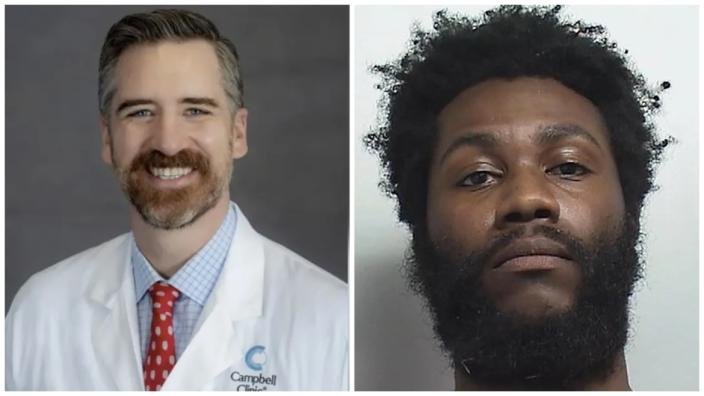
Courtesy of Campbell Clinic and Collierville Police Department.

Tennessee cops identified 29-year-old Larry Pickens as the man who allegedly staked out and shot physician Benjamin Mauck dead in an exam room this week—an “unthinkable Blooded Shooting tragedy” that’s horrified his loved ones and colleagues.

Pickens now faces charges of first-degree murder and aggravated assault. He’s accused of waiting inside Mauck’s orthopedics office for hours before eventually barging into an exam room and shooting the beloved doc dead around 2:30 p.m. Tuesday.

Details surrounding the slaying have been limited. Cops in Collierville, a city of 50,000 about 30 miles west of Memphis, are yet to release a suspected motive, but confirmed Pickens was receiving care from Mauck.

Chief Dale Lane said officers responded to Mauck’s office in less than five minutes, but they weren’t able to revive him. Lane said Pickens seemingly spared other patients after he opened fire then ran outside the building—a sign that Tuesday’s slaying was targeted.

“This appears to be a one-on-one interaction,” Lane said Tuesday. “It’s bad. It’s horrific. It’s terrible. Our thoughts and prayers are with the family.”

Lane said Pickens was holding a handgun when officers took him into custody outside Mauck’s office without incident. Video from the scene showed officers sprinting out of the clinic with guns drawn. Separate footage from a body-worn camera showed a man telling officers the shooter “had a gun in his hand and came running out.”

Speaking to WREG 3, a woman fought back tears as she recalled her experience inside the clinic. “Someone’s not going home to their family,” she said. “It could have been anybody else in that clinic today.”

While cops have remained mum on a possible motive, Memphis Senator Raumesh Akbari said in a statement that the shooter had been threatening a clinic employee for over a week. Lane said his department was unaware of the alleged threats.

“Tragedies like this underscore the urgent need for common sense—like reinstating background checks and gun licenses, and establishing new reforms like an order of protection so police can remove firearms from a person who is threatening others,” said Akbari.

Mauck, 43, was married with two kids, the New York Post reported, citing the Facebook page for Rhiannon Mauck. That page’s profile photo appears to show Rhiannon and Mauck smiling with two young children in front of a lake.

An outpouring of tributes emerged Tuesday after Campbell Clinic Orthopedics identified Mauck as the slain doctor. An online bio said he graduated medical school from the University of Tennessee-Memphis and specialized in elbow, hand and wrist surgery for the last six years.

“I am saddened and in a place of unhappiness right now! Dr Benjamin Mauck was an incredible and brilliant physician,” wrote Constance Terry on Facebook, adding that Mauck was the only physician to properly diagnose and treat her after a car accident in 2021.

Just last month, Mauck was named a 2023 Top Doctor in Memphis by Castle Connolly, a national healthcare research agency that puts patients in contact with physicians.

In a statement, Campbell Clinic Orthopedics said it was closing all nine of its clinics—scattered around West Tennessee and Mississippi—on Wednesday as colleagues, loved ones and patients continue to mourn.

“We are shocked and heartbroken to confirm the incident resulted in the tragic loss of one of our highly respected and beloved physicians,” a spokesperson for the clinic, Irina Ollar, said in a statement.

Mauck was also the head of the Congenital Hand Clinic at Le Bonheur Children’s Hospital, where he was a “beloved colleague and a dedicated physician,” said Dr. Trey Eubanks, the hospital’s interim president.

“We already miss him,” Eubanks wrote in a statement. “His death is an unthinkable tragedy, and I am at loss at what to say. I am so sorry to those who loved and knew him, for those who worked alongside him every day.”

A judge set Pickens bail at $1.2 million, police posted to NextDoor on Wednesday. He is scheduled to be arraigned on Thursday.

Read more at The Daily Beast.

Get the Daily Beast’s biggest scoops and scandals delivered right to your inbox. Sign up now.

Stay informed and gain unlimited access to the Daily Beast’s unmatched reporting. Subscribe now.