Starting right about now, Americans are enjoying the first of several summer holiday weekends — with some people celebrating with more than just a simple barbecue or quiet get-together.
As a result, Airbnb says it is looking to crack down on those who may be thinking of throwing “disruptive” parties this summer.
The booking site announced it will be rolling out “anti-party technology” during Memorial Day weekend as well as the July 4 weekend, according to a company press release.
“Our anti-party technology is designed to help identify and prevent certain attempts to book one-to-two-night stays in entire home listings that could be higher risk for a disruptive party,” the company noted.
Airbnb lists different examples of actions it says would make for a “disruptive party” with open-invite gatherings.
Airbnb has enhanced its “anti-party technology” to curb “disruptive” events during the Memorial Day and Fourth of July weekends, the company said. (iStock)
The California-based company listed a number of “disturbances” that could arise in surrounding communities.
These can include excessive noise, visitors, trash, smoking and parking nuisances, trespassing and vandalism — as well as advertising listings using “party-friendly” or “event-friendly” terminology.
Three states — Texas, Florida and California — were listed as those with the most guests flagged for potentially disruptive parties last year. (iStock)
The technology, introduced in 2020, blocked or redirected 51,000 people from booking entire home listings over the 2024 holiday weekends due to these offenses.
A massive 45.1 million Americans are set to travel at least 50 miles from their home during the long Memorial Day weekend, AAA announced.
Americans have begun enjoying the first of several summer holiday weekends — with some people celebrating with more than just a simple barbecue. As a result, one company has released “anti-party technology” to curb “disruptive” get-togethers.(iStock)
Of the millions of Americans traveling, AAA predicts 3.61 million will be flying, 39.4 million will drive, and just over two million will be taking other forms of transportation.
Some 45 million Americans are set to travel at least 50 miles from their home during the long holiday weekend, according to AAA.(iStock)
Last year, Texas, Florida, and California were noted as the states with the most flagged guests suspected of “disruptive” parties.
Airbnb told Fox News Digital earlier this week, “These measures announced this week are specifically for Memorial Day and July 4 weekends. If guests believe they were unfairly affected by these measures, we encourage them to reach out to our Community Support team directly.”
Americans are gearing up to celebrate the summer holidays — with some celebrating with more than just a barbecue.
Now, Airbnb is looking to crack down on those who may be thinking of throwing “disruptive” parties this summer.
The booking site announced it will be rolling out “anti-party technology” during Memorial Day and Fourth of July weekends, according to a company press release.
“Our anti-party technology is designed to help identify and prevent certain attempts to book one-to-two-night stays in entire home listings that could be higher risk for a disruptive party,” said the release.
Airbnb lists different examples of actions that it says would make for a disruptive party with open-invite gatherings.
Airbnb enhances its anti-party technology to curb disruptive events during Memorial Day and Fourth of July.(iStock)
The California-based company listed a number of “disturbances” that could arise in the surrounding communities.
These can include excessive noise, visitors, trash, smoking and parking nuisances, trespassing and vandalism — as well as advertising listings using “party-friendly” or “event-friendly” terminology.
Three states — Texas, Florida and California — were noted as those with the most guests flagged for potentially disruptive parties last year. (iStock)
The technology, introduced in 2020, blocked or redirected 51,000 people from booking entire home listings over the 2024 holiday weekends due to these offenses.
A massive 45.1 million Americans are set to travel at least 50 miles from their home during the long weekend, AAA announced.
A massive 45.1 million Americans are set to travel at least 50 miles from their home during the long weekend, AAA announced.(iStock)
Of the millions of Americans traveling, AAA predicts 3.61 million will be flying, 39.4 million will drive, and just over two million will be taking other forms of transportation.
Texas, Florida, and California were noted as the states with the most flagged guests suspected of disrupting parties last year.
Airbnb told Fox News Digital on Tuesday, “These measures announced this week are specifically for Memorial Day and July 4 weekends. If guests believe they were unfairly affected by these measures, we encourage them to reach out to our Community Support team directly.”
Scammers are always coming up with new tricks. Just when you start feeling confident about spotting phishing emails, suspicious links and fake banking apps, they find a new angle. Lately, they have been getting more creative, turning to the built-in features of our phones to pull off their schemes. One of the latest targets is NFC, the technology behind tap-to-pay.
It might seem harmless, but a new scam is using it in ways most people would never expect. An Android malware called SuperCard goes beyond just stealing your card details. It gives attackers the ability to use your card remotely for real transactions. And the worst part is that it all begins with something as simple as a text message.
SuperCard X stands out from other Android malware because of how it operates. As reported by researchers at Cleafy, instead of stealing usernames, passwords or verification codes, it uses a method called NFC relay. This allows attackers to copy card data from a victim’s device in real time and use it elsewhere to make payments or withdraw cash. The process does not require physical access to the card or knowledge of the PIN.
The malware is offered through a Malware-as-a-Service model, which means different cybercriminals can use it in their own regions. This makes the threat more scalable and harder to contain. Unlike most banking trojans, SuperCard X is not focused on one specific institution. It targets any cardholder regardless of which bank issued their card.
Another key difference is how stealthy the malware is. It uses minimal permissions and does not include extra features that would make it easier to detect. This lean approach helps it avoid detection by antivirus software and allows it to operate quietly on infected devices.
The fraud begins with a message sent through SMS or WhatsApp. It pretends to be from a bank and warns the recipient about a suspicious transaction. The message includes a phone number and urges the person to call to resolve the issue. This is the first step in gaining the victim’s trust.
Once on the phone, the attacker poses as a bank representative and walks the victim through a fake security process. This may include asking them to confirm personal details or adjust settings in their mobile banking app, such as removing spending limits on their card.
Next, the attacker asks the victim to install a mobile app that is described as a tool to verify the account or enhance security. In reality, this app contains the SuperCard X malware. After the installation, the attacker instructs the victim to tap their card against the phone. The malware then captures the NFC data from the card and sends it to a second phone controlled by the attacker.
Using the copied data, the attacker can make contactless payments or make ATM withdrawals almost instantly. This method allows them to steal funds quickly and leaves little opportunity for banks or victims to intervene in time.
A woman scrolling on her phone(Kurt “CyberGuy” Knutsson)
1) Be cautious of suspicious texts and calls. Use strong antivirus software: Fraudulent campaigns often begin with an SMS or call that seems to come from your bank. These messages usually claim there’s suspicious activity on your account and urge you to click a link or dial a number to resolve the issue. However, this is a tactic used to gain access to your personal information. Always approach such messages with skepticism.
The best way to safeguard yourself from malicious links that install malware, potentially accessing your private information, is to have strong antivirus software installed on all your devices. This protection can also alert you to phishing emails and ransomware scams, keeping your personal information and digital assets safe. Get my picks for the best 2025 antivirus protection winners for your Windows, Mac, Android and iOS devices.
2) Avoid installing apps from untrusted sources: One of the key ways malware like SuperCard X spreads is through deceptive apps that victims are persuaded to install. These apps often look harmless, posing as tools for security or account verification. If you receive a link to download an app via SMS, email or messaging apps like WhatsApp, do not click on it. Instead, only download apps from trusted sources, such as the Google Play Store. Additionally, carefully review app permissions and avoid granting unnecessary access, particularly to sensitive data like NFC, location or personal contacts.
3) Turn off NFC when not in use: NFC, or Near Field Communication, is a useful feature that allows contactless payments and data exchanges. However, it can be exploited by attackers to capture your card information without you even realizing it. To minimize your risk of falling victim to NFC-based malware like SuperCard X, turn off NFC when you’re not actively using it.
On most Android devices, you can do this by going to “Settings,” then “Connected Devices” or “Connection Preferences,” where you’ll find the NFC toggle. By disabling NFC, your phone won’t transmit data wirelessly, which helps protect your payment card information from being stolen by nearby attackers.
4) Keep a close eye on your bank accounts and cards: If your device has come into contact with the SuperCard or anything similar, it’s possible your banking details are already compromised. That’s why it’s important to regularly check your transaction history for anything odd, like a small payment you don’t remember making or a charge from a strange location could be a sign of misuse. If you spot anything suspicious, report it to your bank right away. It’s also worth checking your credit reports every now and then to catch signs of identity theft before they snowball into bigger issues.
5) Use a personal data removal service: If scammers have targeted you once, there’s a higher chance they’ll try again, especially if your personal details (like your phone number, address or email) are easily found online. Data removal services scan people-search sites and brokers, then request the removal of your info. This reduces your exposure and helps prevent future phishing or social engineering attacks.
While no service can guarantee the complete removal of your data from the internet, a data removal service is really a smart choice. They aren’t cheap and neither is your privacy. These services do all the work for you by actively monitoring and systematically erasing your personal information from hundreds of websites. It’s what gives me peace of mind and has proven to be the most effective way to erase your personal data from the internet. By limiting the information available, you reduce the risk of scammers cross-referencing data from breaches with information they might find on the dark web, making it harder for them to target you. Check out my top picks for data removal services here.
6) Contact your bank and freeze your cards: If you think you’ve tapped or handled a suspicious card, or if your phone acted strangely afterward, don’t brush it off. Call your bank and let them know what happened. They can freeze your card to stop any unauthorized payments and issue a new one for added safety. You should also ask them to monitor your account more closely for a while. On top of that, place a fraud alert with a credit bureau so no one can easily open a new line of credit in your name.
7) Consider enrolling in identity theft protection services: If you’ve been targeted by a sophisticated scam like SuperCard X, there’s a chance your personal information, not just your card data, may be at risk. Identity theft companies can monitor personal information, like your Social Security number, phone number and email address, and alert you if it is being sold on the dark web or being used to open an account. They can also assist you in freezing your bank and credit card accounts to prevent further unauthorized use by criminals. See my tips and best picks on how to protect yourself from identity theft.
8) Report the scam to your national cybercrime authority: Whether or not you lost money, reporting the scam helps authorities track emerging threats and warn others. You can report such fraud to the FBI’s Internet Crime Complaint Center or the Federal Trade Commission. Your report could help catch the people behind the scam or at least shut down their infrastructure.
The SuperCard X malware campaign represents a significant shift in how cybercriminals are targeting individuals and financial institutions. By exploiting NFC technology and combining it with social engineering tactics, attackers have found a way to bypass traditional fraud detection systems. What’s especially concerning is how quickly these attacks unfold, making them harder to detect before the damage is done. As this threat evolves, it’s important for both consumers and institutions to recognize the potential risks of these multilayered fraud strategies.
Do you think Google is doing enough to protect you from malware? Let us know by writing us atCyberguy.com/Contact.
For more of my tech tips and security alerts, subscribe to my free CyberGuy Report Newsletter by heading to Cyberguy.com/Newsletter.
Kurt “CyberGuy” Knutsson is an award-winning tech journalist who has a deep love of technology, gear and gadgets that make life better with his contributions for Fox News & FOX Business beginning mornings on “FOX & Friends.” Got a tech question? Get Kurt’s free CyberGuy Newsletter, share your voice, a story idea or comment at CyberGuy.com.
Doctors told a U.K. woman she’s at risk of developing a rare spinal condition due to a yoga pose she did years ago, according to news agency SWNS.
Terrilyn Griffiths, 44, from Lowestoft, Suffolk, exhibited early signs of cauda equina syndrome (CES, a dangerous form of spinal nerve damage) in January 2024 when an MRI revealed slipped discs in her back, stemming from yoga-induced back injuries.
“I was showing my ex’s kids how to do a standing bridge pose when my back gave way,” she said of the initial incident in 2021.
At first, Griffiths “thought nothing of it,” but then she began experiencing back pain two weeks later, often feeling like she “would collapse at the waist.”
“It didn’t help that I worked a laborious job, and I had to carry heavy materials around all day,” Griffiths, who worked in a factory at the time, told SWNS.
Terrilyn Griffiths, 44, was teaching kids how to do a bridge yoga pose when she first injured her back in July 2021.(Terrilyn Griffiths / SWNS)
She pushed through the pain for six months until it subsided, leading her to think it had eventually “healed on its own.”
But the pain resurfaced almost two years later in June 2023. “I had a physical week at work, and my back went right before I had a horse-riding lesson,” she said.
Griffiths eventually went to the doctor in January 2024, when she learned she had early signs of cauda equina syndrome, which can cause pain, weakness and incontinence, per Cleveland Clinic.
“CES is traumatic and life-changing … it has taken my life away.”
Doctors referred the woman to a physiotherapist, but Griffith said “nothing has helped.” She is not eligible for a corrective surgery because she doesn’t present any “red flag symptoms” characteristic of the condition.
During this time, Griffiths was experiencing dexterity issues in her hands, weakness in her hip and groin area, altered sensation in her saddle region and a semi-paralyzed bladder, per the SWNS report.
She also “struggles to walk” and is unable to travel more than a single flight of stairs without having pins and needles.
Terrilyn Griffiths is no longer able to ride horses or hike due to the painful condition.(Terrilyn Griffiths / SWNS)
After working with the physiotherapist for nine months doing small exercises, Griffiths said the pain across her back only got worse.
“CES is traumatic and life-changing,” said Griffiths, who is now housebound.
“Not many people seem to know much about it, which has made getting the right treatment harder … and now it has taken my life away.”
“I feel as if there’s little hope for me in the future,” she added.
“I have started looking into getting the surgical procedure elsewhere — maybe abroad — to decompress the area,” said Griffiths.(Terrilyn Griffiths / SWNS)
According to the U.K.’s National Health Service, if the condition is not addressed early, it can result in life-changing injuries.
Griffiths is now raising funds for private consultations, travel expenses and support at home.
“I have started looking into getting the surgical procedure elsewhere — maybe abroad — to decompress the area,” she said. “But I wish more people were more aware of incomplete and partial cauda equina syndrome.”
“Perhaps things would have been different for me.”
Khloe Quill is a lifestyle production assistant with Fox News Digital. She and the lifestyle team cover a range of story topics including food and drink, travel, and health.
"Bloom" is Launched - A Children’s Storybook About Grief, Memories, Love and Healing 23
This enchanting picture book takes young readers on an emotional journey through grief and healing. With its heartwarming narrative and captivating illustrations, “Bloom” invites families to explore difficult topics while celebrating the enduring bonds of love.
St. Louis, Missouri, May 20, 2025, The world of children’s literature is rich with stories that teach, inspire, and spark imagination. Juliet Isioma Ezepue has launched her latest Children’s Storybook, “Bloom,” a tender story about love, memory, and the beauty that never fades.
The heart of “Bloom” stems from a deeply personal place. The author drew inspiration from her own experience with loss, particularly the passing of her beloved father. This profound event stirred emotions that many can relate to but often find difficult to express.
In crafting this story, she sought to channel those feelings into something meaningful for children. The idea was not just to depict grief but also to illuminate the enduring connections we share with loved ones who have passed away.
Each page aims to capture the magic of memory and how it intertwines with love. Through Belle’s journey in the garden, readers witness a beautiful metaphor for healing—how new life can still blossom amidst sorrow.
This narrative serves as both an homage and a gentle guide through challenging emotions, helping young readers understand that love never truly fades; it simply transforms and grows anew.
Grief and loss are daunting subjects, especially for children. These emotions can feel overwhelming and confusing. Addressing them in a gentle way is essential.
“Bloom” does just that by weaving themes of love and remembrance into its narrative. When Belle’s grandfather passes away, her world shifts dramatically. But through her journey back to the cherished garden, readers discover how memories breathe life into grief.
The story embraces the idea that it’s okay to feel sad while also celebrating what was lost. By planting new flowers together as a family, Belle finds comfort in growth and renewal.
This approach empowers children to express their feelings openly—acknowledging sadness while also finding joy amidst the pain. “Bloom” becomes more than just a book; it serves as a bridge connecting young hearts with complex emotions they may struggle to understand on their own.
The Importance of Memories and How They Can Help with Healing:
Memories hold a unique power in our emotional landscape. They connect us to moments that once brought joy and love, especially after loss. In the context of grief, these recollections serve as gentle reminders of what was cherished.
When Belle tends to her grandfather’s garden, she feels his presence in every flower. This act signifies how memories can transform sorrow into beauty. Each bloom represents a loving connection that endures beyond death.
Engaging with memories allows children—and adults—to process their feelings safely. It provides a space to remember laughter shared and lessons learned without fear or sadness overshadowing them.
As time passes, those precious moments become anchors during turbulent times. They help rebuild trust in love’s continuity despite physical absence, nurturing hope for brighter days ahead through each vivid recollection cherished together.
Love and support are at the heart of “Bloom.” The story illustrates how these two elements can guide us through life’s toughest moments.
When Belle loses her grandfather, her world feels heavy with sadness. Yet, it is within this sorrow that love shines most brightly. Her family comes together to nurture not only a garden but also their bond.
The act of planting flowers symbolizes hope and continuity. Each bloom represents shared memories and enduring affection. In every petal, readers find reminders of those they’ve lost.
Through gentle interactions, Belle learns that love transcends even the greatest distances— including death itself. This theme encourages young readers to embrace their feelings while leaning on loved ones for comfort and strength.
As families read together, they discover the importance of supporting one another during times of grief—a lesson that resonates beyond pages into real life experiences.
The illustrations in “Bloom” play a vital role in conveying the tender emotions woven throughout its pages. Each image invites readers into Belle’s world, where vibrant colors and gentle lines create a sense of warmth and comfort. Every illustration is more than just decoration; they are heartfelt reminders that love can transcend even life itself.
The response to “Bloom” has been heartwarming and impactful. Parents have expressed how much the story resonates with their families, often sharing that it opens up important conversations about grief and loss. Many appreciate the gentle way it addresses complex emotions, making it easier for children to process their feelings.
Teachers have found the book a valuable addition to their classrooms. They see its potential not just as a reading tool but also as a means of fostering empathy among students. The themes of love and memory encourage discussions on healing and support within peer groups.
“Bloom” stands out not only as a narrative about grief but also as an essential resource for families navigating through difficult times together. As readers turn its pages, they discover that memories hold tremendous power—reminding them that those we lose remain close at heart while encouraging new growth amidst sorrowful moments.
About Author:
Juliet Isioma Ezepue is a storyteller whose work gives voice to the hope and hurdles with life, drawing inspirations from her life as a mother to four children, wife, and researcher focused on the connections and creativity within communities. She is widely acclaimed for her daily writings which creates space where everyone, particularly children and young people can thrive.
Her childhood was divided between Nigeria and the US. She currently lives in Saint Louis, Missouri with her family where she draws from her multicultural experiences to craft stories that touch the hearts of young readers, guiding them through life’s most profound lessons. In addition to her professional background, she is the author of Bright Star, her debut children’s book which Kirkus Review described as a “sweet read-aloud for curious toddlers and preschoolers.”
About ZHS Press:
Their books are like mirrors that help people see themselves, see each other, affirm the possibilities within themselves and each other, while surviving all the stressors with life that all experience. They are fearlessly committed to telling deep truths about ourselves with books that inspire and unite all by showcasing aspects of one’s lives, emotions often hidden and out of sight.
“Our stories are of our shared memories, our shared affirmations, our shared emotions, our shared dreams, our shared adventures, our shared failures, and even our shared hope for ourselves and our communities. Research notes that children can learn to read, develop an understanding of their feelings and those of others when they hold books that are of value to them, books where they see themselves.”
They tell children that they are important enough to be reflected in ways that mirror their lives. Everyone needs to see representation of themselves both visually and verbally, and ZHS press is here to deliver.
Upcoming Book Readings and Signings: Dr. Juliet will be hosting a series of book readings and signings across St. Louis, offering families and young readers, a unique chance to connect with this heartwarming story:
A long-lost shipwreck sitting in the waters of Lake Michigan was recently discovered by a fisherman – to the surprise of local officials.
The Wisconsin Historical Society announced the discovery on May 16. The tugboat, which was called the J.C. Ames, was built for the lumber trade in 1881. It was intentionally sunk in 1923.
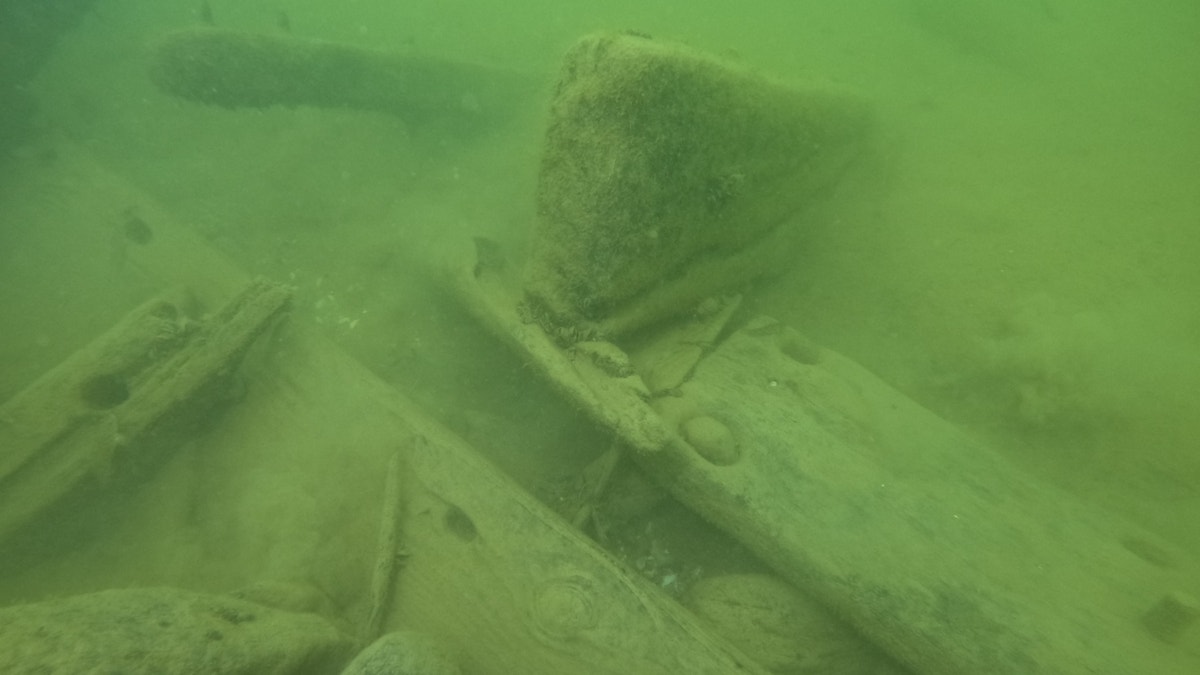
The angler, Christopher Thuss, discovered the ship on a foggy day near the coast of Manitowoc, where it was sitting nine feet below the lake’s surface. After spotting the shipwreck, he reported the find to officials.
“These kinds of discoveries are always so exciting because it allows a piece of lost history to resurface,” Tamara Thomsen, a maritime archaeologist at the Wisconsin Historical Society, said in a statement. “It sat there for over 100 years and then came back on our radar completely by chance.”
Thomsen added, “We are grateful that Chris Thuss noticed the wreck and reported it so we can share this story with the Wisconsin communities that this history belongs to.”
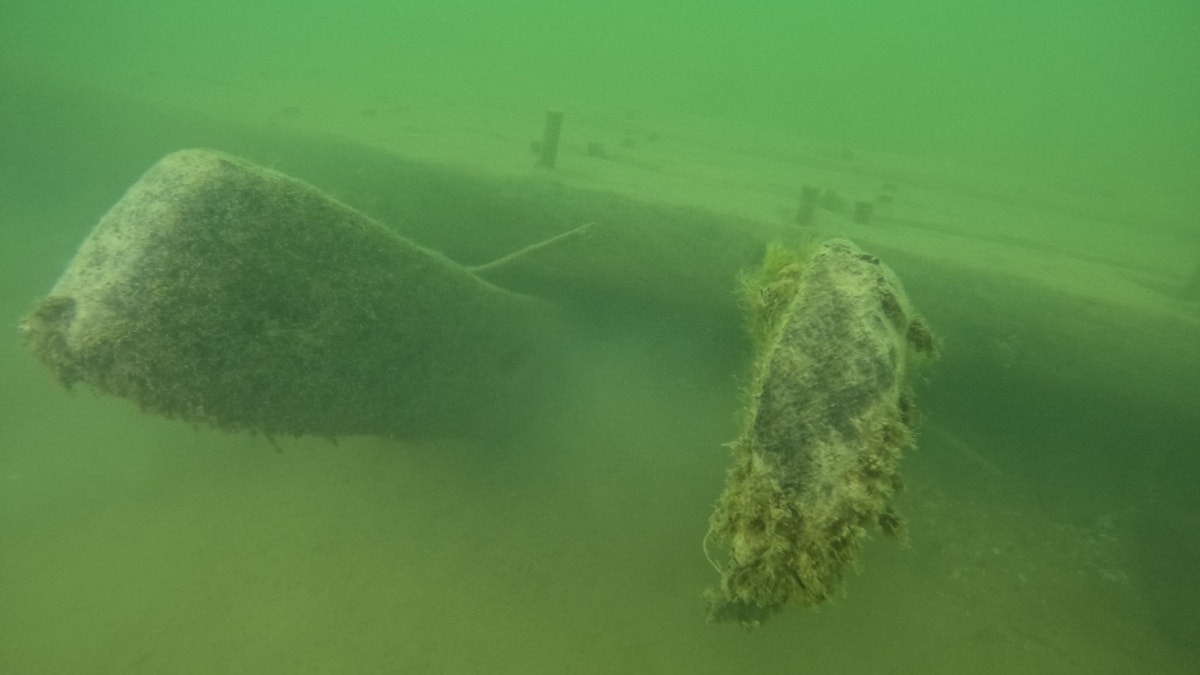
The J.C. Ames tugboat was built in 1881 and dismantled in 1923.(Wisconsin Historical Society)
The J.C. Ames cost $50,000 to build. It was “one of the largest and most powerful tugs on the lakes,” according to officials.
It was damaged in a collision in 1889, but was repaired and changed owners several times before it was discarded.
Thomsen told Fox News Digital the ship had “outlived its usefulness” by the time that it was intentionally sunk.
“Abandoning ships that had outlived their use was how it was done back in the day.”
“[The ship] was dismantled at Manitowoc with its engine/boiler removed, towed outside the harbor, burned and abandoned in 1923,” the historian explained.
She added, “Abandoning ships that had outlived their use was how it was done back in the day.”
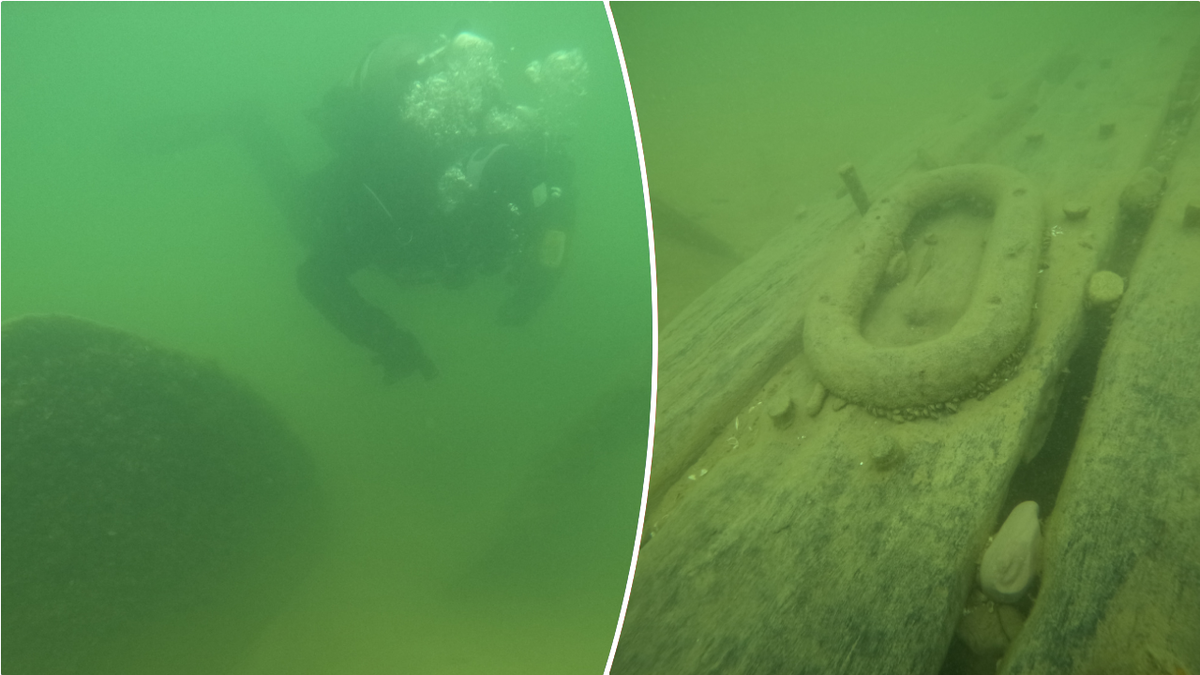
Divers found small artifacts near the wreck of the tugboat, which sank in the 1920s.(Wisconsin Historical Society)
Thomsen also noted that it became somewhat of a spectacle for the ships to be set on fire while they were dismantled.
“They set fire to them and people came out to watch,” the expert said.
Thomsen also estimates that 13 ships were abandoned in the Maritime Bay near Manitowoc. Divers have only been able to locate three, but they’re still keeping their eyes peeled for them.
“We only find them when they are uncovered by storms if someone sees them before they are covered again – it needs to be perfect timing,” she said.
The fisherman observed the shipwreck sitting nine feet below the lake’s surface.(Wisconsin Historical Society)
The maritime archaeologist also noted that a large propeller, measuring 10.5 feet in diameter, still sits at the shipwreck site.
The find is especially remarkable because Thuss’s step-grandmother garnered a reputation for finding shipwrecks herself, according to the Wisconsin Historical Society.
“‘Shipwreck Suzze’ Johnson, who took up the hobbies of operating a powered parachute and ultralight plane as a retiree, has incredibly discovered a variety of shipwrecks from the air in the recent past, including three shipwrecks in three days in Lake Michigan in 2015,” the historical organization said.
The tugboat was damaged in a collision in 1889, but was repaired and had a relatively long lifespan.(Wisconsin Historical Society)
Last May, the Wisconsin Historical Society identified 11 ancient canoes in a Madison lake, including one boat that dated back to 2500 B.C.
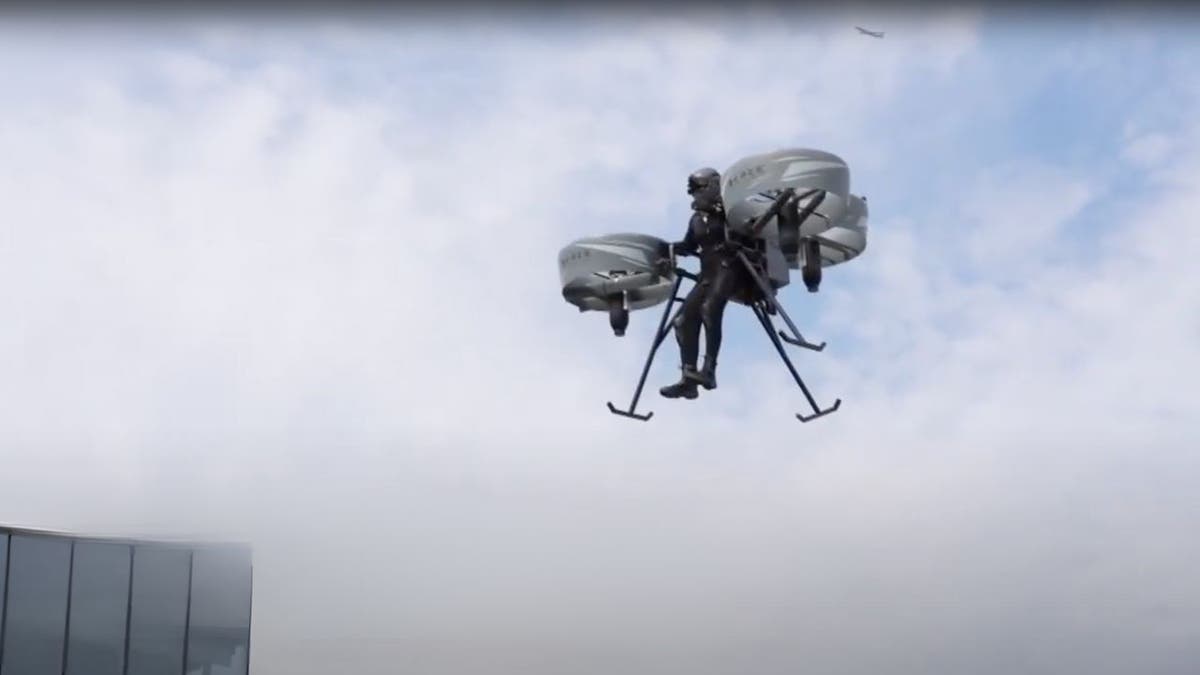
Have you ever imagined what personal flying could look like in the near future? China’s Zhiyuan Research Institute, based in Hangzhou, is bringing that vision closer to reality. They just unveiled what they’re calling the world’s first tri-ducted wearable electric vertical takeoff and landing (eVTOL) aircraft for individual use, and their recent demo flight is already sparking curiosity about the future of personal flight.
Tri-ducted wearable eVTOL for individual use (Zhiyuan Research Institute)(Kurt “CyberGuy” Knutsson)
What’s so special about this flying machine?
The coolest thing about this eVTOL is its tri-ducted propulsion system. That means it has three powerful propellers, one on the left, one on the right and one in the back, all working together to keep the aircraft stable and efficient. This setup isn’t just for show. It actually helps the vehicle fly smoother, cut down on noise and hover more reliably. It’s the first time a manned aircraft has used this kind of design, which is pretty groundbreaking.
Safety is a huge focus for the Zhiyuan team. They built in a one-click separation system that lets the pilot quickly detach from the aircraft and deploy a low-altitude parachute if something goes wrong. That way, the pilot can land safely even in an emergency, which is a big comfort for anyone flying solo.
Flying this thing isn’t just for experts. Zhiyuan developed a ground control system that helps keep things simple. The eVTOL can hover steadily and fly on its own without the pilot having to constantly control it, and it can make quick, agile moves when needed. The controls are designed to be easy to use, so even people without much flying experience can handle them.
On the power side, the team created a new propulsion system with a high thrust-to-weight ratio. They used advanced ducted motor designs to make the whole thing more efficient. Plus, the flight control system can handle turbulent weather, so the ride stays smooth even when the air gets rough.
This wearable eVTOL isn’t just a cool gadget. Zhiyuan sees it as being useful in all kinds of real-world situations. It could help with emergency rescues, maintaining electrical infrastructure or cleaning skyscrapers. It also has the potential for sightseeing and leisure flights, and it could be used for border patrol or customs inspections. With its versatility and easy controls, this aircraft could be a game changer for both professionals and adventure seekers.
However, there is currently no official information on the commercial availability or price of Zhiyuan’s tri-ducted wearable eVTOL. The aircraft has completed its first public demonstration, but details about when it will be available for purchase and at what cost remain undisclosed.
Tri-ducted wearable eVTOL for individual use (Zhiyuan Research Institute)(Kurt “CyberGuy” Knutsson)
This new eVTOL is part of a much bigger trend in China. The country is working hard to grow what it calls its “low-altitude economy,” which includes drones, eVTOLs and other aircraft that fly below about 3,280 feet. The government has made low-altitude aviation a priority and is promising support for commercial spaceflight and next-generation air mobility technologies. Experts estimate that this industry could be worth more than $137 billion by 2030 as these aircraft find more uses in areas like logistics, tourism and public services.
It’s pretty crazy to watch personal flying tech take off like this. Zhiyuan’s tri-ducted wearable eVTOL is already up in the air, giving us a peek at what getting around might look like down the road. As these things become easier to use and more common, flying could end up being just another way we get from place to place, whether for work, emergencies or just for fun.
Would you be excited or nervous to try out this kind of personal aircraft? Let us know by writing us atCyberguy.com/Contact.
For more of my tech tips and security alerts, subscribe to my free CyberGuy Report Newsletter by heading to Cyberguy.com/Newsletter.
Kurt “CyberGuy” Knutsson is an award-winning tech journalist who has a deep love of technology, gear and gadgets that make life better with his contributions for Fox News & FOX Business beginning mornings on “FOX & Friends.” Got a tech question? Get Kurt’s free CyberGuy Newsletter, share your voice, a story idea or comment at CyberGuy.com.
Former FBI Director James Comey told MSNBC Monday that he had no ill intent with his controversial “86 47” Instagram post and that he is not intimidated by President Donald Trump’s administration.
Comey posted a photo of shells on Thursday that were configured to say “86 47.” The number “86” generally means to get rid of something or someone and “47” refers to Trump being the 47th president. Some saw this as a threat, but Comey maintained he thought it was a clever political statement against Trump and didn’t have any violent intentions.
MSNBC’s Nicolle Wallace asked Comey, “Between posting the picture and getting a call from the Secret Service, did you have any sort of gut check of like, ‘Well, they’ve audited me in an extraordinary way. I was under investigation for years after he fired me.’ …Did you have any regret about posting the picture?”
“I regret the distraction and the controversy around it,” Comey replied. “But again, it’s hard to have regret about something that, even in hindsight, looks to me to be totally innocent.”
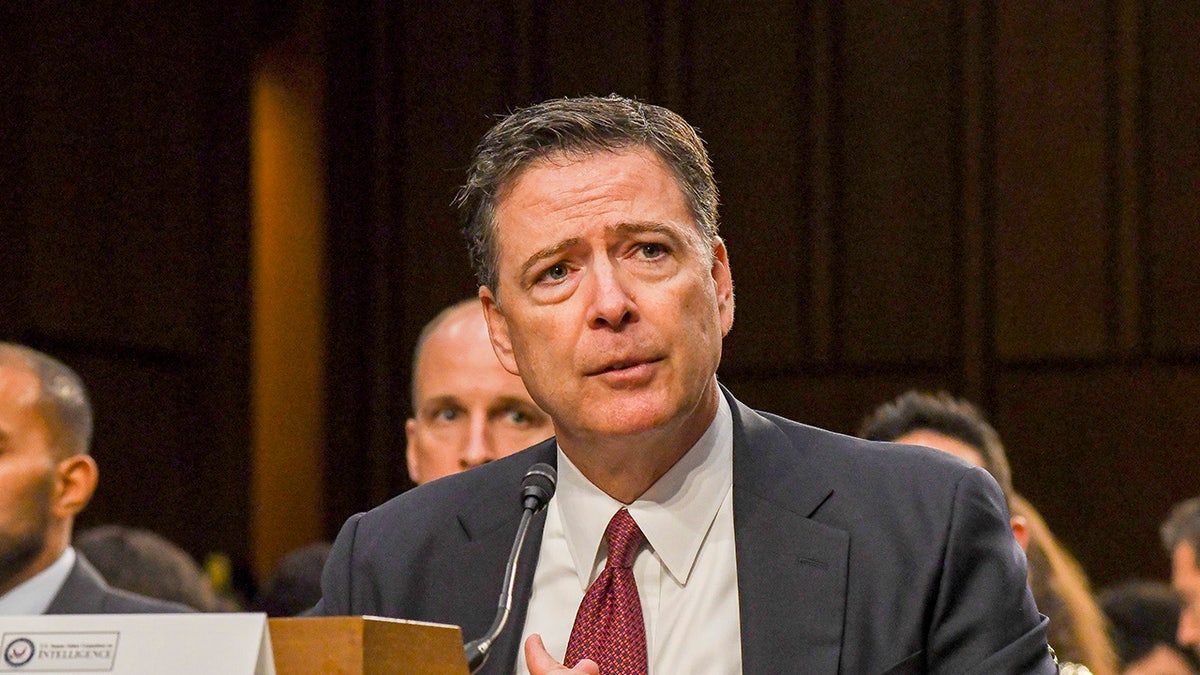
Former FBI Director James Comey appears on MSNBC on Monday. (Screenshot)
“I didn’t have a gut check. In the Trump era, I’ve been investigated a lot, audited a lot, and so it’s not my first rodeo. I’m, in some strange way, the relationship he can’t get over,” he said of the president.
“I really thought that I was done [with Trump]. I was in another life. I was a grandfather and an author, wearing sweaters and jeans. And then I went for a walk on the beach and posted a silly picture of shells that I thought was a clever way to express a political viewpoint. And actually I still think it is,” he added. “I don’t see it the way some people are still saying it is, but again, I don’t want any part of any violence. I’ve never been associated with violence, and so that’s why I took it down.”
Comey, who also has a thriller novel out this week, said that his wife noticed the shells as they were leaving the beach and she knew the “86” phrase as a restaurant server to mean taking something off the menu. He claimed as a kid he thought it meant to leave or ditch a place.
“I actually didn’t think of it as political speech by me, but I thought, ‘What a clever way to express a political view,’” Comey said as he marveled over the detail. “The shells were the same color for each of the letters… It took a lot of work. Somebody with artistic flair did that, and I have a hard time believing it was anybody with a dark intention, and it certainly was no dark intention on my part or my spouse’s part.”
After deleting the post on Instagram, Comey said in another post that he “didn’t realize some folks associate those numbers with violence. It never occurred to me, but I oppose violence of any kind, so I took the post down.” (Mark Reinstein/Corbis via Getty Images)
When asked what would happen if Trump politicizes the government against him, Comey said, “The first thing I’ll do is stand up and defend myself, because I’m not afraid. I believe in the rule of law in this country. It’s under attack, but it exists.”
In a statement to Fox News Digital, Harrison Fields, special assistant to the president and principal deputy press secretary, responded, “Disgraced former FBI Director James Comey, whom President Trump fired for gross incompetence and unfitness for the role, suffers from an incurable case of Trump Derangement Syndrome.”
Fields added that Comey’s “recent doubling down on incomprehensible and dangerous rhetoric directed at President Trump underscores his derangement and commitment to divisiveness and politics rather than loyalty to the country. The appropriate federal agencies are investigating his inexcusable actions and will take prompt action if warranted.”
FBI Director Kash Patel.(AP/J. Scott Applewhite)
The U.S. Secret Service has already interviewed Comey about the situation, and FBI Director Kash Patel said in an X post on Thursday, “We are aware of the recent social media post by former FBI Director James Comey, directed at President Trump. We are in communication with the Secret Service and Director Curran. Primary jurisdiction is with SS on these matters and we, the FBI, will provide all necessary support.”
Comey and Trump have been fierce rivals since Trump fired him in 2017. Comey, a former Republican, endorsed Joe Biden and Kamala Harris for president in 2020 and 2024. Trump referred to Comey as a “dirty cop” this week in the aftermath of the seashell post.
Rachel del Guidice is a reporter for Fox News Digital. Story tips can be sent to rachel.delguidice@fox.com.
Prolonged fatigue could indicate poor sleep habits — but it could also be a lingering effect of mini-strokes.
That’s according to a new study from Aalborg University Hospital in Denmark, which was published this week in Neurology, the medical journal of the American Academy of Neurology (AAN).
A mini-stroke — medically known as a transient ischemic attack (TIA) — is a temporary blockage of blood flow to the brain that causes a “short period of symptoms,” according to Mayo Clinic.
The study found that people who experience a TIA are more likely to report prolonged fatigue lasting up to one year.
“Patients with a presumed transient event reported fatigue at levels comparable to a stroke,” lead study author Birgitte Hede Ebbesen, PT, PhD, a physiotherapist at Aalborg University Hospital, told Fox News Digital.
A new study found that people who experience a mini-stroke are more likely to report prolonged fatigue lasting up to one year.(iStock)
The researchers followed 354 people averaging 70 years of age who had experienced a mini-stroke.
Over a 12-month period, the participants reported their level of fatigue in five areas: overall tiredness, physical tiredness, reduced activity, reduced motivation and mental fatigue, according to a university press release.
On a scale ranging from 4 to 20 — with 20 being the most fatigued — the participants reported an average score of 12.3 in the two weeks after the mini-stroke, 11.9 at three months, 11.4 at six months and 11.1 at the one-year mark.
Two weeks after the mini-stroke, 61% reported high levels of fatigue. At three, six and 12 months, 54% said they experienced fatigue.
Two weeks after the mini-stroke, 61% reported high levels of fatigue. At three, six and 12 months, 54% said they experienced fatigue.(iStock)
Those who reported prolonged fatigue were twice as likely to have experienced anxiety and/or depression, the study found. Some also reported
“We had encountered fatigue among patients with TIA in clinical settings, so we knew it was there — but the frequency still surprised us,” Modrau told Fox News Digital.
“Long-term fatigue was common in our group of study participants, and we found that if people experience fatigue within two weeks of leaving the hospital, it is likely they will continue to have fatigue for up to a year.”
Based on these findings, Modrau suggests that people diagnosed with a transient ischemic attack should be monitored for lingering fatigue in the ensuing weeks and months.
A mini-stroke — medically known as a transient ischemic attack (TIA) — is a temporary blockage of blood flow to the brain that causes a “short period of symptoms,” according to Mayo Clinic.(iStock)
“This could help us better understand who might struggle with fatigue long-term and require further care.”
The more commonly known symptoms of stroke include face drooping, arm weakness or slurred speech, which usually resolve within a day, according to Modrau. Some patients also reported long-term cognitive issues.
Causes of post-stroke fatigue
Bradley Serwer, an interventional cardiologist and chief medical officer at VitalSolution, an Ingenovis Health company that offers cardiovascular and anesthesiology services to hospitals nationwide, confirmed that fatigue is very common — and sometimes “debilitating” — following a stroke.
“Fatigue is multifactorial and can rarely be attributed to a single cause,” Serwer, who was not involved in the study, told Fox News Digital.
“Fatigue is multifactorial and can rarely be attributed to a single cause.”
The Maryland-based cardiologist shared the following potential reasons for fatigue following a mini-stroke.
Brain healing: “After a stroke, the brain tries to heal itself,” Serwer said. “This process causes the brain to work harder to ‘rewire’ itself, which results in a higher demand for energy. This often leaves patients feeling drained or fatigued.”
Increased inflammation: This can occur due to the immune response following a TIA.
Reduced levels of chemicals like serotonin, dopamine and norepinephrine can result in depression, fatigue or lack of motivation.(iStock)
Lower levels of neurotransmitters in the brain: Reduced levels of chemicals like serotonin, dopamine and norepinephrine can result in depression, fatigue or lack of motivation, according to Serwer.
Sleep disturbances: “These are very common after a stroke and can lead to significant sleep deprivation,” the cardiologist said.
Medications: Drugs used to treat strokes may have adverse side effects, including fatigue. “Betablockers are excellent blood pressure medications and are often prescribed after a stroke or heart attack, but they may cause notable fatigue,” Serwer noted.
Other factors: “Simple tasks may require more mental effort than before the injury,” the cardiologist said. “Depression or anxiety after a stroke can also be a confounding predictor of fatigue.”
The study did have some limitations, the researchers noted.
“It is an observational study and therefore we cannot determine causality,” Modrau said.
“Results are based on self-reported questionnaires, and we cannot be certain that relatives didn’t help fill them out or influence results.”
Drugs used to treat strokes may have adverse side effects, including fatigue.(iStock)
The researchers also did not have information on pre-TIA fatigue levels, although previous studies suggested that it was “much more frequent” after mini-strokes.
Looking ahead, Modrau said she hopes healthcare providers begin to acknowledge lasting fatigue after TIA and provide care pathways for these patients.
“Up until now, patients with lasting challenges after TIA have been left alone in many cases,” she told Fox News Digital.
“We as a society should start to acknowledge their difficulties instead of viewing them as ‘the lucky ones,’” she continued. “My aim with this study has been to give these patients a voice – and to start to listen to their struggles.”
Melissa Rudy is senior health editor and a member of the lifestyle team at Fox News Digital. Story tips can be sent to melissa.rudy@fox.com.
A flight passenger called out a fellow flyer for his “nasty cologne,” sparking a debate about smells in “cramped spaces.”
In the forum “r/delta” on Reddit, the post was titled, “Dudes and their nasty cologne,” as the user shared that he or she was on a flight from Albuquerque, New Mexico, to Atlanta, Georgia.
“GUYS … You do not need to wear buckets of cologne before boarding a plane. The preferred amount would be zero. People are allergic,” wrote the user.
The person continued, “Honestly, it’s wholly inconsiderate to wear anything super strong in cramped spaces.”
Reddit users took to the comments section to share their thoughts about various smells on planes.
A flight passenger has called out a fellow flyer for using “nasty cologne” in a cramped airplane space. Plenty of other social media users chimed in. (iStock)
“Perfume and cologne are NOT meant to be announced, they are to be discovered,” wrote one user.
Another user commented, “I have to bring my inhaler with me for every flight because of this.”
Yet another Redditor said, “It doesn’t help that a lot of airports have cologne shops where people go in and spray a ton of samples on themselves before their flight.”
One user wrote, “In my experience, it’s mostly middle-aged women with their sickly sweet perfume that I notice. But I agree with the sentiment.”
Said another person, “I’ve given up a FC [first class] seat and moved to coach because a woman’s perfume gave me an asthma attack.”
“I think everyone needs to walk through a smell detector before they board a plane. If it’s too much they have to go home and take a shower,” joked one user on Reddit about the “nasty cologne” issue on board a flight. (iStock)
A user advised, “I always travel with peppermint oil to put in/around my nose to combat the noxious cologne/perfume /body spray /BO.”
Another user joked, “I think everyone needs to walk through a smell detector before they board a plane. If it’s too much they have to go home and take a shower.”
Gary Leff, a Texas-based travel industry expert and author of the blog “View From the Wing,” told Fox News Digital that passengers should be mindful of others.
“Don’t bring stinky foods on the plane, either!”
“Passengers have a zone of personal space on the plane that roughly corresponds to the area of their seat,” said Leff.
“Within that space, there are all [types] of behavior that might come under criticism (usually in the realm of personal hygiene and grooming), but it really comes down to the discretion of the individual,” he added.
A travel expert (not pictured) said smells can spread throughout the airplane cabin with the airflow and filtration systems.(iStock)
Leff said that with airflow and filtration, smells, sprays or perfumes can be spread throughout the cabin.
“To broaden the lesson a bit, don’t bring stinky foods on the plane, either!” Leff said.