Published


An ancient Bronze Age settlement was recently uncovered by archaeologists in the United Kingdom while a highway was being built.
The Suffolk City Council described the site as a “Late Bronze Age settlement and cremation cemetery” that dates back 3,000 years; they shared the information in a press release dated mid-April. In Britain, the Bronze Age lasted from 2500 B.C. to roughly 800 B.C.
The excavation took place on the construction site of Europa Way. The highway was built to link roads in northwest Ipswich, a port town in Suffolk.
DOZENS OF ANCIENT SKELETONS FOUND IN HEART OF BUSTLING CITY: ‘HARD TO IMAGINE’
“Intensive Late Bronze Age activity at Europa Way was located on the glacial outwash gravels, which outcrop on the lower slopes of the northern side of the valley of the River Gipping,” the city council said in a statement.
“There is a rich record of prehistoric land use on the lighter soils of the terrace and outwash gravels, which flank the River Gipping’s course upstream of Ipswich.”
The 3,000-year-old Bronze Age settlement was found during construction of the Europa Way road in Suffolk. (Oxford Archaeology via Suffolk City Council)
Archaeologists uncovered 18 burials dating back to 1200 B.C., along with remains of various structures and a host of ancient artifacts.
“The postholes of two roundhouses, numerous four and six-post structures, and two ring-gullies were found at the site near Bramford and Sproughton, along with multiple pottery finds,” the city council’s statement read.
Archaeologists also found cremation urns, a copper-alloy pin and fragmented fired clay weights.
“This evidence indicates a settlement with a mixed agricultural economy including cereal production, and breeding and raising cattle.”
Archaeologists also found cremation urns, a copper-alloy pin, fragmented fired clay weights and a clay spindle whorl, along with a “rare example of a flint quern, used for hand-grinding grain into flour.”
EXPERTS SHOCKED BY ANCIENT KING ARTHUR MANUSCRIPT FOUND TUCKED INSIDE BOOK: ‘SURVIVED THE CENTURIES’
Experts from Cotswold Archaeology, Oxford Archaeology and Suffolk County Council’s Archaeological Service all participated in the excavation, with Oxford Archaeology taking the lead on the fieldwork.
In a statement, Oxford Archaeology senior project manager Chris Thatcher said that the discovery was important in understanding “prehistoric activity along this stretch of the Gipping valley.”
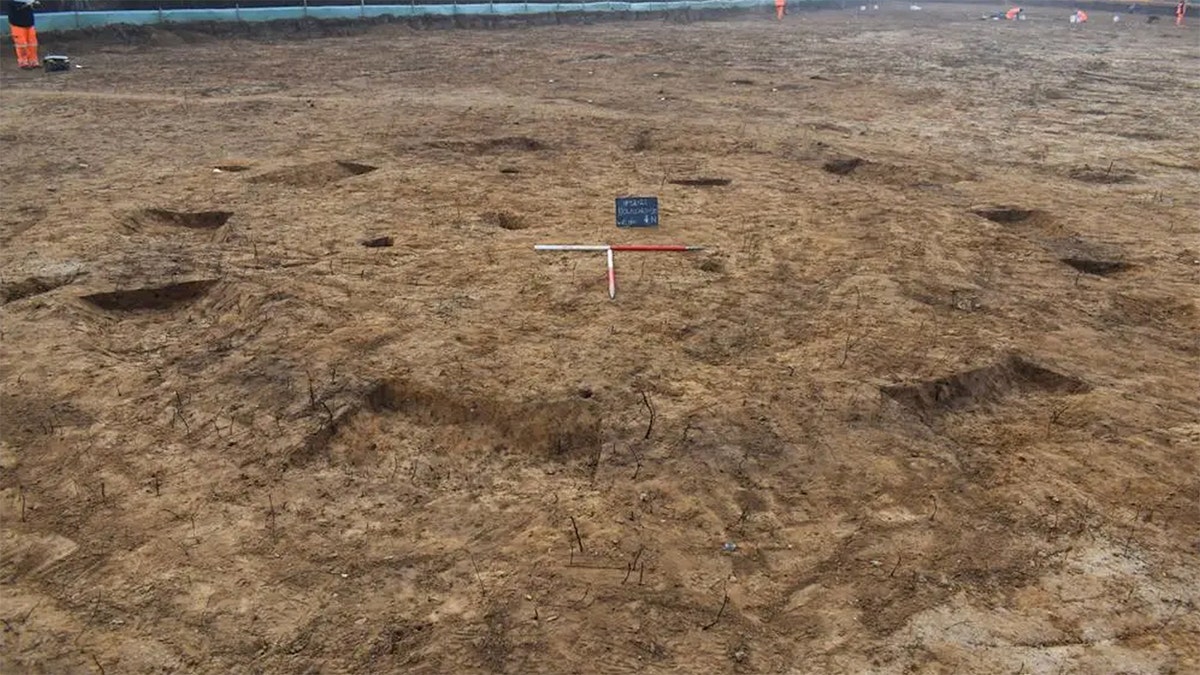
Archaeologists found interesting artifacts during the dig. A distinctive feature of the cremation cemetery was “how close it was to the buildings and daily life.” (Oxford Archaeology via Suffolk City Council)
“Some aspects of the settlement remains are of considerable significance in the wider regional context, especially the substantial pottery finds, the cremation cemetery, and the way that the agricultural landscape was organized,” the archaeologist said.
For more Lifestyle articles, visit foxnews.com/lifestyle
Thatcher added that a distinctive feature of the cremation cemetery was “how close it was to the buildings and daily life.”
“[T]he inhabitants of the settlement were likely buried close by,” he also said.
“There is a rich record of prehistoric land use.”
“This is part of an emerging pattern of Late Bronze Age burial activity, and appears to mark a shift from the Middle Bronze Age preference for major cemeteries, typically within extensive field systems, or the deceased being interred at earlier-established ancestral monuments.”
CLICK HERE TO SIGN UP FOR OUR LIFESTYLE NEWSLETTER
The latest announcement comes on the heels of other discoveries at the site, ranging from millennia-old Neolithic pottery to Iron Age currency and medieval artifacts.

The Europa Way road services Ipswich, a borough in the United Kingdom, seen here. (Getty Images)
In a statement, Suffolk County Council cabinet member Philip Faircloth-Mutton hailed the discovery as showing Suffolk’s “unique history, and add[ing] another layer to our understanding of what life was like for previous generations in our part of the world.”
CLICK HERE TO GET THE FOX NEWS APP
“This is why it is important that the council’s Archaeological Service is here to help record and preserve our past,” Faircloth-Mutton said.
“As important and interesting as finds are today, who knows how significant this information might be in generations to come.”

The April visit included 16 students, plus alumni and University representatives. Meridia Brownstones is an urban development project helmed by Rider alumnus Evan Swalling, President at Capodagli Family Office.
Linden, New Jersey, May 11, 2025, The Capodagli Property Company specializes in revitalizing neglected urban spaces into thriving multi-family communities. The visit included an interactive multi-media presentation by the Capodagli Property Company development and Meridia Living property management teams. The presentation laid out the concept for the development, its impact on the community and the challenges they addressed in delivering a project that is a change agent for the neighborhood.
The students learned about site planning, environmental remediation, governmental approvals, financial feasibility, construction, marketing, and property management. The importance of the project’s proximity to NJ Transit’s Rahway rail station was emphasized to the group. During the presentation, Evan and Thomas Visaggio were able to identify the different professional disciplines needed to make a large project like Meridia Brownstones a reality. The visit was capped with a walking tour of the property and amenity spaces.
“Sharing our experiences in Rahway with these Rider University students was an opportunity for us to showcase our priority on revitalizing communities.” Swalling continues, “It was exciting to have such insightful dialogue with young professionals who are looking to jump into a career in real estate and development.” Capodagli Property Company continues its mission to partner with community organizations and schools to provide opportunities to educate on the importance of strong community partnerships.
About Capodagli Property Company:
Capodagli Property Company is a premier real estate development, construction, and property management firm specializing in multi-family and mixed-use real estate projects. Founded in 1970, Capodagli Property Company is recognized for its ability to envision thriving communities on underutilized assets, playing a major role in redeveloping these communities.
Capodagli Property Company develops, owns, and manages over 6,000 rental apartments with over 4,000 units in the pipeline.
They are proud of their reputation for building and managing exceptional residential communities under the brand name “Meridia Living.” Meridia Living strives to ensure all the properties they manage are well maintained while instilling a sense of belonging among their residents.
For complete information, visit: www.capodagli.com
Media Contact:
Capodagli Property
Attn: Media Relations
201 S. Wood Avenue
Linden, NJ 07036
973-694-3000
marketing@meridialiving.com


Hackers have become increasingly sophisticated in targeting bank accounts, sometimes stealing money without the account holder realizing it right away. This raises an unsettling concern among many: could someone actually drain your bank account while making it appear as though your balance remains untouched?
As Bruce from Phoenix asks, “Is it true that hackers can wipe out your bank account but make it look like the money is still there?”
The short answer is yes, though it’s rare and requires a high level of skill. Still, even the possibility is alarming, especially when you consider how easily people can fall victim to common tactics hackers use to gain access to accounts in the first place.
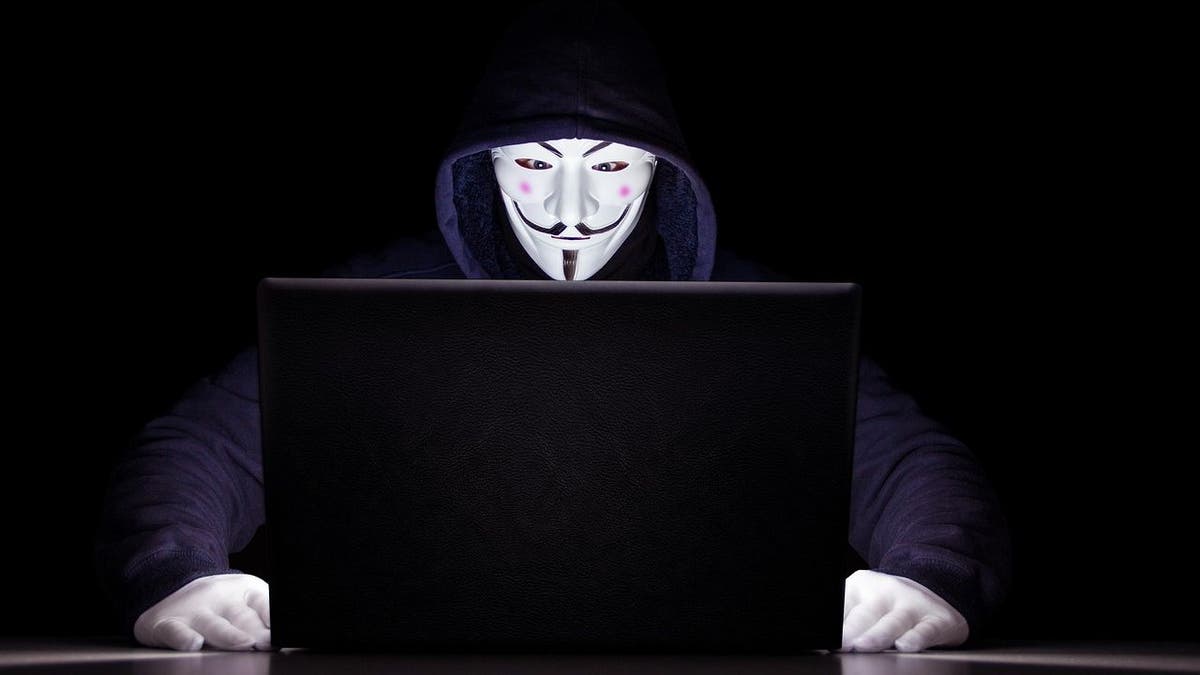
A hacker at work (Kurt “CyberGuy” Knutsson)
There’s a long list of methods cybercriminals use to get into people’s financial accounts, and most of them don’t involve “hacking” in the Hollywood sense. Instead, they rely on tricking you into handing over sensitive information. Here are some of the most common techniques.
Fake banking apps and mobile trojans: Some apps are designed to look exactly like your bank’s official app, but they’re actually fakes. If you enter your login info, it goes straight to the scammer. Even more advanced are mobile banking trojans, which hide inside seemingly unrelated apps. Once installed, the trojan watches for when you open your real banking app and then quickly overlays a fake login screen. If you type in your credentials, the trojan grabs them and sends them off to the attacker.
Phishing scams: Scammers send emails or texts that appear to be from your bank, asking you to verify a transaction or log in to resolve an issue. These messages often include links to websites that look identical to your bank’s site but are actually fakes. The giveaway is often a small detail, like a misspelled URL. For example, “captial0ne.com” instead of “capitalone.com.”
Keyloggers: Keyloggers are a type of malware that silently records everything you type. If one gets onto your device, it can capture your banking username, password and anything else you type, all without you knowing.
Man-in-the-middle attacks: These attacks happen when hackers intercept the data being transmitted between you and your bank’s website. This is especially risky if you’re on public Wi-Fi. You may think you’re logging in securely, but a hacker could be watching everything or even redirecting you to a fake version of your bank’s site.
SIM swapping: SIM swapping is where a scammer contacts your phone provider, pretends to be you and asks to transfer your number to a new SIM card. If successful, they receive your text messages, including any verification codes sent by your bank. This gives them access to your account, even if two-factor authentication is turned on.
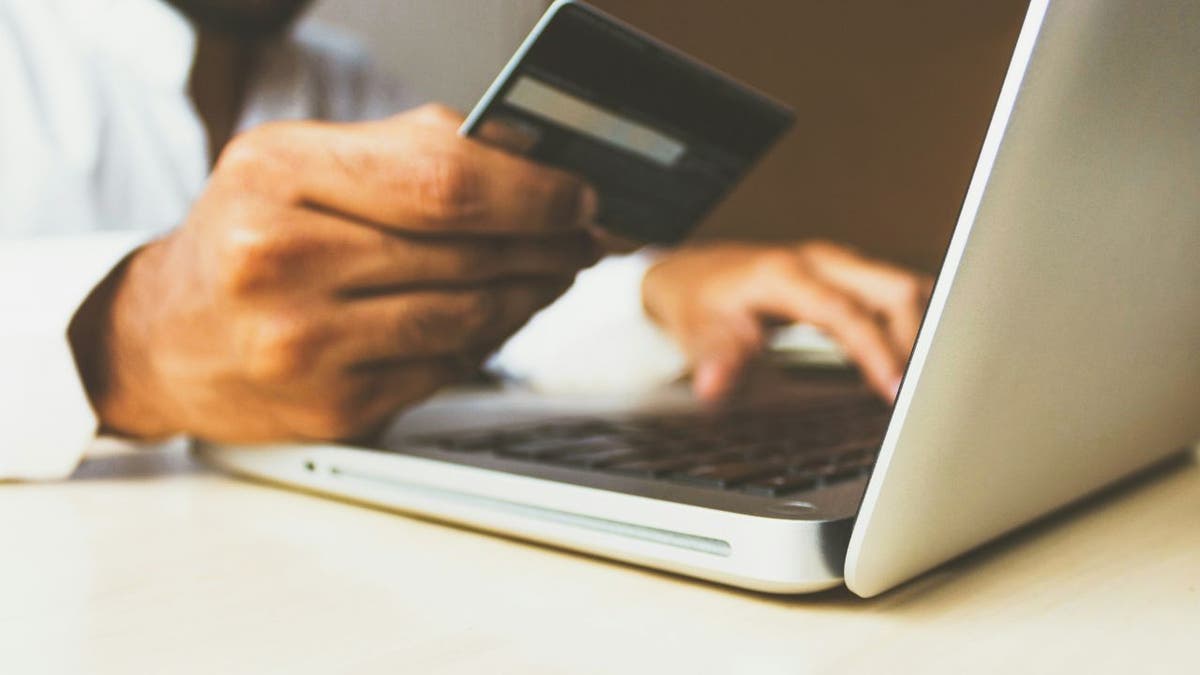
A person using a bank card to shop via laptop (Kurt “CyberGuy” Knutsson)
SNEAKY SCAMMERS DRAIN BANK ACCOUNT IN SINISTER PHONE PHISHING SCHEME
This is where it gets unsettling. In rare cases, hackers can actually make it look like your bank balance hasn’t changed, even though they’ve already taken the money. How? By targeting the display layer of your banking app or web interface. If malware is installed on your device, it can manipulate what shows up on the screen. That means your balance might look normal, while your actual funds are long gone. This type of attack is extremely rare and usually requires access to a compromised or jailbroken device, but it’s technically possible and just sophisticated enough to delay you from realizing what happened.
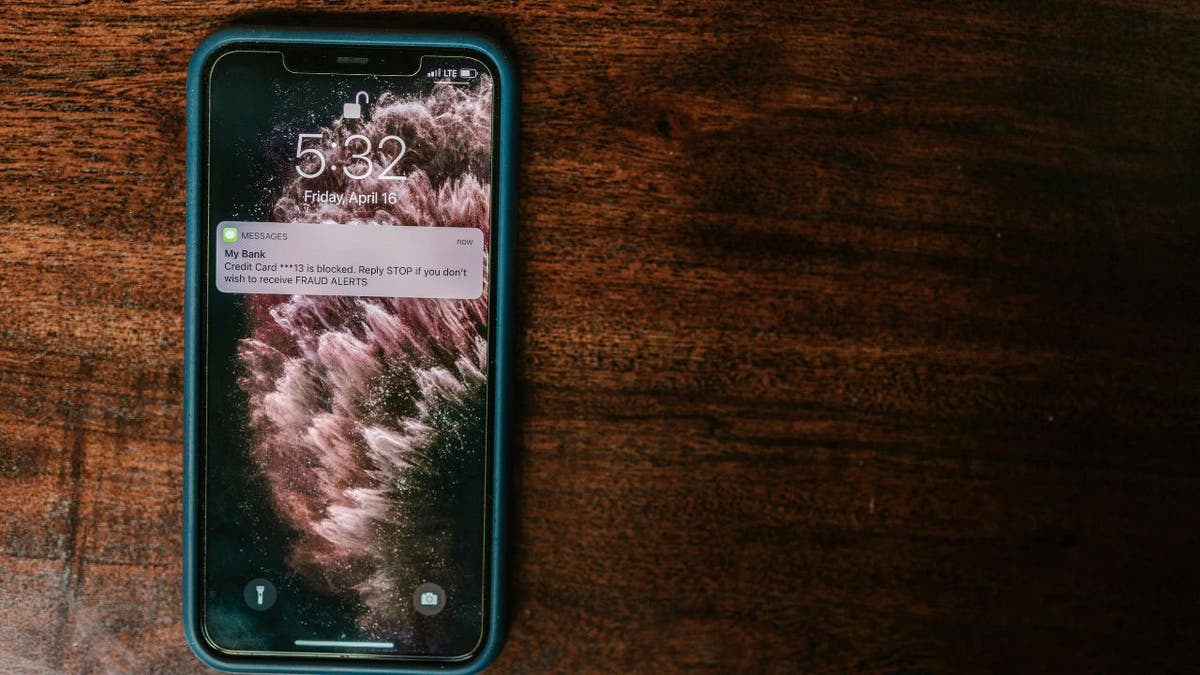
Bank alert notification on smartphone (Kurt “CyberGuy” Knutsson)
PREVENTING THIS INSIDIOUS EMAIL FORWARDING SCAM THAT WILL DRAIN YOUR BANK ACCOUNT
The good news? You don’t need to be a cybersecurity expert to protect yourself. Just following these key steps can dramatically reduce your risk.
1) Use official apps only: Cybercriminals will try to trick you with fake banking apps and mobile trojans that overlay fake login screens, so it’s critical to download banking apps exclusively from the Apple App Store or Google Play. Never install apps from links in emails or texts.
2) Turn on two-factor authentication (2FA): SIM-swapping attacks can hijack your phone number and intercept SMS codes, so enable app-based 2FA to block unauthorized logins even if hackers obtain your password.
3) Get text or app alerts: Hackers can manipulate your account’s display to hide stolen funds, so set up real-time transaction alerts to expose unauthorized withdrawals immediately, especially for microtransactions used to test your account.
4) Use strong, unique passwords: Phishing scams and keyloggers often harvest weak or reused credentials, so use a password manager to generate and store complex passwords. Get more details about my best expert-reviewed password managers of 2025 here.
5) Avoid clicking suspicious links and install strong antivirus software: Scammers impersonate banks with phishing emails/texts containing misspelled URLs (e.g., “captial0ne.com”), so always navigate directly to your bank’s official website or app instead of clicking embedded links. Strong antivirus software helps protect your devices from fake apps, keyloggers and other threats. The best way to safeguard yourself from malicious links that install malware, potentially accessing your private information, is to have antivirus software installed on all your devices. This protection can also alert you to phishing emails and ransomware scams, keeping your personal information and digital assets safe. Get my picks of the best 2025 antivirus protection winners for your Windows, Mac, Android and iOS devices.
6) Check your accounts regularly: Don’t just glance at your balance. Review recent transactions at least once a week to catch any suspicious activity.
7) Avoid public Wi-Fi for banking: Hackers exploit unsecured networks to launch man-in-the-middle attacks and spoof banking sites, so use a VPN to encrypt your connection if you must bank on public Wi-Fi. VPNs will protect you from those who want to track and identify your potential location and the websites that you visit. For the best VPN software, see my expert review of the best VPNs for browsing the web privately on your Windows, Mac, Android and iOS devices.
8) Use a personal data removal service: Data brokers sell your contact details and personal information, which hackers can use for targeted phishing attacks or SIM swap scams. These services automatically remove your data from broker databases, reducing the risk of social engineering attempts that could compromise your bank account.
While no service can guarantee the complete removal of your data from the internet, a data removal service is really a smart choice. They aren’t cheap, and neither is your privacy. These services do all the work for you by actively monitoring and systematically erasing your personal information from hundreds of websites. It’s what gives me peace of mind and has proven to be the most effective way to erase your personal data from the internet. By limiting the information available, you reduce the risk of scammers cross-referencing data from breaches with information they might find on the dark web, making it harder for them to target you. Check out my top picks for data removal services here.
GOT A BANK TRANSFER ALERT TEXT? IT MIGHT BE A SCAM. HERE’S WHAT TO DO
Hackers don’t need to break into your bank’s system; they just need to trick you. Whether it’s phishing, malware or SIM swaps, the goal is always the same: get access to your login and verification codes. Fortunately, you can make it much harder for them by using secure habits and staying alert. Your money belongs with you, not in the hands of a scammer.
Has this ever happened to you or someone you know? Let us know by writing us at Cyberguy.com/Contact.
For more of my tech tips and security alerts, subscribe to my free CyberGuy Report Newsletter by heading to Cyberguy.com/Newsletter.
Ask Kurt a question or let us know what stories you’d like us to cover.
Follow Kurt on his social channels:
Answers to the most-asked CyberGuy questions:
New from Kurt:
Copyright 2025 CyberGuy.com. All rights reserved.
Two fortunate fishermen in the Mountain State recently broke two statewide records, both on the same day.
In a May 1 announcement, the West Virginia Division of Natural Resources (WVDNR) said the two records were broken on April 22.
The records are related to two different types of fish: a redhorse sucker and a redear sunfish.
WHAT CAUSES NEARLY EVERY ALLIGATOR ATTACK ON HUMANS? STUDY SAYS IT’S OUR FAULT
Washington, West Virginia, resident Jason Floyd caught the 24.57-inch, 5.75-pound redhorse sucker at the Belleville Lock and Dam on the Ohio River, according to the WVDNR.
“He caught the fish using a FloBell Bottom Tackle swimbait and jighead on a 10-pound braided line,” the state agency noted.
Two West Virginia anglers managed to break state records while fishing on the same day. (West Virginia Division of Natural Resources (WVDNR))
Later on April 22, John Plott caught a hefty 12.44-inch, 1.60-pound redear sunfish, marking his second record-breaking catch of the species.
TOURIST WHO TRAVELED TO FLORIDA WINS $1M LOTTERY PRIZE WITH TICKET BOUGHT AT WALMART
Plott’s latest catch broke the West Virginia state record for redear sunfish length, but his previous weight record of 1.75 pounds still stands.

Jason Floyd recently caught a record-breaking 24.57-inch, 5.75-pound redhorse sucker in West Virginia. (West Virginia Division of Natural Resources (WVDNR))
The Oak Hill resident caught the record-breaking fish using a nightcrawler, according to WVDNR.
He reeled it in at Plum Orchard Lake in Fayette County.
CLICK HERE TO SIGN UP FOR OUR LIFESTYLE NEWSLETTER
In a statement, WVDNR director Brett McMillion said that he was “thrilled to recognize Mr. Floyd and Mr. Plott for their outstanding achievements.”
“We look forward to seeing more milestones like these in the future.”
The official added, “These records highlight the incredible fishing opportunities available across West Virginia as well as the dedication and passion of our anglers.”
For more Lifestyle articles, visit foxnews.com/lifestyle
McMillion also said, “Establishing new record categories was an important step in honoring the diversity of our fisheries, and we look forward to seeing more milestones like these in the future.”

John Plott caught an impressive 12.44-inch, 1.60-pound redear sunfish, though he caught a heavier one in the past. (West Virginia Division of Natural Resources (WVDNR))
Floyd is the first angler to break the redhorse sucker state record since the agency added the fish to its record categories in 2024, according to WVDNR.
The impressive catches are a few of many fishing state records that have been broken over the past year.
CLICK HERE TO GET THE FOX NEWS APP
Last summer, a Texas angler caught a 71-pound smallmouth buffalo in Austin’s Lady Bird Lake.
The tragic Hindenburg disaster of 1937, which resulted in the death of 36 people and effectively ended passenger airship travel, cast a long-lasting shadow over lighter-than-air technology. For many decades, airships were largely confined to niche roles such as advertising and surveillance.
However, a groundbreaking spin-off from Lockheed Martin to AT² Aerospace is now reviving the airship concept with a modern twist: hybrid airships designed specifically for eco-friendly cargo transport. Most recently, AT² Aerospace announced two purchase orders for their airships, one from Straightline Aviation and one from Arctic Airships.

Z1 hybrid airship (AT² Aerospace) (Kurt “CyberGuy” Knutsson)
At the center of this revival is the Z1 hybrid airship, a massive vessel capable of carrying up to 23.5 tons (21 metric tons) of cargo while minimizing environmental impacts and significantly reducing fuel consumption compared to traditional aircraft. Unlike the hydrogen-filled Hindenburg, which was highly flammable, the Z1 relies on helium for lift, a nonflammable gas, providing buoyancy for the majority of the airship’s weight, combined with aerodynamic design and advanced propulsion systems.

Z1 hybrid airship (AT² Aerospace) (Kurt “CyberGuy” Knutsson)
MASSIVE AIRSHIP COULD SHAKE UP CARGO TRANSPORT
The Z1 combines lighter-than-air buoyancy with advanced engineering innovations. Notably, the aircraft features a tri-lobe hull design, a hallmark of Lockheed Martin’s earlier airship projects. This design includes a raised central lobe flanked by two side lobes, which enhances lift efficiency and stability. Its Air Cushion Landing System allows it to take off and land on virtually any flat surface, including sand, ice, water or uneven terrain, eliminating the need for traditional runways.
The Z1 uses vectored thrust propulsion and advanced onboard systems for weather prediction and route planning, enabling it to travel more than 1,400 nautical miles at speeds of up to 60 knots. The hybrid lift system merges helium’s natural buoyancy with vectored thrust from the engines, optimizing both efficiency and control. This innovative design reduces fuel consumption to just one-fifth of what a heavy-lift helicopter would use, making the Z1 especially suited for transporting goods to remote and difficult-to-access areas such as the Arctic or the Amazon rainforest.

Z1 hybrid airship (AT² Aerospace) (Kurt “CyberGuy” Knutsson)
ZERO EMISSIONS HYDROGEN ELECTRIC JET DISRUPTS CONVENTIONAL FLIGHTS
The Z1 addresses two pressing challenges in modern transportation. First, it offers a practical solution for accessing remote regions where traditional cargo planes and helicopters face high costs and infrastructure limitations. Its ability to land without airstrips unlocks affordable transport options for industries like mining, disaster relief and medical supply delivery in isolated communities.
Second, the Z1 contributes to the urgent global need to reduce carbon emissions. Transports such as cars, trucks, trains, ships and airplanes currently account for over 40% of worldwide carbon emissions, and the Z1’s low fuel consumption and ability to overfly environmentally sensitive areas quietly present a scalable alternative for freight transport with minimized environmental impact.

Z1 hybrid airship (AT² Aerospace) (Kurt “CyberGuy” Knutsson)
IS THIS 656-FOOT AIRYACHT THE LUXURY TRANSPORTATION OF THE FUTURE?
The recent $50 million order from Straightline Aviation demonstrates strong confidence in the Z1’s commercial potential, with the first delivery expected by 2028. Arctic Airships has also placed orders for two airships, targeting operations in Alaska’s challenging terrain.
“Our hybrid airships will transform cargo transport by providing an environmentally responsible solution while maintaining operational efficiency,” said Dr. Bob Boyd, CEO of AT² Aerospace. He went on to say, “Our aircraft not only optimizes cargo movement in challenging terrains but also aligns with the industry’s increasing focus on environmental responsibility and cost efficiency.”
SUBSCRIBE TO KURT’S YOUTUBE CHANNEL FOR QUICK VIDEO TIPS ON HOW TO WORK ALL OF YOUR TECH DEVICES

Z1 hybrid airship (AT² Aerospace) (Kurt “CyberGuy” Knutsson)
The Z1 hybrid airship is a real, practical answer to the challenges we face in logistics and the environment today. By blending tried-and-true lighter-than-air technology with advanced, fuel-efficient propulsion, AT² Aerospace is showing us a whole new way to think about sustainable transport. It is encouraging to see that when it comes to moving cargo responsibly, the sky really is no longer the limit.
In a world racing to cut carbon emissions, can hybrid airships and sustainable fuels realistically transform aviation before climate impacts worsen? Let us know what you think in the comments below. Let us know by writing us at Cyberguy.com/Contact.
For more of my tech tips and security alerts, subscribe to my free CyberGuy Report Newsletter by heading to Cyberguy.com/Newsletter.
Ask Kurt a question or let us know what stories you’d like us to cover.
Follow Kurt on his social channels:
Answers to the most-asked CyberGuy questions:
New from Kurt:
Copyright 2025 CyberGuy.com. All rights reserved.
A simple selfie could hold hidden clues to one’s biological age — and even how long they’ll live.
That’s according to researchers from Mass General Brigham, who developed a deep-learning algorithm called FaceAge.
Using a photo of someone’s face, the artificial intelligence tool generates predictions of the subject’s biological age, which is the rate at which they are aging as opposed to their chronological age.
MUSIC CONDUCTOR WITH PARKINSON’S SEES SYMPTOMS IMPROVE WITH DEEP BRAIN STIMULATION
FaceAge also predicts survival outcomes for people with cancer, according to a press release from MGB.
A simple selfie could hold hidden clues to one’s biological age — and even how long they’ll live. (iStock)
The AI tool was trained on 58,851 photos of “presumed healthy individuals from public datasets,” the release stated.
To test the tool’s accuracy, the researchers used it to analyze photos of 6,196 cancer patients taken before radiotherapy treatment.
Among the people with cancer, the tool generated a higher biological age that was about five years higher than their chronological age.
PARALYZED MAN WITH ALS IS THIRD TO RECEIVE NEURALINK IMPLANT, CAN TYPE WITH BRAIN
The researchers also tested the tool’s ability to predict the life expectancy of 100 people receiving palliative care based on their photos, then compared it to 10 clinicians’ predictions. FaceAge was found to be more accurate than the clinicians’ predictions.
The researchers’ findings were published in The Lancet Digital Health.

Mass General Brigham developed a deep-learning algorithm called FaceAge, which generates predictions of the subject’s biological age from a photo. (Mass General Brigham)
“We can use artificial intelligence to estimate a person’s biological age from face pictures, and our study shows that information can be clinically meaningful,” said co-senior and corresponding author Hugo Aerts, PhD, director of the Artificial Intelligence in Medicine (AIM) program at Mass General Brigham, in the release.
“This work demonstrates that a photo like a simple selfie contains important information that could help to inform clinical decision-making and care plans for patients and clinicians,” he went on.
WOMAN SAYS CHATGPT SAVED HER LIFE BY HELPING DETECT CANCER, WHICH DOCTORS MISSED
“How old someone looks compared to their chronological age really matters — individuals with FaceAges that are younger than their chronological ages do significantly better after cancer therapy.”
The goal is for the tool to help eliminate any bias that may influence a doctor’s care decisions based on the perception of a patient’s appearance and age.
“While FaceAge may outperform clinicians in some survival predictions, it should augment human judgment, not override it.”
The researchers noted that more research is needed before the tool could be rolled out for clinical use.
Future studies will include different hospitals and cancer patients at various stages of the disease, according to the release. Researchers will also evaluate FaceAge’s ability to predict diseases, general health status and lifespan.
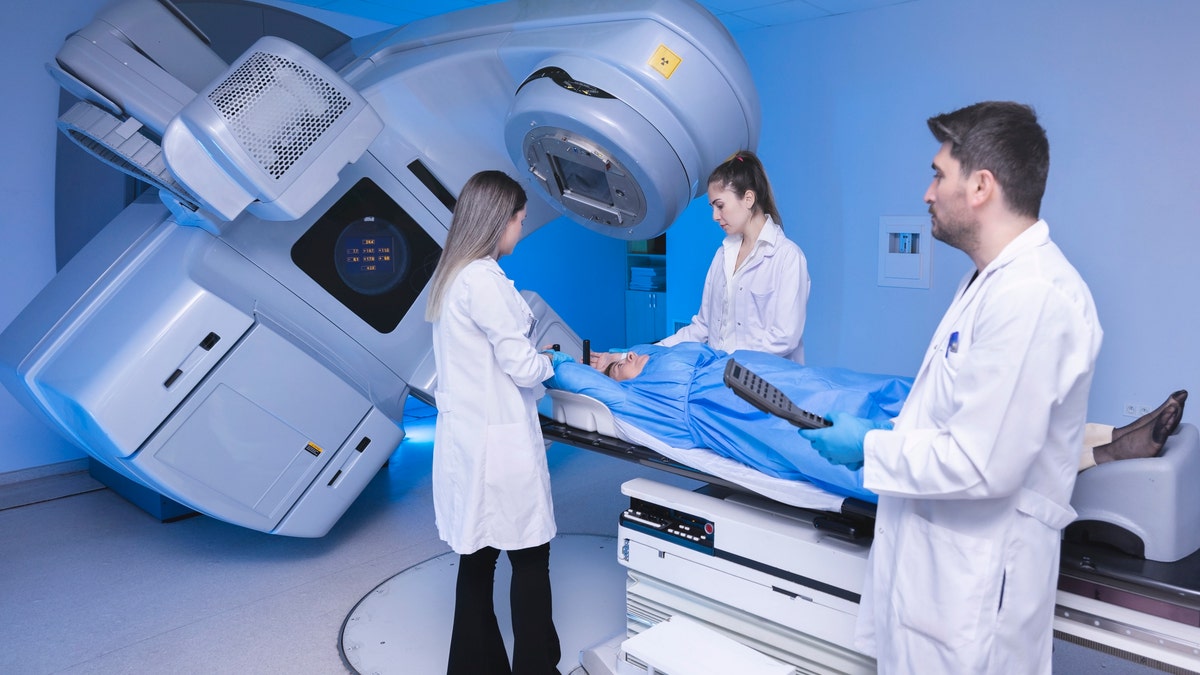
To test the tool’s accuracy, the researchers used it to analyze photos of 6,196 cancer patients taken before radiotherapy treatment. (iStock)
“This opens the door to a whole new realm of biomarker discovery from photographs, and its potential goes far beyond cancer care or predicting age,” said co-senior author Ray Mak, MD, a faculty member in the AIM program at Mass General Brigham, in the release.
“As we increasingly think of different chronic diseases as diseases of aging, it becomes even more important to be able to accurately predict an individual’s aging trajectory. I hope we can ultimately use this technology as an early detection system in a variety of applications, within a strong regulatory and ethical framework, to help save lives.”
Dr. Harvey Castro, a board-certified emergency medicine physician and national speaker on artificial intelligence based in Dallas, Texas, was not involved in FaceAge’s development but shared his comments on the tool.
ARE FULL-BODY SCANS WORTH THE MONEY? DOCTORS SHARE WHAT YOU SHOULD KNOW
“As an emergency physician and AI futurist, I see both the promise and peril of AI tools like FaceAge,” he told Fox News Digital.
“What excites me is that FaceAge structures the clinical instinct we call the ‘eyeball test’ — a gut sense of how sick someone looks. Now, machine learning can quantify that assessment with surprising accuracy.”
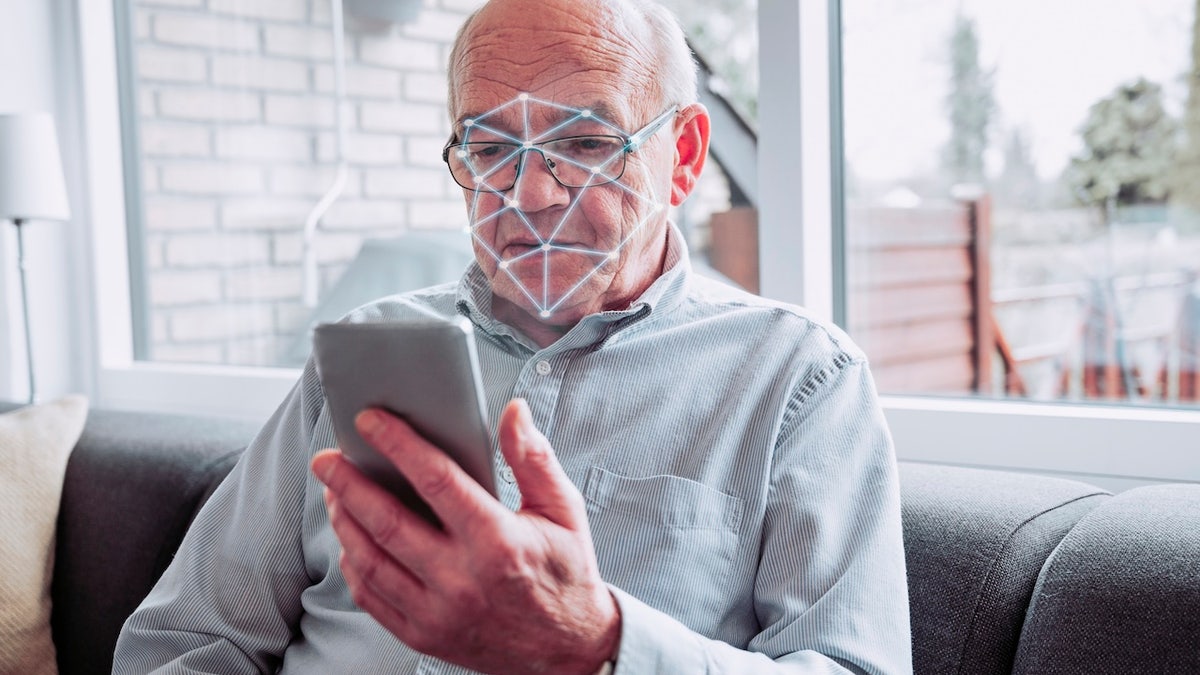
Among the people with cancer, the tool generated a higher biological age that was about five years higher than their chronological age. (iStock)
Castro predicts that FaceAge could help doctors better personalize treatment plans or prioritize palliative care in oncology — “where resilience matters more than a birthdate.”
The doctor emphasized, however, that caution is key.
CLICK HERE TO GET THE FOX NEWS APP
“AI models are only as good as the data they’re trained on,” Castro noted. “If the training data lacks diversity, we risk producing biased results.”
“While FaceAge may outperform clinicians in some survival predictions, it should augment human judgment, not override it.”
CLICK HERE TO SIGN UP FOR OUR HEALTH NEWSLETTER
Castro also cautioned about potential ethical concerns.
“Who owns the facial data? How is it stored? Do patients understand what’s being analyzed? These questions matter as much as the technology itself,” he said.

“AI can enhance our care — but it cannot replace the empathy, context and humanity that define medicine.” (iStock)
There is also a psychological impact of the tool, Castro noted.
“Being told you ‘look older’ than your age could influence treatment decisions or self-perception in ways we don’t yet fully understand,” he said.
“We need clear consent, data privacy and sensitivity. No one wants to be told they look older without context.”
For more Health articles, visit www.foxnews.com/health
The bottom line, according to Castro, is that AI can enhance a doctor’s judgment, but cannot replace it.
“AI can enhance our care — but it cannot replace the empathy, context and humanity that define medicine.”
The “new media” seat at the White House has shaken up press briefings as the Trump administration aims to reach Americans who don’t rely on what it calls “the archaic White House press corps” for information.
The “new media” seat is the brainchild of press secretary Karoline Leavitt, who felt legacy media essentially had a monopoly over coverage of the White House. No seats were taken from anyone, as the designated seat to the right of the lectern is where White House staffers or guests traditionally sat along the side of the James S. Brady Press Briefing Room.
Nowadays, the seat is filled by new and emerging voices who typically get introduced by Leavitt before being called upon for the first question of the briefing, which traditionally went to the Associated Press under previous administrations.
EX-CNN JOURNALIST SPEAKS OUT ON BIDEN COVER-UP, SAYS WHITE HOUSE AIDES MADE IT DIFFICULT ON PRESS
The new media seat (left) inside the James S. Brady Press Briefing Room offers a chance for emerging voices to question White House press secretary Karoline Leavitt. (Taylor Rogers)
Some of the “new media” seat’s occupants, such as Axios’ Mike Allen and 2Way’s Mark Halperin, are longtime D.C. insiders who currently work for upstart organizations, while others, like “Unbiased Podcast” host Jordan Berman, wouldn’t have sniffed the briefing room under previous administrations.
“The legacy media’s charade of inclusivity has been exposed by their resistance to allow emerging voices into the press briefing room. Americans have found new ways to digest their media—and we cater to the people, not the archaic White House press corps,” assistant press secretary Taylor Rogers told Fox News Digital.
The “new media” seat has also faced criticism, largely from legacy outlets, and some of the occupants have been criticized for lobbing softball questions at briefings or heaping praise on Leavitt and the president. But White House insiders believe negative coverage of the opportunity for new voices is proof that traditional outlets are scared to relinquish control of the briefing room.
Ruthless Podcast co-host John Ashbrook occupied the seat in January and asked Leavitt if the legacy media was out of touch with the border crisis. He embraced his role as an outsider in the briefing room despite what he called “eye rolls and smirks” from traditional journalists.
“Every dirty look from legacy media was wiped away when they had to write down the news made in response to the question I asked,” Ashbrook told Fox News Digital.
While Ashbrook used his lead-off question to prompt criticism of the press, other “new media” seat occupants have asked about such topics as transgender athletes, artificial intelligence, the economy and foreign policy.
PODCAST HOST SAYS HE RECEIVED ‘EYE ROLLS,’ ‘SMIRKS’ FROM REPORTERS DURING WHITE HOUSE BRIEFING DEBUT

“Timcast IRL” host Tim Pool occupies the new media seat. (Demetrius Freeman/The Washington Post via Getty Images)
“Timcast IRL” host Tim Pool has been one of the more polarizing occupants of the seat. When Pool was announced as the seat holder last month, the move was swiftly criticized by mainstream reporters.
New York Times reporter Ken Bensinger reminded his followers on X that Pool was tied to a Tennessee-based media company accused of receiving money from Russia (Pool has denied any wrongdoing), while a USA Today reporter took issue with his signature beanie cap.
Pool, who has 2.4 million followers on X, said he noticed “snooty looks” from some legacy reporters and “disdain” for his presence on social media following the opportunity.
“All they’ve done in that press room is march in lockstep with each other, all reporting the same falsehoods, the same angles, the same manipulations. There’s no curiosity. The questions they largely ask are predictable. And yet, if any other company wants to come in, it’s a whiplash, it is an attack, it’s vitriol. They’re acting more like high school teen girls than professionals,” Pool told Fox News Digital.
Pool said that during the Biden administration, White House reporters from liberal, mainstream outlets were largely not curious or intentionally tried to obfuscate facts and details to push a political ideology. He’s thrilled that Leavitt has shaken things up to offer a break from the “faux adversarial questions” that liberal reporters asked during the Biden administration.
“There needs to be an attempt to create competition in the journalistic space so that we’re not getting the same worldview from every single reporter,” Pool said. “Naturally, they’re upset by the competition. But all I see is, with the new media personalities coming in, they’re largely on the other sides of the political spectrum, but even then, they’re not in complete agreement on everything.”
“I do think this is a great step forward in bringing in new voices with different perspectives, which is what diversity was supposed to mean,” he continued. “It was an honor and a privilege.”
WHITE HOUSE REPORTERS RESPOND AFTER BEING CALLED OUT FOR WEAK COVERAGE OF BIDEN’S DECLINE AT WHCD

White House press secretary Karoline Leavitt listens during a briefing with reporters in the James Brady Press Briefing Room at the White House, on Friday, May 9, in Washington, D.C. (AP/Alex Brandon)
The “new media” seat has also been occupied by The Bulwark’s Andrew Egger, Breitbart’s Matt Boyle, podcaster Sage Steele, Rumble’s Chris Pavlovski, X’s John Stoll, Semafor’s Shelby Talcott, The Daily Wire’s Mary Margaret Olohan, “Breaking Points” co-host Saagar Enjeti, Townhall’s Katie Pavlich, Merit Street Media’s Lyndsay Keith, NOTUS reporter Jasmine Wright, Matthew Foldi of the Washington Reporter, Punchbowl’s Brendan Pedersen and Blaze Media correspondent Chris Bedford, among others.
Reporters from outlets such as the AP, CNN, Reuters, ABC, CBS, NBC, USA Today, The New York Times, NPR, Bloomberg, Wall Street Journal and Fox News have assigned seats at White House press briefings, while reporters from smaller outlets stand along the crowded perimeter of the room.
Leavitt explained why she has taken a different approach to the media during a May 5 appearance on “Hannity.”
“It’s because President Trump has revolutionized media and the way Americans consume media. He started this on the campaign when he opened the campaign to social media influencers and podcasters, and he was willing to take that nontraditional media route. We’ve continued that effort at the White House,” Leavitt said.
CLICK HERE TO GET THE FOX NEWS APP
Former Obama press secretary Jay Carney even praised Leavitt’s changes to the White House press operation.
“I think it’s important to recognize the media landscape has changed, to bring in new voices, to shake things up,” Carney said at an ROKK Solutions event last month when asked about the new media seat.
“I think that’s admirable,” Carney continued. “Everybody can learn from that.”
Dr. Josef Wegner, Penn Museum curator who is based in Philadelphia, recently uncovered a groundbreaking discovery: an unknown pharaoh’s tomb, dating back 3,600 years. (Credit: Josef Wegner for the Penn Museum)
Archaeologists confronted by a false door at an excavation site were stunned to find that it led to the tomb of Egyptian royalty.
The Egyptian Ministry of Tourism and Antiquities announced the discovery in a recent Facebook post in April.
The tomb was found at the Saqqara archaeological site in the Giza Governorate of Egypt.
MAN STUMBLES ACROSS HOARD OF PRICELESS COINS IN NATURE WALK: ‘FACE TO FACE WITH HISTORY’
The tomb belonged to a prince named “Userefre” or “Waser Ef Ra,” the son of King Userkaf.
Userkaf was the founder of the Fifth Dynasty, which lasted from the early 25th century B.C. until the mid-24th century B.C.
An ancient Egyptian tomb was concealed by a “massive false door,” shown at left, made of pink granite. (Egyptian Ministry of Tourism and Antiquities via Facebook)
The tomb was concealed by a “massive false door,” according to Egyptian officials, and was made of pink granite.
The door measures roughly 14 feet high and roughly 3.7 feet wide.
The discovery marks the first time a door of this type was found, officials said.
The tomb was concealed by a “massive false door.”
The door was “adorned with hieroglyphic inscriptions detailing the prince’s name and titles,” according to the Facebook post.
It described him as a “hereditary prince, regional governor of Buto and Nekheb, royal scribe, minister, judge, and chanting priest.”
Archaeologists also found statues of King Djoser, his wife and his 10 daughters in the tomb, plus a red granite table with a list of funerary offerings.

The recent findings were uncovered at the Saqqara archaeological site in the Giza Governorate of Egypt. (Egyptian Ministry of Tourism and Antiquities via Facebook)
A large black granite statue was also found, along with another tomb entrance which was also made of pink granite.
HISTORIC MARYLAND CHURCH OPENS DOORS TO VISITORS 320 YEARS AFTER CLOSING DOWN
“To the north of the lintel, a discovery considered the first of its kind in the Saqqara area was made, where a group of 13 pink granite statues seated on a high-backed bench was found,” said the Facebook post, which was translated from Arabic to English.
For more Lifestyle articles, visit foxnews.com/lifestyle
“There are also statue heads at a higher level than the rest of the statues, representing the wives of the tomb owner seated in the middle, with two headless statues to the left, in front of which another black granite statue was found, overturned, measuring approximately 1.35 meters in height.”
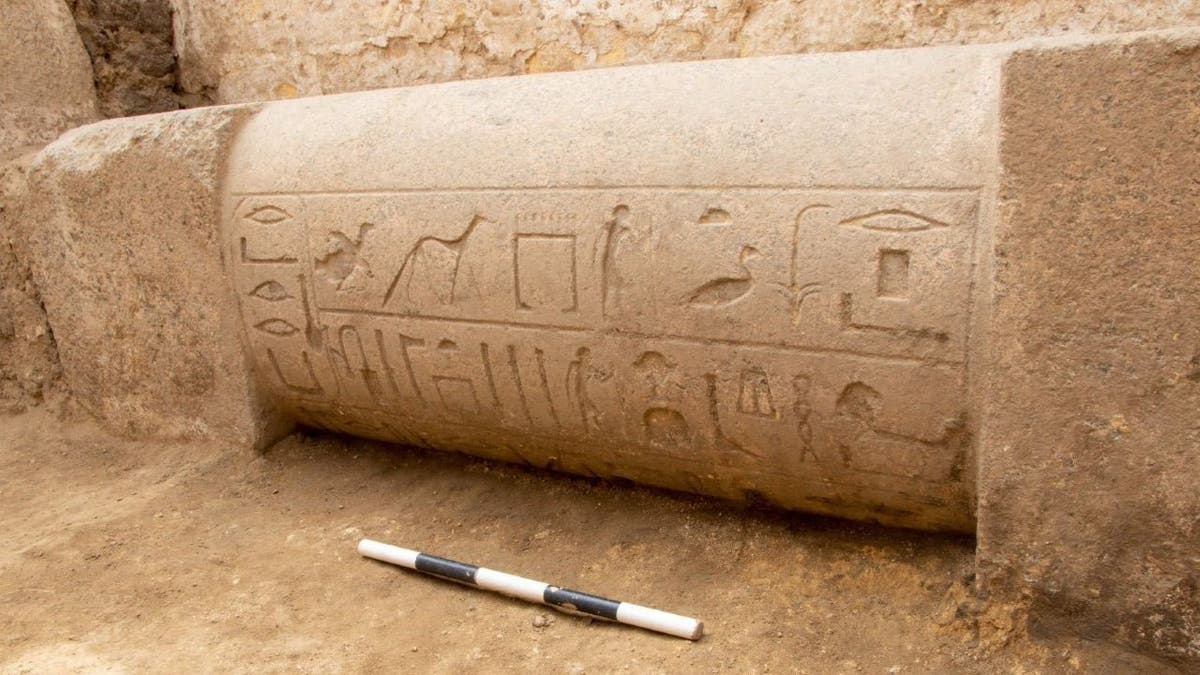
Archaeologists uncovered hieroglyphics dating as far back as 2400 B.C. (Egyptian Ministry of Tourism and Antiquities via Facebook)
Egyptian Minister of Tourism and Antiquities Sherif Fathy expressed happiness over the discovery, and said that it helps “unveil new secrets of this significant historical period in the history of ancient Egyptian civilization.”
CLICK HERE TO SIGN UP FOR OUR LIFESTYLE NEWSLETTER
The latest discovery is one of many ancient Egyptian finds uncovered this year.

A statue made of black granite was also discovered by archaeologists at the Egyptian site. (Egyptian Ministry of Tourism and Antiquities via Facebook)
In March, archaeologists announced that they’d uncovered a 3,000-year-old mining complex, complete with remnants of ancient homes, workshops and baths.
CLICK HERE TO GET THE FOX NEWS APP
In an even more significant achievement, an archaeologist from the University of Pennsylvania found the long-lost tomb of an unknown Egyptian pharaoh.
Ever wondered why your text messages sometimes fail to send, show up pixelated or don’t appear at all on the other person’s end?
It might not be your phone, but your carrier’s messaging support. Knowing the difference between SMS, MMS and RCS and how your carrier handles them can save you money, improve message delivery and ensure you’re using the full potential of your messaging app.
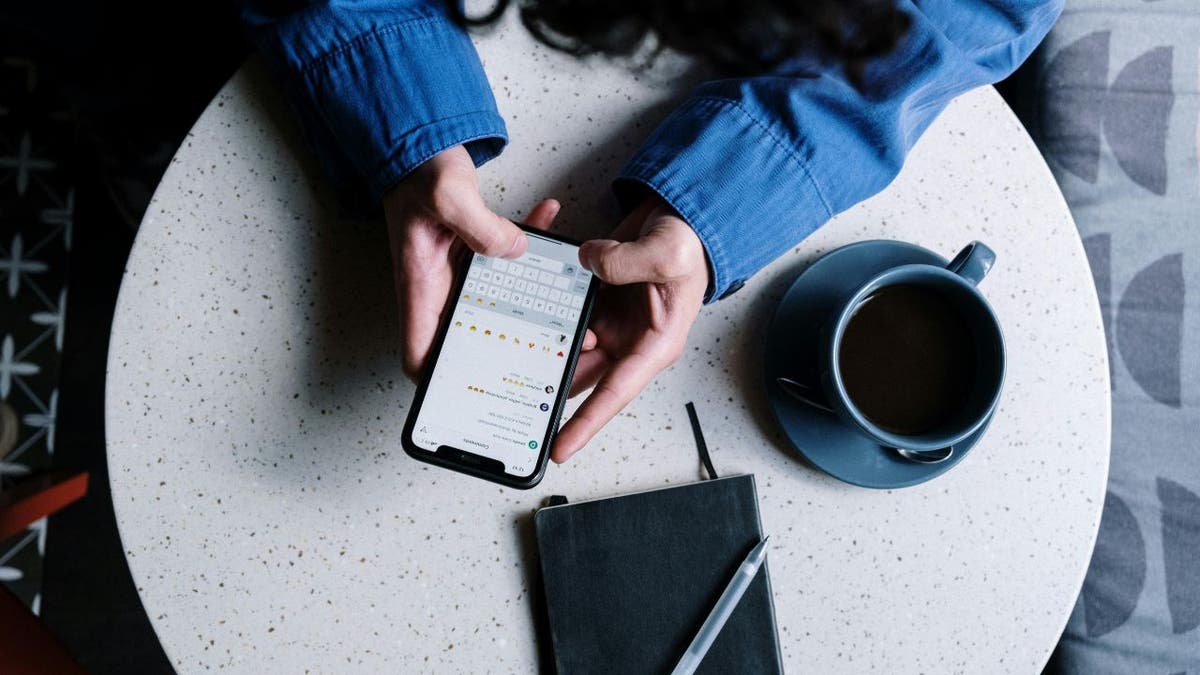
A person texting on their phone (Kurt “CyberGuy” Knutsson)
Before you can figure out which phone carrier fits your messaging needs, it helps to understand the differences between the three main types of mobile messaging — SMS, MMS and RCS. Each has its own capabilities, limitations and impact on your experience.
SMS (Short Message Service) is the most basic form of text messaging and has been around since the early days of mobile phones. It allows users to send plain text messages with a strict character limit of 160 characters. SMS messages are sent over the cellular network, which means they work even if you don’t have a data plan or access to Wi-Fi. This makes SMS one of the most reliable messaging options available, especially for simple communication. It works for all phones, even older models, which makes it universal.
MMS (Multimedia Messaging Service) builds upon SMS by allowing the transmission of multimedia content. With MMS, users can send images, videos, audio files and even GIFs. The character limit is significantly higher, typically up to 1,600 characters, although this can vary depending on the carrier. MMS messages also travel over the cellular network but require mobile data to send and receive. They do not require Wi-Fi, but because media files are larger, the reliability can vary. Some carriers compress MMS files or fail to send them if they exceed certain size limits, which means your carefully chosen vacation photo might arrive as a pixelated blur.
RCS (Rich Communication Services) represents the next generation of mobile messaging. It is designed to upgrade the SMS and MMS experience by providing features that rival popular messaging apps like iMessage and WhatsApp. With RCS, users can send high-resolution photos and videos, audio clips, emoji, stickers and even read receipts and typing indicators. There is no character limit, and the service works over Wi-Fi or mobile data instead of over standard cellular channels.
While RCS allows larger files, some messaging platforms or carriers may still apply soft limits or compress images/videos to ensure consistent performance. However, for RCS to work, both the sender and the recipient need to have RCS enabled on a supported messaging app and carrier. Google Messages is the most reliable app for accessing these RCS features, especially on Android devices. However, it should be noted that Apple devices do not support RCS natively because Apple relies on iMessage for similar functionality.
HOW TO STOP SPAM TEXT MESSAGES ON YOUR PHONE
Now that you know what SMS, MMS and RCS are, it’s important to understand how your phone carrier influences your messaging experience. From hidden fees to message delivery issues, the provider you choose can make a big difference in how well these technologies work.
Not all carriers treat these messaging types the same. While SMS is often free and unlimited on many plans, MMS messages may incur additional charges, especially on prepaid or international plans. RCS messages, on the other hand, use mobile data or Wi-Fi and typically do not incur per-message fees, making them a cost-effective option if supported.
For example, carrier A might offer unlimited SMS but charge for every MMS sent. Carrier B might include MMS in the plan but cap the number of SMS messages. Carrier C could fully support RCS, letting users send messages over Wi-Fi for free. Choosing the right carrier based on how you communicate can help avoid surprise charges.
While SMS and MMS are universally supported, RCS still depends on carrier infrastructure and the messaging app being used. Some carriers support RCS only through their proprietary apps, which may not be compatible with all devices. Others support “universal RCS”, which works across multiple platforms but still requires the right app, most reliably Google Messages.
If you’re hoping to use RCS features like high-resolution image sharing, read receipts and typing indicators, it’s important to ensure your carrier not only supports RCS but also supports it universally across devices and apps. Otherwise, your message may silently fall back to SMS or MMS if the recipient’s carrier or device does not support RCS.
Illustration of text messaging on a smartphone (Kurt “CyberGuy” Knutsson)
ANDROID FEATURE PREVENTS SENSITIVE CONTENT IN GOOGLE MESSAGES
As of May 2025, all major U.S. wireless carriers and most of their sub-brands and MVNOs (mobile virtual network operators) fully support SMS, MMS and RCS messaging. This includes both Android and iPhone users (with iOS 18.4 or newer for RCS on iPhone).
You can expect full support for SMS, MMS and RCS on the following carriers: AT&T, Verizon, T-Mobile, US Cellular, C Spire, Consumer Cellular, Cricket, Family Mobile, FirstNet, H2O Wireless, Metro by T-Mobile, Mint Mobile, Boost Mobile, Google Fi, PureTalk, RedPocket Mobile, Spectrum Mobile, Straight Talk, TracFone, Ultra Mobile, US Mobile, Visible and Xfinity Mobile.
If you are using one of these carriers, you can expect the latest messaging features, including high-resolution media sharing, read receipts, typing indicators and the ability to send messages over Wi-Fi or mobile data. For the best experience, make sure your device is updated to the latest software and that you are using a supported messaging app.
RCS support is expanding internationally, with carriers like Orange and Sosh in France offering RCS on iPhones running iOS 18.4 beta. To check if your international carrier supports RCS on iPhone:
HOW TO GET RID OF ROBOCALLS WITH APPS AND DATA REMOVAL SERVICES
Apple and Google are rolling out support for RCS Universal Profile 3.0, which brings end-to-end encryption for RCS messages, enhancing privacy and security across platforms. Some carriers may still be updating their infrastructure, so check with your provider or device settings if you do not see RCS options enabled.
If you use a smaller or regional provider not mentioned above, or if you plan to travel internationally, it is important to check with your carrier about its current support for RCS, especially if you use an iPhone. While international support for RCS is expanding, it is not yet universal.
When you are abroad, reliable messaging becomes even more critical. SMS is the most dependable option and works almost everywhere, making it a safe choice for staying connected. MMS, on the other hand, can be inconsistent overseas due to differences in network standards and carrier agreements. RCS is even less predictable outside your home country, as it relies on mobile data or Wi-Fi and often does not function while roaming unless your carrier specifically enables it for international use.
So, if you are traveling or using a less common carrier, always confirm whether your plan includes international MMS and RCS support. This will help you avoid unexpected gaps in communication or surprise fees and ensure your messages reach their destination reliably.
GOT A BANK TRANSFER ALERT TEXT? IT MIGHT BE A SCAM. HERE’S WHAT TO DO
Email-to-text is a feature that lets you send a text message to someone’s phone number directly from your email. To do this, you use a special email-to-SMS gateway provided by the recipient’s mobile carrier. For example, to text a friend on AT&T, you’d send an email to something like 1234567890@txt.att.net.
However, not all carriers support this, and some may block the feature altogether to prevent spam or limit abuse. Even among those that do support it, there can be differences between how SMS (text-only) and MMS (media messages) are handled.
Below are examples of the special email addresses (called gateways) that let you send text messages via email:
AT&T
Verizon
T-Mobile
If you rely on this feature, such as sending yourself reminders from your email or receiving system alerts to your phone, it is important to check whether your carrier supports it. Be aware that not all carriers clearly document this capability, especially smaller providers like Spectrum Mobile or Xfinity Mobile, which may restrict or not support it at all.
WHAT IS ARTIFICIAL INTELLIGENCE (AI)?
A man texting on his iPhone (Kurt “CyberGuy” Knutsson)
To enhance your mobile messaging security, follow these best practices:
1. Avoid clicking on unknown links or messages and install strong antivirus software: Be cautious with links or attachments from unknown sources because they can lead to phishing or malware attacks. Also, install strong antivirus software on your device to protect against malware and viruses.
The best way to safeguard yourself from malicious links that install malware, potentially accessing your private information, is to have strong antivirus software installed on all your devices. This protection can also alert you to phishing emails and ransomware scams, keeping your personal information and digital assets safe. Get my picks for the best 2025 antivirus protection winners for your Windows, Mac, Android and iOS devices.
2. Enable Multi-factor Authentication (MFA): Use MFA to add an extra layer of security for your messaging apps and accounts. This can include methods like authentication apps, physical security keys, or SMS codes, which help prevent unauthorized access even if your password is compromised. By activating MFA, you significantly reduce the risk of your accounts being hacked, providing an essential safeguard against cyber threats.
GET FOX BUSINESS ON THE GO BY CLICKING HERE
3. Keep your device and apps updated: Regularly update your operating system and apps to ensure you have the latest security patches.
4. Use end-to-end encrypted messaging apps: Consider using apps with end-to-end encryption for secure communication. This ensures that only you and the intended recipient can read the messages, keeping them safe from hackers or third-party interception. Popular options include Signal, WhatsApp and iMessage, which prioritize privacy and protect sensitive conversations from unauthorized access.
5. Be mindful of public Wi-Fi and use a Virtual Private Network (VPN): Avoid using public Wi-Fi for sensitive communications, as it can be insecure and expose your data to potential eavesdropping or hacking. Consider using a VPN for secure browsing on public networks because it encrypts your internet traffic and masks your IP address, providing a safer experience even on unsecured networks. By using a VPN, you can significantly reduce the risks associated with public Wi-Fi and protect your personal data from unauthorized access. For best VPN software, see my expert review of the best VPNs for browsing the web privately on your Windows, Mac, Android and iOS devices
6. Delete sensitive messages: Regularly delete sensitive messages to minimize data exposure. This practice helps protect your privacy by ensuring that confidential information isn’t stored indefinitely on your device or in the cloud, where it could potentially be accessed by unauthorized parties. Additionally, consider using messaging apps that offer features like automatic message deletion or self-destructing messages to further enhance your privacy
HOW TO BLOCK A PHONE NUMBER OR TEXT ON YOUR SMARTPHONE
Texting may seem simple, but there’s a lot going on behind the scenes, especially when your messages aren’t sending or show up weird. Understanding the difference between SMS, MMS and RCS can save you from headaches, surprise charges and blurry photos. The good news? A little knowledge goes a long way. Now that you’re in the know, you can text smarter, choose the right carrier and keep your conversations running smoothly, wherever you are.
CLICK HERE TO GET THE FOX NEWS APP
Do you think mobile carriers should do more to protect you from phishing scams and malicious links sent via SMS and MMS? What specific measures would you like them to implement? Let us know by writing us at Cyberguy.com/Contact
For more of my tech tips and security alerts, subscribe to my free CyberGuy Report Newsletter by heading to Cyberguy.com/Newsletter
Ask Kurt a question or let us know what stories you’d like us to cover
Follow Kurt on his social channels
Answers to the most asked CyberGuy questions:
New from Kurt:
Copyright 2025 CyberGuy.com. All rights reserved.