3.2 C
New York
Sunday, March 29, 2026
Home Blog Page 230

Ancient treasure unearthed by metal detectorist roaming field in Romania

0

An ordinary spring day quickly became extraordinary after a nature-loving metal detectorist unearthed a cache of ancient treasure.  

Marius Mangeac confirmed the discovery to Fox News Digital. He said he found the hoard in a field near Letca Veche, a small village in southern Romania.

In a Facebook group, Mangeac said that he found the coins “on a beautiful Saturday that didn’t foreshadow anything of what was to come.”

MAN FINDS ‘CANDY-LIKE’ DIAMOND WHILE EXPLORING ARKANSAS STATE PARK: ‘CHANCE OF A LIFETIME’

“I took my detector and went out alone, as I often do, for exercise and to relax in the fields and forests,” he wrote in his post, which was translated from Romanian to English.

“I didn’t think this day would surprise me and bring me face to face with history.”

A hoard of Ancient Roman coins dating back 2,000 years was recently found in a field in Romania. (Marius Mangeac via Facebook)

But suddenly his metal detector began beeping – and soon, Mangeac was looking at a hoard of 1,469 Roman coins.

Seeing the silver denarii, Mangeac said that his heart “[was] beating quite hard.”

ARCHAEOLOGISTS UNEARTH STRANGE HEAD DEPICTING ROMAN GOD BENEATH CATHOLIC BASILICA

“[I] even thought about pinching myself to make sure I wasn’t dreaming,” the hobbyist said.

For more Lifestyle articles, visit foxnews.com/lifestyle

“Whose were these coins, and what were they intended for?”

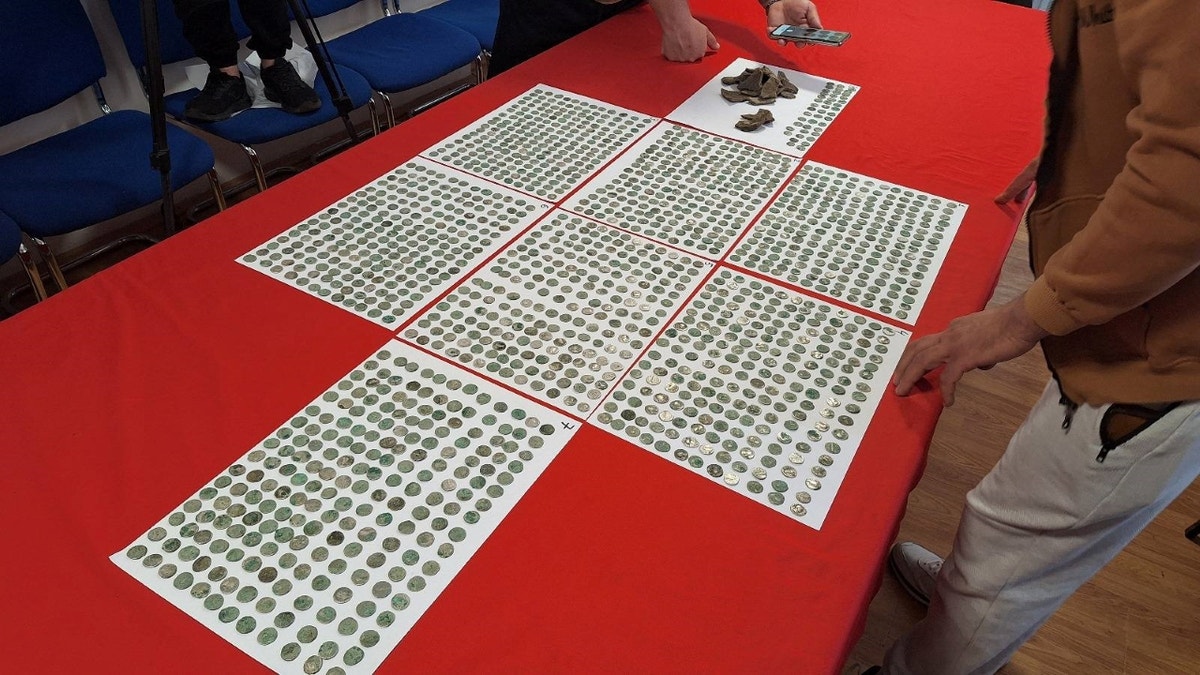
Thousands of coins on table

The findings consist of 1,469 silver denarii, which was the standard silver coin in Ancient Rome. (Marius Mangeac via Facebook)

Speaking to Fox News Digital, Mangeac estimated that the coins are at least 2,000 years old. 

CLICK HERE TO SIGN UP FOR OUR LIFESTYLE NEWSLETTER

After two strenuous days of photographing the coins, he handed them over to the town hall in Letca Nouă.

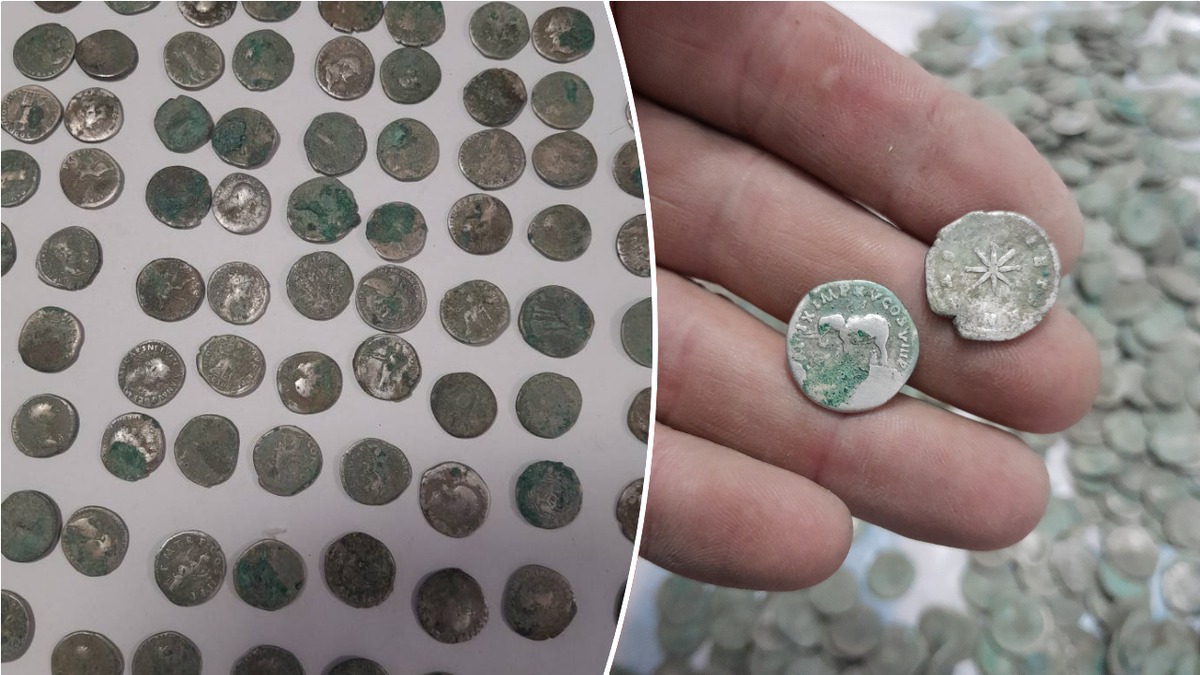
Split image of coins

Mangeac said that it took him two full days to photograph the coins he found. (Marius Mangeac via Facebook)

The metal detectorist concluded, “I hope that one day I can take my child to the museum and explain to him how I was lucky enough to discover a page of our people’s history.”

CLICK HERE TO GET THE FOX NEWS APP

Mangeac’s discovery comes weeks after a pair of metal detectorists found ancient treasure in the Romanian commune of Breaza in Transylvania.

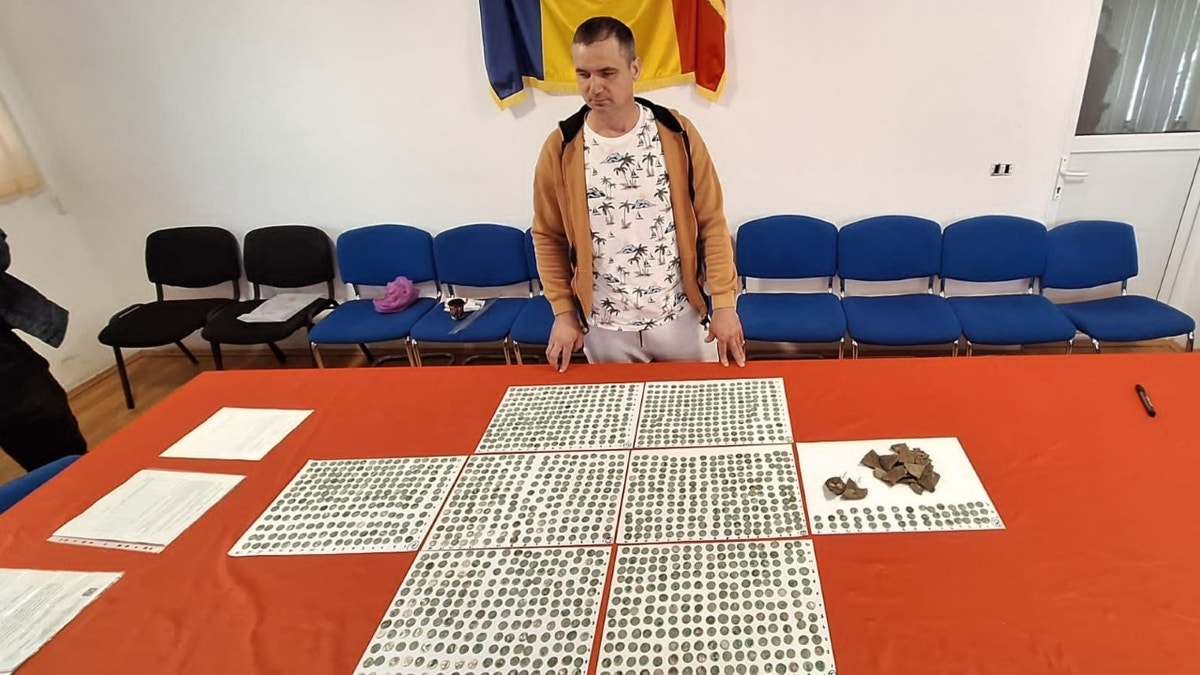
Bebe Mangeac standing with hoard of treasure

Mangeac said that he was humbled by his lucky discovery — and hopes to see it in a museum one day. (Marius Mangeac via Facebook)

The treasure dated back to the Dacians, who unsuccessfully warred against the Roman Empire in the second century A.D.

Artificial intelligence helps reunite lost dogs with their owners

0


When Michael Bown left New York City for a family reunion at the Jersey Shore, he never imagined he’d return to a nightmare. 

His beloved adopted dog, Millie, just a year old, slipped out of her collar during a walk in the East Village and vanished into the night. 

What followed was a frantic, emotional and ultimately heartwarming journey, one that highlights the power of community, technology and a little bit of luck.

Join The FREE CyberGuy Report: Get my expert tech tips, critical security alerts and exclusive deals — plus instant access to my free Ultimate Scam Survival Guide when you sign up!

AI dog tech 1

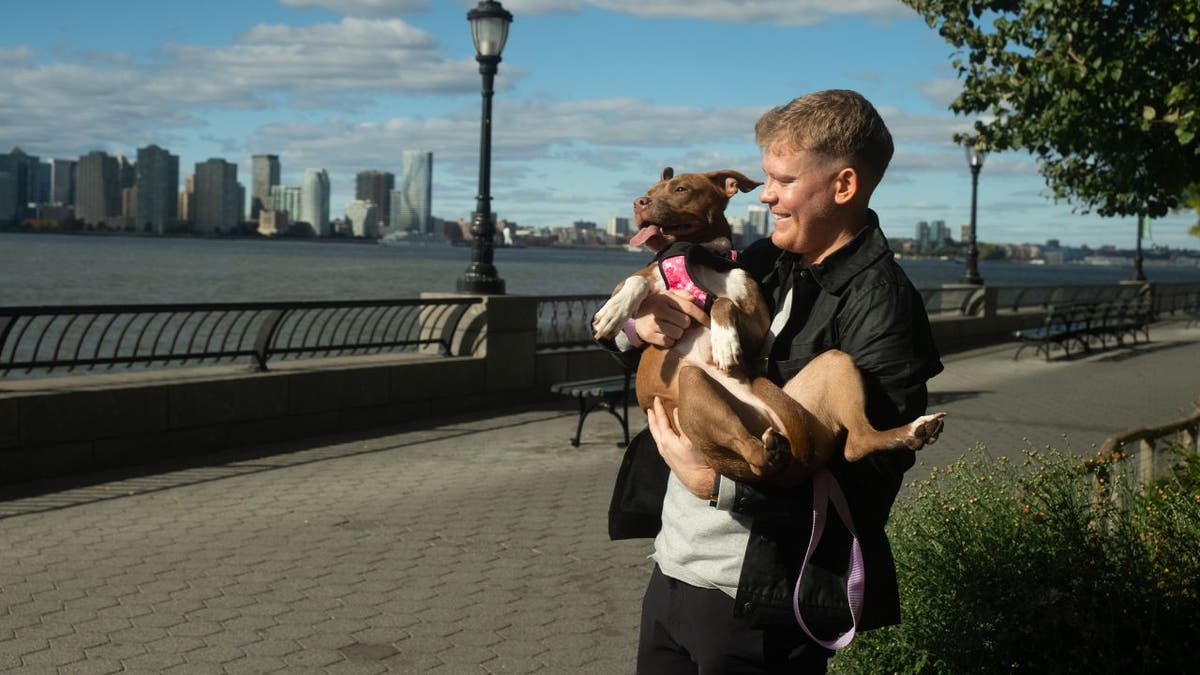
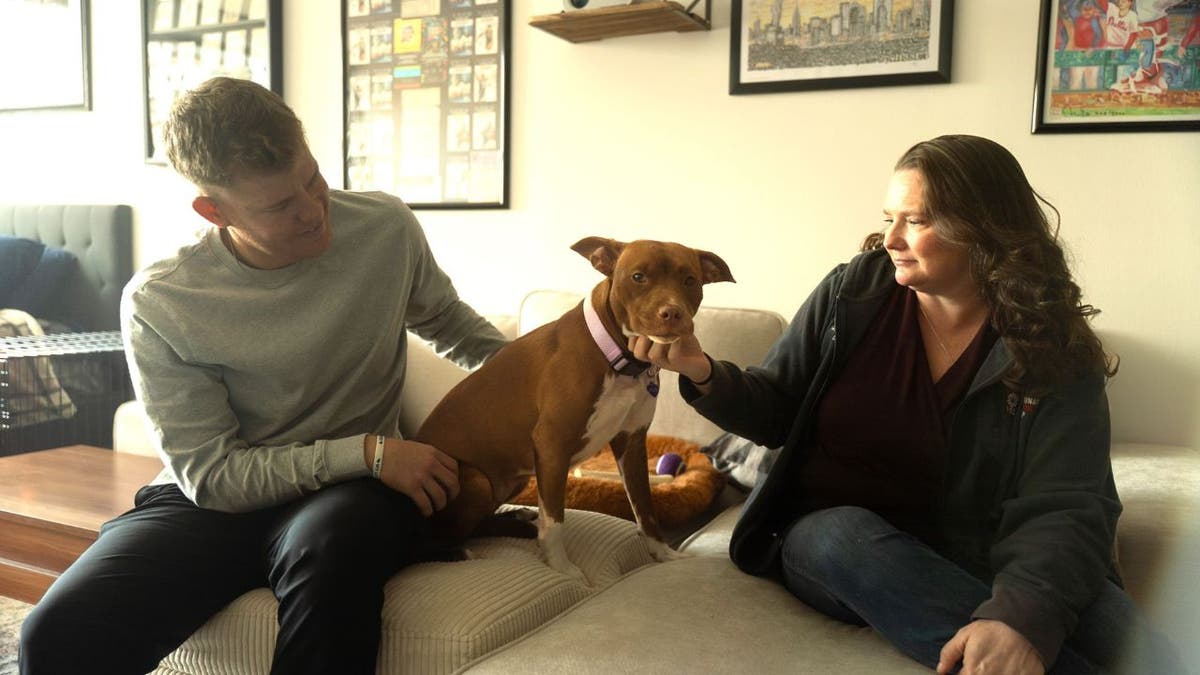
Michael Bown and his reunited dog Millie  (Petco Love)

A dog gone missing: The start of a frantic search

Michael’s story began with a simple act of trust, leaving Millie in the care of a close friend. But as Michael recalls, “She got a little spooked out on the walk with him and slipped out of her collar. This was in the East Village in New York, and she just sort of took off. I think she was trying to find me or figure out where I was.”

His friend chased Millie for blocks, desperately trying to catch up, even attempting to flag down cyclists and passersby. But Millie, a quick and determined pit bull mix, was gone. 

“He called me on the phone and was just, you know, sort of, like, panting and freaking out saying, like, ‘Hey. So sorry, but, you know, this is what happened. I’m not able to find her.'”

Michael immediately turned around, driving straight back to New York. He and his family searched the city until 2 a.m., visiting police stations and firehouses and posting in Facebook groups and lost pet websites. 

“It was like looking for a needle in a haystack, especially in New York,” he said.

AI dog tech 2

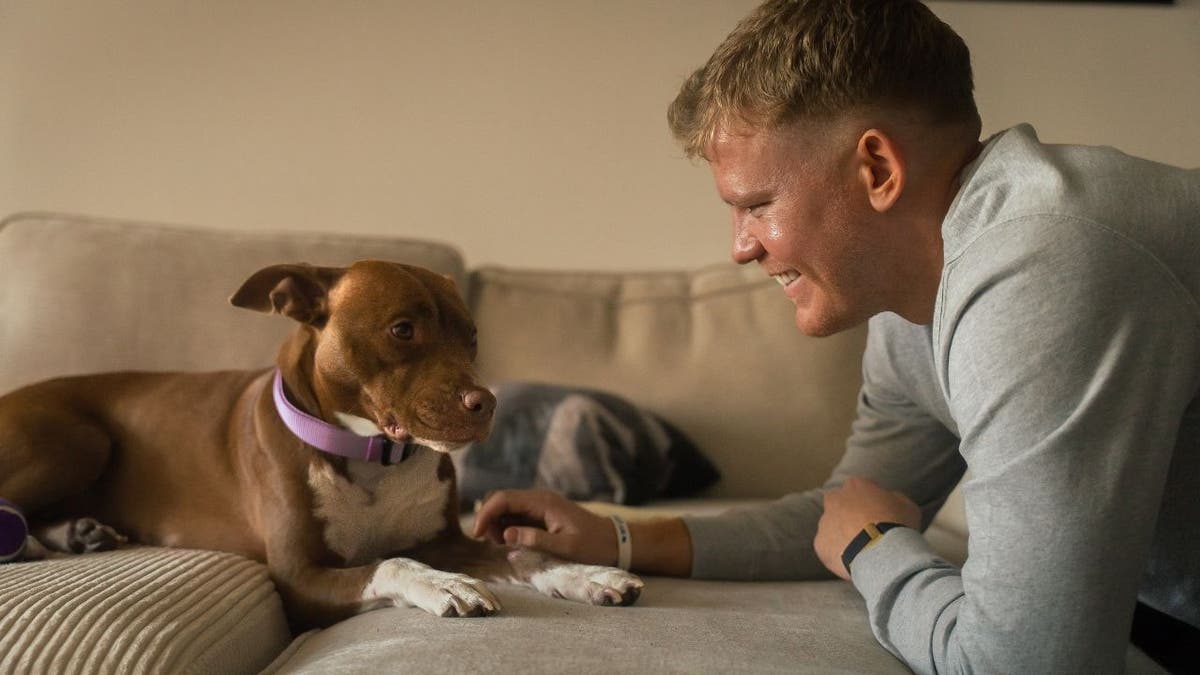
Michael Bown and his reunited dog Millie  (Petco Love)

5 BEST PET TRACKERS

Technology to the rescue

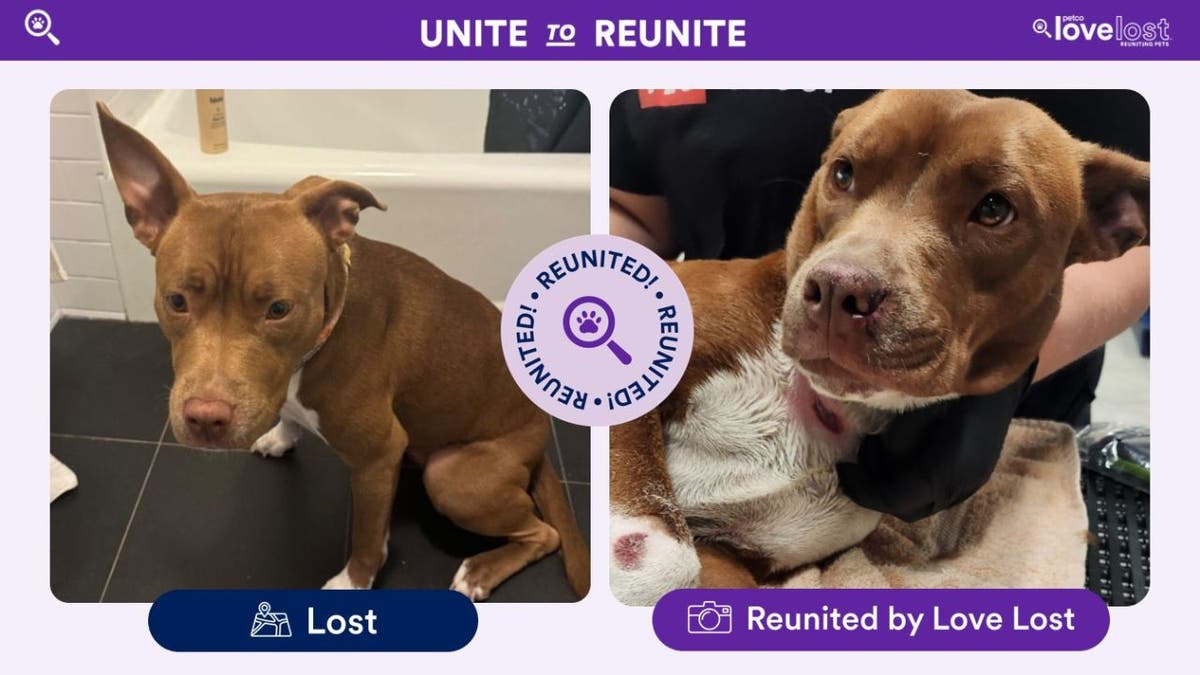
The next morning, Michael’s mother uploaded Millie’s photo and microchip information to Petco Love Lost, a free, innovative platform that uses AI-powered photo matching to reunite lost pets with their families. Within minutes, Michael received two alerts, one with an image match and another with a microchip match. Both pointed him to an emergency vet clinic in Paramus, New Jersey.

“It was fantastic. I had never heard of anything like that technology. It couldn’t have worked better,” Michael shared. “From the time she went missing to when I was able to find her, I think it was only thirteen, fourteen hours. So, yeah, I mean, less than a full day from that happening, or from her, you know, getting off the leash, to me reuniting with her.”

AI dog tech 3

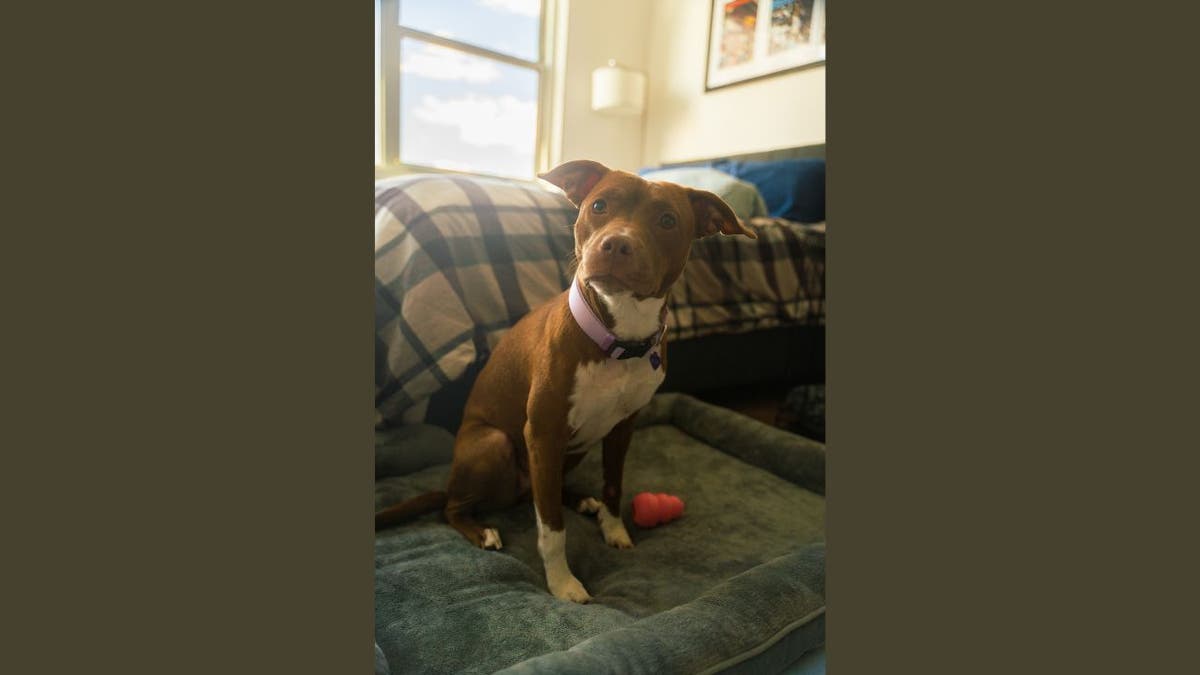
Millie’s lost and reunited photos  (Petco Love)

BEST PET TECH GIFT GUIDE

Millie’s wild journey

Millie’s adventure was as harrowing as it was miraculous. After running nearly ten miles from the East Village to Harlem, she was struck by a car. A Good Samaritan stopped traffic, scooped her up and drove her to an emergency vet in New Jersey. 

The staff treated her for scrapes, cuts and a leg injury and uploaded her photo and microchip info to Petco Love Lost, where the system’s AI matched her with Michael’s report. 

The technology was great. All we had to do was upload a picture of her, and then we were able to just get matched back with her through that picture, and, sort of like the AI technology of her getting matched, with the veterinary group also uploading a picture of her. So, yeah, I mean, it’s crazy technology these days and how quickly, you know, people can get reunited with their pets,” Michael said.

AI dog tech 4

Michael Bown and his reunited dog Millie  (Petco Love)

HEARTLESS SCAMMERS ARE PREYING ON PEOPLE’S LOST PET ANGUISH

How Petco Love Lost works

Aaron Klein, director of product at Petco Love Lost, explained the magic behind the platform.

“Petco Love Lost uses photo-matching technology to instantly scan and compare a photo of a lost or found pet against our massive, centralized database of pets,” Klein said. “This includes photos from most animal shelters across North America, as well as from platforms like Nextdoor Neighbors by Ring and direct posts from community members. What used to take hours, manually searching shelter websites, scrolling through social media and piecing together information, is now done in less than a minute.

“The Petco Love Lost system automatically matches pets based on up to 512 data points, and as soon as you report your pet, we continue monitoring all incoming pets,” Klein added. “If we find a possible match, you’ll get a new match alert via text and an email right away, so you never miss a lead. This real-time, automated approach makes reunions faster, more accurate and less stressful for pet parents.”

WHAT IS ARTIFICIAL INTELLIGENCE (AI)?

AI dog tech 5

Michael Bown and his reunited dog Millie  (Petco Love)

The challenge of lost pets

Reuniting lost pets with their families is a huge challenge, especially in a city as sprawling as New York. According to Klein, “The toughest part of reuniting lost pets is twofold: First, getting all lost and found pet data into one central place, and second, getting everyone, whether they’ve lost or found a pet, to actually look in that one place.”

GET FOX BUSINESS ON THE GO BY CLICKING HERE

With only 22% of pet parents going to a shelter when a pet is lost, but 80% searching online (often on just one platform), there are huge gaps in the search process. Petco Love Lost is tackling this by connecting data sources into one searchable platform, including over 3,000 shelters and major social media networks, with plans to expand even further.

AI dog tech 6

Michael Bown, his reunited dog Millie and Heather Small, Veterinary Emergency Group  (Petco Love)

An emotional reunion

When Michael finally saw Millie at the vet, it was a moment of pure relief and joy. 

“It was a very emotional, like, reunion for me,” he said. “I mean, I think the good thing about, like, we got reunited so quickly. But that whole, like, night where she was missing, and I wasn’t quite sure where she was was definitely, like, one of the harder nights that I’ve had for a while. … There definitely were [tears]. I was, you know, crying like a baby not to admit it. But, yeah, it was very emotional.” 

SUBSCRIBE TO KURT’S YOUTUBE CHANNEL FOR QUICK VIDEO TIPS ON HOW TO WORK ALL OF YOUR TECH DEVICES

AI dog tech 7

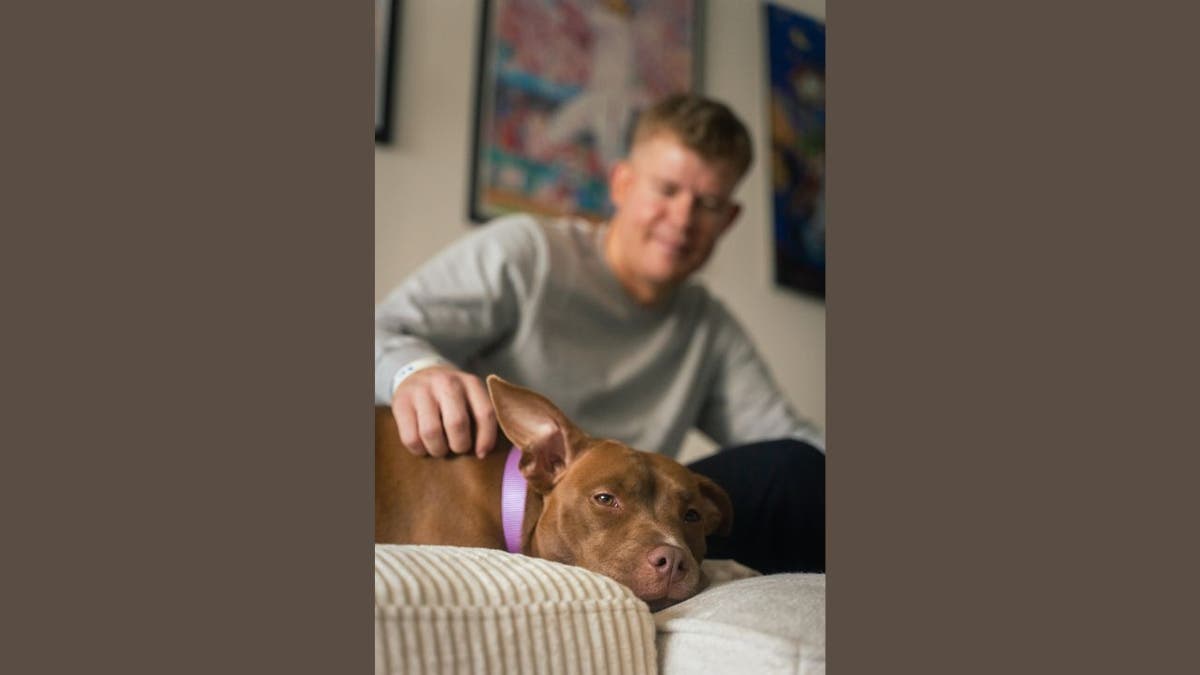
Millie reunited with her owner and back home  (Petco Love)

Kurt’s key takeaways

Michael’s story is a testament to the power of community, technology and hope. Thanks to Petco Love Lost’s innovative platform and the kindness of strangers, Millie made it home. As Michael puts it, “Love Lost helped me find Millie. It was fantastic.” 

For pet parents everywhere, platforms like Petco Love Lost are changing the game, making it faster and easier than ever to bring lost pets home where they belong.

CLICK HERE TO GET THE FOX NEWS APP

What’s the most unforgettable moment you’ve experienced when searching for a lost pet, and how do you think this kind of AI technology could change that story? Let us know by writing us at Cyberguy.com/Contact

For more of my tech tips and security alerts, subscribe to my free CyberGuy Report Newsletter by heading to Cyberguy.com/Newsletter

Ask Kurt a question or let us know what stories you’d like us to cover

Follow Kurt on his social channels

Answers to the most asked CyberGuy questions:

New from Kurt:

Copyright 2025 CyberGuy.com.  All rights reserved.  


Source link

Worst cities for allergies revealed, along with tips to manage symptoms

0

Allergy season is upon us, and it’s bringing about some of the worst cases yet.

“Changes in temperature and precipitation patterns allow plants and trees to grow in places they didn’t before,” according to the American Lung Association — which means a rising pollen count, and even new types of pollen.

The Asthma and Allergy Foundation of America (AAFA) recently released its annual allergy report, which identifies the “most challenging cities” for those living with seasonal allergies.

19 DRUG APPROVALS IN 2024 THAT HAD ‘BIG CLINICAL IMPACT,’ ACCORDING TO GOODRX

The report focuses on tree, grass and weed pollen counts throughout the year, as well as over-the-counter allergy medicine use and the availability of board-certified allergists and immunologists.

This year’s report named Wichita, Kansas, as the top allergy capital for the third year in a row, largely due to its worse-than-average tree and grass pollen. (iStock)

The 2025 report named Wichita, Kansas, as the top allergy capital for the third year in a row, largely due to its worse-than-average tree and grass pollen.

Top 10 allergy capitals

  1. Wichita, Kansas
  2. New Orleans, Louisiana
  3. Oklahoma City, Oklahoma
  4. Tulsa, Oklahoma
  5. Memphis, Tennessee
  6. Little Rock, Arkansas
  7. Raleigh, North Carolina
  8. Richmond, Virginia
  9. Greenville, South Carolina
  10. Greensboro, North Carolina

HONEY AND ALLERGY RELIEF: DO THESE TWO REALLY GO TOGETHER?

New types of pollen — and larger amounts of them — can trigger allergy symptoms for people even if they haven’t previously suffered from them.

Seasonal allergies

According to the American Lung Association, “changes in temperature and precipitation patterns allow plants and trees to grow in places they didn’t before.” (iStock)

Dr. Purvi Parikh, who specializes in infectious disease allergy and immunology at NYU Langone, spoke with Fox News Digital about the best ways to keep allergies at bay as the seasons change.

1. Stay on top of medications

For those who suffer from seasonal allergies, Parikh recommends starting medications early.

“One of the most important things that we recommend is to use a 24-hour antihistamine, because they’re longer-acting and can really help control symptoms,” she told Fox News Digital.

Eye drops and antihistamine nasal sprays can also help with itchy eyes and stuffy noses, respectively.

HEART DISEASE DEATH RISK RAISED BY COMMON HOUSEHOLD PRODUCTS, STUDY FINDS

“The other important thing to remember with over-the-counter medications is that if you’re having breathing issues, like coughing, wheezing or chest tightness, those are all signs that you might have asthma,” Parikh cautioned.

In that case, she recommends seeing a medical professional to make sure you’re using the right medication.

A woman with brown curly curly holds a tissue to her nose with both hands, covering the bottom half of her face. Her eyes are closed as she blows her nose and is positioned in the foreground of a green backdrop set in nature

“One of the most important things that we recommend is to use a 24-hour antihistamine, because they’re longer-acting and can really help control symptoms,” an expert advised. (Getty Images)

2. Wash your clothes

When coming inside after spending time outdoors, Parikh recommends changing clothes and taking a shower to wash off any pollen and decrease exposure.

CLICK HERE TO GET THE FOX NEWS APP

Washing bedsheets once a week in warm water can also help limit exposure to allergens, according to experts.

3. Pay attention to timing

As the pollen count is highest in the mornings, Parikh said it’s best to stay indoors early in the day.

“Keep windows closed early in the morning for the same reason,” she advised.

9 OVER THE COUNTER REMEDIES TO HELP YOU BEAT SPRING ALLERGIES

The pollen count surges again in the late afternoon and early evening hours.

Different plants and trees release pollen at different times, so symptoms can vary depending on where you live, according to the AAFA.

Blooming tree

Different plants and trees release pollen at different times, so symptoms can vary depending on where you live. (iStock)

Trees generally produce the most pollen from February through April. 

In some southern states, however, they can begin producing the allergen as early as December or January and peak at multiple times during the year, the same source stated.

4. Seek care as needed

While stuffy noses and dry eyes are often chalked up to allergies, Parikh noted that other factors could be at play.

CLICK HERE TO SIGN UP FOR OUR HEALTH NEWSLETTER

Colds and viruses and allergies can have a lot of identical symptoms,” she told Fox News Digital.

“Allergies tend to last longer … so if you feel like you’re sick for the whole month of April and May … it may be more likely that it’s allergies.”

For more Health articles, visit www.foxnews.com/health

Those who are unsure whether their symptoms are due to allergies or illness should consult a doctor, Parikh advised.

Trump vows to increase trade with India, Pakistan after praising ceasefire agreement: ‘A job well done!’

0

U.S. President Donald Trump on Saturday promised to increase trade with India and Pakistan after the two nations agreed to a ceasefire to end the conflict with each other.

“While not even discussed, I am going to increase trade, substantially, with both of these great Nations,” Trump wrote on Truth Social. “Additionally, I will work with you both to see if, after a ‘thousand years,’ a solution can be arrived at concerning Kashmir. God Bless the leadership of India and Pakistan on a job well done!!!”

The fragile ceasefire was holding on Sunday after several days of intense fighting, with dozens killed as missiles and drones were fired at each other’s military bases. The deal was reached after diplomacy and pressure from the U.S., but artillery fire was witnessed in Indian Kashmir within hours of the agreement.

Attacks were witnessed in cities near the border under a blackout, as was the case in the previous two evenings.

INSIDE THE WHITE HOUSE’S EFFORT TO PULL INDIA, PAKISTAN BACK FROM THE BRINK OF WAR

U.S. President Donald Trump promised to increase trade with India and Pakistan after the two nations agreed to a ceasefire. (Al Drago/Bloomberg via Getty Images)

The fighting began on Wednesday after 26 men were killed two weeks prior in an attack targeting Hindus in Pahalgam in Kashmir. Both countries rule part of Kashmir but claim full control.

Late on Saturday, India accused Pakistan of violating the agreement to stop firing and that the Indian armed forces had been told to “deal strongly” with any continued firings.

Pakistan blamed India for violating the truce and said it was committed to the ceasefire.

TRUMP ANNOUNCES INDIA AND PAKISTAN AGREED TO CEASEFIRE

Indian policemen pay their respects during a funeral

Indian police officers pay their respects during the funeral of Raj Kumar Thapa, a senior government official who was killed in cross-border shelling between India and Pakistan, in Roop Nagar, Jammu, May 11, 2025. (Reuters)

The fighting and explosions reported overnight had quieted on both sides of the border by dawn on Sunday.

“I am very proud of the strong and unwaveringly powerful leadership of India and Pakistan for having the strength, wisdom, and fortitude to fully know and understand that it was time to stop the current aggression that could have lead to to [sic] the death and destruction of so many, and so much,” Trump said in his post.

“Millions of good and innocent people could have died! Your legacy is greatly enhanced by your brave actions. I am proud that the USA was able to help you arrive at this historic and heroic decision,” he added.

People celebrate after the ceasefire announcement

People celebrate after the ceasefire announcement between India and Pakistan, in Hyderabad, Pakistan, May 10, 2025. (Reuters)

CLICK HERE TO GET THE FOX NEWS APP

In the Indian border city of Amritsar, a siren sounded Sunday morning to resume normal activities.

Officials in Pakistan said there was some firing in Bhimber in Pakistani Kashmir overnight, but there was no fighting anywhere else and no casualties were reported.

The two countries have gone to war three times, including twice over Kashmir.

Reuters contributed to this report.

Wreckage of 19th century Dutch ship found off Australia: ‘Significant discovery’

0

Archaeologists are confident they have found the wreckage of an 800-ton Dutch merchant ship that sunk off the coast of Australia 168 years ago. 

The Koning Willem de Tweede was lost near Robe, Australia, in June 1857, killing 16 of its 25 crew members. 

The “significant discovery” was announced this week by the Australian National Maritime Museum and the SilentWorld Foundation after a four-year search. 

The find “connects us to stories of trade and migration, having discharged over 400 Chinese miners just days before its sinking,” the museum said in a post on social media about the discovery. 

ARCHAEOLOGISTS UNCOVER CENTURIES-OLD SHIPWRECK BENEATH ANCIENT CITY: ‘UNIQUE SOURCE OF KNOWLEDGE’

A painting of the Koning Willem de Tweede, an 800-ton Dutch merchant ship that sunk off the coast of Australia 168 years ago.  (Australian National Maritime Museum)

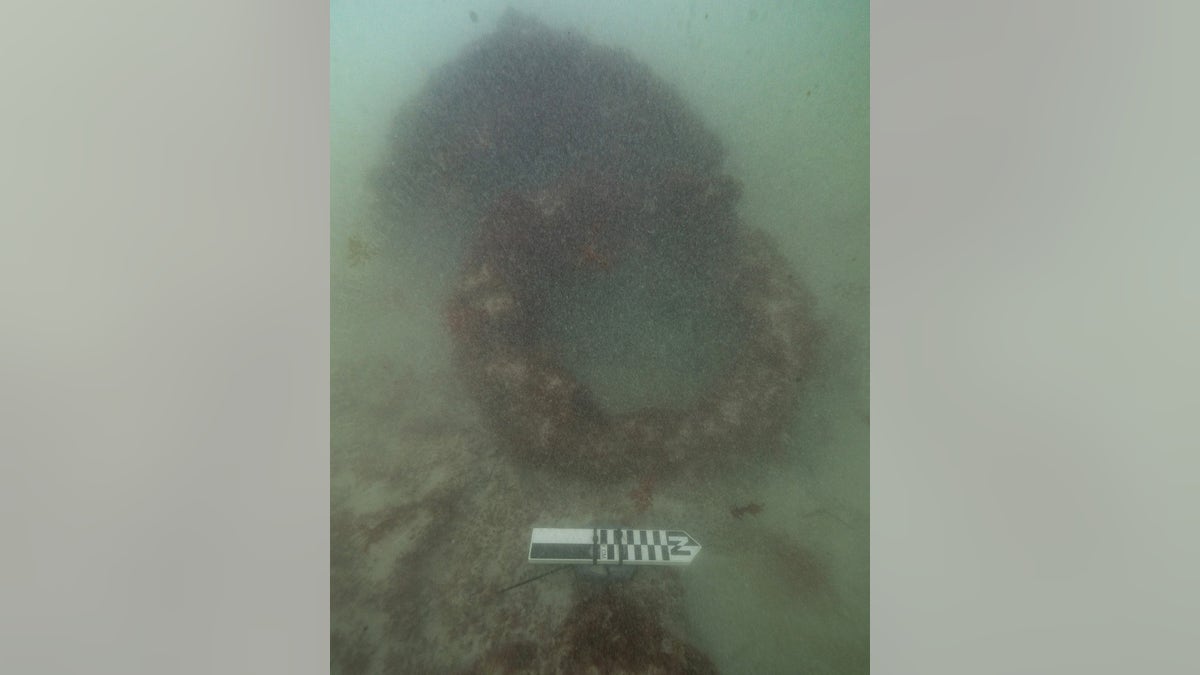
James Hunter, acting manager of maritime archeology at the Australian National Maritime Museum, told the Australian Broadcasting Company (ABC) Wednesday that archaeologists had uncovered several components of the ship, including its windlass, a device that raises and lowers equipment to the ship sticking out of the seabed. 

“We looked at things like the depth of the ship — the draught — and we’ve looked at the water depth it’s sitting in, and that all seems to line up really well,” he told ABC of the confidence they had found its final resting place. 

He added that researchers also found a “magnetic anomaly” that is the same length as the 140-foot ship. 

The museum said the find was a collaboration with the Silentworld Foundation, a nonprofit that supports underwater archeology, and, South Australia’s Department for Environment and Water and Flinders University.

Component of ship on sea floor

A component of the ship was found on the sea floor.  (Australian National Maritime Museum)

HAUNTING SLAVE SHIPS FOUND OFF COAST OF NATIONAL PARK 300 YEARS LATER: ‘VERY CONVINCING’

“This significant discovery, supported by the Dutch Ministry of Foreign Affairs and the Cultural Heritage Agency of the Netherlands, marks the culmination of dedicated research since 2022,” the museum said on Facebook Tuesday. “Future monitoring visits are planned to further assess the site and uncover more of this important piece of maritime history.” 

“When the weather has been kind enough, they have carried out survey work searching for the wreck,” SilentWorld said on Facebook Wednesday. “The latest visit to Robe, in association with the team listed above, led to the probable identification of the shipwreck. The visibility was challenging, but still enough for the team to make this incredible call!”

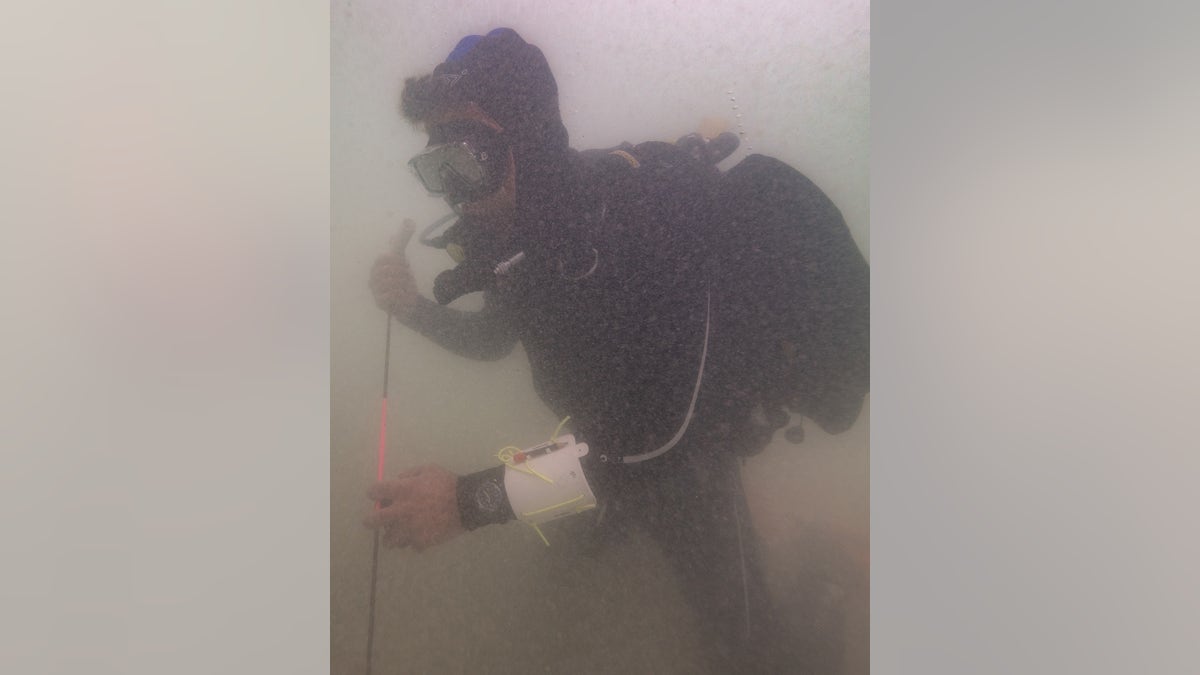
Diver exploring wreck

A diver exploring the wreck of the Koning Willem de Tweede.  (Australian National Maritime Museum)

Hunter told ABC the ship may have run aground on the seabed and was buried by sand. 

The team thought it had found the wreck three years ago, but Hunter said the sand made visibility difficult. 

CLICK HERE TO GET THE FOX NEWS APP

“It takes nothing to stir the sand up, and it kind of sits in suspension almost like you’re in a blizzard underwater,” he said.

FDA approves first at-home HPV test to screen for cervical cancer

0

The Food and Drug Administration (FDA) has approved the first at-home screening test for cervical cancer, the product’s maker announced on Friday.

The DIY test could serve as an alternative to in-person “Pap smears,” which are recommended every three years for women up to age 65.

The self-collection device — the Teal Wand, made by Teal Health in San Francisco — allows women to procure a sample and mail it in for laboratory analysis.

NEW CERVICAL CANCER TREATMENT APPROACH COULD REDUCE RISK OF DEATH BY 40%, TRIAL RESULTS SHOW

The test is designed to detect human papillomavirus (HPV), the virus that causes almost all cervical cancer cases.

The Food and Drug Administration has approved the first at-home screening test for cervical cancer, the product’s maker announced on Friday. (iStock)

The approval comes after a clinical trial including more than 600 women, in which the Teal Wand had a 96% accuracy rate of detecting cervical precancers.

In the study, 86% of participants said they’d be more likely to comply with cervical cancer screening recommendations if they could do it at home, Teal Health reported.

Additionally, 94% said they would prefer to self-collect at home as long as the results were accurate.

CERVICAL CANCER DEATHS COULD BE REDUCED WITH HOME HPV TESTING, STUDY FINDS

“Cervical cancer is largely preventable, yet screening rates in the U.S. continue to lag, and the FDA approval of this at-home Teal Wand self-collection device is a critical step forward,” said Dr. Christine Conageski, associate professor, OB-GYN and director of the Complex Dysplasia Clinic at the University of Colorado, who was a principal investigator in the SELF-CERV trial. 

“It offers an evidence-based way to expand access without compromising accuracy,” she added in a statement.

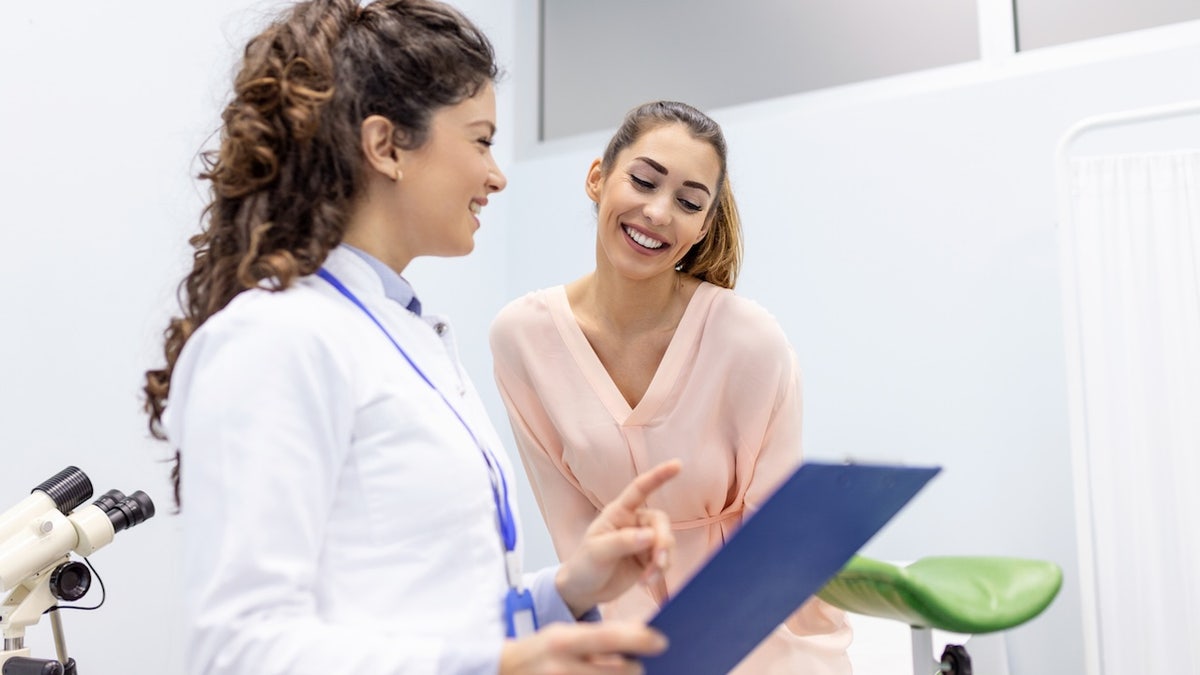
Woman at OB-GYN

“Cervical cancer is largely preventable, yet screening rates in the U.S. continue to lag, and the FDA approval of this at-home Teal Wand self-collection device is a critical step forward,” a doctor said. (iStock)

Approximately 11,500 new cervical cancer diagnoses are made in the U.S. each year, and the disease causes 4,000 annual deaths, according to the Centers for Disease Control and Prevention. 

In addition to the cervical cancer risk, some higher-risk incidences of HPV can also cause other types of cancers, according to experts.

“Any type of test that helps detect cervical cancer is a win.”

Women between the ages of 25 and 65 who are at average risk of cervical cancer will soon be able to order the at-home test at www.getteal.com, according to the company’s announcement.

Kits are expected to first become available in California starting in June, with plans to expand across the country “as soon as possible,” the company said in its announcement.

CLICK HERE TO SIGN UP FOR OUR HEALTH NEWSLETTER

“Teal is working with major insurance providers and plans to have flexible payment options, helping to remove financial concerns and ensuring more women have access to this preferred at-home screening if they want it,” the company stated. 

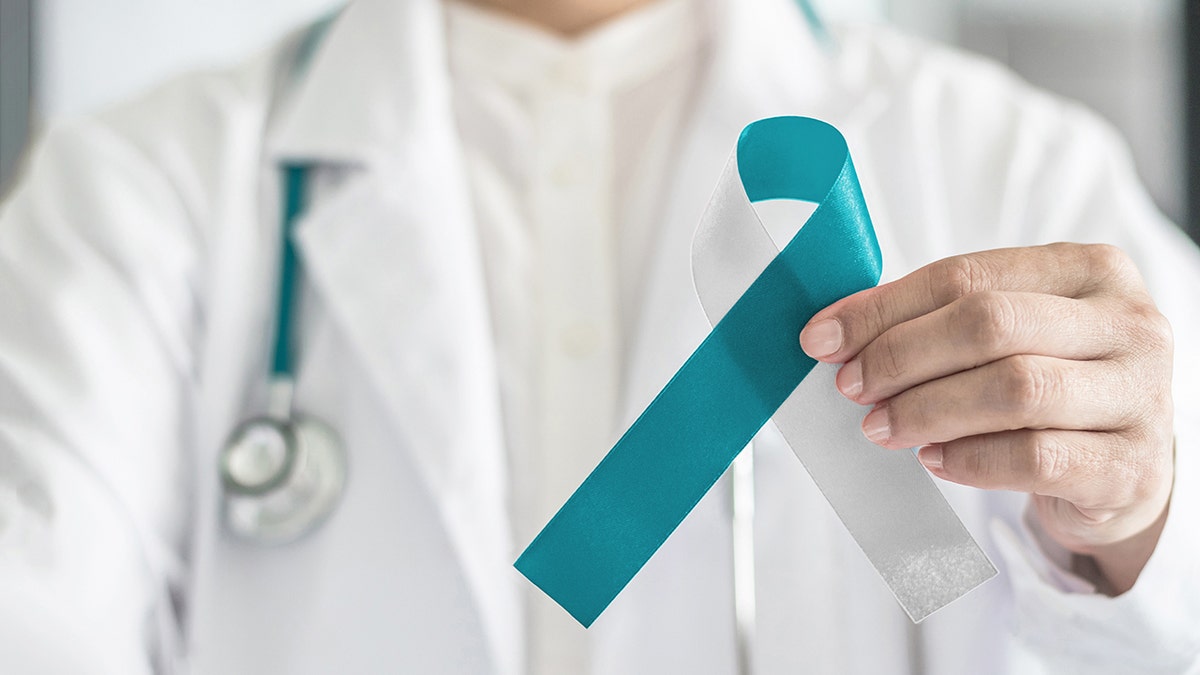
doctor holds teal and white ribbon for Cervical Cancer awareness

Approximately 11,500 new cervical cancer diagnoses are made in the U.S. each year, and the disease causes 4,000 annual deaths. (iStock)

In addition to the collection kit, the product also includes a telehealth service with support from medical providers throughout the process.

Women who test positive for HPV will be referred for a traditional Pap smear. Those who do not test positive are not considered at risk of cervical cancer and will not need to screen again for three to five years.

CLICK HERE TO GET THE FOX NEWS APP

“Some women are scared of a traditional Pap smear or find the process uncomfortable — as a result, they put off this vital test,” said Ami Vaidya M.D., co-chief of gynecologic oncology at Hackensack University Medical Center’s John Theurer Cancer Center, in a press release. (She was not involved in the trial.)

For more Health articles, visit www.foxnews.com/health

“This could be an important tool in getting more women regularly screened, especially those who don’t have access to a medical provider. Any type of test that helps detect cervical cancer is a win.”

How SIM swapping led to a $1.8M cyber fraud case

0


Join Fox News for access to this content

You have reached your maximum number of articles. Log in or create an account FREE of charge to continue reading.

By entering your email and pushing continue, you are agreeing to Fox News’ Terms of Use and Privacy Policy, which includes our Notice of Financial Incentive.

Please enter a valid email address.

A San Fernando Valley, California, man has been sentenced to more than five years in federal prison after orchestrating a massive fraud operation that targeted dozens of victims, many of them elderly. 

Oren David Sela, 36, stole mail, hijacked phone numbers through SIM swapping, and used victims’ identities to drain bank accounts, stealing over $1.8 million. 

Here is how the scheme worked and what you can do to avoid becoming a victim of a similar attack.

Join The FREE CyberGuy Report: Get my expert tech tips, critical security alerts, and exclusive deals — plus instant access to my free Ultimate Scam Survival Guide when you sign up!

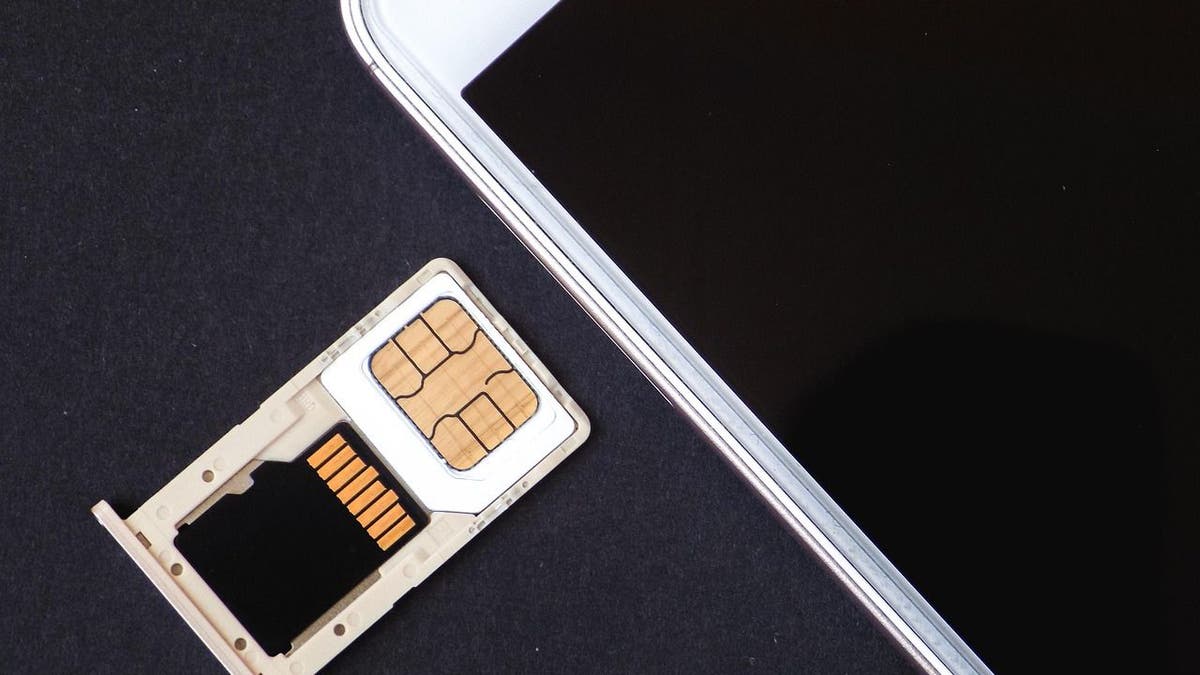
sim swapping 1

A SIM card. (Kurt “CyberGuy” Knutsson)

What is SIM swapping?

SIM swapping is a form of identity theft where a scammer tricks a mobile carrier into transferring your phone number to a new SIM card they control. Once they hijack your number, they can intercept text messages, including verification codes, and gain access to your bank accounts, emails and more.

There are two common ways scammers pull off SIM swaps:

  • Social engineering: They impersonate you and contact your phone carrier’s customer support, claiming their phone was lost or stolen. They then convince the carrier to activate a new SIM card with your number.
  • Insider threats: In some cases, scammers bribe or trick employees at mobile carriers into switching the number without following proper verification steps.

Once they control your phone number, they can:

  • Receive all your incoming calls and texts
  • Reset passwords on your email, bank, and social media accounts
  • Bypass security alerts sent to your phone
  • Lock you out of your own accounts

SIM swapping turns your phone number into a master key for stealing your identity and money.

HOW TO AVOID MALICIOUS SIM SWAPPING SCAM

Inside the $1.8M fraud scheme

Between November 2021 and October 2023, Sela stole mail from homes in Beverly Hills, California, and nearby neighborhoods. He collected personal information, including:

  • Debit and credit card details
  • Bank account numbers
  • Social Security numbers
  • Driver’s licenses

Using this information, Sela carried out SIM swapping attacks to bypass two-factor authentication (2FA) protections. This allowed him to:

  • Break into victims’ online banking and financial accounts
  • Open new fraudulent accounts in the victims’ names
  • Transfer money into intermediary accounts he controlled
  • Order new debit and credit cards linked to the victim accounts

Sela made hundreds of fraudulent withdrawals and transfers. He attempted to steal nearly $2.6 million and successfully stole at least $1.8 million.

The lavish lifestyle and his downfall

Sela often spent the stolen money on luxury goods, including a nearly $17,000 watch. In 2022, he was arrested in Beverly Hills and found with nearly $25,000 in cash, various pieces of expensive jewelry, and numerous fraudulent debit and credit cards belonging to elderly victims. Despite this arrest, Sela continued committing fraud. During two subsequent searches of his properties in 2022 and 2023, law enforcement discovered more than $70,000 in cash, stolen mail, fraudulent identification documents, and banking information linked to dozens of victims.

In October 2024, Sela pleaded guilty to bank fraud and aggravated identity theft. On April 22, 2025, he was sentenced to 61 months in federal prison and ordered to pay $1,818,369 in restitution.

SIM swapping 2

Illustration of two-factor authentication. (Kurt “CyberGuy” Knutsson)

FBI WARNS ABOUT NEW EXTORTION SCAM TARGETING SENSITIVE DATA 

Why SIM swapping is so dangerous

Two-factor authentication provides an extra layer of security, but it is only effective if the attacker cannot access your phone. When scammers hijack your phone number, they can intercept 2FA codes sent by text and quickly take control of your accounts. Once inside your email or banking app, they can:

  • Reset passwords
  • Move money
  • Lock you out
  • Open new lines of credit in your name

They do not even need your password if they can control your number.

WHAT IS ARTIFICIAL INTELLIGENCE (AI)?

SIM swapping 3

Illustration of security on smart device. (Kurt “CyberGuy” Knutsson)

WHAT EXACTLY IS A DATA BREACH AND WHY SHOULD I CARE?

How to protect yourself from SIM swapping and identity theft

Take these important steps to secure your information:

1. Monitor your accounts: Regularly review your bank statements, credit card statements, and financial accounts for unauthorized activity. Report any suspicious transactions immediately.

2. Lock your SIM card: Set a PIN on your SIM card through your mobile carrier. Without it, your number cannot be moved without your permission.

3. Be cautious about sharing personal information: Limit the amount of personal information you share online, especially on social media. Scammers often use small details like birthdays, pet names, or locations to guess security questions or impersonate you.

4. Place a fraud alert: Contact one of the three major credit bureaus (Equifax, Experian, or TransUnion) and request a fraud alert. This makes it harder for identity thieves to open new accounts in your name.

5. Check your credit reports: Obtain free copies of your credit reports and review them carefully for suspicious activity. If you find errors or signs of fraud, report them right away.

GET FOX BUSINESS ON THE GO BY CLICKING HERE

6. Freeze your credit: A credit freeze prevents new accounts from being opened in your name without your consent. It is free to set up and does not affect your credit score.

7. Use an authenticator app, not SMS for two-factor authentication: Use apps like Microsoft Authenticator or Google Authenticator instead of relying on text message codes, which can be intercepted if your phone number is stolen.

8. Strengthen your passwords: Create strong, unique passwords for each account. Consider using a password manager to generate and store complex passwords securely. Get more details about my best expert-reviewed Password Managers of 2025 here.

9. Invest in identity theft protection: Identity Theft companies can monitor personal information like your Social Security Number (SSN), phone number, and email address and alert you if it is being sold on the dark web or being used to open an account. They can also assist you in freezing your bank and credit card accounts to prevent further unauthorized use by criminals. See my tips and best picks on how to protect yourself from identity theft.

10. Be cautious of phishing attempts and use strong antivirus software: Watch out for emails, texts, or calls asking for personal information. Always verify the source before providing sensitive details. Installing antivirus software on all your devices can help protect you by blocking malicious links, detecting phishing attempts, and stopping malware before it can steal your private information. Get my picks for the best 2025 antivirus protection winners for your Windows, Mac, Android and iOS devices. 

Kurt’s key takeaways

If scammers can steal your phone number, they can steal your money, your accounts, and even your identity. SIM swapping is a serious threat because it gives criminals a shortcut around your strongest defenses. Take action today to protect your phone, your accounts, and your personal information. A few small steps can make the difference between staying safe and facing a devastating financial loss.

CLICK HERE TO GET THE FOX NEWS APP

Have you ever been targeted by a SIM swapping scam or identity theft? Let us know by writing us at Cyberguy.com/Contact

For more of my tech tips and security alerts, subscribe to my free CyberGuy Report Newsletter by heading to Cyberguy.com/Newsletter

Ask Kurt a question or let us know what stories you’d like us to cover.

Follow Kurt on his social channels:

Answers to the most-asked CyberGuy questions:

New from Kurt:

Copyright 2025 CyberGuy.com. All rights reserved.  



Source link

US barely ahead of China in artificial intelligence arms race, Sam Altman says

0


Welcome to Fox News’ Artificial Intelligence newsletter with the latest AI technology advancements.

IN TODAY’S NEWSLETTER:

– OpenAI chief Sam Altman: US barely ahead of China in artificial intelligence arms race
– Some companies have been adjusting their workforce as they embrace more AI, automation: report
– Randy Travis stages stunning comeback with help from AI after devastating stroke

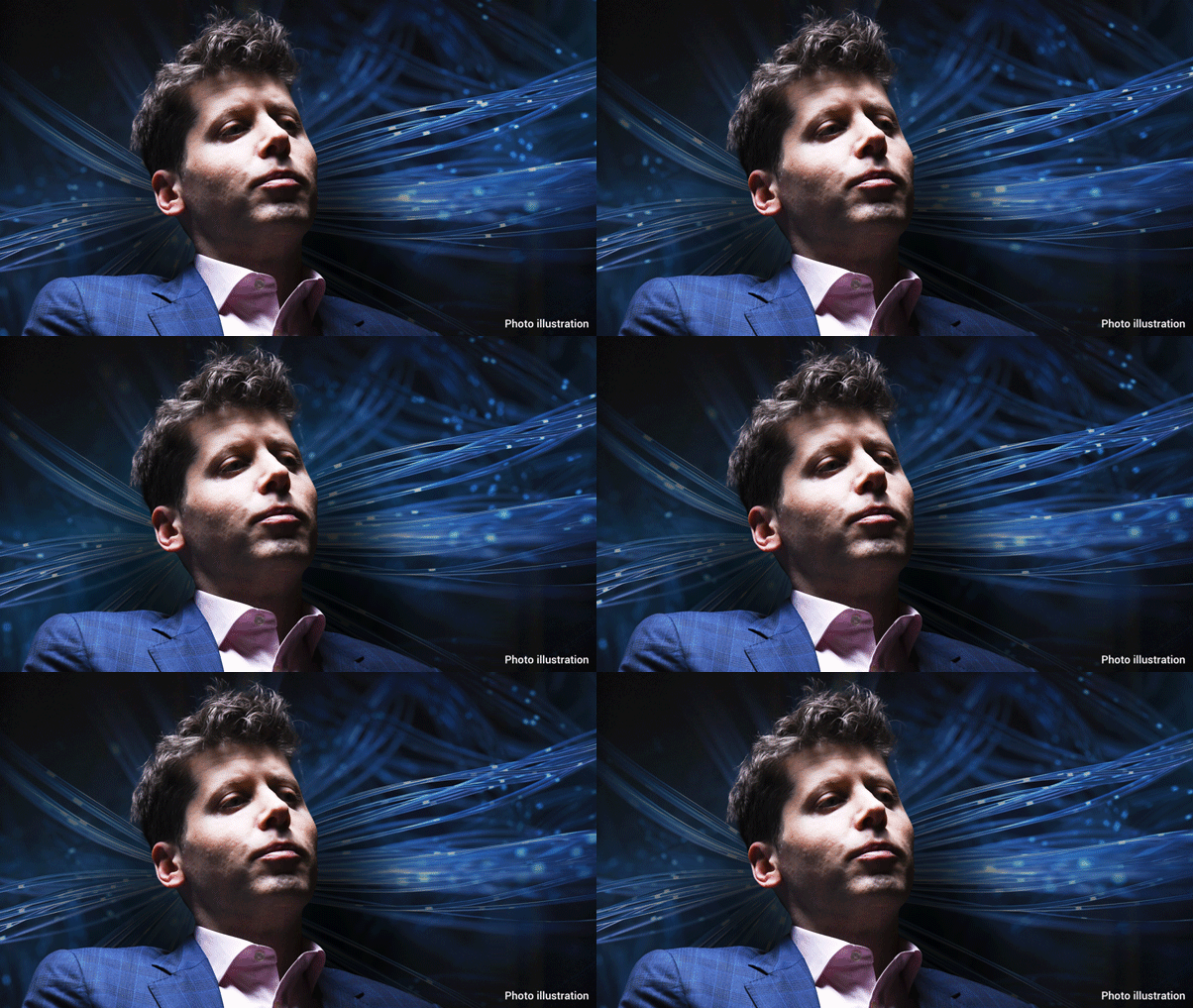
AI ARMS RACE: OpenAI co-founder Sam Altman joined three other artificial intelligence (AI) and technology executives for a Senate Commerce Committee hearing on winning the global AI race and strengthening domestic capabilities in computing and innovation.

Sam Altman, chief executive officer of OpenAI, during a fireside chat at University College London (UCL) in London, UK, on Wednesday, May 24, 2023. Altman said part of the reason for his current tour of European cities is to discover a suitable location for a new office.  Digital Network - Human Brain - Blue Version - Artificial Intelligence, Data Flow, Synapse - stock video

Sam Altman, chief executive officer of OpenAI, during a fireside chat at University College London (UCL) in London, UK, on Wednesday, May 24, 2023. Altman said part of the reason for his current tour of European cities is to discover a suitable location for a new office.  Digital Network – Human Brain – Blue Version – Artificial Intelligence, Data Flow, Synapse – stock video (Photographer: Chris J. Ratcliffe/Bloomberg via Getty Images)

EMBRACING AI: Some companies have been adjusting their workforce as they simultaneously embrace artificial intelligence and automation more, according to Forbes.

NEW INVESTORS: OpenAI is shaking up its corporate structure to bring in new investors and accelerate the development of artificial general intelligence (AGI).

OPINION: META MADNESS: Mark Zuckerberg went on a recent media tour to promote that Meta is seeking to transform its Meta AI chatbots into friends, under the guise of helping the very real loneliness epidemic.

Mark Zuckerberg speaks on Theo Von's podcast

Meta CEO Mark Zuckerberg spoke with comedian Theo Von on his “This Past Weekend” podcast. (Theo Von YouTube channel)

TRAGEDY TO TRIUMPH: Randy Travis is leaning into artificial intelligence to continue to produce new music, over a decade after his near-fatal stroke.

’90s NBA NOSTALGIA: The late Jim Fagan, whose iconic voice became synonymous with NBC programming in the ’90s, will be part of NBA coverage going forward – thanks to artificial intelligence.

‘NOTHING TO DO WITH IT’: President Donald Trump responds to some controversy over an AI-generated image of him as the pope.

Subscribe now to get the Fox News Artificial Intelligence Newsletter in your inbox.

FOLLOW FOX NEWS ON SOCIAL MEDIA

Facebook
Instagram
YouTube
Twitter
LinkedIn

SIGN UP FOR OUR OTHER NEWSLETTERS

Fox News First
Fox News Opinion
Fox News Lifestyle
Fox News Health

DOWNLOAD OUR APPS

Fox News
Fox Business
Fox Weather
Fox Sports
Tubi

WATCH FOX NEWS ONLINE

Fox News Go

STREAM FOX NATION

Fox Nation

Stay up to date on the latest AI technology advancements and learn about the challenges and opportunities AI presents now and for the future with Fox News here.


Source link

BioRewards Plasma Services and Alpha-1 Plasma Holdings Launch $100M Expansion Plan to Revolutionize Plasma Collection

0
Picture1

New York City, NY – 05/09/2025 – BioRewards Plasma Services (“BioRewards”), a next-generation plasma collection company, has officially launched with the backing of Alpha-1 Plasma Holdings (“Alpha-1”), a premier investor in plasma collection infrastructure. With equity commitments and debt financing, BioRewards is set to deploy over $100 million in capital to open more than 20 state-of-the-art plasma collection centers across the U.S. over the next three years, with other centers in the conception stage outside the US within key nations. The company aims to redefine donor experience, enhance efficiency through cutting-edge technology, and deliver high-quality plasma materials to fractionators worldwide.

“We believe in building strategic partnerships that maximize impact,” said Charles Auger, CEO of BioRewards. “Our ability to work creatively with plasma-derived medicinal product (“PDMP”) fractionators around the world, combined with our relentless focus on innovation and efficiency, makes us a partner of choice in this industry.”  BioRewards stands out as a premier independent developer and operator of plasma collection centers, offering both normal source and hyperimmune plasma solutions. Leveraging advanced digital tools—including AI-driven site selection analytics, CRM-driven donor engagement, and operational optimization—BioRewards will increase collection efficiency, reduce donor wait times, and ensure plasma supply reliability for global fractionators.

“Our mission is simple but critical—to provide a flexible and modern approach to plasma collection that meets the growing demand for plasma-derived medicines,” remarked Chris Barber, COO of BioRewards. “With decades of industry expertise, our leadership team understands what it takes to scale operations while maintaining the highest standards of quality and efficiency.”

Alpha-1 Plasma Holdings’ investment in BioRewards reflects a strong commitment to reshaping the plasma collection landscape.John Fontana, CEO of Alpha-1, highlighted BioRewards’ potential impact: “The independent plasma sector needs forward-thinking companies that can reliably and cost-effectively meet global plasma demand. BioRewards brings together experience, vision, strategy, and execution—all the ingredients necessary to be a game-changer.”

Fontana continued, “At Alpha-1, we recognize that success in the plasma industry requires more than operational excellence—it requires creative partnerships with financial and real estate development partners. BioRewards is uniquely positioned to forge these relationships and unlock new growth opportunities.”

With early interest from global fractionators and nations, BioRewards is positioning itself as a key player in the plasma supply chain. BioRewards Plasma is set to make a lasting impact on the industry by combining donor-first experiences with best-in-class technology and operational excellence. The company welcomes collaboration with fractionators, healthcare providers, and community leaders as it embarks on this ambitious expansion plan. Peter M. Jaworski, Ph.D., Senior Advisor at Alpha-1, emphasized the global significance of this initiative, stating, “Plasma-derived therapies are essential to millions of patients worldwide. BioRewards will help by increasing the high-quality plasma supply in order to meet the growing demand for these life-saving therapies in a sustainable way.”

About BioRewards Plasma Services:
BioRewards Plasma Services is an emerging leader in the independent plasma collection industry, dedicated to delivering high-quality source and hyperimmune plasma material for pharmaceutical companies worldwide. With a leadership team boasting over 100 years of combined experience, BioRewards leverages cutting-edge technology to enhance donor experience, improve operational efficiency, and ensure a stable high-quality plasma supply chain.

About Alpha-1 Plasma Holdings:
Alpha-1 Plasma Holdings is a strategic investor in the healthcare industry, focused on expanding human plasma material availability to PDMP fractionators worldwide. With a commitment to innovation, Alpha-1 partners with industry leaders to advance the future of plasma-derived therapies through creative partnerships and real estate development.

To learn more about partnership opportunities, please email Info@BioRewards.com. Interested plasma supply and center development customers are encouraged to inquire about the next phase of BioRewards’ expansion.

Media Contacts:

Corporate Communications
Info@BioRewards.com
New York, New York

Brain surgery could become safer and less invasive with rice-sized robot

0


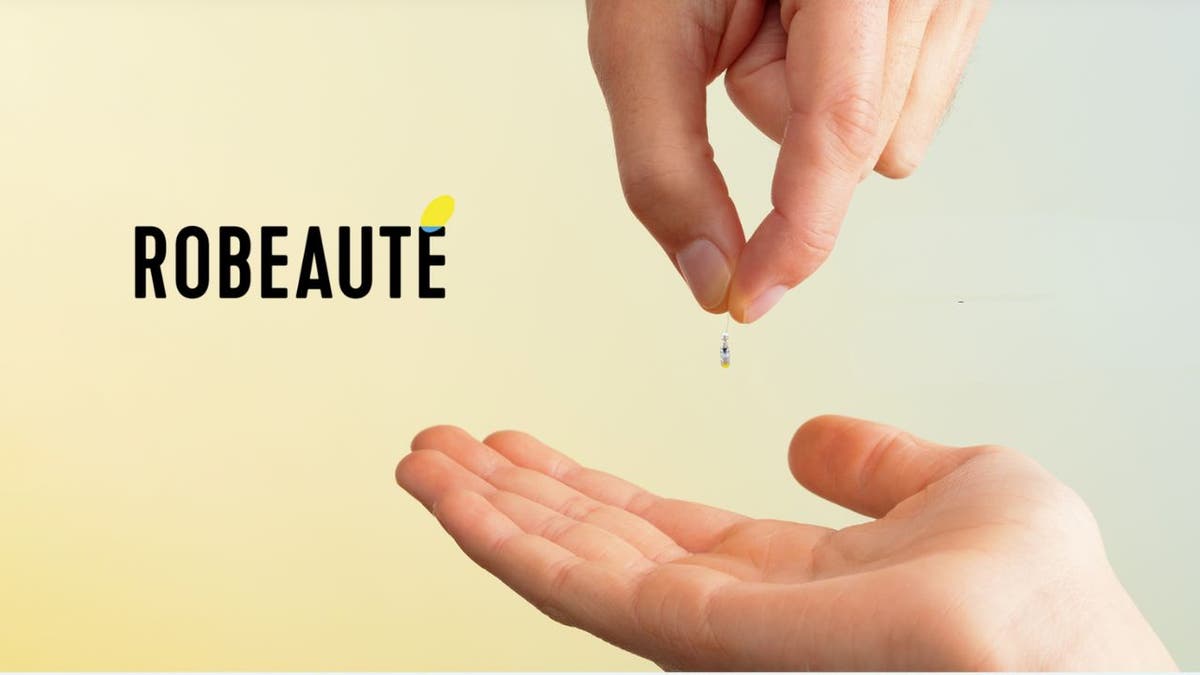
A French startup named Robeauté has just raised about $29 million to develop a truly groundbreaking neurosurgical microrobot. 

Imagine a device no bigger than a grain of rice that can carefully navigate the complex and delicate pathways of the brain. 

This little robot could change the way doctors treat brain tumors and other neurological conditions, making surgeries safer and more precise than ever before.

Join The FREE CyberGuy Report: Get my expert tech tips, critical security alerts, and exclusive deals — plus instant access to my free Ultimate Scam Survival Guide when you sign up!

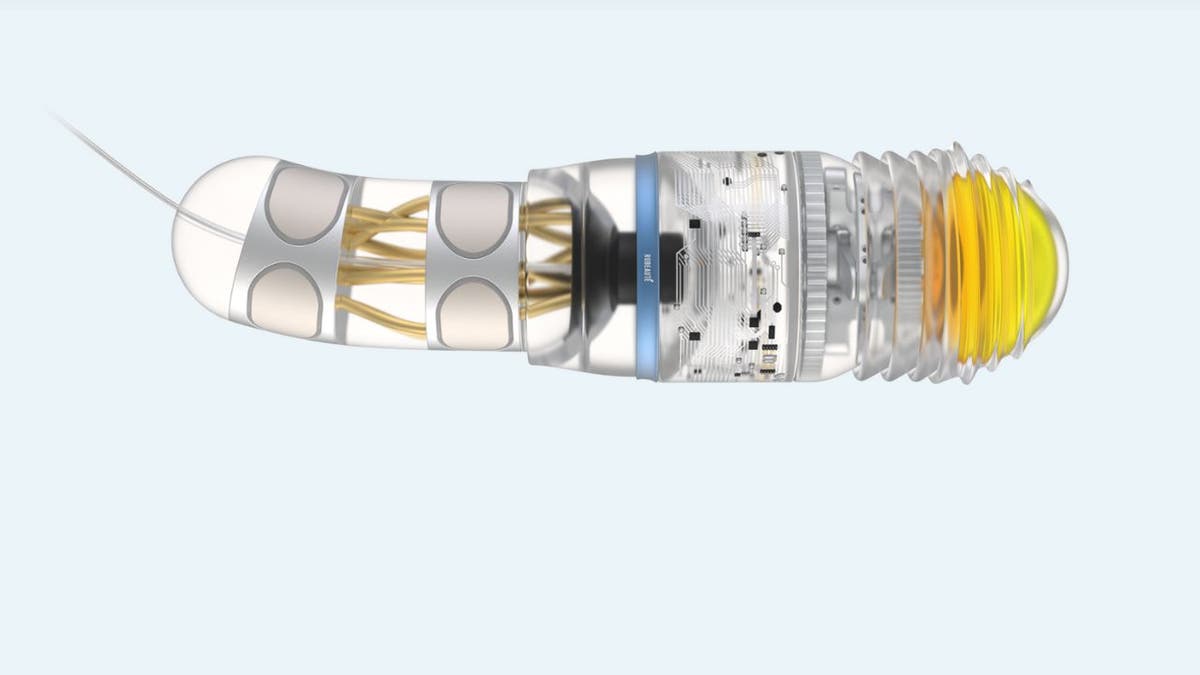
rice-sized robot 1

A neurosurgical microrobot. (Robeauté)

The challenges of brain surgery today

Brain surgery is incredibly complex. The tools surgeons use today are often rigid and can only move in straight lines. This limits where they can safely operate. Many tumors or problematic areas in the brain are simply too risky to reach because they lie near regions responsible for critical functions like movement or speech.

In some cases, surgeons have no choice but to leave tumors untreated because the risk of damage is too high. On top of that, many drugs cannot even reach certain parts of the brain because of the blood-brain barrier, leaving patients with limited treatment options.

rice-sized robot 2

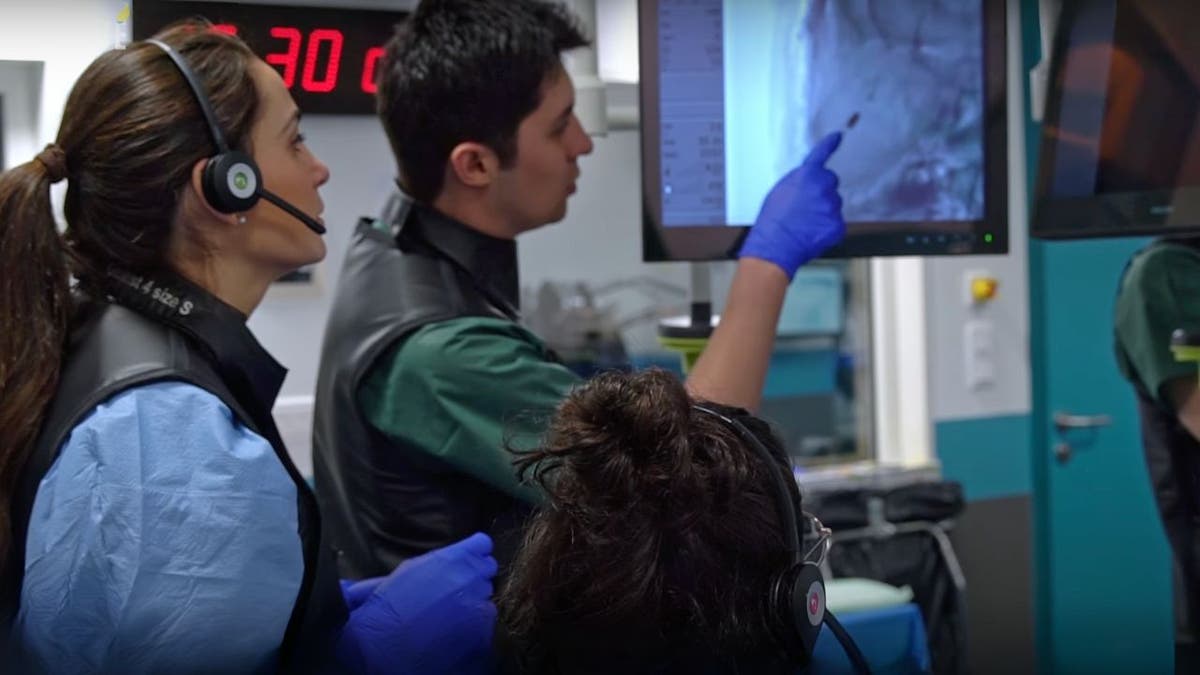
A neurosurgical microrobot. (Robeauté)

TEEN GOES FROM 10 NIGHTLY SEIZURES TO ZERO WITH BRAIN IMPLANT 

How the microrobot works

Robeauté’s microrobot is designed to overcome these challenges. It is incredibly small, about three millimeters long, roughly the size of a grain of rice, and it enters the brain through a tiny incision just a millimeter wide. Unlike traditional tools, this robot does not move in straight lines. Instead, it can follow curved paths, gently pushing aside brain tissue as it goes. It uses rotating silicone rings at its tip to carefully shift tissue without causing damage. This movement is inspired by how tiny insects walk on water, using adhesion forces that dominate at such small scales.

Inside the robot, there is a small compartment that holds miniature surgical tools. For example, when performing a biopsy, the microrobot uses a flexible needle and tiny forceps to collect tissue samples. These samples can be stored inside the device or pulled back through a cable connected to the robot. Beyond biopsies, the robot can also implant electrodes for conditions like Parkinson’s disease or deliver drugs directly to tumors. It even has sensors that send real-time information back to the surgeons, helping them monitor the procedure closely.

What is really impressive is how the robot’s path is planned. Using MRI scans combined with artificial intelligence, surgeons can map out safe routes that avoid sensitive brain areas. During surgery, they can adjust the robot’s position in real time using ultrasound imaging mounted on the skull, achieving sub-millimeter precision.

rice-sized robot 3

A neurosurgical microrobot. (Robeauté)

AI ENABLES PARALYZED MAN TO CONTROL ROBOTIC ARM WITH BRAIN SIGNALS

Looking ahead: Trials and future plans

So far, the microrobot has been tested in preclinical trials, mainly on sheep, with very promising results. There were no major complications like bleeding, which suggests the device can safely navigate brain tissue. Robeauté plans to begin human clinical trials in 2026, focusing on microbiopsies of brain tumors. They also aim to expand into the U.S. market and seek FDA approval, with hopes of launching internationally by 2030.

rice-sized robot 4

A neurosurgical microrobot. (Robeauté)

AI SYSTEM RESTORES SPEECH FOR PARALYZED PATIENTS USING OWN VOICE

Why this technology matters

The potential impact of this microrobot is huge. It could allow doctors to diagnose brain tumors earlier and treat them more effectively while reducing the risks associated with traditional surgery. Because it is minimally invasive, patients could experience faster recoveries and fewer side effects. Additionally, the ability to collect live data from inside the brain could accelerate research and drug development for neurodegenerative diseases like Alzheimer’s and Parkinson’s.

SUBSCRIBE TO KURT’S YOUTUBE CHANNEL FOR QUICK VIDEO TIPS ON HOW TO WORK ALL OF YOUR TECH DEVICES

Kurt’s key takeaways

Robeauté’s microrobot represents an exciting fusion of robotics, artificial intelligence, biology, and medicine. It tackles one of the most difficult challenges in healthcare: how to safely access and treat the brain. While there are still hurdles to overcome, such as regulatory approvals and manufacturing at scale, this tiny device has the potential to turn previously “inoperable” brain tumors into treatable conditions. As one of the company’s founders describes it, the microrobot acts like a “brain gardener,” delicately tending to damaged tissue from within. With strong funding and a growing portfolio of patents, Robeauté is poised to make a lasting impact on the future of neurosurgery.

Would you trust a rice-sized robot to perform brain surgery on you safely? Let us know by writing us at Cyberguy.com/Contact.

For more of my tech tips and security alerts, subscribe to my free CyberGuy Report Newsletter by heading to Cyberguy.com/Newsletter.

Ask Kurt a question or let us know what stories you’d like us to cover

Follow Kurt on his social channels

Answers to the most asked CyberGuy questions:

New from Kurt:

Copyright 2025 CyberGuy.com.  All rights reserved.  


Source link