15.7 C
New York
Thursday, March 26, 2026
Home Blog Page 240

Physical activity boosts brain health even when energy is lagging, study finds

0

Even on days when you’re lagging in energy, exercise can give your brain a boost.

That’s according to researchers at the University of Missouri (Mizzou), who made a specific discovery about physical activity’s brain benefits.

The study, published in the journal Physiology, examined what happens to the brains of individuals who have limited ketone production in the liver.

DANCING CAN HELP RELIEVE CANCER-RELATED SIDE EFFECTS, EARLY DATA SHOWS

When the body is low on glucose, its usual fuel, the liver produces ketones, which help generate energy and power the brain, according to the study’s press release.

These molecules support cognitive memory, learning and overall brain health.

Exercise can boost brain power in a new way, researchers have discovered. (iStock)

Even when the liver cannot produce enough ketones, exercise helps compensate for this loss, potentially reversing some cognitive decline, the researchers found.

This is especially prevalent as people age and face a higher risk of conditions such as Alzheimer’s disease.

DEMENTIA RISK CONNECTED TO CANNABIS-RELATED HOSPITAL VISITS, SAYS STUDY

These findings are also promising for those who have liver conditions that prevent the body from producing ketones.

Lead study co-researcher R. Scott Rector, Ph.D., a professor in the School of Medicine and director of the NextGen Precision Health Building, commented on the study in an interview with Fox News Digital, noting that the body’s natural production of ketones is important for keeping the brain healthy.

woman jogging outside

Even when the liver cannot produce enough ketones, exercise helps compensate for this loss, potentially reversing some cognitive decline, the researchers found. (iStock)

“It helps maintain memory, learning abilities, and the health of the brain’s energy factories (mitochondria),” he said. 

“Exercise can still protect the brain even when the liver isn’t making ketones, which might be relevant to individuals with liver disease, which causes reduced ketone production.”

These findings were surprising to the researchers, according to Rector, who expected that exercise might not improve brain health when ketone production was limited.

“Exercise can still protect the brain even when the liver isn’t making ketones.”

“However, it seems exercise has backup pathways that enhance brain health, even when ketone production is compromised,” he said.

Another lead researcher, Taylor Kelty, a postdoctoral fellow in Rector’s lab, noted that previous research has begun to show the link between severe liver dysfunction and a high risk of dementia.

Zumba class

The study findings are promising for those who have liver dysfunction and face a higher risk of cognitive decline with age. (iStock)

“If ketone production in the liver is disrupted, it could be a potential cause of cognitive decline, ultimately leading to conditions like dementia,” Kelty said in the press release.

These findings reinforce exercise’s role in keeping people “mentally sharp,” as well as being a “key piece of the puzzle in preserving brain health as we age,” according to the researcher.

CLICK HERE TO SIGN UP FOR OUR HEALTH NEWSLETTER

Rector noted that exercise activates “many other pathways” in the liver that could also help the brain, although that wasn’t a focus of this study. 

“In the future, we need to study these other molecules and backup systems that still boost brain health,” he said to Fox News Digital.

Doctor Pointing At Desktop Computer Monitor With CT Scan Of Patient's brain

“Scientists are finding more and more evidence that liver health affects brain diseases like Alzheimer’s disease,” Rector said. (iStock)

“Exercise’s brain health benefits are particularly important for those who have liver conditions like MASLD (metabolic dysfunction-associated steatotic liver disease),” Rector added.

CLICK HERE TO GET THE FOX NEWS APP

“Scientists are finding more and more evidence that liver health affects brain diseases like Alzheimer’s disease,” he said.

“Scientists are finding more and more evidence that liver health affects brain diseases like Alzheimer’s disease.”

“Our findings suggest that taking care of the liver and understanding ketone metabolism could be a new way to help prevent or slow down brain diseases.”

For more Health articles, visit www.foxnews.com/health

The research was funded by the National Institutes of Health as part of the NIH Molecular Transducers of Physical Activity Consortium.

TSA preparing for May 7 REAL ID deadline, travelers rush some DMVs

0

Some states are seeing massive lines at Department of Motor Vehicles (DMV) locations as travelers scramble to get their REAL IDs prior to the May 7 deadline. Others, not so much.

FOX News Multimedia Reporter Asher Redd was live outside a DMV in Antioch, Tennessee, on FOX 35 Orlando Monday morning, where a line of about 200 people stood behind him. 

Redd said states like Illinois, Pennsylvania and Tennessee have some of the longest lines and appointment wait lists through at least July. There in Tennessee, he reported some DMVs are open six days a week in hopes of getting everyone the identification travelers from U.S. airports and those entering some federal buildings will need.  

California is in a similar boat, FOX 11 Los Angeles reported, where some offices are opening an hour early through June 27 for those who started the process online and made appointments. 

HOW RUSSIA STOWAWAY SNUCK ONTO DELTA FLIGHT AT NY AIRPORT: VIDEO

A REAL ID sign is seen at the Denver Airport. (Fox News)

Meanwhile, Florida is not seeing the same rush. Some people who live in the Sunshine State can skip DMVs altogether, and get their drivers’ licenses at the local tax collector’s offices.

“We are fortunate in Florida since amendment 10, the local tax collectors in the state have done a phenomenal job to ensure the citizens have gotten their Real ID compliance completed,” a spokesperson for the Seminole County Tax Collector’s Office told Fox News Digital via email. 

REAL ID DEADLINE FOR TRAVELERS, SOME FEDERAL BUILDING ACCESS QUICKLY APPROACHING

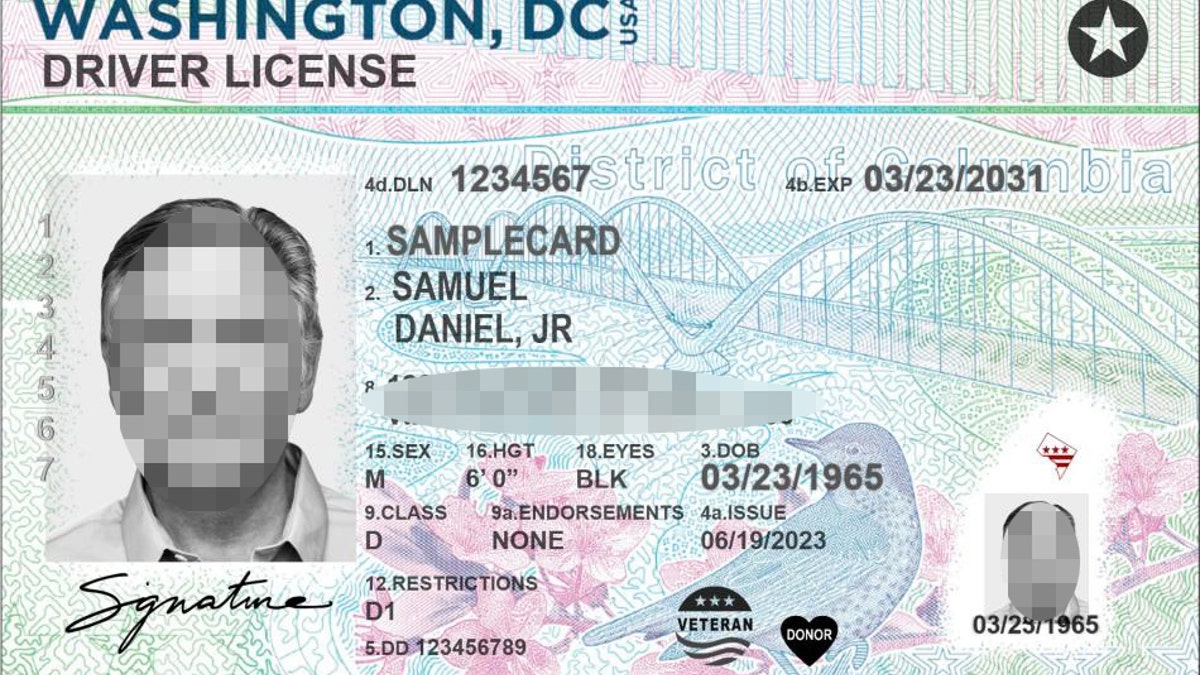
Sample drivers license with Real ID

A sample driver’s license that is REAL ID compliant.  (DC DMV)

“Here in Seminole County there are only about 4000 people that have yet to complete it, which is less than 1% of the population,” the statement said. 

Instead of heading to the DMV, the founder of passport and Visa services ItsEasy.com recommends obtaining a passport card.

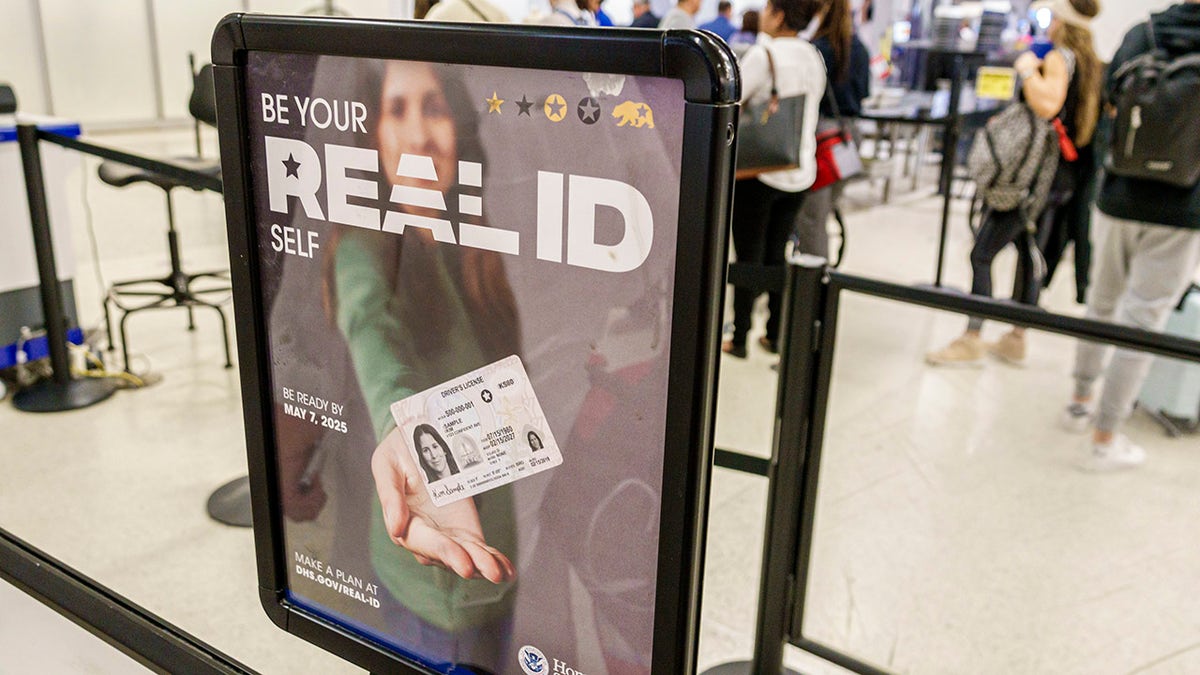
real id sign

TSA checkpoint security screening with REAL ID sign at Miami International Airport.  (Jeffrey Greenberg/Universal Images Group via Getty Images)

“The last-minute rush to obtain a REAL ID Driver’s License is leading to long delays at the DMV and causing unnecessary stress amongst travelers,” David Alwadish said in a statement. “The credit-card sized, U.S. passport card is a convenient, secure and affordable alternative.”

“For added security, I love that, unlike a DMV-issued ID, it does not have your address on it for strangers to know where you live,” Aldawish added.

CLICK HERE TO GET THE FOX NEWS APP

The Transportation Security Administration (TSA) continues reminding Americans “that starting Wednesday, May 7, 2025, every air traveler 18 years of age and older will need to have a REAL ID-compliant state-issued driver’s license, instruction permit or identification card or another acceptable form of ID to board a U.S. commercial aircraft,” according to media releases.

REAL IDs have a star in the upper right-hand corner, TSA said. 

Once enforcement begins, the TSA said unprepared travelers arriving at TSA checkpoints should expect delays. 

FBI warns of time-traveling hackers

0


Cybercriminals always find new ways to scam you, whether it’s mimicking a government agency, creating a fake website or delivering malware disguised as a software update. Just when you think you’ve seen it all, they come up with a new trick.

This time, the FBI has issued an alert: Hackers are using a “time-traveling” technique to bypass your device’s security measures. No, we’re not talking about actual time travel (though wouldn’t that be something?). This is a sophisticated cyberattack where hackers manipulate a system’s internal clock to sneak past security defenses.

Join The FREE “CyberGuy Report”: Get my expert tech tips, critical security alerts and exclusive deals, plus instant access to my free “Ultimate Scam Survival Guide” when you sign up.

FBI warns of time-traveling hackers

A man working on his laptops (Kurt “CyberGuy” Knutsson)

What you need to know

The concept of “time-traveling hackers” refers not to literal time travel but to a sophisticated cyberattack technique where hackers manipulate a system’s internal clock to bypass security measures. This attack is reportedly tied to the Medusa ransomware gang.

In this type of attack, hackers exploit expired security certificates by altering the system date on a targeted device to a time when those certificates were still valid. For example, a security certificate that expired in, say, 2020 could be made usable again if the system’s clock is set back to 2019. This allows malicious software signed with these outdated certificates to be recognized as legitimate by the system, effectively “traveling back in time” from a security perspective. 

This technique was notably used in the Medusa ransomware attacks, which targeted critical infrastructure and prompted an FBI cybersecurity advisory (AA25-071A) earlier in 2025. The campaign has affected over 300 critical infrastructure targets. The attackers combined this method with social engineering and exploited unpatched vulnerabilities, amplifying the threat. 

The FBI has warned that such attacks pose a significant risk, as they can disable modern security protections like Windows Defender by tricking the system into accepting outdated drivers or software.

FBI warns of time-traveling hackers

A woman working on her laptop and scrolling on her phone (Kurt “CyberGuy” Knutsson)

DOUBLECLICKJACKING HACK TURNS DOUBLE-CLICKS INTO ACCOUNT TAKEOVERS

What does the FBI recommend?

Traditional search and rescue tools, like rigid robots and specialized cameras, often struggle in disaster zones. Cameras follow only straight paths, forcing teams to cut through debris just to see further in. Rigid robots are vulnerable in tight, unstable spaces and expensive to repair when damaged. And manual probing is slow, exhausting and risks responder safety.

FBI warns of time-traveling hackers

A man working on his laptop (Kurt “CyberGuy” Knutsson)

RELENTLESS HACKERS ABANDON WINDOWS TO TARGET YOUR APPLE ID

5 ways to stay safe from Medusa malware

1) Use strong antivirus software: A strong antivirus isn’t just for catching old-school viruses anymore. It can detect phishing links, block malicious downloads and stop ransomware before it gets a foothold. Since the Medusa gang uses fake updates and social engineering to trick users, having strong antivirus software adds a critical layer of protection against threats you might not see coming. Get my picks of the best 2025 antivirus protection winners for your Windows, Mac, Android and iOS devices.

2) Enable two-factor authentication (2FA): The FBI specifically recommends enabling 2FA across all services, especially for high-value targets like webmail accounts, VPNs and remote access tools. 2FA makes it significantly harder for attackers to break in, even if they’ve managed to steal your username and password through phishing or other tactics.

3) Use strong, unique passwords: Many ransomware groups, including Medusa, rely on reused or weak passwords to gain access. Using a strong password (think long, random and unique to each account) greatly reduces that risk. A password manager can help you generate and store complex passwords so you don’t have to remember them all yourself. Get more details about my best expert-reviewed password managers of 2025 here.

4) Monitor for suspicious system time changes: The core of this “time-traveling” attack is clock manipulation: Hackers roll back a device’s clock to a time when expired security certificates were still valid. This allows outdated and potentially malicious software to appear trustworthy. Be alert to unexpected system time changes, and if you’re managing an organization, use tools that flag and log these types of configuration shifts.

5) Keep systems updated and patch known vulnerabilities: The Medusa ransomware campaign has a track record of exploiting unpatched systems. That means old software, outdated drivers and ignored security updates can all become entry points. Regularly installing updates for your OS, applications and drivers is one of the most effective ways to stay protected. Don’t put off those system notifications; they exist for a reason.

CLICKFIX MALWARE TRICKS YOU INTO INFECTING YOUR OWN WINDOWS PC

Kurt’s key takeaway

The Medusa attack is a good example of how cybercriminals are shifting tactics. Instead of relying on traditional methods like brute force or obvious exploits, they are targeting the basic logic that systems depend on to function. In this case, it is something as simple as the system clock. This kind of strategy challenges the way we think about security. It is not just about building stronger defenses but also about questioning the default assumptions built into the technology we use every day.

How do you think technology companies can better support individual users in protecting their data and devices? Let us know by writing us at Cyberguy.com/Contact.

For more of my tech tips and security alerts, subscribe to my free CyberGuy Report Newsletter by heading to Cyberguy.com/Newsletter.

Ask Kurt a question or let us know what stories you’d like us to cover.

Follow Kurt on his social channels:

Answers to the most-asked CyberGuy questions:

New from Kurt:

Copyright 2025 CyberGuy.com. All rights reserved.



Source link

Soft vine-like robot helps rescuers find survivors

0


When disaster strikes and buildings collapse, every second counts for emergency responders searching for survivors trapped beneath rubble. Traditional tools often fall short in these dangerous, chaotic environments, but a new breed of robot, SPROUT, is poised to make a life-saving difference.

Join the FREE “CyberGuy Report”: Get my expert tech tips, critical security alerts and exclusive deals, plus instant access to my free “Ultimate Scam Survival Guide” when you sign up!

Soft vine-like robot helps rescuers find survivors

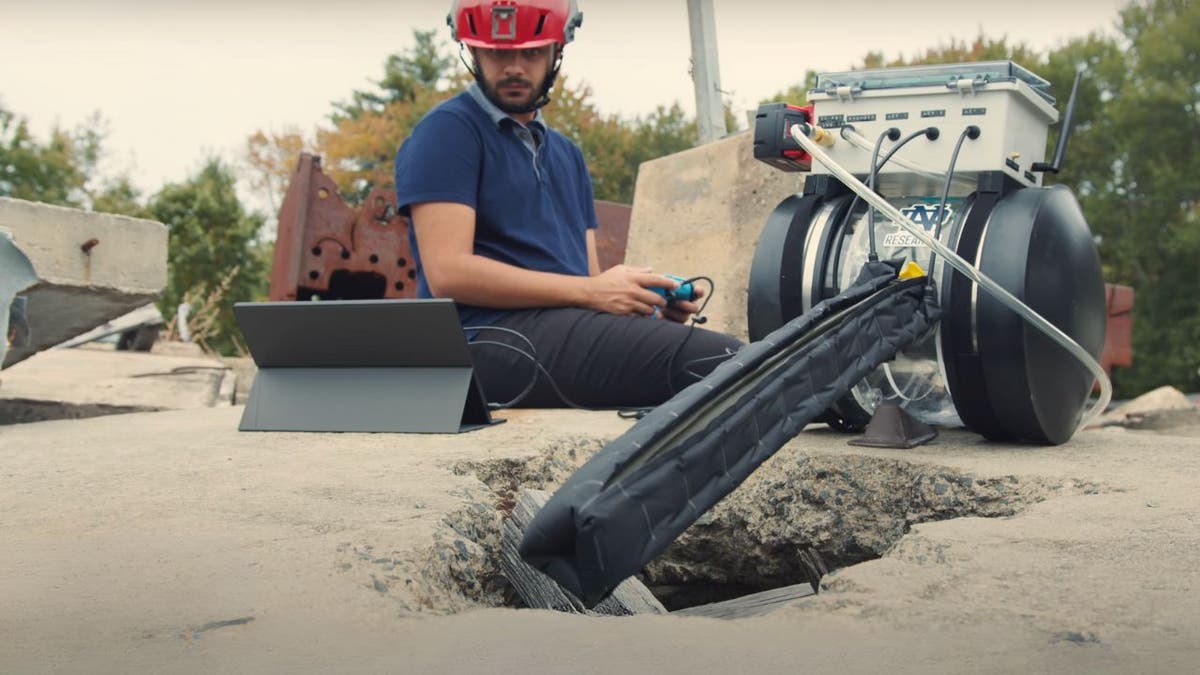
Soft Pathfinding Robotic Observation Unit (MIT Lincoln Laboratory) (Kurt “CyberGuy” Knutsson)

What is SPROUT?

SPROUT, short for Soft Pathfinding Robotic Observation Unit, is a flexible, vine-like robot developed by MIT Lincoln Laboratory in collaboration with the University of Notre Dame. Unlike rigid robots or static cameras, SPROUT can “grow” into tight, winding spaces that are otherwise inaccessible, giving first responders a new way to explore, map and assess collapsed structures.

Soft vine-like robot helps rescuers find survivors

Soft Pathfinding Robotic Observation Unit (MIT Lincoln Laboratory) (Kurt “CyberGuy” Knutsson)

ELECTRIC SUV IS THE ULTIMATE LIFELINE FOR SEARCH AND RESCUE MISSIONS

How does SPROUT work?

SPROUT is made of an airtight fabric tube that inflates with air, allowing it to extend from a fixed base. As it grows, it can flex around corners and squeeze through narrow gaps, mimicking the movement of a plant vine. Operators control SPROUT using a joystick, steering it through debris while watching a live video feed from a camera mounted at the tip. This setup lets responders see and map hidden void spaces without entering dangerous areas themselves.

Three pouch motors along the vine’s length enable SPROUT to bend and turn, while an internal reel system allows the robot to be compactly stored and precisely deployed as needed. In addition to cameras, SPROUT can carry other sensors to image, map and even assess hazards within the collapsed structure.

TOP 13 EMERGENCY CAR ESSENTIALS

Soft vine-like robot helps rescuers find survivors

Soft Pathfinding Robotic Observation Unit (MIT Lincoln Laboratory) (Kurt “CyberGuy” Knutsson)

RESCUE DRONE HITS BEACHES DESIGNED TO SAVE LIVES AS A FLYING LIFEBUOY

Why traditional tools fall short

Traditional search-and-rescue gear, such as rigid robots or specialized cameras, struggles in disaster zones for several reasons. Cameras can only probe straight paths, often requiring teams to cut new access holes to see further into the rubble.

Rigid robots are prone to damage in unstable, cramped environments and are expensive to repair. Manual probing is time-consuming and physically exhausting for responders.

SPROUT’s soft, flexible design directly addresses these challenges, offering a safer, faster and more adaptable solution for navigating the unpredictable landscape of collapsed buildings.

Soft vine-like robot helps rescuers find survivors

Soft Pathfinding Robotic Observation Unit (MIT Lincoln Laboratory) (Kurt “CyberGuy” Knutsson)

BEST HOME INVENTORY APPS TO PROTECT YOUR PROPERTY IN CASE OF EMERGENCY

Real-world testing and impact

SPROUT has already been put through its paces at the Massachusetts Task Force 1 training site, where it demonstrated its ability to flex around corners and penetrate void spaces in engineered collapsed structures. These tests allowed the team to refine SPROUT’s durability, portability and steering controls, with plans for larger field studies underway.

The project is a true collaboration, pairing MIT’s engineering expertise with Professor Margaret Coad’s pioneering work on vine robots at Notre Dame. This partnership has accelerated SPROUT’s development, bringing hands-on demonstrations to first responders, many of whom have limited research and development budgets.

IS YOUR PHONE READY FOR AN EMERGENCY? TURN ON THESE LIFESAVING SETTINGS

Soft vine-like robot helps rescuers find survivors

Soft Pathfinding Robotic Observation Unit (MIT Lincoln Laboratory) (Kurt “CyberGuy” Knutsson)

Looking ahead: The future of SPROUT

The team behind SPROUT is continuously working to expand its capabilities. Current models can extend up to 10 feet, with future versions aiming to reach beyond 25 feet. Researchers are also exploring the use of multiple SPROUT robots to cover larger areas and expedite rescue operations in major disasters.

Beyond disaster response, the technology could be adapted for inspecting military systems or critical infrastructure in hard-to-reach places, making SPROUT a versatile tool for a variety of high-stakes scenarios.

SUBSCRIBE TO KURT’S YOUTUBE CHANNEL FOR QUICK VIDEO TIPS ON HOW TO WORK ALL OF YOUR TECH DEVICES

Soft vine-like robot helps rescuers find survivors

Soft Pathfinding Robotic Observation Unit (MIT Lincoln Laboratory) (Kurt “CyberGuy” Knutsson)

Kurt’s key takeaways

SPROUT is a remarkable example of how soft robotics can make a real difference in some of the most challenging and dangerous situations. By giving first responders a flexible, easy-to-use tool for searching through rubble, SPROUT has the potential to save lives and change the way we approach disaster rescue. It’s great to see technology that’s not just innovative but truly impactful, helping those who help others when it matters most.

How do you feel about robots being used to explore dangerous places where people can’t easily go? Let us know by writing us at Cyberguy.com/Contact.

For more of my tech tips and security alerts, subscribe to my free CyberGuy Report Newsletter by heading to Cyberguy.com/Newsletter.

Ask Kurt a question or let us know what stories you’d like us to cover.

Follow Kurt on his social channels:

Answers to the most-asked CyberGuy questions:

New from Kurt:

Copyright 2025 CyberGuy.com. All rights reserved.



Source link

Top 11 questions parents ask doctors about measles

0

As measles cases continue to spread throughout the U.S. — with 12 states reporting official outbreaks, according to the latest CDC data — concern is growing among high-risk groups.

Children under the age of 5 are most vulnerable to measles, health experts confirm.

The CDC recommends that children receive two doses of the MMR (measles-mumps-rubella) vaccine, starting with the first dose at 12 to 15 months of age, and a second dose at 4 through 6 years of age. 

MEASLES OUTBREAKS EMERGE ACROSS US: SEE WHICH STATES HAVE REPORTED CASES

That means children under 5 may not have full protection.

As measles cases continue to spread throughout the U.S. — with 12 states reporting official outbreaks, according to the latest CDC data — concern is growing among high-risk groups. (iStock)

Allison Croucher, DO, a pediatrician and doctor of osteopathic medicine with Duly Health and Care in Illinois, said she frequently gets questions from concerned parents looking to protect their children from the highly contagious virus.

Chroucher shared some of the most common inquiries she receives, along with her responses.

1. Should I be worried about measles where I live or where I’m traveling to?

Measles cases have been reported in 20 states so far (according to the CDC): Alaska, Arkansas, California, Colorado, Florida, Georgia, Hawaii, Illinois, Indiana, Kansas, Kentucky, Louisiana, Maryland, Michigan, Minnesota, Missouri, Montana, New Jersey, New Mexico, New York City, New York State, Ohio, Oklahoma, Pennsylvania, Rhode Island, Tennessee, Texas, Vermont, Virginia and Washington.

Baby with measles

Children under the age of 5 are most vulnerable to measles, health experts confirm. (iStock)

Even if you do not live in one of those areas, keep a close eye on local health alerts, since the disease is rapidly evolving. 

Your state’s Department of Health website, which should end in “.gov,” is a great place to start. If you plan on traveling to an area with reported cases, be sure to seek guidance from your doctor beforehand.

2. How do I know if my child is fully vaccinated?

A child is considered fully vaccinated for measles if they have received two doses of the measles, mumps and rubella (MMR) vaccine at least four weeks apart. 

The first dose is typically given to children between 12 and 15 months old, followed by the second at four to six years.

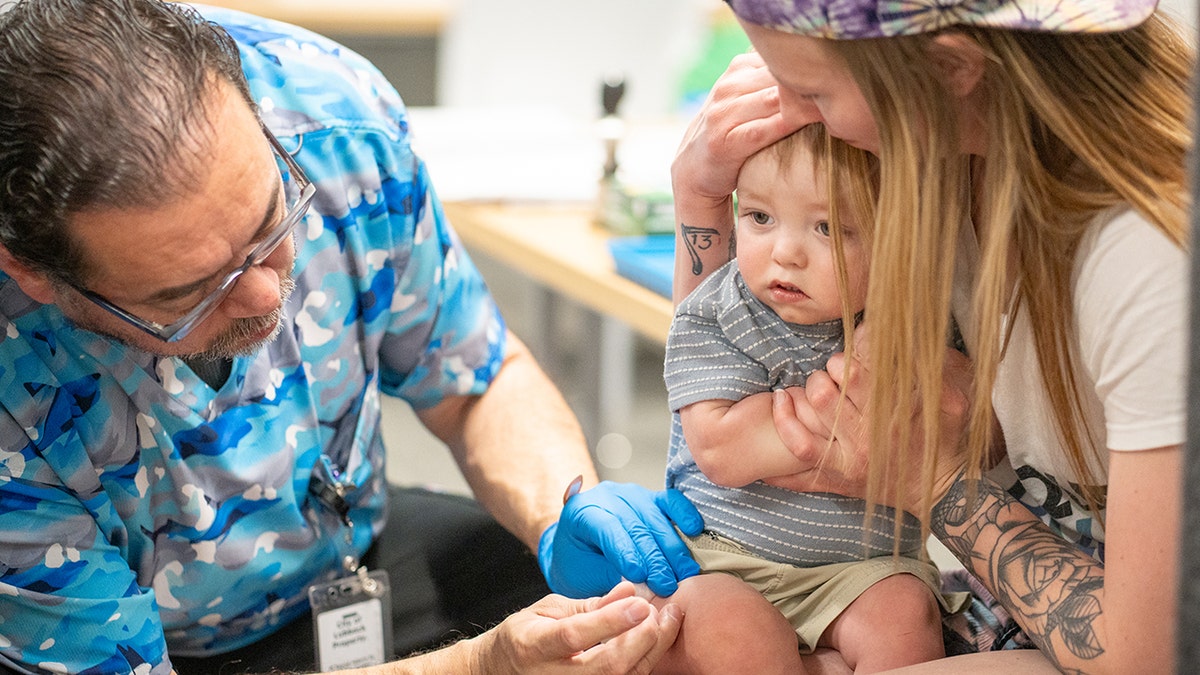
Child at pediatrician

In the early stages, symptoms to watch out for include fever, cough, runny nose, and red, irritated eyes.  (iStock)

3. Can my infant get the vaccine early? 

In certain cases, yes. Infants who are high-risk or traveling to areas with active cases may be eligible to get the MMR vaccine between six months and 12 months of age. This depends on individual circumstances, so it’s important to talk with your pediatrician. 

Keep in mind that an early dose doesn’t count on the regular vaccination schedule — your child will still need two additional doses after their first birthday.

ANOTHER STATE CONFIRMS MEASLES CASE WITH INFECTED CHILD ITS FIRST OF YEAR

4. What if my infant is too young to get the MMR vaccine? 

If your infant is too young for the vaccine, it’s important to take extra precautions to limit their exposure to others who are or might be ill. Don’t be afraid to decline travel or gatherings — you have every right to protect your child’s health.

5. How early can my child get their second MMR vaccine? 

For children over one year, the second MMR dose can be given as early as four weeks after the first. Once they’ve received both doses, children are considered fully vaccinated and don’t require any additional doses.

“One to three of every 1,000 children infected with measles will die due to complications from the disease.”

6. We have been around other people who recently traveled. What symptoms should we watch for?  

In the early stages, symptoms to watch out for include fever, cough, runny nose, and red, irritated eyes. 

These symptoms usually appear seven to 14 days after initial exposure. 

7. My child is showing signs of a cold. Could this be early-stage measles?

It’s not always easy to tell, since measles shares symptoms with many other illnesses. One key differentiator is that children with measles typically display very high fevers, around 104°F. They also tend to be very fussy. 

CLICK HERE TO GET THE FOX NEWS APP

Around the second or third day of symptoms, many patients develop small, bluish-white spots on their inner cheeks, referred to as Koplik spots — though not every child will develop these spots. The telltale red rash typically develops three to five days into the illness.

Measles outbreak across America

A child is considered fully vaccinated for measles if they have received two doses of the measles, mumps and rubella (MMR) vaccine at least four weeks apart.  (Jan Sonnenmair/Getty Images)

8. What does the measles rash look like? 

This rash typically starts three to five days after the initial symptoms. It begins as small spots on the face near the hairline, then spreads downwards and can cover the entire body.

9. Why is measles dangerous? 

Measles can have many complications, ranging from mild to severe. About one in 10 people will develop ear infections or diarrhea. 

About one in five unvaccinated children with measles will require hospitalization. Up to one in 20 children will contract pneumonia, which is the most common cause of death from the disease. 

CLICK HERE TO SIGN UP FOR OUR HEALTH NEWSLETTER

About one in 1,000 children will develop encephalitis, or inflammation and swelling of the brain. This can lead to seizures, lifelong disability or even death. In all, one to three of every 1,000 children infected with measles will die due to complications from the disease.

10. Why aren’t some people getting their kids the MMR vaccine? 

There is a growing amount of misinformation and disinformation circulating about vaccines, which has led some parents to delay or skip them altogether. 

The MMR vaccine has been safely administered to millions of people and has an excellent safety record — and research has repeatedly debunked the myth that the vaccine is linked to autism. 

For more Health articles, visit www.foxnews.com/health

11. What should I do if I think my child might have the measles? 

Don’t wait — contact your doctor right away. They can guide you through the next steps.

The above questions and answers were provided by Allison Croucher, DO, a pediatrician and doctor of osteopathic medicine with Duly Health and Care in Illinois.

Flight passenger vapes on plane, prompting pilot to make announcement to all travelers

0

An airline passenger traveling from Los Angeles to Cancun, Mexico, took to social media to share the way a flight crew handled a recent incident of a person vaping while on board.

Posted in the “r/AlaskaAirlines” Reddit forum, the post was titled, “Vaper on LAX-CUN Flight 4/18/25.”

The user wrote, “So on Flight 1340 this morning, ‘a lady’ decided that (per the gossip I heard from a flight attendant) that she needed to vape a bit in the lav because ‘she was stressed out.‘”

PILOT ALLEGEDLY CALLS OUT VAPING PASSENGER IN CABIN-WIDE ANNOUNCEMENT: ‘ONE PERSON DECIDED TO RISK LIVES’

While the Reddit user was in the lavatory, the pilot made an announcement, according to the post.

“The pilot comes on the air and tells everyone that [t]here’s been a smoke alarm in the lav and ‘no smoking or vaping or chewing tobacco’ [is allowed] on the flight,” the person wrote about what allegedly happened. 

During a recent flight, a pilot called out a vaping passenger (not pictured). The pilot even threatened to turn the plane around because of the incident, as another passenger shared in an online forum.  (iStock)

The user added, “He’s upset and [said] this is a federal offense, and he’s going to turn this plane around and go home if he has to tell us all again.”

The user concluded, “I exit the lav and take my seat shaking my head in digust so [that] everyone knows it wasn’t me.” 

FLIGHT PASSENGER SLAMS ‘SNEAKY’ TRAVELERS WHO VAPE IN AIRPORTS: ‘YOU AREN’T FOOLING ANYONE’

Plenty of other Reddit users took to the comments section to share their thoughts and opinions about vaping on planes.

“That’s risky, since it’s illegal to smoke on an aircraft,” commented one user.

flight passengers smoking

A pilot reminded passengers (not pictured) during a recent flight that vaping anywhere on board a plane is a “federal offense.” (iStock)

Another user said, “Please note this is not necessarily a criminal offense, so being arrested for this doesn’t normally occur unless some other severe activity is also present. It is a civil violation and can result in FAA penalties.”

Suggested one Redditor, “The answer for smokers and vapers is to use a patch or a Zyn on flights.”

Another user commented, “Smoking and vaping require the FAs to submit a smoking/vaping report … [They] can actually do it right from their work device in real time.”

FLIGHT PASSENGER SAYS ‘ENTITLED’ SEAT SWAPPERS SHOULD PUT THEIR MONEY WHERE THEIR MOUTHS ARE

“I bet the airline cares. And will cancel her flight home. And blacklist [her] from the airline,” said another user.

A different person shared, “I have a couple of flight attendant friends. She wasn’t arrested because it’s unlikely they wanted to process the paperwork in that jurisdiction and then be forced to deal with a case relating to a major U.S. airline and their airport.”

Vape cigarettes in woman hand

“The answer for smokers and vapers is to use a patch or a Zyn on flights,” wrote one person on Reddit about the incident.  (iStock)

On the Alaska Airlines website under its “Onboard Policies,” the company lists prohibited items.

“We prohibit the use of items that do not meet FAA or Alaska Airlines regulations. These include: electronic smoking devices – battery-operated or USB-charged cigars/cigarettes/pipes that simulate smoking.”

For more Lifestyle articles, visit foxnews.com/lifestyle

Gary Leff, a Texas-based travel industry expert and author of the blog “View From the Wing,” told Fox News Digital there’s a stigma against vaping.

“Other passengers might think vapers are smoking a cigarette even though they aren’t,” said Leff.

Girl smoking and vaping

One travel expert (not pictured) has said he’s seen planes today that still have ashtrays. (iStock)

He added, “You can’t smoke on a plane. You can’t vape, either. The FAA has interpreted the prohibition on cigarette smoking to include vaping products, even though they’re quite different.”

CLICK HERE TO SIGN UP FOR OUR LIFESTYLE NEWSLETTER

He added, “It’s not about banning vapor. The regulation simply extends the ban on cigarettes to include e-cigarettes, which weren’t contemplated when the law against on-board smoking was passed.”

He continued, “Planes still have ashtrays even though smoking has been illegal on U.S. aircraft for a quarter-century!”

CLICK HERE TO GET THE FOX NEWS APP

Said Leff, “You’ll usually find them in or near the lavatory, because customers may smoke even though it’s illegal to do so.”

Trump vows to bring Columbus Day back ‘from the ashes’

0

President Donald Trump vowed Sunday to bring back Columbus Day “from the ashes,” while calling out Democrats for doing everything possible to destroy Christopher Columbus’ reputation.

“I’m bringing Columbus Day back from the ashes,” the president wrote in a post on Truth Social. “The Democrats did everything possible to destroy Christopher Columbus, his reputation, and all of the Italians that love him so much.

“They tore down his Statues, and put up nothing but ‘WOKE,’ or even worse, nothing at all! Well, you’ll be happy to know, Christopher is going to make a major comeback,” Trump added. “I am hereby reinstating Columbus Day under the same rules, dates, and locations, as it has had for all of the many decades before!”

Columbus is commonly credited with discovering the “New World.” This after journeying across the Atlantic Ocean from Spain to find a direct route from Europe to Asia without traveling around the massive African continent. This inadvertently bridged the divide between Europe and what would eventually become North and South America.

DEFACED COLUMBUS STATUE THAT WAS THROWN INTO A VIRGINIA POND FINDS MORE WELCOMING HOME IN NYC SUBURB

Columbus’ ships – the Niña, the Pinta and the Santa Maria – most likely landed on San Salvador, one of the Bahamian islands, before moving to different locations in search of valuable resources.

The controversial part of his history, however, revolves around enslavement and colonization. 

In recent years, the Columbus Day holiday has come under heightened scrutiny, with many opting to honor Indigenous Peoples’ Day instead.

PENNSYLVANIA APPEALS COURT REVIVES LEGAL BATTLE OVER PITTSBURGH’S EFFORTS TO REMOVE COLUMBUS STATUE

Protesters surround a statue of Christopher Columbus before marching, eventually returning and pulling it down in Richmond, Virginia, June 9, 2020.  (PARKER MICHELS-BOYCE/AFP via Getty Images)

In fact, several statues of Columbus have been removed, defaced or even dragged and submerged into water over the past few years because of the controversy surrounding the historical figure.

An 8-foot-tall bronze statue of Columbus once housed at the entrance of Byrd Park in Richmond, Virginia, was uprooted by protesters in light of George Floyd’s 2020 death until finding a new home in a New York City suburb last year.

In images from the tumultuous summer, protesters are seen marching near the statue, holding signs that called for removal of imagery that recognizes colonizers to pay respect to indigenous communities.

RHODE ISLAND’S HIGHLY CRITICIZED COLUMBUS STATUE RE-EMERGES IN NEARBY TOWN AFTER BEING REMOVED 3 YEARS AGO

Christopher Columbus

Christopher Columbus is credited with discovering the “New World” in his search for a western passage to the Indies.

Other reports and images show the statue on the ground after being pulled down from its pedestal with ropes, defaced with spray paint and lit on fire.

The protesters then dragged the statue to a nearby pond and submerged it in water. 

CLICK HERE TO GET THE FOX NEWS APP

The nearly 100-year-old homage to Columbus was later retrieved and restored before eventually being shipped to its new home at the Rockland Sons of Italy Lodge in the hamlet of Blauvelt, located approximately 20 miles northwest of New York City. 

Fox News Digital’s Taylor Penley contributed to this report.

Hamas exploits UN cash app for Gazans, steals vital aid meant for civilians

0

United Nations agencies’ monthly cash transfers to Gaza residents are inadvertently strengthening the Hamas terrorist organization, as the group and affiliated traders continue to control the money flow to the enclave, an expert on Hamas’ financial and economic operations said.

“Hamas exploits its role as the de facto ruler of Gaza to extract financial gains from aid money sent by U.N. organizations to civilians via apps still operating in the region,” Eyal Ofer told Fox News Digital.

“The aid system is being manipulated by Hamas and affiliated traders. Hamas does this largely behind the scenes, leveraging their control over large merchants, crime families, and using cash to establish a shadow banking system within Gaza.”

HOW ISRAEL’S WAR AGAINST HAMAS TERRORISTS WILL BE DIFFERENT UNDER TRUMP

Gazans at a bazaar set up to meet their basic needs amidst the rubble in the heavily damaged Jabalia refugee camp in northern Gaza on the 3rd day of Ramadan, after Israel halted humanitarian aid to the Gaza Strip, on March 3, 2025.  (Mahmoud Issa/Anadolu via Getty Images))

Each month, international organizations send significant sums into Gaza’s economy. The U.N.’s World Food Programme (WFP) transfers approximately $18.43 million, reaching 82,636 families, with each family receiving an average of $209, according to open-source data. UNICEF’s monthly assistance averages $5 million, helping to reach at least 20,000 families every month. 

“I go to the market and meet people whose job is to provide cash in exchange for a fee,” Gaza resident Shahab Yousef told Israel’s news agency TPS-IL. “The fee is 20–30%. If I transfer 1,000 shekels [$271] I get back 700 [$190],” he said. “For big purchases, I pay digitally. But at the market, I need cash, and I lose 30 percent every time.”

Another Gaza resident, Nidal Qawasmeh, expressed similar frustration to TPS-IL. “These people are charging 30 percent just to give you cash. I just want to take care of my family, but everything costs me more because of this. Prices are insane.”

The specific amount received per family every month is around $270 (or 1,000 New Israeli Shekels), which was calculated as 80% of the Survival Minimum Expenditure Basket, UNICEF told Fox News Digital. Smaller organizations like UNFPA and others also contribute, bringing the total to about $39.66 million per month, reaching 60% of Gaza’s households, according to open-source data.

Gaza money changer

A man holds a wad of Israeli shekels in Gaza. (Majdi Fathi/TPS)

Despite the scale of direct financial aid, which reaches over half of the enclave’s population, Gaza’s severe food insecurity and high inflation (91% and 118%, respectively, as of January 2024) underscore its importance. However, the way this money circulates within Gaza is far more complex. “Hamas controls much of the cash that enters Gaza through various channels,” Ofer told Fox News Digital, “People who receive money via mobile apps must convert it into cash to use in local markets, but this involves hefty fees, with many money changers tied to Hamas or its allies.”

TPS-IL reported that Israel’s Foreign Minister Gideon Sa’ar recently warned that Hamas’s economic strength in Gaza relies on billions of shekels in cash, paid as salaries and quickly reclaimed through taxes on merchants. In a letter to Bank of Israel Governor Prof. Amir Yaron, Sa’ar urged the cancelation of the circulation of 200-shekel bills previously introduced into Gaza, saying that experts believe the move would severely damage Hamas’s financial network. The Bank of Israel rejected the proposal, citing technical reasons and claiming that implementation was not feasible.

Ofer’s research found that the fees can range from 20% to 35%, meaning recipients lose a significant portion of their aid just to access it. “In videos from Gaza, you can see traders refusing to accept app funds and forcing customers to convert them into cash, knowing they will lose at least 20% in the process,” he said.

Peter Gallo, an international lawyer and former Office of Internal Oversight Services (OIOS) investigator at the U.N., told Fox News Digital, “If an investigator in Israel can figure it out, the aid agencies either knew or should have known. Twenty to thirty percent is just ridiculous. That’s extortion. It’s what some have politely described as a ‘revolutionary tax.’ In fairness, the aid agencies might argue they had no alternative, It is the cost of doing business, but it would have been better if they were honest about it from the start.”

HAMAS TERROR GROUP REPORTEDLY BUCKLING UNDER FINANCIAL STRAIN AMID ISRAELI MILITARY GAINS AND GROWING UNREST

Jabilia, Gaza

Palestinians shop for food and clothes at the local bazaar as daily life continues in the shadow of war in Jabalia, Gaza, on January 15, 2024. (Photo by Mahmoud Shalha/Anadolu via Getty Images) (Photo by Mahmoud Shalha/Anadolu via Getty Images)

A spokesperson for UNICEF told Fox News Digital, “UNICEF is aware of the cash liquidity crisis in Gaza and the continuous shortage of hard cash, which is a direct consequence of the banking system’s inability to function amid the ongoing conflict.

“Since May 2024, UNICEF has introduced fully digital cash payments via e-wallets, which do not require hard cash at any point. By using e-wallets, recipients of humanitarian digital cash transfers can purchase goods such as food, hygiene items and medicine without ever handling physical money,” the spokesperson said.

“The use of digital e-wallets can be accessed through an app and works on the most basic smartphones. When implemented, these digital cash payments via e-wallets eliminate the need for cash conversion and, consequently, the payment of any fees. The UNICEF humanitarian digital cash program adheres to the highest standards of neutrality and impartiality. No external party, actor, or agency—not even the beneficiaries themselves—has any role or influence in the design or implementation of the program, including the composition of the beneficiary list, payment schedule, frequency and amounts.”

World Food Programme (WFP) aid at the Erez west crossing on the Israel-Gaza border.

World Food Programme (WFP) aid at the Erez west crossing on the Israel-Gaza border. (IDF spokesman)

The spokesperson claimed: “More than 1.8 million people—close to the entire population of Gaza—are grappling with extreme food insecurity, with at least half of them being children. . . . Acute malnutrition among children is rising at alarming rates. The UNICEF humanitarian cash transfer program is, simply put, keeping children alive in the midst of a war not of their making by providing them with access to essential items for their survival. UNICEF’s monthly budget for humanitarian cash transfers in Gaza averages USD 5 million to support approximately 20,000 families. We estimate that these parameters are too small to significantly impact the local economy.”

The World Food Programme didn’t respond to multiple requests for comment.

In a statement to Fox News Digital, Israel’s Ambassador to the United Nations, Danny Danon, said, “This is yet another example of Hamas showing a complete disregard for the people of Gaza – and exploiting systems and infrastructure to sustain their murderous terror machine.”

CLICK HERE TO GET THE FOX NEWS APP

“Turning a blind eye is not acceptable. The U.N. Security Council has been addressing terrorist financing since 2001, yet aid agencies continue to ignore the fact that Hamas is making a profit off this money flow, despite international efforts to stop terrorist financing,” Gallo said.

Blue Shield exposed 4.7 million patients’ health data to Google

0


Healthcare institutions and insurers arguably collect the most sensitive information about you, including IDs, contact details, addresses and medical records. But they often don’t put in the same level of effort to protect that data. 

That’s clear from the growing number of healthcare data breaches we’ve seen recently. In most of those cases, a bad actor was involved. 

But in the latest news, health insurance giant Blue Shield of California confirmed that it had been sharing private health data of 4.7 million users with Google for three years without even realizing it.

STAY PROTECTED & INFORMED! GET SECURITY ALERTS & EXPERT TECH TIPS — SIGN UP FOR KURT’S THE CYBERGUY REPORT NOW

person with laptop

A person doing a Google search  (Kurt “CyberGuy” Knutsson))

What you need to know

Blue Shield of California just admitted to a major data privacy slip that went on for almost three years, from April 2021 to January 2024. It was using Google Analytics to track how people used its member websites. This is totally normal since every business does it. But the tool was accidentally sharing sensitive info with Google Ads because it wasn’t set up properly. 

What I find extremely shocking is that it took the company three years to realize it was sharing its user data with Google to run ads. This says a lot about how much these healthcare giants care about protecting your data. 

The shared data included a broad array of protected health information (PHI), including names, zip codes, gender, medical claim dates, online account numbers, insurance plan names, group numbers, family data and even search criteria used in its “Find a Doctor” feature.

“Google may have used this data to conduct focused ad campaigns back to those individual members. We want to reassure our members that no bad actor was involved, and, to our knowledge, Google has not used the information for any purpose other than these ads or shared the protected information with anyone,” the company said in a notice on its website.

This incident is not isolated. Over the past few years, healthcare and tech companies have come under scrutiny for similar missteps. The Federal Trade Commission (FTC) and the Department of Health and Human Services (HHS) have already issued warnings about the use of tracking technologies in healthcare, especially those that might expose patient data to third parties without adequate transparency or safeguards.

A Google spokesperson provided the following comment to CyberGuy when asked about the Blue Shield data breach:

“Businesses, not Google, manage the data they collect and must inform users about its collection and use. By default, any data sent to Google Analytics for measurement does not identify individuals, and we have strict policies against collecting private health information (PHI) or advertising based on sensitive information.”

person typing on laptop

A person working on their laptop  (Kurt “CyberGuy” Knutsson)

MALWARE EXPOSES 3.9 BILLION PASSWORDS IN HUGE CYBERSECURITY THREAT 

Impact on patients and the industry

Since the data was only shared with Google and not any other party, the overall risk is relatively low, apart from the clear privacy violation. It’s highly unlikely that anyone else will gain access to it, so the chances of the data being misused are slim. Google says it doesn’t allow ads to be served based on sensitive information like health, so there’s a good chance your data wasn’t even used for advertising.

Blue Shield’s case follows a string of similar breaches. Companies like GoodRx, BetterHelp and Kaiser have all faced regulatory and legal consequences for sharing sensitive user data with advertising vendors. Some even settled for millions of dollars. Despite the risks, many healthcare organizations have continued using these tools due to the lack of clear regulatory guardrails, a situation complicated further by a federal court ruling that blocked the Biden administration’s attempts to curb the use of online trackers in healthcare settings.

WHAT IS ARTIFICIAL INTELLIGENCE (AI)?

typing on a laptop

A person working on a laptop (Kurt “CyberGuy” Knutsson)

HOW TO REMOVE YOUR PRIVATE DATA FROM THE INTERNET

How to protect your health data online

The Blue Shield of California incident is a reminder that even well-known healthcare providers can mishandle sensitive data. While you can’t always control what happens behind the scenes, there are steps you can take to reduce your exposure and safeguard your privacy:

1. Limit what you share on health portals: Avoid entering more personal details than absolutely necessary on insurance or provider websites. Tools like “Find a Doctor” might log your search terms, so keep inputs vague when possible.

2. Use privacy-focused browsers: Browsers like Brave or Firefox offer built-in privacy protections, such as blocking third-party trackers that could expose health-related browsing activity.

3. Turn off ad personalization: Visit Google’s Ad Settings and disable ad personalization. This won’t stop tracking, but it can reduce how your data is used for targeting.

4. Opt out of tracking where possible: Many healthcare sites use cookies and tracking tools. Choose “reject all” or the strictest privacy settings in cookie banners. If a tracking opt-out tool is available, use it.

5. Read privacy policies (yes, really): Look for language like “third-party sharing,” “advertising,” or “analytics.” If a healthcare provider mentions tools like Google Analytics or Meta Pixel, that’s a cue to proceed cautiously.

6. Monitor your accounts and credit: Keep an eye out for unusual insurance claims or medical charges. Set up credit alerts or monitoring services if your provider offers them, especially after a breach.

7. Ask questions: Call or email your healthcare provider or insurer. Ask what tracking tools they use and how they protect your data. The more consumers push for transparency, the more pressure there is to improve standards.

GET FOX BUSINESS ON THE GO BY CLICKING HERE

Bonus privacy steps (For extra peace of mind)

If you want to go beyond the basics, here are some additional steps that can help reduce your digital footprint and catch misuse early:

Use a personal data removal service: While no service can guarantee the complete removal of your data from the internet, a data removal service is really a smart choice. They aren’t cheap — and neither is your privacy.  These services do all the work for you by actively monitoring and systematically erasing your personal information from hundreds of websites. It’s what gives me peace of mind and has proven to be the most effective way to erase your personal data from the internet.  By limiting the information available, you reduce the risk of scammers cross-referencing data from breaches with information they might find on the dark web, making it harder for them to target you. Check out my top picks for data removal services here. 

Consider identity theft protection services: If you’re concerned about fraud or medical identity theft, you’ll want to consider using identity theft protection services. Identity theft companies can monitor personal information like your Social Security number, phone number and email address and alert you if it is being sold on the dark web or being used to open an account.  They can also assist you in freezing your bank and credit card accounts to prevent further unauthorized use by criminals. 

Use strong antivirus software: To guard against malware or phishing attacks that could compromise access to your online health accounts, be sure to use strong antivirus software. The best way to safeguard yourself from malicious links that install malware, potentially accessing your private information, is to have antivirus software installed on all your devices. This protection can also alert you to phishing emails and ransomware scams, keeping your personal information and digital assets safe. Get my picks for the best 2025 antivirus protection winners for your Windows, Mac, Android and iOS devices. 

Kurt’s key takeaway

It baffles me how careless most companies are when it comes to protecting user data. Blue Shield “mistakenly” shared your data with Google, which then used it to show personalized ads. It took the company three years to realize this. While most cyber incidents involve an attacker, this breach didn’t need one. We need accountability in data practices, especially when human error or tech oversight can cause damage at scale.

CLICK HERE TO GET THE FOX NEWS APP

How comfortable are you knowing that your health data might be used to target ads? Let us know by writing us at Cyberguy.com/Contact

For more of my tech tips and security alerts, subscribe to my free CyberGuy Report Newsletter by heading to Cyberguy.com/Newsletter

Ask Kurt a question or let us know what stories you’d like us to cover

Follow Kurt on his social channels

Answers to the most asked CyberGuy questions:

New from Kurt:

Copyright 2025 CyberGuy.com.  All rights reserved.



Source link

Fuel-sipping jet promises quieter, greener skies

0


Delta Air Lines is partnering with aerospace startup JetZero to introduce a revolutionary aircraft design that has the potential to transform the future of commercial flying. 

This new design, called the blended wing body (BWB) aircraft, differs dramatically from the traditional tube-and-wing planes in service. 

By combining the wings and fuselage into a single, wide, flat shape, the BWB reduces drag and weight, resulting in fuel efficiency improvements of up to 50% compared to today’s aircraft.

Join The FREE CyberGuy Report: Get my expert tech tips, critical security alerts and exclusive deals — plus instant access to my free Ultimate Scam Survival Guide when you sign up!

blended wing aircraft 1

Blended wing body aircraft  (JetZero)

Driving toward net-zero emissions by 2050

The blended wing body (BWB) aircraft represents a critical component of Delta’s strategy to decarbonize aviation, with its fuel efficiency gains directly supporting the airline’s 2050 net-zero target. By leveraging existing engine technology, the design avoids delays associated with developing new propulsion systems, enabling faster adoption across fleets. 

The aircraft’s capacity to transport over 250 passengers, matching mid-sized international jets in range and wide-body models in seating, positions it as a practical solution for reducing emissions without compromising operational needs. Its noise-reducing engine placement and compatibility with current airport infrastructure address both environmental and logistical challenges, while integration with sustainable aviation fuels amplifies its role in cutting lifecycle carbon emissions. 

This multifaceted approach demonstrates how innovative airframe technology can accelerate the industry’s shift toward cleaner travel.

blended wing aircraft 2

Blended wing body aircraft  (JetZero)

ZERO EMISSIONS HYDROGEN ELECTRIC JET DISRUPTS CONVENTIONAL FLIGHTS

Delta’s role: Turning innovation into reality

Delta is deeply involved in the project beyond financial support. Through its Sustainable Skies Lab, the airline is contributing operational expertise to help make the BWB aircraft commercially viable. This includes advising on maintenance, airport operations and other practical considerations necessary for the aircraft’s success in everyday airline service. 

Amelia DeLuca, Delta’s chief sustainability officer, highlights the importance of this collaboration, stating that working with JetZero to develop a new airframe and passenger experience is an essential step toward advancing the airline industry’s fuel-saving and innovation goals.

WHAT IS ARTIFICIAL INTELLIGENCE (AI)?

blended wing aircraft 3

Blended wing body aircraft  (JetZero)

TECH STARTUP AND MAJOR AIRLINE PARTNER LAUNCH ELECTRIC AIR TAXI SERVICE

Rethinking the passenger experience

The interior of the BWB aircraft is being thoughtfully redesigned to enhance comfort and accessibility. The wider and flatter shape of the plane’s body allows for new cabin layouts. Delta aims to provide dedicated overhead bin space for every passenger, more accessible seating and lavatories and fewer rows to create a less crowded environment. 

Additionally, the engines will be mounted on top of the aircraft, which is expected to significantly reduce cabin noise and lower noise pollution around airports.

blended wing aircraft 4

Inside a blended wing body aircraft  (JetZero)

RADICAL NEW TECH BRINGS FLYING CARS CLOSER TO REALITY

Backed by industry and government support

This partnership follows JetZero’s receipt of a significant grant from the U.S. Air Force in 2023 to build a full-scale demonstrator aircraft, with a first flight planned for 2027. The grant, along with collaborations with aerospace leaders such as Northrop Grumman and Scaled Composites, reflects strong government and industry support for the BWB concept. Delta has been involved with JetZero since 2021, providing valuable guidance on how to bring this technology to market.

GET FOX BUSINESS ON THE GO BY CLICKING HERE

blended wing aircraft 5

Blended wing body aircraft  (JetZero)

The need for breakthrough technologies in aviation

Over the past 50 years, the aviation industry has made impressive gains in fuel efficiency, improving by roughly 80% through innovations like winglets and lighter materials. Delta alone saved more than 40 million gallons of fuel in 2024 by optimizing operations and upgrading its fleet. Still, the industry acknowledges that incremental improvements are insufficient to meet pressing climate goals. Technologies like the BWB aircraft are necessary to achieve the significant reductions in emissions and fuel consumption that the future demands.

SUBSCRIBE TO KURT’S YOUTUBE CHANNEL FOR QUICK VIDEO TIPS ON HOW TO WORK ALL OF YOUR TECH DEVICES

blended wing aircraft 6

Blended wing body aircraft  (JetZero)

Kurt’s key takeaways

Delta and JetZero’s collaboration marks a meaningful step toward a cleaner, quieter and more efficient future for air travel. While challenges remain, including regulatory approvals and ensuring passenger comfort with the new design, this partnership exemplifies the aviation industry’s dedication to innovation and sustainability. The future of flying is being reshaped by bold ideas like the blended wing body aircraft, which promise to make air travel more environmentally responsible while improving the overall passenger experience.

CLICK HERE TO GET THE FOX NEWS APP

Would you be excited to fly on a radically redesigned airplane that promises greater comfort, quieter cabins and a smaller carbon footprint — even if it means adjusting to a very different cabin layout and window view than what you’re used to?  Let us know by writing us at Cyberguy.com/Contact

For more of my tech tips and security alerts, subscribe to my free CyberGuy Report Newsletter by heading to Cyberguy.com/Newsletter

Ask Kurt a question or let us know what stories you’d like us to cover

Follow Kurt on his social channels

Answers to the most asked CyberGuy questions:

New from Kurt:

Copyright 2025 CyberGuy.com.  All rights reserved.  



Source link