Four suspects were charged in connection with the home invasion of online streamer Amouranth, whose real name is Kaitlyn Siragusa. The streamer says she was held at gunpoint by several individuals demanding that she hand over the private keys to her crypto.
According to Fox 26, the suspects include Dylan Nesho Campbell, Bryan Anthony Salazar Guerrero and two additional suspects between the ages of 16-17.
Campbell and Guerrero were each charged with aggravated kidnapping and aggravated robbery with a deadly weapon, as was the 17-year-old suspect.
Luckily, her husband was on speakerphone, which the gunmen took in an attempt to access a crypto app. The husband, having been alerted to the situation, grabbed a handgun while attempting to gauge where the armed men were in the home.
The online streamer led the assailants around the home and convinced them to start looking for a cold storage device.
As the armed robbers were looking for the device, Siragusa ran upstairs to her husband, who was also watching the situation unfold on the home’s network of cameras.
Once she was safely upstairs, her husband fired off three rounds at assailants, likely shooting one in the process before the home invaders retreated and law enforcement arrived at the scene.
Siragusa’s husband later revealed that he was the one posting from her account as the incident unfolded. Source: Amouranth
The streamer previously disclosed that she held roughly 211 Bitcoin, worth over $20 million in November 2024, to online followers — making her a target for armed robbery.
The incident is merely the latest in a string of kidnappings and armed robberies aimed at crypto holders.
In January 2025, a UK court sentenced seven gang members for the kidnapping and extortion of a crypto investor, who was repeatedly assaulted and coerced into handing over funds over several months.
New York University (NYU) Langone is teaming up with an Israeli hospital to give fresh hope to Israel Defense Forces (IDF) soldiers who lost limbs in the brutal war against Hamas.
Israeli charity Belev Echad has facilitated international collaboration between Tel Aviv Sourasky Medical Center – Ichilov and NYU’s Center for Amputation Reconstruction (CAR) to deliver state-of-the-art osseointegration techniques pioneered in the US to Israeli soldiers and train Israeli doctors to perform the surgeries in their own country.
Osseointegration is a process that allows for a prosthesis to be attached directly to a patient’s bone, eliminating pressure on their soft tissue. NYU CAR is a multidisciplinary center established in 2019 that focuses on patients who are suffering from “complex limb injuries” or who suffer from severe congenital defects, according to center head Dr. Omri Ayalon.
A soldier wounded in Khan Yunis said he just wants to get back to a normal life. (Israel Defense Forces)
“I feel very grateful that I am able to provide a service that is helping. We have the luxury here of not being in wartime and able to focus on these more reconstructive procedures that help these soldiers get back to a more normal way of life,” Dr. Ayalon told Fox News Digital.
Hamas’ horrific Oct. 7 terrorist attacks and the subsequent war in Gaza have tragically increased the need for prosthetics in Israel, but osseointegration is not yet widespread in the country.
The interdisciplinary nature of the NYU CAR center allows patients to get all the necessary services for a successful prosthetic implant, including surgery, physical therapy and emotional counseling, in one place. The techniques available at NYU CAR, which prior to Oct. 7 had experience treating wounded Ukrainian soldiers, can help alleviate phantom limb sensation and other pain associated with amputation and prosthesis, and osseointegration allows patients to be fitted with prosthetics when they otherwise wouldn’t be able to.
NYU Langone is partnering with an Israeli hospital to perform state-of-the-art surgery. (Noam Galai/Getty Images)
Wounded Israeli soldier Imri Rong, 26, was in Australia when word broke his country was under attack. He rushed back home as soon as a flight became available and served as a commander of an IDF K-9 unit in Gaza. Rong was injured when he and his team were clearing a home in Khan Yunis that turned out to be booby-trapped. The house, which was wired with explosives, collapsed on the soldiers. The unit’s dog, Cheetah, who alerted the soldiers to the booby traps with just seconds to spare, was killed in the collapse, but all the soldiers escaped with their lives. Rong credits Cheetah for saving them.
“She saved my life that day, she saved the lives of eight soldiers,” he told Fox News Digital.
Rong suffered nerve damage in his leg and ankle that made it difficult for him to walk. Belev Echad secured his treatment at NYU CAR. He says his “biggest wish” is to see all the hostages back home, and he looks forward to living a “normal life” once his surgeries are over, and hopes to play soccer with his friends again.
Pictures are displayed on the walls of a bomb shelter, in which, six months prior, people sought refuge before being killed during the deadly October 7 attack on Israel by Hamas terrorists from Gaza, near Kibbutz Beeri in southern Israel, April 7, 2024.(REUTERS/Amir Cohen)
Dr. Yaron Mor of Ichilov Hospital, one of Israel’s largest, believes that the partnership with NYU CAR presents a unique opportunity for both countries to grow from each other’s knowledge. Dr. Mor told Fox News Digital that treating wounded veterans is especially meaningful for him. Dr. Mor served in a previous Gaza war, operation Cast Lead, and had to identify the body of a slain friend.
“It’s a privilege to treat them. They’re kids, we have to provide them the opportunity to lead normal lives,” Dr. Mor said.
Belev Echad is an Israeli rehab center for wounded IDF soldiers. The organization’s President, Rabbi Uriel Vigler, says he arranged this partnership to help bring “cutting edge surgeries” and “innovative tech” to Israel.
“These surgeries will transform the lives of so many people,” he said.
The creator of the Libra (LIBRA) token has launched another memecoin with some of the same concerning onchain patterns that pointed to significant insider trading activity ahead of the coin’s 99% collapse.
Hayden Davis, the co-creator of the Official Melania Meme (MELANIA) and the Libra token, has launched a new Solana-based memecoin with an over 80% insider supply.
Davis launched the Wolf (WOLF) memecoin on March 8, banking on rumors of Jordan Belfort, known as the Wolf of Wall Street, launching his own token.
The token reached a peak $42 million market cap. However, 82% of the WOLF token’s supply was bundled under the same entity, according to a March 15 X post by Bubblemaps, which wrote:
“The bubble map revealed something strange — $WOLF had the same pattern as $HOOD, a token launched by Hayden Davis. Was he behind this one too?”
The Wolf memecoin lost over 99% of its value within two days, from the peak $42.9 million market capitalization on March 8 at 4:00 am UTC to just $570,000 by publication time, Dexscreener data shows.
Davies’ latest token launch comes weeks after the Libra token’s collapse, where eight insider wallets cashed out $107 million in liquidity, leading to a $4 billion market cap wipeout within hours.
The Libra token turned into a political issue, with Argentine President Javier Milei risking impeachment after his endorsement of the Libra coin.
Argentine lawyer Gregorio Dalbon has asked for an Interpol Red Notice to be issued for Davis, citing a “procedural risk” if Davis remained free as he could have access to vast amounts of money that would allow him to either flee the US or go into hiding.
Memecoins are turning into “retail value extraction tools”
Memecoins are turning against crypto’s fundamental ethos of decentralization, becoming increasingly used to exploit retail investors amid the growing number of rug pulls, according to Anastasija Plotnikova, co-founder and CEO of blockchain regulatory firm Fideum.
“Memecoins have evolved from community-driven social experiments into a chaotic landscape dominated by value extraction from retail investors,” Plotnikova told Cointelegraph, adding:
“Insider rings, pump-and-dump schemes, and sniper groups have replaced the organic, collectible nature of original memecoins, creating an unhealthy playing field.”
Investors will also need to distinguish between memecoins that can be seen as genuine “collectibles” and “outright fraudulent activities” like rug pulls which are “not only unethical but also clearly illegal, with case law to support enforcement.”
“In my view, these activities should fall firmly within the jurisdiction of law enforcement agencies,” she added.
United States regulators are becoming increasingly aware of the growing memecoin scams.
A New York lawmaker introduced a bill that would establish criminal penalties specifically aimed at preventing cryptocurrency fraud and protecting investors from rug pulls, Cointelegraph reported on March 6.
Under the proposal, new criminal charges would be created for offenses involving “virtual token fraud,” explicitly targeting deceptive practices associated with cryptocurrencies.
Jameson Lopp, the chief security officer at Bitcoin (BTC) custody company Casa, recently argued against allowing quantum recovery of lost BTC and said that burning these coins to protect the integrity of the protocol was the preferable option.
According to Lopp, allowing individuals or institutions with quantum computers to recover lost coins violates the Bitcoin network’s properties of censorship resistance, transaction immutability, and conservatism.
In a March 16 article, the crypto executive wrote that allowing quantum recovery is not good for anyone. Lopp added:
“Allowing quantum recovery of bitcoin is tantamount to wealth redistribution. What we would be allowing is for bitcoin to be redistributed from those who are ignorant of quantum computers to those who have won the technological race to acquire quantum computers.”
“It is hard to see a bright side to that scenario,” the executive continued before concluding that quantum recovery can only harm the security of the Bitcoin network.
In October 2024, researchers at Shanghai University claimed they broke encryption standards used in military and banking applications using a quantum computer.
The YouTuber said that the quantum computer used by the research team could only factorize the integer 2,269,753, which set a new record for quantum computers but still lagged behind some classical computers.
Mental Outlaw added that the device used in the experiment could only break a 22-bit key, while the record set by a classical computer was breaking an 892-bit key.
Modern encryption key sizes can range anywhere between 2048 to 4096 bits, with the option of extending key sizes in the future to make them even more secure.
Bitcoin (BTC) is struggling to break above the 200-day simple moving average ($84,000), but a positive sign is that the bulls have not ceded much ground to the bears. Bitget Research chief analyst Ryan Lee told Cointelegraph that Bitcoin needs to achieve a weekly close above $81,000 to signal resilience. Selling could accelerate if the price plummets below $76,000.
Another cautious voice was that of Markus Thielen, head crypto researcher at 10x Research. Thielen told Cointelegraph that Bitcoin’s chart structure “suggests market indecision rather than a straightforward bullish consolidation.” Thielen remains doubtful of a strong price recovery in Bitcoin at the current juncture.
However, Bitcoin network economist Timothy Peterson has a different view. In an X post, Peterson said that April and October are the two months that generate a large portion of Bitcoin’s annual performance. That suggests Bitcoin could rise to a “new all-time high before June.”
Could buyers drive Bitcoin above the short-term overhead resistance levels? If they do, what other top cryptocurrencies may rally in the near term?
Bitcoin price analysis
The downsloping 20-day exponential moving average ($86,188) suggests that bears are in command, but the positive divergence on the relative strength index (RSI) indicates that the selling pressure is reducing.
If the price turns down from the current level, the BTC/USDT pair could drop to $80,000 and then to $76,606.
Contrarily, if the price turns up and breaks above the 20-day EMA, it will signal that the markets have rejected the breakdown below the 200-day SMA. The pair could rally to the 50-day SMA ($93,033) and, after that, to $100,000. Buyers may find it difficult to surpass the psychological barrier at $100,000.
The 20-EMA on the 4-hour chart is flattening out, and the RSI is just above the midpoint, indicating a balance between supply and demand. Buyers will have to drive the pair above the resistance line to gain the upper hand. The pair may climb to $92,810 and then to $95,000.
The downside support is at $80,000 and next at $78,000. If the supports crack, the possibility of a drop below $76,606 increases.
BNB price analysis
BNB (BNB) started a recovery from $507 on March 11, which is facing selling at the 50-day SMA ($621).
The 20-day EMA ($595) is the critical near-term support to watch out for. If the price rebounds off the 20-day EMA, it suggests that the bulls are buying on minor dips. That improves the prospects of a break above the 50-day SMA. The BNB/USDT pair could then rally toward $686.
Contrary to this assumption, if the price turns down and breaks below the 20-day EMA, it will indicate that the bears are fiercely defending the 50-day SMA. The pair may tumble to $550.
The 20-EMA has turned up on the 4-hour chart, and the RSI is in the positive zone, indicating a bullish sentiment. There is resistance at $632, but if buyers overcome it, the pair could jump to $680.
This optimistic view will be negated in the near term if the price turns down and breaks below the 20-EMA. The pair may dip to the 50-SMA, which is again likely to attract buyers. A break below the 50-SMA will tilt the advantage in favor of the bears.
Toncoin price analysis
Toncoin (TON) rose sharply from $2.35 on March 11 and reached the 50-day SMA ($3.64) on March 16.
The correction from the 50-day SMA is expected to find support at the 20-day EMA ($3.15). If that happens, it will signal a change in sentiment from selling on rallies to buying on dips. That increases the possibility of a rally above the 50-day SMA. The TON/USDT pair could climb to $4 and later to $5.
Contrarily, a break and close below the 20-day EMA suggests that the bears remain active at higher levels. The pair may then drop toward $2.50.
The 4-hour chart shows the up move is facing selling at the $3.60 level, but buyers are expected to defend the 20-EMA on declines. If the price turns up sharply from the 20-EMA, the bulls will try to propel the price above $4.15. If they manage to do that, the pair could jump toward $4.67.
Conversely, if the price turns down and breaks below the 20-EMA, it will signal that the bears remain active at higher levels. The pair may drop to the 50-SMA and subsequently to $2.50.
The 20-day EMA ($21.06) is flattening out, and the RSI has risen to the midpoint, indicating that the selling pressure is reducing. If buyers drive the price above the triangle, it will signal the resumption of the upmove. The GT/USDT pair could climb to $24 and eventually to $26.
If the price continues lower and closes below the 20-day EMA, it will signal that the pair may remain inside the triangle for a while. The bears will be back in command on a break below the triangle.
The 4-hour chart shows that the bears are finding it difficult to maintain the price below the 20-EMA. That suggests demand at lower levels. Buyers will try to strengthen their position by pushing the price above the resistance line. If they do that, the pair could rally toward $24.
Instead, if the price turns down and breaks below the 50-SMA, it will signal that the bullish momentum is weakening. The pair may descend to $19 and eventually to the support line.
Cosmos price analysis
Cosmos (ATOM) broke above the 20-day EMA ($4.31) on March 15, indicating that the selling pressure is reducing.
The RSI has formed a positive divergence, suggesting that the bearish momentum is weakening. The 50-day SMA ($4.73) could act as resistance but is likely to be crossed. A close above $5.15 could open the doors for a rally to $6.50.
The 20-day EMA is the crucial support to watch out for on the downside. If this support gives way, it will signal that the bears remain sellers on rallies. That could sink the ATOM/USDT pair to $3.50.
The pair started a pullback in the near term, which could reach the 20-EMA. If the price turns up from the 20-EMA, it will signal a positive sentiment where the bulls are buying on dips. That increases the likelihood of a break above $5.15. If that happens, the pair may surge to $5.50 and then to $6.50.
This positive view will be invalidated in the near term if the price breaks below the 20-EMA. That could sink the pair to the 50-SMA and later to $3.80.
This article does not contain investment advice or recommendations. Every investment and trading move involves risk, and readers should conduct their own research when making a decision.
Telegram founder and free speech advocate Pavel Durov was born on Oct. 10, 1984, in St. Petersburg, Russia, and demonstrated an early knack for computer science, culminating in the entrepreneur establishing several successful online social media platforms.
While studying at Saint Petersburg State University, Durov became inspired by the success of the Facebook social media site and its founder, Mark Zuckerberg — eventually starting the social media platform VKontakte (VK) in 2006.
VK is a platform similar to Facebook but geared toward Russian speakers, and it is one of the largest social media platforms in the world.
A picture of Pavel Durov as a teenager. Source: Cointelegraph
The meteoric growth of the platform eventually attracted the attention of state regulators, who pressured the company to censor the platform and comply with government requests to provide user information.
Durov refused to comply with these requests out of a principled stance on freedom of speech, online expression, and user privacy, which caused the tech founder to be ousted from the company he started in 2014.
However, the tech founder was already hard at work on his next venture before departing VK, a messaging platform that has become a household name in crypto — Telegram.
Pavel and his brother Nikolai Durov launch Telegram
The Durov brothers launched Telegram in 2013. Since then, the platform has garnered over 950 million users worldwide due to its privacy-enhancing technology, which encrypts messages end to end.
Telegram also has robust features that include decentralized web surfing, a torrent of mini-apps and games.
The Telegram founder discussing messaging applications at TechCrunch’s Disrupt conference. Source: TechCrunch
According to Forbes, the Telegram founder has a net worth of $17.1 billion as of March 16, 2025 — mainly through his ownership of Telegram.
In March 2024, the entrepreneur announced that Telegram was nearing profitability and was considering an initial public offering to become a publicly traded company.
Pavel Durov is a libertarian and has infused the liberty-minded ethos into Telegram. In a January 2025 post, Durov wrote:
“I am proud that Telegram has supported freedom of speech long before it became politically safe to do so. Our values don’t depend on US electoral cycles.”
The Telegram founder’s libertarian ethos, commitment to free speech, and privacy eventually put the entrepreneur in the crosshairs of the French government.
Pavel Durov arrested in France amid cries of politically-motivated censorship
Durov speaks with independent news host Tucker Carlson about free speech and privacy shortly before his arrest in August 2024. Source: Tucker Carlson
Shortly after his arrest, the Telegram founder posted bail and was released from custody on the condition that he remain in France during the legal proceedings.
The arrest sparked widespread outrage among the crypto community and free speech advocates worldwide, who condemned the French government for using state power in an attempt to coerce Pavel Durov into censoring the platform or giving the government the Telegram encryption keys.
French President Emmanuel Macron was accused of orchestrating a politically motivated arrest, a claim the French leader denied, which only prompted more backlash from the crypto community.
On March 15, Pavel Durov reportedly left France and headed to Dubai, where Telegram is headquartered, after receiving permission from French law enforcement officials to leave the country.
However, it is unclear how long Durov will remain in Dubai, as the global fight for freedom of speech, privacy, and autonomy continues.
AI bots are self-learning software that automates and continuously refines crypto cyberattacks, making them more dangerous than traditional hacking methods.
At the heart of today’s AI-driven cybercrime are AI bots — self-learning software programs designed to process vast amounts of data, make independent decisions, and execute complex tasks without human intervention. While these bots have been a game-changer in industries like finance, healthcare and customer service, they have also become a weapon for cybercriminals, particularly in the world of cryptocurrency.
Unlike traditional hacking methods, which require manual effort and technical expertise, AI bots can fully automate attacks, adapt to new cryptocurrency security measures, and even refine their tactics over time. This makes them far more effective than human hackers, who are limited by time, resources and error-prone processes.
Why are AI bots so dangerous?
The biggest threat posed by AI-driven cybercrime is scale. A single hacker attempting to breach a crypto exchange or trick users into handing over their private keys can only do so much. AI bots, however, can launch thousands of attacks simultaneously, refining their techniques as they go.
Speed: AI bots can scan millions of blockchain transactions, smart contracts and websites within minutes, identifying weaknesses in wallets (leading to crypto wallet hacks), decentralized finance (DeFi) protocols and exchanges.
Scalability: A human scammer may send phishing emails to a few hundred people. An AI bot can send personalized, perfectly crafted phishing emails to millions in the same time frame.
Adaptability: Machine learning allows these bots to improve with every failed attack, making them harder to detect and block.
This ability to automate, adapt and attack at scale has led to a surge in AI-driven crypto fraud, making crypto fraud prevention more critical than ever.
In October 2024, the X account of Andy Ayrey, developer of the AI bot Truth Terminal, was compromised by hackers. The attackers used Ayrey’s account to promote a fraudulent memecoin named Infinite Backrooms (IB). The malicious campaign led to a rapid surge in IB’s market capitalization, reaching $25 million. Within 45 minutes, the perpetrators liquidated their holdings, securing over $600,000.
How AI-powered bots can steal cryptocurrency assets
AI-powered bots aren’t just automating crypto scams — they’re becoming smarter, more targeted and increasingly hard to spot.
Here are some of the most dangerous types of AI-driven scams currently being used to steal cryptocurrency assets:
1. AI-powered phishing bots
Phishing attacks are nothing new in crypto, but AI has turned them into a far bigger threat. Instead of sloppy emails full of mistakes, today’s AI bots create personalized messages that look exactly like real communications from platforms such as Coinbase or MetaMask. They gather personal information from leaked databases, social media and even blockchain records, making their scams extremely convincing.
For instance, in early 2024, an AI-driven phishing attack targeted Coinbase users by sending emails about fake cryptocurrency security alerts, ultimately tricking users out of nearly $65 million.
Also, after OpenAI launched GPT-4, scammers created a fake OpenAI token airdrop site to exploit the hype. They sent emails and X posts luring users to “claim” a bogus token — the phishing page closely mirrored OpenAI’s real site. Victims who took the bait and connected their wallets had all their crypto assets drained automatically.
Unlike old-school phishing, these AI-enhanced scams are polished and targeted, often free of the typos or clumsy wording that is used to give away a phishing scam. Some even deploy AI chatbots posing as customer support representatives for exchanges or wallets, tricking users into divulging private keys or two-factor authentication (2FA) codes under the guise of “verification.”
In 2022, some malware specifically targeted browser-based wallets like MetaMask: a strain called Mars Stealer could sniff out private keys for over 40 different wallet browser extensions and 2FA apps, draining any funds it found. Such malware often spreads via phishing links, fake software downloads or pirated crypto tools.
Once inside your system, it might monitor your clipboard (to swap in the attacker’s address when you copy-paste a wallet address), log your keystrokes, or export your seed phrase files — all without obvious signs.
2. AI-powered exploit-scanning bots
Smart contract vulnerabilities are a hacker’s goldmine, and AI bots are taking advantage faster than ever. These bots continuously scan platforms like Ethereum or BNB Smart Chain, hunting for flaws in newly deployed DeFi projects. As soon as they detect an issue, they exploit it automatically, often within minutes.
Researchers have demonstrated that AI chatbots, such as those powered by GPT-3, can analyze smart contract code to identify exploitable weaknesses. For instance, Stephen Tong, co-founder of Zellic, showcased an AI chatbot detecting a vulnerability in a smart contract’s “withdraw” function, similar to the flaw exploited in the Fei Protocol attack, which resulted in an $80-million loss.
3. AI-enhanced brute-force attacks
Brute-force attacks used to take forever, but AI bots have made them dangerously efficient. By analyzing previous password breaches, these bots quickly identify patterns to crack passwords and seed phrases in record time. A 2024 study on desktop cryptocurrency wallets, including Sparrow, Etherwall and Bither, found that weak passwords drastically lower resistance to brute-force attacks, emphasizing that strong, complex passwords are crucial to safeguarding digital assets.
4. Deepfake impersonation bots
Imagine watching a video of a trusted crypto influencer or CEO asking you to invest — but it’s entirely fake. That’s the reality of deepfake scams powered by AI. These bots create ultra-realistic videos and voice recordings, tricking even savvy crypto holders into transferring funds.
5. Social media botnets
On platforms like X and Telegram, swarms of AI bots push crypto scams at scale. Botnets such as “Fox8” used ChatGPT to generate hundreds of persuasive posts hyping scam tokens and replying to users in real-time.
In one case, scammers abused the names of Elon Musk and ChatGPT to promote a fake crypto giveaway — complete with a deepfaked video of Musk — duping people into sending funds to scammers.
In 2023, Sophos researchers found crypto romance scammers using ChatGPT to chat with multiple victims at once, making their affectionate messages more convincing and scalable.
Similarly, Meta reported a sharp uptick in malware and phishing links disguised as ChatGPT or AI tools, often tied to crypto fraud schemes. And in the realm of romance scams, AI is boosting so-called pig butchering operations — long-con scams where fraudsters cultivate relationships and then lure victims into fake crypto investments. A striking case occurred in Hong Kong in 2024: Police busted a criminal ring that defrauded men across Asia of $46 million via an AI-assisted romance scam.
Automated trading bot scams and exploits
AI is being invoked in the arena of cryptocurrency trading bots — often as a buzzword to con investors and occasionally as a tool for technical exploits.
A notable example is YieldTrust.ai, which in 2023 marketed an AI bot supposedly yielding 2.2% returns per day — an astronomical, implausible profit. Regulators from several states investigated and found no evidence the “AI bot” even existed; it appeared to be a classic Ponzi, using AI as a tech buzzword to suck in victims. YieldTrust.ai was ultimately shut down by authorities, but not before investors were duped by the slick marketing.
Even when an automated trading bot is real, it’s often not the money-printing machine scammers claim. For instance, blockchain analysis firm Arkham Intelligence highlighted a case where a so-called arbitrage trading bot (likely touted as AI-driven) executed an incredibly complex series of trades, including a $200-million flash loan — and ended up netting a measly $3.24 in profit.
In fact, many “AI trading” scams will take your deposit and, at best, run it through some random trades (or not trade at all), then make excuses when you try to withdraw. Some shady operators also use social media AI bots to fabricate a track record (e.g., fake testimonials or X bots that constantly post “winning trades”) to create an illusion of success. It’s all part of the ruse.
On the more technical side, criminals do use automated bots (not necessarily AI, but sometimes labeled as such) to exploit the crypto markets and infrastructure. Front-running bots in DeFi, for example, automatically insert themselves into pending transactions to steal a bit of value (a sandwich attack), and flash loan bots execute lightning-fast trades to exploit price discrepancies or vulnerable smart contracts. These require coding skills and aren’t typically marketed to victims; instead, they’re direct theft tools used by hackers.
AI could enhance these by optimizing strategies faster than a human. However, as mentioned, even highly sophisticated bots don’t guarantee big gains — the markets are competitive and unpredictable, something even the fanciest AI can’t reliably foresee.
Meanwhile, the risk to victims is real: If a trading algorithm malfunctions or is maliciously coded, it can wipe out your funds in seconds. There have been cases of rogue bots on exchanges triggering flash crashes or draining liquidity pools, causing users to incur huge slippage losses.
How AI-powered malware fuels cybercrime against crypto users
AI is teaching cybercriminals how to hack crypto platforms, enabling a wave of less-skilled attackers to launch credible attacks. This helps explain why crypto phishing and malware campaigns have scaled up so dramatically — AI tools let bad actors automate their scams and continuously refine them based on what works.
AI is also supercharging malware threats and hacking tactics aimed at crypto users. One concern is AI-generated malware, malicious programs that use AI to adapt and evade detection.
In 2023, researchers demonstrated a proof-of-concept called BlackMamba, a polymorphic keylogger that uses an AI language model (like the tech behind ChatGPT) to rewrite its code with every execution. This means each time BlackMamba runs, it produces a new variant of itself in memory, helping it slip past antivirus and endpoint security tools.
In tests, this AI-crafted malware went undetected by an industry-leading endpoint detection and response system. Once active, it could stealthily capture everything the user types — including crypto exchange passwords or wallet seed phrases — and send that data to attackers.
While BlackMamba was just a lab demo, it highlights a real threat: Criminals can harness AI to create shape-shifting malware that targets cryptocurrency accounts and is much harder to catch than traditional viruses.
Even without exotic AI malware, threat actors abuse the popularity of AI to spread classic trojans. Scammers commonly set up fake “ChatGPT” or AI-related apps that contain malware, knowing users might drop their guard due to the AI branding. For instance, security analysts observed fraudulent websites impersonating the ChatGPT site with a “Download for Windows” button; if clicked, it silently installs a crypto-stealing Trojan on the victim’s machine.
Beyond the malware itself, AI is lowering the skill barrier for would-be hackers. Previously, a criminal needed some coding know-how to craft phishing pages or viruses. Now, underground “AI-as-a-service” tools do much of the work.
Illicit AI chatbots like WormGPT and FraudGPT have appeared on dark web forums, offering to generate phishing emails, malware code and hacking tips on demand. For a fee, even non-technical criminals can use these AI bots to churn out convincing scam sites, create new malware variants, and scan for software vulnerabilities.
How to protect your crypto from AI-driven attacks
AI-driven threats are becoming more advanced, making strong security measures essential to protect digital assets from automated scams and hacks.
Below are the most effective ways on how to protect crypto from hackers and defend against AI-powered phishing, deepfake scams and exploit bots:
Use a hardware wallet: AI-driven malware and phishing attacks primarily target online (hot) wallets. By using hardware wallets — like Ledger or Trezor — you keep private keys completely offline, making them virtually impossible for hackers or malicious AI bots to access remotely. For instance, during the 2022 FTX collapse, those using hardware wallets avoided the massive losses suffered by users with funds stored on exchanges.
Enable multifactor authentication (MFA) and strong passwords: AI bots can crack weak passwords using deep learning in cybercrime, leveraging machine learning algorithms trained on leaked data breaches to predict and exploit vulnerable credentials. To counter this, always enable MFA via authenticator apps like Google Authenticator or Authy rather than SMS-based codes — hackers have been known to exploit SIM swap vulnerabilities, making SMS verification less secure.
Beware of AI-powered phishing scams: AI-generated phishing emails, messages and fake support requests have become nearly indistinguishable from real ones. Avoid clicking on links in emails or direct messages, always verify website URLs manually, and never share private keys or seed phrases, regardless of how convincing the request may seem.
Verify identities carefully to avoid deepfake scams: AI-powered deepfake videos and voice recordings can convincingly impersonate crypto influencers, executives or even people you personally know. If someone is asking for funds or promoting an urgent investment opportunity via video or audio, verify their identity through multiple channels before taking action.
Stay informed about the latest blockchain security threats: Regularly following trusted blockchain security sources such as CertiK, Chainalysis or SlowMist will keep you informed about the latest AI-powered threats and the tools available to protect yourself.
The future of AI in cybercrime and crypto security
As AI-driven crypto threats evolve rapidly, proactive and AI-powered security solutions become crucial to protecting your digital assets.
Looking ahead, AI’s role in cybercrime is likely to escalate, becoming increasingly sophisticated and harder to detect. Advanced AI systems will automate complex cyberattacks like deepfake-based impersonations, exploit smart-contract vulnerabilities instantly upon detection, and execute precision-targeted phishing scams.
To counter these evolving threats, blockchain security will increasingly rely on real-time AI threat detection. Platforms like CertiK already leverage advanced machine learning models to scan millions of blockchain transactions daily, spotting anomalies instantly.
As cyber threats grow smarter, these proactive AI systems will become essential in preventing major breaches, reducing financial losses, and combating AI and financial fraud to maintain trust in crypto markets.
Ultimately, the future of crypto security will depend heavily on industry-wide cooperation and shared AI-driven defense systems. Exchanges, blockchain platforms, cybersecurity providers and regulators must collaborate closely, using AI to predict threats before they materialize. While AI-powered cyberattacks will continue to evolve, the crypto community’s best defense is staying informed, proactive and adaptive — turning artificial intelligence from a threat into its strongest ally.
Cat owners have been alerted to a potential health threat.
Savage Pet of El Cajon, California, is recalling 66 large chicken boxes (84 oz.) and 74 small chicken boxes (21 oz.) with the lot code/”best by” date of 11.15.2026, as these products have “the potential to contain H5N1, also known as bird flu,” according to the U.S. Food & Drug Administration (FDA).
The Savage Cat food products were distributed to retailers in five states: California, Colorado, New York, Pennsylvania and Washington, the FDA’s website says.
“People who fed [their] cats the recalled products should watch for symptoms of bird flu, including fever, lethargy, low appetite, reddened or inflamed eyes, discharge from the eyes and nose, difficulty breathing, and neurological signs like tremors, stiff body movements, seizure, lack of coordination or blindness,” the notice says.
Anyone whose felines exhibit these signs after consuming the product “should immediately contact their veterinarian,” the FDA advises.
Anyone whose cats exhibit certain symptoms, including fever, lethargy and low appetite, “should immediately contact their veterinarian,” the FDA’s website says. Pet owners need to protect themselves from possible infection as well, the site indicates.(iStock)
The FDA indicates that “while no human infections have been identified among people handling raw pet food products, humans can become infected if [the] live virus gets into a person’s eyes, nose or mouth.”
Regular handwashing and cleaning of contact surfaces is highly recommended, the notice also indicates.
“People who handled the recalled products should watch for symptoms of bird flu.”
“People who handled the recalled products should watch for symptoms of bird flu, including eye redness or irritation (conjunctivitis), cough, sore throat, sneezing, runny/stuffy nose, muscle/body aches, headaches, fatigue, fever, trouble breathing, seizures, rash, diarrhea, nausea and/or vomiting.”
The New York City Health Department issued a statement about three cats (not pictured) potentially becoming infected with bird flu.(iStock)
The notice also says, “People exhibiting these signs after having contact with this product should contact their healthcare provider and local health department.”
In February, Savage Pet said it was “made aware of one cat in Colorado that contracted H5N1, got sick and recovered.”
“The product with ‘non-negative’ PCR results was sent to the National Veterinary Services Laboratory in Ames, Iowa, for virus isolation testing” — and the product was taken off the market pending final test results, the site says.
The company added, as the FDA site indicates, “To ensure maximum safety, we are modifying our market withdrawal to a recall … The product with lot code/’best by’ date of 11.15.2026 was distributed in November 2024.”(REUTERS/Andrew Kelly/File Photo)
The virus isolation testing was found “to be negative,” it also says.
On March 13, “Savage Pet was made aware of an additional case in New York of a kitten” that ate from lot 11.15.2026 and “contracted avian flu. Further testing is ongoing.”
Previous studies have suggested that H5N1 could be transmitted among cats.
The company added, as the FDA site indicates, “To ensure maximum safety, we are modifying our market withdrawal to a recall … The product with lot code/’best by’ date of 11.15.2026 was distributed in November 2024.”
“The boxes are cardboard and contain individual plastic packets inside. The lot code/’best by’ date is stamped on the bottom and on each packet.”
Potential cat-to-cat transmission
Previous studies have suggested that H5N1 could be transmitted among cats, and a March 15 statement from the New York City Health Department seems to support that possibility.
The statement provided details of two cats that contracted bird flu and a third cat suspected to have it.
“Avian influenza (bird flu) virus was detected in two cats and a suspected third cat over the past two months, all connected to Savage Cat Food, poultry packets lot number 11152026,” the alert read.
“Avian influenza (bird flu) virus was detected in two cats and a suspected third cat over the past two months, all connected to Savage Cat Food, poultry packets lot number 11152026,” read an alert from the New York City Health Department.(iStock)
The first cat, cat A, became ill and died after eating chicken packets from Savage Cat Food.
“Testing for H5 bird flu was performed at the Cornell Veterinary Diagnostic Laboratory, and confirmatory H5N1 testing by the U.S.D.A. National Veterinary Services Laboratory (NVSL) is pending.”
A second cat, cat B, was diagnosed with H5N1 and also died as a result of infection, health officials said – but “this cat did not consume the raw food product but was exposed to a sick cat, cat C. Cat C became ill with fever after consuming Savage Cat Food lot number 11152026.”
“Cat C survived and H5 testing was not performed and cannot be performed, as too much time has passed.”
This suggests that cat B may have been infected after contact with cat C.
Melissa Rudy is senior health editor and a member of the lifestyle team at Fox News Digital. Story tips can be sent to melissa.rudy@fox.com.
Opinion by: Casey Ford, PhD, researcher at Nym Technologies
Web3 rolled in on the wave of decentralization. Decentralized applications (DApps) grew by 74% in 2024 and individual wallets by 485%, with total value locked (TVL) in decentralized finance (DeFi) closing at a near-record high of $214 billion. The industry is also, however, heading straight for a state of capture if it does not wake up.
As Elon Musk has teased of placing the US Treasury on blockchain, however poorly thought out, the tides are turning as crypto is deregulated. But when they do, is Web3 ready to “protect [user] data,” as Musk surrogates pledge? If not, we’re all on the brink of a global data security crisis.
The crisis boils down to a vulnerability at the heart of the digital world: the metadata surveillance of all existing networks, even the decentralized ones of Web3. AI technologies are now at the foundation of surveillance systems and serve as accelerants. Anonymity networks offer a way out of this state of capture. But this must begin with metadata protections across the board.
Metadata is the new frontier of surveillance
Metadata is the overlooked raw material of AI surveillance. Compared to payload data, metadata is lightweight and thus easy to process en masse. Here, AI systems excel best. Aggregated metadata can reveal much more than encrypted contents: patterns of behaviors, networks of contacts, personal desires and, ultimately, predictability. And legally, it is unprotected in the way end-to-end (E2E) encryptedcommunications are now in some regions.
While metadata is a part of all digital assets, the metadata that leaks from E2E encrypted traffic exposes us and what we do: IPs, timing signatures, packet sizes, encryption formats and even wallet specifications. All of this is fully legible to adversaries surveilling a network. Blockchain transactions are no exception.
From piles of digital junk can emerge a goldmine of detailed records of everything we do. Metadata is our digital unconscious, and it is up for grabs for whatever machines can harvest it for profit.
The limits of blockchain
Protecting the metadata of transactions was an afterthought of blockchain technology. Crypto does not offer anonymity despite the reactionary association of the industry with illicit trade. It offers pseudonymity, the ability to hold tokens in a wallet with a chosen name.
Harry Halpin and Ania Piotrowska have diagnosed the situation:
“[T]he public nature of Bitcoin’s ledger of transactions […] means anyone can observe the flow of coins. [P]seudonymous addresses do not provide any meaningful level of anonymity, since anyone can harvest the counterparty addresses of any given transaction and reconstruct the chain of transactions.”
As all chain transactions are public, anyone running a full node can have a panoptic view of chain activity. Further, metadata like IP addresses attached to pseudonymous wallets can be used to identify people’s locations and identities if tracking technologies are sophisticated enough.
This is the core problem of metadata surveillance in blockchain economics: Surveillance systems can effectively de-anonymize our financial traffic by any capable party.
Knowledge is also an insecurity
Knowledge is not just power, as the adage goes. It’s also the basis on which we are exploited and disempowered. There are at least three general metadata risks across Web3.
Fraud: Financial insecurity and surveillance are intrinsically linked. The most serious hacks, thefts or scams depend on accumulated knowledge about a target: their assets, transaction histories and who they are. DappRadar estimates a $1.3-billion loss due to “hacks and exploits” like phishing attacks in 2024 alone.
Leaks: The wallets that permit access to decentralized tokenomics rely on leaky centralized infrastructures. Studies of DApps and wallets have shown the prevalence of IP leaks: “The existing wallet infrastructure is not in favor of users’ privacy. Websites abuse wallets to fingerprint users online, and DApps and wallets leak the user’s wallet address to third parties.” Pseudonymity is pointless if people’s identities and patterns of transactions can be easily revealed through metadata.
Chain consensus: Chain consensus is a potential point of attack. One example is a recent initiative by Celestia to add an anonymity layer to obscure the metadata of validators against particular attacks seeking to disrupt chain consensus in Celestia’s Data Availability Sampling (DAS) process.
Securing Web3 through anonymity
As Web3 continues to grow, so does the amount of metadata about people’s activities being offered up to newly empowered surveillance systems.
Beyond VPNs
Virtual private network (VPN) technology is decades old at this point. The lack of advancement is shocking, with most VPNs remaining in the same centralized and proprietary infrastructures. Networks like Tor and Dandelion stepped in as decentralized solutions. Yet they are still vulnerable to surveillance by global adversaries capable of “timing analysis” via the control of entry and exit nodes. Even more advanced tools are needed.
Noise networks
All surveillance looks for patterns in a network full of noise. By further obscuring patterns of communication and de-linking metadata like IPs from metadata generated by traffic, the possible attack vectors can be significantly reduced, and metadata patterns can be scrambled into nonsense.
Anonymizing networks have emerged to anonymize sensitive traffic like communications or crypto transactions via noise: cover traffic, timing obfuscations and data mixing. In the same spirit, other VPNs like Mullvad have introduced programs like DAITA (Defense Against AI-guided Traffic Analysis), which seeks to add “distortion” to its VPN network.
Scrambling the codes
Whether it’s defending people against the assassinations in tomorrow’s drone wars or securing their onchain transactions, new anonymity networks are needed to scramble the codes of what makes all of us targetable: the metadata our online lives leave in their wake.
The state of capture is already here. Machine learning is feeding off our data. Instead of leaving people’s data there unprotected, Web3 and anonymity systems can make sure that what ends up in the teeth of AI is effectively garbage.
Opinion by: Casey Ford, PhD, researcher at Nym Technologies.
This article is for general information purposes and is not intended to be and should not be taken as legal or investment advice. The views, thoughts, and opinions expressed here are the author’s alone and do not necessarily reflect or represent the views and opinions of Cointelegraph.
Change-of-address scams involve some of the most seemingly harmless personal information getting into the wrong hands. This can lead to a whole host of problems, including financial losses and identity theft, although change-of-address fraud is technically a form of identity theft.
This kind of fraud involves a scammer impersonating you to request a change of address with the United States Postal Service (USPS).
Once they have your mail redirected to an address they control, they can go through it at their leisure, looking for mail they can steal and information they can use to perpetrate further scams, like taking out loans or credit cards in your name or using your identity to defraud others.
This detailed breakdown explains the process of a change-of-address scam, from initial targeting to the potential consequences and warning signs to watch for.
Targeting
A person with criminal intent gets your postal address and full name, something that’s most easily done using a so-called people search site. People search sites, also known as people finder sites, are a kind of data broker that specializes in collecting, organizing and selling access to personal information.
Making a fraudulent change-of-address request
The scammer then mails a change-of-address request to the USPS, providing your name and a new address he has access to. The online change-of-address form is generally more secure, requiring confirmation via a bank account. That’s why scammers will almost always mail in the request.
The form requires a signature, but this is unlikely to be verified when processing the request. So, the scammer will either find an image of your signature somewhere, steal a document that includes your signature or simply sign your name any which way.
Harvesting sensitive documents and data
Now that they’ve redirected your mail straight into their hands, the scammer just has to patiently wait for sensitive mail to arrive. They’re on the lookout for anything they can use to steal from you or defraud you. Bank statements, tax documents, checks and even your household bills can be used to commit further acts of fraud and identity theft.
One of the scariest things a scammer can do once he has enough of your personal information is to commit deed fraud, otherwise known as home title theft. You’re far from helpless, though. There are telltale signs that you can watch for to catch change-of-address scams early.
The signs to look out for
The most obvious sign to watch for is a sudden and persistent drop in the amount of mail entering your mailbox. This only applies to mail addressed to you by name. Mail delivered to your address without an addressee, including mail addressed to “homeowner” or “occupant,” won’t be affected by a change-of-address scam.
The other major things to keep an eye on are your credit report, credit card statements and bank statements. You can request a free credit report from one of the three credit bureaus once per year.
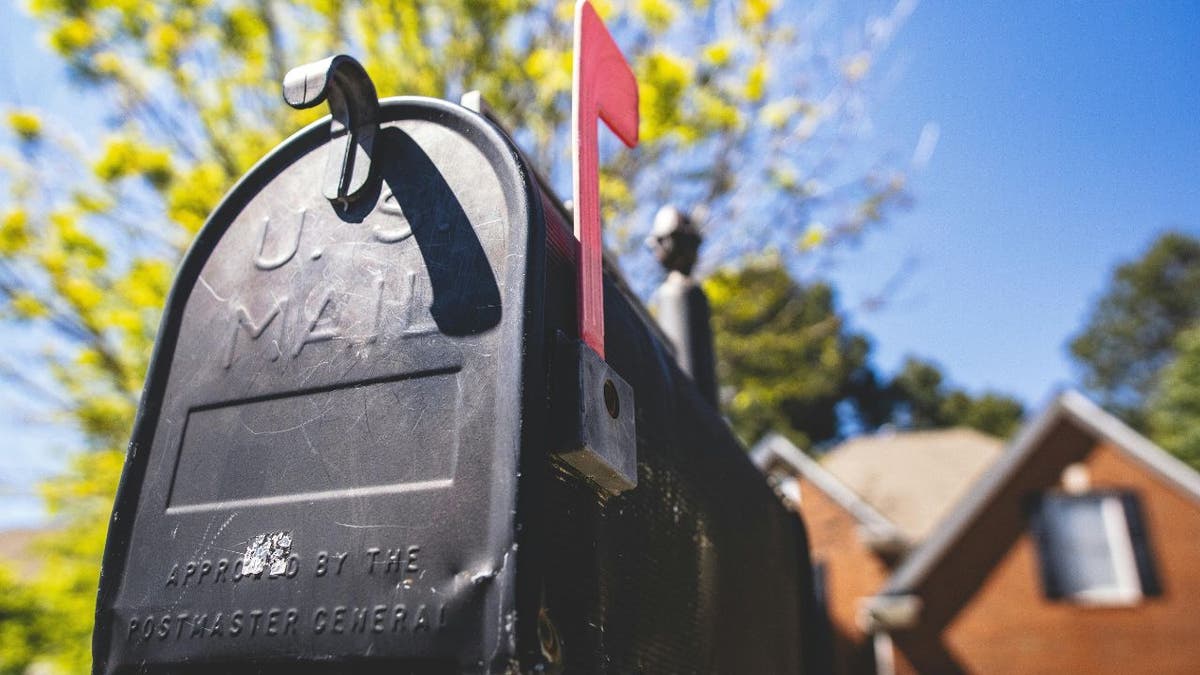
A mailbox in front of a house (Kurt “CyberGuy” Knutsson)
What to do if you think your mail has been fraudulently redirected
If you have good reason to believe that someone has redirected your mail without permission, don’t hesitate to take action. The sooner you catch this, the better. Here’s what you can do:
Start by keeping detailed records: Document everything that’s led you to believe your mail has been redirected. This includes the mail you were expecting, any communication with the senders of the missed mail (such as confirming dispatch dates), suspicious phone calls, texts or emails, and any unusual activity in your online accounts, bank accounts or credit reports.
Reach out to the USPS for help: Use the online locator to find and contact your local U.S. Postal Inspection Service (USPIS) office. They can assist with investigating fraudulent mail redirection.
Take action if identity theft is suspected: If you believe you’ve become a victim of identity fraud, visit the Federal Trade Commission’s identity theft portal. This resource will help you develop a recovery plan and guide you through the steps to protect yourself.
Taking these steps will put you on the road to regaining control and getting through what can quickly become a stressful situation.
Prevention is better than a cure, and, luckily, there’s a lot you can do to stop change-of-address scams before they start.
1. Invest in personal data removal services: Have your personal information removed from data broker databases, including people search sites. They’re the first port of call for many scammers. Without these companies in the mix, scammers aren’t likely to come across your address in the first place.
A reputable personal information removal service can take your data down from hundreds of sites and keep it off by resending removal requests, even as data brokers try to add your information to their databases.
While no service promises to remove all your data from the internet, having a removal service is great if you want to constantly monitor and automate the process of removing your information from hundreds of sites continuously over a longer period of time. Check out my top picks for data removal services here.
2. Reduce the amount of sensitive mail in your mailbox: Start by switching to paperless options wherever available. This will dramatically reduce the amount of sensitive mail heading to your mailbox, leaving criminals with little value to steal. Check your mail daily, as soon as possible after it’s delivered. Get someone to do this for you if you’re away. Some redirection scams start with mail being stolen from your mailbox. Definitely avoid allowing your mailbox to overflow.
3. Secure your mailbox: Consider upgrading to a locked mailbox to prevent mail theft. If you live in an area prone to mail theft, this simple step can stop criminals from intercepting sensitive documents before they even reach you.
4. Use an identity theft protection service: Identity theft companies can monitor personal information like your Social Security number, phone number and email address and alert you if it is being sold on the dark web or being used to open an account. They can also assist you in freezing your bank and credit card accounts to prevent further unauthorized use by criminals. See my tips and best picks on how to protect yourself from identity theft.
5. Set up USPS Informed Delivery: Enroll in USPS Informed Delivery, a free service that lets you preview images of incoming mail before it arrives. This can help you spot missing mail early and identify potential issues with mail redirection.
6. Report suspicious activity immediately: If you notice anything unusual, such as missing mail or unauthorized changes to your accounts, report it right away. Contact the USPS, your bank and the Federal Trade Commission to ensure the issue is documented and addressed promptly.
Change-of-address scams might sound like an unlikely threat, but they can wreak havoc on your finances and peace of mind if left unchecked. By staying alert, securing your personal information and taking proactive measures like monitoring your mail and credit, you can greatly reduce the risk of falling victim to these scams. Remember, catching fraud early is key. So, don’t hesitate to act if something feels off.
Kurt “CyberGuy” Knutsson is an award-winning tech journalist who has a deep love of technology, gear and gadgets that make life better with his contributions for Fox News & FOX Business beginning mornings on “FOX & Friends.” Got a tech question? Get Kurt’s free CyberGuy Newsletter, share your voice, a story idea or comment at CyberGuy.com.