Kaito AI, an artificial intelligence-powered platform that aggregates crypto data to provide market analysis for users, and its founder Yu Hu, were the victims of an X social media hack on March 15.
In several now-deleted posts, hackers claimed that the Kaito wallets were compromised and advised users that their funds were not safe.
According to DeFi Warhol, the hackers opened up a short position on KAITO tokens before posting the messages in the hopes that users would sell or pull their funds, which would have crashed the price and created profits for the threat actors.
The price of the KAITO token dips, presumably due to a short position. Source: CoinMarketCap
The Kaito AI team regained access to the accounts and reassured users that Kaito token wallets were not compromised in the social media exploit.
“We had high-standard security measures in place to prevent [the hack] — so it seems to be similar or the same as other recent Twitter account hacks,” the Kaito AI team added.
This recent exploit is the latest in a growing list of social media hacks, social engineering scams, and cybersecurity incidents plaguing the crypto industry.
Vigilance is key: some of the latest scams and exploits to impact crypto
Pump.fun’s X account was hacked on Feb. 26 by a threat actor promoting several fake tokens, including a fraudulent governance token for the fair launch platform called “Pump.”
According to onchain sleuth ZackXBT, the Pump.fun incident was directly connected to the Jupiter DAO account hack and the DogWifCoin X account compromise.
On March 7, The Alberta Securities Commission, a Canadian financial regulator, warned the public that malicious actors were using fake news articles and fake endorsements featuring the likeness of Canadian politicians to promote a crypto scam.
The scam, known as CanCap, played on fears of a trade war between Canada and the US to lure unsuspecting victims into investing in the project, which the scammers claimed had the support of Canadian leader Justin Trudeau.
An example of a Lazarus social engineering scam where the hackers pretend to be venture capitalists experiencing audio-visual issues. Source: Nick Bax
Crypto executives are also sounding the alarm on a new scam from the state-sponsored Lazarus hacker group, where the hackers pose as venture capitalists in a Zoom meeting.
Once the target is in the meeting room, the hackers would claim they were experiencing audio-visual issues and redirect the victim to a malicious chat room where the user is encouraged to download a patch.
The patch contains malicious software designed to steal crypto private keys and other sensitive information from the victim’s computer.
Several years back, many in the crypto community described Bitcoin as a “safe-haven” asset. Fewer are calling it that today.
A safe-haven asset maintains or increases in value in times of economic stress. It can be a government bond, a currency like the US dollar, a commodity like gold, or even a blue-chip stock.
A spreading global tariff war set off by the United States, as well as troubling economic reports, have sent equity markets tumbling, and Bitcoin too — which wasn’t supposed to happen with a “risk off” asset.
Bitcoin has suffered compared with gold, too. “While gold prices are up +10%, Bitcoin is down -10% since January 1st,” noted the Kobeissi Letter on March 3. “Crypto is no longer viewed as a safe haven play.” (Bitcoin dropped even further last week.)
But some market observers are saying that this wasn’t really unexpected.
Bitcoin (white) and gold (yellow) price chart from Dec. 1 to March 13. Source: Bitcoin Counter Flow
Was Bitcoin ever a safe haven?
“I have never thought of BTC as a ‘safe haven,’” Paul Schatz, founder and president of Heritage Capital, a financial advisory firm, told Cointelegraph. “The magnitude of the moves in BTC are just too great to be put in the haven category although I do believe investors can and should have an allocation to the asset class in general.”
“Bitcoin is still a speculative instrument for me, not a safe haven,” Jochen Stanzl, Chief Market Analyst at CMC Markets (Germany), told Cointelegraph. “A safe haven investment like gold has an intrinsic value that will never be zero. Bitcoin can go down 80% in major corrections. I wouldn’t expect that from gold.”
Crypto, including Bitcoin, “has never been a ‘safe haven play’ in my opinion,” Buvaneshwaran Venugopal, assistant professor in the department of finance at the University of Central Florida, told Cointelegraph.
But things aren’t always as clear as they first appear, especially when it comes to cryptocurrencies.
One could argue that there are different kinds of safe havens: one for geopolitical events like wars, pandemics, and economic recessions, and another for strictly financial events like bank collapses or a weakening dollar, for instance.
The perception of Bitcoin may be changing. Its inclusion in exchange-traded funds issued by major asset managers like BlackRock and Fidelity in 2024 widened its ownership base, but it may also have changed its “narrative.”
It is now more widely seen as a speculative or “risk on” asset like a technology stock.
“Bitcoin, and crypto as a whole, have become highly correlated with risky assets and they often move inversely to safe-haven assets, like gold,” Adam Kobeissi, editor-in-chief of the Kobeissi Letter, told Cointelegraph.
There’s a lot of uncertainty where BTC is heading, he continued, amid “more institutional involvement and leverage,” and there’s also been a “narrative shift from Bitcoin being viewed as ‘digital gold’ to a more speculative asset.”
One might think that its acceptance by traditional finance giants like BlackRock and Fidelity would make Bitcoin’s future more secure, which would boost the safe haven narrative — but that’s not necessarily the case, according to Venugopal:
“Big companies piling into BTC does not mean it has become safer. In fact, it means BTC is becoming more like any other asset that institutional investors tend to invest in.”
It will be more subject to the usual trading and draw-down strategies that institutional investors use, Venugopal continued. “If anything, BTC is now morecorrelated to risky assets in the market.”
Bitcoin’s dual nature
Few deny that Bitcoin and other cryptocurrencies are still subject to big price swings, further propelled recently by growing retailadoption of crypto, particularly from the memecoin craze, “one of the largest crypto-onboarding events in history,” Kobeissi noted. But perhaps that is the wrong thing to focus on.
“Safe havens are always longer-term assets, which means that short-term volatility is not a factor in that characteristic,” Noelle Acheson, author of the Crypto is Macro Now newsletter, told Cointelegraph.
The big question is whether BTC can hold its value longer-term against fiat currencies, and it’s been able to do that. “The numbers bear out its validity – on just about any four-year timeframe, BTC has outperformed gold and US equities,” said Acheson, adding:
“BTC has always had two key narratives: it is a short-term risk asset, sensitive to liquidity expectations and overall sentiment. It is also a longer-term store of value. It can be both, as we are seeing.”
Another possibility is that Bitcoin could be a safe haven against some happenings but not others.
“I see Bitcoin as a hedge against issues in TradFi,” like the downturn that followed the collapse of the Silicon Valley Bank and Signature Bank two years ago, and “US Treasury risks,” Geoff Kendrick, global head of digital assets research at Standard Chartered told Cointelegraph. But for some geopolitical events, Bitcoin might still trade as a risk asset, he said.
Gold can serve as a hedge against geopolitical issues, like trade wars, while both Bitcoin and gold are hedges against inflation. “So both are useful hedges in a portfolio,” Kendrick added.
Others, including Ark Investment’s Cathie Wood, agree that Bitcoin acted as a safe haven during the SVB and Signature bank runs in March 2023. When SVB collapsed on March 10, 2023, Bitcoin’s price was around $20,200, according to CoinGecko. It stood close to $27,400 a week later, roughly 35% higher.
BTC price fell on March 10 before bouncing back a week later. Source: CoinGecko
Schatz doesn’t see Bitcoin as a hedge against inflation. The events of 2022, when FTX and other crypto firms collapsed and the crypto winter began, “damages that thesis dramatically.”
Maybe it’s a hedge against the US dollar and Treasury bonds? “That’s possible, but those scenarios are pretty dark to think about,” Schatz added.
No time for over-reaction
Kobeissi agreed that short-term fluctuations in asset classes “often have minimal relevance over a long-term time period.” Many of Bitcoin’s fundamentals remain positive despite the current drawdown: a pro-crypto US government, the announcement of a US Bitcoin Reserve, and a surge in crypto adoption.
The big question for market players is: “What is the next major catalyst for the run to continue?” Kobeissi told Cointelegraph. “This is why markets are pulling back and consolidating: it’s a search for the next major catalyst.”
“Ever since macro investors started seeing BTC as a high-volatility, liquidity-sensitive risk asset, it has behaved like one,” added Acheson. Moreover, “it is almost always short-term traders that set the last price, and if they’re rotating out of risk assets, we will see BTC weakness.”
Markets are struggling in general. There’s “the specter of renewed inflation and an economic slowdown weighing heavy on expectations” that are also affecting Bitcoin’s price. Acheson further noted:
“Given this outlook, and BTC’s dual nature of risk asset and long-term safe haven, I’m surprised it’s not falling further.”
Venugopal, for his part, says Bitcoin hasn’t been a short-term hedge or safe haven since 2017. As for the long-term argument that Bitcoin is digital gold because of its 21 million BTC supply cap, that only works “if a large fraction of investors collectively expect Bitcoin to increase in value over time,” and “this may or may not be true.”
Obesity and stress could magnify the risk of one of the most aggressive types of cancer, a new study suggests.
Researchers at University of California Los Angeles (UCLA) found that stress-related neurotransmitters and obesity-related hormones activated CREB (cyclic AMP response element-binding protein), which was shown to promote the growth of cancer cells in the pancreas.
In the study, mice that ate a high-fat diet were more likely to develop precancerous lesions. When stress levels were also raised through social isolation, the lesions grew even more.
The stress-related cancer risk was more pronounced in female mice.
Based on these findings, the researchers suggested exploring the use of existing medications to reduce the risk of obesity- and stress-related cancers.
Obesity and stress could magnify the risk of one of the most aggressive types of cancer, a new study suggests.(iStock)
“Since β-adrenergic receptors play a crucial role in stress-related cancer growth, commonly used beta-blockers, which are drugs prescribed for high blood pressure, could be repurposed to help mitigate these effects,” a press release stated.
Pancreatic cancer is one of the deadliest types in the U.S., with a five-year survival rate of just 13%.
One of the biggest challenges with the disease is that it’s often detected at a late stage when the disease is already advanced, according to Dr. Robert Den, a radiation oncologist, professor of radiation oncology, and chief medical officer at Alpha Tau Medical in Israel.
“Unlike some other cancers, there are no effective early screening tools, so by the time a patient is diagnosed, treatment options are often limited,” Den, who was not involved in the study, told Fox News Digital.
“Unlike some other cancers, there are no effective early screening tools, so by the time a patient is diagnosed, treatment options are often limited.”(iStock)
The study reinforces the strong connection between the mind and body as it related to cancer development, Den said.
“Stress and its associated pathways can exacerbate disease progression, and we know that obesity fuels certain cancers, potentially impacting a patient’s response to treatment,” he said.
“In this case, we’re seeing evidence that stress and obesity may contribute to the worsening of pancreatic cancer, which has major implications for both prevention and treatment strategies.”
Maintaining a heart-healthy diet and eating in moderation are essential, Den noted — not just for cancer prevention but for overall health.
Pancreatic cancer is one of the deadliest types in the U.S., with a five-year survival rate of just 13%.(iStock)
“Exercise is particularly crucial in addressing both obesity and stress,” he said. “Staying active is not only beneficial for physical health, but also an excellent way to reduce stress.”
Mindfulness can also play a key role in reducing cancer risk, the doctor advised.
“Spending time outdoors can also improve both mental and physical well-being, so I always encourage patients to find ways to be active, connect with nature and prioritize their overall wellness,” he said.
Regarding pancreatic cancer treatment, Den noted that there have been some advancements in chemotherapy and surgical techniques, but “there hasn’t yet been a breakthrough.”
“Most immunotherapies, which have been revolutionary in other cancers, have not shown the same promise in pancreatic cancer,” he said.
“Spending time outdoors can also improve both mental and physical well-being, so I always encourage patients to find ways to be active, connect with nature and prioritize their overall wellness,” an oncologist said.(iStock)
“The key challenge is finding ways to help patients who are not candidates for surgery, as surgery remains the best line of defense.”
Fox News Digital reached out to the study researchers for comment.
Melissa Rudy is senior health editor and a member of the lifestyle team at Fox News Digital. Story tips can be sent to melissa.rudy@fox.com.
Pope Francis remains stable as he continues his recovery one month after he was hospitalized for a bout of bronchitis that turned into pneumonia.
“The clinical conditions of the Holy Father have remained stable, confirming the progress highlighted in the last week,” a medical bulletin from the Vatican’s Holy See Press Office said in an update on Saturday.
It was the first medical update in three days.
While working from the Gemelli hospital, the pope was able to sign off on a three-year reform project that aims to make the Church a more welcoming place.
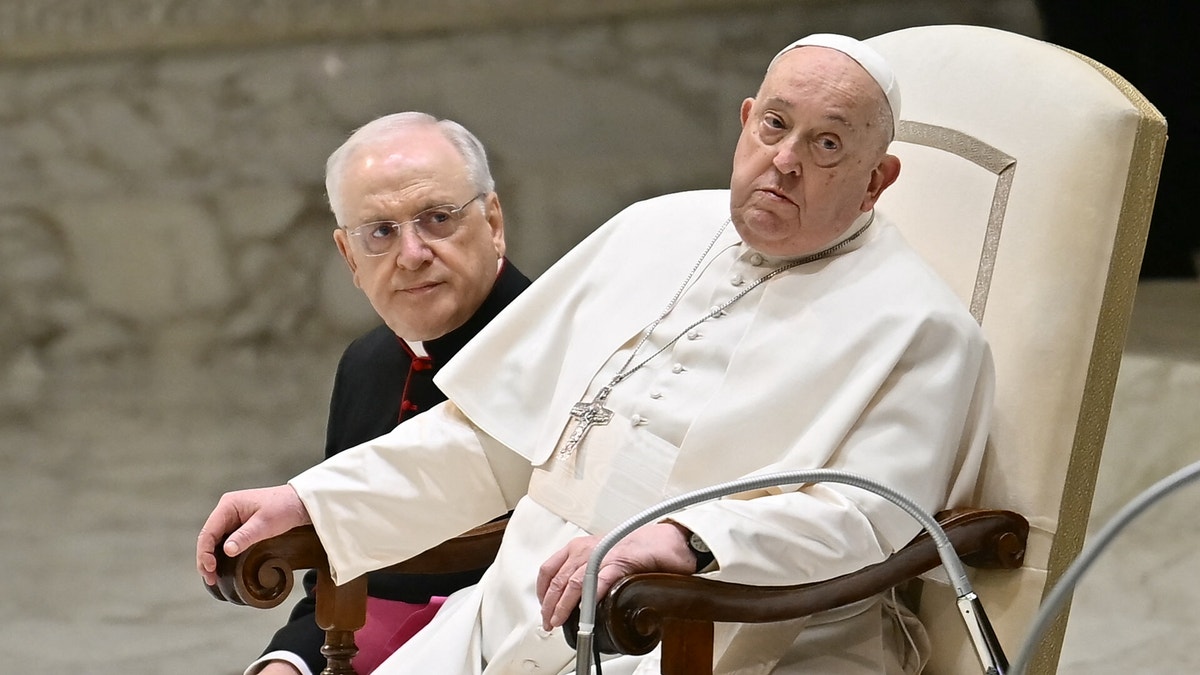
Pope Francis remains stable as he continues his recovery one month after he was hospitalized for a bout of bronchitis that turned into pneumonia. (Buda Mendes/Getty Images)
He also spent the day praying and resting.
The Vatican added that the pope’s high-flow oxygen therapy continues, which is progressively reducing his need for non-invasive mechanical ventilation at night and will help his lungs work more.
“The Holy Father still needs hospital medical therapy, motor and respiratory physiotherapy,” the bulletin added, noting that these therapies show “gradual improvements.”
Francis was first admitted to the hospital on Feb. 14, after a week-long fight against bronchitis gradually worsened, ultimately turning into double pneumonia.
This week, his health improved significantly, with the Vatican saying he was now “out of danger of death.”
The 88-year-old spent time on Wednesday following spiritual exercises in the Vatican, receiving the Eucharist, praying and completing physical therapy.
This week marked the 12-year anniversary of the pope’s election to lead the Roman Catholic Church.
The pope’s condition has been complicated, because he had part of his lung removed as a child after a pulmonary infection.
A chest X-ray on Tuesday confirmed improvements observed by medical staff in previous days, but his situation remains “complex,” meaning he will have to spend more time in the hospital.
A message for Pope Francis in front of the Agostino Gemelli Polyclinic in Rome on Saturday. (AP Photo/Andrew Medichini)
An X-ray this week confirmed that his infection was clearing.
The Vatican said that the pope’s condition has improved to the point where updates will only be given when there is new information.
The next update will be in the middle of next week, the Vatican said.
The pope released an audio message earlier this month, thanking people for their well-wishes, which was played in St. Peter’s Square.
But for the last four Sundays, the blessing the pope gives from a window overlooking St. Peter’s Square has been delivered in text form only.
Pope Francis attended the weekly general audience on February 12, shortly before he was admitted to the hospital. (Filippo Monteforte/AFP via Getty Images)
The pontiff participated in Lenten spiritual exercises from the hospital this week and received get-well cards and a cake to celebrate his 12th anniversary as pope.
Meanwhile, as the pope continues his treatments, the nuns who work the Vatican’s switchboard are fielding calls from those concerned about his health.
“They feel like children waiting to know about their father,” Sister Anthony, who runs the operation in an office near St. Peter’s Basilica, told the Associated Press. “We tell them to pray for him.”
Fox News’ Elizabeth Pritchett and the Associated Press contributed to this report.
The current crypto market correction is merely the middle of the bull cycle, not the top, based on the steadily growing stablecoin supply, which may signal more incoming investment according to analysts.
The cumulative stablecoin supply has surpassed $219 billion, suggesting that the current cycle is still far from its top.
Historically, stablecoin supply peaks have aligned with crypto cycle tops, according to a March 14 X post by crypto intelligence platform IntoTheBlock, which wrote:
“In April 2022, supply hit $187B—just as the bear market started. Now it’s at $219B and still rising, suggesting we’re likely still mid-cycle.”
Increasing stablecoin inflows to crypto exchanges can signal incoming buying pressure and growing investor appetite, as stablecoins are the main investor on-ramp from fiat to the crypto world.
Still, Ether (ETH) price is down over 52% over the past three months, after it peaked above $4,100 on Dec. 16, 2024, and analysts are eying another decline below $1,900, a “robust” demand zone that may bring more investment into the world’s largest cryptocurrency.
Crypto market will likely lack direction ahead of FOMC meeting: analyst
Despite the rising stablecoin supply, the crypto market may continue to lack direction ahead of next week’s Federal Open Market Committee (FOMC) meeting.
Next week’s FOMC meeting may be decisive for crypto markets, which remain influenced by macroeconomic developments, according to Stella Zlatareva, dispatch editor at Nexo digital asset investment platform.
Zlatareva told Cointelegraph:
“Bitcoin’s movement below key technical levels, mirroring the S&P 500’s trajectory, highlights the market’s cautious tone as traders await key economic data for direction, including U.S. retail sales and the FOMC meeting.”
“All eyes are set on next Wednesday’s FOMC meeting, anticipating insights into U.S. monetary policy and potential interest rate adjustments, especially given the recent declines in U.S. PPI and initial jobless claims figures, which point towards a slowing economy,” she added.
The predictions come days ahead of the next FOMC meeting scheduled for March 19. Markets are currently pricing in a 98% chance that the Fed will keep interest rates steady, according to the latest estimates of the CME Group’s FedWatch tool.
Despite the potential for short-term volatility, investors remain optimistic for the rest of 2025, VanEck predicted a $6,000 cycle top for Ether’s price and a $180,000 Bitcoin price during 2025.
Bitcoin (BTC) failed to sustain levels above $85,000 on March 14, despite a 1.9% gain in the S&P 500 index. More importantly, it has been over a week since Bitcoin last traded at $90,000, prompting traders to question whether the bull market is truly over and how long selling pressure will persist.
Bitcoin basis rate rebounds from bearish levels
From a derivatives perspective, Bitcoin metrics have shown resilience despite a 30% drop from its all-time high of $109,354 on Jan. 20. The Bitcoin basis rate, which measures the premium of monthly contracts over spot markets, has recovered to healthy levels after briefly signaling bearish sentiment on March 13.
Traders typically demand a 5% to 10% annualized premium to compensate for longer settlement periods. A basis rate below this threshold signals weak demand from leveraged buyers. While the current 5% rate is lower than the 8% recorded two weeks ago, it remains within neutral territory.
Central banks will eventually boost BTC price
Bitcoin price action has closely tracked the S&P 500, suggesting that factors driving investor risk aversion may not be directly tied to the top cryptocurrency.
However, this also challenges the idea of Bitcoin as a non-correlated asset, as its price behavior has aligned more closely with traditional markets, at least in the short term.
S&P 500 futures (left) vs. Bitcoin/USD. Source: TradingView / Cointelegraph
If Bitcoin’s price remains heavily dependent on the stock market, which is under pressure due to fears of an economic recession, investors are likely to keep reducing exposure to risk-on assets and shift toward short-term bonds for safety.
However, central banks are expected to implement stimulus measures to avoid a recession, and scarce assets like Bitcoin are likely to outperform as a result.
According to the CME FedWatch tool, the markets are pricing less than 40% odds for interest rates in the US below 3.75% from the current 4.25% baseline ahead of the July 30 FOMC meeting.
Nevertheless, Bitcoin should reclaim the $90,000 level as soon as the S&P 500 pares some of its recent 10% losses. But in a worst-case scenario, panic selling of risk-on assets could continue.
Under such conditions, BTC would likely keep underperforming over the next few months, especially if spot Bitcoin exchange-traded funds (ETFs) continue to experience significant and sustained net outflows.
Bitcoin derivatives show no signs of stress
Professional traders are not actively using Bitcoin options for hedging presently, as shown by the 25% delta skew metric. This implies that few market participants expect the BTC price to retest the $76,900 level anytime soon.
Bullish sentiment typically leads to put (sell) options trading at a 6% or higher discount. In contrast, bearish periods cause the indicator to rise to a 6% premium, as seen briefly on March 10 and March 12. However, the 25% delta skew has recently stayed within the neutral range, reflecting a healthy derivatives market.
To better gauge trader sentiment, examining BTC margin markets is important. Unlike derivatives contracts, which are always balanced between longs (buyers) and shorts (sellers), margin markets let traders borrow stablecoins to buy spot Bitcoin. Similarly, bearish traders can borrow BTC to open short positions, betting on a price drop.
Bitcoin margin long-to-short ratio at OKX. Source: OKX
The Bitcoin long-to-short margin ratio at OKX shows longs outweighing shorts by 18 times. Historically, excessive confidence has pushed this ratio above 40 times, while levels below five times favoring longs are seen as bearish. The current ratio mirrors sentiment on Jan. 30, when Bitcoin traded above $100,000.
There are no signs of stress or bearishness in Bitcoin derivatives and margin markets, which is reassuring, especially after over $920 million in leveraged long futures contracts were liquidated in the seven days ending March 13.
Therefore, as recession risks ease, Bitcoin price is likely to reclaim the $90,000 level in the coming weeks, given the resilience in investor sentiment.
This article is for general information purposes and is not intended to be and should not be taken as legal or investment advice. The views, thoughts, and opinions expressed here are the author’s alone and do not necessarily reflect or represent the views and opinions of Cointelegraph.
President Donald Trump announced on Saturday that he has ordered airstrikes against the Houthi rebels in Yemen.
In a Truth Social post, Trump wrote that he had “ordered the United States Military to launch decisive and powerful Military action against the Houthi terrorists in Yemen.”
“They have waged an unrelenting campaign of piracy, violence, and terrorism against American, and other, ships, aircraft, and drones,” Trump’s post read.
“Joe Biden’s response was pathetically weak, so the unrestrained Houthis just kept going,” Trump continued. “It has been over a year since a U.S. flagged commercial ship safely sailed through the Suez Canal, the Red Sea, or the Gulf of Aden.”
President Donald Trump waves before departing on Marine One from the South Lawn of the White House, March 7, in Washington, D.C. (AP Photo/Alex Brandon)
This is a breaking news story. Check back with us for updates.
The Open Network (TON) Society released a statement on March 15 celebrating the return of Pavel Durov’s passport as a win for freedom of speech, online privacy, and innovation.
According to the AFP news agency, Durov left France and headed to Dubai on the morning of March 15 after gaining permission from French officials to depart the European country.
“We have stood behind Pavel since his arrest on August 24, 2024,” the TON Society wrote. The group added:
“Pavel’s unwavering commitment to freedom of speech and transparency, despite facing the most challenging of circumstances, is a powerful reminder of the importance of standing by your principles, even when it is politically and personally detrimental to do so.”
The TON Society previously penned a letter condemning the French government for detaining Durov and urging the country to release the Telegram founder.
The TON Society celebrates the return of Durov’s passport by French law enforcement officials. Source: TON Society
“The arrest of the Telegram founder, Pavel Durov, is a direct assault on a basic human right — the freedom of expression of everyone,” the TON Society’s Aug. 27 letter read.
At the time, the organization also called on the United Nations, the Council of Europe (CoE), the Organization for Security and Cooperation in Europe (OSCE), and the European Union (EU) to intervene and push for Durov’s release.
Free speech advocates in the crypto industry sounded the alarm over Pavel Durov’s arrest, citing the troubling implications for privacy and decentralized technologies in the face of state pressure to censor the internet and the potential for regulatory capture.
Emmanuel Macron denies political motivation for Durov’s arrest
Shortly after French law enforcement officials detained the Telegram founder, President Emmanuel Macron denied the arrest was politically motivated and claimed that France was committed to free speech.
French President Emmanuel Macron denies the arrest of Pavel Durov was politically motivated. Source: Emmanuel Macron
In a subsequent press conference, Macron also denied inviting Durov to France amid a torrent of backlash from the crypto community and free speech advocates.
Elon Musk has confirmed that SpaceX’s Starship will head to Mars at the end of 2026. The ship will be carrying Optimus, Tesla’s humanoid robot. The tech billionaire said that if all goes well, humans could be on the red planet by 2029, although he admitted that 2031 is more likely.
NASA’s Perseverance Mars rover used its dual-camera Mastcam-Z imager to capture this image of “Santa Cruz,” a hill within Jezero Crater, on April 29, 2021, the 68th Martian day, or sol, of the mission.(Credits: NASA/JPL-Caltech/ASU/MSSS)
The X account for Optimus replied to Musk’s announcement with just two words: “Hold on.”
“Starship is the world’s most powerful launch vehicle ever developed, capable of carrying up to 150 metric tonnes fully reusable and 250 metric tonnes expendable,” SpaceX writes on its website. In US tons, that is up to 165 tons of fully reusable and up to 275 tons expendable.
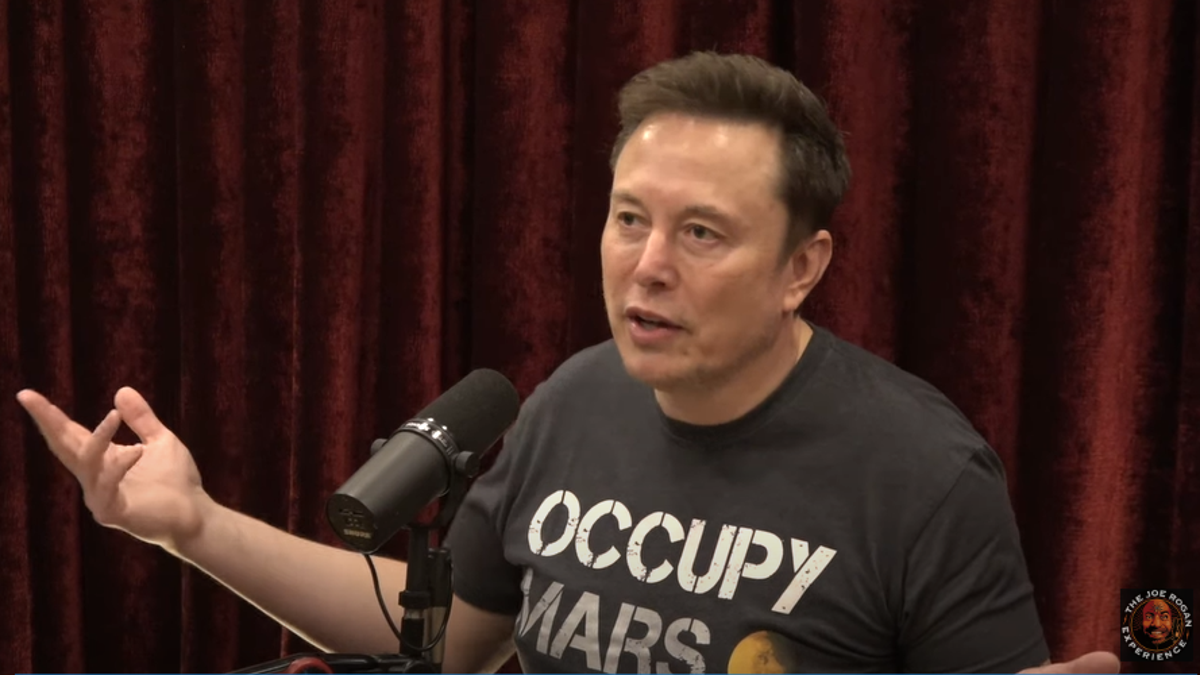
Musk has long talked about his dream of sending men to Mars, and recently he was spotted in the White House wearing an “Occupy Mars” shirt.
Billionaire Elon Musk spoke to podcaster Joe Rogan about the future of the X platform under either future President Kamala Harris or future President Donald Trump.(The Joe Rogan experience.)
“I can’t think of anything more exciting than going out there and being among the stars,” a quote from Musk reads on SpaceX’s webpage on its mission of “making humanity multiplanetary.”
Musk’s announcement of a mission to Mars comes during an exciting week for SpaceX.
A SpaceX Falcon 9 rocket blasts off from the launch pad at NASA’s Kennedy Space Center in Cape Canaveral, Fla., Friday, March 14, 2025.(SpaceX/NASA)
On Friday, SpaceX and NASA launched a crew headed for the International Space Station (ISS) with astronauts who will replace Butch Wilmore and Suni Williams, who have been stuck in space for nine months.
Test pilots Wilmore and Williams launched into space aboard Boeing’s Starliner on June 5, 2024, and were scheduled to return to Earth on June 13, 2024. However, thruster failures and helium leaks led NASA and Boeing to leave the astronauts aboard the ISS rather than have them make the risky journey home.
Rachel Wolf is a breaking news writer for Fox News Digital and FOX Business.
The price of Toncoin (TON) jumped over 6% following the release of Telegram founder Pavel Durov from France, where he had been compelled to remain since his arrest in August 2024.
According to CoinMarketCap, the price of TON has rallied by roughly 18% in the last 24 hours and over 13% in the last seven days.
Following the news of the Telegram founder’s arrest in France on Aug. 24, 2024, the price of TON plummeted by over 35%, from roughly $6.88 to $4.44 by September 2024.
The digital asset reached a high of $7.20 on December 4, 2024, amid a historic rally in the crypto markets in response to the re-election of President Donald Trump in the United States.
However, TON’s price collapsed by roughly 67% after the post-election rally, reaching a low of $2.36 on March 11, 2025.
Toncoin’s price action since August 2024. Source: TradingView
Toncoin is the cryptocurrency of The Open Network, which is separate from the Telegram platform, but has become a staple for users of the messaging application.
French prosecutors accused Durov of running a platform that allegedly enables illegal activities, according to charges announced on Aug. 28, 2024.
Durov being granted approval to leave France was applauded by Telegram and TON users as a win for freedom of speech, while the debate between online security and freedom of expression continues to foment.
Pavel Durov finally allowed to leave France after months
The Telegram founder reportedly secured permission to leave France on March 13 to travel to Dubai.
According to the AFP news agency, unnamed sources confirmed Durov’s departure from the European country this morning, and other sources claimed that the Telegram founder was allowed to leave France for “several weeks.”
At this point, it is unclear whether the case has been settled in French courts or if Durov has only been granted temporary travel time while the case is arbitrated in the legal system.
A translated statement from the Paris Public Prosecutor’s Office announcing charges against Telegram founder Pavel Durov. Source: Jacques Pezet
French law enforcement officials have accused Telegram of facilitating illegal activities by failing to censor the messaging platform and also pressed charges against Durov — forcing him to remain in France as part of a bail agreement.
The Telegram founder later characterized the arrest as unnecessary and said that the company maintains a representative in the European Union to handle legal requests.
Durov emphasized that he and the company would have gladly cooperated with French authorities if an appropriate legal request for help was submitted.