The US Office of the Comptroller of the Currency (OCC) has eased its stance on how banks can engage with crypto just hours after US President Donald Trump vowed to shut down Operation Chokepoint 2.0 — the prolonged crackdown restricting crypto firms’ access to banking services.
“Crypto-asset custody, certain stablecoin activities, and participation in independent node verification networks such as distributed ledger are permissible for national banks and federal savings associations,” the OCC said in a March 7 statement.
OCC’s new guidance will “reduce the burden” on banks
The OCC confirmed in a document titled Interpretive Letter 1183 that OCC-supervised financial institutions no longer need “supervisory nonobjection” to engage with crypto-related activities.
“Today’s action will reduce the burden on banks to engage in crypto-related activities and ensure that these bank activities are treated consistently by the OCC,” Acting Comptroller of the Currency Rodney E. Hood said.
The agency said it made the decision because OCC staff now have a better grasp of crypto and want to roll back its earlier stringent rules to “encourage responsible innovation and enhance transparency.”
While the industry has welcomed the OCC’s recent letter, Custodia Bank founder and CEO Caitlin Long said in a March 7 X post that Operation Chokepoint 2.0 “isn’t over” until the US Federal Reserve and the Federal Deposit Insurance Corporation also rescind their “anti-crypto guidance.”
“Some people really suffered, it was ridiculous what they were doing. In the end, they came around, but they came around for the wrong reasons, only because they wanted votes,” Trump said.
Operation Chokepoint 2.0 “strong-armed banks”
Operation Chokepoint 2.0 widely impacted the industry in multiple countries and was a significant pain point for industry advocacy groups during the 2024 United States election.
“They strong-armed banks into closing crypto businesses and entrepreneurs effectively blocking money transfers to and from exchanges, and they weaponized the government against the entire industry,” Trump said.
“But I know that feeling also, maybe better than you do; all that will soon be over.”
Many crypto firms turned to stablecoins to finance their operations after losing their business accounts at traditional banking institutions during the debanking operation.
On Jan 16, Wyoming Senator Cynthia Lummis sent a letter to the FDIC, claiming that whistleblowers informed her that the agency allegedly destroyed documents related to Operation Chokepoint 2.0.
“If it is uncovered that you or your staff have knowingly destroyed materials or sought to obstruct the oversight functions of the Senate, I will make swift criminal referrals to the US Department of Justice,” she said at the time.
United States Treasury Secretary Scott Bessent said the US government will use stablecoins to ensure that the US dollar remains the world’s global reserve currency during the White House Crypto Summit on March 7.
Bessent reiterated the Trump administration’s promise to end the war on crypto and committed to rolling back previous IRS guidance and punitive regulatory measures. Bessent then turned his attention to stablecoins and said:
“We are going to put a lot of thought into the stablecoin regime, and as President Trump has directed, we are going to keep the US [dollar] the dominant reserve currency in the world, and we will use stablecoins to do that.”
President Trump told the summit that he hopes lawmakers will get a comprehensive stablecoin regulatory bill to his desk before the August Congressional recess.
President Trump delivers address to White House Crypto Summit. Source: The Associated Press
The President was also critical of the Biden administration for selling portions of the seized Bitcoin (BTC), which he said amounted to billions in losses through premature selling.
Many of the attendees of the first White House Crypto Summit remarked on the historic nature of the event, which cements a seismic shift in the US government’s stance toward the digital asset industry.
Overcollateralized stablecoins, which use short-term US Treasury bills and cash deposits to back their digital fiat tokens and thus drive demand for US debt instruments, have been pitched as a way to extend US dollar dominance.
Waller argued that the corrosive effect of cryptocurrencies on the market share of the US dollar would be mitigated by stablecoin demand.
Treasury Secretary Scott Bessent says stablecoins will ensure US dollar hegemony at the White House Crypto Summit. Source: The Associated Press
In February 2025, Waller reiterated his stance that stablecoins could help preserve the dollar’s status as the global reserve currency by overcoming capital controls in foreign countries and enhancing payment rails.
As part of this effort to leverage stablecoins to defend the US dollar, US representatives French Hill and Bryan Steil introduced a stablecoin bill titled the Stable Act of 2025 to establish a comprehensive regulatory framework for dollar-pegged digital fiat tokens.
Australia’s Murdoch Children’s Research Institute is helping scientists use stem cell medicine and artificial intelligence to develop precision therapies for pediatric heart disease, the leading cause of death and disability in children.
Around 260,000 children die from heart disease around the world each year. In the U.S., a child is born with a heart defect every 15 minutes.
“We’re really interested in understanding how kids develop heart disease and where we can interfere to stop it progressing,” Murdoch Children’s Research Institute (MCRI) Heart Disease Group Leader David Elliott said.
Dame Elisabeth Murdoch, the mother of Fox News founder Rupert Murdoch, helped found Australia’s MCRI. The institute is partnering with Gladstone Institutes in San Francisco for the Decoding Broken Hearts Program.
Amelia and Elijah Mallinson are two kids who could benefit from this research. The siblings live in Melbourne and have the same genetic heart condition.
“We took her to our local emergency because she woke up, she was swollen,” Amelia and Elijah’s mother, Ebony Mallison, said. “We thought she was just sleepy, but turns out she was in and out of consciousness.”
Amelia was two years old when doctors discovered her condition.
Ebony Mallison, center, sits with her two children, Amelia and Elijah, who are living with the same genetic heart condition. Both of their cases are enrolled in the Decoding Broken Hearts program.(Fox News)
“After they’d done a chest X-ray, they realized that her heart was a lot larger than it should have been, and they realized she was in heart failure,” Mallison said.
Amelia waited almost a year for a heart transplant. After successful treatment, she lives a mostly normal life. Her brother Elijah’s condition was discovered during a precautionary checkup.
“It was quite a shock because we weren’t aware of anything that would cause him to also have a heart condition. It was very much a let’s get him checked just to completely rule out that there’s nothing wrong,” Mallison said. “I feel like that was kind of more scary because we could anticipate the bad. But he’s been really stable and really healthy so far, hasn’t really needed any treatment or therapies yet, which is great.”
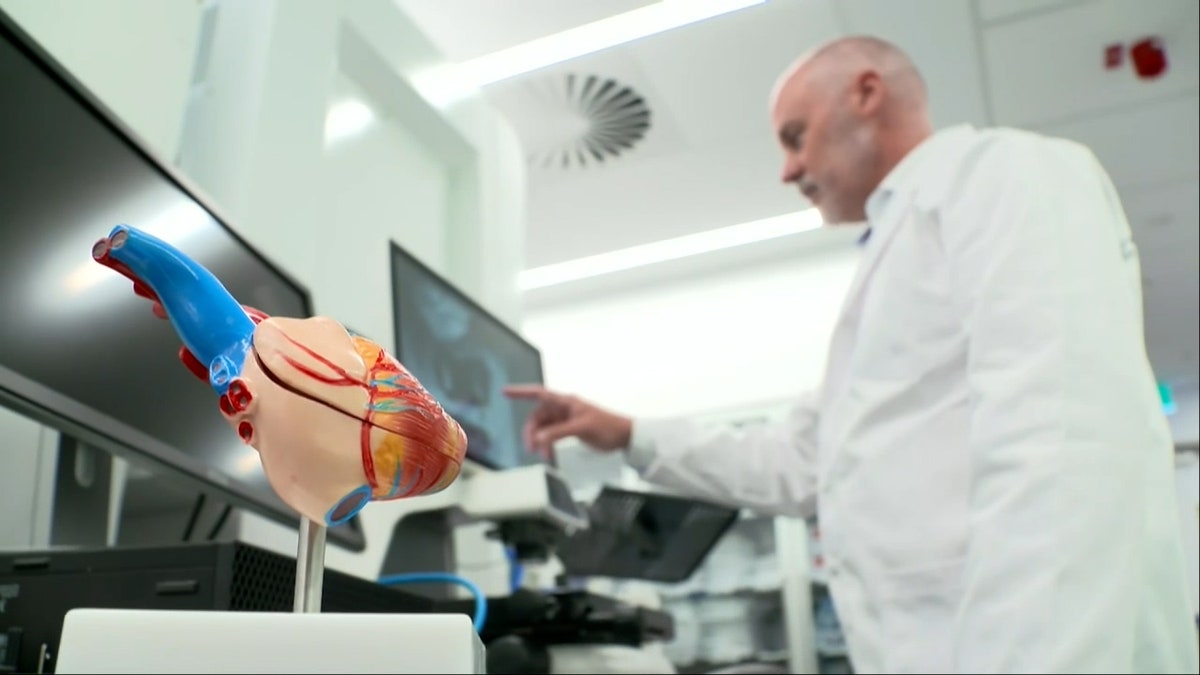
Heart Disease Group Leader David Elliott at the Murdoch Children’s Research Institute examines an image of a heart on his monitor.(Fox News)
“For many, the disease would be absolutely critical if you could correct the problem in-utero,” said Elliott. “Those who have very severe heart disease will need three surgeries before they’re five. And it’s very draining for the families involved. And so, what we really like to do is really progress that and allow those children a much more effective life.”
MCRI is part of the Royal Children’s Hospital, which treats around 700 heart conditions each year. Every case is enrolled in the Decoding Broken Hearts program.
“We can use a special technology called reprogramming. So we take a small sample of this child’s blood,” Elliott said. “From that, we can create a heart cell. And in that heart cell is an exact replica up here in the laboratory of the child’s heart cell.”
Researchers then create additional small heart replicas to alter the function and find possible treatments for the patients at Royal Children’s.
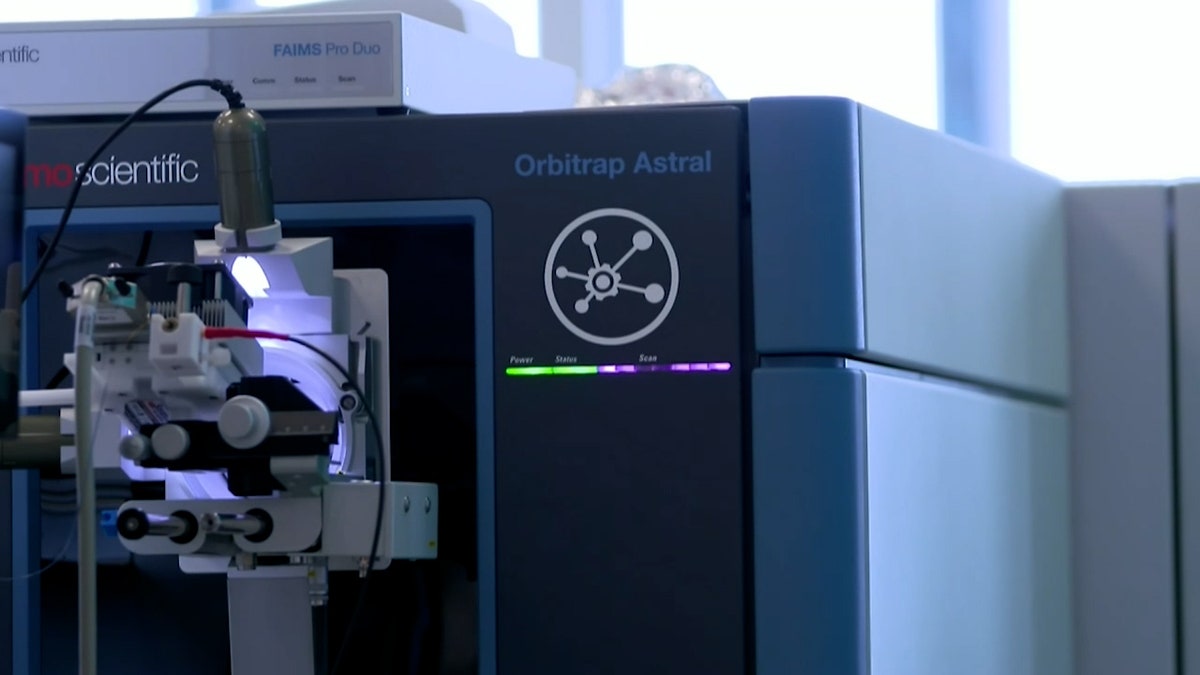
Scientists use patients’ blood samples to create small heart replicas to study, aided by artificial intelligence.(Fox News)
“We’re trying to use all of those different tools and technologies to understand how the disease develops and where we can look for new therapies using precision medicine to help kids with heart disease,” Elliott said.
“Gladstone brings the expertise and the computational know-how that’s built up around the Bay area to use AI to study the disease,” Elliott said. “What AI allows us to do is millions and millions of experiments in the computer before we bring them into the cell, and that really allows us to target in and look at the ideal spot to interfere, to help cure disease.”
Amelia and Elijah have also participated in studies to further advance treatments for conditions like theirs.
“If it even helps one family, it’s worth it,” Mallinson said. “Every staff member that you come in contact with at the hospital and doing research, they all make a huge difference in the lives of the kids and everyone in the families of these kids.”
If you would like to donate or learn more about the Decoding Broken Hearts Program you can visit go.fox/MCRI.
Bret Baier currently serves as FOX News Channel’s (FNC) anchor and executive editor of Special Report with Bret Baier (weeknights at 6-7PM/ET), chief political anchor of the network and co-anchor of the network’s election coverage. Baier is also host of FOX News Audio’s “The Bret Baier Podcast” which includes Common Ground and The All-Star Panel. He joined FNC in 1998 as the first reporter in the Atlanta bureau and is now based in Washington, D.C.
Solana native token, SOL (SOL), is up by 17% after falling to a low of $125 on Feb. 28. However, it encountered strong resistance near the $180 mark. More significantly, the current price of $145 represents a 50% decline from its all-time high of $295 on Jan. 19, raising concerns among traders about SOL’s ability to regain bullish momentum.
While analysts attribute the sharp decline in SOL’s value to the memecoin market crash, onchain activity has declined across various sectors, including liquid staking, tokenized assets, yield aggregators, synthetic perpetuals, NFT marketplaces, and artificial intelligence infrastructure.
Decreased blockchain activity suggests a reduced appetite for SOL, with Solana network fees dropping by 73% compared to four weeks ago, according to DefiLlama data. While the surge in activity was largely driven by memecoin token launches and decentralized exchange (DEX) trading, the result of SOL’s fading momentum remains the same.
The number of active addresses interacting with Jito, Solana’s largest liquid staking decentralized application, fell by 56% over the past 30 days, as per DappRadar data. Similarly, the NFT marketplace Magic Eden saw a 38% decrease in active addresses, while Save (formerly Solend), which offers collateralized lending, experienced a 42% drop in users over the same period
In comparison, the number of active addresses on Base, the Ethereum layer-2 blockchain, declined by just 2% over the same period. Even Ethereum’s base layer outperformed Solana, with the number of addresses engaging with DApps dropping by 17% over 30 days. This suggests that attributing SOL’s underperformance solely to the memecoin bubble burst is less plausible, as other networks did not experience a similar outcome.
Low leverage demand, bots and lack of Trump support limit SOL upside
Another factor limiting SOL’s upside potential is the lack of interest from leveraged traders. The funding rate on SOL perpetual futures has been negative for the past three days, meaning shorts (sellers) are paying to keep their positions open.
SOL perpetual futures 8-hour funding rate. Source: CoinGlass
The current negative 0.01% 8-hour funding rate is not particularly concerning, as it translates to a mere 0.9% cost per month. However, the lack of interest from leveraged buyers following a 52% drop from its all-time high is not a positive sign for traders’ sentiment. On the other hand, unexpected news, such as the potential approval of a Solana spot exchange-traded fund (ETF) in the United States, could surprise traders and trigger a short-covering rally.
For some critics, the potential for increased activity on the Solana network is less of a concern. They argue that the narrative surrounding Solana is misleading, as reportedly 95% of the network’s fees came from just 1.3% of users, mainly driven by Wintermute, a market-making firm, and maximum extractable value (MEV) bots.
In short, a “tiny group of users, primarily predatory traders,” benefited from pump-and-dump schemes, according to arndxt, author of the “Threading on the Edge” newsletter. Arndxt claims that memecoin speculation led to sandwich attacks, where a malicious trader detects a pending transaction on a decentralized exchange, places one order before and another after it, and profits from price manipulation between the transactions.
Part of the reason SOL was unable to reclaim the $180 level is tied to World Liberty Financial, a semi-centralized finance application linked to President Donald Trump’s personal investments. The project has reportedly accumulated positions in Ether (ETH), Wrapped Bitcoin (WBTC), Tron (TRX), Chainlink (LINK), Aave (AAVE), and other cryptocurrencies, but none in SOL, despite the launch of the Official Trump (TRUMP) memecoin on the Solana network.
Therefore, for SOL to regain its bullish momentum, four key areas of concern need to be addressed: onchain activity, leverage demand, MEV bots, and investment from Trump’s project.
This article is for general information purposes and is not intended to be and should not be taken as legal or investment advice. The views, thoughts, and opinions expressed here are the author’s alone and do not necessarily reflect or represent the views and opinions of Cointelegraph.
The Centers for Disease Control and Prevention (CDC) is in the process of launching a large study into possible links between autism and vaccines, sources familiar told Reuters.
The study has not been confirmed, and it is unclear how the study will be carried out, the outlet reported.
Fox News Digital reached out to the U.S. Department of Health and Human Services (HHS) and the CDC for comment.
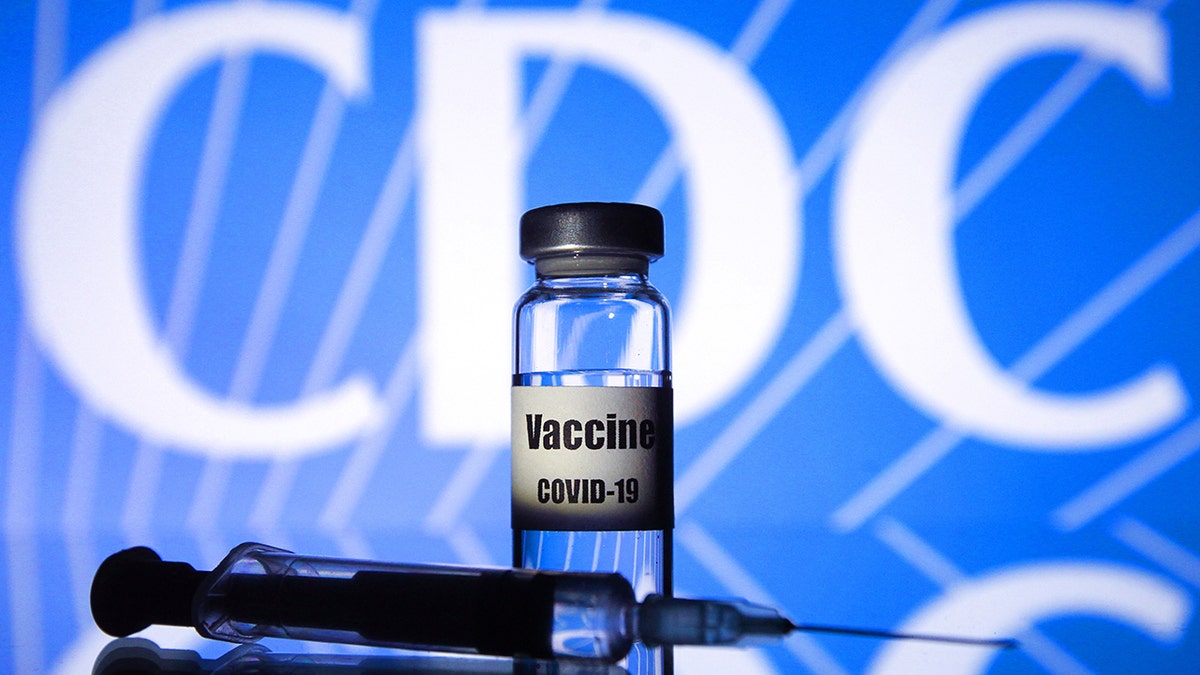
The CDC plans to launch a study into potential links between vaccines and autism, according to Reuters. (iStock)
The CDC acknowledges there is parental concern about possible connections between autism and vaccines.
“To date, the studies continue to show that vaccines are not associated with ASD [Autism Spectrum Disorder]. CDC knows some parents and others still have concerns,” reads the agency’s site.
Dr. Nicole Saphier, a Fox News medical contributor, told Fox News Digital the decision to launch research into a potential link is a “notable shift, likely spurred by ongoing public debate and pressure for transparency.”
The CDC acknowledges there is parental concern about possible connections between autism and vaccines.(Pavlo Conchar/SOPA Images/LightRocket via Getty Images)
“Historically, the agency has maintained that no such connection exists, citing robust, but outdated studies,” she said.
“This move could signal an effort to address persistent skepticism, though it’s bound to reignite controversy.”
“The outcome hinges on the study’s design — rigorous, unbiased and transparent methodology will be key to settling the science, one way or another. Whether the results will sway anyone’s predetermined opinion on the matter, however, is the biggest unknown,” Saphier added.
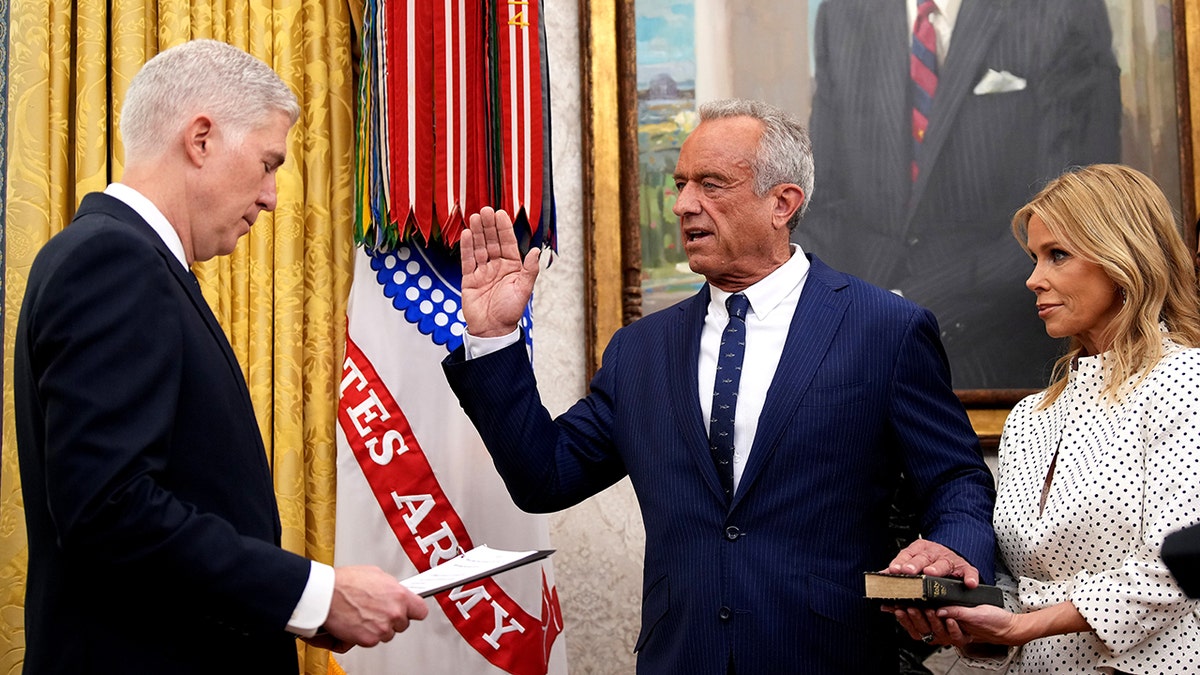
In his recent op-ed on the measles outbreak, Health and Human Services Secretary Robert F. Kennedy, Jr. wrote, “We must engage with communities to understand their concerns, provide culturally competent education, and make vaccines readily accessible for all those who want them.”(Andrew Harnik/Getty Images)
In his recent op-ed on the measles outbreak, HHS Secretary Robert F. Kennedy, Jr. wrote, “…we have a shared responsibility to protect public health. This includes ensuring that accurate information about vaccine safety and efficacy is disseminated.”
“We must engage with communities to understand their concerns, provide culturally competent education, and make vaccines readily accessible for all those who want them,” Kennedy added.
United States Treasury Secretary Scott Bessent said the US government will use stablecoins to ensure that the US dollar remains the world’s global reserve currency during the White House Crypto Summit on March 7.
Bessent reiterated the Trump administration’s promise to end the war on crypto and committed to rolling back previous IRS guidance and punitive regulatory measures. Bessent then turned his attention to stablecoins and said:
“We are going to put a lot of thought into the stablecoin regime, and as President Trump has directed, we are going to keep the US [dollar] the dominant reserve currency in the world, and we will use stablecoins to do that.”
President Trump told the summit that he hopes lawmakers will get a comprehensive stablecoin regulatory bill to his desk before the August Congressional recess.
President Trump delivers address to White House Crypto Summit. Source: The Associated Press
The President was also critical of the Biden administration for selling portions of the seized Bitcoin (BTC), which he said amounted to billions in losses through premature selling.
Many of the attendees of the first White House Crypto Summit remarked on the historic nature of the event, which cements a seismic shift in the US government’s stance toward the digital asset industry.
Overcollateralized stablecoins, which use short-term US Treasury bills and cash deposits to back their digital fiat tokens and thus drive demand for US debt instruments, have been pitched as a way to extend US dollar dominance.
Waller argued that the corrosive effect of cryptocurrencies on the market share of the US dollar would be mitigated by stablecoin demand.
Treasury Secretary Scott Bessent says stablecoins will ensure US dollar hegemony at the White House Crypto Summit. Source: The Associated Press
In February 2025, Waller reiterated his stance that stablecoins could help preserve the dollar’s status as the global reserve currency by overcoming capital controls in foreign countries and enhancing payment rails.
As part of this effort to leverage stablecoins to defend the US dollar, US representatives French Hill and Bryan Steil introduced a stablecoin bill titled the Stable Act of 2025 to establish a comprehensive regulatory framework for dollar-pegged digital fiat tokens.
US President Donald Trump took investors by surprise last weekend when he directed his digital asset working group to create a cryptocurrency reserve that includes Bitcoin, Ether, Solana, XRP and Solana. After an epic pump, crypto markets reversed course within 24 hours, leaving Bitcoin on the precipice of a bearish trend reversal. Fear and trepidation gripped the markets, with investors wondering whether the bull market had ended prematurely.
A closer look at the business cycle reveals that the Bitcoin bull (BTC) market is far from dead. Things may be about to heat up once Trump’s trade war chaos gives rise to sensible trade policies with China, Canada and Mexico.
This week’s Crypto Biz newsletter explores Bitcoin through the lens of the business cycle and chronicles the market’s reaction to a multicurrency crypto reserve.
Trump tanks Bitcoin, but there’s a silver lining
Despite favorable regulatory tailwinds for crypto, Trump’s first month in office was disastrous for markets. Bitcoin suffered its worst February in a decade, and altcoins were decimated as Trump’s trade-war threats triggered a flight to safety.
Fear has gripped crypto markets, with analysts and investors wondering whether the Inauguration Day BTC peak of $109,000 was the top for this cycle. However, according to the Manufacturing Purchasing Managers Index (PMI), the peak isn’t even close.
Throughout its history, Bitcoin’s price has closely mirrored the manufacturing PMI, an important proxy for the business cycle. For example, in 2017 and 2021, Bitcoin’s cycle top was roughly aligned with the peak of the manufacturing PMI.
In January, the manufacturing PMI entered growth territory for the first time in more than two years, signaling that the business cycle was expanding. According to Real Vision founder Raoul Pal, trends in the PMI point to a Bitcoin cycle peak in late 2025 or even early 2026.
Coinbase CEO Brian Armstrong and Gemini CEO Tyler Winklevoss say a crypto reserve that includes anything other than Bitcoin would be a bad idea for the United States.
“Only one digital asset in the world right now meets the bar and that digital asset is Bitcoin,” Gemini’s Tyler Winklevoss said.
Coinbase’s Armstrong agreed, saying, “Just Bitcoin would probably be the best option,” as it is the only “successor to gold.”
Even notorious Bitcoin hater Peter Schiff said he understood BTC’s digital gold thesis but saw no reason to include altcoins in a national crypto reserve.
Trump’s Commerce Secretary Howard Lutnick later clarified that the administration would likely treat Bitcoin differently than other assets in the crypto reserve.
Metaplanet buys the dip
Japanese investment firm Metaplanet has added more Bitcoin to its balance sheet, acquiring 497 BTC at an average price of $88,448. Once again, the acquisition sent Metaplanet’s stock soaring, underscoring positive investor sentiment around digital assets. The company now holds 2,888 BTC worth about $251 million. Only a dozen publicly traded companies hold more Bitcoin than Metaplanet, according to industry data.
Metaplanet is known as “Asia’s Strategy,” a reference to Michael Saylor’s business intelligence firm turned Bitcoiin bank. In January, Metaplanet announced plans to raise more than $700 million to fund future Bitcoin purchases.
Bitcoin miners’ post-halving woes
Bitcoin’s extreme volatility has put pressure on public miners, which were already strained by the network’s quadrennial halving event last April. According to JPMorgan, Bitcoin mining stocks collectively plunged 22% in February. The analysis included Riot Platforms, Bitdeer, Marathon Digital and Core Scientific, among others.
Virtually all companies saw their share prices tumble after reporting quarterly earnings in February — even Core Scientific, which reported better-than-expected sales in the final three months of 2024.
Since the Bitcoin halving, miner revenues and gross profits have declined by an average of 46% and 57%, respectively, according to JPMorgan.
Crypto Biz is your weekly pulse on the business behind blockchain and crypto, delivered directly to your inbox every Thursday.
A greater consumption of butter has been linked to increased mortality rates – and replacing it with certain plant-based oils may help reduce the risk of death, according to a new study.
The study, published on Thursday in JAMA Internal Medicine, revealed that “substituting butter with plant-based oils, particularly olive, soybean and canola oils, may confer substantial benefits for preventing premature deaths.”
Researchers analyzed the data of over 200,000 adults over a long period of time and found that replacing butter with plant-based oils was associated with an estimated 17% reduction in total mortality and cancer mortality, according to the study.
Using data collected from three cohort studies spanning 33 years, researchers assessed diets from “food frequency questionnaires” done every four years.
“Women and men who were free of cancer, cardiovascular disease (CVD), diabetes or neurodegenerative disease at baseline were included,” according to the cohort study.
Using olive oil instead of butter was associated with an estimated 17% reduction in total mortality, according to a new study. (iStock)
The study was done by the Department of Epidemiology at the Harvard T.H. Chan School of Public Health in Boston along with other Boston institutions. The Department of Public Health at the University of Copenhagen in Denmark also took part.
Total mortality was the primary outcome, and mortality due to cancer and CVD were secondary outcomes, the study said.
“Deaths were identified through systematic searches of state vital records and the National Death Index, supplemented by reports from next of kin and postal authorities,” the study noted. “Using these methods, we achieved more than 98% completeness in mortality follow-up for the cohorts.”
Lauren Manaker, a registered dietitian in South Carolina, told Fox News Digital she’s not surprised by the study results.
“We are already aware that consuming excessive amounts of saturated fats is not something that supports our health – and butter is a source of saturated fat,” said Manaker, who was not involved in the new research.
‘Isn’t the villain’
But chef Andrew Gruel, who owns the American Gravy restaurant group in California, recently told Fox News Digital that he believes butter is better than it’s perceived.
“The idea that butter is inherently bad for you comes from outdated dietary advice rooted in the mid-20th century push against saturated fats,” Gruel said.
“Butter is a source of saturated fat,” one expert told Fox News Digital. A chef, however, shared some additional context about the popular spread. (iStock)
Butter, once “demonized because it is high in saturated fat, which was thought to increase cholesterol levels and directly lead to heart disease,” Gruel said, “isn’t the villain it was once made out to be.”
He said that “studies, like those reviewed in a 2014 meta-analysis published in Annals of Internal Medicine, found no clear evidence that higher saturated fat increases the risk of heart disease when you account for the overall diet.”
Gruel added, “Butter’s saturated fat – about 7 grams per tablespoon – does raise LDL (‘bad’) cholesterol, but it also raises HDL (‘good’) cholesterol, which can offset some of the risk. Plus, not all LDL is created equal.”
He said, “Butter increases the more significant, less harmful LDL particles than small, dense ones tied to artery clogging.”
Butter “isn’t the villain it was once made out to be,” chef Andrew Gruel said.(iStock)
Dr. Walter C. Willett, a medical doctor and professor of epidemiology and nutrition at the Harvard T.H. Chan School of Public Health in Boston, said it’s a mistake to think that butter is better than conventional cooking oils.
“If you want to have a heart attack, that’s the right step to take,” Willett, who co-authored the new study, told Fox News Digital.
US President Donald Trump’s executive order establishing a strategic Bitcoin (BTC) reserve called for a budget-neutral strategy to acquire more coins, which includes adding more BTC through asset forfeitures and possibly converting other reserve assets to the cryptocurrency.
The US government maintains strategic reserves covering a range of assets and commodities, including gold, petroleum, natural gas, foreign currency, medicine, land, critical rare-earth minerals and even cheese.
The most liquid of these strategic reserve assets are petroleum, gold and foreign currency.
According to the US Department of Energy, the US Strategic Petroleum Reserve has approximately 395 million barrels of crude oil as of Feb. 28, with a total holding capacity of over 713 million barrels.
A visual illustration of the salt caverns that house the US Strategic Petroleum Reserve. Source: US Department of Energy
Assuming a price of $67 per barrel of West Texas Crude Oil, this gives the US petroleum reserve a value of over $26.4 billion.
Data from the US Treasury shows that the department currently holds over 258.6 million troy ounces of gold, valued at over $10.9 billion as of Feb. 28.
The Treasury Department’s convertible foreign currency reserves, as of Jan. 31, total over $35 billion. Sygnum Bank estimates that the US Bitcoin reserve could grow BTC’s market capitalization by roughly 25%, or approximately $460 billion.
US Treasury convertible foreign reserves. Source: US Treasury
Senator Cynthia Lummis calls for converting gold reserves to Bitcoin
In July 2024, Wyoming Senator Cynthia Lummis introduced the Bitcoin Act to the US Senate, outlining a plan for the US government to acquire 5% of Bitcoin’s total supply — 1 million BTC.
The bill also proposed the US government hold Bitcoin for 20 years as a hedge against inflation.
In November 2024, Senator Lummis suggested converting some US gold reserves to Bitcoin as a budget-neutral way to purchase the 1 million BTC, which would have cost approximately $90 billion at the time.
BTC is the US government’s largest digital asset held by a dollar amount at roughly $17.4 billion. Source: Arkham Intelligence
Lummis had previously argued that the US Treasury should convert some of its assets to purchase BTC but did not specify which assets should be converted.
White House adviser David Sacks also called Bitcoin digital gold and the recently established Bitcoin strategic reserve “a digital Fort Knox” for the supply-capped, decentralized cryptocurrency.
Sacks added that the scarce nature of BTC sets it apart from other cryptocurrencies as a unique store of value.
The blockchain platform linked to United States President Donald Trump took the crypto market downturn as an investment opportunity, tripling its Ether holdings in a week ahead of the White House’s first Crypto Summit on March 7.
Meanwhile, Solana was hit by nearly half a billion dollars worth of outflows in February as cryptocurrency investors sought safer investments following a wave of memecoin scams and rug pulls.
Trump’s WLFI tripled Ether holdings in a week amid market downturn
The decentralized finance (DeFi) platform linked to US President Donald Trump significantly increased its Ether holdings over the past week as the cryptocurrency’s price briefly dipped below $2,000.
Trump’s World Liberty Financial (WLFI) DeFi platform tripled its Ether (ETH) holdings over the past seven days as ETH dipped below the $2,000 psychological mark, Cointelegraph Markets Pro data shows.
ETH/USD, 1-month chart. Source: Cointelegraph
Data provided by Arkham Intelligence shows WLFI now holds about $10 million more in Ether than a week earlier. Its latest acquisitions also include an additional $10 million in Wrapped Bitcoin (WBTC) and $1.5 million in Movement Network (MOVE) tokens.
WLFI token balances history. Source: Arkham Intelligence
Trump’s DeFi platform is currently sitting on a total unrealized loss of over $89 million across the nine tokens it invested in, Lookonchain data shows.
The dip buying came during a period of heightened market volatility and investor concerns, driven by both macroeconomic concerns and crypto-specific events, including the $1.4 billion Bybit hack on Feb. 21, the largest exploit in crypto history.
Solana sees $485 million outflows in February as crypto capital flees to “safety”
Solana saw nearly half a billion dollars in outflows last month as investors shifted to what were perceived to be safer digital assets, reflecting growing uncertainty in the cryptocurrency market.
Solana (SOL) was hit by over $485 million worth of outflows over the past 30 days, with investor capital mainly flowing to Ethereum, Arbitrum and the BNB Chain.
The capital exodus came amid a wider flight to “safety” among crypto market participants, according to a Binance Research report shared with Cointelegraph.
Solana outflows. Source: deBridge, Binance Research
“Overall, there is a broader flight towards safety in crypto markets, with Bitcoin dominance increasing 1% in the past month to 59.6%,” the report stated.
”Some of the capital flowed into BNB Chain memecoins, driven in part by CZ’s tweets about his dog, Brocolli,” it added.
Beyond Solana, total cryptocurrency market capitalization dropped by 20% in February, driven by growing negative sentiment, Binance Research noted.
Disappointment in Solana-based memecoin launches has also curbed investor appetite, particularly after the launch of the Libra token, which was endorsed by Argentine President Javier Milei.
Trump to host first White House crypto summit on March 7
US President Donald Trump will host the first White House Crypto Summit on March 7, bringing together industry leaders to discuss regulatory policies, stablecoin oversight and the potential role of Bitcoin in the US financial system.
The attendees will include “prominent founders, CEOs, and investors from the crypto industry,” along with members of the President’s Working Group on Digital Assets, according to an announcement shared by the White House “AI and crypto czar,” David Sacks, in a March 1 X post.
The summit will be chaired by Sacks and administered by Bo Hines, the executive director of the Working Group.
Sacks was appointed White House crypto and AI czar on Dec. 6, 2024, to “work on a legal framework so the Crypto industry has the clarity it has been asking for, and can thrive in the U.S.,” Trump wrote in the announcement.
Part of Sacks’ role will be to “safeguard” online speech and “steer us away from Big Tech bias and censorship,” Trump added.
Trump has previously signaled that he intends to make crypto policy a national priority and make the US a global hub for blockchain innovation. The upcoming summit may set the tone for crypto regulations over the next four years.
Crypto VC deals top $1.1 billion in February as DeFi interest surges — The TIE
Venture capital funding into blockchain and cryptocurrency startups accelerated in February, with decentralized finance (DeFi) projects attracting significant investment flows, signaling that demand for blockchain builders remained strong amid volatile market conditions.
According to data from The TIE, 137 crypto companies raised a combined $1.11 billion in funding in February.
DeFi secured nearly $176 million in total funding across 20 projects. Meanwhile, eight business service providers raised a total of $230.7 million. Startups specializing in security services, payments and artificial intelligence also drew significant interest.
Business service providers and DeFi projects attracted the largest investments in February. Source: The TIE
The biggest venture capital investors targeted “multiple sectors, including key narratives such as AI, Developer Tools, DeFi, DePIN, Funds, and Payments,” The TIE said.
The data is consistent with Cointelegraph’s recent reporting, which showed a large uptick in decentralized physical infrastructure network (DePIN) deals.
Bybit hacker launders 100% of stolen $1.4 billion crypto in 10 days
The Bybit exploiter has laundered 100% of the stolen funds after staging the biggest hack in crypto history, but some of the loot may still be recoverable by blockchain security experts.
The hacker has since moved all 500,000 stolen Ether (ETH), primarily through the decentralized crosschain protocol THORChain, blockchain security firm Lookonchain reported in a March 4 post on X:
“The #Bybit hacker has laundered all the stolen 499,395 $ETH($1.04B currently), mainly through #THORChain.”
North Korea’s Lazarus Group has converted the stolen proceeds despite being identified as the main culprit behind the attack by multiple blockchain analytics firms, including Arkham Intelligence.
The news comes over two months after South Korean authorities sanctioned 15 North Koreans for allegedly generating funds for North Korea’s nuclear weapons development program through cryptocurrency heists and cyber theft.
According to data from Cointelegraph Markets Pro and TradingView, most of the 100 largest cryptocurrencies by market capitalization ended the week in the green.
Of the top 100, the Cardano (ADA) token rose over 46% as the bigger gainer in the top 100, driven by the token’s inclusion in Trump’s upcoming Digital Asset Stockpile. Bitcoin Cash (BCH) rose over 40% as the second-biggest gainer over the past week.
Total value locked in DeFi. Source: DefiLlama
Thanks for reading our summary of this week’s most impactful DeFi developments. Join us next Friday for more stories, insights and education regarding this dynamically advancing space.