3.5 C
New York
Saturday, March 7, 2026
Home Blog Page 373

Easy internet sleuth tricks you’ll wish you knew sooner

0


The internet is a treasure chest of information … if you know where to look. Whether you’re trying to verify a website, learn more about your neighborhood or dig up what’s floating around online about you, a little tech know-how goes a long way.

Here are some simple, powerful tricks to level up your sleuthing skills.

THE BIGGEST WI-FI MISTAKE YOU DIDN’T KNOW YOU WERE MAKING

Win a pair of $329 Ray-Ban Meta smart glasses. Enter here, no purchase necessary!

See the details of any website

You’ve come across a website that offers an incredible promise of a free trip to Hawaii. Aloha! All the site needs is your personal info and a credit card. Before you take the plunge, make sure you’re not getting screwed over.

A WHOIS lookup search checks a database that contains information about domain names and their registrants — so you can find out who owns the website and see if they have a real business address and contact information. 

woman buying something online

A woman is seen holding a credit card while using a laptop. (iStock)

How do you get this done?

  • Head to a WHOIS lookup website. There are plenty of them on the web. I use who.is.
  • Plug the site’s URL into the search bar. You’ll see who owns the site and their contact information, including address and phone number.

Next time you think a friend is getting scammed, pull out this awesome tech party trick. You could save them some cash and embarrassment!

RELATED: Your IP address: What it is and why you need to protect yours if you care about privacy

Run a free background check

SCAMMERS ARE TARGETING TEENS WITH THESE NASTY TRICKS

Your online business is everyone’s business, like it or not. How can you check what the internet’s got on you? Here’s a quick and easy way:

  • Head to Google and type in your first and last name in quotes. See what pops up. People are usually interested in the organizations you’re affiliated with, your social profiles and any photos of you floating around the web.
  • Next up, your credit score. You can get a free credit report from Equifax, Experian and TransUnion once a year. Go here to get yours online. Check the fourth credit bureau, Innovis, too.
  • What about family tree sites? They can be fun and informative … and incredibly invasive. Look yourself up at FamilyTreeNow.com. You’ll be shocked.

Find out who your neighbor is

Go introduce yourself. If that’s not possible, you can find out online in most cases through a county’s assessor site. These government-run sites use data from assessors to estimate the value of real property within a county, city, town or village.

close up of hands of business person working on computer, man using internet and social media

A close-up of the hands of a person using a laptop.  (iStock)

Once you get there, you can see where your person of interest lives, get details on their home or any other properties they own, and much more. You can even view signed documents, like the deed to their home. Yes, really.

The easiest way to find your county assessor’s site is a quick Google search. Just type in the county you’re looking for, along with “assessor.” You can also go to Publicrecords.netronline.com. This directory includes official state and county websites you can search for by ZIP code. 

Every county assessor’s site works a little differently, but here’s an overview of how to search on the Maricopa County site here in Arizona.

20 TECH TRICKS TO MAKE LIFE BETTER, SAFER OR EASIER

Click on the Go to Data Online button next to the County Assessor option, then search by name or address. Click the magnifying glass icon to search and you’ll see the address, owner, parcel number and other information. Then click on the parcel number and to get even more detailed information and access any related documents.

PRIVACY 101:How to get photos of your home off Zillow, Redfin and Realtor.com

A picture is worth a thousand words

Words and profiles are one thing, but what about pictures of you? All these sites are

worth checking to see what pops up.

  • Pimeyes: This site allows you to upload an image of yourself (or anyone) to find that image across the internet. This is particularly useful for tracking down where your photos appear online. Beware: You may get back blurred-out images from adult content.
  • TinEye: Another excellent reverse image search tool that may turn up additional results.

Google Maps logo

Google Maps is pictured on a phone. (Nikolas Kokovlis/NurPhoto via Getty Images)

RELATED: Think of Google Lens as the smarter version of Google Images.

Go down memory lane

Not all online sleuthing is of the sneaky variety. This one is fun to try with all the places you’ve lived or a home you’re considering buying.

Pop into old Street View photos on Google Maps. You’re able to see what a place looked like going back as long as Google has captured photos there. I’ve spotted pictures going back over a decade. Talk about a hit of virtual nostalgia.

  • Open Google Maps on a browser, type in an address and click the photo that pops up.
  • Choose See more dates to scroll through the photos.

Now, share this article and impress your friends with your tech savvy — or save them from falling for a scam. Either way, you’ll look like the smartest person in the room. 

CLICK HERE TO GET THE FOX NEWS APP

Get tech-smarter on your schedule

Award-winning host Kim Komando is your secret weapon for navigating tech.

Copyright 2025, WestStar Multimedia Entertainment. All rights reserved. 



Source link

6 tips to ‘detox’ after excessive holiday eating and drinking

0

Between dinner parties, cookie exchanges and festive cocktails, most people report eating and drinking more than usual during the holidays, gaining on average 1 to 2 pounds of body weight. 

Now that a new year has arrived — bringing with it a return to regular routines and the typical flurry of resolutions — many may be eager to look and feel healthier.

“If you are feeling bloated and sluggish after the holidays, it is most likely water retention from eating higher-sodium and higher-sugar foods, along with alcohol and less overall activity,” New Jersey-based registered dietitian Erin Palinski-Wade told Fox News Digital.

‘I’M A PSYCHOLOGIST — HERE’S HOW TO FINALLY BREAK YOUR BAD HABITS’

While it can be tempting to jump on a “detox” plan, the dietitian noted that the body naturally detoxifies itself through organs like the liver and kidneys.

Most people report eating and drinking more than usual during the holidays, gaining on average 1 to 2 pounds of body weight.  (iStock)

“You do not need to follow a detox plan or take a special supplement to detox — however, you can adopt healthier habits post-holidays to support your body’s detox abilities while helping to flush out the water retention that makes you feel bloated and fatigued,” she said.

Tanya Freirich, a registered dietitian nutritionist in Charlotte, North Carolina, who practices as The Lupus Dietitian, agrees that the body does a good job of detoxing what it doesn’t need without any extra products — but acknowledges that holiday excess can take a toll.

‘YO-YO’ WEIGHT LOSS OCCURS BECAUSE OF THIS SURPRISING REASON

“Many people feel bloated from extra eating and more salt, sugar and alcohol,” she said to Fox News Digital. “If you feel that you are in need of a detox, I recommend a simplified diet instead of a detox diet.” (More on that below.)

6 tips for a reset

The experts shared with Fox News Digital some simple steps for getting back to a healthier state after a season of overindulgence.

1. Stay hydrated

Registered dietitian and food blogger Lauren Harris-Pincus, based in New York, recommends aiming for at least 64 to 96 ounces of water per day.

“This will help keep things moving, support your own detoxification processes, nourish your skin, help with fatigue and combat the dryness we experience from indoor forced heat in the winter,” she told Fox News Digital. 

“You can adopt healthier habits post-holidays to support your body’s detox abilities.”

All unsweetened beverages count toward hydration — water, coffee, tea and sparkling water, as well as milk and yogurt, according to Harris-Pincus. 

“Most fruits and veggies are hydrating as well,” she added.

2. Follow a ‘simplified diet’

Freirich recommends continuing to eat consistently throughout the day, focusing primarily on unprocessed foods, home-cooked meals, and “particularly nourishing” foods like vegetables, soups, whole grains, beans, nuts, seeds and fruits.

Woman meal plan

Experts recommend focusing on unprocessed foods, home-cooked meals, and “particularly nourishing” foods like vegetables, soups, whole grains, beans, nuts, seeds and fruits. (iStock)

She also recommends slowly increasing fiber to 25 to 35 grams per day. Examples of fiber-rich foods include unprocessed vegetables, whole grains, nuts, seeds, beans, lentils and chickpeas.

Harris-Pincus also recommends balancing meals with protein, fiber-rich carbohydrates and heart-healthy fats. 

3. Boost physical activity

The Physical Activity Guidelines for Americans recommends that adults get 150 minutes of moderate-intensity physical activity per week.

“Even if you cannot fit in structured exercise, just adding more steps to your day or incorporating stretching into your routine will help to fight bloat and boost energy,” said Palinski-Wade.

IS EATING ONCE A DAY A GOOD IDEA? EXPERTS SHARE VARYING OPINIONS ON THE ‘OMAD DIET’

Harris-Pincus agreed that it doesn’t have to be extreme — “even walking around the house brings mental and physical health benefits.”

4. Prioritize sleep

Most experts recommend that healthy adults get at least seven hours of sleep nightly.

Lack of quality sleep not only zaps your energy, but can also impact hunger and satiety, leading to poor food choices that will keep you feeling bloated and sluggish,” Palinski-Wade said. 

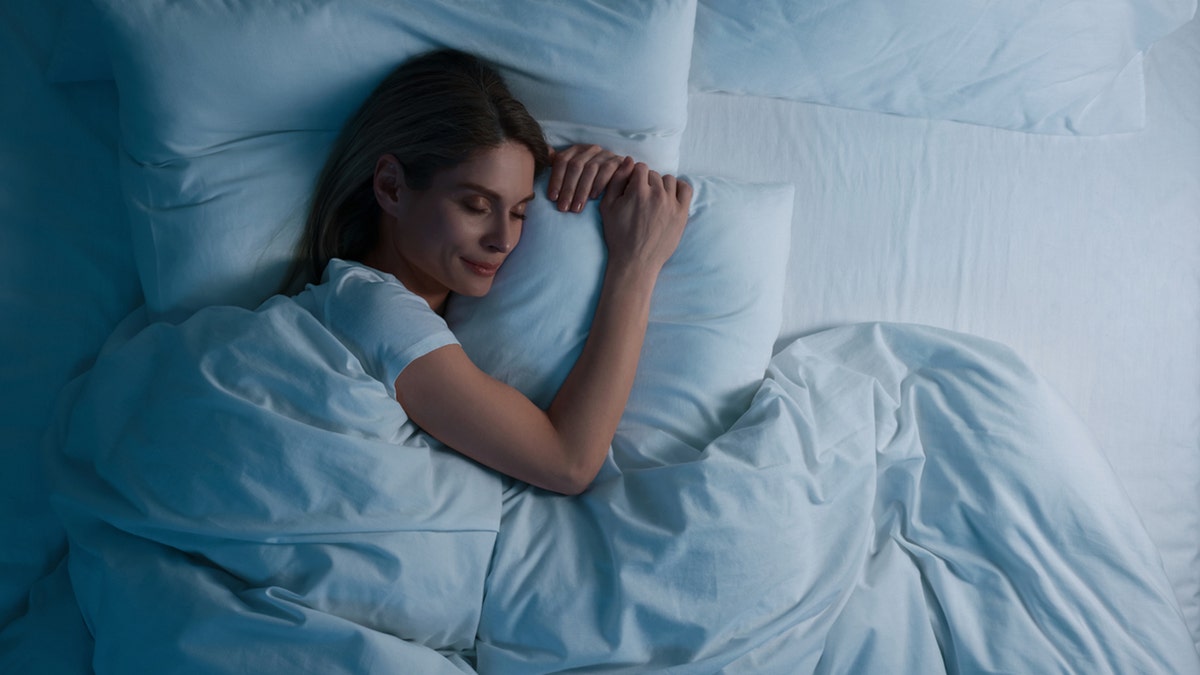
Woman sleeping in bed at night

Most experts recommend that healthy adults get at least seven hours of sleep nightly. (iStock)

She recommends going to bed at the same time each night, eliminating distractions such as TVs and cell phones, and aiming to have a quiet, dark sleep environment.

5. Increase probiotic-containing foods

Probiotics are microorganisms that help balance the “good” and “bad” bacteria in the gut microbiome, which promotes healthy digestion, according to experts.

CLICK HERE TO GET THE FOX NEWS APP      

“Probiotics can be found in yogurt, kombucha, kefir, miso soup, kimchi, sauerkraut and other fermented foods,” Freirich said.

6. Cut out or limit alcohol

Recent research has confirmed the negative health effects of alcohol, including a higher risk of many types of cancer.

“Reducing or skipping alcohol can do wonders for your overall health, energy and well-being in the new year,” Freirich said.

Dangerous behaviors to avoid

Palinski-Wade warns about products that claim to offer a “quick fix,” such as losing a rapid amount of weight in a short period of time or promoting detox claims that are not backed by scientific evidence. 

“Reducing or skipping alcohol can do wonders for your overall health, energy and well-being.”

“Some of these products could contain potentially harmful ingredients or laxatives, or may interact with other supplements and medications,” she cautioned. 

It’s always best to discuss a supplement with your physician or dietitian to make sure it is from a reputable brand and is safe for your individual health needs, the dietitian added.

CLICK HERE TO SIGN UP FOR OUR HEALTH NEWSLETTER

“In order to feel your best and maintain that feeling, you need to incorporate realistic lifestyle habits you can stick with day after day,” Palinski-Wade said. “Consistency is key when it comes to achieving true health change.”

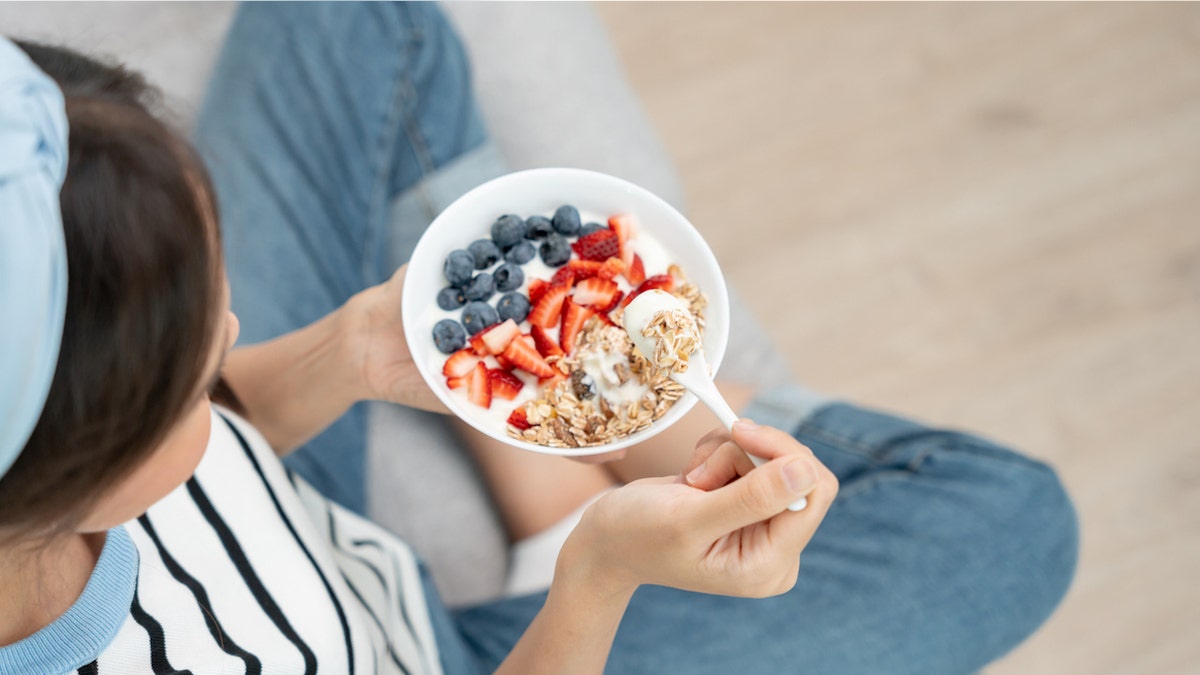
Strawberries and blueberries

Probiotics are microorganisms that help balance the “good” and “bad” bacteria in the gut microbiome, which promotes healthy digestion, according to experts. (iStock)

Freirich agreed, warning against any extreme fasting, cleanses or detox products. 

“Many of these cause extreme bowel movements, which can lead to a dramatic loss of electrolytes and fluids that can be extremely dangerous for the body,” she cautioned. “Fasting and cleanses can also cause dangerous changes to blood sugar.”

For more Health articles, visit www.foxnews.com/health

Instead, focusing on the six steps outlined above will help your digestive system move regularly, Freirich said, while also reducing any water retention and puffiness.

Israeli PM Benjamin Netanyahu leaves hospital after prostate surgery

0

Israeli Prime Minister Benjamin Netanyahu was released from hospital on Thursday after his prostate surgery ended “successfully,” his office reported on X.

NETANYAHU GOES AGAINST DOCTOR’S ORDERS, APPEARS IN ISRAELI PARLIAMENT AFTER SURGERY

Israeli PM Netanyahu speaks

Israeli Prime Minister Benjamin Netanyahu makes a televised statement on Nov. 26 in Jerusalem, Israel.  (Israeli Government Press Office via AP)

“I have just left Hadassah Ein Kerem Hospital,” he said on X. The hospital is in Jerusalem.

His office said Netanyahu, 75, was in good condition and fully conscious after the conclusion of his prostate surgery.

Rare religious cross discovered by child while exploring on school field trip in Jerusalem

0

While on a class trip to the historic Ein Karem village in Jerusalem, Israel, a 10-year-old discovered an unexpected surprise.

Nehorai Nir was picking edible plants with his class and believed he saw a red pomegranate on the ground.

“I ran to pick it up and discovered a worm inside, so I reluctantly put it down — but on the way back up the hill I suddenly saw a colorful object shining in the dirt,” Nir said, according to an Israel Antiquities Authority (IAA) press release.

RARE GOLD COIN WORTH THOUSANDS DROPPED INTO SALVATION ARMY BUCKET BY ANONYMOUS HOLIDAY DONOR

He added, “I pulled it out and was immediately very excited.”

Nehorai Nir, 10, found a golden cross medallion while on a class field trip to the village of Ein Karem village in Jerusalem, Israel.  (Emil Aladjem, Israel Antiquities Authority)

The discovery was an intricate golden cross medallion made with a micro-mosaic technique.

CLICK HERE TO SIGN UP FOR OUR LIFESTYLE NEWSLETTER

The cross medallion is about 100 to 200 years old, so it is not classified as an antique, but it’s still a rare object, according to the IAA.

ein karem israel

The Ein Karem village in Jerusalem is rich in religious history, attracting many Christian pilgrimages.  (Emil Aladjem, Israel Antiquities Authority)

 “The manufacturing method demanded expert craftsmanship which includes setting glass and tiny coloful precious stones, placed with exceeding precision to form miniature patterns,” said Dr. Amit Re’em, IAA Jerusalem district archaeologist.

Re’em added, “This technique was developed in Rome about the year 1800 or slightly earlier, and continued until the early 20th century.” 

“Besides its beauty, the significance of this medallion is embedded in its findspot — Ein Karem, a site venerated by Christianity.” Re’em said.

For more Lifestyle articles, visit www.foxnews.com/lifestyle

Ein Karem is where the New Testament places the birth of John the Baptist, and where the text says his mother Elizabeth, met Jesus’ mother Miriam by a neighborhood well, according to the IAA.

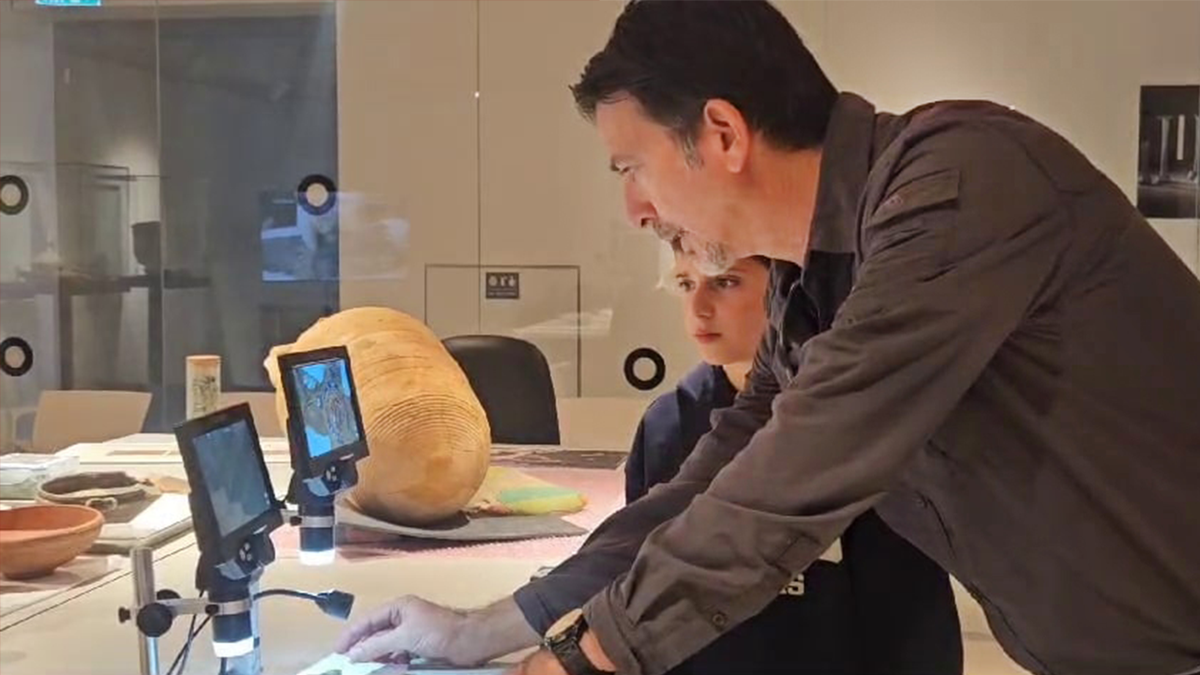
iaa rare cross medallion

IAA staff examines the medallion with a microscope alongside ten-year-old Nir in a laboratory.   (Emil Aladjem, Israel Antiquities Authority)

The village’s rich history also includes two churches, the Church of the Visitation and the Church of Saint John, that draw generations of pilgrims to Ein Karem.

IAA Director Eli Escusido said in the press release, “This exciting find in the very month that Christians celebrate Christmas puts the spotlight on Ein Karem as a central place of Christian pilgrimage in the Land of Israel.”

CLICK HERE TO GET THE FOX NEWS APP

“Through the medium of a small but unique object, we are exposed to the story of one individual’s thrilling personal journey, which connects us to the past history of this site and to the world of the pilgrims,” said Escusido.

Fox News Digital reached out to the IAA for additional comment.

Does ‘Dry January’ actually improve your health? Here’s what to know

0

Join Fox News for access to this content

Plus special access to select articles and other premium content with your account – free of charge.

By entering your email and pushing continue, you are agreeing to Fox News’ Terms of Use and Privacy Policy, which includes our Notice of Financial Incentive.

Please enter a valid email address.

For those looking to embrace a healthier lifestyle, the start of the New Year sometimes means the start of “Dry January.”

The trend coincides with the U.S. surgeon general’s new advisory warning about alcohol-related cancer risk.

Dr. Vivek Murthy issued the guidance on Friday following research that has linked alcohol to at least seven types of cancer.

‘I’M A PSYCHOLOGIST – HERE’S HOW TO FINALLY BREAK YOUR BAD HABITS’

“Dry January” encourages people to abstain from alcohol as a way to improve their health and well-being — but does this month-long drinking hiatus truly impact health in a positive way?

For the most part, experts say yes, though it’s not an absolute must for everyone.

Dry January is a month-long public health campaign that encourages people to stay sober and alcohol-free. (iStock)

“Ultimately, sober months like Dry January can be harmless for the majority of the population who do not have a severe alcohol use disorder,” said Dr. Deni Carise of Conshohocken, Pennsylvania, former chief science officer at the Recovery Centers of America. 

Alcohol consumption has been linked to at least seven types of cancer, according to the U.S. surgeon general’s advisory. 

“Diagnoses are characterized as mild, moderate or severe,” Carise continued. “Those who drink heavily could encounter very serious health risks when quitting abruptly and should take caution.”

“I’ve been doing it for years,” John Hayes, a financial broker in Atlanta, Georgia, told Fox News Digital in 2023 about Dry January.  “It is a great chance to hit the reset button after so many holiday parties from Thanksgiving and Christmas through New Year’s Eve.”

DRINKING ALCOHOL IS LINKED TO SIX TYPES OF CANCER, EXPERTS SAY: ‘IT’S TOXIC’

The benefits of Dry January can vary from person to person, but for many, it serves as a reset button after holiday indulgences, promoting overall well-being and healthy habits.

Research has shown that a month without alcohol leads to lower blood pressure, cholesterol and diabetes risk, as well as fewer cancer-related proteins in the blood.

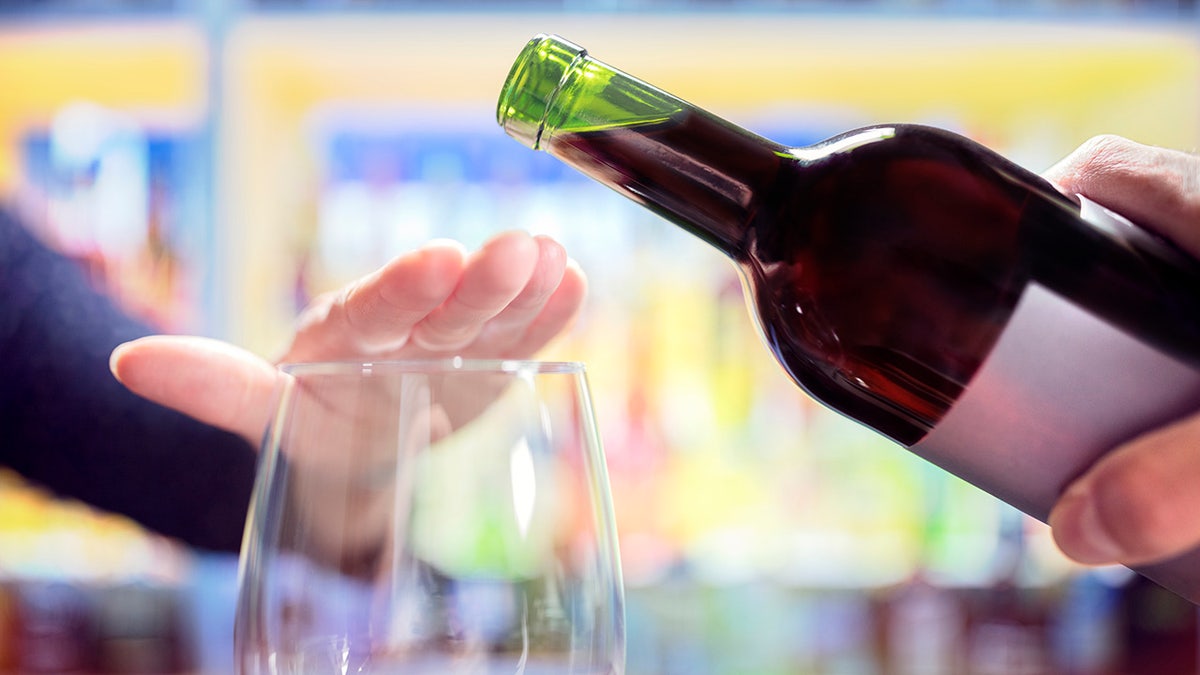
Person's hand rejects wine from being poured into their glass

Depending on a person’s relationship with drinking, a month without alcohol can have a positive impact on physical and mental health, experts say. (iStock)

“It isn’t about giving anything up. It is about getting something back. Get your fun back. Get your energy back. Get your calm back,” stated the group Alcohol Change UK, the organization behind the “Dry January” campaign.

If you’re thinking of participating in Dry January this year, there are some health factors to consider before ditching alcohol for an entire month.

Alcohol’s impact on physical health

Cutting out alcohol for a month can significantly reduce expenses, especially after the holiday season, which often involves increased spending. It’s a chance to save money while also reassessing your spending habits.

‘ALCOHOL GENE’ COULD PREDICT HOW COCKTAILS MAY AFFECT YOU – AND THERE’S A TEST FOR IT

Aside from saving money from all the alcoholic beverages you won’t be purchasing for the month of January, the top health benefit you’ll receive is avoiding unnecessary calories, experts say.

A can of beer contains around 154 calories, while a 5-ounce serving of wine is around 123 calories, according to the USDA’s FoodData Central database. 

Friends toasting each other with wine, smiling, sitting in restaurant

Aside from saving money from all the alcoholic beverages you won’t be purchasing, the top health benefit of Dry January is avoiding unnecessary calories. (iStock)

Spirits and liquors like sake, whiskey, vodka, rum and gin tend to be under 100 calories, but that’s on a per-ounce basis. The totals can ratchet up quickly when people drink cocktails.

Calorie intake estimates published by the FDA state that men and women over the age of 21 can potentially consume 2,400 to 3,000 calories and 2,000 to 2,400 calories per day, respectively, depending on how active their lifestyles are.

“Understanding one’s relationship with alcohol is imperative before deciding to cut it off completely and suddenly.”

Avoiding alcohol could also potentially improve digestive health, according to experts.

Alcohol is considered a diuretic, so it increases the passing of urine, which could have a dehydrating effect if a person is not drinking enough water.

A study by The American Journal of Gastroenterology found that “heavy alcohol intake” appears to “exacerbate gastrointestinal symptoms in adults with irritable bowel syndrome,” which includes symptoms like abdominal and stomach pain, bloating, intestinal gas, diarrhea, constipation, nausea, heartburn and indigestion.

person trying to sleep

Drinking alcohol before bed can have negative effects on sleep. (iStock)

Drinking alcohol before bed has also been found to interrupt rapid eye movement (REM) sleep and have insomnia-like effects, according to the National Sleep Foundation, a Washington, D.C.-based nonprofit that provides expert-backed information on sleep.

For more Health articles, visit www.foxnews.com/health

Abstaining from alcoholic beverages at night and in general could potentially provide deeper, more consistent sleep, which may lead to higher energy levels throughout the day, the nonprofit reports.

Improved sleep quality also yields increased daytime energy and a refreshed mindset. 

Alcohol’s impact on mental health

Cutting out alcohol can also have positive effects on mental health, according to Dr. Daryl Appleton, a psychotherapist who practices in New York City and New England.

“A lot of my clients engage in Dry January as a mental and emotional detox and ritual in self-control,” Appleton previously told Fox News Digital. 

Each person’s medical history and intentions around drinking for the rest of the year dictate the health impact Dry January will have, he noted.

Man offer alcohol but woman refuses to drink it.

Experts say abstaining from alcohol can help improve mental health. (iStock)

She continued, “On the positive side, allowing your body and brain to take a break from alcohol can potentially decrease cortisol and the stress it puts on the system, which allows for rest and repair. Since alcohol is a depressant, taking a break can also uncover whether alcohol is masking emotional symptoms as a [bandage], or is contributing to them by making anger, sadness and isolation feel worse.”

Sober months like Dry January help people evaluate their relationship with alcohol, she added.

ALCOHOL DEATHS HAVE MORE THAN DOUBLED IN RECENT YEARS, ESPECIALLY AMONG WOMEN 

Stepping away from alcohol often brings stable moods, reduced anxiety and an overall uplift in emotions, the expert noted. Many Dry January participants often report sharper mental clarity, improved focus and better concentration.

CLICK HERE TO SIGN UP FOR OUR HEALTH NEWSLETTER

“On the not-so-healthy side, if someone has an alcohol-use disorder, obviously stopping cold can lead to severe withdrawals, seizures and even death,” Appleton warned.

“Understanding one’s relationship with alcohol is imperative before deciding to cut it off completely and suddenly.”

Waiter offers wine to a woman who refuses

Avoiding alcohol in social gatherings can be a challenge for some. (iStock)

Participating in Dry January comes with its share of hurdles. Avoiding alcohol in social gatherings where it’s prevalent can make one feel left out or pressured to drink.

Overcoming ingrained habits tied to stress or emotions can be challenging, as alcohol might have been a coping mechanism. 

“It isn’t about giving anything up. It is about getting something back.”

Emotional fluctuations, such as irritability or cravings, may emerge during this period, especially in the absence of supportive surroundings. Successfully tackling these obstacles often involves planning, seeking supportive communities, and staying committed to personal reasons for embracing Dry January.

CLICK HERE TO GET THE FOX NEWS APP 

Embracing these difficulties as part of the journey fosters resilience and a deeper understanding of one’s relationship with alcohol, making Dry January a transformative experience beyond a simple month-long commitment.

Cortney Moore contributed reporting. 

‘I’m a psychologist — here’s how to finally break your bad habits’

0

Join Fox News for access to this content

Plus special access to select articles and other premium content with your account – free of charge.

By entering your email and pushing continue, you are agreeing to Fox News’ Terms of Use and Privacy Policy, which includes our Notice of Financial Incentive.

Please enter a valid email address.

More than a third of Americans report making New Year’s resolutions, statistics show, many of which are focused on kicking bad habits.

Whether it’s smoking, overeating, drinking excessive alcohol or “doom-scrolling” on social media instead of sleeping, 72% of U.S. adults report having at least one unhealthy behavior, according to data from the United Health Foundation.

Dr. Adi Jaffe, a California-based psychologist, knows firsthand the dangers of unhealthy habits, as he once struggled with drug addiction himself.

CDC WARNS OF DEADLY DRUG 100 TIMES MORE POTENT THAN FENTANYL, OVERDOSES SPIKE IN PAST YEAR

“I got trapped in the world of drugs and alcohol, from the middle of high school until a few years after college,” he shared with Fox News Digital during an on-camera interview.

Dr. Adi Jaffe, a California-based psychologist, struggled with drug addiction in his youth and now helps others overcome unhealthy habits. (Adi Jaffe, PhD)

“Addiction doesn’t separate by gender or age or race or income — people from all walks of life are impacted.”

Jaffe ultimately spent time in jail before getting clean and returning to school, earning two master’s degrees and a PhD in psychology.

“I wanted to understand what happened to me — and then what I’ve done over the last 15 years, hopefully, is bring those lessons to others who are struggling.”

“Addiction doesn’t separate by gender or age or race or income — people of all walks of life are impacted.”

Today, Jaffe focuses on helping people beat addiction and improve their mental health. In his upcoming book — “Unhooked: Free Yourself from Addiction Forever” — he shares a step-by-step program to help people free themselves from harmful habits.

Jaffe shared with Fox News Digital some of his tips and insights.

Recognizing the behavior

While many people think of addiction as involving drugs or alcohol, Jaffe noted that it can take many forms.

Unhealthy snacking

Many people assume that the behavior itself is the problem, the psychologist said — but there is almost always an underlying reason for those unhealthy or harmful choices. (iStock)

“If you engage in a behavior of any sort over long periods of time that robs you of your ability to be fully present in your life — and it bothers you, but you can’t find yourself stopping it, even though you’ve tried over and over — to me, that qualifies,” he said.

In addiction to substance abuse, addictive behaviors might include “doom-scrolling” on your phone for hours a day, binge-eating, gambling or indulging in other unhealthy activities.

SEVERE HEALTH RISKS OF VAPING AND E-CIGARETTES, ESPECIALLY FOR YOUTH, SAY EXPERTS

People can be addicted to work and success, too, Jaffe noted.

“When things get hard and get tough, they want to go to work,” he said. “They believe success or performance will make them feel better, but it can cause damage just like other addictions.”

Doom scrolling

“Doom-scrolling” on social media is a potentially addictive behavior, the psychologist noted. (iStock)

Social media is another form of addiction, the expert said.

“When your phone buzzes or pings, you don’t know what’s there, so it’s a novelty that’s interesting, and it releases dopamine,” he said. “You almost literally cannot help yourself.”

Identifying the ‘hooks’

Many people assume that the behavior itself is the problem, Jaffe said — but there is almost always an underlying reason for those unhealthy or harmful choices.

“The behavior was actually a medicine of sorts for a problematic undercurrent.”

“The reason you do it is that at some point earlier in your life, there was pain or struggle or emotional discomfort,” he said. 

“And you discovered that when you engaged in the behavior, that discomfort went away. So the behavior was actually a medicine of sorts for a problematic undercurrent.”

Bad habits

More than a third of Americans report making New Year’s resolutions, statistics show, many of which are focused on kicking bad habits. (iStock)

For Jaffe, when he was 14 or 15 years old, his “hook” was social anxiety.

“And when somebody handed me a bottle of vodka at some sleepaway camp, I drank it because I didn’t want to look awkward,” he told Fox News Digital. 

CLICK HERE TO GET THE FOX NEWS APP      

“Once I started drinking, I had no anxiety and felt like I belonged. I felt like I could talk to people. And so I realized that alcohol had ‘solved’ this problem.”

Teenager drinking beer

“Once I started drinking, I had no anxiety and felt like I belonged. I felt like I could talk to people. And so I realized that alcohol had ‘solved’ this problem.” (iStock)

Everyone has different hooks, Jaffe said, but there are similarities and patterns.

“We start living our lives trying to escape the discomfort of the hooks.”

Replacing the habit

Once people have identified an unhealthy behavior, one of the biggest mistakes they make is just trying to stop it without a plan, according to Jaffe.

CLICK HERE TO SIGN UP FOR OUR HEALTH NEWSLETTER

“We try to stop ourselves from doing what we don’t like,” he noted. “Especially around New Year’s, people might say, ‘I’m going to stop eating bad foods or I’m going to stop being lazy,’” he said.

Research has shown, however, that the most important aspect of kicking a bad habit is to replace the negative behavior with a positive one, the psychologist noted.

Donut or apple

The most important aspect of kicking a bad habit is to replace the negative behavior with a positive one. (iStock)

“We have to stop trying to just eliminate bad habits — it doesn’t work,” Jaffe said. “We have to replace them with something else.”

For example, if someone wants to quit smoking, they might keep gum or sunflower seeds in their pocket, he said.

“You just have to keep going.”

Or, if someone is too focused on work, that might mean letting go of some tasks and delegating them to other people.

Jaffe also emphasized that the process of kicking a bad habit isn’t always perfect or seamless, and that slipping up from time to time doesn’t equate to failure.

For more Health articles, visit www.foxnews.com/health

“It’s okay to fall flat on your face a number of times while you’re working on changing this,” he said. 

“You just have to keep going.”

Jaffe’s book, “Unhooked: Free Yourself from Addiction Forever,” will be available on Jan. 7.

Rare gold coin worth thousands dropped into Salvation Army bucket by anonymous holiday donor

0

One person was likely on “Santa’s nice list” after dropping a special coin into a Salvation Army donation kettle on Christmas Eve.

Local Salvation Army staff in Washington, Pennsylvania, were collecting donations with their Red Kettles in front of a Giant Eagle grocery store. 

A generous donor dropped in a gold coin wrapped in a dollar bill that had been taped up with a note saying that he or she wanted to remain anonymous.

DA VINCI’S ‘LAST SUPPER’ PAINTED IN LATE 1400S IS VIEWED BY 460,000 VISITORS EACH YEAR

A Salvation Army spokesperson told Fox News Digital that the coin was stamped with Queen Elizabeth the II’s potrait and is worth more than $2,700.

A rare gold coin was donated to a Salvation Army Red Kettle in Washington, Pennsylvania, by an anonymous good Samaritan after the donor dropped it inside amid holiday foot traffic.  (The Salvation Army)

“Increased foot traffic around the holidays is critical for The Red Kettle campaign,” said the spokesperson.

The Red Kettles raised an average of $2.7 million each day last holiday season.

“In fact, during a typical year, nearly half of the donations that The Salvation Army receives (including donations to Red Kettles) come from October through December,” the spokesperson added.

‘GATE LICE’ AND ‘SEAT SQUATTERS’ AMONG 2024’S MOST VIRAL TRAVEL TRENDS

David Zanca, senior portfolio manager of Louisiana-based Blanchard & Co., an American investment firm that specializes in rare coins, told Fox News Digital that the coin is a one-ounce, Canadian gold maple leaf. 

“Canadian gold maple leaf coins are fairly popular with investors as a way to buy gold bullion. Gold bullion pieces are those that are primarily valued for their gold content,” said Zanca.

Salvation Army kettle

The Red Kettles raised an average of $2.7 million each day last holiday season. (Mark Rightmire/MediaNews Group/Orange County Register via Getty Images)

The coin is dated 1987 with an engraved inscription. 

“Assuming the person bought the coin in 1987, they would have paid an average price that year of $520. That’s over 500% difference from the 1987 value,” said Zanca, adding that the donation is “great” for the Salvation Army.

CLICK HERE TO SIGN UP FOR OUR LIFESTYLE NEWSLETTER

“One of the interesting aspects of gold coins is that they can be gifted/donated in a private manner,” said Zanca. 

“God bless the person that chose to donate the gold coin to the Salvation Army not just because of the size of the donation. But, because it calls us now, at the start of a new year, to focus on and discuss kindness,” he added.

Salvation Army food rescue

“The funds that come from the coin will go directly back into the local community to help provide critical social services for individuals and families throughout 2025,” said the Salvation Army spokesperson. (Brian Hayes, Lucky Duck Foundation)

This is not the first time the Salvation Army has received a gold coin in one of its kettles, as in the last four years the organization has literally struck gold across the U.S.

Two South African Krugerrands were donated in Naples, California, and Canton, Michigan.

For more Lifestyle articles, visit www.foxnews.com/lifestyle

In Farming Hills, Michigan, two sovereign coins were dropped in along with a 10-ruble coin.

A gold coin worth $3,000 was found in a kettle in Monmouth, Oregon.

“The funds that come from the coin will go directly back into the local community to help provide critical social services for individuals and families throughout 2025,” said the Salvation Army spokesperson.

CLICK HERE TO GET THE FOX NEWS APP

Services such as alcohol/substance abuse recovery, clothing assistance, rent/mortgage/utility assistance, school supplies and more will be helped thanks to the coins.

Young Paxton – a Child in California – Has Been Diagnosed With an Ultra-Rare Neurodegenerative Mutation on The CLCN6 Gene. His Family is Devastated and Needs Help – They Have Launched a GoFundMe Campaign

0
20241227 212910548
Young Paxton – a Child in California - Has Been Diagnosed With an Ultra-Rare Neurodegenerative Mutation on The CLCN6 Gene. His Family is Devastated and Needs Help – They Have Launched a GoFundMe Campaign 45

Motivated by love and hope, this child’s family has taken an inspiring step forward: they have established Cure CLCN6 Inc., a nonprofit organization dedicated to fundraising for research that could lead to life-saving gene therapy at UMass Worcester Chan School of Medicine.

Sacramento, California, January 2, 2025, The diagnosis is not just a label; it’s a call to action for researchers and advocates alike. This family’s journey exemplifies how adversity can spark determination and collaboration in pursuit of solutions that could change lives forever.

The CLCN6 gene plays a crucial role in the brain’s electrical signaling. When mutations occur within this gene, they can lead to severe neurodegenerative disorders. These mutations disrupt normal cell function, resulting in progressive neurological decline.

Understanding how these genetic changes affect the nervous system is vital for creating effective treatments. Researchers are racing against time to unravel the complex mechanisms behind CLCN6 mutations, aiming for breakthroughs that could transform lives.

This ultra-rare neurodegenerative mutation on the CLCN6 gene has changed everything for the family. Daily challenges have become overwhelming. Simple tasks, once taken for granted, now require immense effort and support. Paxton’s future is uncertain, filled with potential hurdles that no parent wants to envision.

The emotional toll weighs heavily on loved ones. They navigate feelings of fear and helplessness while trying to maintain hope amid adversity. Each day brings new questions about treatment options and long-term outcomes.

Cure CLCN6 Inc. was born from love and determination. Every meeting fueled their passion to raise awareness about neurodegenerative rare diseases. They connected with families who shared similar struggles, forging bonds that transcended distance.

Raising awareness and funds for research is crucial in the fight against rare diseases. For families like this young child’s, every dollar counts. Their nonprofit organization, Cure CLCN6 Inc., has embarked on an ambitious mission. They aim to shine a light on mutations of the CLCN6 gene and their devastating effects.

The cost to develop the therapeutics and fund the clinical trial will cost the family $1.5 million. The therapeutic that is developed will serve as a blueprint for treating other affected children in the future.

Through community events, social media campaigns, and partnerships with local businesses, they seek to spread knowledge about this condition. Educational webinars provide valuable information for those affected by neurodegenerative diagnoses. These sessions foster understanding among medical professionals as well.

As momentum builds around fundraising initiatives, hope grows stronger that life-saving therapies will soon be developed at UMass Worcester Chan School of Medicine. Recent years have brought a surge of interest in rare diseases, particularly those linked to genetic mutations. Researchers are harnessing advanced technologies like CRISPR and gene therapy. These tools make it possible to target specific genes with unprecedented precision.

There are many ways to support Cure CLCN6 Inc. Your involvement can make a significant difference in the fight against this rare neurodegenerative disease. One effective way to help is through donations. Every contribution, no matter how small, adds up and directly supports vital research efforts aimed at developing life-saving gene therapies.

Volunteering your time is another impactful option. Whether you can assist with events or spread awareness online, your passion and energy will help elevate the cause. Advocacy plays a crucial role as well. Share the story of this young child and others affected by mutations on the CLCN6 gene on social media platforms. Raising awareness can attract attention from potential donors and researchers alike.

Through fundraising efforts, they aim to support critical research that could pave the way for life-saving gene therapy at UMass Worcester Chan School of Medicine. As awareness spreads, so does understanding about neurodegenerative rare disease diagnosis, inspiring others to join in this vital mission.

Every donation counts and every action matters. By supporting this cause, we not only stand behind one family’s fight but also contribute to groundbreaking advancements in medical science that could impact many lives beyond just one child’s experience.

For complete information, visit: https://cureclcn6.org/

Visit Paxton’s GoFundme Page here:

Media Contact:

Cure CLCN6 Inc.
Attn: Media Relations
Sacramento, California
518-852-8281
contactus@cureclcn6.org

20241227 213051638
Young Paxton – a Child in California - Has Been Diagnosed With an Ultra-Rare Neurodegenerative Mutation on The CLCN6 Gene. His Family is Devastated and Needs Help – They Have Launched a GoFundMe Campaign 46

Warding off dementia means more reading, praying and listening to music: study

0

For long-term brain health, older adults might want to carefully consider how they spend their downtime, according to a new study.

Researchers from the University of South Australia assessed the 24-hour activity patterns of nearly 400 people over age 60.

When it comes to brain health, the study found that the context or type of activity individuals engage in matters, news agency SWNS reported.

DEMENTIA REPORT REVEALS ‘SHOCKING’ SIGNS AT AGE 60 THAT YOU’LL DEVELOP THE DISEASE BY AGE 80

Some sedentary behaviors are better for cognitive function than others, according to the findings, which were published in The Journal of Gerontology Series A. 

Mentally stimulating behaviors, such as reading, listening to music, praying, crafting and playing a musical instrument — as well as social behaviors like chatting with others — are beneficial for memory and thinking abilities, the study noted.

Mentally stimulating behaviors such as reading, listening to music, praying, crafting and playing a musical instrument are beneficial for memory and thinking abilities, a new study noted. (iStock)

The research team referred to the “valuable insights” that could help reduce instances of cognitive impairment. More passive activities, like playing video games or watching TV, do not offer the same benefits as reading, praying and other activities, they noted.

More than 55 million people around the globe have dementia, according to estimates from the World Health Organization. Another 10 million new cases are diagnosed each year.

SLEEPY DURING THE DAY? IT COULD BE AN EARLY WARNING SIGN OF DEMENTIA, STUDY SUGGESTS

Dr. Maddison Mellow, researcher at the University of South Australia, said that not all sedentary behaviors are equal when it comes to memory and cognitive health.

Dementia communication: couples interacting

“The context of an activity alters how it relates to cognitive function, with different activities providing varying levels of cognitive stimulation and social engagement.” (iStock)

“In this research,” she said, “we found that the context of an activity alters how it relates to cognitive function, with different activities providing varying levels of cognitive stimulation and social engagement.”

DEMENTIA RISK COULD BE LINKED TO WALKING SPEED, STUDY SUGGESTS

She said that scientists “already know that physical activity is a strong protector against dementia risk, and this should be prioritized if you’re trying to improve your brain health,” as SWNS reported.

“Even small, 5-minute time swaps can help.”

“But until now, we hadn’t directly explored whether we can benefit our brain health by swapping one sedentary activity for another.”

ALZHEIMER’S PATIENT, 90, SAYS SKIING AND OTHER ACTIVITIES KEEP HIM MENTALLY SHARP

She went on, “And while the ‘move more, sit less’ message certainly holds true for cardiometabolic and brain health, our research shows that a more nuanced approach is needed when it comes to thinking about the link between sedentary behaviors and cognitive function.”

It’s wise to “prioritize movement that’s enjoyable and gets the heart rate up,” she also said.

And “even small, 5-minute time swaps can help.”

group of people praying together

“A more nuanced approach is needed when it comes to thinking about the link between sedentary behaviors and cognitive function.” (iStock)

A recent study published by the RAND Corporation in California also identified several major predictors occurring around age 60 that could likely lead to cognitive impairment and dementia in individuals by age 80, as Fox News Digital previously reported.

CLICK HERE TO SIGN UP FOR OUR HEALTH NEWSLETTER

Researchers evaluated 181 potential risk factors, including demographics, socioeconomic status, lifestyle and health behaviors, health history, psycho-social factors and more.

For more Health articles, visit www.foxnews.com/health

The list of predictors, according to RAND, included “never exercising” and “low engagement in hobbies.” 

CLICK HERE TO GET THE FOX NEWS APP  

The study results suggested that “maintaining good physical and mental health is beneficial not just to staying in shape, but also to staying sharp and delaying cognitive decline,” study co-author Peter Hudomiet, a RAND economist in California, told Fox News Digital.

Melissa Rudy of Fox News Digital contributed reporting.

Journalists who hid Biden’s mental decline should be held accountable: NY Post editorial board

0

Join Fox News for access to this content

Plus special access to select articles and other premium content with your account – free of charge.

By entering your email and pushing continue, you are agreeing to Fox News’ Terms of Use and Privacy Policy, which includes our Notice of Financial Incentive.

Please enter a valid email address.

Journalists who helped the White House cover up President Biden’s mental decline should be held responsible for misleading the public, The New York Post demanded in a scathing new editorial.

“Dem-friendly journalists saw the same evidence as the rest of us that Biden was compromised, and instead of being skeptical, asking questions and putting the White House’s feet to the fire — doing their jobs — they joined the crusade to gaslight America,” the Post’s editorial board wrote Wednesday.

As Biden prepares to leave office, the media is facing renewed scrutiny over how it covered one of the biggest stories of the year — concerns that Biden was unfit for office.

Throughout the 2024 presidential race, many media pundits and commentators ran to Biden’s defense when there was speculation about his mental acuity, including after Special Counsel Robert Hur’s report about him being well-meaning but forgetful, viral videos of him looking confused and a Wall Street Journal report about his faltering behind-the-scenes demeanor.

BIDEN WHITE HOUSE URGED DEMOCRATS TO CALL BACK WALL STREET JOURNAL AS IT REPORTED ON PRESIDENT’S MENTAL ACUITY

Journalists who defended President Biden from scrutiny need to be held accountable, The New York Post said. (Pete Marovich/Getty Images)

Despite polls showing the majority of Americans felt Biden was too old to serve a second term, many journalists treated questions about Biden’s health like a right-wing conspiracy.

“The entire idea that Biden was anything but healthy — virile, even — was treated as a right-wing, tin-foil-hat talking point,” the Post wrote.

These concerns came to a tipping point after Biden’s faltering June debate performance, after which he was pressured to drop out of the race.

“And at every turn, spineless, in-the-tank journos obediently did Team Biden’s propagandistic dirty work — right up until the debate, when Biden’s senility became too unmistakable to continue denying,” the Post’s editorial continued.

“Now they’re acting bashful, but it’s far too late to salvage their shredded credibility,” the Post wrote, referring to a recent Semafor report where several liberal journalists admitted that their defense of Biden was their worst take of 2024.

CLICK HERE FOR THE LATEST MEDIA AND CULTURE NEWS

Joe Biden

President Biden faced intense calls for him to step aside following a disastrous debate performance.  (ANDREW CABALLERO-REYNOLDS/AFP via Getty Images)

“I come out of 2024 with a lot of contempt for the president and for the people around him — who have essentially been engaged in elder abuse — and also with a fair amount of embarrassment that I didn’t see through their deception earlier,” journalist Josh Barro told Semafor.

“Like many others, I was completely, utterly, totally, embarrassingly wrong, about Biden’s lack of mental competence,” former MSNBC host Mehdi Hasan also confessed to the outlet.

The revelations come at a time when trust in the media is at a historic low, according to Gallup polling.

FLASHBACK: MEDIA, TOP DEMOCRATS AND LEADERS RAN PASSIONATE DEFENSE OF BIDEN’S ABILITY TO SERVE

President Biden

Several liberal journalists recently confessed their defense of Biden was their biggest regret of 2024. (Kevin Dietsch/Getty Images)

Biden’s former defenders in the media shouldn’t be let off the hook, the Post’s editorial board insisted.

“No one who perpetuated, concealed or ignored this grotesque scandal should ever live it down,” the editorial continued.

The criticism follows a recent Wall Street Journal report, citing interviews with current and former White House staff, which alleged that Biden’s stamina issues were apparent within his first few months in office.

The White House pushed back on the substance of the Journal’s report in a statement provided to Fox News Digital, saying Biden’s policy accomplishments provide “indisputable proof” of his qualifications and leadership.

CLICK HERE TO GET THE FOX NEWS APP

Fox News’ Joshua Q. Nelson and Hanna Panreck contributed to this report.