4.7 C
New York
Thursday, March 5, 2026
Home Blog Page 387

Using VPNs without messing up your banking apps

0


Using a virtual private network (VPN) can significantly enhance your online security, especially when accessing sensitive information like banking apps. However, it can also lead to complications, such as being blocked from accessing your bank’s services.

Melissa from Dallas wrote to us asking, “How can I use a VPN without getting locked out of my banking app? It’s very frustrating, and I worry about my security when I have to turn off the VPN. Are there any specific tips to ensure I stay both secure and connected?”

Melissa, we totally understand how that can be aggravating. We’ll guide you through the steps to use VPNs effectively while ensuring your banking activities remain secure and accessible.

GET SECURITY ALERTS, EXPERT TIPS – SIGN UP FOR KURT’S NEWSLETTER – THE CYBERGUY REPORT HERE
Using VPNs without messing up your banking apps

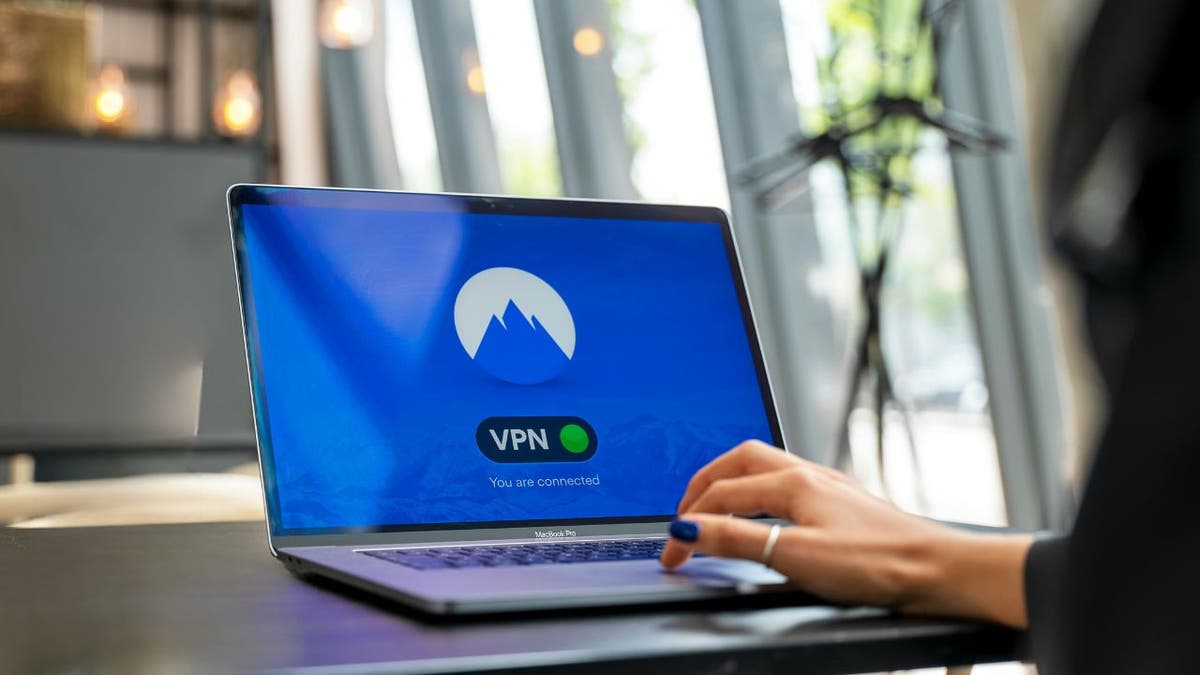
A woman logging onto her VPN on her laptop (Kurt “CyberGuy” Knutsson)

What is a VPN?

A VPN encrypts your internet traffic and reroutes it through a server in a different location than your own. VPNs make it appear that you are connecting to the internet from whichever location the server is hosted in rather than your actual location.

When you first connect to a network using a VPN, your device will establish a secure connection with the VPN server and your device’s IP address will appear as the VPN server, meaning that only your internet service provider will see that you’re connecting to a VPN server. Normally, when you connect to a website, the website or any online services you visit can see your device’s technical information, including location-sensitive data such as IP addresses.
Using VPNs without messing up your banking apps

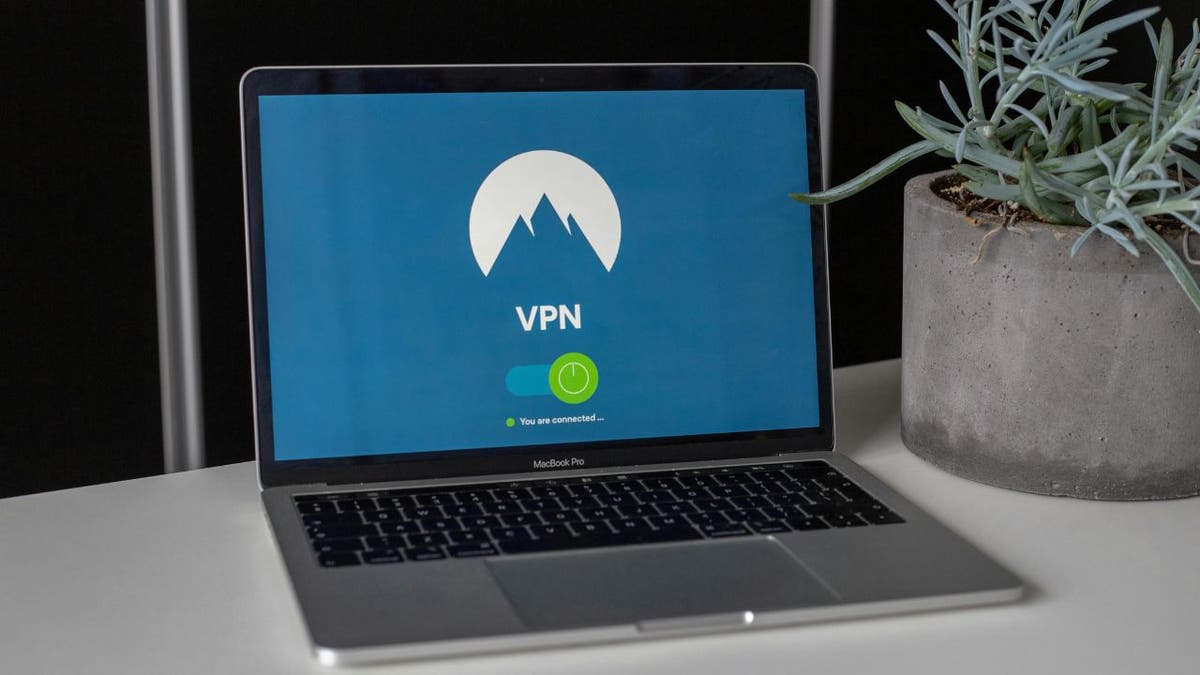
A VPN on a laptop (Kurt “CyberGuy” Knutsson)

BEST VPNs FOR BROWSING WEB IN 2024

Understanding VPNs and their benefits

A VPN creates a secure tunnel between your device and the internet, encrypting your data to protect it from prying eyes. The three key benefits of using a VPN for online banking include:

1) Enhanced security: Encrypts your connection, making it difficult for hackers to intercept sensitive information.

2) Privacy protection: Masks your IP address, helping you maintain anonymity while browsing.

3) Access to geo-restricted content: Allows you to access banking services when traveling abroad.

Using VPNs without messing up your banking apps

Illustration of how you can use a VPN worldwide (Kurt “CyberGuy” Knutsson)

HOW VPNs SHIELD YOUR IDENTITY, SECURE YOUR FINANCIAL TRANSACTIONS FROM THEFT

Steps to use a VPN safely with banking apps

1) Choose the right VPN

Select a reputable VPN service that prioritizes security and privacy. Look for features such as:

  • Military-grade encryption (256-bit AES)
  • No-logs policy to ensure your activities are not tracked.
  • Kill-switch functionality to prevent data leaks if the VPN connection drops.
  • Servers in your home country to avoid triggering alerts from your bank

2) Install the VPN software

Download and install the VPN application on your device. Most VPN services offer user-friendly interfaces compatible with various operating systems, including Windows, macOS, Android and iOS.

3) Connect to a server

Before accessing your banking app:

  • Launch the VPN application.
  • Connect to a server located in your home country. This helps prevent your bank from flagging your access as suspicious.

4) Log into your banking app

Once connected:

  • Open your banking app or website.
  • Log in as you normally would. If you encounter issues, consider clearing browser cookies or switching servers within the VPN.

5) Monitor for any issues

If you experience difficulties logging in:

  • Disable the VPN temporarily and try accessing the app again.
  • Change the VPN city/location to match the city where you live or are currently located.
  • When traveling, be sure to change the VPN to the city where you live to avoid issues.
  • Contact customer support for both your bank and the VPN provider if problems persist.
Using VPNs without messing up your banking apps

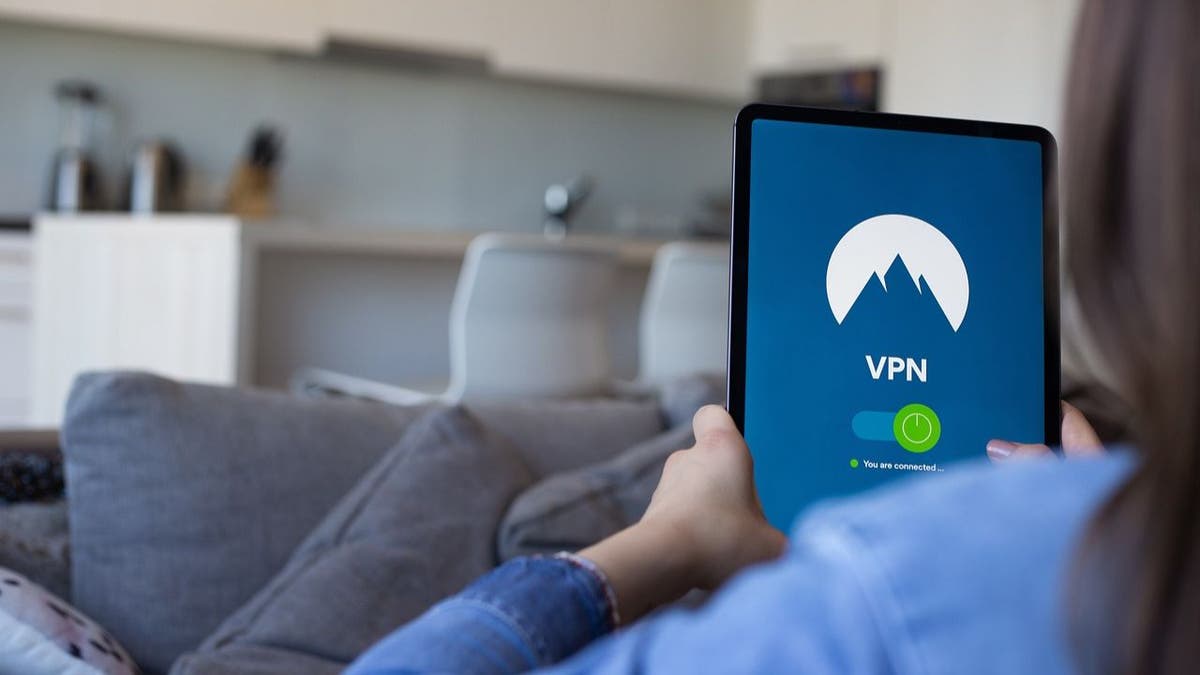
A woman logging onto her VPN on her tablet (Kurt “CyberGuy” Knutsson)

CAN YOU BE TRACKED WHEN USING A VPN?

What to do when your VPN gets blocked by your bank

Now, some websites, especially banking sites, might get a little suspicious when they see you’re using a VPN. They might even block you out. So, what do you do if your bank’s website won’t let you in with your VPN on? Don’t panic. Here are a few quick fixes:

  • Try contacting your bank’s customer support. They might have a solution or be able to white-list your VPN, which basically means allowing your connection to bypass security blocks.
  • Change the VPN city/location to match the city where you live or are currently located.
  • If all else fails, you can always temporarily disable your VPN when accessing your banking app. Just remember to turn it back on when you’re done.

Now, you might be wondering, “Is it safe to turn off my VPN for banking?” Well, as long as you’re on a secure, private network (not public Wi-Fi), you should be OK. Just make sure to enable it again as soon as you’re done. Remember, while VPNs can sometimes be a bit of a hassle, the privacy and security they provide are totally worth it.

Choosing the right VPN for banking security and safety tips

Securing your financial information with reliable VPN services and following these practical safety tips are important.

1) Choose a reliable VPN: Select a reputable VPN service with strong encryption protocols. For the best VPN software, see my expert review of the best VPNs for browsing the web privately on your Windows, Mac, Android and iOS devices.

2) Always use VPN on public Wi-Fi: Never access financial accounts on public networks without activating your VPN first.

3) Enable two-factor authentication (2FA): Add an extra layer of security to your accounts by enabling 2FA.

4) Use strong, unique passwords: Create complex passwords for each of your accounts and consider using a password manager. Consider using a password manager to generate and store complex passwords.

5) Regularly monitor your accounts: Check your retirement accounts frequently for any suspicious activity.

6) Keep software updated: Ensure your devices and apps are always up to date with the latest security patches.

7) Be wary of phishing attempts: Don’t click on suspicious links or provide personal information in response to unsolicited emails. The best way to safeguard yourself from malicious links that install malware, potentially accessing your private information, is to have strong antivirus software installed on all your devices. This protection can also alert you to phishing emails and ransomware scams, keeping your personal information and digital assets safe. Get my picks for the best 2024 antivirus protection winners for your Windows, Mac, Android and iOS devices.

Pro tip: Use split tunneling: This feature allows you to route only specific traffic through the VPN while keeping other traffic on a regular connection. It can be beneficial for banking apps while allowing general browsing without interference.

HOW TO REMOVE YOUR PRIVATE DATA FROM THE INTERNET

Kurt’s key takeaways

Using a VPN can significantly enhance your online banking security by encrypting sensitive data and providing privacy protection. However, it’s essential to choose a reliable service and connect appropriately to avoid access issues with banking apps. By following the outlined steps and tips, you can enjoy the benefits of a VPN without compromising your ability to manage your finances securely. Always stay vigilant about potential security threats and maintain good online habits for optimal safety while banking online.

Are there any misconceptions about VPNs and online banking that you’d like clarified? Let us know by writing us at Cyberguy.com/Contact.

For more of my tech tips and security alerts, subscribe to my free CyberGuy Report Newsletter by heading to Cyberguy.com/Newsletter.

Ask Kurt a question or let us know what stories you’d like us to cover.

Follow Kurt on his social channels:

Answers to the most asked CyberGuy questions:

New from Kurt:

Copyright 2024 CyberGuy.com. All rights reserved.



Source link

Breast cancer patient has ‘miraculous’ recovery, says God led her to cure

0

Join Fox News for access to this content

Plus special access to select articles and other premium content with your account – free of charge.

By entering your email and pushing continue, you are agreeing to Fox News’ Terms of Use and Privacy Policy, which includes our Notice of Financial Incentive.

Please enter a valid email address.

Less than three years ago, Tina Willits, now 53, thought she had just two years to live.

Today, she is cancer-free — and she wants the world to know about the treatment that saved her.

The Florida mother and grandmother first felt a lump in late 2021, just months after a normal mammogram. 

In March 2022, she discovered that she had HER2 positive breast cancer, an aggressive form of the disease where the cancer cells have an abnormally high level of a protein called human epidermal growth factor receptor 2 (HER2).

BREAST CANCER VACCINE UPDATE FROM CLEVELAND CLINIC: ‘A NEW ERA’

“I still remember the doctor coming in and telling us that it was in my lymph nodes, ribs, spine, sternum and bones,” Willits told Fox News Digital during an on-camera interview. 

Florida mother and grandmother Tina Willits, now 53, thought she had just two years to live, but today she is cancer-free. (Tina Willits)

Willits was told that she had golf ball-sized tumors and that the disease was too advanced for a mastectomy. She was placed on end-of-care chemotherapy and told to “enjoy the time you have left.”

“The doctor told me … we will try to stop the progression, but she said the best we can probably offer you is about 24 months.”

‘I wanted it gone’

Willits wasn’t satisfied with just stopping the progression of her cancer.

“I have five biological children and I was raising two of my bonus babies, and I had four grandkids at the time,” she said. 

“And I was just determined that I wanted it gone. That was my goal. And I remember my oncologist telling me that that was never going to happen.”

“The doctor told me … the best we can offer you is about 24 months.”

After doing some of her own research, Willits learned about an alternative treatment called immunotherapy, where the body’s immune system is used to identify and destroy cancer cells. 

For decades, the go-to treatments for cancer have been chemotherapy, radiation and surgery — but some experts are calling immunotherapy the “fourth pillar” of cancer treatments.

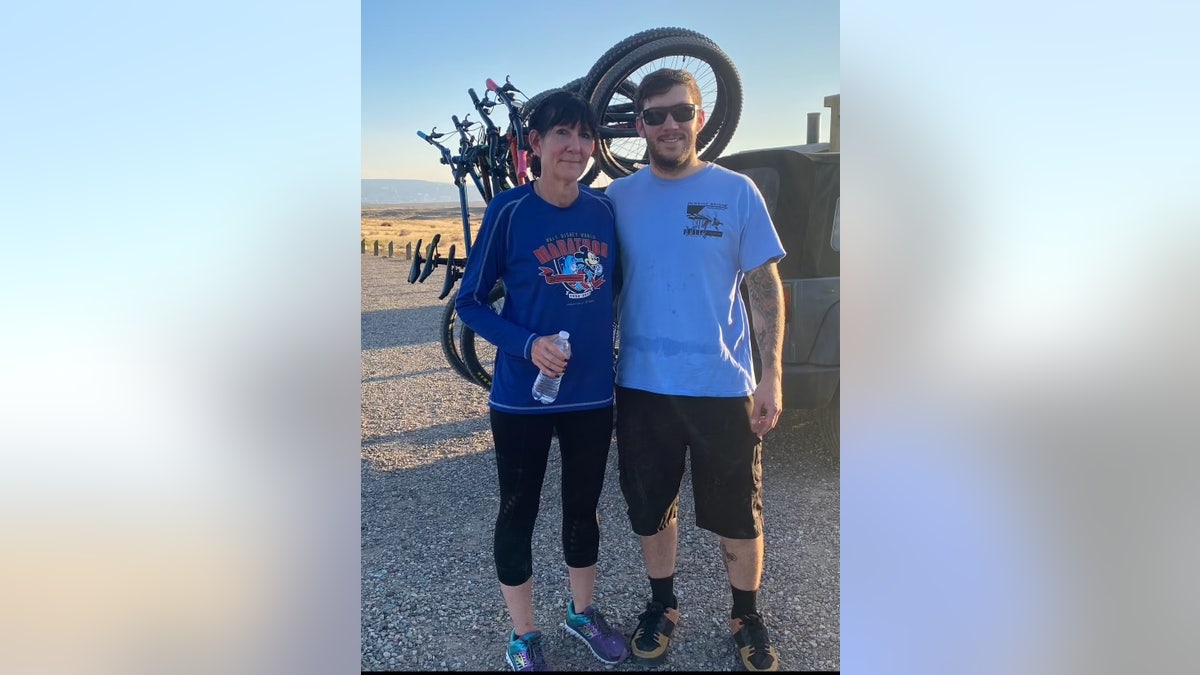
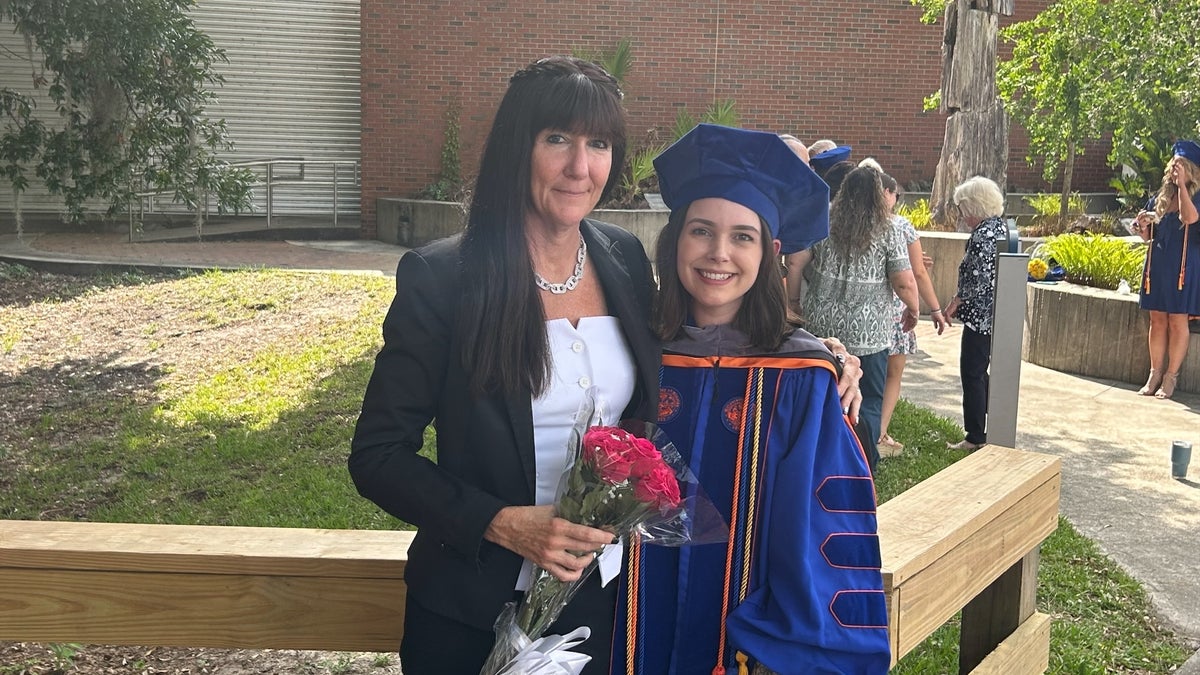
Tina Willits with family

“I have five biological children and I was raising two of my bonus babies, and I had four grandkids at the time,” said Willits, in explaining why she was so determined to beat cancer. (Tina Willits)

In her research, she came across Dr. Jason R. Williams of The Williams Cancer Institute in California, who offers a new cancer therapy that uses cold gases and the body’s own cells to freeze and fight tumors. 

“Immunotherapy teaches the immune system to attack the cancer,” Williams told Fox News Digital. “So, like a vaccine, it can give you a long-term, durable response. This is what is needed to achieve cures.”

4 HIDDEN SIGNS OF BREAST CANCER TO WATCH FOR: ‘YOU KNOW YOUR BODY’

Willits and her husband reached out to the doctor, who immediately began looking into her case.

“She physically was in good condition, even though her cancer was advanced,” Williams said. “She was on chemo, but still remained in very good health, even though she was advanced and metastatic.”

“I was confident, but cautious. Cancer is a very challenging foe.”

Tina Willits with husband

Willits is pictured at her wedding, before being diagnosed with aggressive breast cancer. “I’m a part of my family’s life every day,” she told Fox News Digital. (Tina Willits)

Williams offered Willits something she hadn’t had until then — hope.  

“He was just unbelievable. After seeing all of my tests, he said, ‘I can cure you,’” she told Fox News Digital. “And you don’t get those words as a stage 4 patient.”

Six weeks after receiving a course of immunotherapy treatments — in conjunction with supplements to ramp up the immune system and cryoablation, which is a procedure that uses freezing temperatures to destroy cancer cells — a PET scan revealed that Willits’ cancer was gone.

ENDOMETRIAL CANCER PATIENTS SEE NEW HOPE AS FDA APPROVES ‘TRANSFORMING’ IMMUNOTHERAPY DRUG

Today, Willits said, she is stable and healthy.

“I exercise every day. I’m a part of my family’s life every day. Cancer, we feel, is completely behind us — and that was almost an impossible mission,” she said.

“People ask me all the time, you know, how did you cure your cancer? And I say, ‘well, God led me to Dr. Williams.’”

Tina Willits with granddaughter

“I cannot even imagine if I had stayed the course of traditional treatment and just tried to stop the progression,” said Willits. (Tina Willits)

Williams believes that immunotherapy is the future of cancer treatments.

“We first must target the tumor directly, injecting immunotherapy into it,” he said.  

“In the future, the patient will be diagnosed with a suspicious lesion, and at the time of initial biopsy, we will begin treating it by injecting immunotherapy.”

Balancing risks and benefits 

While immunotherapy has shown promise as an alternate treatment, it does come with its own risks and limitations for certain groups of patients.

WHY IMMUNOTHERAPY IS EMERGING AS THE ‘FOURTH PILLAR’ OF CANCER TREATMENTS, EXPERTS SAY

“Patients with autoimmune diseases have a higher risk, because the immune system is more primed to also attack normal tissues,” Williams cautioned.  

“Though risks are higher, we do have techniques to overcome this, and so the benefits outweigh the risks.”

“As oncologists, we don’t want to expose a patient to a medication that can increase the risk of side effects without a clinical benefit.”

Brian Slomovitz, director of gynecologic oncology and co-chair of the Cancer Research Committee at Mount Sinai Medical Center in Florida, noted that immunotherapy has transformed the way many cancers are treated, but that it’s not always effective.

“It is important to understand that it is not useful in all patients,” said Slomovitz, who was not involved in Willits’ care.

CLICK HERE TO GET THE FOX NEWS APP      

“As oncologists, we don’t want to expose a patient to a medication that can increase the risk of side effects without a clinical benefit.”

In “properly selected” patients, however, Slomovitz believes immunotherapy can prolong both the time to cancer recurrence and overall survival rates. 

Tina Willits with son

Today, Willits said, she is stable and healthy. “I exercise every day,” she told Fox News Digital. (Tina Willits)

“I’m excited to watch as the field of immuno-oncology continues to evolve.”

Willits now aims to raise awareness of the availability of this treatment, as many women assume that chemotherapy, radiation and surgery are their only options.

CLICK HERE TO SIGN UP FOR OUR HEALTH NEWSLETTER

“The reality is there are women out there who don’t know it exists,” she said. “And if we can get the word out, I can’t even tell you how many hundreds of women we could potentially save.”

“I cannot even imagine if I had stayed the course of traditional treatment and just tried to stop the progression,” she said. “I mean, it’s out of my body. It’s gone. Life is back to normal again. And I am so grateful.”

Tina Willits with daughter

 “If we can get the word out, I can’t even tell you how many hundreds of women we could potentially save,” Willits said. (Tina Willits)

While Willits’ prognosis is “excellent,” Williams emphasized that “we must always be cautious and continue to monitor.”

“Any person who has had cancer before certainly has a higher-than-normal risk for another cancer or a recurrence.”

For more Health articles, visit www.foxnews.com/health

For patients just starting their cancer journey, Williams says it’s critical to take the time to research their options thoroughly. 

“Numerous off-label medications and supplements that are available can help enhance treatment outcomes, and exploring immunotherapy should always be a priority,” he added.

‘Flying naked’ is the latest travel trend dividing the internet, and it doesn’t mean what you think

0

Join Fox News for access to this content

Plus special access to select articles and other premium content with your account – free of charge.

By entering your email and pushing continue, you are agreeing to Fox News’ Terms of Use and Privacy Policy, which includes our Notice of Financial Incentive.

Please enter a valid email address.

Some social media users claim they’re leaving their luggage at home and opting for a care-free way to travel.

Dubbed “flying naked,” it’s the trend that travelers are trying out, but it doesn’t mean exactly how it sounds.

Instead of hopping on a plane with a carry-on or checking your bag at the front, passengers are traveling with the bare minimum.

MYSTERIOUS ‘DING’ SOUNDS HEARD ON AIRPLANES MIGHT NOT MEAN WHAT YOU THINK

The concept behind this trend is not entirely new; in fact, people have been testing the move out for years, and it’s recently been gaining traction.

The idea is that you hop on a train, fully clothed, with nothing but what is already in your pockets, although headphones seem to be one exception.

“Flying naked” is the most recent travel trend that has people traveling with nothing but the clothes on their backs. (iStock)

Some Reddit users joined in on the conversation, with some appearing to appreciate the idea and others finding the concept to be too limiting.

‘SEAT SQUATTERS’ ON PLANES ARE LATEST TRAVEL TREND TAKING OVER SOCIAL MEDIA

This can range from a brief overnight trip to multiple days with people breaking down their “zero bag trips” and sharing how they plan to attempt their travels with limited resources.

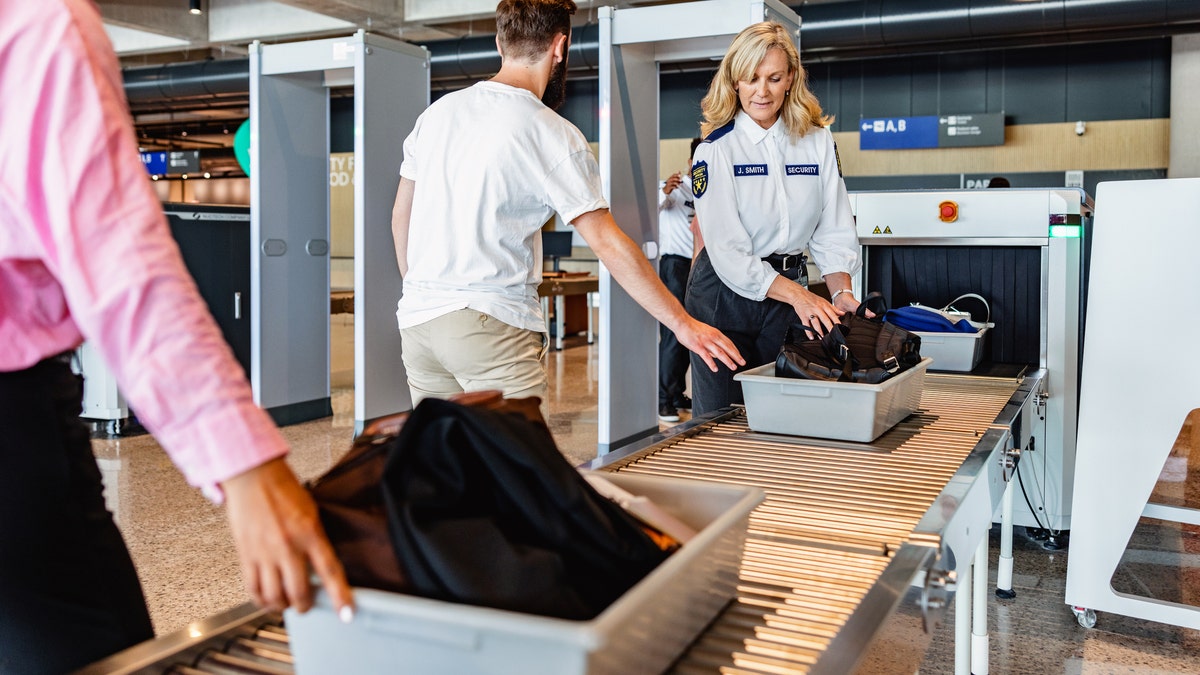
tsa security

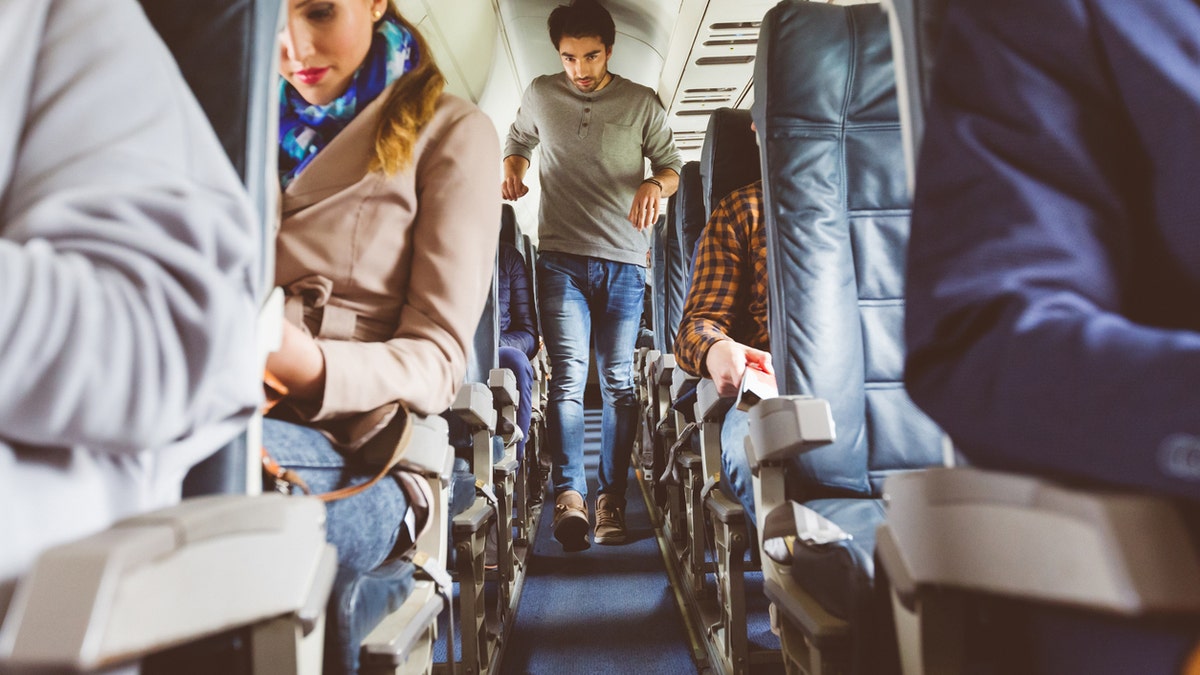
This trend has allowed people to have a smooth travel day without worrying about getting stuck in TSA or missing luggage on the second half of their connecting flight, social media users say. (AzmanJaka)

One user on TikTok posted a video of themselves walking through the airport, captioning the footage, “Getting on a plane with no carry-on bags is the weirdest feeling. It’s like you’re just hopping on the local bus and a little while later you [are] off in a completely different city.”

Another creator posted a series of travel videos titled “Traveling with No Bags, Just Vibes.”

Another flyer posted a similar video saying, “Woke up and decided to get on a flight with no checked bag or carry on, just vibes.”

THE FOUR ‘DREADED’ LETTERS ON AIRLINE BOARDING PASSES THAT TRAVELERS SAY THEY NEVER WANT TO SEE

While some hopped on the “flying naked” bandwagon, others said they couldn’t grasp the concept.

“I don’t get how come people are on the JFK AirTrain with no bags. Traveling [with] no inventory is insane to me,” another TikTok user said in a video.

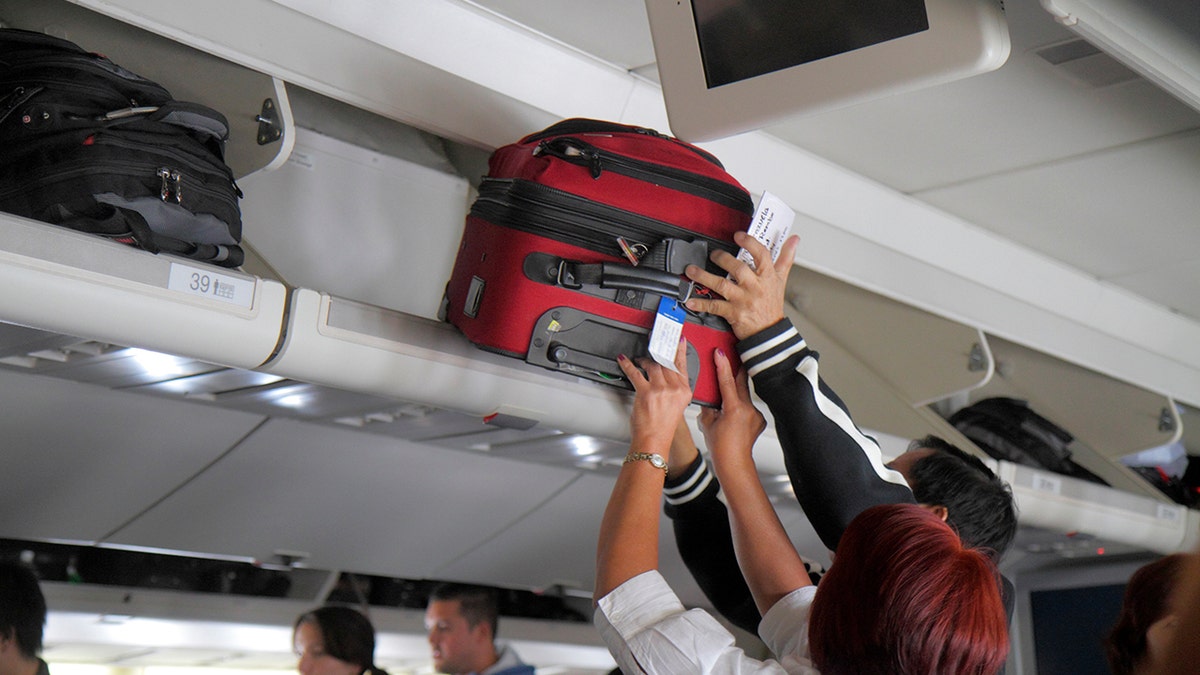
Carry on luggage

Social media users have found the trend to either be “a vibe” or absolutely “insane.” (Jeff Greenberg/Universal Images Group via Getty Images)

There appear to be some beneficial aspects to flying without bags.

There may be less stress that comes with having to find overhead bin space or concern about your checked luggage not making it aboard a connecting flight.

AIRLINE PASSENGERS COULD BE REMOVED FROM FLIGHTS FOR GOING BAREFOOT: ETIQUETTE EXPERT WEIGHS IN

An additional perk could include not having to pay additional fees for checking a bag.

In 2023, airlines made over $33 billion in baggage fees, FOX Business reported.

flight passengers boarding

Airlines made over $33 billion in baggage last year, FOX Business reported. (iStock)

Some airlines, like Frontier, will even pay personnel an additional fee if they catch someone with a carry-on bag that is too large for the overhead bin space in the cabin as a way of incentivizing employees and passengers to follow the strict baggage policies, Reuters reported.

The “flying naked” trend is in contrast to another packing hack that people attempted while flying, which involved an over-abundance of bags while boarding an airplane.

TRAVELER’S VIRAL FLIGHT BOOKING HACK TO AVOID DREADED MIDDLE SEAT IGNITES DEBATE

Instead of flying with barely anything on you, some passengers have tried to bring additional bags on the plane, aside from their carry-on and personal bags, by hiding them under their clothes.

There are three ways to try the "flying naked" trend: Totally Bare, Pocket People and Delivery Crew.

There are three ways to try the “flying naked” trend: Totally Bare, Pocket People and Delivery Crew. (iStock)

One TikTok user posted a video of a woman wearing a backpack on the front of her body, before putting on a sweatshirt to give the illusion that she was pregnant.

Others have tried to bring a pillowcase stuffed with additional clothes, a hack that quickly backfired, leading to one passenger getting involved with security, according to several news reports.

While the idea of “flying naked” might seem relaxing at the beginning, the next question is: What do you do when you land?

For more Lifestyle articles, visit www.foxnews.com/lifestyle

Some people claim they’ll live off the clothes on their back and continuously wash the items in the shower or sink, according to social media posts.

naked flying trend

The most recent travel trend that’s raising eyebrows is the so-called “flying naked,” but the rather controversial name doesn’t mean exactly what you might think. (iStock)

Others see it as an opportunity to shop or thrift for clothes when they arrive at their destination, but then they have to buy a new bag or suitcase to bring pack all the newly acquired clothing items they have purchased.

Another option would be to ship home the items they purchased, which could result in a payment that costs more than the fees required to check a bag.

Thrillist, a media company that covers travel, food, drink and more, categorized “naked flyers” into three categories: Totally Bare, Pocket People and Delivery Crew.

CLICK HERE TO SIGN UP FOR OUR LIFESTYLE NEWSLETTER

Those who go “Totally Bare” only bring the basics, which consist of a phone, charger and wallet. Thrillist noted that these people are in it for the challenge and will not ship luggage.

“Pocket People” are those who will fill up all available pockets with items they might need, including headphones, additional clothes and other toiletries.

CLICK HERE TO GET THE FOX NEWS APP

“Cargo pants and zipper pockets are their friends,” the outlet said.

The last group, “Delivery Crew,” is only trying the “flying naked” trend because they want a smooth flying experience, while their luggage will be shipped to their final destination and be waiting for them upon their arrival, Thrillist reported.

Fox News Digital reached out to Frontier Airlines for comment.

Reuters contributed to this report.

Dr. Nicole Saphier on ultra-processed foods in US: ‘People profit off addiction’

0

Ultra-processed food makers are under pressure, as a teen in Pennsylvania has launched a lawsuit against multiple food giants.  

Bryce Martinez, 18, who was diagnosed with type 2 diabetes and fatty liver disease at 16 after consuming ultra-processed foods throughout his childhood, is taking on 11 food manufacturers for allegedly engineering the foods to be addictive, according to the Philadelphia Inquirer.

Between 5% and 10% of American children had non-alcoholic fatty liver disease (NAFLD) as of 2021, according to the National Institute of Diabetes and Digestive and Kidney Diseases (NIDDK).

TEEN SUES FOOD GIANTS OVER ULTRA-PROCESSED FOODS AFTER BEING DIAGNOSED WITH FATTY LIVER DISEASE

“NAFLD has become more common in children in recent decades, in part because childhood obesity has become more common,” the NIDDK wrote on its website.

One in five kids between 12 and 18 are pre-diabetic, according to CDC data from 2019. (Fox News)

In a Sunday appearance on “Fox & Friends Weekend,” Fox News medical contributor Dr. Nicole Saphier commented that these statistics are “shocking but not surprising.”

“We’ve been watching this trend happen for the last decade or so,” she said. “And while we have come to accept the fact that American adults tend to be overweight and have metabolic syndrome, pre-diabetes and diabetes, it’s now going into our children.”

ULTRA-PROCESSED FOODS MAKE UP 60% OF AMERICA’S DIET, WHO’S AT BIGGEST RISK

This progression “makes sense,” according to Saphier, as children often adopt the lifestyle choices of their parents.

“Those lifestyle behaviors, unfortunately, [are] now harming our children,” she said.

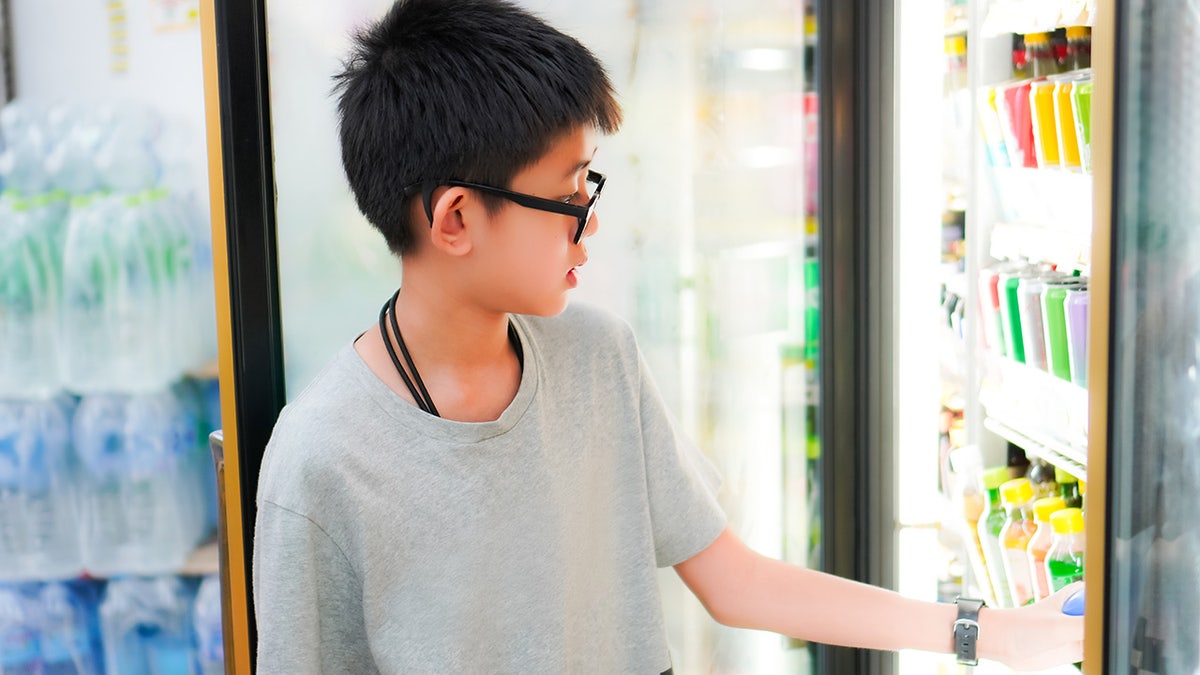
kid choosing a drink from a store fridge

Poor lifestyle habits of American adults are transferring over to their children, Saphier suggested. (iStock)

The doctor agreed that “harmful consumerism” markets products that could gravely impact health, much like “big tobacco,” alcohol and some pharmaceuticals.

“These all have addiction potentials,” Saphier said. “They really feed on our natural dopamine pathways, which are the reward centers in the brain.”

CLICK HERE TO SIGN UP FOR OUR HEALTH NEWSLETTER

“If the product is harming the actual consumer … is it working for the consumer or is it purely profit-driven?” Saphier asked. “Because the harsh reality is people profit off addiction.”

In the case of Bryce Martinez, Saphier noted that “marketing is very aggressive, especially to our younger generations.” But she also questioned – “where are the parents?”

dr. nicole saphier on fox & friends

Dr. Nicole Saphier joined ‘Fox & Friends Weekend’ on Dec. 15, 2024. (Fox News)

“We also as individuals have to be holding ourselves accountable for some of this as well,” she added.

For more Health articles, visit www.foxnews/health

“Yes, there are aggressive and harmful marketing campaigns, there [are] disgusting chemicals in our food supply, especially what’s accessible to lower-income populations – but also we have to think of, as the individual, what are we choosing to do.”

CLICK HERE TO GET THE FOX NEWS APP

Fox News Digital’s Maria Lencki contributed to this report.

Flyer asks social media users if you can buy 2 airline seats to avoid sitting next to strangers

0

A traveler took to social media to ask whether passengers could purchase an additional airplane seat next to them.

Posted in the “r/SouthwestAirlines” forum, the user wrote, “People keep ‘saving’ the seat next to them because they don’t want anyone to sit there. Is it technically possible to buy another seat, not customer of size, just so you don’t have to sit next to someone[?]”

The user went on, writing, “Maybe people buying an extra seat will stop the purses, jackets, blankets, etc on the seat next to someone?”

FLIGHT PASSENGER WARNS TRAVELERS TO ‘ALWAYS SCREENSHOT YOUR BOARDING PASS’: HERE’S WHY

Fellow Redditors took to the comments section to share their thoughts on purchasing an extra seat.

A flight passenger asked social media users whether they can purchase an additional seat on a Southwest Airlines flight so they do not have someone sitting next to them. (iStock)

“You cannot have two tickets in your name. One will be automatically canceled before your flight,” one claimed.

‘SEAT SQUATTERS’ ON PLANES ARE LATEST TRAVEL TREND TAKING OVER SOCIAL MEDIA

“Take up a musical instrument, one too large for the overhead but not too large for the seat. you’ll still have someone sitting next to you on one side, but your instrument will get a nice view from its window seat,” a user advised. 

airline travelers on flight

Social media users weighed in on whether a flyer can purchase an additional seat.  (iStock)

One user said, “No you can not do that on most airlines. Only if you actually need 2 seats.”

Another added, “Nope. With it being open seating. You’re getting someone [sitting] next to you.”

For more Lifestyle articles, visit foxnews.com/lifestyle

airplane laptop seat recline

The traveler said he or she would be willing to buy an additional seat if an airline allows. (iStock)

Southwest Airlines has an open-air policy allowing passengers to select their own seats upon boarding based on the assigned group. 

CLICK HERE TO SIGN UP FOR OUR LIFESTYLE NEWSLETTER

Under the help center on Southwest’s website, there is a page sharing information for customers of size.

“Customers who encroach upon any part of the neighboring seat(s) may proactively purchase the needed number of seats prior to travel to ensure the additional seat(s) is available,” it says.

Adding, “Southwest will refund the extra seat purchased upon request. After travel is complete, please request your refund.”

The site does not define the requirements to be considered a customer of size.

Airplane seats

Southwest allows “customers of size” to purchase an additional seat. (iStock)

Southwest announced this year that it will be launching an assigned seating model.

“We will begin selling flights with seat assignments in the second half of 2025 for travel in the first half of 2026,” the airline’s site states under the “What’s New” page.

DELTA PASSENGER SHARES RARE MOVE MADE BY GATE AGENT WHO ALTERED SEAT ASSIGNMENTS ON FLIGHT

American Airlines’ website includes a section for customers interested in “extra space during travel.” 

“If you need more than one seat to travel comfortably and safely, you must book an additional seat by calling Reservations. Please inform us of your seating needs when booking your trip,”  the airline’s site states.

Delta Air Lines also offers information about purchasing an extra seat. 

“A customer may purchase an extra seat for each flight in the itinerary,” Delta’s website says.

“The seat will be sold at the same fare when purchased at the same time.”

“Customers who do not purchase the extra seat in advance risk the need to change seat assignments to another location on the aircraft that provides additional space. In the event of a full flight, customers will be rebooked for a later flight with available seating,” the site continued.

CLICK HERE TO GET THE FOX NEWS APP

Fox News Digital reached out to Southwest, American Airlines and Delta for comment. 

Columbia professor who called Oct 7 Hamas attacks ‘awesome’ to teach course on Zionism

0

A Columbia University professor who called Hamas’ Oct. 7 attacks on Israel “awesome” will be teaching an upcoming course on Zionism at the Ivy League school. 

The class led by Joseph Massad will cover the “History of the Jewish Enlightenment (Haskala) in 19th century Europe and the development of Zionism through the current peace process between the state of Israel and the Arab states and the Palestinian national movement,” according to a description on Columbia’s website. 

The day after Hamas launched its bloody attack on Israel, Massad posted a column on the website The Electronic Intifada, saying, “The sight of the Palestinian resistance fighters storming Israeli checkpoints separating Gaza from Israel was astounding, not only to the Israelis but especially to the Palestinian and Arab peoples who came out across the region to march in support of the Palestinians in their battle against their cruel colonizers.” 

“No less awesome were the scenes witnessed by millions of jubilant Arabs who spent the day watching the news, of Palestinian fighters from Gaza breaking through Israel’s prison fence or gliding over it by air,” he added. 

COLUMBIA GROUP’S ANTISEMITIC NEWSPAPER DRAWS OUTRAGE FROM NY LAWMAKER, AS UNIVERSITY INVESTIGATES 

Protestors gather at the gates of Columbia University in support of student protesters who barricaded themselves in Hamilton Hall, despite orders from university officials to disband or face suspension, during the ongoing conflict between Israel and the Palestinian Islamist group Hamas, in New York City on April 30, 2024. (Reuters/David Dee Delgado)

Columbia University and Massad did not immediately respond to requests for comment by Fox News Digital. 

Rep. Ritchie Torres, D-N.Y., a staunch ally of Israel in Congress, criticized the class on X, saying, “Why should U.S. taxpayers subsidize ideological indoctrination that glorifies the mass murder, maiming, mutilation, rape, and abduction of Jews and Israelis?” 

COLUMBIA ALUMNUS LAYS INTO ALMA MATER OVER RESPONSE TO ‘APPALLING’ ANTI-ISRAEL PROTESTS 

Hamas terrorists

Fighters from the armed wing of Hamas are seen taking part in a military parade in the central Gaza Strip on July 19, 2023. (Majdi Fathi/NurPhoto via Getty Images)

“Joseph Massad, who is an apologist for October 7th (calling it “astounding” and “incredible”), is going to teach a course on Zionism at Columbia University. What’s next at Columbia? [Former Ku Klux Klan leader] David Duke teaching a course on antiracism.” 

Columbia international and public affairs adjunct professor Lawrence Rosenblatt reportedly has resigned because of the class. 

Palestinian flag at Columbia encampment

Anti-Israel protesters set up an encampment on the campus of Columbia University on April 26, 2024 in New York City. (Spencer Platt/Getty Images)

CLICK HERE TO GET THE FOX NEWS APP 

“While Massad has a right to think what he thinks, and speak what he believes, Columbia has a responsibility to teach objectively and fairly,” Rosenblatt wrote in a resignation letter obtained by the Jerusalem Post. “At best perhaps one could tolerate a class on the Israeli-Palestinian conflict co-taught from the many diverse Israeli and Palestinian perspectives, though not by someone who advocates for the eradication of a group of people.”  

6 sneaky scams that could ruin your holiday season

0


The holiday season is a time filled with joy, festivities and cherished moments with family and friends. However, amidst the hustle and bustle of shopping, cooking and celebrating, it’s easy to overlook a lurking danger: scams. Scammers thrive during this busy time, preying on our excitement and stress to trick us into revealing personal information or losing money. We’re going to discuss six sneaky scams that could ruin your holiday spirit and provide you with essential tips on how to protect yourself from these deceptive tactics.

GET SECURITY ALERTS, EXPERT TIPS – SIGN UP FOR KURT’S NEWSLETTER – THE CYBERGUY REPORT HERE

6 sneaky scams that could ruin your holiday season

Scam alert illustration (Kurt “CyberGuy” Knutsson)

1) Package delivery scam

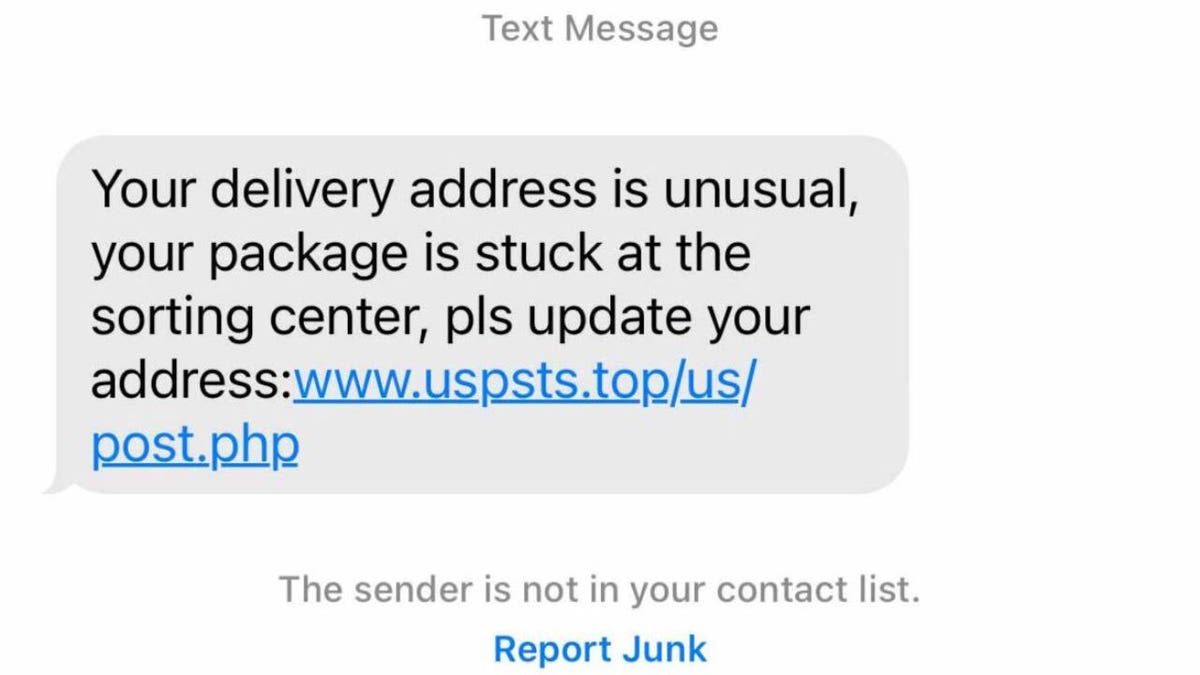
With the holiday season in full swing, the end-of-year sales have begun, and you probably have already started your holiday shopping and are expecting packages coming via different types of delivery services like FedEx, UPS or USPS. So, if you receive a text that mentions a package delivery, you may be likely to easily fall for a scam. I was expecting a package recently and received this text out of the blue (see image).

6 sneaky scams that could ruin your holiday season

Fake package delivery scam text (Kurt “CyberGuy” Knutsson)

BEST ANTIVIRUS FOR MAC, PC, IPHONES AND ANDROIDS – CYBERGUY PICKS

Even though the text says the sender is not in my contact list and that it may be junk, I almost clicked the link because I was so focused on the fact that there may have been a typo in my delivery address. But once I looked a little closer, there were a few red flags in this text message that tipped me off to it being a scam.

  • First, the link does not lead you to usps.com. It’s a fake link that scammers hope you won’t notice. Notice it is uspsts.top and not usps.com. This is a common scam going around called typosquatting wherein a scammer uses a domain that looks close to a real website. Next, the text says “pls,” which is lingo for “please” that you likely wouldn’t see in correspondence from the USPS. Scammers often make typos or use poor grammar when communicating, so always double-check.
  • Scammers are sending emails, texts and even occasionally there could be a phone call that is regarding an issue with package delivery. It may be something like this text I received that has a link where they’ll end up asking for information, or you may be asked to pay a “shipping fee” to get your package.
  • Be sure to always have strong antivirus software running on your devices to prevent any disasters from happening if you were to click on a malicious link. See my expert review of the best antivirus protection for your Windows, Mac, Android and iOS devices.

How to avoid package delivery scams

If you are expecting a package, and you’re wondering if you’ve received real information or not about it, the best way to check is to go to the original confirmation you received about shipping. You most likely received an email regarding your package, and if you go to that email to get your order number, you should be able to look up the status of your order directly on any website.

6 sneaky scams that could ruin your holiday season

A woman shopping on her laptop (Kurt “CyberGuy” Knutsson)

8 PHISHING EMAIL SCAMS TO WATCH OUT FOR THIS HOLIDAY SEASON

2) Charity scams

Sadly, charity scams aren’t new, but they are way more prevalent during the holiday season since scammers are hoping you’re feeling more generous during this time of year. Sometimes, scammers may create fake names of organizations to get you to donate money, or they may reach out to you via phone/email/text posing as someone working for a legitimate charity. Social media has also become a popular place for charities to market themselves and reach more eyes in hopes of donations, so scammers may try to pose as fake charities. These schemes will try to appeal to your emotions during this season, so be sure to check where you donate your money so you don’t fall for a scam.

How to avoid charity scams

Never give your money to anyone immediately who approaches you or reaches out on behalf of any organization without doing your own independent research. Either do a little googling or check with a family member to see if it’s real, and if it is, you should be able to donate to an official website or an official address. You can always mention this to anyone who asks you to donate somewhere. Don’t fall into the pressure of donating right then and there. Also, always double-check the name of an organization. Sometimes (especially online), scammers will alter the name of a known organization slightly to trick you into donating.

9 WAYS SCAMMERS CAN USE YOUR PHONE NUMBER TO TRY TO TRICK YOU

3) Social media gift exchange scam

The Better Business Bureau is warning about a gift exchange scam with a new twist, which has been occurring during recent holiday seasons. It’s an online version of the popular “Secret Santa” gift exchange. However, the BBB says these social media-driven gift exchanges are actually pyramid schemes, and you will most likely be disappointed if you participate.

In the past few years, variations of the gift exchange have popped up, with someone asking you to select a random person and send them a gift to pay it forward. Another asks you to exchange bottles of wine with someone else, and while it seems fun and light-hearted, you don’t know who is on the receiving end.

How to avoid social media gift exchange scams

It may sound nice to send a holiday gift to a stranger in turn for receiving multiple gifts yourself, but you’re never going to receive many (if any) gifts at all. Don’t participate in gift exchanges with anyone you don’t know, or you won’t be able to guarantee you’ll actually be gifting someone who isn’t a scammer.

HOW TO REMOVE YOUR PRIVATE DATA FROM THE INTERNET 

4) Gift card scams

Gift card scams are another popular method that has been rising in popularity recently, but it’s especially important to watch out for the possibilities, since you may be purchasing gift cards for friends or family for the holidays. Scammers often steal gift cards and use the information before they make it look like they didn’t. They have a number of methods for tricking you using gift cards, so if you can send an online one (so that you can ensure you’ve purchased it on a legitimate, official website), that would be a much safer alternative.

How to avoid gift card scams

If you’re getting anyone a gift card and buying it in person, be sure to check that the package hasn’t been tampered with. Double-check that nothing on the packaging looks suspicious since scammers will try to make it seem like the package was sealed, but they will already have used the gift card, so you’re essentially buying a useless piece of plastic.

6 sneaky scams that could ruin your holiday season

Illustration of a gift card (Kurt “CyberGuy” Knutsson)

THE BEST WAY TO BUY GIFT CARDS EVER

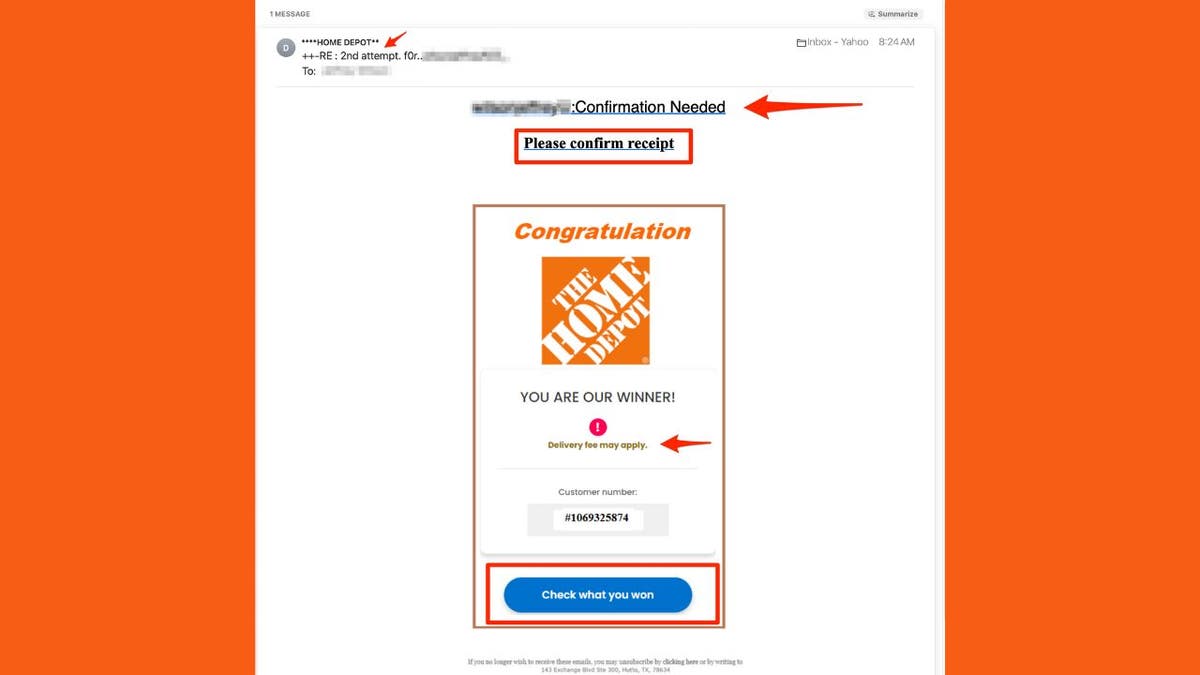
5) Home Depot email confirmation scam

Scammers are capitalizing on the festive spirit with a deceptive email campaign targeting people at this time of year. This scam involves a deceptive email that appears to be from Home Depot with such wording as “Confirmation needed: please confirm receipt.” The email body typically contains enticing text like “Congratulations! The Home Depot – You are our winner!” along with a customer number and a blue circle that says, “Check if you won.” Who couldn’t use a little extra cheer or perhaps a holiday prize from Home Depot this season?

The problem is this is a scam, and the goal of this scam is to lure you into clicking on an embedded link, which can lead to various malicious outcomes. These include phishing for personal and financial information, installing malware on your device, redirecting to a fake website that resembles Home Depot’s or prompting you to pay a “delivery fee” for a non-existent prize.

How to avoid Home Depot email scams

To protect yourself from this and similar scams, scrutinize the sender’s email address for any discrepancies. Hover over links without clicking to reveal their true destination. Be wary of unexpected “winnings” or requests for confirmation. If you receive an email that raises suspicion, contact Home Depot directly through their official website or customer service number to verify its legitimacy. Finally, remember that legitimate companies will not ask you to confirm sensitive information via email or require you to click on links to claim prizes.

6 sneaky scams that could ruin your holiday season

Fake Home Depot winning email (Kurt “CyberGuy” Knutsson)

6) Fake online shopping sites scam

One of the most common scams during the holiday season is the fake online shopping site scam. Scammers create websites that look like legitimate online stores but are actually designed to steal your personal and financial information. They may offer products at very low prices or claim to have limited-time deals or exclusive items. They may also send you phishing emails or text messages with links to these fake sites.

6 sneaky scams that could ruin your holiday season

A woman shopping on her laptop (Kurt “CyberGuy” Knutsson)

Some signs of a fake online shopping site are:

  • The website address does not match the name of the store or brand.
  • The website has poor design and/or spelling and grammar errors.
  • The website does not have a secure connection (https) or a padlock icon in the address bar.
  • The website asks for too much personal information, such as your Social Security number or bank account details.
  • The website does not have a clear return policy, contact information or customer reviews.

How to avoid falling victim to this scam

By following a few simple precautions, you can significantly reduce your risk of falling prey to online scams and ensure a safer shopping experience.

1) Shop only from trusted and reputable online stores that you know and have used before.

2) Check the website address carefully and look for any red flags.

3) Do some research on the online store before making a purchase. Read customer reviews, look for ratings or search for complaints online.

4) Use a credit card or a secure payment service like PayPal when shopping online. Do not use debit cards, wire transfers or gift cards.

5) Keep track of your online purchases and monitor your bank statements for any unauthorized charges.

6) Use strong antivirus protection software. An effective antivirus software is a must-have. The best way to protect yourself from clicking on any malicious links on fake websites or in phishing emails and text messages is to have antivirus protection installed and actively running on all your devices. It’s the best to help stop and alert you of any malware in your system and ultimately protect you from being hacked. See my expert review of the best antivirus protection for your Windows, Mac, Android and iOS devices.

7) Use a personal data removal service. Scammers can obtain your information from various online sources, including data brokers, people search sites and public records. Using a data removal service can help reduce your digital footprint, making it harder for scammers to access your personal information. This proactive step can be crucial in preventing identity theft and minimizing the chances of falling victim to scams during the busy holiday season.

While no service promises to remove all your data from the internet, having a removal service is great if you want to constantly monitor and automate the process of removing your information from hundreds of sites continuously over a longer period of time. Check out my top picks for data removal services here.

I’ve been scammed! What to do next?

Below are some next steps if you find you or your loved one is a victim of identity theft.

1) If you can regain control of your accounts, change your passwords and inform the account provider

2) Look through bank statements and checking account transactions to see where outlier activity started

3) Use an identity theft protection service: Identity theft companies can monitor personal information like your Social Security number, phone number and email address and alert you if it is being sold on the dark web or being used to open an account. They can also assist you in freezing your bank and credit card accounts to prevent further unauthorized use by criminals. 

One of the best parts of using some services is that they might include identity theft insurance of up to $1 million to cover losses and legal fees and a white-glove fraud resolution team where a U.S.-based case manager helps you recover any losses. See my tips and best picks on how to protect yourself from identity theft.

4) Report any breaches to official government agencies like the Federal Communications Commission.

5) Get the professional advice of a lawyer

  • Before speaking to law enforcement, especially when you are dealing with criminal identity theft
  • If being a victim of criminal identity theft leaves you unable to secure employment or housing

6) Alert all three major credit bureaus and possibly place a fraud alert on your credit report.

7) Run your own background check or request a copy of one if that is how you discovered your information has been used by a criminal.

If you are a victim of identity theft, the most important thing to do is to take immediate action to mitigate the damage and prevent further harm.

SUBSCRIBE TO KURT’S YOUTUBE CHANNEL FOR QUICK VIDEO TIPS ON HOW TO WORK ALL OF YOUR TECH DEVICES

Kurt’s key takeaways

As we dive into the holiday season, let’s keep our guard up against those sneaky scams that could spoil our celebrations. Remember to stay vigilant while shopping online or responding to unexpected messages. A little caution can go a long way in ensuring that your holidays remain joyful and stress-free. So, enjoy the festivities, cherish the moments with loved ones, and keep these tips in mind to outsmart the scammers.

What are some of your personal experiences with holiday scams, and how did you protect yourself from them? Let us know by writing us at Cyberguy.com/Contact.

For more of my tech tips and security alerts, subscribe to my free CyberGuy Report Newsletter by heading to Cyberguy.com/Newsletter.

Ask Kurt a question or let us know what stories you’d like us to cover.

Follow Kurt on his social channels:

Answers to the most asked CyberGuy questions:

New from Kurt:

Copyright 2024 CyberGuy.com. All rights reserved.



Source link

How to factory reset your Android

0


Want to know how to factory reset your Android phone? Before handing over your old device, it’s important to remove all traces of your personal information. This not only protects your privacy but also ensures the new owner receives a device in its original state, free from any of your custom settings or data. I’ve got you covered with a step-by-step guide to help you through the process, ensuring you don’t miss a thing. Let’s walk through it together. If you want to factory reset your iPhone, we’ll take you through the steps here. 

GET SECURITY ALERTS, EXPERT TIPS – SIGN UP FOR KURT’S NEWSLETTER – THE CYBERGUY REPORT HERE

How to factory reset your Android

Android phone (Kurt “CyberGuy” Knutsson)

How to back up your Android

Before we dive in, remember this golden rule: back up your data. A factory reset wipes everything clean, so let’s make sure your precious memories and important files are safe and sound.

Settings may vary depending on your Android phone’s manufacturer. 

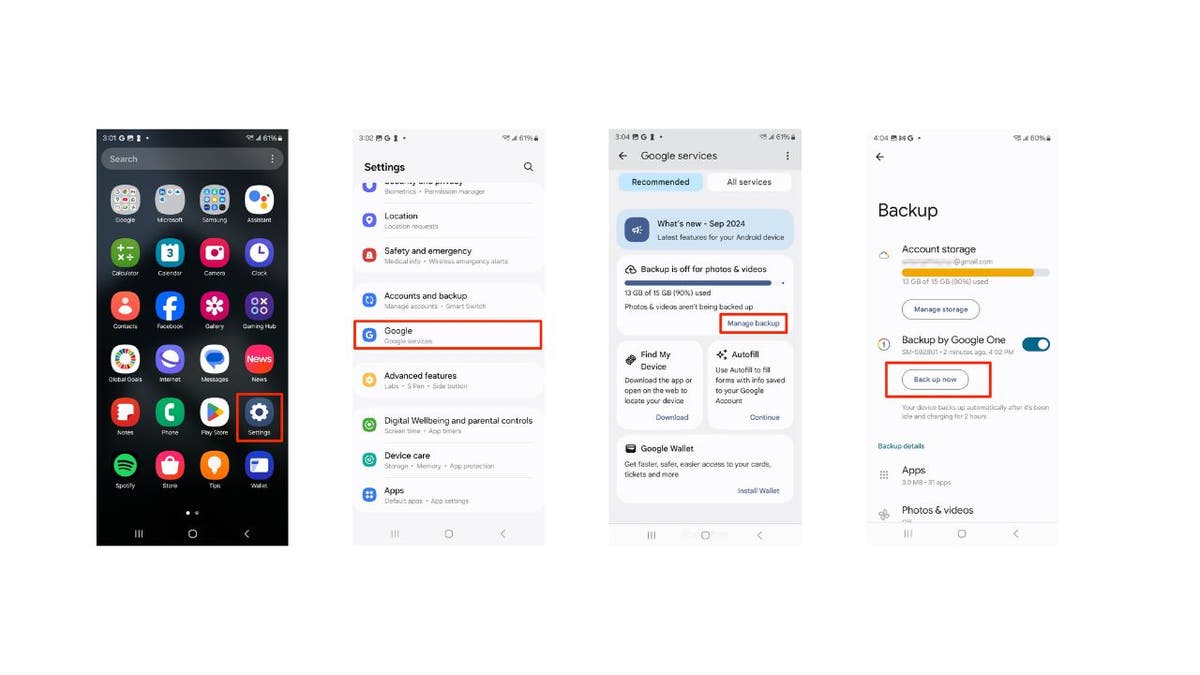
  • Open the Settings app on your Android phone
  • Tap on Google
  • Select Manage backup
  • Toggle on where it says Back up now
How to factory reset your Android

Steps to back up your Android phone (Kurt “CyberGuy” Knutsson)

Pro tip: You should charge your device to at least 70% before starting; you don’t want your phone dying mid-reset.

BEST ANTIVIRUS FOR ANDROIDS – CYBERGUY PICKS 2024

How to factory reset your Android

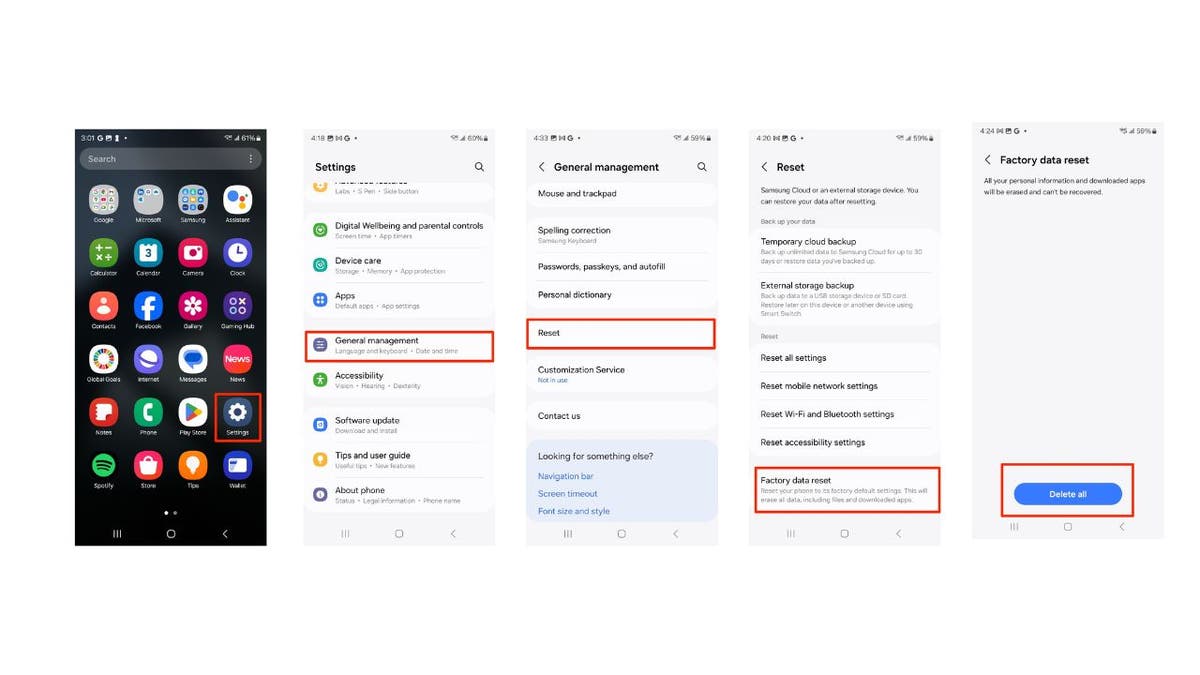
All right, let’s get down to business. Here’s how to factory reset your Android:

 Settings may vary depending on your Android phone’s manufacturer. 

  • From your Android’s home screen, find and tap the Settings app
  • Scroll down and tap Additional Settings (on some devices, this might be System or General Management)
  • Tap Backup and Reset (or Reset on some models)
  • Select Erase All Data (or Factory data reset)
  • Scroll down and tap Reset again to confirm
  • You may then be asked to enter your current PIN.
  • You’ll see a warning that this will delete all your personal information and downloaded apps will be erased and can’t be recovered.
  • Tap Erase Data or Delete all to begin the process
How to factory reset your Android

Steps to factory reset your Android phone (Kurt “CyberGuy” Knutsson)

Your phone will restart and begin the reset, which might take a few minutes. Once it’s done, you’ll see the initial setup screen, just like when your phone was brand new. Also, after a factory reset, you may need to sign in with the Google account previously linked to the device for security purposes.

TOP PHONE CHARGING CABLES THAT WILL SUPERCHARGE YOUR ANDROID DEVICES

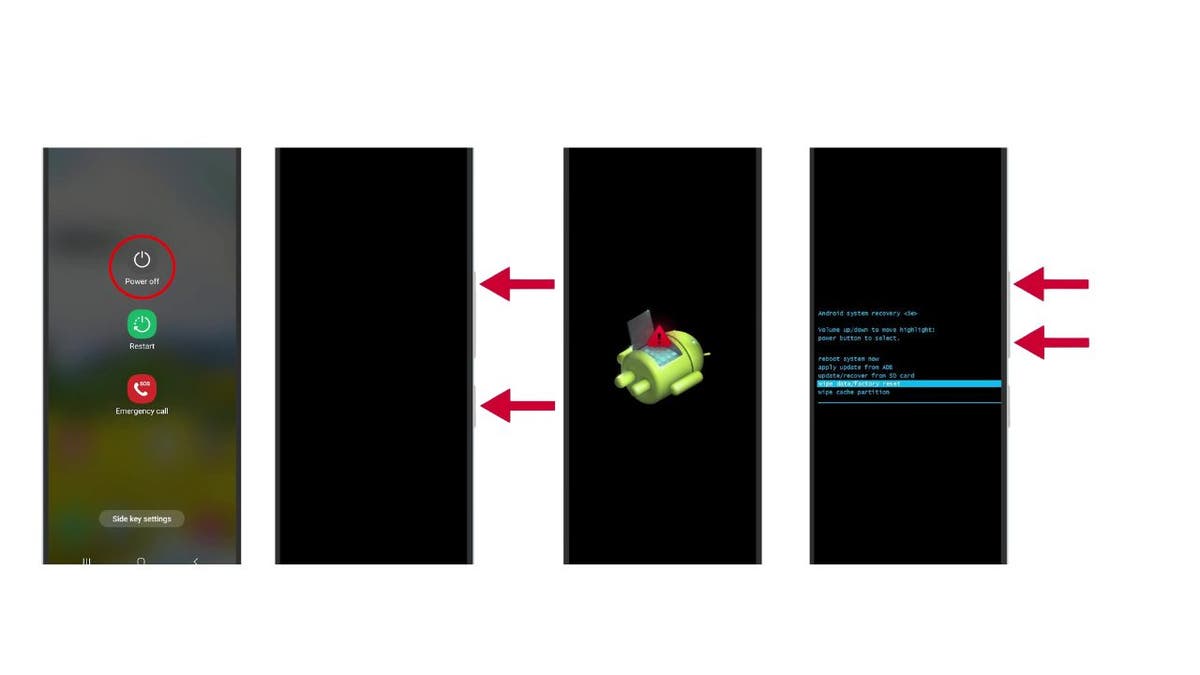
How to factory reset your Android using Recovery Mode

OK, let’s say you want to factory reset your Android, but your phone is unresponsive, or you cannot access the settings. You can use “Recovery Mode.”

Settings may vary depending on your Android phone’s manufacturer.

  • Start by powering off your device completely
  • Then enter recovery mode by pressing and holding the volume up, home and power buttons simultaneously (or just volume up and power for some models) until you see the Android logo.
How to factory reset your Android

Steps to factory reset your Android using Recovery Mode (Kurt “CyberGuy” Knutsson)

  • Use the volume buttons to scroll to Wipe Data or Perform a factory reset, then press the power button to select it.
  • Confirm the reset by selecting Yes–delete all user data, then confirm with the power button.
  • After the reset is complete, select Reboot system now.
How to factory reset your Android

Steps to factory reset your Android using Recovery Mode (Kurt “CyberGuy” Knutsson)

There you have it. By following these steps, you can successfully perform a factory reset on any Android device, ensuring a fresh start or preparing it for a new user. Once your device is clean, check out “Best ways to get rid of your old phone or tablet” for various options like trading it in for credit, donating to charity or recycling through certified e-waste programs.

SUBSCRIBE TO KURT’S YOUTUBE CHANNEL FOR QUICK VIDEO TIPS ON HOW TO WORK ALL OF YOUR TECH DEVICES

Kurt’s key takeaways

Factory resetting your Android prepares your device for a new user or just starting fresh. Remember, it’s a drastic measure that erases everything, so always back up your data first. Whether you’re troubleshooting, starting fresh or passing your device on, now you’ve got the knowledge to do it right.

Have you faced any challenges with data security, and how did you overcome them? Let us know by writing us at Cyberguy.com/Contact.

For more of my tech tips and security alerts, subscribe to my free CyberGuy Report Newsletter by heading to Cyberguy.com/Newsletter.

Ask Kurt a question or let us know what stories you’d like us to cover.

Follow Kurt on his social channels:

Answers to the most asked CyberGuy questions:

New from Kurt:

Copyright 2024 CyberGuy.com. All rights reserved.


Source link

‘Yo-yo’ weight loss occurs because of this surprising reason

0

Join Fox News for access to this content

Plus special access to select articles and other premium content with your account – free of charge.

By entering your email and pushing continue, you are agreeing to Fox News’ Terms of Use and Privacy Policy, which includes our Notice of Financial Incentive.

Please enter a valid email address.

About 40% of American adults live with obesity — and for many of them, it can feel a bit like a roller-coaster as their weight fluctuates up and down.

The cycle of losing and regaining weight on repeat, commonly known as the yo-yo effect, could be due to a type of “metabolic memory,” where the body remembers and strives to return to its former state of obesity, according to a new study.

“Obesity is a chronic condition with significant metabolic consequences, strongly linked to various metabolic and cardiovascular diseases,” study author Dr. Ferdinand von Meyenn, assistant professor for nutrition and metabolic epigenetics at ETH Zurich in Switzerland, told Fox News Digital.

IS EATING ONCE A DAY A GOOD IDEA? EXPERTS SHARE VARYING OPINIONS ON THE ‘OMAD DIET’

“A well-documented observation is that the body tends to defend increased body weight, making weight loss and maintenance notoriously challenging.”

The cycle of losing and regaining weight on repeat, commonly known as the yo-yo effect, could be due to a type of “metabolic memory,” a new study found. (iStock)

Obesity is a common chronic disease in the U.S., with one in five children and two out of five adults meeting the criteria, according to the Centers for Disease Control and Prevention (CDC).

The new research, published in November in the journal Nature, points to epigenetics (genetic activity) that may play a role in regaining weight after weight loss. 

What is epigenetics?

“Epigenetics, which involves chemical markers that influence gene activity without altering the DNA sequence, is crucial in how cells function and respond to environmental factors,” Dr. Fatima Cody Stanford, obesity medicine physician at Massachusetts General Hospital and Harvard Medical School, told Fox News Digital.

‘HIDDEN’ FAT COULD PREDICT ALZHEIMER’S DISEASE UP TO 20 YEARS BEFORE SYMPTOMS, RESEARCH FINDS

“These markers can be altered by lifestyle factors, such as diet, and can remain stable for years, effectively creating a cellular ‘memory’ of past states, such as obesity,” added Stanford, who was not part of the study.

It is well-known that cells keep their genetic identity as they divide. The researchers were curious about what happens to fat cells — which live on average for 10 years before the body replaces them, von Meyenn said.

Fat cells

The researchers investigated what happens to fat cells, which live on average for 10 years before the body replaces them. (iStock)

This differs from other cells in tissues, which divide much faster – intestinal cells, for example, generally divide every other week, he added. 

Fat cells still must adapt to external stimuli and undergo epigenetic adaptations, von Meyenn noted.

The researchers set out to determine whether these changes could be reversed.

Fighting ‘memory’ in fat cells 

In mouse studies, the researchers found that even after significant weight loss, their cells have a “memory” of obesity encoded in the epigenome, which controls the activity of genes, von Meyenn noted.

“Our study indicates that one reason maintaining body weight after initial weight loss is difficult is that the fat cells remember their prior obese state and likely aim to return to this state,” he told Fox News Digital.

“The body tends to defend increased body weight, making weight loss and maintenance notoriously challenging.” 

“This means one would have to ‘fight’ this obesogenic memory to maintain body weight.”

Based on this research, a failure to maintain weight loss after dieting is not necessarily due to lack of effort or willpower, but could also be driven by an underlying biological phenomenon, von Meyenn added.

Potential limitations 

The research looked only at fatty tissue, and the genetic mechanisms were studied only in mice. Even so, the researchers said they believe that similar mechanisms also apply to humans. 

Other experts cautioned, however, that the study shows only association and does not prove that epigenetic changes cause the yo-yo effect.

CAN’T STOP THINKING ABOUT YOUR NEXT MEAL? IT’S CALLED FOOD NOISE, HERE’S WHAT TO DO

“The authors pointed out that they cannot say for certain that the epigenetic modifications directly cause people to regain their lost weight, nor pinpoint which specific epigenetic markers may be driving this effect,” Petronella Ravenshear, board-certified nutritionist and author of “The Human Being Diet,” told Fox News Digital.

Florida-based Ravenshear, who was not part of the study, noted that the results should not lead people to claim, “It’s not my fault, it’s my genes!”

Plans for future research

“We will need to now expand, see how the memory can be erased and whether other cells or tissues are also affected, [such as] the brain or the liver,” von Meyenn said.

It’s possible that if people maintain a healthy weight for a year or longer after dieting, that may be enough time to erase the memory in fat cells, according to Ravenshear.

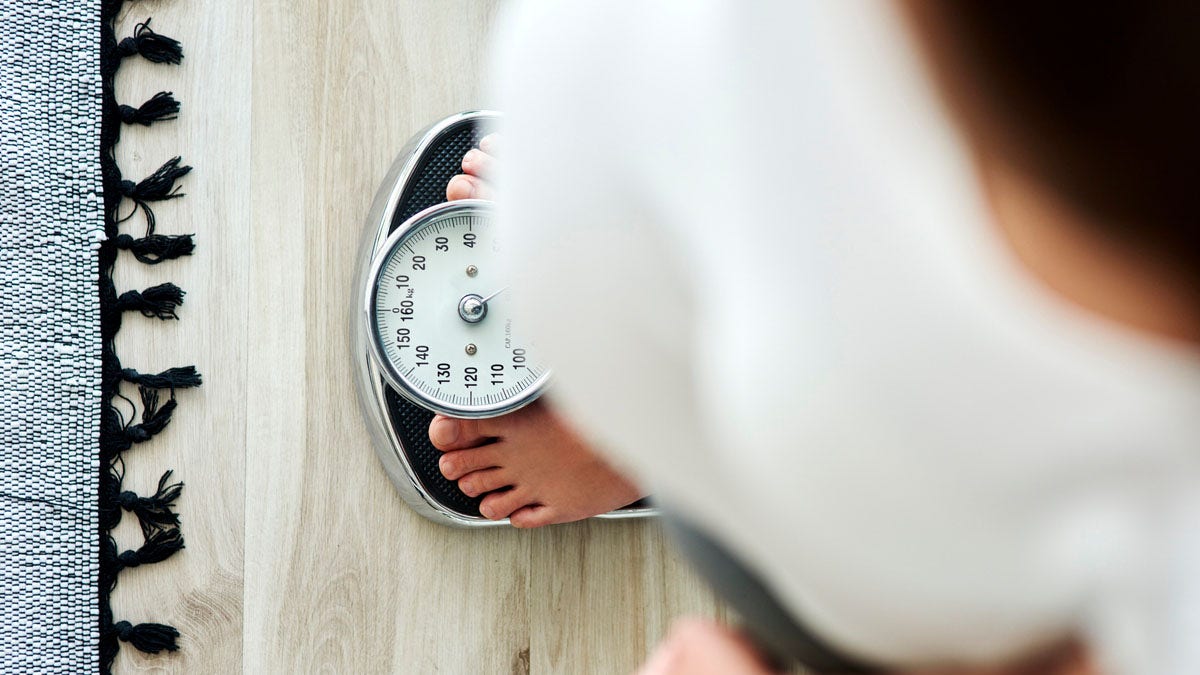
Standing on scale

The term “diet,” in its original connotation, means “way of living” — but it is now synonymous with short-term dietary changes that are unsustainable, one expert said. (iStock)

“This discovery underscores the importance of preventing obesity, particularly in children and adolescents, to avoid establishing this epigenetic memory that complicates long-term weight management,” Stanford noted.

“Understanding these mechanisms further could lead to more effective treatments and prevention strategies, emphasizing the need for a proactive approach to weight management from an early age,” she added. 

‘Way of living’

The term “diet,” in its original connotation, means “way of living” — but it is now synonymous with short-term dietary changes that are unsustainable, Ravenshear noted.

CLICK HERE TO GET THE FOX NEWS APP 

People often regain the weight they lose when they return to the eating habits that led to weight gain in the first place, many experts agree.

Ravenshear cited Professor David Benton at Swansea University in the U.K., author of “Tackling the Obesity Crisis,” who recently shared in a Guardian interview, “The mantra is that diets fail.”

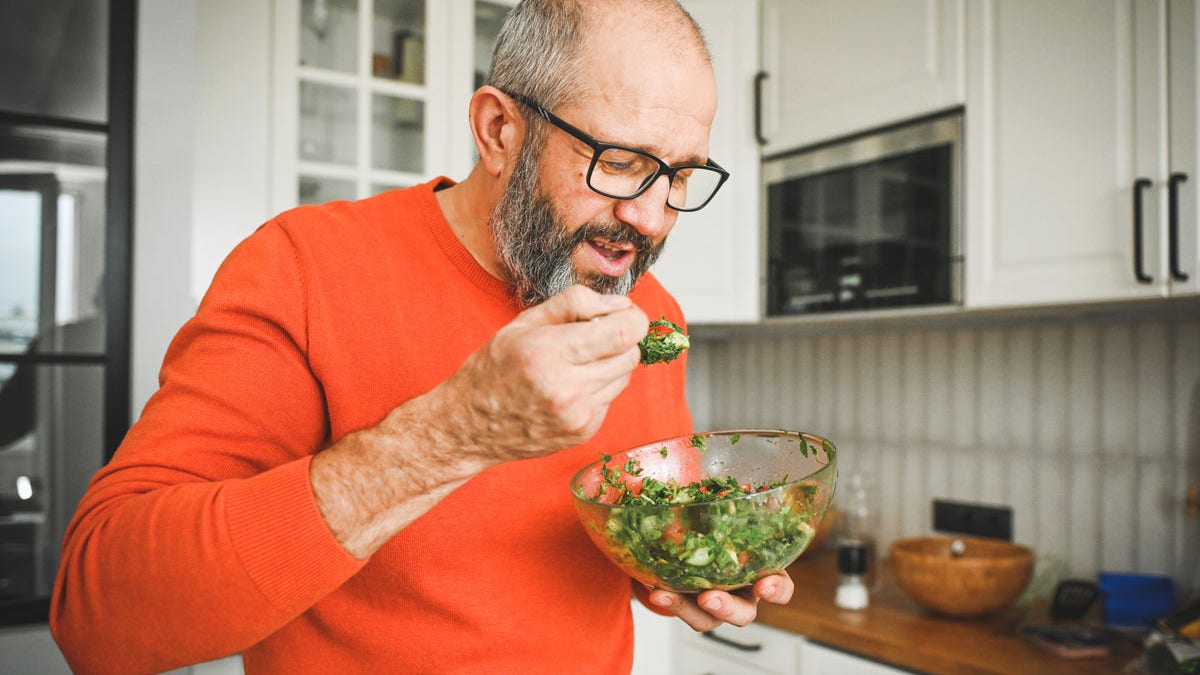
Man eating salad

One expert recommends focusing on breaking addictions to sugar and refined carbohydrates and embracing a new way of eating. (iStock)

“They fail because to avoid regaining lost weight, you need to permanently change your diet.”

After finishing a diet, many people return to the previous lifestyle that caused the problem in the first place, he noted.

CLICK HERE TO SIGN UP FOR OUR HEALTH NEWSLETTER

“Frequently snacking, and eating calorie-dense, nutrient-poor foods, disrupts our blood sugar, raises insulin levels and adds to inflammation – and the inflammation itself makes it harder to lose weight,” Ravenshear told Fox News Digital.

Junk Food

“Eating calorie-dense, nutrient-poor foods disrupts our blood sugar, raises insulin levels and adds to inflammation – and the inflammation itself makes it harder to lose weight,” one expert cautioned. (iStock)

She recommends focusing on breaking addictions to sugar and refined carbohydrates and embracing a new way of eating.

The expert suggests choosing nutrient-dense whole foods, eating three meals a day, and fasting with nothing but water for five hours between meals.

For more Health articles, visit www.foxnews.com/health

The weight loss occurs as a side effect of rebalanced hormones and lowered inflammation, she noted.

Ravenshear added, “When we are getting the calories, but not the nutrients that our body and brain need, we’re always hungry because our brain drives us to keep searching for food.”

‘Santa Claus’ sarcophagus believed to be discovered during excavation project

0

While Santa Claus is often pictured flying across the night sky on Christmas Eve, a team of archaeologists may have unearthed a sarcophagus containing the remains of the saint whose spirit of generosity is still celebrated in the modern world more than 1,600 years later.

“We believe that we have encountered a sarcophagus to be in situ (original position) for the first time,” said associate professor Ebru Fatma Findik, who is heading the excavation team through Hatay Mustafa Kemal University’s Department of Art History. 

The discovery was made at St. Nicholas Church in the Demre district of Antalya, Turkey, as part of an excavation initiated by Turkey’s Ministry of Culture and Tourism. 

HISTORIC ROME LANDMARK’S TEMPORARY CLOSURE CAUSES UPROAR: ‘SADDEST THING I’VE SEEN IN ITALY’

The sarcophagus was found in the church’s two-story annex, which is believed to be the original burial site of Saint Nicholas, a bishop who lived in the ancient city of Myrna during the fourth century.

During an excavation in Turkey, a sarcophagus was discovered that is believed to be the burial site of Saint Nicholas. (Ministry of Culture and Tourism of the Republic of Turkey)

“While drilling inside the structure, we encountered a surprise sarcophagus,” Findik said. 

“We are working inside the 20-meter-long, two-story structure that borders the church courtyard from the south. This work, among the undecorated sarcophagus group, is made of local stone and has a slightly high barrel roof.”

The lid has a handle, Findik said, and the underground part of the approximately 2-meter-long sarcophagus is estimated to be 1.5-2 meters high. 

WHITE HOUSE SELECTS NORTH CAROLINA FAMILY’S CHRISTMAS TREE FARM TO PROVIDE 2024 TREE

“According to initial evaluations, its similarity to the types of sarcophagi in the region is striking,” Findik added.

Saint Nick sarcophagus found in Turkey

The sarcophagus is strikingly similar to the ones used in the fourth century. (Ministry of Culture and Tourism of the Republic of Turkey)

She explained to A News, a Turkish news agency, that the exact location of Saint Nicholas’ burial remains uncertain. 

“Some historical sources mention that St. Nicholas was buried near the sacred area of the city of Myra,” Fındık told A News. 

“The discovery of a sarcophagus near the church, which is believed to be the resting place of St. Nicholas, could indicate that this site may indeed be the sacred area in question. We can say that we have reached archaeological evidence that confirms historical sources about St. Nicholas’ burial place being in the city’s sacred area.”

For more Lifestyle articles, visit foxnews.com/lifestyle.

Before the team reached the sarcophagus, they found other artifacts of interest.

Saint Nick sarcophagus found in Turkey

The sarcophagus was discovered in the two-story building next to the church and is believed to be the burial place of Saint Nicholas. (Ministry of Culture and Tourism of the Republic of Turkey)

“In addition, many terracotta oil lamp fragments and animal bones were unearthed before reaching the sarcophagus during the drilling,” Findik said.

Saint Nicholas, known for his acts of generosity, was born in the third century Greek village of Patara, which is now on the southern coast of Turkey. 

It is said his wealthy parents died when he was young and that he used his inheritance to assist the needy and suffering, especially children. 

CLICK HERE TO SIGN UP FOR OUR LIFESTYLE NEWSLETTER

He served as the bishop of Myra and died in 343 CE. 

Saint Nick's sarcophagus discovered

The Ministry of Culture and Tourism of the Republic of Turkey believes its team may have discovered the sarcophagus belonging to Saint Nicholas. (iStock | Ministry of Culture and Tourism of the Republic of Turkey)

Around 200 years after his death, his remains were moved to the Church of St. Nicholas, which was built in his honor. 

Findik said her team looks forward to gathering more information as the excavation continues.

“The fact that a sarcophagus has been unearthed very close to the church that is thought to contain the tomb of St. Nicholas excites us greatly,” Findik said. 

CLICK HERE TO GET THE FOX NEWS APP

“As part of the project, we will be happy to complete the excavation and restoration of the area where the sarcophagus is located and contribute to our country’s tourism.”