10.1 C
New York
Saturday, February 28, 2026
Home Blog Page 472

Bronze Age jar smashed by 4-year-old boy back on display at Israeli museum

0

An ancient jar is back on display at a museum in Israel nearly two weeks after a 4-year-old visitor accidentally smashed it late last month.

The jar dated back to the Bronze Age, between 2200 and 1500 B.C. — predating the time of Kings David and Solomon — and it was totally intact, making it a rare find and a valuable artifact.

While on display at the Hecht Museum in Haifa, the pint-sized visitor pulled on the artifact to see what was inside, and that caused it to fall over and shatter into pieces.

The Associated Press reported that Alex Geller, the boy’s father, described his son — the youngest of three — as exceptionally curious. When Geller heard the crash, he confessed, the first thought to race through his head was, “Please let that not be my child.”

BOY ACCIDENTALLY DESTROYS 3,500-YEAR-OLD ARTIFACT IN ISRAELI MUSEUM

A young preschooler accidentally shattered a nearly 3,500-year-old jar that was not behind glass at the Hecht Museum in Haifa. (Hecht Museum)

The museum immediately appointed a specialist to restore the jar so it could be returned to its spot near the front entrance of the museum.

On Wednesday, the jar was back on display after being pieced together and restored.

ISRAEL OPENS TOMBS FROM ANCIENT ROME TO THE PUBLIC FOR THE FIRST TIME: ‘WONDERFUL PAINTINGS’

Ancient-Jar-Finished-Product

A rare bronze-era jar, newly reassembled, returned to public exhibition after a four-year-old accidentally broke it in August during a visit at the Hecht Museum of the University of Haifa, Israel, on Wednesday, Sept. 11, 2024.  (AP Photo/Mahmoud Illean)

Oftentimes, when archaeologists piece together artifacts, they face the daunting task of sifting through piles of shards of multiple objects.

But in this case, the repairs were expected to be fairly simple because the pieces were from a single and complete jar, museum restoration expert Roee Shair said.

ARCHAEOLOGISTS UNSEAL 2,000-YEAR-OLD TOMB, FIND MUMMY IN ‘EXCELLENT STATE’

Replacing-Ancient-Jar

A rare bronze-era jar, newly reassembled, returned to public exhibition after a four-year-old accidentally broke it in August during a visit at the Hecht Museum of the University of Haifa, Israel, on Wednesday, Sept. 11, 2024. (AP Photo/Mahmoud Illean)

Using 3D technology, hi-resolution videos and special glue, experts were able to reconstruct the large jar.

A few pieces were missing, and the gluing process left a few hairline cracks, but the impressive size of the jar remains.

ARCHAEOLOGISTS DISCOVER UNDERWATER MOSAIC BELIEVED TO DATE BACK TO ROMAN EMPIRE

Ancient-Jar-In-Place

Bronze-era jar. (AP Photo/Mahmoud Illean)

The only major difference now is there is a new sign near the jar that reads, “Please don’t touch.”

Now that it is back on display, museum director Inbal Rivlin and the museum decided to turn the incident into a teachable moment and invited the Geller family back for a special hands-on visit to illustrate the restoration process.

CLICK HERE TO GET THE FOX NEWS APP

The Associated Press contributed to this report.

Greece to impose tax for cruise visitors on popular islands to combat overtourism

0

Join Fox News for access to this content

You have reached your maximum number of articles. Log in or create an account FREE of charge to continue reading.

By entering your email and pushing continue, you are agreeing to Fox News’ Terms of Use and Privacy Policy, which includes our Notice of Financial Incentive.

Please enter a valid email address.

Visiting Santorini or Mykonos in Greece could start costing you a little extra as government officials devise a strategy to curb overtourism on the islands.

Greek officials are planning to impose a tax for cruise ship visitors during the peak summer season, according to Reuters.

The tax would be 20 euros ($22) for visitors cruising to Santorini or Mykonos.

ROME COULD CHARGE ENTRY TO HISTORIC LANDMARK IN LATEST ATTEMPT TO TACKLE OVERTOURISM

From January to June, more than 11 million travelers visited Greece, bringing in about $7 million in travel receipts, according to the Bank of Greece.

Greek officials would impose about a $20 tax on visitors arriving to Mykonos or Santorini by boat. (iStock)

“Greece does not have a structural overtourism problem… Some of its destinations have a significant issue during certain weeks or months of the year, which we need to deal with,” Prime Minister Kyriakos Mitsotakis said during a press conference, according to Reuters.

For more Lifestyle articles, visit foxnews.com/lifestyle

Last year, 209,300 Americans visited Greece, according to the Bank of Greece.

Aerial view of Imerovigli church in Santorini in Greece

Greece could also limit the number of cruise ships that arrive at certain destinations. (iStock)

“Cruise shipping has burdened Santorini and Mykonos and this is why we are proceeding with interventions,” Mitsotakis added.

The government could also limit the number of cruise ships that arrive at certain destinations, Reuters reported.

CLICK HERE TO SIGN UP FOR OUR LIFESTYLE NEWSLETTER

Greece is not the only European country that grapples with overtourism.

greece tourism

Greece joins other European countries in attempting to tackle overtourism by imposing taxes. (iStock)

The European Parliament stated that “the effects of overtourism are potentially severe and both natural and cultural heritage sites are at risk of losing their appeal as desirable tourism destinations due to it,” according to its report titled “Overtourism: impact and possible policy responses.”

CLICK HERE TO GET THE FOX NEWS APP

Venice initiated a pilot program to charge day-trippers an entry fee to reduce the influx on peak days and officials in Rome are drafting a plan to implement allocated time slots at the iconic Trevi Fountain to limit waves of guests while collecting a fee, Fox News Digital reported.

Fox News Digital reached out to the Greece Ministry of Tourism for comment.

Reuters contributed to this report.

How COVID affected teens’ brains, plus new cancer drugs and Parkinson’s risk

0

COVID BRAIN – New research found that pandemic restrictions had an “alarming” impact on teenagers’ brains. Get the details here. Continue reading…

MIDDAY PICK-ME-UP – A trending sleep hack is helping to boost energy levels – and it involves caffeine. Continue reading…

NEW HOPE – An existing breast cancer drug could help prolong survival for children with brain tumors, a new study finds. Doctors discuss its potential. Continue reading…

Doctor hugging child

A drug called ribociclib, which is currently used to treat breast cancer, could slow the progression of certain pediatric high-grade gliomas. (iStock)

‘SIX-PACK’ SURGERY – More men are turning to a special surgical procedure to give them the look of chiseled abs. Plastic surgeons discuss the risks and benefits. Continue reading…

AVIAN ALERT – A U.S. state has reported the first human case of bird flu without any exposure to animals. Here’s what to know. Continue reading…

GUT-HEALTH CONNECTION – Damage to the digestive tract could significantly increase the risk of a common neurological disease. Continue reading…

Woman gut health

The study included 9,350 patients who underwent an upper endoscopy, a procedure that examines the esophagus, stomach and first portion of the small intestine. (iStock)

VIRAL CONCERNS – The Wetland virus, a newly discovered rare disease in China, could cause brain damage or bleeding under the skin, researchers warn. Continue reading…

WELLNESS POINTS – Watching game shows could have a surprising health benefit. Discover the benefits of getting in the game. Continue reading…

ASK A DOCTOR – “Is it safe to drink tap water?” Experts give their guidance on the potential risks and share safety tips. Continue reading…

Woman filling tap water

Generally speaking, it’s safe to drink tap water, most experts agreed — although there is some level of risk. (iStock)

FOLLOW FOX NEWS ON SOCIAL MEDIA

Facebook

Instagram

YouTube

Twitter

LinkedIn

SIGN UP FOR OUR NEWSLETTERS

Fox News First

Fox News Opinion

Fox News Lifestyle

Fox News Health

Fox News Autos

Fox News Entertainment (FOX411)

DOWNLOAD OUR APPS

Fox News

Fox Business

Fox Weather

Fox Sports

Tubi

WATCH FOX NEWS ONLINE

Fox News Go

STREAM FOX NATION

Fox Nation

Author Carlos Whittaker shares how he went screen-free for mental health

0

Ironically, it was a notification on his phone that prompted author and podcaster Carlos Whittaker to embark on a seven-week screen-free journey that would change his life. 

Whittaker, who lives in Nashville on a “suburban farm” with his wife, three children and dog, knew he used his phone a lot, but didn’t consider it a problem until he sat down and did the math.

After getting an alert that he had averaged seven hours and 23 minutes of daily phone time that particular week, Whittaker realized that if he lived to be 85, he would spend more than a decade of his remaining life on the device.

KEEPING KIDS SAFE: ‘WAIT UNTIL 8TH’ PLEDGE AIMS TO EMPOWER PARENTS TO RESIST SMARTPHONES FOR CHILDREN

In the summer of 2022, Whittaker embarked on a seven-week journey across the United States, navigating his life without the use of any screens.

He documented the mission in his latest book, “Reconnected: How Seven Screen-Free Weeks with Monks and Amish Farmers Helped Me Recover the Lost Art of Being Human,” which was published on Sept. 10.

Carlos Whittaker, pictured, lived without screens for seven weeks in 2022 in an experience he described as life-changing.  (Carlos Whittaker)

“That’s exactly what I did,” Whittaker told Fox News Digital in a Zoom interview. “I lived with these monks and the Amish, and it absolutely changed my life.” 

The author spent two weeks at a monastery, two weeks with the Amish and three weeks with his family, living entirely without screens.

“I lived with these monks and the Amish, and it absolutely changed my life.” 

Before and after the experiment, Whittaker’s brain was scanned and analyzed by neurologists – and he details those results in his book. 

Whittaker, who described himself as an evangelical Christian, was connected to St. Andrew’s Abbey – a Catholic, Benedictine monastery in California – which allowed him to stay in a guest cabin for the first part of his journey. 

LIMIT OF 3 HOURS OF WEEKLY SCREEN TIME FOR KIDS HAS ‘POSITIVE EFFECT’ ON BEHAVIOR, MENTAL HEALTH: STUDY

Digital detox

Whittaker almost quit the experiment at the very beginning. 

“When you can’t get out of your head by picking up your phone and scrolling TikTok or X or whatever it is, and you’re stuck in your own thoughts – that’s something we’re not used to, and I definitely wasn’t used to it,” he said. 

This sudden digital detox led to “four days of panic,” he said, as he experienced “panic attacks, night sweats, heart palpitations [and] jitters.” 

An inset of Carlos Whittaker, a bald man with a beard wearing a black shirt, over a picture of a phone that is wrapped in a chain.

Whittaker said he nearly quit his experiment right as it began, finding the sudden lack of a smartphone to be physically taxing. (iStock; Carlos Whittaker)

Not having his phone felt like “coming off the drug of knowledge and the drug of control,” Whittaker said. 

But on day five of the experiment, something changed. 

“It literally felt like an elephant stepped off my chest and I could breathe again,” he said. “And I got it. But those first four days were the crazy days.”

INCREASED USE OF SOCIAL MEDIA TAKES MENTAL HEALTH TOLL ON TEENS

In the book, Whittaker writes about how he initially felt uncomfortable living among Benedictine monks and found their prayer routine to be “boring.” (Benedictine monks pray the Liturgy of the Hours, a daily prayer, at different times throughout the day.)

“I’ll be blatantly honest, the first two days, I was bored out of my mind,” he said. “We were praying five or six times a day.”

“When you lower the volume of life, the volume of God goes up.”

But eventually, he said, “I got it,” adding that he has kept up the practice of praying the Liturgy of the Hours even after leaving the monastery.

“I missed it so much. It created a rhythm in my day,” he said. “It gave some stability to some parts of my faith that maybe were unstable.”

Monks head to noon Mass through a breezeway at St. Andrew's Abbey chapel in Valyermo.

Whittaker lived among the Benedictine monks at St. Andrew’s Abbey in California for two weeks, joining them for daily prayer and Mass.  (Bryan Chan/Los Angeles Times via Getty Images)

“What I learned from the monks is that every day, I had multiple opportunities to lower the volume of life and slow down — and when you lower the volume of life, the volume of God goes up,” he said. 

CLICK HERE TO SIGN UP FOR OUR LIFESTYLE NEWSLETTER

After his time at the monastery, Whittaker moved to the Midwest and lived for two weeks with an Amish family. (The Amish are a religious group that eschews most modern technology.)

Getting permission to live among the Amish, however, was more challenging. Whittaker was rejected by many people he contacted, as they were wary of an outsider temporarily joining their community.

Amish family walks down road.

Whittaker spent two weeks living with an Amish family as part of his screen-free experiment.  (iStock)

“We finally ended up with a sheep-farming family that was like, ‘Absolutely, come on in,'” he said. “And they helped me become as Amish as I could in 14 days.” 

Throughout his seven screen-free weeks, Whittaker journaled and recorded videos each night on a small, screen-free camera. 

LIMITING SCREEN TIME IN INFANTS MAY DECREASE RISK OF AUTISM SPECTRUM DISORDER, STUDY FINDS

Those videos will be compiled into a documentary, also called “Reconnected,” that will be released on Oct. 25, he said.

New habits

While Whittaker has largely returned to life as it was before his experiment – including the use of a smartphone – he has made changes that he says have improved his life. 

“This book isn’t about how bad phones are. This book is about how beautiful it is on the other side of the phone,” he told Fox News Digital. 

“This book isn’t about how bad phones are. This book is about how beautiful it is on the other side of the phone.”

“Instead of setting up all these rules and restrictions for my screen time, once I fell in love with wondering, with noticing, with savoring, with 90-minute meals – with all of these things I was doing without my phone, I just picked up my phone less.”

Today, Whittaker uses his phone about 3-½ hours a day, four hours less than before the experiment.

BALANCING THE PROS AND CONS OF SOCIAL MEDIA SCREEN TIME

“I’ve legitimately added half of my life back, half of the years back that I was losing before.” 

4 tips to cut down on screen time

Whittaker offered a few tips for those who want to limit their daily screen time.

1. Charge your phone outside the bedroom 

“The first thing everyone needs to do is stop charging your phone in the bedroom and start charging it in another room,” he said. 

“Buy an alarm clock. I know it’s the craziest, most old-fashioned thing, but all it’s going to do is wake you up.” 

A young Asian woman tries to turn off the alarm clock in her bedroom at home while still lying in bed.

One of Whittaker’s suggestions to cut down on screen time is to buy an alarm clock.  (iStock)

2. Don’t pick up your phone right away

People should avoid looking at their phones for “at least 30 minutes in the morning,” Whittaker suggested.

CLICK HERE TO GET THE FOX NEWS APP

“Just drink your coffee. When you’re just drinking the coffee, [it] tastes so much better. You get to savor it,” he said. 

3. Subscribe to print media

Whittaker subscribes to a newspaper rather than relying on the constant buzz of a smartphone app. 

4. Use the ‘do not disturb’ feature

“I’ve actually placed my smartphone in permanent ‘do not disturb,’ so I never get a ‘ding,'” he told Fox News Digital. 

Close-up of a smartphone device screen showing the Do not Disturb mode being enabled

Whittaker said his smartphone is permanently on “do not disturb” for everyone except his family and his assistant.  (iStock)

For more Lifestyle articles, visit www.foxnews.com/lifestyle

Whittaker has set up his phone so that only his assistant and family can immediately reach him.

“I never get a buzz. I never get a notification,” he said.

Fox News AI Newsletter: iPhone 16, Apple’s bold move into AI

0


Welcome to Fox News’ Artificial Intelligence newsletter with the latest AI technology advancements.

IN TODAY’S NEWSLETTER:

– Apple’s bold move into AI: New iPhone 16, AirPods and watches

– OpenAI co-founder raises $1B for startup with single goal: safe superintelligence

– US indictments reveal AI use in Russia disinformation campaign targeting 2024 election

Apple’s bold move into AI: New iPhone 16, AirPods and watches

Apple event logo (Apple) (Kurt “CyberGuy” Knutsson)

APPLE’S BIG REVEAL: With slightly larger, slimmer bezels and a new camera system, these devices are designed to attract both casual and professional users alike.

1 GOAL, 1 PRODUCT: A new tech startup co-founded by OpenAI’s former chief scientist Ilya Sutskever has raised $1 billion in cash to help fund the development of a safe artificial intelligence system, the startup said last week.

Garland-Wray

FBI Director Christopher Wray, right, speaks during a meeting of the Justice Department’s Election Threats Task Force at the Department of Justice, on  Wednesday, Sept. 4, 2024, in Washington, as Attorney General Merrick Garland, left, looks on.  (AP Photo/Mark Schiefelbein)

MIXED MESSAGE: Experts say the Kremlin could include artificial intelligence in efforts to manipulate November’s presidential elections through influence schemes. 

NO MORE CHORES: Chinese startup Astribot has officially launched its latest creation, the S1 humanoid robot, in a video that showcases its impressive range of household capabilities. The S1 can be seen making waffles, feeding a cat, serving tea and even shooting hoops. This launch follows the robot’s initial reveal in April, where only the upper half was shown, leaving many curious about its complete design.

Chinese robo-helper can clean, cook, even shoot hoops

S1 humanoid robot (Astribot) (Kurt “CyberGuy” Knutsson)

Subscribe now to get the Fox News Artificial Intelligence Newsletter in your inbox.

FOLLOW FOX NEWS ON SOCIAL MEDIA

Facebook
Instagram
YouTube
Twitter
LinkedIn

SIGN UP FOR OUR OTHER NEWSLETTERS

Fox News First
Fox News Opinion
Fox News Lifestyle
Fox News Health

DOWNLOAD OUR APPS

Fox News
Fox Business
Fox Weather
Fox Sports
Tubi

WATCH FOX NEWS ONLINE

Fox News Go

STREAM FOX NATION

Fox Nation

Stay up to date on the latest AI technology advancements and learn about the challenges and opportunities AI presents now and for the future with Fox News here.


Source link

Nearly 1 million Medicare beneficiaries face data breach

0


Nearly 1 million Medicare beneficiaries have recently learned that their personal information may have been compromised in a data breach last year. This incident comes on the heels of another incident and highlights the ongoing challenges in protecting sensitive health care data and the importance of staying vigilant about your personal information.

GET SECURITY ALERTS, EXPERT TIPS – SIGN UP FOR KURT’S NEWSLETTER – THE CYBERGUY REPORT HERE

Nearly 1 million Medicare beneficiaries face data breach

A total of 946,801 Medicare beneficiaries may have had their personal data exposed due to a security vulnerability. (Kurt “CyberGuy” Knutsson)

The breach: What happened?

The Centers for Medicare & Medicaid Services (CMS) is notifying 946,801 Medicare beneficiaries that their personal data may have been exposed due to a security vulnerability in the MOVEit file transfer software used by Wisconsin Physicians Service Insurance Corp., a CMS contractor.

On July 8, 2024, Wisconsin Physicians Service (WPS) Insurance Corp. informed CMS about a cybersecurity incident involving MOVEit, a file transfer software. This incident compromised files containing protected health information, including Medicare claims data and other personally identifiable information.

The vulnerability in the MOVEit software allowed unauthorized access to personal information between May 27 and May 31, 2023. Progress Software, the developer of MOVEit, discovered and publicly disclosed this vulnerability on May 31, 2023, promptly releasing a software patch to address the issue.

WPS immediately applied the patch and conducted an initial investigation, which did not reveal any evidence of unauthorized file access at that time. However, in May 2024, new information prompted WPS to conduct a more thorough review with the assistance of a third-party cybersecurity firm. This review confirmed that while the vulnerability was successfully patched in early June 2023, an unauthorized third party had copied files from WPS’s MOVEit system before the patch was applied.

In coordination with law enforcement, WPS evaluated the impacted files. Initially, the examined portion did not contain personal information. However, on July 8, 2024, WPS discovered that some files in a different portion did contain personal information, leading to the immediate notification of CMS.

As of now, CMS and WPS are not aware of any reports of identity fraud or misuse of personal information resulting directly from this incident. Nevertheless, they are taking proactive measures to notify potentially affected individuals and provide resources to help protect their personal information.

It’s important to note that this incident does not affect current Medicare benefits or coverage.

Nearly 1 million Medicare beneficiaries face data breach

The data breach does not affect Medicare benefits or coverage. (Kurt “CyberGuy” Knutsson)

What information was exposed?

The compromised data potentially includes:

  • Names
  • Addresses
  • Birth dates
  • Social Security numbers
  • Medicare Beneficiary Identifiers (MBIs)
  • Hospital account numbers
  • Dates of services

Steps being taken by CMS

The Centers for Medicare & Medicaid Services and Wisconsin Physicians Service Insurance Corp. are taking comprehensive measures to address the data breach and protect affected beneficiaries. They have initiated a process of mailing written notifications to all individuals whose information may have been compromised. These notifications provide detailed information about the breach and offer guidance on protective steps.

In addition to the notifications, CMS and its contractor are offering affected beneficiaries complimentary credit monitoring services for a period of 12 months. This service will help individuals monitor their credit reports for any suspicious activity that could indicate identity theft or fraud.

Furthermore, CMS is taking the proactive step of issuing new Medicare cards to beneficiaries whose Medicare Beneficiary Identifiers (MBIs) were potentially exposed in the breach. These new cards will contain updated MBIs, effectively invalidating the compromised numbers and adding an extra layer of security to beneficiaries’ accounts.

To ensure transparency and provide clear guidance, WPS has prepared a comprehensive letter that is being sent to all potentially affected individuals. This letter outlines the nature of the breach, the specific information that may have been compromised, and it details instructions on how to utilize the offered protection services. It also includes contact information for further assistance and answers to frequently asked questions, helping beneficiaries navigate this challenging situation with as much support as possible.

We reached out to CMS for a comment on this article, and a rep provided this statement: “We take the privacy and security of your Medicare information very seriously. CMS and WPS apologize for the inconvenience this incident might have caused you.”

Nearly 1 million Medicare beneficiaries face data breach

A person holding an elderly person’s hand (Kurt “CyberGuy” Knutsson)

HACKED, SCAMMED, EXPOSED: WHY YOU’RE ONE STEP AWAY FROM DISASTER ONLINE

What you should do

If you’re a Medicare beneficiary, here are some steps you can take to protect yourself:

1) Watch for official communication: CMS will send letters to affected individuals. Be cautious of unsolicited calls or emails claiming to be from Medicare.

2) Monitor your credit: Take advantage of the free credit monitoring services offered if you receive a notification letter.

3) Review your Medicare summary notices: Check for any unfamiliar charges or services.

4) Be alert for scams: Beware of anyone contacting you about needing a new Medicare card. This is likely a scam.

5) Contact Medicare directly: If you’re concerned, call 1-800-MEDICARE to ask if your account was involved in any data breaches.

6) Report suspicious activity: If you suspect fraud, contact your state’s Senior Medicare Patrol for guidance.

7) Be cautious with digital communications: Don’t click on any links or download attachments in unsolicited emails, texts or social media messages claiming to be from Medicare or related to the data breach. These could be phishing attempts to gather more of your personal information. The best way to protect yourself from clicking malicious links is to have antivirus protection installed on all your devices. This can also alert you of any phishing emails or ransomware scams. Get my picks for the best 2024 antivirus protection winners for your Windows, Mac, Android and iOS devices.

8) Use an identity theft protection service: Identity theft companies can monitor personal information like your Social Security Number, phone number and email address and alert you if it is being sold on the dark web or being used to open an account. They can also assist you in freezing your bank and credit card accounts to prevent further unauthorized use by criminals. See my tips and best picks on how to protect yourself from identity theft.

9) Consider using a data removal service: Given that Medicare beneficiary information may be exposed online due to data breaches, consider using a reputable data removal service. These services can help reduce your digital footprint by removing your personal information from various online databases and people-search websites. This can make it more difficult for scammers to find and misuse your information. However, be cautious when selecting such a service and ensure it’s legitimate, as some scammers may pose as data removal services to collect more of your personal information. Check out my top picks for data removal services here.

Protecting your Medicare information

To safeguard your Medicare data in the future. Never share your Medicare number with unsolicited callers or emailers. Be cautious about giving personal information over the phone or online. Regularly review your Medicare statements for any unusual activity. Keep your Medicare card in a safe place, just like you would a credit card.

PHARMA GIANT’S DATA BREACH EXPOSES PATIENTS’ SENSITIVE INFORMATION

Kurt’s key takeaways

While data breaches are unfortunately becoming more common, staying informed and taking proactive steps can help mitigate potential risks. Remember, Medicare will never call you unsolicited to ask for personal information or to issue a new card. If you’re ever in doubt, hang up and call Medicare directly using the official number on your card or the Medicare website. By staying vigilant and following these guidelines, you can help protect your personal and health care information from potential misuse.

Given the increasing frequency and scale of data breaches in the health care sector, what additional measures do you think Medicare and its affiliated organizations should implement to better protect beneficiaries’ personal information and prevent future security incidents? Let us know by writing us at Cyberguy.com/Contact.

For more of my tech tips and security alerts, subscribe to my free CyberGuy Report Newsletter by heading to Cyberguy.com/Newsletter.

Ask Kurt a question or let us know what stories you’d like us to cover.

Follow Kurt on his social channels:

Answers to the most asked CyberGuy questions:

New from Kurt:

Copyright 2024 CyberGuy.com. All rights reserved.


Source link

New prostate cancer medication could offer hope for those with aggressive disease

0

There may be a “promising new strategy” in combating aggressive forms of prostate cancer, according to a new study.

Researchers at Flinders University and the University of South Australia investigated how the novel drug, CDKI-73, has the potential to tackle drug-resistant prostate cancer.

This drug reportedly “defies conventional therapies,” as noted in the study findings, which were published in the British Journal of Cancer.

MEN’S CANCER DEATHS EXPECTED TO SPIKE MORE THAN 90% BY 2050, STUDY FINDS

Prostate cancer is the second-leading cause of cancer death in American men, following lung cancer, according to the American Cancer Society (ACS).

In 2024, around 299,010 new cases will be diagnosed and more than 35,000 men will die from the disease, per the ACS.

Prostate cancer is the second-leading cause of cancer death in American men, following lung cancer, according to the American Cancer Society. (iStock)

The disease “frequently evolves into aggressive forms that do not respond to standard hormone therapies,” according to Flinders University.

The researchers, including professors Luke Selth and Shudong Wang, targeted cyclin-dependent kinase 9 (CDK9) – a protein responsible for the growth and survival of prostate cancer cells.

ARTIFICIAL INTELLIGENCE DETECTS CANCER WITH 25% GREATER ACCURACY THAN DOCTORS IN UCLA STUDY

Selth, of Flinders University, confirmed in a press release that the CDKI-73 inhibitor has shown to be effective in blocking prostate cancer growth in models and tumor samples.

“Our research demonstrates that CDKI-73 potently blocks the growth of prostate cancer, even aggressive subtypes of the disease that are resistant to current treatments,” he said.

man puts pill in mouth

The drug being orally available may help “facilitate its use as a new treatment,” one of the researchers said. (iStock)

“Importantly, CDKI-73 targets cancer cells specifically without harming normal cells.”

In an email sent to Fox News Digital, Selth said the drug is orally available as a tablet, which could help “facilitate its use as a new treatment.”

“We still need to do a lot more work to fully understand the potential of CDK9 inhibitors and to deliver a new treatment for patients.”

Selth said he considers the study results a “significant step forward in understanding the role of CDK9 in aggressive prostate cancer.”

“Having said that, we still need to do a lot more work to fully understand the potential of CDK9 inhibitors and to deliver a new treatment for patients,” he added.

CLICK HERE TO SIGN UP FOR OUR HEALTH NEWSLETTER

Wang, who developed CDKI-73, said in the release that the drug is a “promising candidate for treating solid tumors, such as prostate cancer.”

“Our proof-of-principle study is an important step toward future clinical trials, and these findings will inform future studies on the use and efficacy of CDKI-73 as a prostate cancer treatment,” he went on.

prostate cancer screening

One of the researchers called the drug a “promising candidate for treating solid tumors, such as prostate cancer.” (iStock)

CDKI-73 is currently being investigated in phase 2 clinical trials in patients with relapsed and therapy-resistant acute myeloid leukemia (AML), a type of blood cancer that affects the bone marrow and blood cells, according to Flinders University.

While the research is an “important step forward,” Wang said, the research team plans to complete more trials to assess the efficacy and safety of the drug before it is given to patients.

For more Health articles, visit www.foxnews/health

Selth encouraged all men over the age of 50 — and those over 40 who have a family history of prostate cancer — to talk to their providers about getting screened during regular check-ups.

Dr. Marc Siegel, senior medical analyst for Fox News and clinical professor of medicine at NYU Langone Medical Center, was not involved in the study, but commented on the drug’s potential. 

Man diagnosis

The new drug “shows promise in treating advanced or aggressive prostate cancer,” a doctor told Fox News Digital. (iStock)

“We know that CDK 9 is an enzyme associated with prostate cancer growth,” he told Fox News Digital.

“In this new study, an inhibitor of CDK 9 (CDKI-73) was found to inhibit growth and lead to death in human prostate cancer cells in the laboratory, and also in animals and models.”

CLICK HERE TO GET THE FOX NEWS APP

“The drug has not been used yet in human subjects and clinical trials may be the next step,” Siegel went on. “It shows promise in treating advanced or aggressive prostate cancer.”

Fox News Digital reached out to oncologists for comment on the experimental drug.

Ohio healthcare company recruiting people with autoimmune conditions for innovative study

0

For people with psoriasis and rheumatoid arthritis (RA), finding comprehensive treatment that works can be a lifelong battle. Medications are often expensive and hard to access, appointments with specialists can take months to secure, and lifestyle factors that may contribute to the diseases tend to be left out of the clinician-patient conversation entirely. 

Ohio-based healthcare company AndHealth believes it doesn’t have to be that way — and is inviting patients with the conditions to help prove it. Through its innovative study, called Project IMPACT, the company aims to demonstrate that addressing underlying causes (like nutrition, stress, or sleep) alongside conventional treatments (like biologic medications) has the potential to stop the progression of or even reverse autoimmune conditions including psoriasis and RA.

“Insurance doesn’t reimburse for a lot of time spent talking to patients about how they can participate in their own care and how they can incorporate lifestyle changes, even though the science is there,” says Dr. Myles Spar, AndHealth’s National Medical Director who’s certified in both internal and integrative medicine.

But Project IMPACT’s model is different. It’s whole-person specialty care approach views patients in the full context of their lives—including any social, physical, or financial barriers they face to care—and connects them with coordinated, culturally competent primary and specialty care. 

More specifically, Project IMPACT patients first meet with a provider virtually for about an hour. Soon after, they receive a personalized care plan developed by experts that may include specialists, a dietitian, a pharmacist, and a health coach. Depending on their health status, goals, and readiness for change, patients may also receive medications, lab testing, meal delivery, supplements, and wearable health tracking devices — all at no cost to them.

Feature Image 2 AndHealth

Unlike a clinical trial, where subjects are blindly given either an intervention or a placebo, this study is observational, meaning everyone receives the support they want in the way they want it. “We’re analyzing the whole availability of those treatment paths, not testing each path,” Spar says. “So signing up for the study doesn’t mean you’re signing up to do steps A, B, and C—you’re signing up to have A, B, and C as options, and then choose your own path.”

For example, those who want to work with a health coach may learn about what lifestyle changes—be it reducing sugar intake or adding in an after-dinner walk each day—can make the biggest difference in their symptoms. Then, they can call on their coach via an app for support in implementing those new habits along the way. 

“The number of touchpoints that we have with patients per week is extraordinary because even me, I’m not gonna bug my doctor with a little thing,” Spar says. “But if it’s a health coach who says, ‘I want you to bug me,’ patients are more likely to say, ’I did my two-minute meditation today’ or ‘I bought running shoes’ or ‘I noticed that I was able to not snack while I was watching the news.’ So they see the coach as a real buddy.”

Ultimately, the company is betting that, when patients are equipped with the right tools, team, and knowledge, they can help improve a condition that they’re often made to believe will only get worse. 

“When you’re diagnosed with a condition that you didn’t pick, one that took control away from you throughout your life, and that makes your life more limited, to suddenly be told, ‘But there is something you can do to get some control back,’ that’s hugely empowering,” Spar says. 

That was the case for Phyllis, a 60-year-old in Mansfield, Ohio whose RA had prevented her from doing what she loved, whether it was dropping by relatives’ homes to play cards or visiting a venue to dance two-step. “I lost interest in wanting to socialize with my friends and family because I just hurt most of the time,” she says. Outside of church, she says, “I literally stayed in bed all day.” 

But through Project IMPACT, Phyllis worked with a physician who seemed “to truly care” and a health coach who helped her eat more fruits and vegetables and limit her sugar intake. Within weeks and even days, “I had more energy and less pain,” she says. “I felt rejuvenated.” 

She also felt like she mattered. When Phyllis told her care team she didn’t have enough gas in the car to get to the clinic for lab work, for example, they swooped in to help. “Traditional healthcare, if you can’t make it there, then you reschedule. And if you don’t reschedule, who cares?” she says. “With this team, if you can’t make it, they try to figure out why. Once they figure out why, then they try to figure out how to fix it. And once they figure out how to fix it, they fix it.” 

Interested in participating? Project IMPACT is currently enrolling adults 21 and older in Ohio and Indiana who are taking specialty medications (or have been advised by a physician to start one) for psoriasis or RA. For more information or to see if you qualify, visit andhealth.com/impact or email impact@andhealth.com.

“The exciting part,” Spar says, “is … you’re helping to move this field forward, and you’re helping to add to the data that this whole-person specialty care approach works.” 

Robots get a feel for human touch, no artificial skin required

0


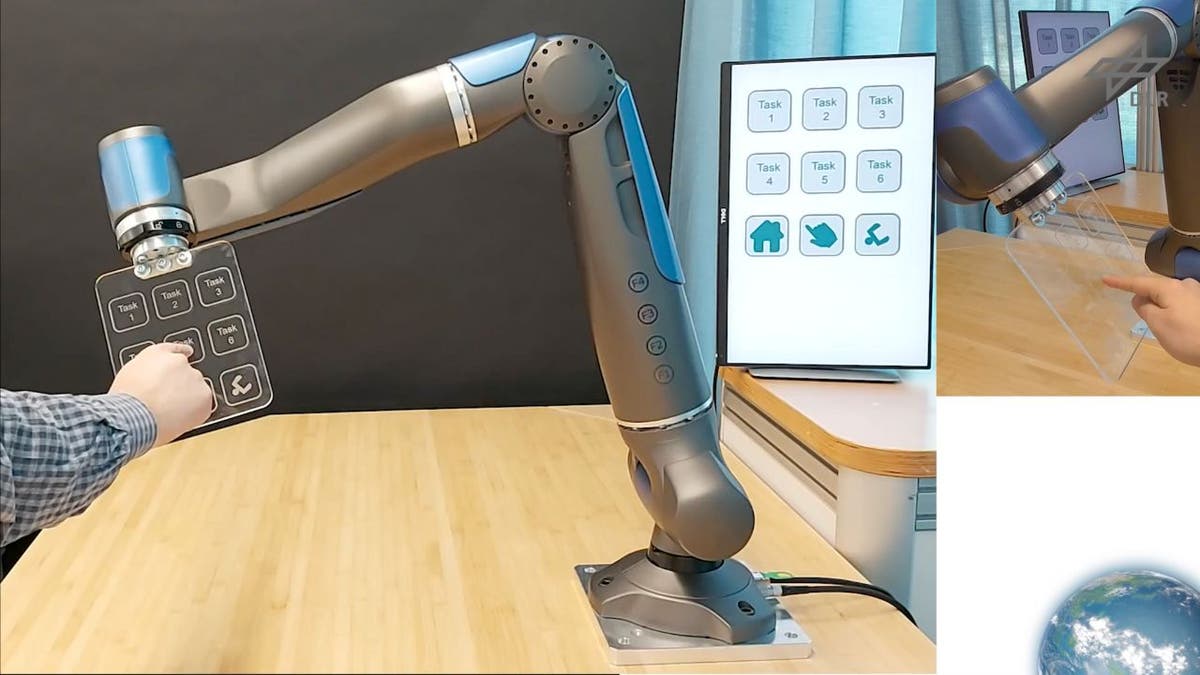
In a groundbreaking development, scientists have found a way to give robots a sense of touch without relying on expensive artificial skin. This innovation, spearheaded by a team from the German Aerospace Centre, could revolutionize human-robot interactions and make robots more adaptable and intuitive to use.

GET SECURITY ALERTS AND EXPERT TIPS – SIGN UP FOR KURT’S NEWSLETTER – THE CYBERGUY REPORT HERE

Robots get a feel for human touch, no artificial skin required

AI robot with internal sensors (German Aerospace Centre) (Kurt “CyberGuy” Knutsson)

The power of AI and internal sensors

Instead of using costly biometric skins and sensors, the researchers harnessed the power of artificial intelligence to interpret signals from a robot’s existing internal sensors. This clever approach allows robots to accurately detect external force and pressure, mimicking the human sense of touch.

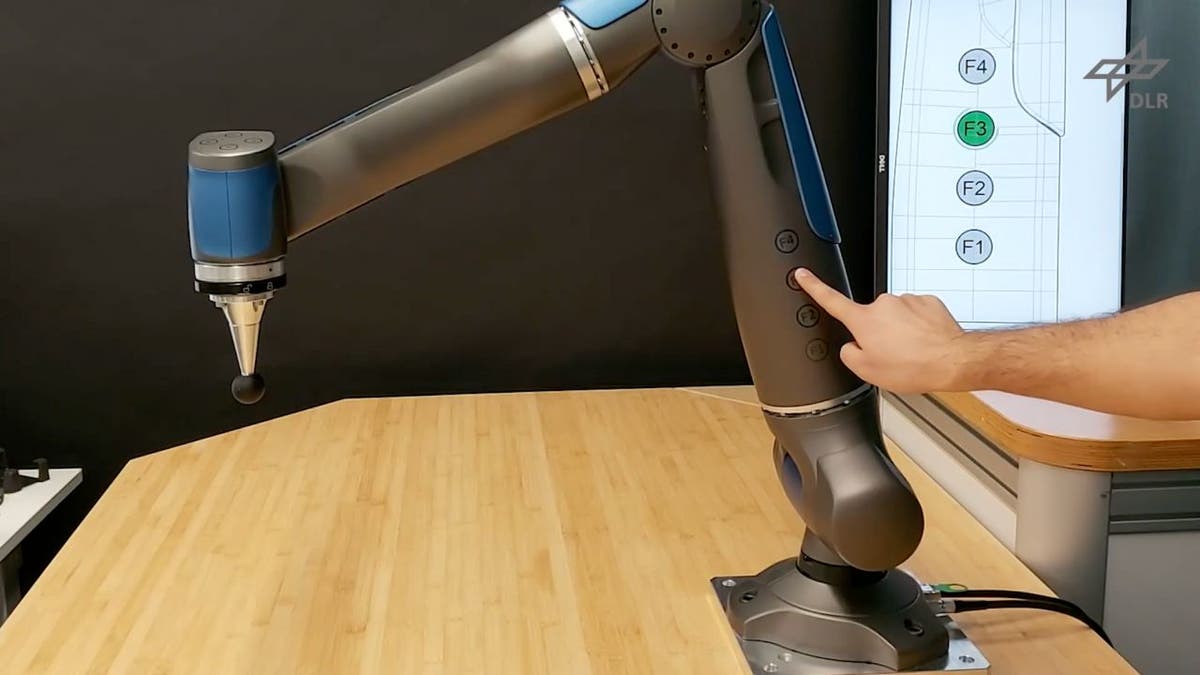
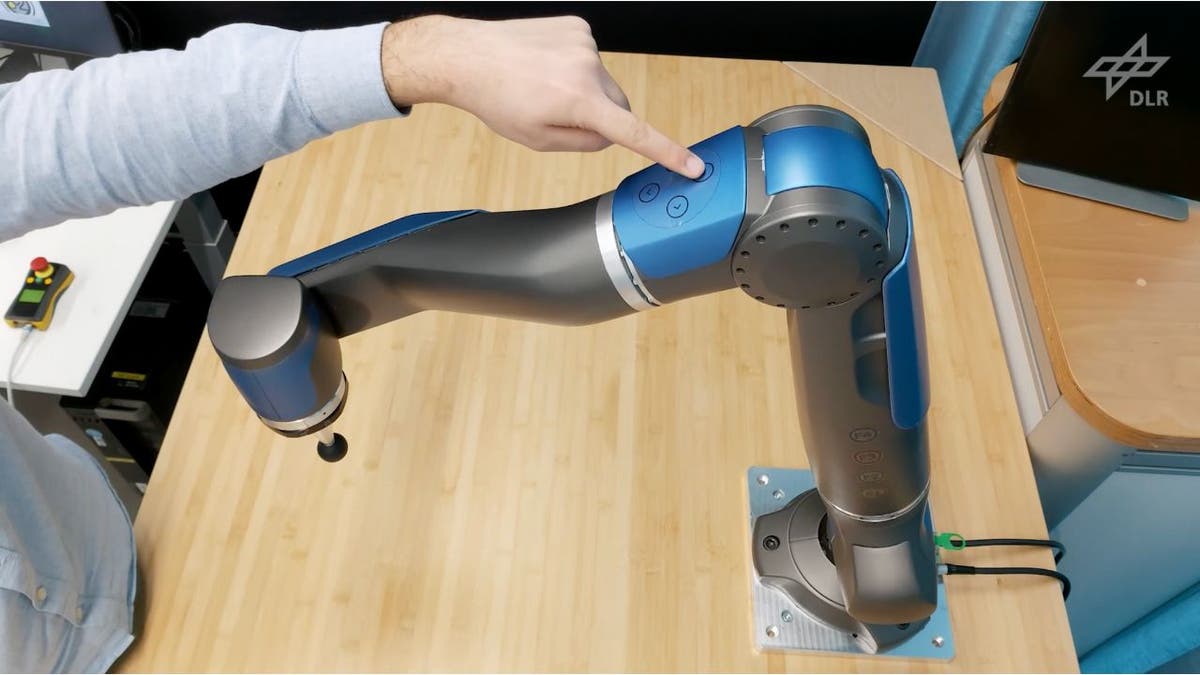
The team’s concept includes virtual buttons, switches and slider bars that can be placed anywhere on the robot’s structure. This flexibility opens up new possibilities for human-robot interaction.

Robots get a feel for human touch, no artificial skin required

AI robot with internal sensors (German Aerospace Centre) (Kurt “CyberGuy” Knutsson)

THE 6-WHEEL ROBOT THAT CHECKS OUT DANGEROUS SITUATIONS SO HUMANS DON’T HAVE TO

Impressive accuracy

The machine learning algorithms developed by the team are so accurate that the robot can even detect numbers traced on its surface. This capability could lead to entirely new ways for humans to communicate with robots.

Robots get a feel for human touch, no artificial skin required

AI robot with internal sensors (German Aerospace Centre) (Kurt “CyberGuy” Knutsson)

WOULD YOU TRUST A ROBOT WITH YOUR SMILE?

Implications for human-robot interaction

The researchers believe this technology will enable a shift towards more adaptable, flexible and intuitive handling of robots. As they wrote in their study, “This opens up unexplored opportunities in terms of intuitive and flexible interaction between humans and robots.” The study, titled “Intrinsic sense of touch for intuitive physical human-robot interaction,” was published in the journal Science Robotics.

HOW TO REMOVE YOUR PRIVATE DATA FROM THE INTERNET

Robots get a feel for human touch, no artificial skin required

AI robot with internal sensors (German Aerospace Centre) (Kurt “CyberGuy” Knutsson)

SUBSCRIBE TO KURT’S YOUTUBE CHANNEL FOR QUICK VIDEO TIPS ON HOW TO WORK ALL OF YOUR TECH DEVICES

Kurt’s key takeaways

By eliminating the need for expensive and complex external sensors, this technology could make advanced robots more accessible and practical for a wide range of applications. The ability to interact with robots through touch, just as we do with other humans, could transform fields ranging from health care to manufacturing, opening up exciting new possibilities for collaboration between humans and machines.

How do you feel about the idea of robots being able to “feel” and interact with us more naturally? Let us know by writing us at Cyberguy.com/Contact.

For more of my tech tips and security alerts, subscribe to my free CyberGuy Report Newsletter by heading to Cyberguy.com/Newsletter.

Ask Kurt a question or let us know what stories you’d like us to cover.

Follow Kurt on his social channels:

Answers to the most asked CyberGuy questions:

New from Kurt:

Copyright 2024 CyberGuy.com. All rights reserved.


Source link

COVID pandemic restrictions had surprising impact on teenagers’ brains

0

Join Fox News for access to this content

Plus special access to select articles and other premium content with your account – free of charge.

By entering your email and pushing continue, you are agreeing to Fox News’ Terms of Use and Privacy Policy, which includes our Notice of Financial Incentive.

Please enter a valid email address.

The pandemic’s negative effects on kids and teens — academically, socially and otherwise — have been shown in numerous studies, and now the latest long-term effect appears to be accelerated aging of young brains.

A team of researchers at the University of Washington studied 160 teens between the ages of 9 and 17. They had gathered data in 2018 for a different study on changes in brain structure during adolescence, but the COVID pandemic interrupted that research.

“Once the pandemic was underway, we started to think about which brain measures would allow us to estimate what the pandemic lockdown had done to the brain,” lead author Neva Corrigan, Ph.D., a research scientist at the University of Washington, said in a press release. 

COVID VACCINE DISTRUST GROWING AMONG AMERICANS, SURVEY FINDS: ‘SHOULD BE A PERSONAL CHOICE’

“What did it mean for our teens to be at home rather than in their social groups — not at school, not playing sports, not hanging out?”

The researchers found that the pandemic caused teenage brains to age faster than normal.

The pandemic’s negative effects on kids’ and teens’ mental health have been shown in numerous studies. (iStock)

“The lifestyle changes due to the COVID-19 pandemic lockdowns appear to have affected brain development during adolescence, causing the brain to mature much faster than is typical,” Corrigan told Fox News Digital via email.

“This accelerated maturation was more widespread throughout the brain, and larger in magnitude, for females as compared to males.”

COVID PANDEMIC TRIGGERED SPIKE IN ANTIDEPRESSANT USE AMONG YOUNG FEMALES, STUDY FINDS

On average, the young females’ brains aged 4.2 years faster than normal, and male brains were accelerated by 1.4 years.

Thirty regions in the female brain showed accelerated aging, compared to only two regions in the male brain, researchers found.

The findings were published in the Proceedings of the National Academy of Sciences on Sept. 9.

Girl mask homework

The researchers found that the pandemic caused teenage brains to age faster than normal. (iStock)

The researchers believe that the accelerated brain aging was due to the stress associated with the restrictive measures taken to curb COVID’s spread, Corrigan said.

“Accelerated development of the cerebral cortex during development has been well-established by previous research to be associated with chronic stress,” she noted.

Recommendations to parents

This study highlights the fact that teenagers’ brains are highly vulnerable to stressors in their environment, according to Corrigan. 

“We recommend that parents of children who were teens during the pandemic stay connected to their teens, and also look out for signs of depression and anxiety, as accelerated cortical thinning increases the risk of developing these and other neuropsychiatric disorders,” she advised. 

GENDER DYSPHORIA AND EATING DISORDERS HAVE SKYROCKETED SINCE PANDEMIC, REPORT REVEALS: ‘RIPPLE EFFECTS’

“We also think parents should be aware that their teens’ social lives are very important to their brain development, and [they should] encourage healthy activities with peers.”

While these findings “seem alarming,” Corrigan said, it’s not known whether the accelerated aging will have long-term effects on continued brain development throughout the teens’ lives. 

“It is not clear whether the cerebral cortex of these teens that showed accelerated maturation will return to a thickness that is more appropriate for their age with time, or whether these effects are permanent,” she told Fox News Digital.
Teen boy mask

It’s not known whether the accelerated aging will have long-term effects on continued brain development throughout the teens’ lives, a researcher noted. (iStock)

She also pointed out that “cortical thinning” is a natural process in aging and can actually allow the brain to function more efficiently. 

“It is not clear that all the consequences of accelerated maturation are negative,” Corrigan added.

Potential limitations

The researchers acknowledged several limitations of the study, the first being its smaller sample size.

“Although we collected data from 160 teens prior to the lockdowns, and 130 teens after the lockdowns ended, larger samples are always better when conducting research,” Corrigan told Fox News Digital.
“What did it mean for our teens to be at home rather than in their social groups — not at school, not playing sports, not hanging out?”

“Also, since the study was not initially designed for the effects of the COVID pandemic, we did not collect the type of behavioral measures that would have allowed us to determine what exact lifestyle disruptions or stressors associated with the lockdowns might have been the greatest contributors to the stress experienced by the teens,” she said.

The researchers also only studied a limited age range, so they couldn’t determine whether the findings apply to other ages. 

Brain concept

On average, the young females’ brains aged 4.2 years faster than normal, and male brains were accelerated by 1.4 years. (iStock)

“Finally, we do not know whether contraction of the COVID-19 virus itself may have contributed to these findings, although in the community from which our study sample was derived, we found no reports of a sex disparity in the contraction of the virus,” Corrigan said. 

‘Downrange effects’

Dr. Brett Osborn, a Florida neurologist, was not involved in the study, but commented on the “detrimental consequences” of pandemic-related stress for teens.

Parent with teen

“We recommend that parents of children who were teens during the pandemic stay connected to their teens, and also look out for signs of depression and anxiety,” a researcher said. (iStock)

“High levels of stress, often associated with elevated cortisol, can wreak havoc on the brain,” he told Fox News Digital.
Cortisol, the body’s primary stress hormone, is typically released by the adrenal glands during acute stress, Osborn explained, but it can become harmful when present at high levels for prolonged periods.

CLICK HERE TO SIGN UP FOR OUR HEALTH NEWSLETTER

“This chronic elevation is particularly damaging to brain structures like the hippocampus (the region associated with memory) and the prefrontal cortex, which is responsible for higher-level cognitive functions like decision-making and social behavior.”

“While the pandemic is over, this is not the end.”

Long-term exposure to high cortisol levels can negatively impact memory, emotional regulation, impulse control, focus and concentration, according to Osborn.

CLICK HERE TO GET THE FOX NEWS APP

“Over time, these changes may predispose individuals to mental health disorders such as depression and anxiety, which are already known to be exacerbated by high cortisol levels,” he added.

For more Health articles, visit www.foxnews.com/health

Overall, Osborn said, the study sheds light on “yet another downrange effect” of the COVID-19 pandemic. 

The doctor added, “While the pandemic is over, this is not the end.”