-0.7 C
New York
Wednesday, February 25, 2026
Home Blog Page 528

US tops world ratings for AI preparedness; China, Russia and Iran lag in key measures, report finds

0

Join Fox News for access to this content

Plus special access to select articles and other premium content with your account – free of charge.

By entering your email and pushing continue, you are agreeing to Fox News’ Terms of Use and Privacy Policy, which includes our Notice of Financial Incentive.

Please enter a valid email address.

A new report from the International Monetary Fund (IMF) has rated countries on their ability to immediately adopt artificial intelligence (AI) into their economies, once again urging policymakers to ensure the life-changing tech “can benefit all.” 

“Under most scenarios, AI will likely worsen overall inequality, a troubling trend that policymakers can work to prevent,” the IMF wrote in a blog post on its data. “To this end, the dashboard is a response to significant interest from our stakeholders in accessing the index.” 

The index measures a country’s AI adoption preparedness through four key measures: digital infrastructure, human capital and labor market policies, innovation and economic integration and regulation.

The index breaks countries into five brackets with a rating of 0 to 1, with a higher score representing more favorable AI preparedness, rating 174 countries. 

WHAT IS ARTIFICIAL INTELLIGENCE (AI)?

Employees work at an intelligent furniture factory using 5G and artificial intelligence technology Oct. 21, 2020, in Ganzhou, Jiangxi Province of China.  (Liu Zhankun/China News Service via Getty Images)

According to those ratings, the U.S. and the Netherlands top the chart with a .77 value of preparedness. Other highly-rated countries are Finland and Estonia with .76, New Zealand, Germany and Sweden with .75 and Australia, Japan and Israel with .73. 

Taiwan, which is the beating heart of semiconductor production and the manufacturer of the most advanced microprocessors, surprisingly received a .67 rating. 

Rival nations in the West received worse ratings, with China at .64, Russia at .56, Iran at .38 and Venezuela at .27. 

NATO’S $1.1B INNOVATION FUND INVESTS IN AI, ROBOTS AND SPACE TECH

India, an industrial powerhouse and a country that has rapidly ascended the ranks of major economies to overtake the U.K. as the fifth-largest economy starting in 2022, has a rating of .49. 

At the bottom end — the countries least-prepared to adopt AI — were South Sudan with .11, Afghanistan with .13, the Central African Republic (CAR) with .18 and Somalia with .2. All other nations received ratings of .25 or higher. 

Doctor using AI

A doctor using the AI document management concept. (iStock)

For countries like Afghanistan, the IMF lacks data on the economy, which may have skewed some of the data. Countries such as North Korea, Yemen, Eritrea and Turkmenistan did not appear on the map due to having “no data” about them. 

The IMF warned that its data proved “challenging” to gather and synthesize, noting that “institutional requirements for economy-wide integration of AI are still uncertain.” 

NEW BLOOD TEST COULD DETECT DEVASTATING CONDITION YEARS BEFORE SYMPTOMS APPEAR

“As the dashboard shows, different countries are at different stages of readiness in leveraging the potential benefits of AI and managing the risks,” the IMF wrote. 

“In advanced economies, for example, some 30% of jobs could benefit from AI integration,” the IMF explained. “Workers who can harness the technology may see pay gains or greater productivity, while those who can’t, may fall behind.”

Nvidia's AI-powered robots stand on dispaly

Nvidia is developing real-world robots equipped with artificial intelligence capabilities. (Justin Sullivan/Getty Images)

“Younger workers may find it easier to exploit opportunities, while older workers could struggle to adapt,” it added. 

Previous IMF analysis determined AI will transform roughly 40% of global employment, which is in line with historical effects of automation and information technology advancements. However, what sets AI apart as a challenge is the fact it will also impact high-skilled jobs. And in more advanced economies, up to 60% of jobs may be affected.

CLICK TO GET THE FOX NEWS APP

With its new analysis, the IMF has suggested countries with more advanced economies should look to expand social safety nets, invest in training workers and prioritize AI innovation and integration. 

“Coordinating with one another globally, these countries also should strengthen regulation to protect people from potential risks and abuses and build trust in AI,” the IMF said. “The policy priority for emerging market and developing economies should be to lay a strong foundation by investing in digital infrastructure and digital training for workers.”

Is vaping better than smoking? E-cigarette side effects and health risks

0

Join Fox News for access to this content

Plus special access to select articles and other premium content with your account – free of charge.

By entering your email and pushing continue, you are agreeing to Fox News’ Terms of Use and Privacy Policy, which includes our Notice of Financial Incentive.

Please enter a valid email address.

Vaping, the practice of inhaling and exhaling aerosol from an e-cigarette, has emerged as a trend, especially among teenagers and young adults. 

While the full impact of e-cigarettes on mental and physical health is still to be determined, current research indicates potential health risks. 

What exactly is vaping?

YOUNG VAPER WHO REQUIRED DOUBLE LUNG TRANSPLANT SHARES WARNINGS AS E-CIGARETTE SALES RISE

Vaping devices, which include e-cigarettes, e-vaporizers and electronic nicotine delivery systems, are battery-operated devices originally designed as an alternative to the experience of traditional smoking. 

Users inhale an aerosol mist — often containing nicotine, various flavorings and other chemicals — produced when the liquid inside the device is heated. These devices come in various forms, sometimes resembling everyday items such as pens, traditional cigarettes, USB memory sticks or even juice boxes.

In teenagers and young adults, the brain is still developing. Exposure to nicotine can lead to attention, learning, behavioral and impulse control problems. (Mike Kemp/In Pictures via Getty Images)

The term “vaping” arises from transforming liquid to vapor when the user puffs on the device. 

Other terms associated with vaping include “dripping,” manually applying e-liquid to the heated coils, and “JUULing,” a term referring to the JUUL brand of e-cigarettes. 

Fox News Digital reached out to JUUL, based in San Francisco, for comment for this article. While the company responded, it opted not to provide a statement at this time.

Initially designed as tools to pursue smoking cessation and to act as an alternative, e-cigarettes began to grow in popularity as an enjoyable experience, especially with the flavorings available and the concealability. 

Appeal of e-cigarettes for adolescents

In 2018, the U.S. Food and Drug Administration (FDA) noted an e-cigarette epidemic among youth, based on a 78% increase in use from the previous year among high school students recorded by the National Youth Tobacco Survey. 

A primary reason that e-cigarettes appeal to the younger generations is their accessibility. 

Young adults aged 18 to 24 are the most frequent users of e-cigarettes. Data also shows that among the 11- to 15-year-old age group, 9% reported having tried vaping, according to the U.S. Centers for Disease Control and Prevention (CDC).

A primary reason that e-cigarettes appeal to the younger generations is their accessibility, according to the Rehabilitation Nursing Journal. 

Other reasons listed for their appeal include the targeted marketing, enticing flavors, social media influence and the belief that they are safer than the traditional alternative of regular cigarettes. 

Health risks of vaping

The adolescent years are a critical time for brain development, which continues until about the age of 25, according to physiological studies. 

Sign reading "Vape Shop"

Vaping can lead to lung irritation and has been linked to respiratory problems, such as coughing, wheezing and asthma. (Mike Kemp/In Pictures via Getty Images)

During this time, the prefrontal cortex — a part of the brain responsible for decision-making and impulse control — is particularly vulnerable to external influences. 

Introducing nicotine through vaping can disrupt the development of neuronal circuits, which could lead to changes in brain function. In particular, nicotine exposure can desensitize the brain’s receptors, which would make it more difficult for an individual to experience pleasure without increased nicotine use.

FDA APPROVES NEW DRUG TO TREAT AUTOIMMUNE LIVER DISEASE: ‘GIANT STEP FORWARD’

Nicotine’s effect on the brain also impacts the reward system, because it increases dopamine release, a neurotransmitter associated with pleasure and reward. This change can be particularly harmful during the developmental stage, as the ongoing maturation of the brain is essential to establishing healthy cognitive and behavioral patterns for adulthood.

Other negative effects of nicotine use, especially in youth, as has been widely reported, include:

Respiratory issues

The use of e-cigarettes has been correlated with lung injury, according to a CDC update providing guidance to health care providers. 

A specific and severe lung condition, E-cigarette or Vaping Product Use-Associated Lung Injury (EVALI), has been directly linked to the use of vapes.

KIDS WITH OBESITY NEED ‘BEHAVIORAL COUNSELING,’ TASK FORCE RECOMMENDS: ‘CALL TO ACTION’

The flavors added to the cartridge have been implicated as a possible factor related to respiratory issues, according to the Journal of the American Medical Association (JAMA).

Vape advertisement for "Vuse Go Range"

Nicotine and other chemicals found in e-cigarettes can have harmful effects on the heart and the rest of the cardiovascular system. (Mike Kemp/In Pictures via Getty Images)

Chemicals such as benzaldehyde and diacetyl are especially concerning due to their association with lung damage, according to the Journal of the American Academy of PAs (JAAPA). 

Cardiovascular health

A study conducted by JAMA Cardiology found that the same negative impacts on the cardiovascular health of traditional cigarette smokers were seen in habitual e-cigarette users as well. 

Additionally, those who “used e-cigarettes at any point” had a 19% higher risk of developing heart failure, according to a study by the American College of Cardiology.

Chemical exposure

Inhalation of chemicals found in e-cigarette liquids is known to be especially harmful to adolescents, according to the American Lung Association. 

Propylene glycol, a key ingredient in many vaping products, has been associated with several health issues. 

CLICK HERE TO GET THE FOX NEWS APP                   

Exposure to propylene glycol may be a contributing root cause of conditions such as rhinitis, asthma and dry mouth, according to JAAPA. 

Moreover, when vaporized, propylene glycol can decompose into formaldehyde and acetaldehyde, irritating the eyes, nose, throat, upper respiratory tract and skin.

Shelf filled with various flavors of vapes

A pharmacist named Hon Lik invented the first vape in 2003. He originally invented the device to help smokers quit the habit.  (Mike Kemp/In Pictures via Getty Images)

Concerns about the safety of these substances are manifested by a lack of regulation in the vaping industry. 

CLICK HERE TO SIGN UP FOR OUR HEALTH NEWSLETTER

“The pharmacologically active components of vaping products are not regulated, and the methods by which they are extracted and suspended in solution vary greatly … The risk profiles of these inhaled chemical mixtures change significantly depending upon the method by which they are vaporized or heated,” cautions the Journal of the Missouri State Medical Association.

How do e-cigarettes compare to traditional cigarettes?

It was not until 2016 that the Food and Drug Administration began to regulate e-cigarettes, as reported by the Rehabilitation Nursing Journal. 

With this regulatory shift, the items became subject to similar restrictions as tobacco products, including the age requirement for purchase of 18 years old. 

GOING TO BED AFTER THIS TIME COULD LEAD TO POORER MENTAL HEALTH, A STANFORD STUDY FINDS

Highlighting the consequences of vaping, 22-year-old Jackson Allard shared his experience as a caution to youth who are considering vaping, as Fox News previously reported.

Likely as a result of his vaping habit, Allard developed parainfluenza, which led to pneumonia and then acute respiratory distress syndrome; he nearly lost his life.

For more Health articles, visit www.foxnews/health

His grandmother, Doreen Hurlburt, frequently warned him against the habit, she said.

“Multiple doctors said, ‘If you smoke cigarettes for 50 years, we’ll see you with lung cancer, and if you vape for five years, we’ll see you with permanent lung damage,'” Hurlburt told Fox News. 

Mills Hays of Fox News contributed reporting. 

Service dog helps woman with epilepsy, plus a new liver drug and bedtime warnings

0

FAITHFUL COMPANION – Channing Seideman’s service dog, Bishop, brings her peace of mind and safety amid the uncertainty of daily epileptic seizures. The Ohio woman shares the heartwarming partnership with Fox News Digital. Continue reading…

‘BIG STEP FORWARD’ – A new drug has shown promise in slowing or preventing the progression of disease in patients with Parkinson’s. Continue reading…

SORRY, NIGHT OWLS – Going to bed after a certain time could lead to poorer mental health, a Stanford study found. Sleep experts share their reactions. Continue reading…

night owl

“We had expected that night owls who stayed up late would be OK, but they ended up being at a greater risk for developing mental health disorders than night owls who went to bed earlier,” one researcher said. (iStock)

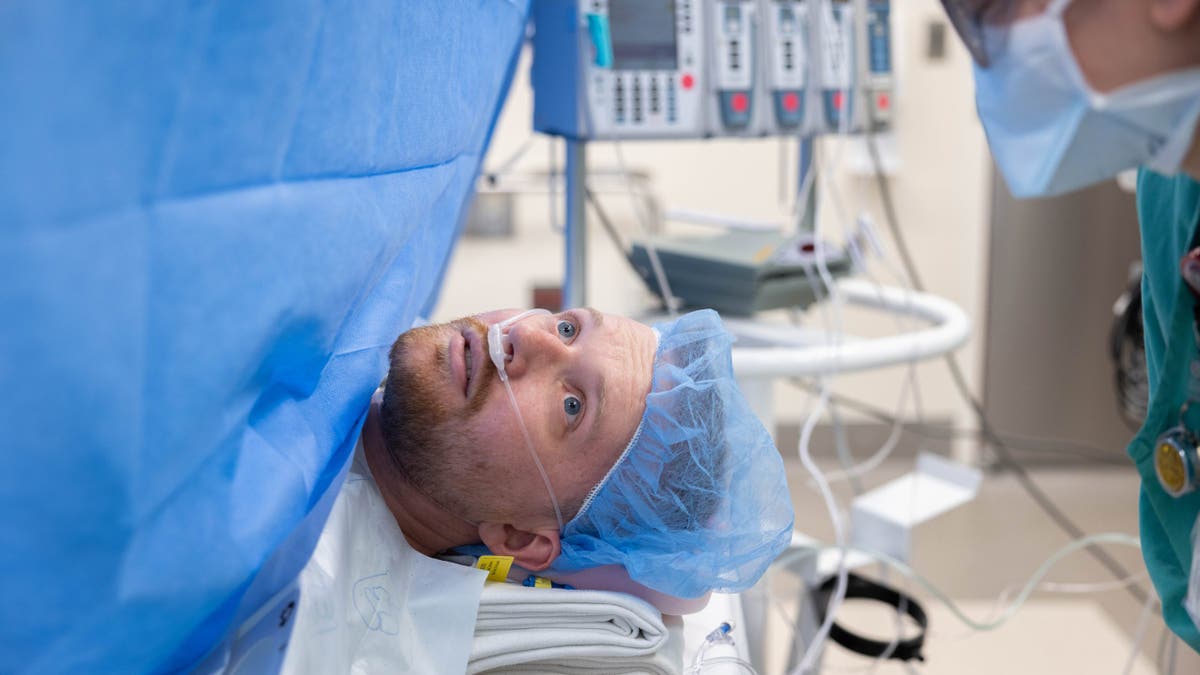
EYES WIDE OPEN – A Chicago man received a kidney transplant while he was completely awake. Doctors weigh in on how surgeries without general anesthesia could transform the future of transplant care. Continue reading…

WAITING TO INHALE – For diabetes patients, a third type of insulin delivery has been shown to work just as well as injections or pumps, a new study found. Continue reading…

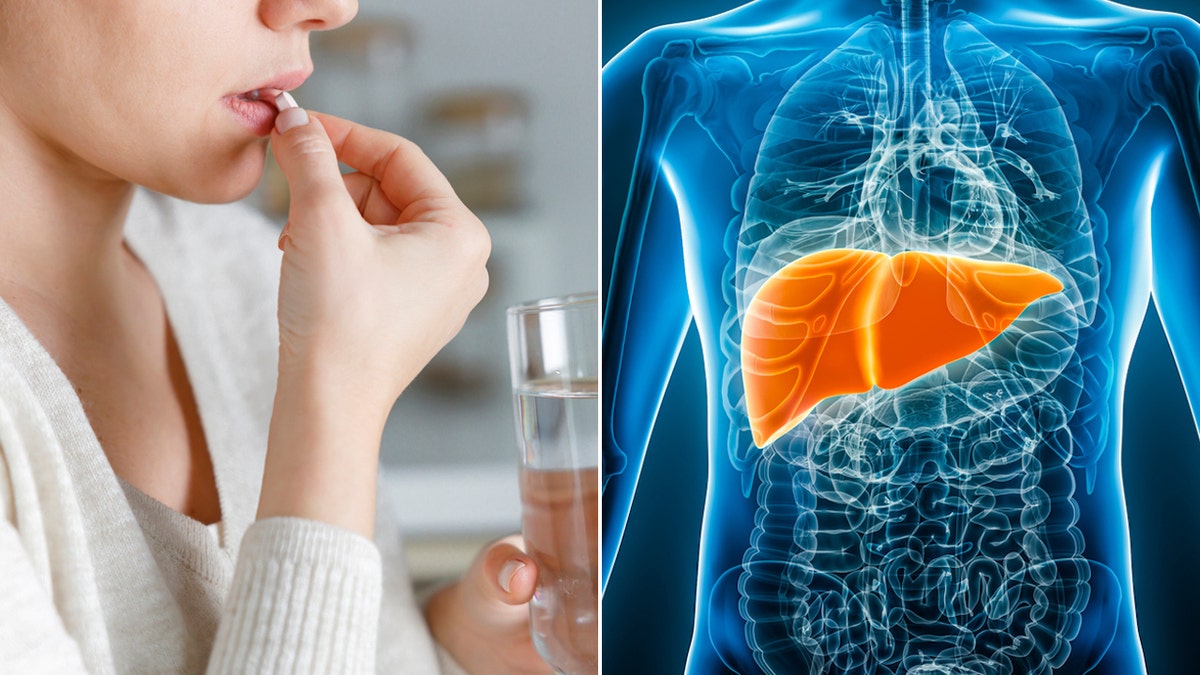
‘GIANT STEP FORWARD’ – The FDA has approved a new drug — Ipsen’s medication Iqirvo (elafibranor) — to treat autoimmune liver disease. Continue reading…

Liver drug split

Primary biliary cholangitis (PBC) is a disease in which the immune system attacks and destroys the small bile ducts of the liver.  (iStock)

ASK A DOCTOR – “Is it ever OK to take someone else’s prescription medication?” Continue reading…

SLOWING ALZHEIMER’S – In a breakthrough study, researchers identified a “protective gene” in one extended family that delays Alzheimer’s disease by several years. Continue reading…

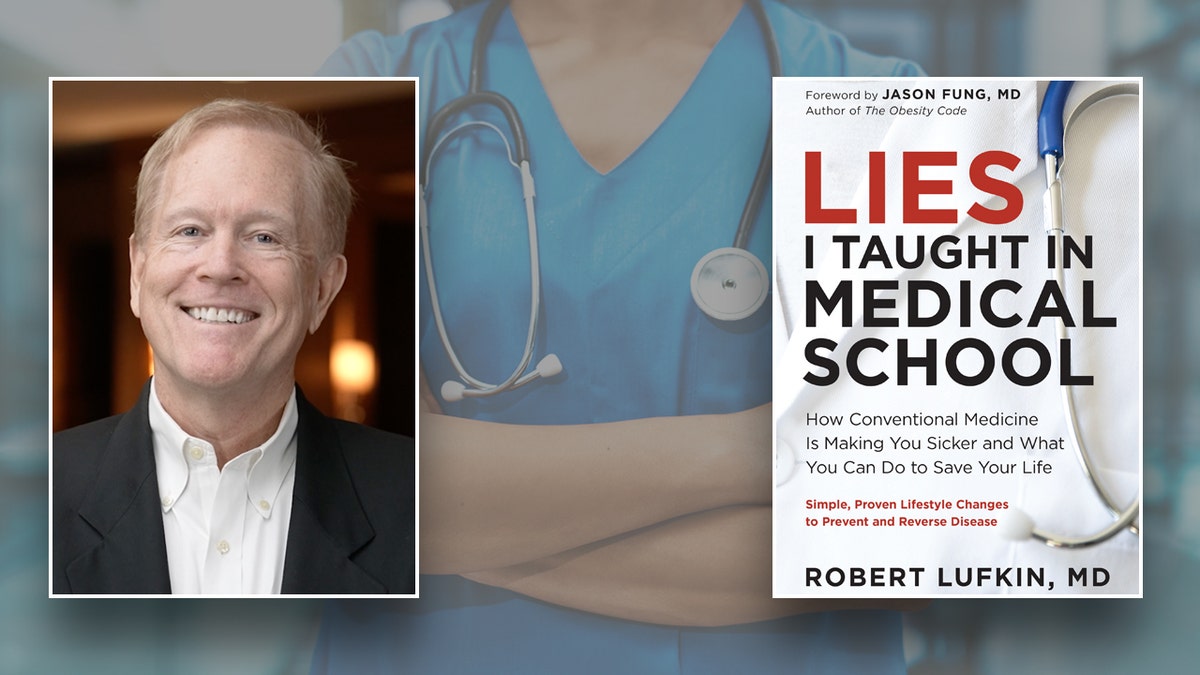
MEDICAL MISINFORMATION? – A California physician believes the medical community is telling patients 10 key “lies.” He details two of the myths in an excerpt from his new book. Continue reading…

"Lies I Told in Medical School"

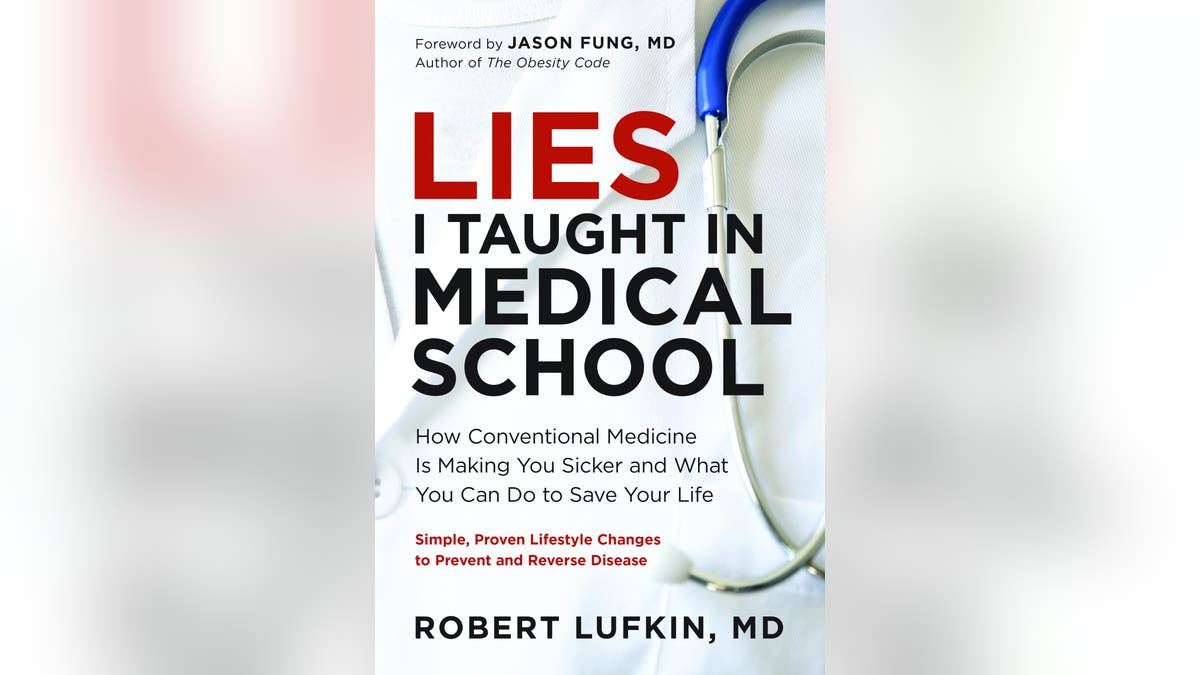
Dr. Robert Lufkin, pictured at left, was diagnosed with four chronic diseases, which inspired him to write a book, “Lies I Taught in Medical School.” (Dr. Robert Lufkin / iStock)

FOLLOW FOX NEWS ON SOCIAL MEDIA

Facebook

Instagram

YouTube

Twitter

LinkedIn

SIGN UP FOR OUR NEWSLETTERS

Fox News First

Fox News Opinion

Fox News Lifestyle

Fox News Health

Fox News Autos

Fox News Entertainment (FOX411)

DOWNLOAD OUR APPS

Fox News

Fox Business

Fox Weather

Fox Sports

Tubi

WATCH FOX NEWS ONLINE

Fox News Go

STREAM FOX NATION

Fox Nation

Chicago man receives kidney transplant while fully awake: ‘The upmost faith’

0

Join Fox News for access to this content

You have reached your maximum number of articles. Log in or create an account FREE of charge to continue reading.

By entering your email and pushing continue, you are agreeing to Fox News’ Terms of Use and Privacy Policy, which includes our Notice of Financial Incentive.

Please enter a valid email address.

Kidney transplants are not uncommon — the kidney is actually the most frequently transplanted organ in the U.S. — but a Chicago man recently received his in a highly unusual way.

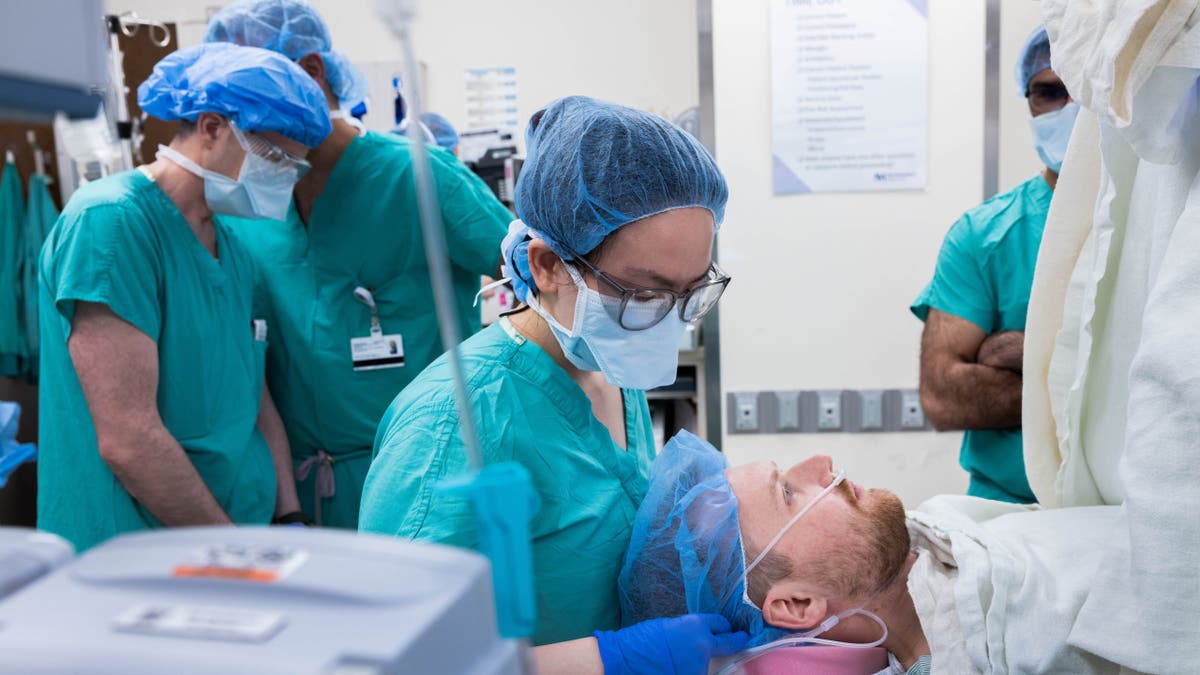
John Nicholas, 28, was awake during the entire procedure, which was performed on May 24 at Northwestern Medicine Hospital. He was discharged the very next day.

Doctors administered a spinal anesthesia shot — similar to what is used for a Cesarean section — instead of general anesthesia, according to a press release from the hospital.

MASSACHUSETTS MAN DIES 2 MONTHS AFTER BECOMING FIRST PERSON TO RECEIVE SUCCESSFUL PIG KIDNEY TRANSPLANT

“This is the first case at Northwestern Medicine where a patient was awake during an entire kidney transplant procedure and went home the next day, basically making this an outpatient procedure,” said Satish Nadig, M.D., PhD, transplant surgeon and director of the Northwestern Medicine Comprehensive Transplant Center, in the release. 

“Inside the operating room, it was an incredible experience being able to show a patient what their new kidney looked like before placing it inside the body,” he added. 

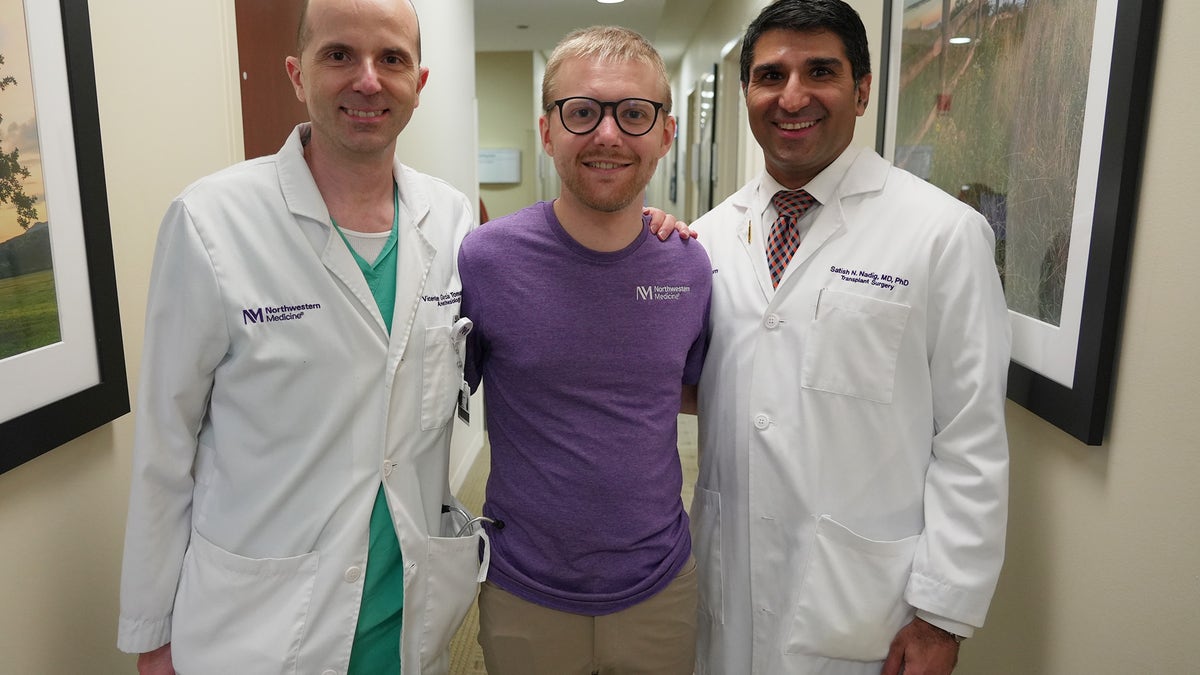
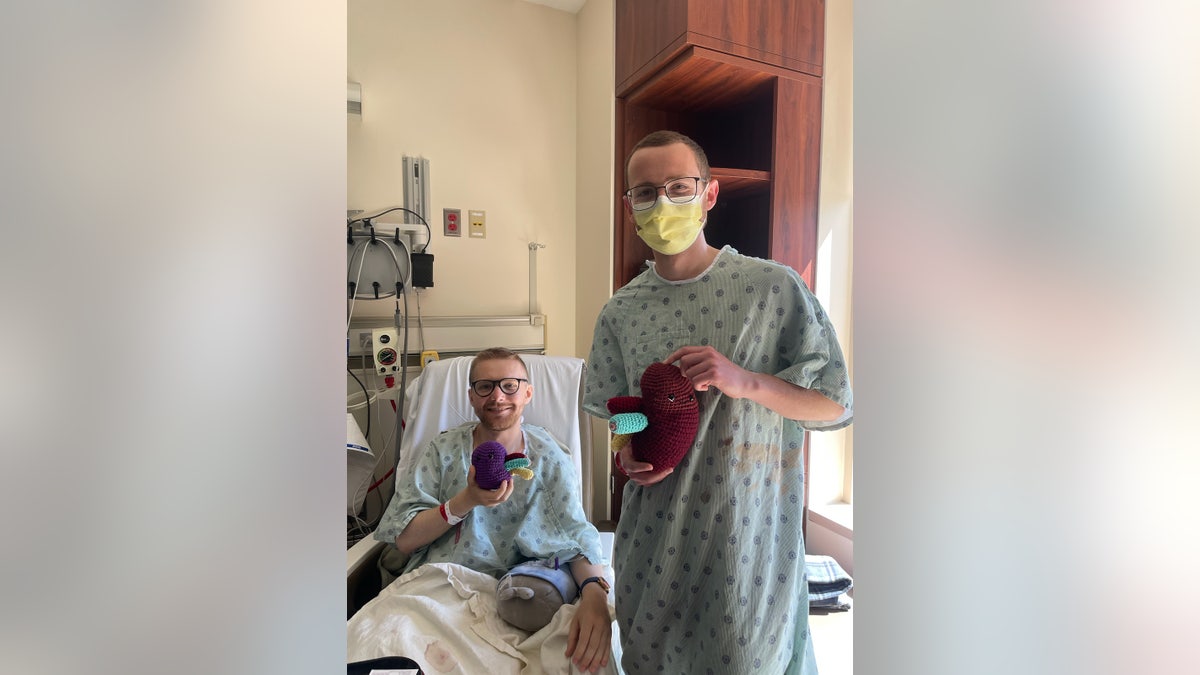
John Nicholas, the patient, is pictured with his surgeons in the operating room after completion of the kidney transplant. (Northwestern Medicine)

“It was incredibly simple and uneventful.”

This type of “awake transplant” could reduce surgical risks and shorten the length of the patient’s hospitalization, doctors say.

“It was an incredible experience, being able to show a patient what their new kidney looked like before placing it inside the body.”

It could also increase access to care for patients who are considered high-risk or have phobias surrounding general anesthesia.

Ideal candidate

Nicholas’ surgery took about two hours, according to the hospital.

He was considered an ideal patient for awake surgery due to his young age, his otherwise good health and his “eagerness to participate,” per the release.

John Nicholas

John Nicholas is pictured awake during his kidney transplant in late May. (Northwestern Medicine)

“It was a pretty cool experience to know what was happening in real time and be aware of the magnitude of what they were doing,” said Nicholas in a statement to Northwestern. 

“At one point during surgery, I recall asking, ‘Should I be expecting the spinal anesthesia to kick in?’ They had already been doing a lot of work and I had been completely oblivious to that fact. Truly, no sensation whatsoever.”

PENNSYLVANIA MOM SEEKS ‘PERFECT MATCH’ BONE MARROW DONOR TO CURE DAUGHTER’S RARE DISORDER: ‘CRUCIAL NEED’

Although Nicholas did receive sedation for comfort, he said he was still aware of what was going on. 

“Especially when they called out my name and told me about certain milestones they had reached,” he noted.

John Nicholas with doctors

Nicholas, center, is pictured after surgery with Dr. Vicente Garcia Tomas, his anesthesiologist, at left, and Dr. Nadig, transplant surgeon, at right.  (Northwestern Medicine)

Nicholas walked out of the hospital on May 25, the day after surgery.

With typical kidney transplants, the recipient remains in the hospital for two to three days.

Saved by a friend

Nicholas’ kidney issues began at age 16 when he was diagnosed with Crohn’s disease, the release stated.

FOUR TEXAS RESIDENTS FOREVER CONNECTED BY TWO KIDNEY DONATIONS IN DIFFERENT CITIES: ‘SUPERBLY TIMED’

After a few years of managing the condition with medication, his kidney function worsened and he required a transplant.

Nicholas’ mother originally planned to donate her kidney, but a breast cancer diagnosis prevented her from doing so, the hospital relayed.

John Nicholas and Pat Wise

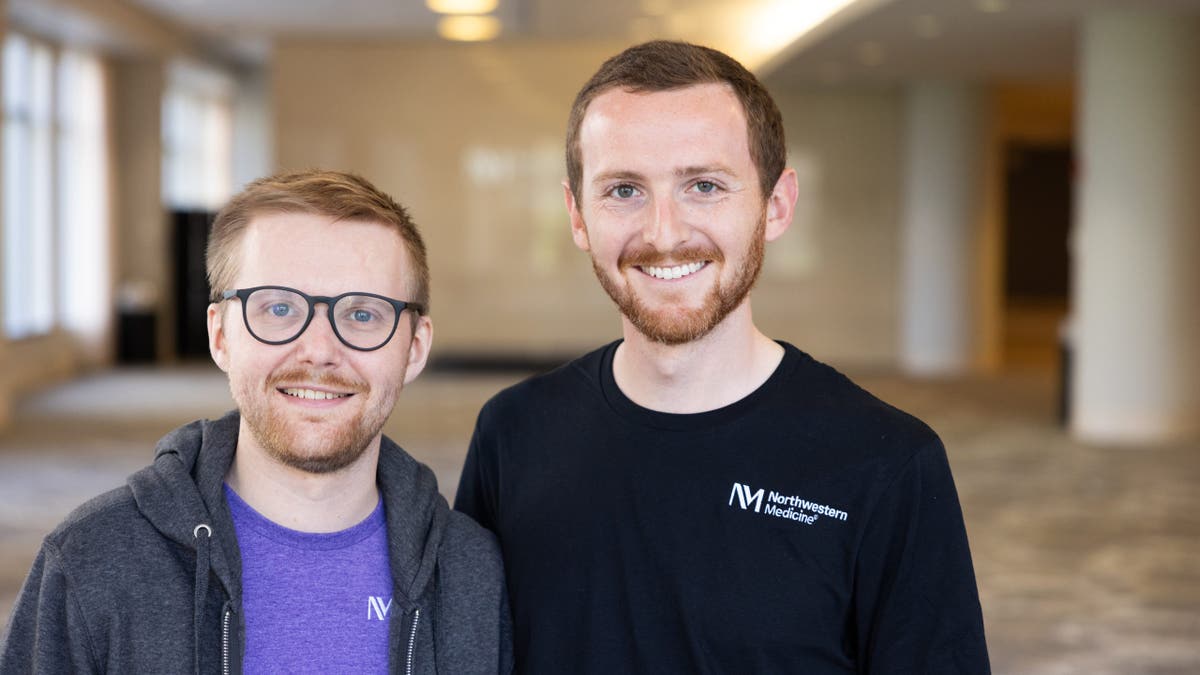
Nicholas, at left, is pictured with his donor and best friend, Pat Wise, after surgery. (Northwestern Medicine)

It was Nicholas’ best friend from elementary school, 29-year-old Pat Wise in Alexandria, Virginia, who ultimately donated the life-saving kidney.

‘Another tool in our toolbelt’

Dr. Marc Siegel, clinical professor of medicine at NYU Langone Medical Center and a Fox News medical contributor, was not involved in the surgery but shared his input.

“My opinion is that in most cases, spinal anesthesia presents a reasonable alternative for those at high risk of general anesthesia complications,” Siegel told Fox News Digital. 

John Nicholas during surgery

Nicholas is pictured awake with his care team during his kidney transplant surgery. (Northwestern Medicine)

“Having said that, general anesthesia would be preferred whenever possible for major surgery like this,” said Dr. Siegel, “because control of the airway and breathing is essential, and is much easier if the patient is asleep and on the ventilator.”

CLICK HERE TO GET THE FOX NEWS APP  

The doctors at Northwestern credit the patient for helping to advance the field of transplant medicine.

John Nicholas with donor, Pat Wise

Nicholas, left, and donor Wise are pictured at a press conference after the surgery. (Northwestern Medicine)

“When John agreed to be the first known patient at Northwestern Medicine to undergo an awake kidney transplant and be discharged home the next day, he knew the benefits outweighed the risks, and … he’s now helping to move the field of transplantation forward,” said Vinayak Rohan, M.D., transplant surgeon at Northwestern Memorial Hospital, in the release. 

CLICK HERE TO SIGN UP FOR OUR HEALTH NEWSLETTER

“He is an extremely compliant patient who was in tune with his body and willing to push the envelope,” stressing that the patient had faith in the doctors and they, in turn, had faith in him.  

John Nicholas with care team

Nicholas, center, is pictured with his entire care team. “He’s now helping to move the field of transplantation forward,” a surgeon said about the patient. (Northwestern Medicine)

The hospital now plans to establish the AWAKE Program (Accelerated Surgery Without General Anesthesia in Kidney Transplantation) for patients who want or need to pursue surgery without general anesthesia.

For more Health articles, visit www.foxnews/health 

“It really opens up a whole new door and is another tool in our toolbelt for the field of transplantation,” Nadig added.

Fox News Digital reached out to Northwestern Medical for additional input.

Fox News AI Newsletter: Caribbean nation capitalizes on AI boom

0


Welcome to Fox News’ Artificial Intelligence newsletter with the latest AI technology advancements.

IN TODAY’S NEWSLETTER:

– Caribbean island finds ‘totally incidental’ way to cash in on AI boom

– Small businesses looking to catch up on AI but face obstacles: study

– Facebook, Instagram are using your data to train AI: Learn how to protect it

United Kingdom Territory

Beach, Anguilla, Lesser Antilles, British Overseas Territory, United Kingdom.   (DeAgostini/Getty Images)

‘TOTALLY INCIDENTAL’: A small Caribbean nation is capitalizing on the artificial intelligence boom thanks in part to a coincidence that came about when internet domain codes for countries were awarded decades ago.

AI OBSTACLES: Small businesses in the U.S. are making progress in catching up with implementing artificial intelligence to help their operations, even though nearly half are unsure of how to get started, according to new research.

Facebook, Instagram are using your data to train AI: Learn how to protect it

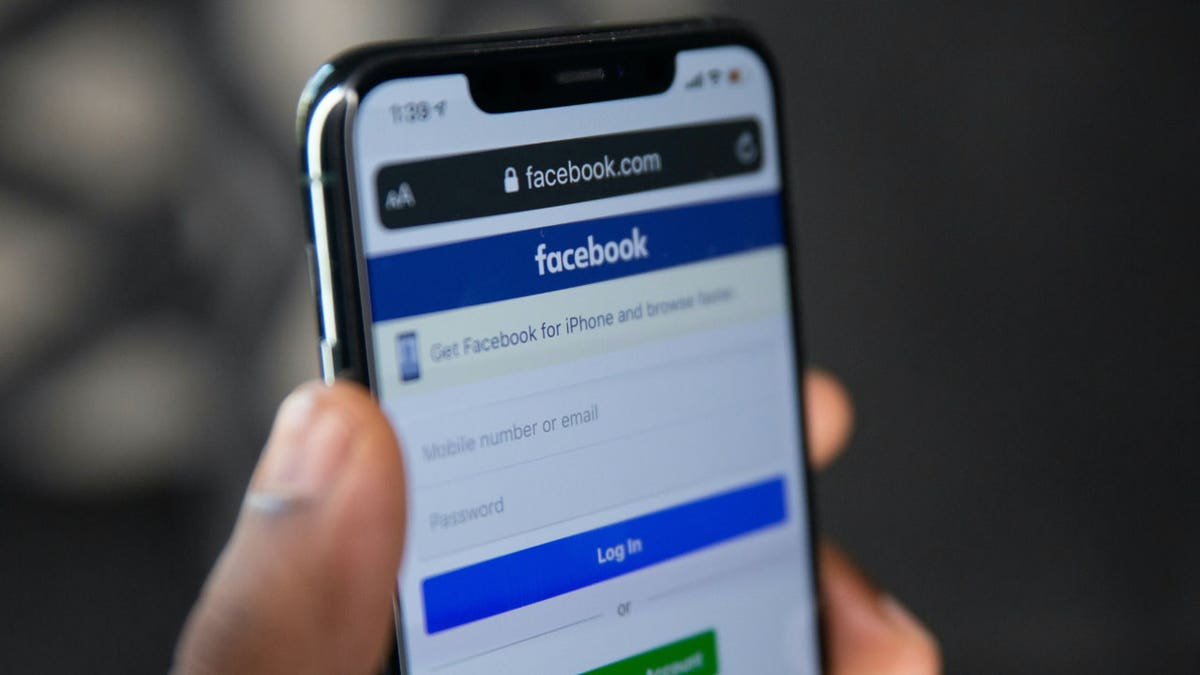
Facebook account on a smartphone (Kurt “CyberGuy” Knutsson)

PROTECT YOUR DATA: Meta may have paused its plans to train artificial intelligence models for the lucky ones living in Europe, where laws protect people using Facebook and Instagram better than Americans. Here in the good ole USA, both Facebook and Instagram have already been combing through public posts from U.S. accounts to train and improve its AI capabilities, including its chatbot, since last year.

REBALANCING: Nvidia, Microsoft and Apple all jockeyed this week for the title of world’s most valuable company as investors bet big on the future of AI.

Huang holding up a circuit board while giving a talk.

Jensen Huang, co-founder and CEO of Nvidia Corp., gives a talk in Taipei, Taiwan. (Annabelle Chih/Bloomberg via Getty Images)

Subscribe now to get the Fox News Artificial Intelligence Newsletter in your inbox.

FOLLOW FOX NEWS ON SOCIAL MEDIA

Facebook
Instagram
YouTube
Twitter
LinkedIn

SIGN UP FOR OUR OTHER NEWSLETTERS

Fox News First
Fox News Opinion
Fox News Lifestyle
Fox News Health

DOWNLOAD OUR APPS

Fox News
Fox Business
Fox Weather
Fox Sports
Tubi

WATCH FOX NEWS ONLINE

Fox News Go

STREAM FOX NATION

Fox Nation

Stay up to date on the latest AI technology advancements and learn about the challenges and opportunities AI presents now and for the future with Fox News here.


Source link

Tech security check: Am I doing enough to keep my computer safe?

0


It’s easy to feel overwhelmed by the number of steps you can take to keep yourself and your computer safe and running smoothly. With the increasing number of cybercriminals, it can feel like you are fighting a losing battle. While it is impossible to be 100% effective all the time, creating some routines in your computer’s maintenance can help you feel more secure and at ease.

That’s why I want to highlight Joe from Hainesport, New Jersey, who has a question about routine steps he could take to stay safe and sane: “I don’t like feeling there is ‘clutter’ or malware lurking on my computer simply because I don’t have the knowledge to keep it orderly. I pay for antivirus software and have … free VPN but still am not confident I am doing all that makes for [good] maintenance. Any comments about that statement?”

Joe, I understand your concerns. It’s important to keep your computer clean and secure. We’re glad to hear that you are using an antivirus program and VPN. I’m on a mission to help you be resilient against today’s privacy and security threats. Below are some additional tips to help you enhance your computer’s security and maintain its function.

GET SECURITY ALERTS, EXPERT TIPS – SIGN UP FOR KURT’S NEWSLETTER – THE CYBERGUY REPORT HERE

Tech security check: Am I doing enough to keep my computer safe?

A woman frustrated by her computer (Kurt “CyberGuy” Knutsson)

How to enhance your computer’s security

Here are five steps to help you enhance your computer’s security:

1) Update your antivirus software regularly

It’s great to install antivirus software on your computer, but it is equally important to update it regularly because it ensures that the software can protect your computer against the latest threats. Antivirus updates contain the latest files needed to combat new viruses and protect your computer. These updates often include the latest list and behavior of known viruses, improvements to the scan engine, and patches for security vulnerabilities in operating systems. Without these updates, your computer would be at risk from new viruses that the outdated antivirus software wouldn’t recognize or be able to defend against. Get my picks for the best 2024 antivirus protection winners for your Windows, Mac, Android and iOS devices.

FREE ANTIVIRUS SOFTWARE: SHOULD YOU USE IT?

2) Scan your computer for malware regularly

There is no use in installing your antivirus if it isn’t actively scanning your computer regularly. Some antivirus software programs can be set up to automatically run on a schedule. If you can’t remember to scan regularly, definitely set up a schedule if your program has that option. If any threats are found when scanning, quarantine or remove them.

Tech security check: Am I doing enough to keep my computer safe?

Illustration focusing on security on your devices (Kurt “CyberGuy” Knutsson)

HOW TO KNOW IF YOUR COMPUTER GOT HACKED, WHAT TO DO NEXT

3) Update your operating system and applications

If you keep your operating system’s software as well as the applications you regularly use updated, you are less likely to be exposed to certain vulnerabilities. Even if you have set your devices to automatically update, it’s worth forcing a manual update when a security flaw has been patched.

4) Remove unnecessary applications 

Older, unused applications take up space on your drive and can pose security threats, especially ones that can no longer be updated to ward against new vulnerabilities. Remove applications from your phone or tablet you haven’t used in a while.

TIDY UP YOUR TECH: TIPS FOR SAFEGUARDING YOUR DATA

5) Use a high quality VPN

A virtual private network (VPN) enhances your digital security by encrypting your internet connection and concealing your IP address. This makes it significantly more challenging for unauthorized parties to intercept your data or track your online activities. However, it’s important to be mindful of the limitations of free VPN services. Here are six reasons why you might want to avoid using a free VPN:

Limited data and speed: Free VPNs often have data caps and slower speeds, hindering your browsing experience.

Security risks: Some free VPNs may not use strong encryption, leaving your data vulnerable.

Privacy concerns: Free VPNs may collect and sell your browsing data to third parties.

Ad intrusions: To support their service, free VPNs might show intrusive ads, which can be annoying and potentially dangerous.

Limited server options: You may have fewer servers to choose from, which can affect your connection’s reliability and speed.

Customer support: Free VPNs typically offer limited customer support, if any.

While no system can guarantee complete invulnerability, these practices can substantially reduce the risk of cyberthreats. Always exercise caution when handling sensitive information on the internet. For the best VPN software, see my expert review of the best VPNs for browsing the web privately on your Windows, Mac, Android and iOS devices.

Tech security check: Am I doing enough to keep my computer safe?

A woman using a VPN on her laptop (Kurt “CyberGuy” Knutsson)

HOW TO TELL IF YOUR BROWSER HAS BEEN HIJACKED

How to ‘declutter’ your computer

Here are four steps to help you declutter your computer and enhance its operation. 

1) Remove old apps

Free up space on your drive and help you find the apps you use most frequently by searching for and removing old apps that you no longer use.

2) Delete unnecessary system files

Deleting unnecessary system files on your PC and Mac is important for several reasons:

  • Free up disk space: Unnecessary files take up valuable storage space that could be used for other applications or data.
  • Improve system performance: Too many unused files can slow down your computer’s performance, as they consume resources and make file searches more time-consuming.
  • Enhance system security: Some of these files could potentially be exploited by malicious software. Removing them reduces this risk.
  • Maintain system hygiene: Regularly cleaning out unnecessary files helps keep your system organized and makes it easier to manage.

More:

3) Organize your files

Keeping your files and folders organized can make it easier to find what you need and make your computer feel less cluttered. You can also group files within folders by type, which might help you sort through what you need to keep or delete.

4) Regularly clean your inbox

A cluttered inbox can make it harder to find important emails. Regularly delete or archive emails you no longer need. Create filters or flag specific individuals or companies as a priority so that they don’t get lost in the shuffle, deleted accidentally or redirected to your spam or junk folder.

Tech security check: Am I doing enough to keep my computer safe?

Update antivirus software regularly (Kurt “CyberGuy” Knutsson)

SUBSCRIBE TO KURT’S YOUTUBE CHANNEL FOR QUICK VIDEO TIPS ON HOW TO WORK ALL OF YOUR TECH DEVICES

Have strong antivirus software

Make sure you have strong antivirus software installed on all your devices to safeguard your private information. With strong antivirus protection, you can prevent malware from sneaking in through malicious links, keeping your personal data secure. Additionally, it will alert you to phishing emails and ransomware scams, keeping your digital life secure. Get my picks for the best 2024 antivirus protection winners for your Windows, Mac, Android and iOS devices.

Kurt’s key takeaways

Regularly employing the security and decluttering strategies listed above doesn’t just keep your computer more secure but also keeps your computer running more smoothly and efficiently. While no process is foolproof, utilizing these strategies on a regular basis can give you greater peace of mind and ease of use. If you’re unsure about how to implement any of the strategies, you can look into the more in-depth articles or seek professional help. There is a reason why these professionals exist, and it is always better to be safe than sorry.

Do you feel like you’re doing enough to keep your computer safe and running well? Let us know by writing us at Cyberguy.com/Contact.

For more of my tech tips and security alerts, subscribe to my free CyberGuy Report Newsletter by heading to Cyberguy.com/Newsletter.

Ask Kurt a question or let us know what stories you’d like us to cover.

Follow Kurt on his social channels:

Answers to the most asked CyberGuy questions:

Copyright 2024 CyberGuy.com. All rights reserved.



Source link

CDC warns of mosquito-driven virus as cases spike

0

The Centers for Disease Control and Prevention has issued a fresh warning about an increased risk of dengue virus infections as a “record-breaking number” of cases are being reported in the Americas. 

From January 1 to June 24 of this year, more than 9.7 million dengue cases were recorded among countries in the Americas, which is more than double the 4.6 million infections recorded throughout 2023, according to the CDC. 

“Global incidence of dengue in 2024 has been the highest on record for this calendar year; many countries are reporting higher-than-usual dengue case numbers,” it also said. “In 2024, countries in the Americas have reported a record-breaking number of dengue cases, exceeding the highest number ever recorded in a single year.” 

The CDC describes the dengue virus as the “most common” mosquito-borne disease in the world. In the U.S., Florida has reported the most cases so far this year with 197, followed by New York with 134, Massachusetts with 50 and California with 40. 

TIGER MOSQUITOES BLAMED FOR SPREAD OF DENGUE FEVER 

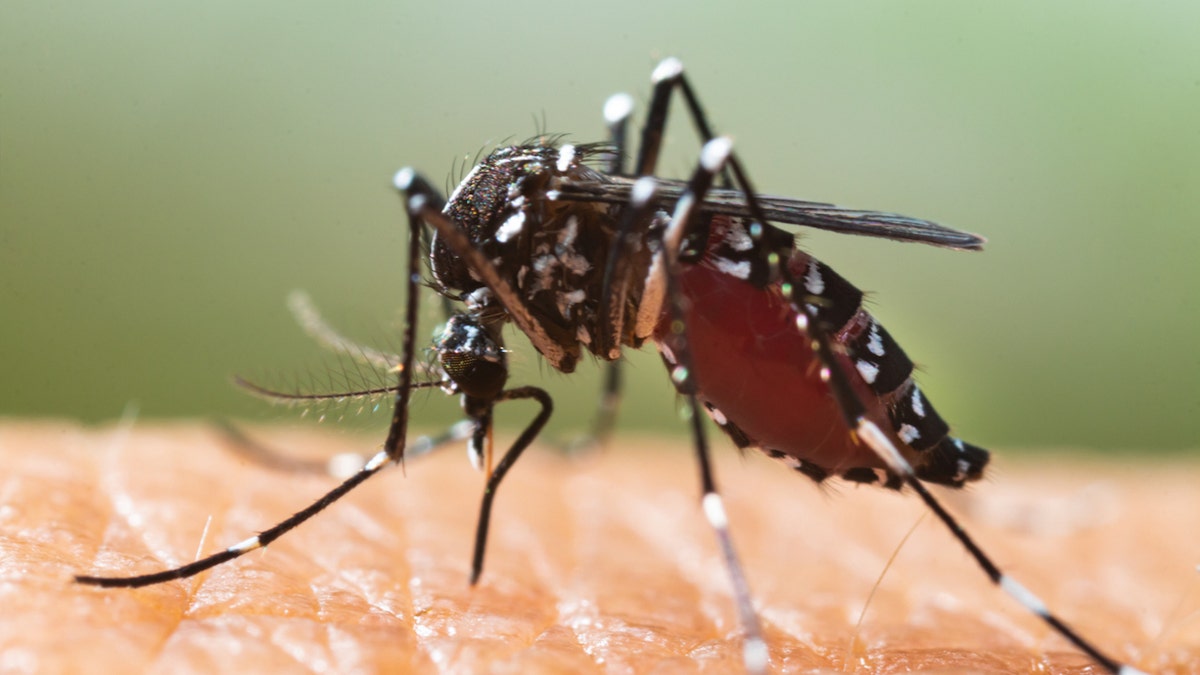
The CDC says there is a “record-breaking” number of dengue virus infections being recorded in the Americas so far this year. (iStock)

“Six U.S. territories and freely associated states are classified as areas with frequent or continuous dengue transmission: Puerto Rico, American Samoa, the U.S. Virgin Islands, the Federated States of Micronesia, the Republic of Marshall Islands, and the Republic of Palau,” the CDC adds. 

The health agency says one in every four dengue infections are symptomatic, with effects including fever and “nausea, vomiting, rash, muscle aches, joint pain, bone pain, pain behind the eyes, headache, or low white blood cell counts.” 

“Severe disease, with associated severe bleeding, shock or respiratory distress caused by plasma leakage, or end-organ impairment, develops in 1 in 20 people with symptomatic dengue,” according to the CDC. 

PUERTO RICO HEALTH OFFICIALS DECLARE DENGUE FEVER A PUBLIC HEALTH EMERGENCY 

Tiger mosquito

Tiger mosquitoes are being blamed for the recent spread of the dengue virus in Europe. (iStock)

It said infants under the age of one, pregnant women and adults over the age of 65 carry an “increased risk of severe dengue” and that “transmission peaks during the warmer and wetter months in many tropical and subtropical regions.” 

There is not currently a medication to treat dengue, the CDC says. 

El Salvador fumigation campaign against dengue

A worker is seen releasing smoke during a fumigation campaign against the Aedes aegypti or Aedes albopictus mosquito, which is the transmitter for the dengue virus, on June 24, in San Salvador, El Salvador.  (Aphotografia/Getty Images)

CLICK HERE TO GET THE FOX NEWS APP 

Infected people are advised to rest, take acetaminophen for pain and fever, stay hydrated and see a doctor. 

Fox News’ Melissa Rudy contributed to this report. 

iPhone’s little-known trick can hear better than some human ears

0


 The iPhone is packed with features that you might take for granted. However, Apple has always prioritized accessibility, ensuring that people with physical challenges can enjoy the iPhone experience just like everyone else. One of the coolest accessibility features that can be used by anyone is Sound Recognition, and it’s something you might find incredibly useful.

GET SECURITY ALERTS, EXPERT TIPS – SIGN UP FOR KURT’S NEWSLETTER – THE CYBERGUY REPORT HERE

iPhone’s little-known trick can hear better than some human ears

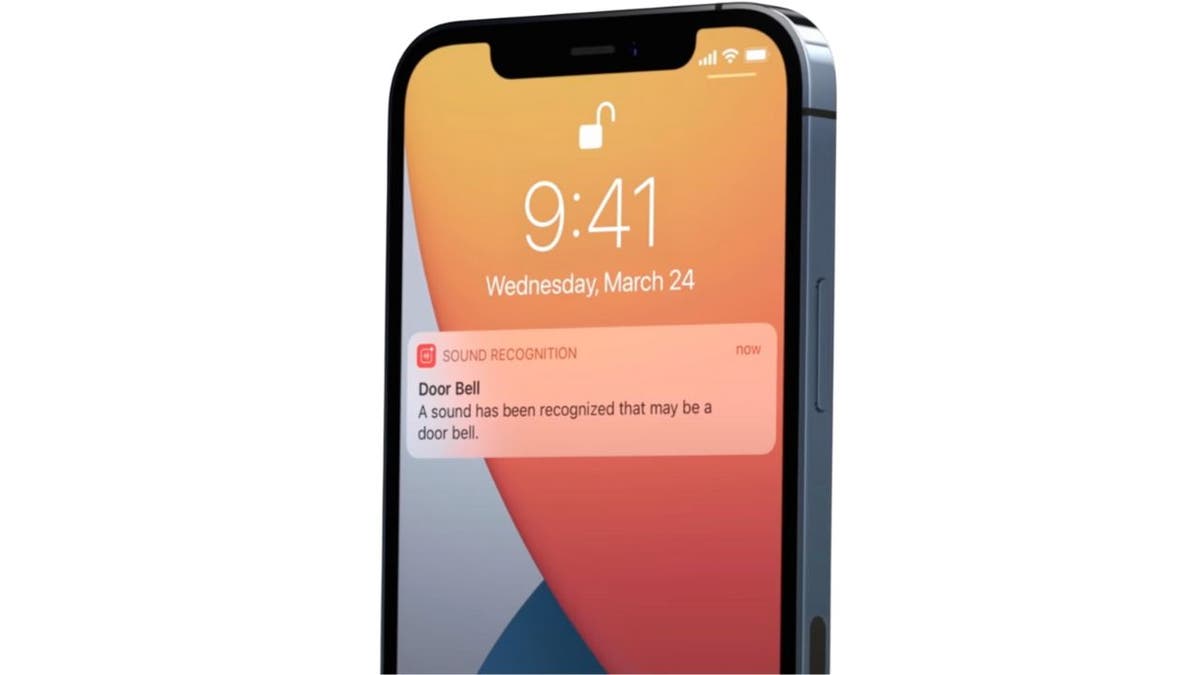
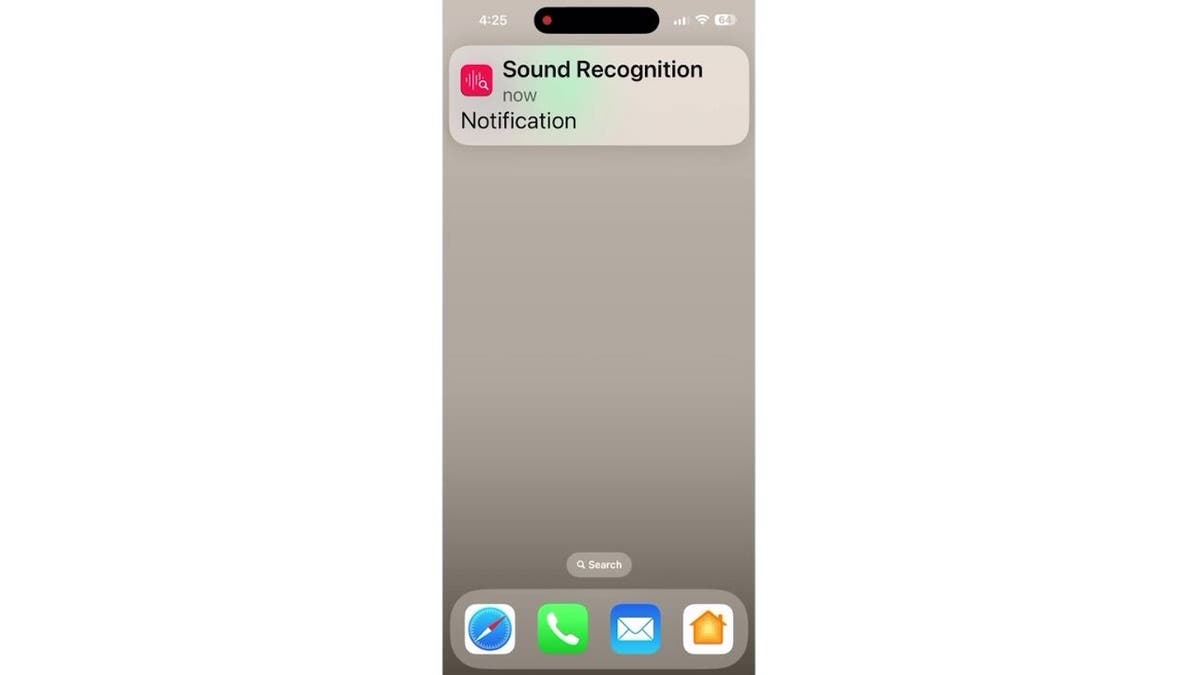
Sound Recognition on iPhone (Apple) (Kurt “CyberGuy” Knutsson)

Understanding Sound Recognition

The idea behind Sound Recognition is to allow your iPhone to listen for sounds you might not be able to hear if you are hearing impaired and alert you when those sounds are detected. As Apple describes it, “Sound Recognition uses on-device intelligence to notify users who might otherwise miss audible environmental alerts around them.”

When Sound Recognition is enabled, your iPhone will send you a push notification alerting you to the detected event, even if you lack the ability to hear it. While designed for the hard of hearing and hearing impaired, users without hearing problems can also benefit from this feature.

It’s important to note that Sound Recognition runs entirely locally on your iPhone. When the AI detects a sound, it identifies it right on your device – no uploading to the Internet is needed. This means Sound Recognition works without an Internet connection and keeps your alerts and Sound Recognition events completely private.

iPhone’s little-known trick can hear better than some human ears

Sound Recognition on iPhone (Kurt “CyberGuy” Knutsson)

HOW TO PROTECT YOUR IPHONE, IPAD FROM MALWARE

Sounds iPhone can recognize

As of iOS 16, iPhone Sound Recognition can identify the following types of sounds: fire alarms, sirens, smoke alarms, cats, dogs, appliances, car horns, doorbells, door knocks, glass breaking, kettles, water running, baby crying, coughing and shouting.

iPhone’s little-known trick can hear better than some human ears

Sounds iPhone can recognize (Kurt “CyberGuy” Knutsson)

8 GREAT IPHONE ACCESSIBILITY TIPS TO MAKE LIFE EASIER

How to use Sound Recognition on iPhone

Sound Recognition is not enabled by default, but it’s simple to turn it on. Keep in mind that you’ll need an iPhone running iOS 14 or later to use this feature. Here’s how to enable it to identify a door knock:

  • Open the Settings app
  • Tap Accessibility
  • Under the Hearing header, tap Sound Recognition
iPhone’s little-known trick can hear better than some human ears

Steps to use Sound Recognition on iPhone (Kurt “CyberGuy” Knutsson)

  • On the Sound Recognition screen, toggle the switch to green (ON). Wait a moment for the required sound files to download
  • Once the files are downloaded, tap the Sounds button
  • On the Sounds screen, tap any sound you want your iPhone to recognize, such as Door Bell
iPhone’s little-known trick can hear better than some human ears

Steps to use Sound Recognition on iPhone (Kurt “CyberGuy” Knutsson)

  • On that sound’s screen, toggle the switch to green (ON) next to the types of sounds you want your iPhone to listen for
iPhone’s little-known trick can hear better than some human ears

Steps to use Sound Recognition on iPhone (Kurt “CyberGuy” Knutsson)

After following these steps, your iPhone will continuously listen for the selected sounds and notify you when it detects them.

iPhone’s little-known trick can hear better than some human ears

Sound Recognition on iPhone (Kurt “CyberGuy” Knutsson)

6 THINGS YOU SHOULD ABSOLUTELY DO IF YOU HAVE AN IPHONE

A word of caution

While Sound Recognition is a cool feature, Apple warns against relying on it in situations where you could be injured or killed. As stated on their website, “Don’t rely on your iPhone to recognize sounds in circumstances where you may be harmed or injured, in high-risk or emergency situations, or for navigation.”

SUBSCRIBE TO KURT’S YOUTUBE CHANNEL FOR QUICK VIDEO TIPS ON HOW TO WORK ALL OF YOUR TECH DEVICES

Kurt’s key takeaways

Apple’s commitment to accessibility is commendable, and the Sound Recognition feature is a prime example of how technology can be inclusive and empowering for all users. While designed with the hearing impaired in mind, Sound Recognition can be a handy tool for anyone who wants to stay alert to important sounds in their environment. By following the simple steps outlined in this article, you can unlock the power of this innovative feature and experience the iPhone in a whole new way.

What potential benefits do you see in the iPhone’s Sound Recognition feature for enhancing daily life or providing added security? Let us know by writing us at Cyberguy.com/Contact.

For more of my tech tips and security alerts, subscribe to my free CyberGuy Report Newsletter by heading to Cyberguy.com/Newsletter.

Ask Kurt a question or let us know what stories you’d like us to cover.

Follow Kurt on his social channels

Answers to the most asked CyberGuy questions:

Copyright 2024 CyberGuy.com. All rights reserved.


Source link

July 4 surprises: The fascinating American history of three popular expressions

0

Join Fox News for access to this content

Plus special access to select articles and other premium content with your account – free of charge.

By entering your email and pushing continue, you are agreeing to Fox News’ Terms of Use and Privacy Policy, which includes our Notice of Financial Incentive.

Please enter a valid email address.

The Fourth of July is celebrated yearly as people all over our country raise their American flag for Independence Day. 

Barbecues, boats and beers are often associated with the summer holiday, but the American holiday also has a rich history, commemorating America’s independence. 

“Happy Fourth of July” is a popular saying among patriots on the day — but there are other unique expressions with interesting origins as well. 

WHY DO WE SAY ‘POKER FACE’ AND OTHER POPULAR EXPRESSIONS? HERE ARE 3 IDIOMS AND THEIR ORIGINS

Why do we say “Have a Yankee Doodle Day” and “Home of the Brave,” for example? 

Here are three idioms related to July 4th with interesting national backstories.

The 4th of July is celebrated annually to commemorate America’s founding. (iStock)

3 popular sayings surrounding the 4th of July

1. ‘Have a Yankee Doodle Day’

A “Yankee doodle dandy” was originally a term used in the 1770s — ‘Yankee’ meaning an American colonist and “doodle” meaning a fool.

WHY DO WE SAY ‘ALL HANDS ON DECK’ AND OTHER POPULAR EXPRESSIONS? 3 FUN IDIOMS WITH UNIQUE MEANINGS

Over the years, the song “Yankee Doodle” grew in popularity, specifically during the Battles of Lexington and Concord.

That is when “patriotic colonists soundly defeated the British soldiers” and would sing the tune, per the Golder Lehrman Institute of American History. 

American flags

“Have a Yankee Doodle Day” is a popular expression that some people use on the Fourth of July.  (iStock)

The song was also often used to joke about how some people would dress and the emphasis they would put on their appearance. 

‘IF THE SHOE FITS’ AND OTHER POPULAR PHRASES: WHERE DID THEY COME FROM? 3 FUN ORIGIN STORIES

Telling people to “Have a Yankee Doodle Day” is essentially telling them to enjoy their festive day in whatever manor they desire. 

2. ‘Happy Birthday, America’

On July 4, 1776, the Second Continental Congress adopted the Declaration of Independence — marking the birth of the United States of America. 

The 13 North American colonies would separate from Great Britain, as Britannica noted. 
Birthday cake

“Happy Birthday, America!” is a popular expression used to celebrate Independence Day each year.  (iStock)

From that day on, July 4th was celebrated as the birthday of America — hence, why people say “Happy birthday, America” on this celebratory day. 

AMERICA WILL BE CELEBRATING ITS 250TH BIRTHDAY AND EVERYONE’S INVITED: ‘BE INSPIRED FOR OUR COUNTRY’S FUTURE’ 

This year, America turns 248 years old on July 4. 

3. ‘Home of the Brave’

The popular expression “Home of the Brave” is most recognizable as a lyric in “The Star-Spangled Banner” — with a rich American backstory.

ON JULY 4, ‘REMEMBER THE BLESSING OF LIVING IN THE MOST FREE AND PROSPEROUS SOCIETY ON EARTH’

It’s believed that an American lawyer and poet named Francis Scott Key wrote a poem that would end up as “The Star-Spangled Banner” as we know it. 

Key was aboard a British ship during negotiations for a prisoner release when he was forced to spend a night on the enemy’s ship, according to the New Jersey State Bar Foundation. 

CLICK HERE TO GET THE FOX NEWS APP

During that time, he witnessed the bombing of Fort McHenry before spotting the American flag still standing the next day, on Sept. 18, 1814 — during the War of 1812. 

Soldier coming home

“Home of the brave” appears in “The Star-Spangled Banner,” our national anthem. (iStock)

Key was so stirred by the sight he decided to write a poem based on what he saw called “Defence of Fort McHenry,” which is what we know as “The Star-Spangled Banner.”

For more Lifestyle articles, visit www.foxnews/lifestyle

Within the poem, the lyrics “home of the brave” are written — and now sung daily — to represent the brave soldiers who were fighting for America. 

In 1931, Congress passed a bill to make “The Star-Spangled Banner” the national anthem, according to The Kennedy Center — and it was signed by President Herbert Hoover.

CLICK HERE TO SIGN UP FOR OUR LIFESTYLE NEWSLETTER

The actual flag raised over Fort McHenry by the dawn’s early light on Sept. 14, by the way, enjoys a place of honor at the National Museum of American History in Washington, D.C. It’s known as the Great Garrison Flag.

Kerry J. Byrne of Fox News Digital contributed reporting.

California doctor reveals the 10 big ‘lies’ the medical community tells patients

0

Join Fox News for access to this content

Plus special access to select articles and other premium content with your account – free of charge.

By entering your email and pushing continue, you are agreeing to Fox News’ Terms of Use and Privacy Policy, which includes our Notice of Financial Incentive.

Please enter a valid email address.

A California doctor wants people to know that, in his view and experience, the medical community doesn’t always tell patients the truth.

Dr. Robert Lufkin, a physician and father of two young children, has been diagnosed with four chronic diseases — the same ones that claimed his father’s life.

Inspired by his own medical struggles, Lufkin decided to write a book exposing what he calls “medical lies” that contribute to the risk of chronic disease in the U.S. – some of which he says he himself once taught as a professor at UCLA and USC.

MEN’S ENERGY AND VITALITY PLUMMETS FOR 6 REASONS. BOOST IT BACK UP THIS WAY

While Lufkin is critical of the medical establishment, he pointed out that he is also still part of it himself.

“I’ve written hundreds of peer-reviewed articles and 10 textbooks, and also have the honor and privilege of teaching doctors and other health care professionals, as well as seeing patients,” Lufkin told Fox News Digital during an interview.  

Dr. Robert Lufkin, pictured at left, was diagnosed with four chronic diseases, which inspired him to write a book, “Lies I Taught in Medical School.” (Dr. Robert Lufkin/iStock)

His own diagnoses, Lufkin said, “woke him up” to the flaws in the medical system.

First, he developed a type of arthritis called gout. 

“Next, I developed hypertension, which practically half of adults have,” he said.
“Unless we address the metabolic cause … the diseases will only continue to get worse and worse.”

Then came pre-diabetes, followed by dyslipidemia — “which is sort of abnormal blood lipids.”

The doctor noted that he’s actually a “big fan” of Western medicine in general — “I think it’s transformed our lives and made the world a better place,” he said — but that in the 21st century, a “new class of diseases” has posed a challenge.

Dr. Robert Lufkin

Dr. Robert Lufkin, a physician and father of two children, said Western medicine has “made the world a better place,” though he warns of widespread misinformation. (Dr. Robert Lufkin)

“The diseases were present before, but now they’re exploding,” he said.

These include obesity, diabetes, hypertension, cancer, cardiovascular disease, Alzheimer’s disease and even mental illness, Lufkin said. 

NURSES SPEAK OUT: ‘WHAT I WISH I’D KNOWN BEFORE ENTERING THE PROFESSION’

“Up to 80% of our resources are now spent on these chronic diseases.”

The problem, according to the doctor, is that the tools that were so effective in the 20th century — “the pills and surgeries” — might save lives in the moment.

But they only address the symptoms of these chronic diseases — not their root causes.

"Lies I Taught in Medical School"

In his book, “Lies I Taught in Medical School,” Lufkin claims that medical professionals tend to propagate 10 major misconceptions. (Dr. Robert Lufkin)

“There’s a common metabolic cause that underlies most of these diseases,” Lufkin said.

“And unless we address the metabolic cause, the pills and surgeries will not. The diseases will only continue to get worse and worse.”

‘The 10 lies’

In his book, “Lies I Taught in Medical School,” Lufkin claims that medical professionals tend to propagate 10 falsehoods.

He listed these situations and includes separate chapters on them in his book, labeled this way: 

1. The Metabolic Lie: “Metabolism Is Just the Body’s Way of Digesting Food”

2. The Obesity Lie: “To Lose Weight, Just Exercise More and Eat Less”

3. The Diabetes Lie: “Sugar is Harmless, Other Than Causing Weight Gain and Tooth Decay”

4. The Fatty Liver Lie: “There Is No Treatment for Nonalcoholic Fatty Liver Disease”

5. The Hypertension Lie: “High Blood Pressure Is Best Treated with Drugs”

8 BAD HABITS THAT MAKE YOU AGE FASTER, ACCORDING TO EXPERTS

6. The Cardiovascular Disease Lie: “Statins Are a Good Choice to Prevent Heart Disease”

7. The Cancer Lie: “Most Cancer Is Caused by Accumulated DNA Damage”

8. The Alzheimer’s Lie: “Alzheimer’s Disease Is a Progressive, Untreatable Disease Caused by Beta-Amyloid Accumulation”

9. The Mental Health Lie: “Metabolism Has Little Effect on Mental Health”

10. The Longevity Lie: “Aging Is the Inevitable Result of Accumulated Wear and Tear”

“In each chapter,” said Lufkin, “we go through each of those chronic diseases that determine our life span — and we talk about what the lies are and what the truth is.” 

The doctor then presents a plan for making healthier lifestyle choices.

Healthy living

In his book, Dr. Lufkin also shares recommendations for healthy lifestyle choices to help prevent disease. (iStock)

“We talk about the nutrition, sleep, exercise, stress and how we can craft our own lifestyles to reverse those diseases,” he said.

In the excerpt below, Lufkin explains the first two of these “lies.”

Read an excerpt from ‘Lies I Taught in Medical School’

The Obesity Lie: ‘A Calorie Is Just a Calorie’

Dr. Robert Lufkin: We are now experiencing the worst global epidemic of obesity in history. Statistics show that 42.5% of adults age 20 and over are obese, and 73.6% are at least overweight. 

Almost half of Americans are now obese, and most are overweight. Obesity is unhealthy and a marker for metabolic dysfunction, which manifests as hypertension, diabetes, heart attack, stroke, Alzheimer’s, cancer and other chronic diseases.

“We are now experiencing the worst global epidemic of obesity in history.”

Our understanding of the causes of this epidemic and the approaches to treating it is based on a simple lie: that “a calorie is a calorie,” implying that obesity is caused by eating too many calories.

Man with doctor

“Obesity is unhealthy and a marker for metabolic dysfunction, which manifests as hypertension, diabetes, heart attack, stroke, Alzheimer’s, cancer and other chronic diseases,” a doctor writes in his book. (iStock)

As a physician, I know from personal experience that I can make anyone gain weight or fat just by giving them extra insulin. This is seen in both type 1 and type 2 diabetics as soon as they begin taking extra insulin as a medication.

To put it another way, calories are necessary, but not sufficient to drive obesity. Insulin is required. Obesity is not just a calorie problem; it’s an insulin problem. 

If all foods stimulated insulin equally, then a calorie would just be a calorie. That’s not a lie. But all foods don’t trigger insulin the same way.

CLICK HERE TO SIGN UP FOR OUR HEALTH NEWSLETTER

The truth here is that in order to lose (or gain) weight, the most important thing is not the number of calories consumed, but rather the types of calories that affect insulin levels and direct our bodies to store energy as fat. 

As every rancher knows, to fatten livestock, simply feed them large amounts of refined carbohydrates that will turn on insulin and drive energy storage into fat. 

Feeding livestock fatty foods will not have the same effect.

The Diabetes Lie: ‘Sugar is Harmless, Other Than Causing Weight Gain and Tooth Decay’

We are currently at the beginning of the worst diabetes epidemic the world has ever known. Ten percent of American adults have type 2 diabetes, and about 38% have prediabetes. This means that for the first time in history, 48% — or nearly half the population — have the same metabolic disease!

diabetes glucometer

“We are currently at the beginning of the worst diabetes epidemic the world has ever known,” Dr. Robert Lufkin writes in his new book.  (iStock)

The diabetes lie declares that the best way to treat type 2 diabetes is with insulin. 

Giving insulin will help control the immediate effects of too much glucose in the blood by telling our cells to remove that blood glucose and store it as fat. 

CLICK HERE TO GET THE FOX NEWS APP          

However, it will also raise the body’s overall insulin levels, worsening insulin resistance, the underlying cause of type 2 diabetes. Additionally, elevated insulin levels drive other chronic diseases.

“Many people would rather take a pill or a shot instead of changing their lifestyles.”

Our health care system is sadly much more optimized to deliver prescriptions for insulin and other drugs for managing type 2 diabetes than giving instructions on how to reverse it by changing our nutrition to avoid the causes. 

To be fair, many people would rather take a pill or a shot instead of changing their lifestyles. But most people don’t know how powerful and effective lifestyle choices can be.

Plus, there is some evidence to show that merely improving glucose control with drugs, such as insulin or pills, might not prevent some of the long-term complications these patients all face.

For more Health articles, visit www.foxnews/health 

There are also financial incentives. In 2013, sales of insulin and other diabetes drugs reached $23 billion, according to data from IMS Health, a drug market research firm. 

That was more than the combined revenue of the National Football League, Major League Baseball and the National Basketball Association.

Excerpted with permission from the new book, “Lies I Told in Medical School” (BenBella Books, Inc.), by Dr. Robert Lufkin, copyright © 2024 by Dr. Robert Lufkin. All rights reserved.Â