-1.3 C
New York
Saturday, February 14, 2026
Home Blog Page 54

Flight delays grow during government shutdown as airlines make changes

0

NEWYou can now listen to Fox News articles!

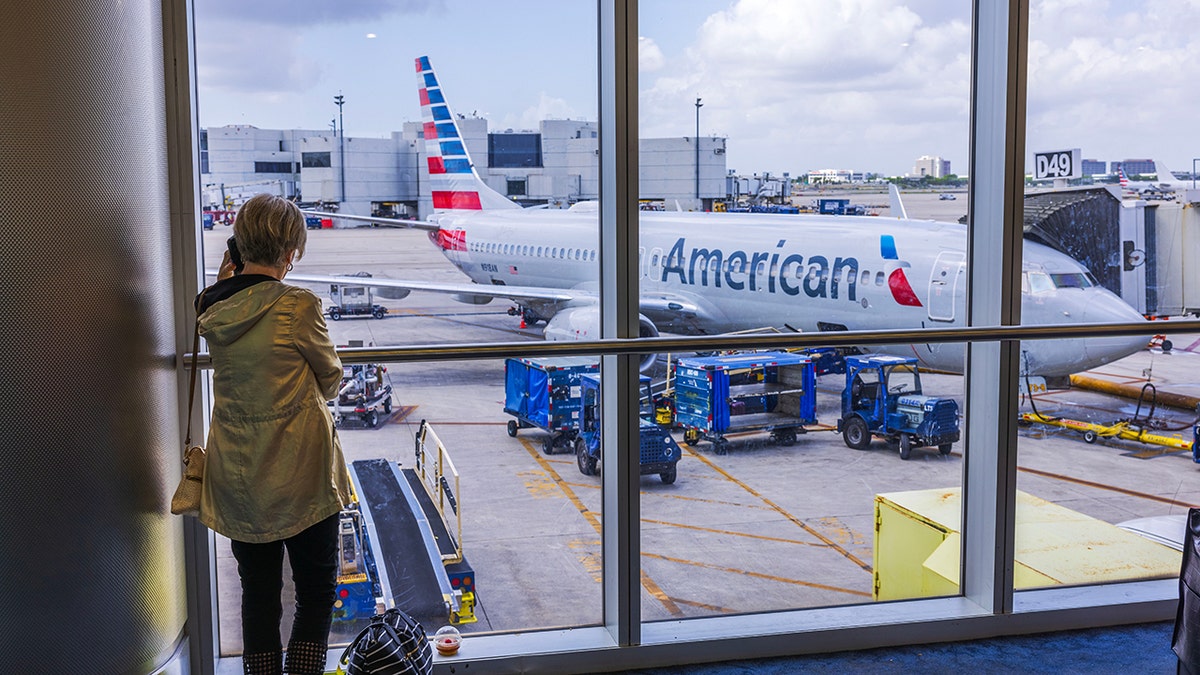
Over 1,000 flights are now experiencing delays as flight cancellations grow during the government shutdown.

As of 9:30 a.m. ET on Thursday, 1,094 flights within, into or out of the U.S. had been delayed, while 49 had been canceled, according to FlightAware.com.

The Federal Aviation Administration (FAA) implemented a flight reduction plan limiting air travel capacity at 40 airports.

AMERICANS COULD FACE AIRPORT CHAOS IF DEMS DON’T END SHUTDOWN, TRUMP OFFICIAL WARNS

Transportation Secretary Sean Duffy told “Fox & Friends” on Thursday travelers might see additional delays.

“Now, does that mean there’s going to be no delays? No … there’s potentially still going to be delays if we have staffing triggers, and we don’t have enough controllers in an aerospace where we did cut 10%, you might see additional delays,” said Duffy.

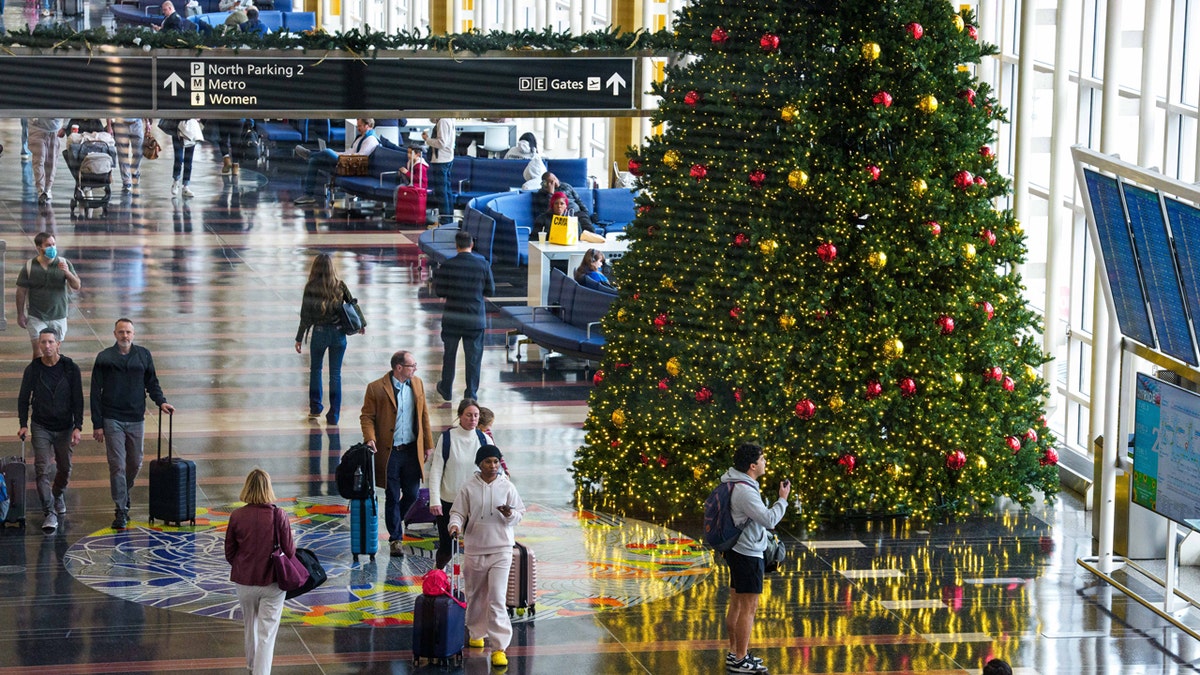
The U.S. government shutdown has triggered 1,000-plus flight delays as the FAA cuts capacity at 40 airports. (AP Photo/Lekan Oyekanmi)

Many airlines are updating customer policies and warning travelers of potential itinerary updates.

Here are a few worth noting. 

United Airlines

United Airlines CEO Scott Kirby updated employees in a press release about the impact of FAA reductions.

“United’s long-haul international flying and our hub-to-hub flying will not be impacted,” wrote Kirby.

CLICK HERE TO SIGN UP FOR OUR LIFESTYLE NEWSLETTER

The Chicago-based airline is offering refunds to customers who do not want to fly during imposed restrictions on flights, “even if their flight isn’t impacted.”

Travelers will be notified if there are any changes to their flight through the United app, website and push notifications.

People wait in a security checkpoint line at George Bush Intercontinental Airport in Houston, Texas

Airlines offer refunds and policy changes amid ongoing travel disruptions. (Mark Felix/AFP via Getty Images)

Southwest Airlines

Southwest Airlines is evaluating how the flight restrictions will “affect our schedule and will communicate directly with customers as soon as possible,” according to the company’s website.

The Dallas-based airline is reminding travelers they must cancel their reservations at least 10 minutes prior to the scheduled departure time in accordance with airline policy.

American Airlines

American Airlines wrote in a press release that the company “expect[s] the vast majority of [its] customers’ travel will be unaffected.”

CLICK HERE FOR MORE LIFESTYLE STORIES

However, American says it will reach out to customers as schedule changes are made.

The Fort Worth, Texas-based airline is placing pressure on Congress, emphasizing the strain on the aviation industry.

Travelers wait at an airport

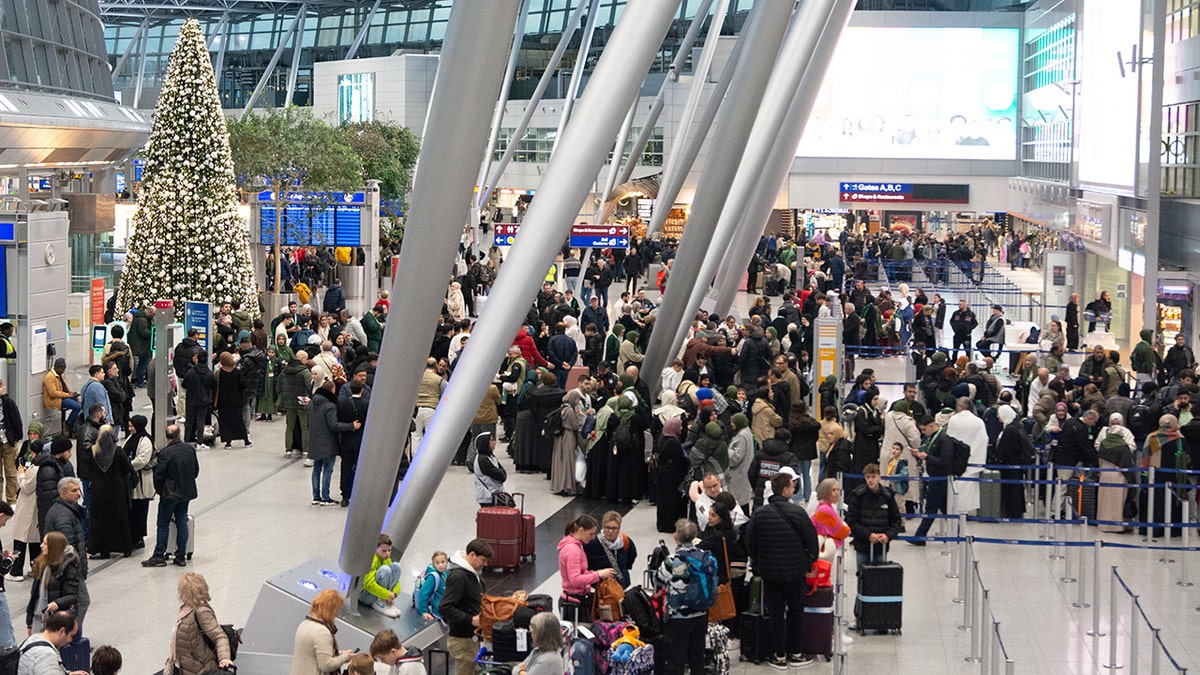
“As we come into Thanksgiving, if we’re still in the shutdown posture, it’s going to be rough out there,” said Transportation Sec. Sean Duffy.  (Evelyn Hockstein/Reuters)

“We continue to urge leaders in Washington to reach an immediate resolution to end the shutdown,” the release added.

Frontier Airlines

Frontier Airlines will waive change or cancellation fees for flights between Nov. 6 to Nov. 12, and travelers will be refunded through travel credits for their itinerary, the company said. 

Frontier CEO Barry Biffle shared travel advice with followers on Instagram.

TEST YOURSELF WITH OUR LATEST LIFESTYLE QUIZ

“If you are flying Friday or in the next 10 days, and need to be there or don’t want to be stranded, I highly recommend booking a backup ticket on another carrier,” wrote Biffle.

Delta Air Lines

Delta said it is also expecting to “operate the vast majority” of its flights as scheduled. 

The company said it is providing “additional flexibility” to customers with changes, cancellations or refund requests.

More information and insight

Duffy said Americans should still book holiday travel if they see deals they would like to grab, but also said it is “hard to predict” what may happen.

“As we come into Thanksgiving, if we’re still in the shutdown posture, it’s going to be rough out there. Really rough,” said Duffy. “And we’ll mitigate the safety side, but will you fly on time? Will your flight actually go? That is yet to be seen, but there’ll be more disruption.”

“Given the possible reduction in scheduled flights, the airlines will try to rebook cancelled flights to the next available flight.”

Speaking to Fox News Digital on Thursday morning, James Squires, director of the flight Desk at Travelmation Flights, said, “Given the possible reduction in scheduled flights, the airlines will try to rebook canceled flights to the next available flight. It is best for travelers to remain calm and to check with [their] airline’s website or mobile app with their confirmation code to check on flight status.”

CLICK HERE TO DOWNLOAD THE FOX NEWS APP

He added, “If a traveler has flexibility and wants to make a voluntary change, the airline may offer them a chance to reschedule their flight to an earlier time or to reschedule their trip altogether. Some of the airlines are also offering clients the opportunity to cancel and still receive refunds on nonrefundable tickets. Travelers should confirm with the airline before canceling.”

Rachel Wolf of Fox News Digital contributed reporting. 

Bank scams cost victims $2.9 billion as fraud losses surge nationwide

0


NEWYou can now listen to Fox News articles!

Losing your life savings to fraud is not a distant fear; it is a real and growing risk. Scams involving criminals pretending to be bank representatives have surged, with the Federal Trade Commission (FTC) reporting record-breaking losses exceeding $2.9 billion in recent data. These criminals no longer rely on basic phone tricks. Instead, they use caller ID spoofing and artificial-voice software to sound like trusted professionals, often imitating real bank employees down to the smallest detail.

Sign up for my FREE CyberGuy Report
Get my best tech tips, urgent security alerts and exclusive deals delivered straight to your inbox. Plus, you’ll get instant access to my Ultimate Scam Survival Guide — free when you join my CYBERGUY.COM newsletter.

HOW SCAMMERS EXPLOIT YOUR DATA FOR ‘PRE-APPROVED’ RETIREMENT SCAMS

What impostor bank scams look like

Scammers pretending to be from your bank follow a predictable yet terrifying pattern. They begin with an urgent phone call warning that your account has been compromised. The caller ID displays your bank’s real number, which builds instant trust.

A woman on the phone

Impostor scams have become one of the fastest-growing crimes in America, costing victims billions each year. (Kurt “CyberGuy” Knutsson)

Next, they instruct you to move your money into a so-called “safe” or “decoy” account while they “investigate” the issue. Their goal is to create fear and push you into action before you have time to think.

One journalist reportedly learned this lesson the hard way when he answered what appeared to be a legitimate call from Chase Bank. After a series of convincing conversations with multiple “representatives,” he transferred nearly $30,000 to scammers. In another case, a 65-year-old caterer reportedly lost $162,000 when a friendly woman pretending to be a bank employee claimed her ATM card had been compromised. These stories are not rare; they reflect how sophisticated and believable modern scams have become.

Why you and others are targets

Banks are trusted institutions, and scammers know it. That trust makes impersonation one of the easiest and most effective fraud tactics today. With spoofing tools, criminals can mimic real bank phone numbers and even use AI to reproduce familiar voices. Their approach is psychological: they create panic and urgency to make victims act quickly and irrationally.

Older adults are particularly vulnerable. The FTC found that losses of over $100,000 to impostor scams among people aged 60 and older have skyrocketed, from $55 million in 2020 to $445 million in 2024. These numbers highlight how no one is immune to manipulation when fear and urgency collide.

A woman speaks on her cell phone.

Criminals exploit fear, trust and technology to pressure victims into acting before they can think clearly. (Kurt “CyberGuy” Knutsson)

9 smart tips to protect yourself from impostor scams 

Impostor scams move fast, but with the right precautions, you can stop them before they strike.

1) Never trust caller ID alone

Spoofed numbers make a call appear as if it’s coming from your bank, even when it’s not.

2) Hang up and call your bank using a verified number

Do not return calls using numbers given to you by the person who contacted you. Always call the number printed on your debit or credit card.

3) Use a data removal service to protect your identity

Scammers often collect phone numbers, email addresses and other personal details from public records and data broker sites. Using a trusted data removal service helps wipe that information from the web, reducing the chances that criminals can use your data to impersonate you.

While no service can guarantee the complete removal of your data from the internet, a data removal service is really a smart choice. They aren’t cheap, and neither is your privacy. These services do all the work for you by actively monitoring and systematically erasing your personal information from hundreds of websites. It’s what gives me peace of mind and has proven to be the most effective way to erase your personal data from the internet. By limiting the information available, you reduce the risk of scammers cross-referencing data from breaches with information they might find on the dark web, making it harder for them to target you.

A woman talking on her cell phone

Scammers often pose as bank employees, using fake caller IDs and urgent stories to trick people into sending money. (Kurt “CyberGuy” Knutsson)

Check out my top picks for data removal services and get a free scan to find out if your personal information is already out on the web by visiting Cyberguy.com

Get a free scan to find out if your personal information is already out on the web: Cyberguy.com

4) Your bank will never ask you to transfer money

Any request to move funds “for protection” is a red flag for fraud.

NATIONAL PROGRAM HELPS SENIORS SPOT SCAMS AS LOSSES SURGE

5) Use strong antivirus software

Scammers often send fake links or pop-ups that install malicious programs on your device. A strong antivirus program can detect these threats, block phishing attempts and stop remote-access tools that give criminals control of your computer. Keeping your software updated adds another layer of protection against evolving scams.

The best way to safeguard yourself from malicious links that install malware, potentially accessing your private information, is to have strong antivirus software installed on all your devices. This protection can also alert you to phishing emails and ransomware scams, keeping your personal information and digital assets safe.

Get my picks for the best 2025 antivirus protection winners for your Windows, Mac, Android and iOS devices at Cyberguy.com.

6) Never share verification codes or PINs

Banks do not ask for your codes over the phone, text, or email.

7) Use call-blocking or scam-identifier apps

Adding these tools to your phone can filter many spoofed calls before they reach you. Both iPhone and Android devices have built-in settings and apps that help you stop scam calls before you even pick up.

If you use an iPhone:

  • Go to Settings
  • Tap Apps
  • Click Phone
  • Under Unknown Callers, click Silence to automatically block unsaved numbers that aren’t in your contacts.

Android phones offer similar protection:

Settings may vary depending on your Android phone’s manufacturer. 

  • Go to the Phone app
  • Click Settings
  • Tap Caller ID & Spam
  • Click Filter Spam Calls, or you might be asked to toggle on Caller ID and spam protection, to automatically identify and block numbers flagged as potential scams.

8) Pause if something feels urgent and frightening

Scammers depend on panic. Taking a moment to breathe could save your savings.

9) Report suspicious activity immediately

If you suspect a scam, contact your bank, file a complaint with the FTC at ReportFraud.ftc.gov and alert local law enforcement.

What to do if you’ve been targeted

If you believe you have fallen victim, act quickly.

1) Contact your bank and request a freeze or close monitoring of your accounts.

2) File a report with the FTC and your local police department, even if you believe recovery is unlikely.

3) Keep every piece of evidence, including phone records, text messages and transfer confirmations.

4) Change all passwords and enable transaction alerts on every sensitive account to prevent further damage. Consider using a password manager, which securely stores and generates complex passwords, reducing the risk of password reuse. 

Next, see if your email has been exposed in past breaches. Our No. 1 password manager pick includes a built-in breach scanner that checks whether your email address or passwords have appeared in known leaks. If you discover a match, immediately change any reused passwords and secure those accounts with new, unique credentials.

Check out the best expert-reviewed password managers of 2025 at Cyberguy.com.

5) Sign up with an Identity Theft Protection service that can monitor personal information like your Social Security Number (SSN), phone number and email address, and alert you if it is sold on the dark web or used to open an account. They can also assist you in freezing your bank and credit card accounts to prevent further unauthorized use by criminals.

See my tips and best picks on how to protect yourself from identity theft at Cyberguy.com.

CLICK HERE TO DOWNLOAD THE FOX NEWS APP

Kurt’s key takeaways

Fraud can strike anyone, anywhere, at any time. Scammers have become smarter, faster and more convincing than ever before. They use fear, urgency and technology to make their lies sound real. But you can fight back with knowledge and caution. Stay alert every time your phone rings or your inbox pings. Slow down before you react. Verify before you trust. The few seconds you take to double-check could be what saves your life savings. Remember, even the most tech-savvy people fall for scams when emotions take over. The real key to protection isn’t fear, it’s awareness and action. Share what you know with friends, family and coworkers. The more people who understand how these scams work, the harder it becomes for criminals to win.

Are banks really doing enough to protect you from impostor scams? Let us know by writing to us at Cyberguy.com.

Sign up for my FREE CyberGuy Report
Get my best tech tips, urgent security alerts and exclusive deals delivered straight to your inbox. Plus, you’ll get instant access to my Ultimate Scam Survival Guide — free when you join my CYBERGUY.COM newsletter.

Copyright 2025 CyberGuy.com.  All rights reserved.


Source link

London’s ‘Mind the Grab’ campaign faces backlash over phone theft reaction

0

NEWYou can now listen to Fox News articles!

A campaign that debuted in London this summer is facing backlash, with both residents and visitors criticizing officials for failing to tackle crime problems head-on.

The “Mind the Grab” initiative aims to raise awareness of widespread phone theft along the city’s iconic Oxford Street shopping district.

Bold purple chalk signs on the edge of the sidewalks say, “Mind the Grab,” and “Step back from the Kerb! Phone snatching hot spot.”

URGENT ADVISORY FOR SAFARI DESTINATION WARNS OF ‘TERRORIST VIOLENCE’ AND RISK OF ‘UNREST’

The Westminster Council and Metropolitan Police Service have partnered with Currys, the U.K.’s largest tech retailer, to remind pedestrians of thefts on mopeds or e-bikes along busy streets. 

Since it launched, the campaign has sparked an active response online, with locals and tourists taking to social media to voice strong opinions.

Social media users have been blasting London’s “Mind the Grab” initiative. (Rasid Necati Aslim/Anadolu via Getty Images)

One Instagram user posted a video detailing the campaign and wrote, “London’s telling us to hide our phones instead of stopping the thieves. Who should really be held accountable?”

In the “r/ukpolitics” forum on Reddit, one user said, “We are normalizing theft.”

Said another, “Slowly drifting toward the ubiquitous third-world ‘pickpockets operate in this area’ – patronizing absolution of state responsibility where it matters, coupled with a warm embrace where unwanted.”

A different Redditor said, “It’s basically London authorities refusing to actually tackle it and trying to put the blame on people who use their phone in the center of London.”

CLICK HERE TO SIGN UP FOR OUR LIFESTYLE NEWSLETTER

“I went to Paris in 2022 [and] 2023, and I noticed the recording ‘beware of pickpockets’ as soon as I got on the train,” wrote another user.

An X user responded to a post captioned, “What’s preventing you from visiting London?” by answering with the comment, “The stabbings and ‘Mind the grab.’”

Girl on phone and other pedestrians on oxford street in front of mind the grab sign

Bold purple chalk signs on the edge of the sidewalks read, “Mind the Grab” and “Step back from the Kerb! Phone snatching hot spot.” (Richard Baker / In Pictures via Getty Images)

“Instead of catching the career criminals behind phone thefts, authorities blamed victims with a ‘Mind the Grab’ purple line down Oxford St.,” said another X post.

Last month, the Metropolitan Police busted an international gang suspected of smuggling nearly 40,000 cell phones from the U.K. to China, The Associated Press reported.

CLICK HERE TO GET THE FOX NEWS APP

It is believed that more than half of the phones were taken in London.

woman on cellphone and man walking on oxford street

“London’s telling us to hide our phones instead of stopping the thieves,” said one person on social media.  (Leon Neal/Getty Images)

Over 115,000 mobile phones were stolen across London in 2023, according to Metropolitan Police data.

TEST YOURSELF WITH OUR LATEST LIFESTYLE QUIZ

Natasha Evans, police lead superintendent in Westminster, said in an August press release that “officers are relentlessly pursuing criminal gangs intent on committing robbery and phone theft.”

“Officers are relentlessly pursuing criminal gangs.”

She added, “We have increased patrols in hot spot areas to identify and deter perpetrators — and robbery has [been] reduced by 20% in the West End since April.”

CLICK HERE FOR MORE LIFESTYLE STORIES

London remains a popular tourist attraction, drawing some 21 million visitors in recent years, with around 3.6 million “overnight visits” coming from North America, according to the U.K.’s Office for National Statistics. 

Gates urges COP30 to prioritize poverty reduction over climate targets

0

NEWYou can now listen to Fox News articles!

The UN Climate Change Conference, COP30, starts Nov. 6 with a world leader summit and runs to Nov. 21. It will emphasize “the urgency of the climate crisis and the need for accelerated and collective climate actions.” However, Microsoft founder Bill Gates just issued a memo aimed at COP30 attendees proposing a fundamental shift in priorities: focus on poverty reduction rather than climate modification.

Gates, who previously gave primary importance to measures to reduce near-term emissions, has drawn criticism for arguing that “a metric that should count even more than emissions and temperature change [is] improving lives. Our chief goal should be to prevent suffering, particularly for those in the toughest conditions who live in the world’s poorest countries.”

His argument rests on three key premises: climate change poses serious challenges but does not represent an existential threat to civilization; temperature metrics alone inadequately measure climate-related progress; and improved health and economic prosperity provide the most effective defense against climate change.

Gates provides data to show that achieving net-zero emissions would result in a 1.9-degree Celsius temperature increase from 1990 levels, while inaction would produce a 2.9-degree increase. This one-degree differential, he argues, suggests that resources allocated toward net-zero goals might yield greater humanitarian benefits if redirected toward energy access and disease prevention.

KEN PAXTON’S ATTACK ON INVESTORS IS CLIMATE CHANGE DENIAL, NOT CONSERVATISM

Billionaire philanthropist Bill Gates surprised social media users when he wrote that climate change does not represent a doomsday scenario for earth. (Sean Gallup/Getty )

The correlation between energy consumption and economic prosperity is striking. Nations with annual per capita incomes below $1,145 consume approximately 1,100 kilowatts per person annually, while those exceeding $14,005 in per capita income utilize 55,000 kilowatts per person annually, according to data cited by Gates.

The genuine inequity, Gates contends, lies in human development disparities. A child born in South Sudan faces mortality risks 39 times higher before age five compared to a Swedish child. These vulnerable populations require enhanced access to energy, nutrition and healthcare infrastructure.

The relationship between economic development and energy consumption is unequivocal: no nation has achieved high per capita income with low per capita energy usage, and conversely, no country maintains high energy consumption alongside persistent poverty.

THE DISTURBING CONNECTION BETWEEN UN’S GREEN ENERGY PUSH AND ILLEGAL IMMIGRATION

Increased energy access facilitates improved living standards through enhanced productivity, agricultural advancement and household consumption, thereby reducing dependence on subsistence farming. Energy availability either provides farmers with modern agricultural technologies or enables economic mobility to pursue alternative livelihoods.

High-energy nations benefit from superior healthcare infrastructure and water sanitation systems, resulting in reduced maternal and child mortality rates and greater capacity for environmental protection measures.

Hurricane Melissa’s destruction in Jamaica illustrates how natural disasters inflict disproportionate damage on developing nations compared to wealthy countries, due to disparities in energy infrastructure, resilient construction and recovery capabilities. Affordable energy access is essential to addressing these inequalities.

TRUMP PICKS HIS MIAMI DORAL RESORT TO HOST 2026 G20 SUMMIT IN FLORIDA DURING NATION’S ANNIVERSARY YEAR

Energy poverty in many African and Latin American nations drives migration pressures, as residents seek higher living standards in fossil fuel-rich regions, particularly Europe and North America.

To support emerging economies and alleviate migration pressures, President Donald Trump has reversed restrictions on loans to developing countries for fossil fuel energy projects. Financial institutions are no longer compelled to finance exclusively renewable energy initiatives.

Climate protesters gathered in London

Climate demonstrators protest outside the Royal Courts of Justice, Strand on Feb. 20, 2024, in London, England. (Leon Neal/Getty Images)

CLICK HERE FOR MORE FOX NEWS OPINION

The 140 private banks from 44 countries that participated in the United Nations Net Zero Banking Alliance — including Barclays, JP Morgan Chase and Sumitomo — have suspended their commitments to restrict fossil fuel financing. The World Bank, which has historically discouraged fossil fuel and nuclear power lending while prioritizing renewables, may reassess its position.

This policy shift enables developing nations to secure financing for conventional power plants, transmission infrastructure, distribution networks and household connections. Importantly, this change diminishes China’s strategic advantage in lending to African and Latin American nations — often securing ports and other assets as collateral.

CLICK HERE TO DOWNLOAD THE FOX NEWS APP

Gates’s reversal in the climate debate challenges the international community to confront an uncomfortable reality. While climate conferences convene in developed nations with reliable electricity and healthcare systems, billions lack access to the energy that makes such gatherings possible.

His argument suggests that the most effective climate strategy may be ensuring that vulnerable populations have the resources to adapt and thrive, rather than pursuing emissions targets that may perpetuate the very poverty that exacerbates climate vulnerability. Whether policymakers at COP30 will heed this message remains uncertain, but Gates has succeeded in reframing the conversation around what climate action should ultimately serve: economic progress, not merely atmospheric targets.

CLICK HERE TO READ MORE BY DIANA FURCHTGOTT-ROTH

Palm Beach International Airport could become Trump airport under new bill

0

NEWYou can now listen to Fox News articles!

A bill was introduced over the weekend that would change the name of the Palm Beach International Airport (PBI) in Florida to the “Donald J. Trump International Airport.”

A spokesperson in state representative Meg Weinberger’s office confirmed the news to Fox News Digital.

“President Trump is the most consequential president of our lifetime and a resident of Palm Beach County, which makes it only fitting to honor him, like many other presidents before him, by naming our airport Donald J. Trump International,” Rep. Weinberger said in a statement. 

CLICK HERE TO SIGN UP FOR OUR LIFESTYLE NEWSLETTER

Air Force One frequently travels to PBI due to the proximity of the president’s Mar-a-Lago residence.

More than 10 commercial airports in the U.S. are named after presidents, including the popular John F. Kennedy Airport in New York City, Ronald Reagan Washington National Airport in Arlington, Virginia, George Bush Intercontinental Airport in Houston, Texas, and Gerald R. Ford International Airport in Grand Rapids, Michigan.

President Donald Trump is shown exiting Air Force One at Palm Beach International Airport on Feb. 14. (Joe Raedle/Getty Images)

In January, Rep. Addison McDowell of North Carolina, along with other House Republicans, introduced legislation to rename the Ronald Reagan Washington National Airport after President Trump.

CLICK HERE FOR MORE LIFESTYLE STORIES

The bill has not moved beyond referral.

Mar-a-Lago in Palm Beach, Florida

Air Force One frequently travels to PBI due to the proximity of President Trump’s Mar-a-Lago residence. (AP Photo/Steve Helber, File)

The Palm Beach airport had a record-breaking year between May 2023 and May 2024, handling over eight million passengers, according to PBI.

TEST YOURSELF WITH OUR LATEST LIFESTYLE QUIZ

It was also ranked the “best in the U.S.” for shortest overall TSA wait times by U.S. Customs and Border Protection, according to information from the airport’s official site.

A Florida lawmaker has filed a bill to rename Palm Beach International Airport after President Donald J. Trump.

A Florida lawmaker has filed a bill to rename Palm Beach International Airport after President Donald J. Trump. (Google Maps)

Weinberger was also co-sponsor of a bill to rename a stretch of Southern Boulevard that runs four miles from PBI to Mar-a-Lago.

CLICK HERE TO GET THE FOX NEWS APP

The proposal was signed by Governor Ron DeSantis, but approval from local officials is still pending.

Trump standing on steps of Air Force one

President Trump boards Air Force One as he departs for Alaska to meet with Russian President Vladimir Putin from Joint Base Andrews in Maryland, Aug. 15, 2025. (Kevin Lamarque/Reuters)

Fox News Digital reached out to the White House for comment.

Foreign apps secretly collect your personal data and sell it to companies

0


NEWYou can now listen to Fox News articles!

You might not think twice about that flashlight app you downloaded or the cute game your grandkids recommended. Yet with a single tap, your private data could travel halfway across the world into the hands of people who profit from selling it. A growing threat is emerging as foreign-owned apps quietly collect massive amounts of personal data about you, and older Americans are among the most vulnerable.

Sign up for my FREE CyberGuy Report
Get my best tech tips, urgent security alerts and exclusive deals delivered straight to your inbox. Plus, you’ll get instant access to my Ultimate Scam Survival Guide — free when you join my CYBERGUY.COM newsletter.

The hidden cost of ‘free’ apps

We all love free apps. Whether it’s a shopping deal finder, a weather tracker or a photo editor, they make life easier. But many of these “free” tools aren’t really free; they just don’t charge you money. Instead, they collect your personal information and sell it to make their profit.

A recent study revealed that over half of the most popular foreign-owned apps available in U.S. app stores collect sensitive user data, including your location, contacts, photos and even keystrokes.

A woman holds a smartphone.

Many “free” apps secretly collect personal data from users, sending private information to foreign servers without consent. (Kurt “CyberGuy” Knutsson)

Some of the worst offenders are apps that seem completely harmless:

  • Flashlight and weather apps that track your GPS location 24/7.
  • Shopping apps that collect purchase history, payment preferences and home addresses.
  • Casual games that request access to your camera and contacts for no logical reason.

These apps often share data with data brokers and ad networks overseas, where privacy laws are weaker and accountability is nearly impossible.

HOW SCAMMERS TARGET YOU EVEN WITHOUT SOCIAL MEDIA

Why retirees are prime targets

If you’re retired, you may already be on dozens of public databases like voter rolls, real estate listings and charity donor lists. Combine that with information harvested from apps, and scammers can build a frighteningly detailed profile of your life.

Young woman types on smartphone

Flashlight, weather and shopping apps often request unnecessary access to your camera, contacts and location to track you around the clock. (Portra/Getty Images)

They can see:

  • Where you live and who lives with you.
  • What medications you search for.
  • What causes you support or charities you donate to.
  • What devices you own and which banks you use.

From there, they can craft highly convincing scams like fake donation requests, Medicare scams or phishing texts that look eerily personal. Some even use your social media photos to mimic family members in “grandparent scams.” And it all starts with what you allowed that “harmless” app to access.

Signs your data might already be exposed

You don’t need to be a tech expert to spot the warning signs. Here’s what to look for:

  • Unfamiliar charges or new accounts in your name.
  • An increase in scam calls or texts, especially with personal details like your city or bank.
  • Emails from foreign domains claiming to offer rewards or urgent account updates.
  • Ads that seem to “read your mind,” which show up right after you talk about something offline.

If you’ve noticed any of these, your information is likely circulating through data brokers who purchased it from app networks.

A smartphone displays apps.

Older Americans are prime targets, but simple steps like deleting risky apps and reviewing permissions can help protect your privacy. (Kurt “CyberGuy” Knutsson)

How to stop the data drain

You can take back control of your data starting right now.

1) Audit your apps

Go through your phone and delete any apps you don’t use regularly, especially free ones from unfamiliar developers.

2) Stop data brokers from trading your info

Even after deleting risky apps, your personal information may already be circulating online. This is where a data removal service can make a massive difference. While no service can guarantee the complete removal of your data from the internet, a data removal service is really a smart choice. They aren’t cheap, and neither is your privacy. These services do all the work for you by actively monitoring and systematically erasing your personal information from hundreds of websites. It’s what gives me peace of mind and has proven to be the most effective way to erase your personal data from the internet. By limiting the information available, you reduce the risk of scammers cross-referencing data from breaches with information they might find on the dark web, making it harder for them to target you.

Check out my top picks for data removal services and get a free scan to find out if your personal information is already out on the web by visiting CyberGuy.com

Get a free scan to find out if your personal information is already out on the web: CyberGuy.com

3) Check permissions

Open your settings and review which apps have access to your location, contacts or camera. Revoke any unnecessary permissions immediately.

TEA APP HACKED AS WOMEN’S PHOTOS, IDS & EVEN DMS LEAKED ONLINE

4) Avoid “foreign-owned” apps that request extensive access without a clear reason.

Always read the privacy policy (yes, it’s tedious but eye-opening). If an app asks for permissions that do not match its purpose, like a calculator wanting your location or a flashlight needing camera access, that is a major red flag. Many foreign-owned apps hide behind vague privacy terms that allow data to be transferred to overseas servers where U.S. privacy laws do not apply.

5) Use official stores only

Stick to the Apple App Store or Google Play Store for downloads. Avoid third-party sites that host cloned or tampered versions of popular apps. Look for verified developers and check privacy ratings in reviews before installing anything new.

6) Keep your device and apps updated

Updates close security holes that hackers exploit through malicious apps. Turn on automatic updates so your phone and apps stay protected without you having to remember.

7) Turn off ad tracking

Limit how much of your activity is shared with advertisers. 

On iPhone:

Go to Settings → Privacy & Security→ Tracking and toggle off “Allow Apps to Request to Track.” 

On Android: 

(Settings may vary depending on your Android phone’s manufacturer) 

Go to Settings → Google → Ads (or Settings → Privacy → Ads) and choose “Delete advertising ID” or “Reset advertising ID.” This action removes or replaces your unique ID so apps and advertisers can no longer use it for personalized ad tracking.

This step stops apps from following you across other platforms and building data profiles about your habits.

CLICK HERE TO DOWNLOAD THE FOX NEWS APP

Kurt’s key takeaway

Foreign-owned apps are the new front line in data harvesting, and retirees are the easiest targets. But you don’t have to accept that your private life is public property. It’s time to take back control. Delete the apps you don’t need. Lock down your permissions. And let a data removal service erase your data trail before scammers can use it against you.

Have you checked which of your apps might be secretly sending your personal data overseas? Let us know by writing to us at CyberGuy.com.

Sign up for my FREE CyberGuy Report
Get my best tech tips, urgent security alerts and exclusive deals delivered straight to your inbox. Plus, you’ll get instant access to my Ultimate Scam Survival Guide — free when you join my CYBERGUY.COM newsletter.

Copyright 2025 CyberGuy.com. All rights reserved.  


Source link

Bipartisan GUARD Act would ban minors from AI chatbots under new bill

0


NEWYou can now listen to Fox News articles!

A new bipartisan bill introduced by Sens. Josh Hawley, R-Mo., and Richard Blumenthal, D-Conn., would bar minors (under 18) from interacting with certain AI chatbots. It taps into growing alarm about children using “AI companions” and the risks these systems may pose.

Sign up for my FREE CyberGuy Report
Get my best tech tips, urgent security alerts and exclusive deals delivered straight to your inbox. Plus, you’ll get instant access to my Ultimate Scam Survival Guide — free when you join my CYBERGUY.COM newsletter. 

What’s the deal with the proposed GUARD Act?

Here are some of the key features of the proposed Guard Act:

  • AI companies would be required to verify user age with “reasonable age-verification measures” (for example, a government ID) rather than simply asking for a birthdate.
  • If a user is found to be under 18, a company must prohibit them from accessing an “AI companion.”
  • The bill also mandates that chatbots clearly disclose they are not human and do not hold professional credentials (therapy, medical, legal) in every conversation.
  • It creates new criminal and civil penalties for companies that knowingly provide chatbots to minors that solicit or facilitate sexual content, self-harm or violence.
A girl looks at a smartphone in front of an indigo background.

Bipartisan lawmakers, including Senators Josh Hawley and Richard Blumenthal, introduced the GUARD Act to protect minors from unregulated AI chatbots. (Kurt “CyberGuy” Knutsson)

The motivation: lawmakers cite testimony of parents, child welfare experts and growing lawsuits alleging that some chatbots manipulated minors, encouraged self-harm or worse. The basic framework of the GUARD Act is clear, but the details reveal how extensive its reach could be for tech companies and families alike.

META AI DOCS EXPOSED, ALLOWING CHATBOTS TO FLIRT WITH KIDS

Why is this such a big deal?

This bill is more than another piece of tech regulation. It sits at the center of a growing debate over how far artificial intelligence should reach into children’s lives.

Rapid AI growth + child safety concerns

AI chatbots are no longer toys. Many kids are using them. Hawley cited more than 70 percent of American children engaging with these products. These chatbots can provide human-like responses, emotional mimicry and sometimes invite ongoing conversations. For minors, these interactions can blur boundaries between machine and human, and they may seek guidance or emotional connection from an algorithm rather than a real person.

Legal, ethical and technological stakes

If this bill passes, it could reshape how the AI industry manages minors, age verification, disclosures and liability. It shows that Congress is ready to move away from voluntary self-regulation and toward firm guardrails when children are involved. The proposal may also open the door for similar laws in other high-risk areas, such as mental health bots and educational assistants. Overall, it marks a shift from waiting to see how AI develops to acting now to protect young users.

A girl uses a smartphone.

Parents across the country are calling for stronger safeguards as more than 70 percent of children use AI chatbots that can mimic empathy and emotional support. (Kurt “CyberGuy” Knutsson)

Industry pushback and innovation concerns

Some tech companies argue that such regulation could stifle innovation, limit beneficial uses of conversational AI (education, mental-health support for older teens) or impose heavy compliance burdens. This tension between safety and innovation is at the heart of the debate.

What the GUARD Act requires from AI companies

If passed, the GUARD Act would impose strict federal standards on how AI companies design, verify and manage their chatbots, especially when minors are involved. The bill outlines several key obligations aimed at protecting children and holding companies accountable for harmful interactions.

  • The first major requirement centers on age verification. Companies must use reliable methods such as government-issued identification or other proven tools to confirm that a user is at least 18 years old. Simply asking for a birthdate is no longer enough.
  • The second rule involves clear disclosures. Every chatbot must tell users at the start of each conversation, and at regular intervals, that it is an artificial intelligence system, not a human being. The chatbot must also clarify that it does not hold professional credentials such as medical, legal or therapeutic licenses.
  • Another provision establishes an access ban for minors. If a user is verified as under 18, the company must block access to any “AI companion” feature that simulates friendship, therapy or emotional communication.
  • The bill also introduces civil and criminal penalties for companies that violate these rules. Any chatbot that encourages or engages in sexually explicit conversations with minors, promotes self-harm or incites violence could trigger significant fines or legal consequences.
  • Finally, the GUARD Act defines an AI companion as a system designed to foster interpersonal or emotional interaction with users, such as friendship or therapeutic dialogue. This definition makes it clear that the law targets chatbots capable of forming human-like connections, not limited-purpose assistants.
A boy holds a smartphone horizontally.

The proposed GUARD Act would require chatbots to verify users’ ages, disclose they are not human and block under-18 users from AI companion features.  (Kurt “CyberGuy” Knutsson)

OHIO LAWMAKER PROPOSES COMPREHENSIVE BAN ON MARRYING AI SYSTEMS AND GRANTING LEGAL PERSONHOOD

How to stay safe in the meantime

Technology often moves faster than laws, which means families, schools and caregivers must take the lead in protecting young users right now. These steps can help create safer online habits while lawmakers debate how to regulate AI chatbots.

1) Know which bots your kids use

Start by finding out which chatbots your kids talk to and what those bots are designed for. Some are made for entertainment or education, while others focus on emotional support or companionship. Understanding each bot’s purpose helps you spot when a tool crosses from harmless fun into something more personal or manipulative.

2) Set clear rules about interaction

Even if a chatbot is labeled safe, decide together when and how it can be used. Encourage open communication by asking your child to show you their chats and explain what they like about them. Framing this as curiosity, not control, builds trust and keeps the conversation ongoing.

3) Use parental controls and age filters

Take advantage of built-in safety features whenever possible. Turn on parental controls, activate kid-friendly modes and block apps that allow private or unmonitored chats. Small settings changes can make a big difference in reducing exposure to harmful or suggestive content.

4) Teach children that bots are not humans

Remind kids that even the most advanced chatbot is still software. It can mimic empathy, but does not understand or care in a human sense. Help them recognize that advice about mental health, relationships or safety should always come from trusted adults, not from an algorithm.

5) Watch for warning signs

Stay alert for changes in behavior that could signal a problem. If a child becomes withdrawn, spends long hours chatting privately with a bot or repeats harmful ideas, step in early. Talk openly about what is happening, and if necessary, seek professional help.

6) Stay informed as the laws evolve

Regulations such as the GUARD Act and new state measures, including California’s SB 243, are still taking shape. Keep up with updates so you know what protections exist and which questions to ask app developers or schools. Awareness is the first line of defense in a fast-moving digital world.

Take my quiz: How safe is your online security?

Think your devices and data are truly protected? Take this quick quiz to see where your digital habits stand. From passwords to Wi-Fi settings, you’ll get a personalized breakdown of what you’re doing right and what needs improvement. Take my Quiz here: Cyberguy.com.

CLICK HERE TO DOWNLOAD THE FOX NEWS APP

Kurt’s key takeaways

The GUARD Act represents a bold step toward regulating the intersection of minors and AI chatbots. It reflects growing concern that unmoderated AI companionship might harm vulnerable users, especially children. Of course, regulation alone won’t solve all problems, industry practices, platform design, parental involvement and education all matter. But this bill signals that the era of “build it and see what happens” for conversational AI may be ending when children are involved. As technology continues to evolve, our laws and our personal practices must evolve too. For now, staying informed, setting boundaries and treating chatbot interactions with the same scrutiny we treat human ones can make a real difference.

If a law like the GUARD Act becomes reality, should we expect similar regulation for all emotional AI tools aimed at kids (tutors, virtual friends, games) or are chatbots fundamentally different? Let us know by writing to us at Cyberguy.com.

Sign up for my FREE CyberGuy Report
Get my best tech tips, urgent security alerts and exclusive deals delivered straight to your inbox. Plus, you’ll get instant access to my Ultimate Scam Survival Guide — free when you join my CYBERGUY.COM newsletter. 

Copyright 2025 CyberGuy.com.  All rights reserved. 


Source link

Influencers chasing Hurricane Melissa facing backlash for Jamaica trips

0

NEWYou can now listen to Fox News articles!

Many TikTok and Instagram videos are sparking backlash as influencers traveled to Jamaica amid Hurricane Melissa.

One TikToker with over 150,000 followers posted a video showing herself traveling to Jamaica during the historic Category 5 storm.

“Hurricane Melissa out here messing with my vacation,” said the text on the video.

TEXAS HONEYMOONERS TRAPPED IN JAMAICA AS CATEGORY 5 HURRICANE MELISSA SLAMS ISLAND

Another video showed two frozen cocktails with the caption, “Pretending there’s not a category 5 hurricane hitting Jamaica.”

The videos now appear to have been deleted.

Some TikTok influencers (not pictured) have faced criticism for posting vacation content during Hurricane Melissa in Jamaica. (AP Photo/Matias Delacroix)

Another traveler with 680,000 followers was seen posting videos in “hurricane fit check” videos, receiving thousands of reactions.

Hundreds of other TikTokers took to the comments section to voice their opinions about the sensitivity of the videos.

URGENT ADVISORY FOR SAFARI DESTINATION WARNS OF ‘TERRORIST VIOLENCE’ AND RISK OF ‘UNREST’

“This generation is so unserious,” said one user.

Another user wrote, “You have no idea what you are about to go through. Be safe.”

couple joking around on beach in jamaica in hurrican with palm trees

A social media expert has called out “tragedy tourism” as various TikTokers (not pictured) appeared to exploit Hurricane Melissa in Jamaica for online content and followers.  (AP Photo/Matias Delacroix)

“You are entirely surrounded by windows that are not boarded up. Why is that,” cautioned a user.

A TikToker wrote, “This is so out of touch.”

CLICK HERE TO SIGN UP FOR OUR LIFESTYLE NEWSLETTER

“Terrible hurricane outfit if you’re gonna be navigating broken glass and nails and flying debris,” commented one user. “You have no idea what you’re up against.”

Another person wrote, “I’m so glad you guys are in good spirits and staying positive.”

hurricane damage at Sea Garden Beach resort, in Montego Bay, Jamaica

“The rise in tragedy tourism where wanna-be influencers exploit catastrophes for content is just despicable,” said a social media critic. “It takes attention and resources away from actual victims.” (Ricardo Makyn/AFP via Getty Images)

Steamboat Institute fellow and social media critic Brad Polumbo told Fox News Digital that this is an example of “tragedy tourism.”

“The rise in tragedy tourism where wanna-be influencers exploit catastrophes for content is just despicable,” he said. “It takes attention and resources away from actual victims, and it monetizes human trauma. It’s symbolic of everything that’s gone wrong with an attention-at-any-cost culture on social media.”

CLICK HERE TO GET THE FOX NEWS APP

He said young people who engage in tragedy tourism may not realize they’re profiting from suffering, as “ragebait and influencer culture” have become normalized on social media.

Polumbo said this trend is part of Gen-Z and social media culture’s “broader fixation with attention as currency.”

Jamaica after Hurricane Melissa

A man looks at a fallen tree in St. Catherine, Jamaica, shortly before Hurricane Melissa made landfall on Oct. 28, 2025. (Ricardo Makyn/AFP via Getty Images)

“Young people are incentivized to do anything for attention, no matter how insensitive, obnoxious or even unsafe it is,” he said. “There are many examples of content creators literally dying during stunts they pulled for ‘content.'”

CLICK HERE FOR MORE LIFESTYLE STORIES

“Intentionally flying into a hurricane’s path is just another example of this self-destruction trend,” Polumbo added.

The scope of the disaster in the aftermath of Hurricane Melissa is just starting to come into focus a week after the record-setting storm made landfall, Fox Weather reported.

It was the most powerful storm to directly hit Jamaica. 

Officials in Jamaica said Monday that at least 32 people have been killed by Melissa and another eight unconfirmed deaths are being investigated, the same source noted. 

TEST YOURSELF WITH OUR LATEST LIFESTYLE QUIZ

Flooding from the storm has left at least 31 people dead in nearby Haiti, according to the country’s Civil Protection Department, Fox Weather also reported. 

It was the most powerful storm to directly hit Jamaica — and the first major hurricane to do so since 1988, according to Reuters. 

Trump’s strategic moves before Xi summit sent clear message to China

0

NEWYou can now listen to Fox News articles!

The most consequential moments of the Trump–Xi summit last week did not occur at South Korea’s Gimhae International Airport. Statements about “stabilizing relations” and “reducing tensions” were predictable, almost perfunctory. 

The real story unfolded in the weeks leading up to the summit – in the choreography, the pageantry and the unmistakable assertion of American power across the Indo-Pacific. By the time Xi Jinping sat across from Donald Trump, he was meeting a U.S. president who had already recommitted to America’s military preeminence in the region, reaffirmed its alliances, and reminded Beijing that the United States remains the indispensable Pacific power.

In the days before the summit, Trump delivered a series of moves that together amounted to a strategic message. When reporters aboard Air Force One asked about Taiwan, he replied simply, “There’s not that much to ask about it. Taiwan is Taiwan.” 

President Donald Trump and Chinese President Xi Jinping meet in South Korea, Thursday. (Fox News/Pool)

The remark – off-the-cuff but unmistakable in meaning – pushed back against speculation that his administration might soften on the issue in pursuit of a grand bargain with Beijing. Trump’s statement told Xi that the United States would not barter away the foundation of East Asian stability for a better trade deal. Since 1979, American policy toward Taiwan has relied on strategic ambiguity – but Trump’s phrasing underscored deterrence, not doubt. 

TRUMP LEARNS HOW TO FEND OFF THE CHINESE THREAT LIKE HE IS READING SUN TZU

Then came a tangible demonstration of alliance power. The Trump administration announced a new partnership with a leading South Korean shipbuilder to co-produce nuclear-powered submarines and expand U.S. shipyard capacity – a deal expected to bring billions of dollars in investment and jobs to American facilities, including in Philadelphia and along the Gulf Coast. 

For all the rhetoric about “America First,” this was alliance diplomacy in practice: fusing allied industrial bases to strengthen deterrence. At a time when China is out-building the U.S. Navy at a breathtaking pace, the U.S.–ROK shipbuilding initiative signals that Washington is no longer content to outsource maritime capacity to its competitors.

Equally deliberate was Trump’s decision to post on Truth Social about nuclear-weapons testing – announcing that the United States would resume limited tests to ensure readiness. The statement came in direct response to China’s accelerated nuclear expansion. 

The Pentagon’s 2024 China Military Power Report estimated that Beijing had surpassed 600 operational nuclear warheads and was rapidly expanding its missile forces and fissile-material production capacity. In recent years, satellite imagery and open-source reporting have also suggested that China may be preparing renewed activity at its Lop Nur nuclear test site, reinforcing concerns that Beijing is edging toward a more aggressive testing posture.

TRUMP SCORES FOUR BIG WINS WITH XI, BUT HAS ONE BIG MISS

In that context, Trump’s post was less provocation than deterrent signaling – a reminder that the U.S. will not allow the balance of nuclear credibility to tilt unchallenged. The move ignited controversy but achieved its purpose: it reassured allies and warned adversaries that American nuclear deterrence is not theoretical.

Perhaps the clearest articulation of this posture came aboard the USS George Washington two days before the summit. Standing on the carrier’s deck alongside Japan’s prime minister, President Trump declared that “the U.S. military will win – every time.” The audience was not voters in the United States. The message was directed at Xi Jinping, the People’s Liberation Army, and America’s allies watching across the Indo-Pacific. 

With the Japanese prime minister by his side – who described the carrier as a “symbol of protecting freedom and peace in this region” – the moment projected allied unity and deterrent resolve. It was as much a visual message as a verbal one: the United States and its partners were back in the business of winning, and Beijing would have to recalibrate its assumptions accordingly.

Taken together – the Taiwan statement, the South Korea shipbuilding accord, the nuclear-testing post, and the carrier speech – the president’s actions framed the summit before it even began. 

CLICK HERE FOR MORE FOX NEWS OPINION

These were not the actions of a president declaring detente with Beijing. They told Xi that the United States would not arrive as a supplicant seeking stability at any price, nor should America First to be interpreted as “America Alone,” retreating to the Western Hemisphere.

Instead, President Trump positioned himself at the helm of an American-led order in the Indo-Pacific in which its two most important allies–Japan and South Korea– play leading roles. His message was not isolation but orchestration: America’s strength is amplified through partnership.

This approach marks an evolution from President Trump’s first term, when “burden-sharing” often meant brow-beating allies. Now his focus is on empowerment — accelerating allied shipbuilding, missile defense and joint exercises. 

The summit’s scripted pleasantries – calls for dialogue and vows to “manage competition responsibly” – mattered less than the backdrop: a U.S. president reinforcing alliances, expanding shipbuilding and projecting confidence from “100,000 tons of diplomacy”–the deck of an aircraft carrier.

CLICK HERE TO GET THE FOX NEWS APP

President Trump will return to Beijing in April for a follow-up summit with Xi – a test of whether his current posture endures. As any student of “The Art of the Deal” knows, Trump’s instinct is to maximize leverage before negotiation. 

The handshake between Trump and Xi captured that dynamic: a confident Trump leaning into Xi knowing weeks of U.S. maneuvers had strengthened America’s hand in its competition with China. Whether that grip represents a lasting commitment to Indo-Pacific leadership or merely a pause before the next deal remains to be seen.

CLICK HERE FOR MORE FROM ROGER ZAKHEIM

Pete Hegseth praises South Korea’s commitment to defense spending boost

0

NEWYou can now listen to Fox News articles!

U.S. Pentagon chief Pete Hegseth on Tuesday lauded South Korea’s plans to boost its military spending and take on a larger role in defending itself from North Korea’s aggression.

The U.S. has wanted South Korea to increase its conventional defense capabilities so that Washington can center its attention on China.

Hegseth spoke to reporters after annual security talks with South Korean Defense Minister Ahn Gyu-back in Seoul, where he said he was “greatly encouraged” by Seoul’s commitment to raising defense spending and making greater investments in its own military capabilities.

He said the two allies agreed that the investments would boost South Korea’s ability to lead its conventional deterrence against its northern foe.

US, CHINA AGREE TO OPEN DIRECT MILITARY HOTLINE AFTER XI-TRUMP SUMMIT

U.S. Defense Secretary Pete Hegseth, left, looks on as South Korean Defense Minister Ahn Gyu-back, right, speaks during a joint press conference following the 57th Security Consultative Meeting at the Defense Ministry in Seoul, South Korea, Tuesday, Nov. 4, 2025. (AP)

South Korean President Lee Jae Myung, in a speech to parliament Tuesday, asked lawmakers to approve an 8.2% increase in defense spending next year. The president said the increase in spending would help modernize the military’s weapons systems and reduce its reliance on the U.S.

Hegseth noted defense cooperation on repairing and maintaining U.S. warships in South Korea, stressing that the activities harness South Korea’s shipbuilding capabilities and “ensure our most lethal capabilities remain ready to respond to any crisis.”

“We face, as we both acknowledge, a dangerous security environment, but our alliance is stronger than ever,” Hegseth said.

TRUMP ARRIVES IN SOUTH KOREA FOR KEY TALKS AHEAD OF APEC SUMMIT, XI MEETING — NO KIM JONG UN REUINION

Pete Hegseth in South Korea

U.S. Defense Secretary Pete Hegseth, second from left, and South Korean Defense Minister Ahn Gyu-back, center, visit the Observation Post Ouellette near the border village of Panmunjom, South Korea, Monday, Nov. 3, 2025. (AP)

Hegseth said the South Korea-U.S. alliance is primarily meant to respond to potential North Korean aggression, but other regional threats must also be addressed.

“There’s no doubt flexibility for regional contingencies is something we would take a look at, but we are focused on standing by our allies here and ensuring the threat of the [Democratic People’s Republic of Korea] is not a threat to the Republic of Korea and certainly continue to extend nuclear deterrence as we have before,” he said.

In recent years, the U.S. and South Korea have discussed how to integrate U.S. nuclear weapons and South Korean conventional weapons.

Hegseth visits South Korea

U.S. Defense Secretary Pete Hegseth, left, shakes hands with South Korean Defense Minister Ahn Gyu-back for a photo at the 57th Security Consultative Meeting at the Defense Ministry in Seoul, South Korea, Tuesday, Nov. 4, 2025. (AP)

CLICK HERE TO DOWNLOAD THE FOX NEWS APP

South Korea has no nuclear weapons, and Ahn denied speculation that it could eventually seek its own nuclear weapons program or that it is pushing for redeployment of U.S. tactical weapon weapons that were removed from South Korea in the 1990s.

Earlier Tuesday, South Korea’s Joint Chiefs of Staff said the country detected North Korea test-firing around 10 rounds of artillery toward its western waters on Monday, shortly before Hegseth arrived at an inter-Korean border village with Ahn to begin his two-day visit to South Korea.

Hegseth visited the Demilitarized Zone on the border with North Korea earlier in the week.