-0.2 C
New York
Tuesday, February 24, 2026
Home Blog Page 551

Virginia tech company settles allegations over whites-only job listing

0


  • Arthur Grand Technologies, a tech firm in northern Virginia, has agreed to pay $38,500 to settle claims of discrimination related to a job listing.
  • The Justice Department said the company posted a job listing specifying a preference for white, US-born candidates.
  • Arthur Grand Technologies attributed the posting to a “disgruntled recruiter in India,” claiming it was intended to embarrass the company.

A northern Virginia tech company is paying $38,500 to settle claims that it discriminated by posting a job listing seeking white, U.S.-born candidates for an opening as a business analyst.

The Justice Department announced Thursday that it had reached a settlement agreement with Arthur Grand Technologies, an information technology firm in Ashburn, Virginia.

The company listed the business analyst job online in March 2023, specifically seeking “Only Born US Citizens (White) who are local within 60 miles from Dallas, TX (Don’t share with candidates).”

PENTAGON’S DEI EFFORTS UNDER SCRUTINY AS HOUSE INVESTIGATORS LAUNCH NEW OVERSIGHT PROBE

“It is shameful that in the 21st century, we continue to see employers using ‘whites only’ and ‘only US born’ job postings to lock out otherwise eligible job candidates of color” said Assistant Attorney General Kristen Clarke of the Justice Department’s civil rights division in a statement. “I share the public’s outrage at Arthur Grand’s appalling and discriminatory ban on job candidates based on citizenship status, national origin, color and race.”

Justice Department

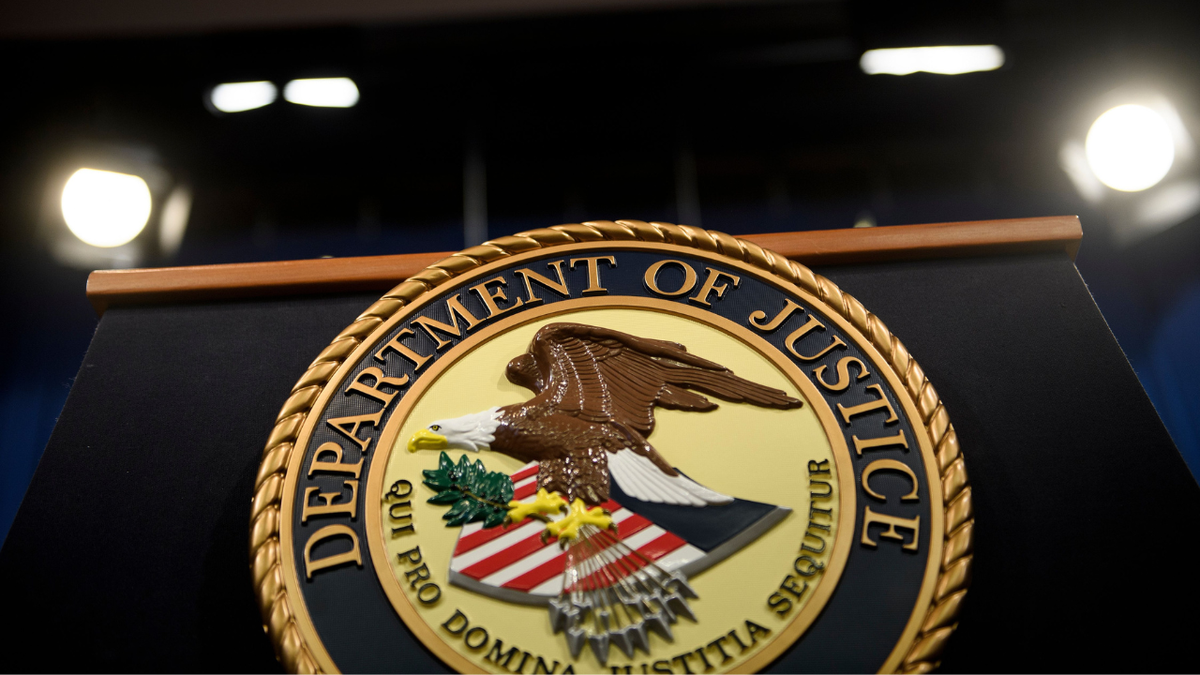
A view of the lecture is seen at the Department of Justice on April 18, 2019, in Washington, DC. A northern Virginia tech company is paying $38,500 to settle claims that it discriminated by posting a job listing seeking white, U.S.-born candidates for an opening as a business analyst. (BRENDAN SMIALOWSKI/AFP via Getty Images)

In the settlement agreement, the company said the ad was “generated by a disgruntled recruiter in India and was intended to embarrass the company,” and that it never intended to dissuade non-citizens from applying.

Arthur Grand did not return a call and email Tuesday seeking comment.

The settlement includes a $7,500 penalty to settle a Justice Department investigation and $31,000 as part of a settlement with the Labor Department to compensate individuals who filed complaints alleging they were discriminated against by the advertisement.

CLICK HERE TO GET THE FOX NEWS APP

The agreement also requires Arthur Grand to train its personnel on the requirements of the federal hiring and discrimination laws and revise its employment policies.

In 2019, another northern Virginia tech firm, Cynet Systems, apologized after posting an online ad seeking “preferably Caucasian” applicants for an account manager job in Florida.


Source link

How to finally resolve the red screen of death on Windows 10

0


Join Fox News for access to this content

You have reached your maximum number of articles. Log in or create an account FREE of charge to continue reading.

Please enter a valid email address.

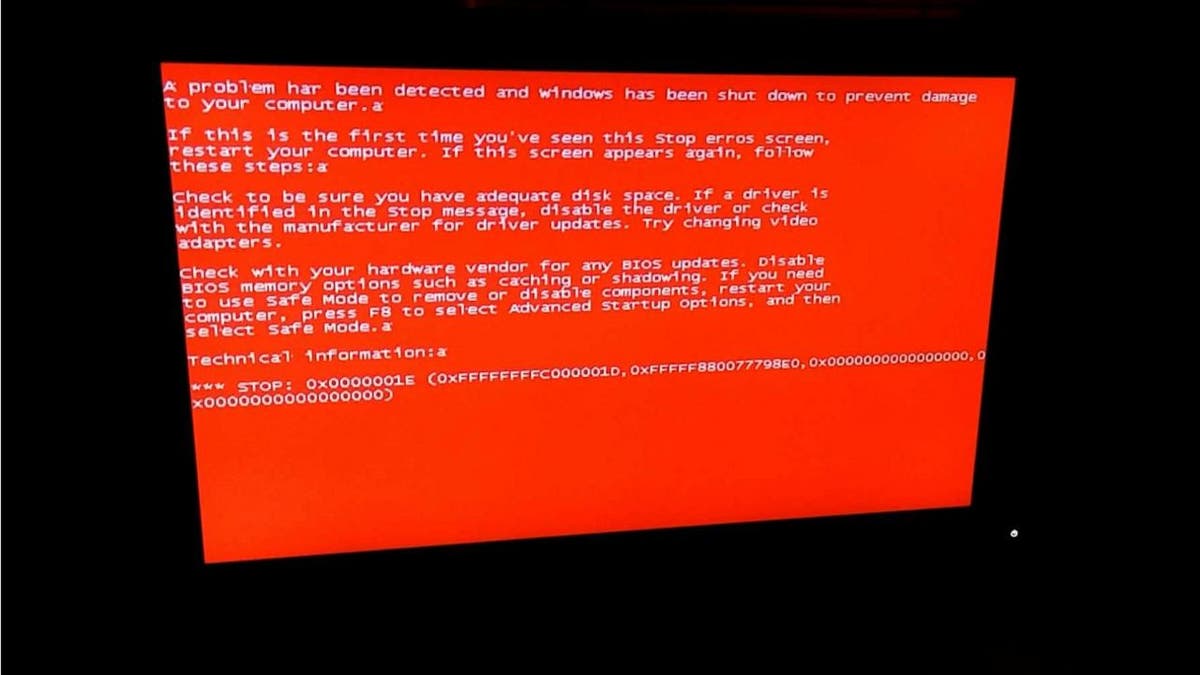
The Red Screen of Death, or RSOD, is a critical error that can severely impact your Windows operating system, similar to the age-old Blue Screen of Death (BSOD) and Black Screen errors. We’ll discuss why the Red Screen error occurs and provide you with some quick fixes to resolve it. Let’s jump right into it.

CLICK TO GET KURT’S FREE NEWSLETTER, THE CYBERGUY REPORT

How to finally resolve the red screen of death on Windows 10

Red Screen of Death (Reddit) (Kurt “CyberGuy” Knutsson)

Causes of the Red Screen of Death error

The Red Screen of Death error can cause your computer to lag and cause constant shutdowns. This error can occur without any warning, potentially causing damage to your Windows 10 operating system. Here are five factors that can contribute to the frequent occurrence of the RSOD error.

1) Broken or outdated drivers: Drivers that are not up-to-date or damaged can trigger the RSOD error.

2) Defective graphics driver: Issues with your graphics drivers can lead to the appearance of the Red Screen error.

3) BIOS problems: Malfunctions or incompatibilities with your system’s BIOS can cause the RSOD error to occur.

4) Incorrect software configurations: Improperly configured software can cause the occurrence of the Red Screen error.

5) Hardware malfunctioning: Faulty hardware components can also be responsible for triggering the RSOD error.

MORE: 10 USEFUL WINDOWS KEYBOARD SHORTCUTS YOU SHOULD KNOW

5 tips for resolving the Red Screen of Death error

Luckily, there are some simple ways to fix the Red Screen of Death error, so if you have this problem, there’s no need to panic. However, it’s always a good idea to regularly back up your computer to prevent data loss in case of issues like the Red Screen of Death. Check out our guide on how to back up your computer for step-by-step instructions.

To ensure you have a reliable backup solution, consider investing in an external hard drive or cloud storage service. Having a backup can save you a lot of hassle and heartache if you ever encounter a critical error like the Red Screen of Death. Now, here are five tips to fix the Red Screen of Death error on Windows 10. 

Tip #1 – Restart your computer

The first thing you should do to resolve the Red Screen error is to restart your computer. This is always the best starting place because a simple restart can efficiently resolve several operating system issues with Windows 10. You may need to perform a hard restart on your computer. To do this:

  • Press and hold down your computer or laptop power button
  • Wait for the computer to power down fully
  • Wait a few minutes before turning back on

Tip #2 – Delete recently installed programs in safe mode

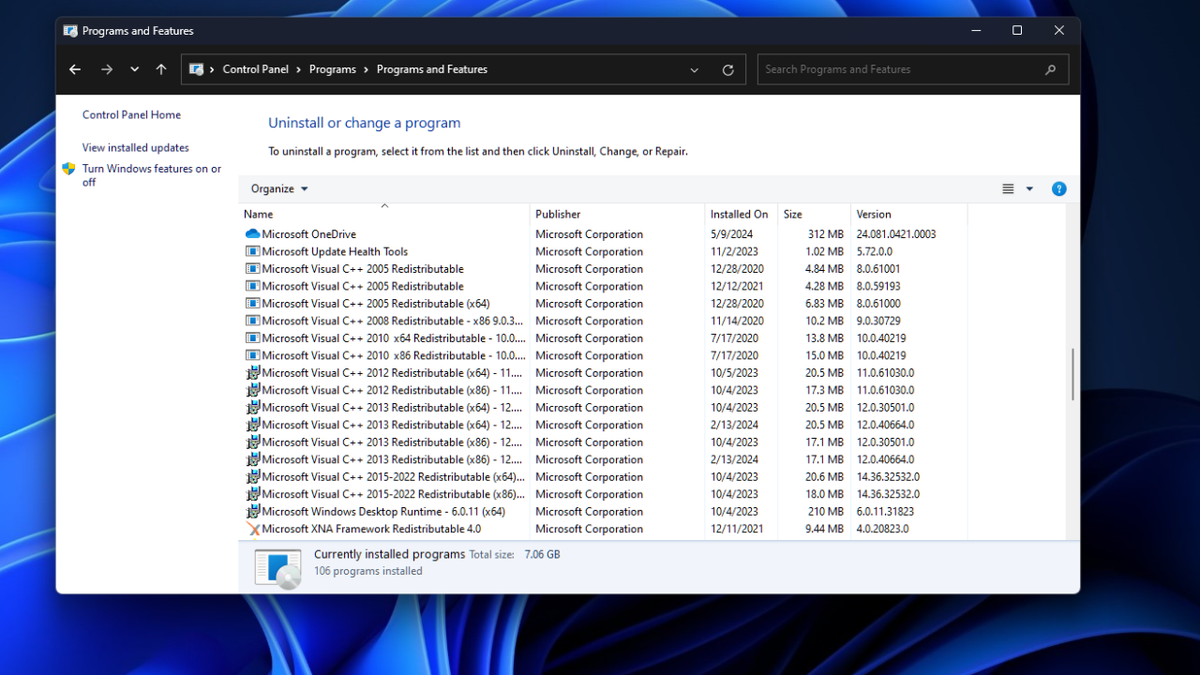
Sometimes, you may experience the Red Screen of Death error after installing a new application. If this is the case, there’s no need to panic. All you need to do is uninstall the application you recently installed. Here’s a step-by-step guide on how to uninstall programs in safe mode.

  • Press the Windows Key + R key
  • Type msconfig and select OK
How to finally resolve the red screen of death on Windows 10

Steps to delete recently installed programs in safe mode (Kurt “CyberGuy” Knutsson)

How to finally resolve the red screen of death on Windows 10

Steps to delete recently installed programs in safe mode (Kurt “CyberGuy” Knutsson)

  • Under boot options, select Safe

Now that you’ve booted in safe mode, here’s what you should do next.

  • Go to the control panel
  • Click Uninstall a Program under “Programs”
  • Double-click the recently installed program and select the Uninstall option.
  • Follow the on-screen instructions until the uninstall process is complete.
How to finally resolve the red screen of death on Windows 10

Steps to delete recently installed programs in safe mode (Kurt “CyberGuy” Knutsson)

MORE: 8 TIPS TO RESTORE SOMETHING YOU ACCIDENTALLY DELETED

Tip #3 – Run SFC command

Corrupted Windows 10 system files are the most common cause of a Red Screen, Black Screen or Blue Screen error on Windows 10. Luckily, repairing corrupted system files with Windows 10 SFC commands is not too difficult. Here’s what you need to do.

  • To open the run box, press the Windows key and R key on your keyboard.
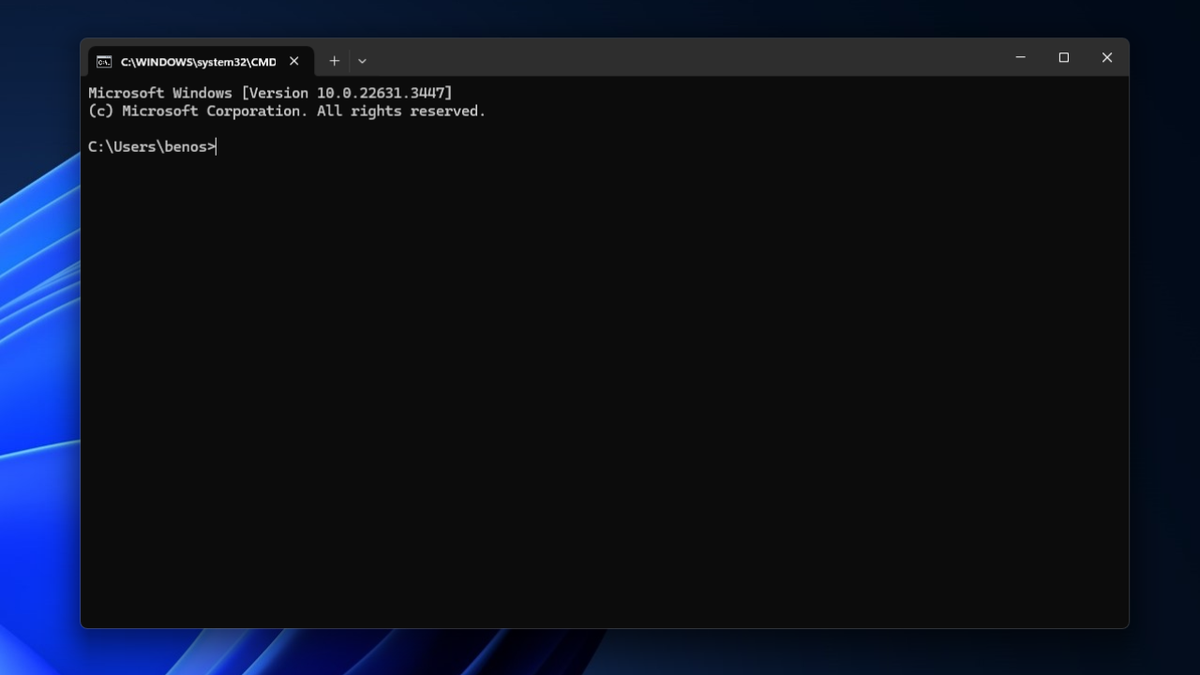
  • Write CMD in the Run Box, then hit the Shift+CTRL+Enter keys simultaneously to open the Command prompt.
How to finally resolve the red screen of death on Windows 10

Steps to run SFC command (Kurt “CyberGuy” Knutsson)

  • Input SFC/Scannow and hit enter. Wait for a moment until the verification is completed.
How to finally resolve the red screen of death on Windows 10

Steps to run SFC command (Kurt “CyberGuy” Knutsson)

  • After the scan, you can restart your computer and see if the Red Screen error persists.

MORE: HOW TO BACK UP YOUR WINDOWS COMPUTER

Tip #4 – Update your graphics driver

The Red Screen of Death error often occurs due to problems with the graphics drivers. Fortunately, with the current version of Windows 10, updating your graphics drivers is much simpler than it used to be.

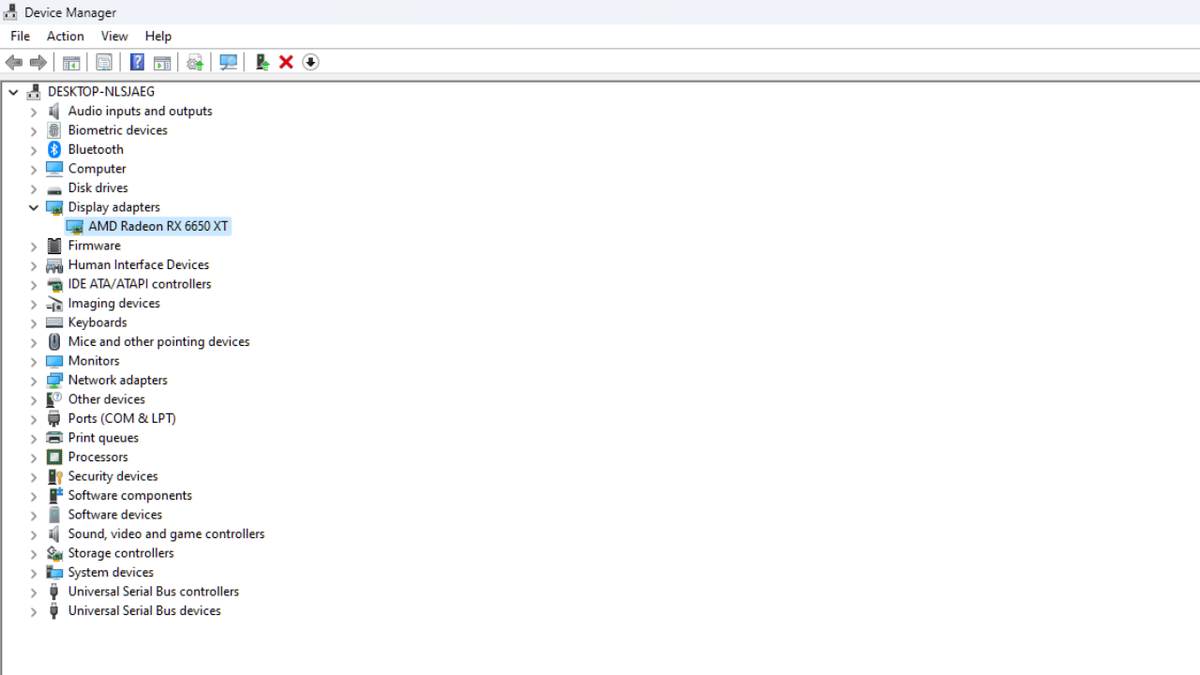
First things first, you will need to know which type of graphics card you have: AMD or Nvidia or potentially Intel (this is unlikely unless you have one of the few computers utilizing Intel Arc graphics).

Here’s how to check which graphics card your computer has.

  • Head to the Device Manager
  • Click Display Adapter
How to finally resolve the red screen of death on Windows 10

Steps to update your graphics driver (Kurt “CyberGuy” Knutsson)

Once you know which graphics card you have, you can download the AMD Windows 10 auto-detect program or NVIDIA’s version of this same tool. If you are someone with Intel Arc graphics, there’s no need to panic. Intel has the same tool available for you. These auto-update tools allow you to keep track of driver updates. They can all scan your computer and install the drivers based on what’s installed on your computer, meaning you don’t have to go through and manually install the drivers from their software page.

EXPERT TIPS, LEGIT REVIEWS. GET THE FREE CYBERGUY REPORT NEWSLETTER

Kurt’s key takeaways

While Windows error codes can be an annoying problem to deal with, they are not too difficult to resolve. We’ve collected here four easy tips to help you resolve the Red Screen of Death. In most cases, all you need to do to fix the Red Screen of Death is update your graphics drivers, which, luckily, AMD and Nvidia (and Intel) have made it easier than ever to do.

Given the challenges posed by the Red Screen of Death error, how do you believe Microsoft should enhance its support and update its systems to better assist users in preventing and resolving such critical issues? Let us know by writing us at Cyberguy.com/Contact.

For more of my tech tips and security alerts, subscribe to my free CyberGuy Report Newsletter by heading to Cyberguy.com/Newsletter.

Ask Kurt a question or let us know what stories you’d like us to cover.

Follow Kurt on Facebook, YouTube and Instagram.

Answers to the most asked CyberGuy questions:

Copyright 2024 CyberGuy.com. All rights reserved.


Source link

Affirmative Action: Fair or Unfair?

0

Are you curious about the hotly debated topic of affirmative action? We shall have a look into a complex and controversial subject that has sparked passionate discussions for decades. From its origins to its impact on education and employment, we’ll explore all sides of the affirmative action debate. 

Understanding Affirmative Action

Affirmative action is a set of policies and initiatives aimed at promoting diversity and equal opportunities in education and employment. It often involves giving preferential treatment to individuals from underrepresented groups, such as women, racial minorities, or individuals with disabilities.

The goal of affirmative action is to address historical discrimination and systemic barriers that have disadvantaged certain groups in society. By actively seeking out candidates from diverse backgrounds, organizations can create a more inclusive and equitable environment.

Critics argue that it can lead to reverse discrimination by unfairly disadvantaging individuals who do not belong to the preferred groups. They suggest that merit should be the sole criteria for selection processes.

Proponents of it believe that it is necessary to level the playing field and ensure that everyone has an equal opportunity to succeed. They argue that without proactive measures, entrenched inequality will persist.

The History of Affirmative Action in the United States

Affirmative Action in the United States has a complex history that dates back to the 1960s. It was initially implemented as a way to address discrimination and promote equal opportunities for minorities and women in education and employment. The concept gained traction during the civil rights movement, aiming to level the playing field for marginalized groups facing systemic barriers.

President John F. Kennedy first introduced it through an executive order in 1961, requiring government contractors to take “affirmative action” to ensure equality in hiring practices. This set the stage for future policies aimed at promoting diversity and inclusivity.

Over the years, affirmative action has faced numerous legal challenges questioning its constitutionality and effectiveness. Despite this, it has remained a controversial yet integral part of American society’s ongoing efforts towards achieving equality and social justice.

The Impact of Affirmative Action on Education and Employment

Affirmative action has had a significant impact on both education and employment in the United States. In educational institutions, affirmative action policies aim to increase diversity by providing opportunities to underrepresented groups. This can result in a more inclusive learning environment that benefits all students.

In terms of employment, affirmative action seeks to address historical discrimination by promoting equal access to job opportunities. By implementing practices such as preferential hiring or recruitment programs, companies can cultivate a workforce that reflects the diversity of society.

Critics argue that affirmative action may lead to reverse discrimination or tokenism, where individuals are hired based on their demographics rather than merit. The impact of affirmative action on education and employment is complex and multifaceted. It remains a topic of debate and discussion as society continues its journey towards equality and fairness.

Alternatives to Affirmative Action

When considering alternatives to affirmative action, one approach is to focus on creating equal opportunities for all individuals regardless of their background or identity. This can involve implementing policies that promote diversity and inclusion in education and the workplace without directly using race or gender as selection criteria.

Another alternative could be to prioritize socioeconomic factors over demographic characteristics when making decisions about admissions, hiring, or promotions. By taking into account an individual’s economic circumstances rather than solely relying on race or gender, organizations can still work towards leveling the playing field while avoiding some of the controversies associated with affirmative action.

Additionally, investing in programs that provide support and resources to underprivileged communities can help address systemic inequalities at a broader level. By addressing root causes of inequality such as lack of access to quality education or job opportunities, society can create a more equitable environment for everyone.

Exploring alternative approaches to affirmative action requires creativity and open-mindedness to find solutions that promote fairness and equality without perpetuating discrimination.

The Future of Affirmative Action

As we look towards the future of affirmative action, there is a growing conversation around its continued relevance and effectiveness in promoting diversity and equality. Many argue that as society progresses, the need for affirmative action may evolve to address new forms of discrimination and inequality.

With ongoing debates surrounding race-based admissions policies, there is a push for more holistic approaches that consider socioeconomic factors alongside race. This shift may lead to more inclusive strategies that benefit a wider range of marginalized communities.

In workplaces, the focus on diversity and inclusion is likely to drive organizations to implement proactive measures beyond traditional affirmative action quotas. Initiatives like unconscious bias training and mentorship programs could become integral in promoting equal opportunities for all individuals.

The future of affirmative action may require a balance between rectifying historical injustices and creating fair opportunities for everyone. As societal norms continue to change, so too must our approach to addressing systemic inequalities through policies like affirmative action.

Finding a Balance between Equality and Fairness

In evaluating affirmative action, it is evident that the policy has both supporters and critics. While it aims to address historical inequalities and promote diversity, some argue that it can lead to reverse discrimination. As we navigate the complexities of this issue, finding a balance between equality and fairness becomes crucial.

It is essential to consider alternative approaches that promote equal opportunities for all individuals without disadvantaging any particular group. By focusing on initiatives like targeted recruitment efforts, mentoring programs, and socioeconomic-based admissions criteria, we can work towards creating a more equitable society.

Moving forward, policymakers must strive to implement policies that not only level the playing field but also create a truly inclusive environment where everyone has an equal chance to succeed based on their merits. By fostering dialogue, listening to diverse perspectives, and remaining open-minded in our approach, we can find common ground that upholds both equality and fairness in our educational institutions and workplaces.

By continuing these conversations and exploring innovative solutions together as a society, we can progress towards a future where opportunities are accessible to all while respecting the principles of meritocracy. Let us strive for a world where equity is at the forefront of our efforts while ensuring fairness for every individual – regardless of their background or circumstances.

AI-powered seeing robot guide dog provides new leash on life for the blind

0


Imagine a world where the visually impaired navigate public spaces with ease, their steps guided not by a furry friend, but by a chatty robotic companion. This is a reality that could soon be possible with the help of experts at the University of Glasgow, who are working on the RoboGuide project.

CLICK TO GET KURT’S FREE NEWSLETTER, THE CYBERGUY REPORT

AI-powered seeing robot guide dog provides new leash on life for the blind

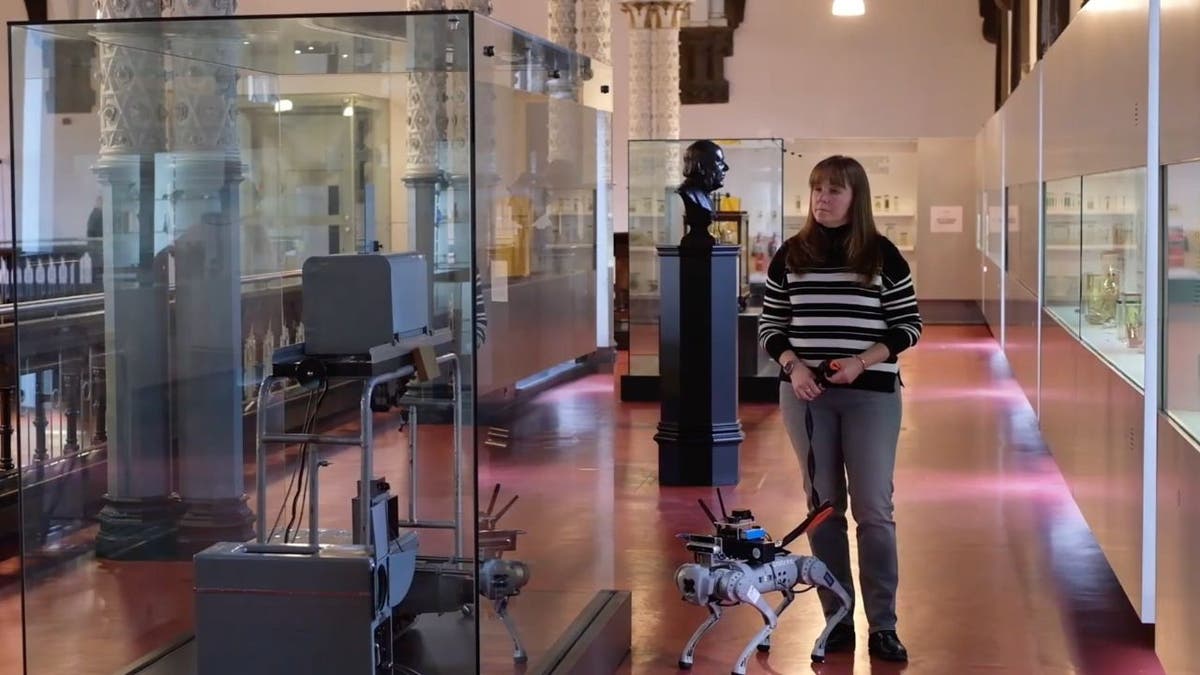
RoboGuide (University of Glasgow) (Kurt “CyberGuy” Knutsson)

The birth of RoboGuide

In the labs of Glasgow’s James Watt School of Engineering, a team of experts has partnered with industry leaders and charitable organizations to create an AI-powered, four-legged robot that promises to revolutionize mobility for the visually impaired.

AI-powered seeing robot guide dog provides new leash on life for the blind

RoboGuide (University of Glasgow) (Kurt “CyberGuy” Knutsson)

CAN’T HEAR OR SEE WELL? IPHONE SETTINGS TO MAKE HEARING, SEEING EASIER

The tech behind the tail wag

RoboGuide is equipped with an array of sophisticated sensors that map out environments with precision. Its software allows it to learn and navigate optimal routes while avoiding obstacles. And with large language model technology, it can converse with users, answering questions and providing guidance.

AI-powered seeing robot guide dog provides new leash on life for the blind

RoboGuide (University of Glasgow) (Kurt “CyberGuy” Knutsson)

THE SEEING AI APP NOW ON ANDROID CAN HELP ANYONE SEE BETTER WITH THEIR SMARTPHONE

Test run for the RoboGuide

The Hunterian Museum, Scotland’s historical gem, served as the testing ground for RoboGuide. Volunteers from the Forth Valley Sensory Centre and RNIB Scotland experienced firsthand how this technology could change their lives. As they explored the museum, RoboGuide offered interactive spoken guidance, proving its potential as a game-changer in assistive technology.

GET SECURITY ALERTS, EXPERT TIPS – SIGN UP FOR KURT’S NEWSLETTER – THE CYBERGUY REPORT HERE

AI-powered seeing robot guide dog provides new leash on life for the blind

RoboGuide (University of Glasgow) (Kurt “CyberGuy” Knutsson)

HOW TO UNLOCK SPECIAL FEATURES ON YOUR IPHONE TO IMPROVE VOICE SEARCH

The visionaries behind the vision

Leading the charge are professor Muhammad Imran and Dr. Olaoluwa Popoola, whose passion for innovation is matched only by their commitment to inclusivity. They, along with Dr. Wasim Ahmad, are not just creating a product; they’re crafting a future where technology serves humanity, breaking down barriers and fostering independence.

AI-powered seeing robot guide dog provides new leash on life for the blind

RoboGuide (University of Glasgow) (Kurt “CyberGuy” Knutsson)

ASK OUR TECH EXPERT ANY QUESTION AND GET KURT’S FREE CYBERGUY REPORT NEWSLETTER HERE

Kurt’s key takeaways

As the RoboGuide project continues to evolve, it’s clear that this isn’t just about technology; it’s about people. It’s about harnessing the power of innovation to make a real difference in the lives of the 2.2 billion individuals worldwide living with sight loss. While currently, RoboGuide is in the prototype phase, it promises a world where the blind and partially sighted step out with confidence, guided by the friendly voice of a robot that’s become their eyes and their ally.

For those with disabilities, what are some of the biggest remaining challenges you face in your daily life that new technologies could help solve? Let us know by writing us at Cyberguy.com/Contact.

For more of my tech tips and security alerts, subscribe to my free CyberGuy Report Newsletter by heading to Cyberguy.com/Newsletter.

Ask Kurt a question or let us know what stories you’d like us to cover.

Follow Kurt on Facebook, YouTube and Instagram.

Answers to the most asked CyberGuy questions:

Copyright 2024 CyberGuy.com. All rights reserved.


Source link

Nurses speak out: ‘What I wish I’d known before entering the profession’

0

Join Fox News for access to this content

Plus special access to select articles and other premium content with your account – free of charge.

Please enter a valid email address.

FIRST ON FOX: With nearly two-thirds of nurses in the United States experiencing burnout — including 69% of those under 25 years of age, according to the American Nurses Association — many in the industry are calling for change.

A recent survey by AMN Healthcare, a health care workforce solutions company based in Texas, found that most nurses aren’t optimistic about improvements, with 80% saying they think the year 2024 will be either “no better or worse” than last year and 38% of nurses expecting it to be worse.

“The concerns that many nurses have about their profession were not created by COVID-19 and have not gone away now that the crisis has passed,” Robin Johnson, group president of nursing solutions at AMN Healthcare, who administered the survey, told Fox News Digital.

NURSES CALL FOR CHANGE AS MANY REVEAL THEY’RE ‘EXTREMELY LIKELY’ TO LEAVE PROFESSION: ‘EMOTIONAL, STRESSFUL’ 

“Many nurses still feel overworked and undercompensated,” she said. 

“What they want to see is a change in their daily working conditions — better hours, fair compensation and more time with their patients.”

Left to right, Karie Ryan, Michele Acito, Katelynn Blackburn and Lisbeth Votruba shared insights into the nursing profession with Fox News Digital. Two other nurses shared thoughts as well.  (iStock/Karie Ryan/Michele Acito/Katelynn Blackburn/Lisbeth Votruba)

Amid the ongoing challenges faced by today’s nurses, six people in the profession shared what they wish they’d known before they decided to enter the field — and what advice they’d give to newcomers.

Lisbeth Votruba: ‘Nurses don’t have enough influence’

Lisbeth Votruba, a third-generation registered nurse in Belmont, Michigan, is also the chief clinical officer of AvaSure, a virtual health care platform. 

“When I first entered the profession in the 1990s, I was surprised to learn that although nurses are held to high ethical and legal standards, they do not have the influence to match that level of accountability,” said Votruba. 

“I see trends to show this is changing, and I am doing what I can as a member of the senior leadership team of a technology company to make sure the voice of nurses is heard as health care technology is being designed,” she said. 

Lisbeth Votruba

Lisbeth Votruba, a third-generation registered nurse in Belmont, Michigan, is also the chief clinical officer of AvaSure, a virtual health care platform. (Lisbeth Votruba)

“Nurses must be at the table for every discussion about technology that impacts the patient,” she said. 

Mat Wellnitz: ‘Wish I’d known the stress involved’

Mat Wellnitz, a registered nurse in Big Rapids, Michigan, recently retired from a rural hospital after more than 34 years, most of them spent in critical care.

“I wish I’d known the amount of stress that’s involved in nursing,” said Wellnitz. 

“I would have taken more time off for myself. It wasn’t until about a week after I retired that I realized how much stress I was blinded to.” 

AMERICANS TRUST NURSES THE MOST OUT OF 23 MAJOR PROFESSIONS, NEW POLL FINDS: ‘AT THE FOREFRONT’

He added, “I used to lie down and instantly could feel my heart pounding, always thinking about work. But not anymore — and I sleep better.”

Larry Williams: ‘Your work impacts your overall health’

Larry Williams worked as a registered nurse at California’s Stanford Hospital in the intensive care unit before retiring in 2021.

“I went into nursing with my eyes wide open … There were no surprises because I worked in two different hospitals while going to school,” said Williams. 

“My advice to anyone considering nursing and health care in general is to find a way to actually work in a hospital prior to graduating. Pay attention to your strengths and weaknesses and choose an area that fits you as a person.”

“It is not the career for everyone, but it was for me.”

He also told Fox News Digital, “While you are working, pay attention to how your work is impacting your overall health. Not everyone is cut out to work in the ICU. I still have occasional work dreams, and I remember the names and faces of people I cared for who did not survive.”

Said Williams, “That is balanced by the happy memories of my peers as well as lives that I have touched … It is not the career for everyone, but it was for me.”

Karie Ryan: ‘Bedside nursing is not the only option’

Karie Ryan, currently the chief nursing officer at health tech firm Artisight, spent 27 years as a nurse in Florida, with a specialty in medical/surgical/orthopedics.

Karie Ryan

Karie Ryan, currently the chief nursing officer at the health tech firm Artisight, told Fox News Digital, “There are so many specialty opportunities, including nursing informatics.” (Karie Ryan)

“I wish I had known that bedside nursing is not the only option available in order to make an impact,” she told Fox News Digital. 

“There are so many specialty opportunities, including nursing informatics.”

She added, “If nursing schools offered exploration in nursing informatics and other subspecialties, it would open a new world of possibilities not only to those entering the field, but as a consideration for nurses later in their career who may want to transition but remain in the profession.”

Katelynn Blackburn: ‘Constant pressure took a toll’

Katelynn Blackburn, a former nurse who is now an entrepreneur, worked 12-hour night shifts for parent access care in Chico, California, for over two years before leaving the field.

Katelynn Blackburn

Katelynn Blackburn worked 12-hour night shifts for parent access care in Chico, California, for over two years before leaving the field.  (Katelynn Blackburn)

“I wish I would have known more about how my personality would affect my profession in the medical field,” said Katelynn Blackburn. 

“I am empathetic and caring; however, the field itself comes with a lot of pain and anxiety for patients and their families,” she said. 

“The constant exposure to hardships, on top of the pressure of providing comfort and support to patients and their families, definitely took its toll on me.”

NATIONAL NURSES WEEK 2024: HOW TO CELEBRATE AND SHOW APPRECIATION TO THE NURSES IN YOUR LIFE

She added, “I wish I had thought less about the income and salary and more about what the actual job entails. You must find something you are passionate about and ensure that it will secure your family financially.”

Noted Blackburn, “I have always had an entrepreneurial mindset and a personality driven to achieve more — so I decided to leave to pursue something I felt more aligned with.”

Michele Acito: ‘Emotional bond is deep’

Michele Acito is executive vice president and chief nursing officer at Holy Name Medical Center in New Jersey. She joined Holy Name in 1989 as a telemetry nurse, working in the cardiovascular and intensive care units before she was promoted. Earlier in her career, she worked as a staff nurse in orthopedics at St. Joseph’s University Medical Center.

“I wish I’d known about the emotional commitment I was making,” said Acito.  

CLICK HERE TO SIGN UP FOR OUR HEALTH NEWSLETTER

“We know we will be committed to providing the best care … but the emotional bond and commitment you make to patients and families as they navigate through life-changing events is deep. As a nurse, you quickly learn how to comfort, celebrate, support and educate patients and families through the good and the difficult times.”

She added, “Today, nearly 40 years into my career, I am able to reflect on how my training as a nurse helped me to help patients and families during their most vulnerable moments. It is what makes me proud to be a nurse.”

Michele Acito

Michele Acito is executive vice president and chief nursing officer at Holy Name Medical Center in New Jersey. She originally joined Holy Name in 1989 as a telemetry nurse, working in the cardiovascular and intensive care units. (Michele Acito)

“Another thing I wish I had known before entering the profession,” said Acito, “was how complex it would be to blend a career, a young family and a household.”

“Nursing was the perfect career for someone striving to manage it all.”

But “what I realized was that nursing was the perfect career for someone striving to manage it all and find fulfillment and purpose on a personal and professional level. It requires thoughtful prioritization, planning and support.”

Other insights: ‘A nurse is a career learner’

Acito also shared the importance of ongoing education to set up nurses for success.

“Having graduated from a BSN program, I thought I was educationally set for my entire career,” she said. “I quickly realized that was not true.”

She noted, “A nurse is a career learner. Obtaining degrees is very important to remain current with theory — but learning through continuing education is paramount to staying current in practice.”

CLICK HERE TO GET THE FOX NEWS APP

“Technologically, nothing remains the same in health care,” said Acito. “It’s an ever-evolving field. Pursuing a nursing career in hospitals and health systems that are committed to investing in innovation and technological advancements is critically important.”

Acito also pointed out, “What I did not know then, but I know today, is that I made the best career choice when I decided to be a nurse. The hours are difficult, the stress intense, the emotional commitment deep — but the rewards are innumerable.”

For more Health articles, visit www.foxnews.com/health.

Explained: Clarence Thomas’ split with conservatives to save ‘Elizabeth Warren’s baby’

0

Join Fox News for access to this content

Plus special access to select articles and other premium content with your account – free of charge.

Please enter a valid email address.

When the Supreme Court decided last week to keep the controversial Consumer Financial Protection Bureau (CFPB) funded, some were surprised that Justice Clarence Thomas split from some of his conservative colleagues, writing the majority opinion to keep the CFPB intact. 

In a 7-2 decision, the court held that Congress uniquely authorized the bureau to draw its funding directly from the Federal Reserve System, therefore allowing it to bypass the usual funding mechanisms laid out in the appropriations clause of the Constitution. 

The financial watchdog agency bypasses typical congressional appropriations and simply requires the CFPB director to make requests of the Treasury Department for funds as needed. The banking industry parties challenging the CFPB say that is unconstitutional, citing the appropriations clause.

But the high court’s majority disagreed. “In this case, we must decide the narrow question whether this funding mechanism complies with the Appropriations Clause. We hold that it does,” the opinion states. 

SUPREME COURT RULES IN FAVOR OF CFPB, BRAINCHILD OF SEN. ELIZABETH WARREN

Justice Clarence Thomas listens during a ceremony on the South Lawn of the White House on Oct. 26, 2020. (Al Drago/Bloomberg via Getty Images)

“For most federal agencies, Congress provides funding on an annual basis. This annual process forces them to regularly implore Congress to fund their operations for the next year. The Consumer Financial Protection Bureau is different. The Bureau does not have to petition for funds each year. Instead, Congress authorized the Bureau to draw from the Federal Reserve System the amount its Director deems ‘reasonably necessary to carry out’ the Bureau’s duties, subject only to an inflation-adjusted cap,” Thomas explained. 

“Although there may be other constitutional checks on Congress’ authority to create and fund an administrative agency, specifying the source and purpose is all the control the Appropriations Clause requires.”

“The statute that authorizes the Bureau to draw money from the combined earnings of the Federal Reserve System to carry out its duties satisfies the Appropriations Clause,” the opinion states. 

The banking associations, which sued the CFPB, Thomas writes “offer no defensible argument that the Appropriations Clause requires more than a law that authorizes the disbursement of specified funds for identified purposes.”

But Justices Samuel Alito and Neil Gorsuch strongly dissented, saying, “The Court upholds a novel statutory scheme under which the powerful [CFPB] may bankroll its own agenda without any congressional control or oversight.”

Thomas, in the majority opinion, fired back, “The dissent accepts that the question in this case is ultimately about the meaning of ‘Appropriations.’”

“It faults us for consulting dictionaries to ascertain the original public meaning of that word, insisting instead that ‘Appropriations’ is a ‘term of art whose meaning has been fleshed out by centuries of history,'” Thomas writes. 

“But, as we have explained at length, both preratifcation and postratifcation appropriations practice support our source-and-purpose understanding,” he said.

The CFPB has been a thorn in the side of Republicans since Sen. Elizabeth Warren, D-Mass., helped create it after the 2008 market crash in an effort to protect consumers from financial schemes, with authority to regulate banking and lending agencies via federal rules. 

President Barack Obama said in 2011 that the agency “was Elizabeth’s idea, and through sheer force of will, intelligence, and a bottomless well of energy, she has made, and will continue to make, a profound and positive difference for our country.”

LIBERAL JUSTICES EARN PRAISE FOR ‘INDEPENDENCE’ ON SUPREME COURT, BUT THOMAS TRULY STANDS ALONE, EXPERT SAYS

justices clarence thomas john roberts samuel alito

Justice Clarence Thomas, Chief Justice John Roberts and Justice Samuel Alito. (Jabin Botsford/The Washington Post via Getty Images)

Former acting CFPB Director Mick Mulvaney during the Trump administration even called the agency “Elizabeth Warren’s baby.”

Warren has been critical of the high court since Trump flipped the ideological majority with his appointments of Justices Amy Coney Barrett, Brett Kavanaugh and Gorsuch. In 2021, she called to expand the court, saying that the current court “threatens the democratic foundations of our nation.”

She’s been directly critical of Thomas, accusing him last year of “corruption” by taking vacations paid for by a GOP mega-donor but not disclosing them. Thomas said he consulted his colleagues and the judicial conference and said he’s followed the ethics rules regarding the reporting of those trips. 

Fox News Digital reached out to Warren for comment.

Elizabeth Warren gesturing

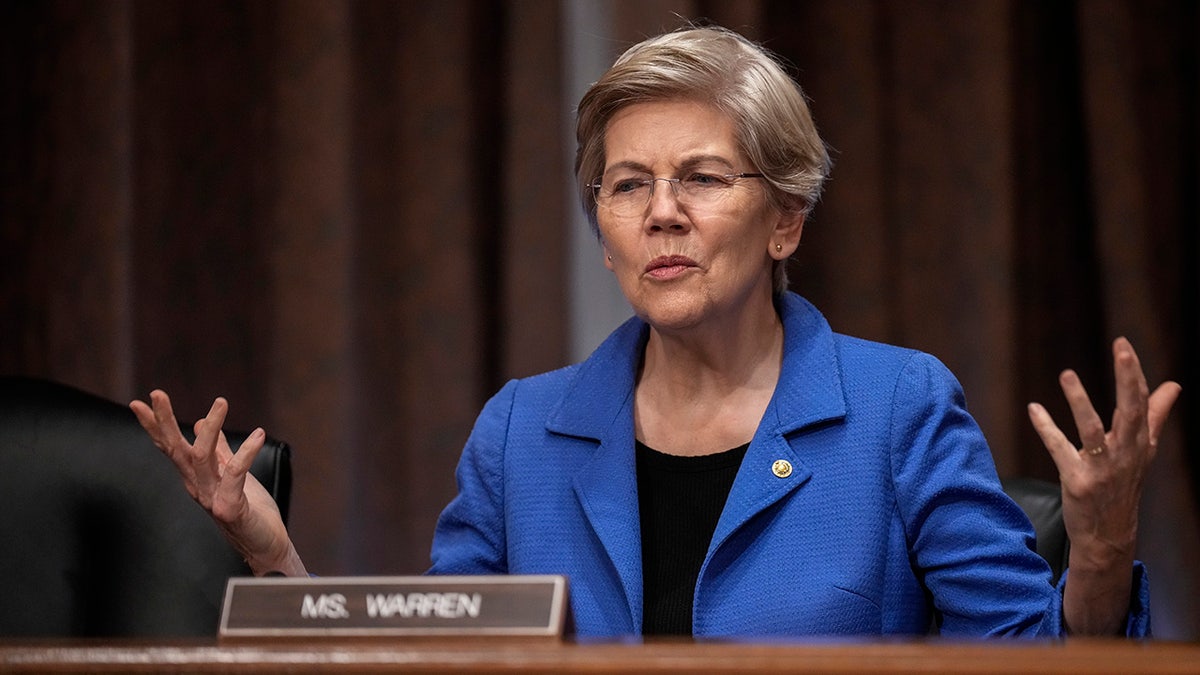
Sen. Elizabeth Warren speaks before the start of a Senate Banking Committee hearing on Capitol Hill, April 27, 2023. (Drew Angerer/Getty Images)

When the high court ruled in the CFPB’s favor last week, she praised it, saying it “followed the law.” 

Peggy Little, a senior counsel with the New Civil Liberties Alliance (NCLA) disagreed with the majority’s decision. But she thinks Thomas’ authorship “debunks the idea that all conservatives decide the cases the same way.” 

OVER 100 FORMER CLERKS OF JUSTICE THOMAS SIGN OPEN LETTER DEFENDING HIS INTEGRITY, INDEPENDENCE

“I think it’s a healthy corrective to how the media talks about the court,” she told Fox News Digital. 

She added that “it would be a mistake for Congress to consider [the decision] a license to set up similar regimes” and that the high court “might revisit it and see the error of its ways.”

David B. Rivkin Jr., an appellate and constitutional law attorney and former White House and Justice Department counsel, says Thomas “marches to the beat of his own drum.”

“The notion that the six conservative justices march in lockstep is absurd,” Rivkin said. “There are distinctive differences not only in how they decide specific cases but in their judicial philosophy. There are numerous permutations of originalism and textualism.”

“Justice Thomas does what he thinks is right, follows the text and its original intent when it was written, and doesn’t mind if he’s the only dissenting justice,” John Shu, a constitutional lawyer who worked for both Bush administrations, told Fox News Digital. 

Shu co-authored the first white paper criticizing the leadership structure and funding mechanism of the CFPB with former White House counsel Ambassador C. Boyden Gray in 2010.

CLICK HERE TO GET THE FOX NEWS APP

“If other justices decide to agree with him, that’s nice, though he’s willing to go it alone,” Shu observed.  “Justice Thomas is a true originalist and textualist, as is Justice Alito, and in this case, they interpret the term ‘appropriations’ in different ways, which further proves that the justices do not vote in lockstep as some erroneously claim.”

“Neither Justice Alito nor Justice Thomas are results-oriented, meaning that they do not begin with a preferred outcome in mind and try to come up with some kind of justification later,” Shu explained. 

“Instead, they go where the law’s text and original intent take them, and they don’t concern themselves with political outcomes or backlashes, which is one of the reasons why the Constitution gives federal judges lifetime appointment, to insulate their jobs from political whims,” he said.

Memorial Day ceremony in Baghdad honors US soldiers killed in drone attack

0

U.S. Military personnel stationed in Baghdad, Iraq held a Memorial Day service Monday to honor the three U.S. Army soldiers who were killed in a drone attack in Jordan earlier this year. 

Combined Joint Task Force Operation Inherent Resolve presented the ceremonial wreath at the Memorial Day ceremony at the Union III base, in Baghdad’s Green Zone. Those in attendance paid their respects to the fallen service members. 

U.S. Army Maj. Gen. J.B. Vowell, Combined Joint Task Force – Operation Inherent Resolve Commanding General, writes the name of a fallen service member on the Memorial Day wall during a ceremony at Union III in Baghdad, Iraq, May 27, 2024.  (U.S. Army)

Staff Sgt. William Rivers, 46, Sgt. Kennedy Sanders, 24, and Sgt. Breonna Moffett, 23, were killed Jan. 28 after a drone attack by an Iranian proxy group hit Tower 22, a small U.S. outpost in northeast Jordan, on the Iraq, Syria, Jordan tri-border, where they were stationed. 

BIDEN ADMIN REVERSES COURSE, GRANTS PERMIT FOR CATHOLIC GROUP’S MEMORIAL DAY MASS AT NATIONAL CEMETERY

us soldiers killed in jordan

L-R: Sgt. William Rivers, Spc. Breonna Moffett, and Spc. Kennedy Sanders.  (Fox News )

The soldiers had been stationed at Tower 22 just across the border from Syria to support the mission to defeat ISIS. 

At its height, over 100,000 people lived there, blocked by Jordan from entering into the kingdom at a time when concerns about infiltration by the extremist group were rampant. Those concerns grew out of a 2016 car bomb attack there, that killed seven Jordanian border guards.

Baghdad 1

Operation Inherent Resolve soldiers stand in formation and salute the United States flag during a Memorial Day ceremony at Union III in Baghdad, Iraq, May 27, 2024. (U.S. Army)

The camp has dwindled in the time since to some 7,500 people because of a lack of supplies, per United Nations estimates.

Baghdad 2

The Memorial Day Wall at Union III in Baghdad, Iraq, May 27, 2024.  (U.S. Army)

The base began as a Jordanian border observation outpost, then saw an increased U.S. presence after American forces entered Syria in late 2015. The small installation includes U.S. engineering, aviation, logistics and security troops with about 350 U.S. Army and Air Force personnel deployed there.

Baghdad 3

A U.S Army soldier assigned to 1st Battalion, 181st Infantry Regiment, 44th Infantry Brigade Combat Team, New Jersey National Guard, plays Amazing Grace on bagpipes during the Memorial Day ceremony at Union III in Baghdad, Iraq, May 27, 2024. (U.S. Army)

CLICK HERE TO GET THE FOX NEWS APP

Rivers, Sanders and Moffett were all assigned to the 718th Engineer Company, an Army Reserve unit based in Fort Moore, Georgia, previously known as Fort Benning.

The Associated Press contributed to this report.

The Bountiful Importance of The Strategic Petroleum Reserve

0

In a world where energy security plays a pivotal role in global stability, the Strategic Petroleum Reserve stands as a vital safeguard against unforeseen disruptions in the oil supply chain. We will take a look at the history, purpose, benefits, and current status of this critical reserve that holds the key to ensuring economic resilience and national security. Join us on this journey to explore why the Strategic Petroleum Reserve is more than just barrels of oil stored underground—it’s a strategic necessity for nations worldwide.

What is the Strategic Petroleum Reserve?

The Strategic Petroleum Reserve, commonly known as SPR, is a massive stockpile of emergency crude oil maintained by various countries to shield against supply disruptions. It serves as a critical buffer during times of geopolitical tensions, natural disasters, or other events that could impact the availability of oil on the market. The SPR typically consists of underground storage facilities located in strategic locations across the country.

Governments use the reserve to mitigate sudden spikes in oil prices and ensure energy security for their citizens. In essence, it acts as an insurance policy against unforeseen circumstances that could threaten national interests. By stockpiling millions of barrels of crude oil, countries can quickly release reserves onto the market to stabilize prices and maintain a steady energy supply when needed most.

History of the Strategic Petroleum Reserve

The history of the Strategic Petroleum Reserve dates back to the aftermath of the 1973 oil crisis when OPEC’s embargo caused a shortage in oil supply, leading to soaring prices and economic turmoil. Recognizing the need for a buffer against future disruptions, the U.S. government established the SPR in 1975.

Located in underground salt caverns along the Gulf Coast, this emergency stockpile can store up to 727 million barrels of crude oil. Over the years, it has played a vital role in safeguarding national energy security during times of geopolitical tensions or natural disasters.

Since its inception, the SPR has been tapped into several times to mitigate supply disruptions and stabilize oil prices. Its strategic importance continues to be highlighted as global energy dynamics evolve and new challenges emerge on the horizon.

Benefits of Having a Strategic Petroleum Reserve

Having a Strategic Petroleum Reserve also enhances national security by ensuring that there is enough fuel available to support critical operations during times of crisis. This strategic asset serves as an insurance policy against potential threats to energy security, safeguarding economic stability and resilience.

Moreover, the existence of a Strategic Petroleum Reserve can deter adversaries from attempting to manipulate global oil markets for political leverage, strengthening diplomatic and geopolitical positions. By maintaining strategic reserves, countries can better protect their interests and reduce vulnerabilities in an increasingly interconnected world.

Current Status of the Strategic Petroleum Reserve

The current status of the Strategic Petroleum Reserve (SPR) is a topic of ongoing interest and discussion in the energy industry. As of 2024, the SPR holds approximately 594.7 million barrels of crude oil, strategically located in underground salt caverns along the Gulf Coast. 

In recent years, there have been debates about modernizing and optimizing the SPR to align with evolving energy landscapes and market dynamics. Some experts advocate for adjusting storage capacity, while others emphasize enhancing coordination with international partners to address global energy challenges effectively.

Efforts are also being made to evaluate the effectiveness of releasing oil from the reserve in response to various scenarios, such as natural disasters or geopolitical tensions impacting oil supplies. Continuous monitoring and assessment are essential to ensure that the SPR remains a valuable resource for safeguarding energy resilience in the United States.

Potential Risks and Challenges

The Strategic Petroleum Reserve is not without its potential risks and challenges. One concern is the cost of maintaining such a large stockpile of oil, which requires significant financial resources. In times of budget constraints, allocating funds for the upkeep of the reserve can be a challenge.

Another risk lies in the potential for geopolitical tensions to impact access to oil supplies. Disruptions in major oil-producing regions could limit the availability of crude oil for refilling the reserve, leaving it vulnerable during times of crisis.

Additionally, there are environmental considerations associated with storing large quantities of oil underground. The risk of leaks or spills from aging infrastructure poses a threat to local ecosystems and communities surrounding storage sites.

As technology evolves and renewable energy sources become more prevalent, reliance on fossil fuels may decrease, potentially affecting the long-term relevance and necessity of maintaining such a substantial petroleum reserve.

Conclusion: The Necessity of Maintaining and Utilizing the Strategic Petroleum Reserve

The Strategic Petroleum Reserve plays a vital role in ensuring energy security and stability for the United States. With its strategic location, vast storage capacity, and emergency response capabilities, the SPR serves as a critical tool in times of supply disruptions or global crises.

By maintaining and utilizing the Strategic Petroleum Reserve effectively, the U.S. can enhance its energy resilience, mitigate risks associated with unforeseen events, and safeguard against potential economic hardships. It is essential to recognize the importance of having this reserve in place as a proactive measure to protect national interests and maintain energy independence.

As we navigate through an ever-changing geopolitical landscape and volatile energy markets, the Strategic Petroleum Reserve remains a valuable asset that must be preserved and managed efficiently. Its continued existence ensures that the U.S. has a reliable buffer to address any sudden disruptions in oil supply and help stabilize prices for consumers.

In essence, sustaining the Strategic Petroleum Reserve is not just about stockpiling oil but rather investing in long-term energy security strategies that benefit both current and future generations. As uncertainties loom on the horizon, it is imperative to prioritize the upkeep of this crucial resource to safeguard our nation’s energy interests and ensure stability in times of need.

Can you bypass VPN blocks, protect your online privacy?

0


In today’s digital age, the significance of virtual private networks (VPNs) cannot be overstated. These powerful tools are essential for safeguarding your online activities and maintaining privacy against ever-evolving cyberthreats. Despite widespread recognition of their benefits, many users, like Beth, who recently contacted us, encounter challenges in effectively leveraging VPNs.

“Hi. I recently had some jerk hack my Amazon account and cause all sorts of problems and I believe they also hacked my Etsy account. … Anyway, I wanted to start using a VPN since 99% of my time both for work and at home is spent online and the same for my son and my husband. However, we noticed that a HUGE number of sites want to block people who are using VPNs. Do you have a suggestion for a VPN that is less likely to be blocked or noticed or however that works?” — Beth, Verbena, Alabama

Hey Beth, I’m sorry to hear that you had to go through such an ordeal. It’s understandable that you want to protect your online privacy and security by using a VPN. However, it’s true that some websites block VPN connections to prevent fraudulent activities and protect their own security. Below are the reasons why VPN connections are blocked and how to circumvent that.

CLICK TO GET KURT’S FREE NEWSLETTER, THE CYBERGUY REPORT

Can you bypass VPN blocks, protect your online privacy?

A woman working on her laptop and holding her phone (Kurt “CyberGuy” Knutsson)

Tips for choosing a reliable VPN 

Use a reputable VPN provider

Major paid VPN services invest significant resources into evading VPN blocking by websites and services. Their server networks are large and constantly rotating IP addresses, making it harder to blacklist.

Avoid free VPNs

Free VPN services tend to have smaller server networks and get their IP address ranges blacklisted more easily by anti-VPN measures. Paid providers are generally better at bypassing blocks.

Enable VPN obfuscation

Many VPNs offer an obfuscation or camouflage mode that disguises VPN traffic as regular internet traffic, helping evade deep packet inspection used to identify VPNs.

Use a browser plugin

Some VPN providers offer browser extensions that can sometimes bypass VPN blocks when the desktop app fails. The extensions route only the browser traffic through the VPN.

No VPN is 100% unblockable, but following these tips can help find a service that minimizes the chances of being blocked when trying to access restricted websites and services.

Can you bypass VPN blocks, protect your online privacy?

VPN on a woman’s smartphone (Kurt “CyberGuy” Knutsson)

MORE: HOW TO USE VPNs WITHOUT COMPROMISING YOUR BANKING APPS

Reasons why VPN connections are blocked

Regarding your online privacy, it’s true that companies like Google have been caught taking information they were not given permission to access. However, it’s important to note that websites have the right to block VPN connections if they suspect fraudulent activities. This is because VPNs can be used to mask the identity of the user and bypass geographical restrictions, which can be used for illegal activities. Below are the top four reasons VPN connections are blocked.

1) Transparency: Financial institutions, in particular, often block VPNs because they want to preserve the transparency of transactions. In short, these institutions have a vested interest in seeing where and who the funds are coming and going. PayPal actually will go as far as to ban VPN users for life as it violates their Terms of Service agreements.

2) Limiting services: Streaming services do not want users to use VPN because it bypasses specific region-based restrictions. Certain content is only available to specific regions of the world, and VPN would mask the user’s location. Streaming services actively block VPN IP addresses, and if it is discovered you managed to bypass their IP blacklists with a regular VPN or VPN obfuscation, you can come under “fire” from the streaming services.

3) Preventing illegal activities: Some governments and companies utilize VPN blocking to ensure that they are protected against misuse, fraud, and other illegal activities.

4) Control: Some governments and companies use VPN blocking to monitor and trace back activities by individuals online. For instance, some companies ban VPN use, limiting nonwork access online, etc.

ASK ANY TECH QUESTION AND GET KURT’S FREE CYBERGUY REPORT NEWSLETTER HERE

Can you bypass VPN blocks, protect your online privacy?

A woman on her computer (Kurt “CyberGuy” Knutsson)

MORE: HOW TO SECURE YOUR HOT SPOT PRIVACY, SECURITY WITH VPN

Changing the VPN server location

One effective way to bypass VPN blocking is to connect to a different VPN server location or city. Many websites and services that attempt to block VPNs do so by blacklisting known VPN IP address ranges. By switching to a VPN server in a different city or country, you can obtain a new IP address that may not be blocked.

Most reputable VPN providers have a large global server network spanning hundreds or thousands of servers across dozens of countries. This gives you many options to try different server locations until you find one that is not blocked by the website or service you’re trying to access.

The steps are usually:

  • Disconnect from your current VPN server
  • In your VPN app, browse the server list and select a new city or country
  • Connect to the new VPN server location

By changing your virtual location frequently, you make it much harder for anti-VPN measures to keep up with blacklisting all the IP addresses associated with a particular VPN service.

How to choose a VPN that keeps you connected

Consider using a VPN to protect against being tracked and to identify your potential location on websites that you visit. Many sites can read your IP address and, depending on their privacy settings, may display the city from which you are corresponding. A VPN will disguise your IP address to show an alternate location. See my expert review of the best VPNs for browsing the web privately on your Windows, Mac, Android & iOS devices.

MORE: WILL A VPN PREVENT APPS FROM TRACKING ME?

Kurt’s key takeaways

Given the tremendous amounts of personal data gleaned through daily online use, it is understandable why you might want to utilize a VPN service. Unfortunately, some companies and government agencies block VPN users, which is completely legal. While it is not foolproof and can slow down your connection speed, VPN obfuscation might help you continue to use VPN without getting blocked.

Do you think the benefits of using a VPN outweigh the inconvenience of potentially being blocked by some websites? Why or why not? Let us know by writing us at Cyberguy.com/Contact.

For more of my tech tips and security alerts, subscribe to my free CyberGuy Report Newsletter by heading to Cyberguy.com/Newsletter.

Ask Kurt a question or let us know what stories you’d like us to cover.

Follow Kurt on Facebook, YouTube and Instagram.

Answers to the most asked CyberGuy questions:

Copyright 2024 CyberGuy.com. All rights reserved.


Source link

How to save full-page screenshots as images on your iPhone

0


Ever stumbled upon a web page so informative you wished you could keep the entire thing, not just what’s visible on your screen? Well, you’re in luck. Today, we’re diving into the nifty trick of capturing a full-page screenshot that’s way bigger than your iPhone screen’s real estate. 

When you took a screenshot in iOS 16 and earlier, you would normally get an option to save it as a PDF. As of iOS 17, you will see a Save to Photos option. This will let you save the full page of your screenshot as an image instead if you’d like. This only takes a couple of steps. Here’s how to save a full-page screenshot as an Image in iOS 17. Now, if you own an Android, you can perform the same steps. To learn how, click here. 

GET SECURITY ALERTS, EXPERT TIPS – SIGN UP FOR KURT’S NEWSLETTER – THE CYBERGUY REPORT HERE

How to save full-page screenshots as images on your iPhone

A woman on her iPhone (Kurt “CyberGuy” Knutsson)

MORE: HOW TO CHANGE CAMERA ZOOM LEVELS ON YOUR IPHONE

How to screen capture a full-page image on iPhone

  • Open the app or website that you want to capture as a full page screenshot
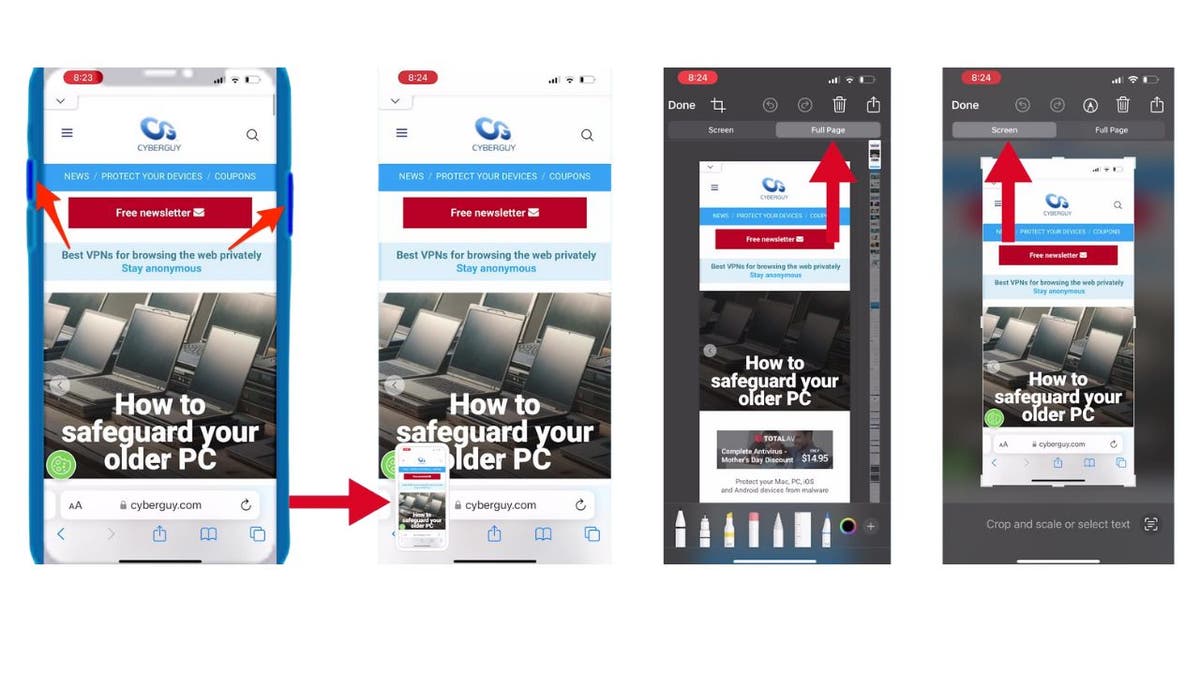
  • Press the Power and Volume Up buttons simultaneously to take a screenshot. You will see a preview of the screenshot in the bottom left corner of the screen.
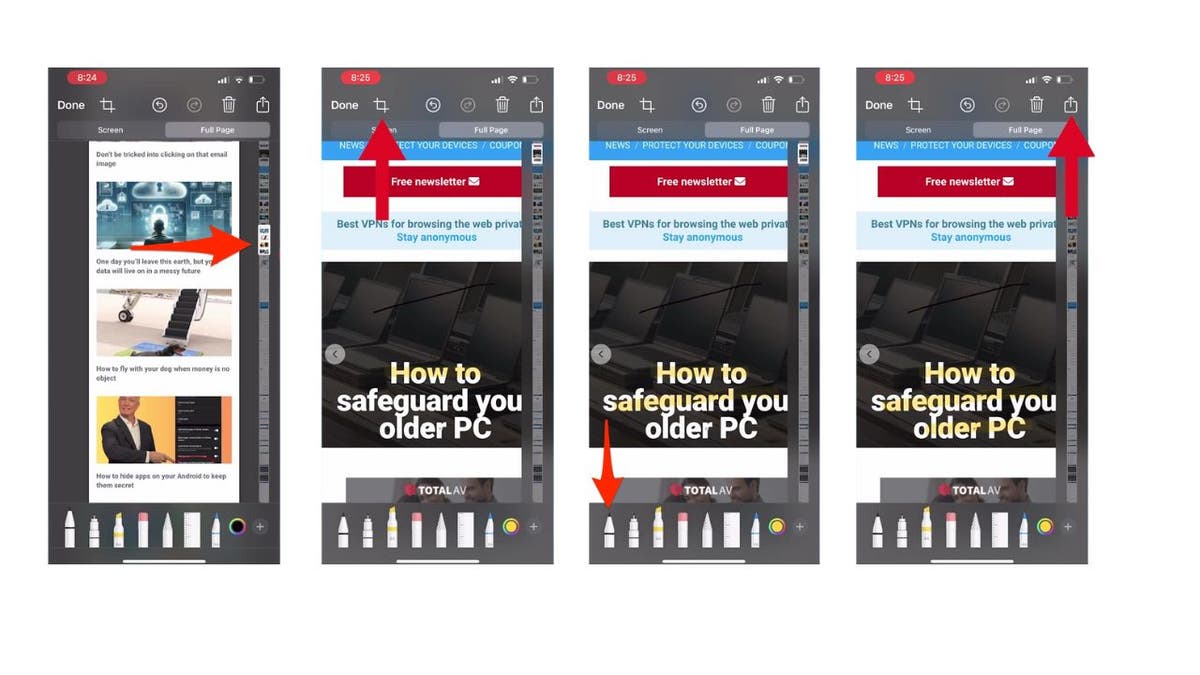
  • Tap on the preview to open the screenshot editor. You will see two options at the top: Screen and Full Page
  • Tap on Full Page to see the entire page of the screenshot or click Screen just to see the visible part of the screen
How to save full-page screenshots as images on your iPhone

Steps to screen capture a full-page image on iPhone (Kurt “CyberGuy” Knutsson)

MORE: HOW TO FIND ANY RECIPE WITH JUST A PHOTO ON IPHONE

  • You can use the slider on the right to scroll through the full page screenshot. You can also crop, annotate or share the screenshot.
How to save full-page screenshots as images on your iPhone

Steps to screen capture a full-page image on iPhone (Kurt “CyberGuy” Knutsson)

GET SECURITY ALERTS, EXPERT TIPS – SIGN UP FOR KURT’S NEWSLETTER – THE CYBERGUY REPORT HERE

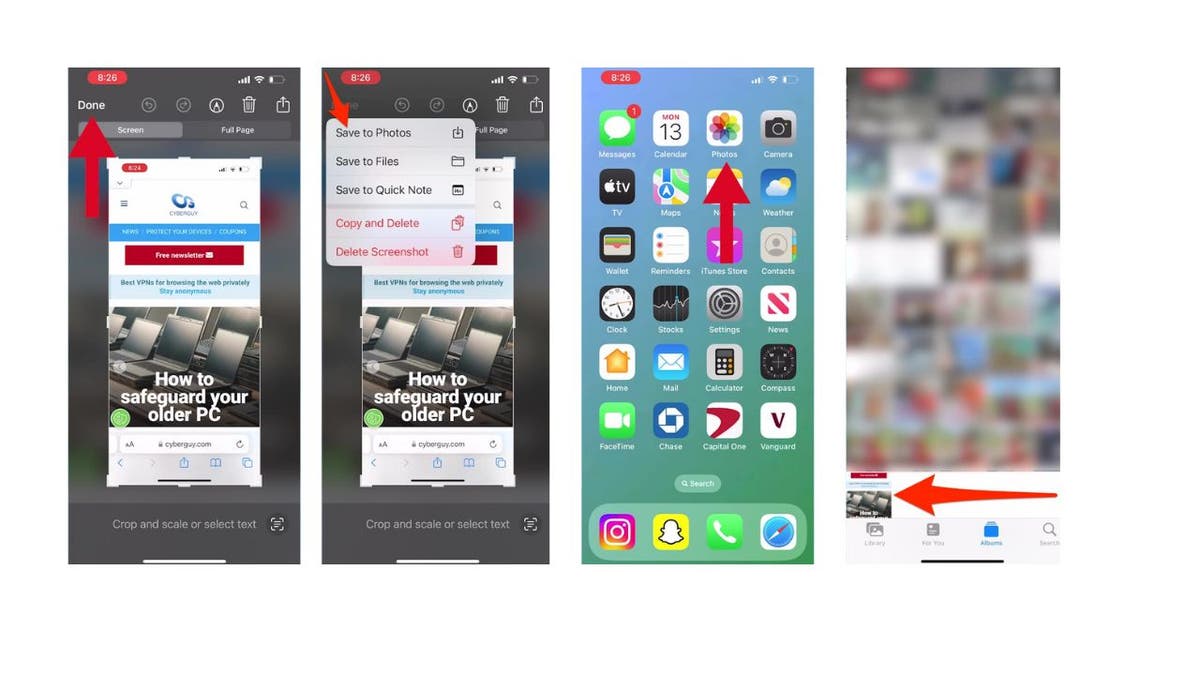
  • To save the full page or the screen as an image, tap Done in the upper left corner.
  • Then click Save to Photos
  • Now, open the photos app
  • You can view it in the Screenshots album in the Photos app or in the All Photos album if iCloud Photos is turned on in Settings > Photos.
How to save full-page screenshots as images on your iPhone

Steps to screen capture a full-page image on iPhone (Kurt “CyberGuy” Knutsson)

MORE: TRY OUT THESE 10 SIRI HIDDEN HACKS ON YOUR IPHONE TODAY

Kurt’s key takeaways

Taking a full-page screenshot is more than just a cool trick; it’s a productivity booster. Whether you’re saving articles for later reading, capturing online receipts or preserving a digital moment, this feature is a game-changer. So next time you’re faced with a page that’s too good to trim, remember these steps and capture it all.

What unique uses do you think full-page screenshots could help you with in your daily tasks or special projects? Let us know by writing us at Cyberguy.com/Contact.

For more of my tech tips and security alerts, subscribe to my free CyberGuy Report Newsletter by heading to Cyberguy.com/Newsletter.

Ask Kurt a question or let us know what stories you’d like us to cover.

Follow Kurt on Facebook, YouTube and Instagram.

Answers to the most asked CyberGuy questions:

Copyright 2024 CyberGuy.com. All rights reserved.


Source link