
The Bitcoin funding rate and 3-month annualized basis rates are moving to levels that signal to traders it may just be the “calm before the storm.”


The Bitcoin funding rate and 3-month annualized basis rates are moving to levels that signal to traders it may just be the “calm before the storm.”

Monero’s version of LocalBitcoins is closing after 7 years of operations serving the XMR community.
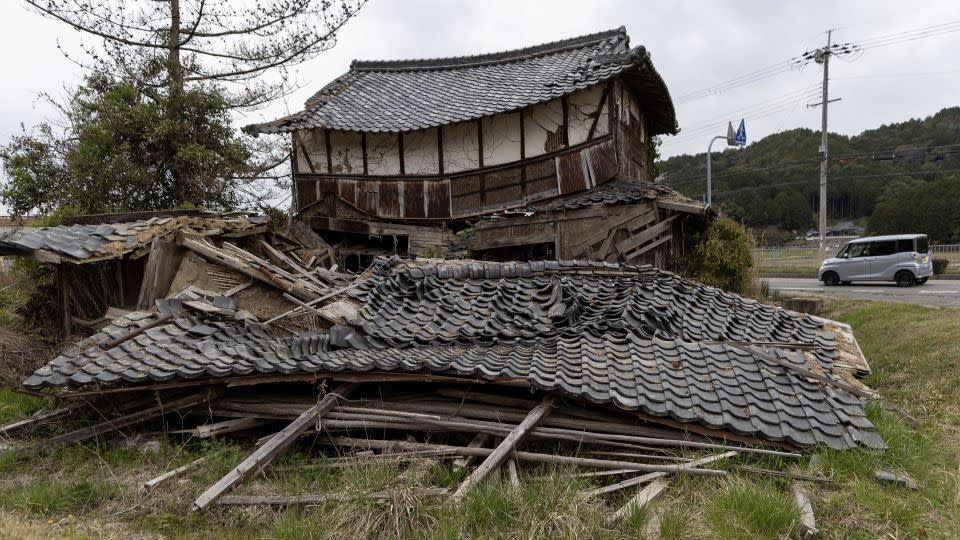
The number of vacant houses in Japan has surged to a record high of nine million – more than enough for each person in New York City – as the east Asian country continues to struggle with its ever-declining population.
Abandoned houses are known in Japan as “akiya” – a term that usually refers to derelict residential homes tucked away in rural areas.
But more akiya are being seen in major cities, such as Tokyo and Kyoto, and that’s a problem for a government that’s already grappling with an aging population and an alarming fall in the number of children born each year.
“This is a symptom of Japan’s population decline,” said Jeffrey Hall, a lecturer at Kanda University of International Studies in Chiba. “It’s not really a problem of building too many houses” but “a problem of not having enough people,” he said.
According to figures compiled by the Ministry of Internal Affairs and Communications, 14% of all residential properties in Japan are vacant.
The numbers include second homes and those left empty for other reasons, including properties temporarily vacated while their owners work overseas.
They aren’t all left to ruin, like traditional akiya, whose growing number present a range of other problems for the government and communities, experts told CNN.
They include stifling attempts to rejuvenate decaying towns, becoming potential hazards due to the lack of maintenance, and raising the risks for rescuers in times of disaster in a country prone to earthquakes and tsunamis.
Akiya are often passed down through generations. But with Japan’s plummeting fertility rate, many are left with no heir to pass to, or are inherited by younger generations who have moved to the cities and see little value in returning to rural areas, experts told CNN.
Some houses are also left in administrative limbo because local authorities don’t know who the owners are due to poor record-keeping, they said.
That makes it difficult for the government to rejuvenate fast-aging rural communities, hampering efforts to attract younger people interested in an alternative lifestyle or investors eyeing a bargain.
Under Japan’s tax policies, some owners often find it cheaper to retain the home than to demolish it for redevelopment.
And even if owners want to sell, they may have trouble finding buyers, said Hall, from Kanda University.
“Many of these houses are cut off from access to public transport, health care and even convenience stores,” he said.

Trending videos showing people – mainly foreigners – scooping up cheap Japanese houses and turning them into stylish guesthouses and cafes have garnered many followers on social media in recent years, but Hall warned it’s not as easy as it seems.
“The truth is most of these homes are not going to be sold to foreigners, or that the amount of administrative work and the rules behind it [are] not something easy for somebody who doesn’t speak Japanese and read Japanese very well,” he said.
“They’re not going to be able to get these houses for cheap.”
Japan’s population has been in decline for several years – at the last count in 2022, the population had shrunk by more than 800,000 since the previous year, to 125.4 million.
In 2023, the number of new births fell for the eighth consecutive year, reaching a record low, according to official data.
Japan’s birth rate has hovered around 1.3 for years, far from the 2.1 needed to maintain a stable population, and just last week Japan’s Ministry of Internal Affairs and Communications said the number of children under age 15 had dropped for the 43rd straight year to a record low of around 14 million, as of April 1.
So, all that means the problem of too many homes and too few people looks set to continue for some time.
Yuki Akiyama, a professor from the faculty of architecture and urban design at Tokyo City University, said vacant houses have caused issues in the past, for example, after the 7.5 magnitude earthquake that hit the Noto Peninsula in the central prefecture of Ishikawa in January.
The area where the quake struck was fraught with akiya, he said, and they posed both a danger to residents during the disaster and challenges for post-earthquake reconstruction.
“When an earthquake or a tsunami occurs, there is a possibility that vacant houses will block evacuation routes as they break down and get destroyed,” he said.
After the earthquake, authorities struggled to decide which damaged properties they could clean up because of unclear ownership, presenting “an obstacle for reconstruction,” said Akiyama.
In other rural areas with a high concentration of vacant houses, akiya have stalled development, the professor said.
With these properties remaining untouched, he said, “The value of the area will be reduced because it is a place where you can’t buy and sell it properly and you can’t do large-scale development.”
“People will think that this place has no value, and the real estate value of the entire area will gradually decrease.”
Akiyama has devised an AI program to predict the areas most vulnerable to akiya, but he stressed the problem isn’t unique to Japan – it has been seen in the US and some countries in Europe.
However, he said Japan’s architectural history and culture made the situation there particularly dire.
Homes in Japan aren’t valued for their longevity, he said, and unlike in the West, people don’t typically see merit in living in historical buildings.
“In Japan, the newer the house, the higher the price it sells for,” he said.
For more CNN news and newsletters create an account at CNN.com

SEC Chair Gary Gensler says he gets an “outsized ratio” of questions about crypto despite its relatively small size compared to the overall financial market.
Researchers have found that a source of carcinogenic chemicals is in Americans’ cars – but there may be a way to reduce your risk.
Environmental Science and Technology, a peer-reviewed scientific journal, published a study called “Flame Retardant Exposure in Vehicles Is Influenced by Use in Seat Foam and Temperature” on Tuesday.
The study explains that Americans breathe in chemicals from the flame retardants in their vehicles. The chemicals can cause issues ranging from developmental neurotoxicity to thyroid hormone dysregulation and even cancer.
The types of chemicals found in flame retardants range from polybrominated diphenyl ethers (PBDEs), which were common in cars until the early 2000s, to alternative brominated flame retardants (BFRs) and organophosphate ester flame retardants (OPEs).
STUDY FINDS EVIDENCE OF MICROPLASTICS IN BRAINS AND OTHER ORGANS
Interior detail of an electric car, taken on August 4, 2015. (Neil Godwin/T3 Magazine/Future via Getty Images)
The federal government requires a level of flame retardants in vehicles. The National Highway Traffic Safety Administration (NHTSA) mandated the use of flame retardants in the 1970s.
“Flame retardant (FR) chemicals are intentionally used in electronics, furnishings, and building materials to meet flammability standards,” the study explains.
STD RATES SKYROCKET AMONG AMERICANS 55 AND OLDER: CDC
“Most [flame retardants] are used in an additive manner (i.e., not chemically bound), and many are semivolatile, indicating that they can be present in both the gas phase and partially in the condensed phase (e.g., particles and surfaces), depending on environmental conditions.”
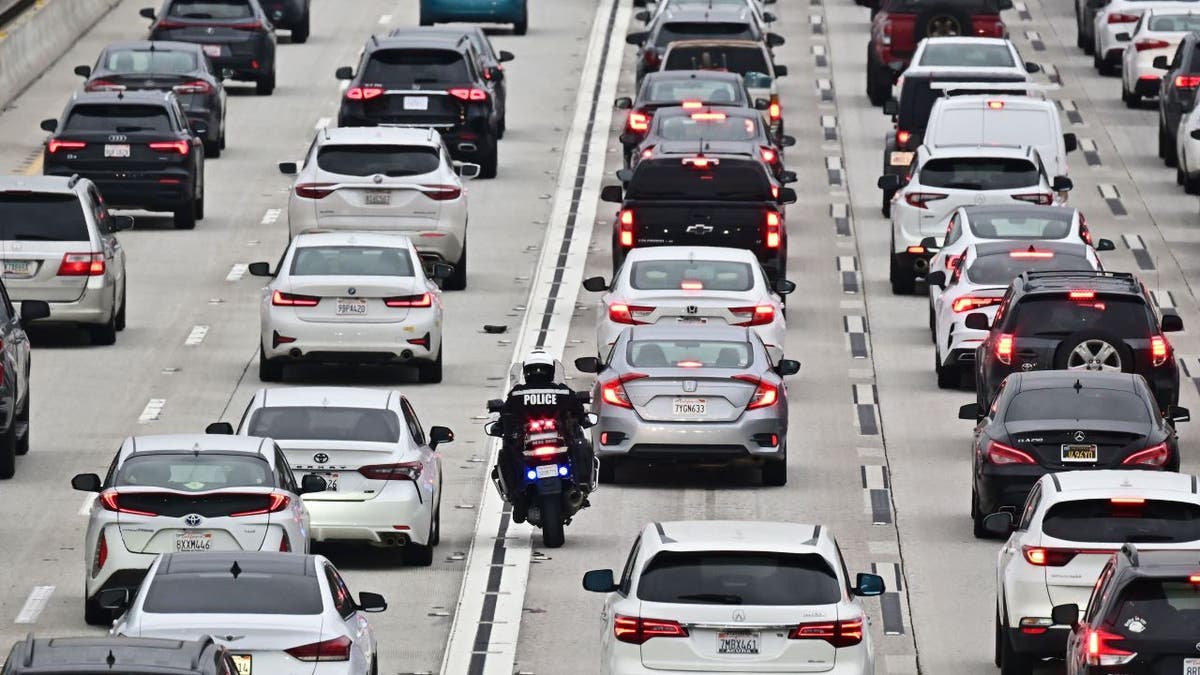
A motorcycle officer weaves through traffic on a Los Angeles freeway during the evening rush hour on April 12, 2023 in Los Angeles, California. (FREDERIC J. BROWN/AFP via Getty Images)
Americans who drive professionally or face long commutes may be at a higher risk of harm from the chemicals.
“These findings highlight that commuters are likely to be exposed to [flame retardants], especially those with longer commutes or those who drive vehicles full time as part of their employment,” the paper read.
“In addition, children, who breathe a greater amount of air per kg body weight compared to adults, would also be at risk of greater exposures for equivalent commuting times.”
CLICK HERE TO SIGN UP FOR OUR HEALTH NEWSLETTER

An interior view of a vehicle on April 2, 2024 in Beijing, China (VCG/VCG via Getty Images)
Drivers and passengers in warmer states may face a greater risk of breathing in the flame retardant chemicals. But rolling down car windows, turning off the AC and parking in covered garages may help reduce exposure to the dangerous chemicals, researchers say.
CLICK HERE TO GET THE FOX NEWS APP
“Increasing ventilation by opening vehicle windows and avoiding recirculating interior cabin air may also reduce exposures,” the study said. “However, the greatest reduction in exposure from vehicle air would come from significantly reducing the amount of FRs added to personal vehicles.”
For more Health articles, visit www.foxnews.com/health.

According to a filing with the U.S. SEC, Susquehanna International Group invested more than $1 billion in Bitcoin ETFs in Q1 2024.

U.S. authorities indicted former Digitex CEO Adam Todd in February for failure to implement and maintain an effective Anti-Money Laundering program at the exchange.
Can incorporating yogurt into your diet keep diabetes at bay?
The U.S. Food and Drug Administration (FDA) has implied that it’s possible.
The health agency announced in March that it will not object to a claim from Danone North America — maker of Dannon and other popular yogurt brands — that regularly eating yogurt could reduce the risk of type 2 diabetes.
The FDA intends to allow the claim to appear on yogurt food labels, “provided that the qualified health claims are worded so as not to mislead consumers, and that other factors for the use of the claim are met.”
“After reviewing the petition and other evidence related to the proposed qualified health claim, the FDA determined that there is some credible evidence supporting a relationship between yogurt intake and reduced risk of type 2 diabetes, but this evidence is limited,” the FDA said in a statement.
The FDA said it will not object to a claim that regularly eating yogurt could reduce the risk of type 2 diabetes. (iStock)
The health claim that the FDA recently approved is referred to as a “qualified claim.”
That means the evidence isn’t strong or conclusive, but is suggestive of benefit to human health, noted Sherry Coleman Collins, a food allergy dietician and expert from the Atlanta metropolitan area.
UTAH MOM FIGHTS FOR HER DAUGHTER’S ACCESS TO DISCONTINUED DIABETES MEDICATION: ‘LIFE-SAVING’
Regular consumption is considered 2 cups (3 servings) per week of yogurt, which is the minimum amount for this qualified health claim.
“I don’t like the idea of suggesting that one food alone has the power to reduce disease, because we know it’s really all about the pattern of eating,” she told Fox News Digital.

Regular consumption is considered 2 cups (3 servings) per week of yogurt, which is the minimum amount for the qualified health claim. (iStock)
“Yogurt — as part of a diet rich in plant-based foods like fruits, vegetables and whole grains, protein foods like lean meats and/or beans, lentils and soy, and fermented dairy — has shown to be very health-promoting,” Collins added.
Yogurt that contains live, active cultures is a great way to get good bacteria in the diet, according to Collins.
CLICK HERE TO SIGN UP FOR OUR HEALTH NEWSLETTER
“A healthy gut, which is one with diverse microbiota and heavy in healthy strains, reduces the risk of many chronic conditions,” she said.
“The good bacteria found in fermented dairy are associated with overall better health and lower rates of disease, including type 2 diabetes.”

“Plain Greek yogurt is fantastic, because it’s high in protein and calcium, and you can adjust the sweetness to your liking by adding a little honey and/or fruit,” a dietitian said. (iStock)
When choosing yogurt, Collins recommended looking for varieties that are low in added sugar.
“Plain Greek yogurt is fantastic, because it’s high in protein and calcium, and you can adjust the sweetness to your liking by adding a little honey and/or fruit,” she said.
CLICK HERE TO GET THE FOX NEWS APP
There’s likely no additional benefit beyond a couple of servings, Collins said.
Fox News Digital reached out to Danone requesting comment.
Both sections of the temporary floating pier intended to be placed off the coast of Gaza Strip for the delivery of humanitarian aid have been completed, though weather and sea conditions are preventing delivery of the parts to the embattled region, Pentagon officials tell Fox News.
Pentagon Deputy Press Secretary Sabrina Singh said during a press briefing on Tuesday that the U.S. Military completed the offshore construction of the Trident Pier section, or the causeway, which is the component that will eventually be anchored to the Gaza shore.
The second element of the project, the floating pier section, has also been completed.
“So, as of today, the construction of the two portions of the JLOTS [Joint Logistics Over-the-Shore], the floating pier and the Trident pier are complete and awaiting final movement offshore,” Singh said. “As you know, late last week, CENTCOM [U.S. Central Command] temporarily paused moving the floating pier and Trident pier toward the vicinity of Gaza due to sea state conditions. Today, there are still forecasted high winds and high sea swells, which are causing unsafe conditions for the JLOTS [Joint Logistics Over-The-Shore] components to be moved.”
MORE AID IS SUPPOSED TO BE ENTERING THE GAZA STRIP. WHY ISN’T IT HELPING?
U.S. Central Command tweeted that the construction of the floating Joint Logistics Over-The-Shore pier in the Mediterranean is underway. (CENTCOM)
The components are still sitting at the Port of Ashdod, and CENTCOM “stands by” to relocate the pier sections to Gaza, Singh added.
Once off the coast of Gaza, the U.S. military and USAID will work together to deliver humanitarian assistance using military support vessels and trucks.
Singh could not provide an exact date for when the pier would be maneuvered into place, mainly because of the weather and security conditions.
“As CENTCOM stands by to move the pier into position in the near future, and again, in partnership with USAID, we’re loading humanitarian aid onto the MV Sagamore, which is currently in Cyprus,” she said. “The Sagamore is a cargo vessel that will use the JLOTS system and will make trips between Cyprus and the offshore floating pier, as USAID and other partners collect aid from around the world.”
GROWING CONTROVERSY OVER BIDEN’S GAZA PIER FUELS CONCERNS OVER COST, SECURITY

Pentagon Deputy spokesperson Sabrina Singh holds a press briefing at the Pentagon in Arlington, Va. (Kevin Dietsch/Getty Images)
The unloading of the aid will be, as she called it, a “crawl, walk, run scenario.”
Once fully operational, 150 trucks will be available to move aid into Gaza. At first, though, a small number of trucks will be used to make sure the distribution system works.
BIDEN’S VISION FOR A PALESTINIAN STATE DOOMED, EXPERTS SAY: ‘AN EXPLICIT RECOGNITION OF HAMAS’

CENTCOM tweeted on X that, ‘The pier will support @USAID and humanitarian partners to receive and deliver humanitarian aid to the people of Gaza. @USTRANSCOM and @USEUCOM support the movement of #humanitarianaid. (CENTCOM)
Last week, U.S. Central Command posted photographs on X of the pier under construction by U.S. soldiers in the Mediterranean Sea, saying that the hulking metal platform “will support USAID and other humanitarian partners who will receive and deliver humanitarian aid to the people of Gaza.”
The Pentagon has said the estimated cost would nearly double the original estimate of $180 million. It also said the project will only be in use temporarily, for a period of three months.
CLICK HERE TO GET THE FOX NEWS APP
The pier will be able to process up to two million meals a day for the people in Gaza, U.S. Central Command said.
Ruth Marks Eglash of Fox News contributed to this report.

Under the plan, 98% of FTX creditors will get at least 118% of their claims back — the remainder will receive all of their claims “plus billions in compensation,” says FTX.