
Memecoins are underperforming Bitcoin today, which could be a sign that traders will pay more attention to BTC’s post-halving recovery.


Memecoins are underperforming Bitcoin today, which could be a sign that traders will pay more attention to BTC’s post-halving recovery.

Bundesbank’s president Joachim Nagel urged central banks to revamp their business models and adopt digital currencies during the BIS Innovation Summit.
As cholera continues to surge — and as vaccines remain in short supply — experts are warning about the global risk.
Cholera is a bacterial disease typically spread by food and water, leading to severe diarrhea and dehydration. It has been on the rise around the world since 2021.
Each year, there are some 1.3 to 4 million cases of cholera worldwide, according to the World Health Organization (WHO). Approximately 21,000 to 143,000 deaths occur as a result.
HIGH LEVELS OF RESISTANT BACTERIA FOUND IN UNCOOKED MEATS AND RAW DOG FOOD: ‘RED FLAG’
Around 473,000 cases were reported to WHO in 2022, which was twice as many cases as the prior year.
Reported cases for 2023 are expected to exceed 700,000.
As cholera continues to surge — and as vaccines remain in short supply — experts are warning about the global risk. (iStock)
“It is concerning to see an increase in the number of cholera cases worldwide, with the majority of the cases in Asia, Africa and Latin America,” Dr. Renuga Vivekanandan, M.D., assistant dean and professor at the Creighton University School of Medicine in Omaha, Nebraska, told Fox News Digital.
The countries most affected include the Democratic Republic of the Congo, Ethiopia, Haiti, Somalia, Sudan, Syria, Zambia and Zimbabwe, according to UNICEF.
The disease can spread quickly in locations where there is insufficient treatment of drinking water and sewage.
Although cholera cases were prevalent in the U.S. in the 1800s, water treatment systems have largely eliminated the disease, per the CDC.
In rare cases, people in the U.S. have contracted the disease from consuming raw or undercooked shellfish from the Gulf of Mexico, the agency stated on its website.
AMID BIRD FLU SPREAD, EXPERTS REVEAL IF IT’S SAFE TO DRINK MILK: ‘INDIRECT CONCERN’
“In the U.S., the cases have remained very small and are usually from travel exposure,” Vivekanandan noted.
Cholera is typically spread when someone drinks water or eats food that is contaminated with the bacterium Vibrio cholerae, according to the CDC.
The disease can spread quickly in locations where there is insufficient treatment of drinking water and sewage, the agency warned.

Cholera has been on the rise around the world since 2021, according to health officials. (iStock)
It is not typically transmitted from person to person.
UNICEF noted in a statement that the rise in cholera is driven by “persistent gaps in access to safe water and sanitation.”
“In the U.S., the cases have remained very small and are usually from travel exposure.”
“I think the cases might be increasing due to climate change, displacements of homes due to disasters, and not having good sanitary conditions, such as poor water sources,” Vivekanandan told Fox News Digital.
Around 10% of the people who are infected with cholera will develop severe symptoms, including watery diarrhea, vomiting and leg cramps, according to the U.S. Centers for Disease Control and Prevention (CDC).
Advanced symptoms include shock and dehydration.
Without treatment, the disease can be fatal.

Around 10% of those who are infected with cholera will develop severe symptoms including watery diarrhea, vomiting and leg cramps, according to the CDC. (iStock)
“Dehydration is the biggest concern with cholera, and rehydration is the most important component of treatment,” said Vivekanandan.
“Most patients with cholera will have mild diarrhea, but 10% will have severe diarrhea and will need rehydration and treatment with antibiotics.”
WITH WHOOPING COUGH CASES ON THE RISE, DO YOU NEED A BOOSTER VACCINE?
Some groups are more susceptible to the disease, according to the CDC.
“Individuals with achlorhydria (the absence of hydrochloric acid in digestive stomach juices), blood type O, chronic medical conditions, and those without ready access to rehydration therapy and medical services are more likely to have severe disease from cholera and suffer poor outcomes,” the agency noted.
The most effective treatment for cholera is “immediate replacement of the fluid and salts lost through diarrhea,” the CDC stated.
This is achieved by giving patients a mixture of sugar and salts mixed with 1 liter of water.
In some severe cases, the patient may require intravenous (IV) fluids.
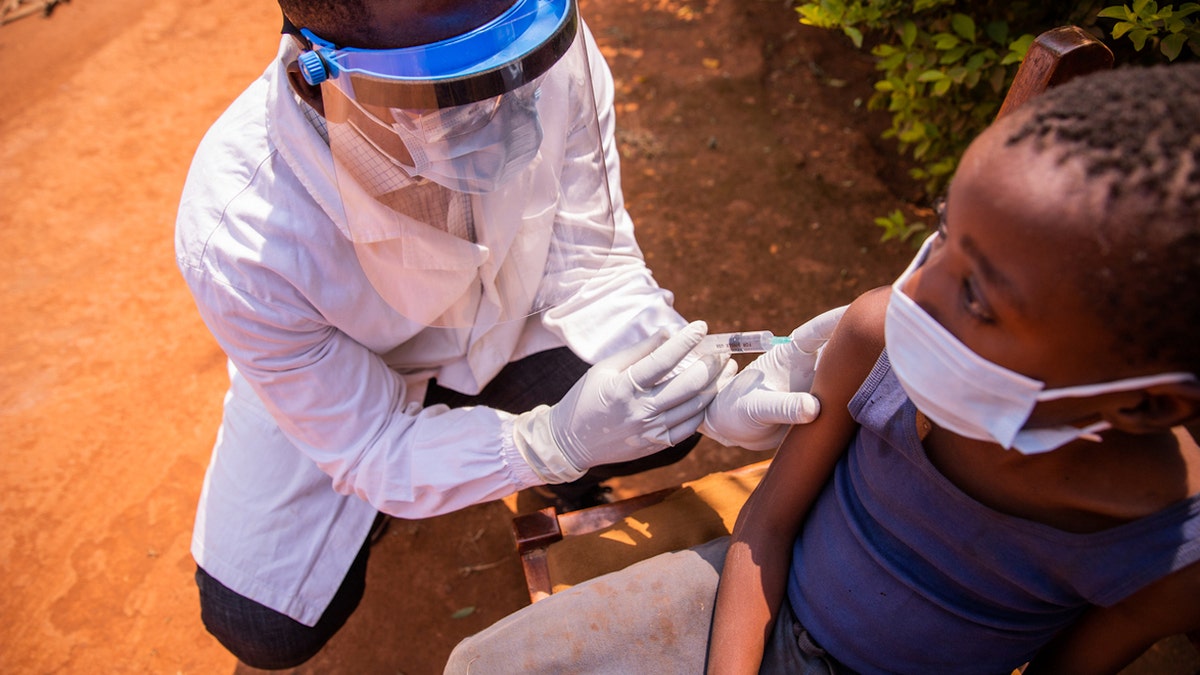
There is a “severe gap” in the number of available vaccine doses compared to the level of current need, said UNICEF. (iStock)
Some patients also receive antibiotics to make symptoms less severe.
“Persons who develop severe diarrhea and vomiting in countries where cholera occurs should seek medical attention promptly,” per the CDC.
There is a single-dose vaccine for cholera, called Vaxchora (lyophilized CVD 103-HgR).
CDC WARNS OF INVASIVE BACTERIAL OUTBREAK AMID SPIKE IN CASES AND FATALITY RATES: ‘RARE BUT SEVERE’
Those who are between the ages of 2 and 64 and who are traveling to “an area of active cholera transmission” are eligible to receive it.
There are three other cholera vaccines, but they are not available in the U.S.
There is a “severe gap” in the number of available vaccine doses compared to the level of current need, said UNICEF on its website.
“Between 2021 and 2023, more doses were requested for outbreak response than the entire previous decade,” UNICEF noted.

In rare cases, people in the U.S. have contracted the disease from consuming raw or undercooked shellfish from the Gulf of Mexico, the CDC stated on its website. (iStock)
While cholera vaccines used to be administered in two doses, the International Coordinating Group (ICG) changed the recommendation to a single dose in Oct. 2022 due to the ongoing shortage.
Vivekanandan called the vaccine shortage “very concerning.”
NEW ANTIBIOTIC KILLS DEADLY, DRUG-RESISTANT BACTERIA IN ‘SCIENTIFIC BREAKTHROUGH’
“This is a serious infection, and we must invest financial and other resources to reduce the worldwide burden,” he told Fox News Digital.
“International resources need to be committed, and partnerships with pharmaceutical companies need to happen to help produce more vaccines.”
“This is a serious infection, and we must invest financial and other resources to reduce the worldwide burden.”
Vivekanandan also urged people who are traveling from the U.S. to other countries to review the CDC’s travel guidance and get any required vaccines.
“I would also recommend that people follow good travel medicine guidance, such as drinking bottled water, eating well-cooked food and making sure to have good hand hygiene,” he added.
CLICK HERE TO SIGN UP FOR OUR HEALTH NEWSLETTER
“As the WHO has stated, we need to have multi-pronged approaches, with a combination of surveillance, water, sanitation and hygiene, social mobilization, treatment, and oral cholera vaccines available for communities at high risk.”

The disease can spread quickly in locations where there is insufficient treatment of drinking water and sewage. (iStock)
On the U.S. Food and Drug Administration (FDA) website, Vaxchora is listed as a “resolved shortage.”
The FDA noted that Emergent Travel Health, manufacturer of the vaccine, announced in May 2021 the temporary discontinuation and distribution of Vaxchora, “due to a significant reduction of international travel caused by the COVID-19 pandemic.”
CLICK HERE TO GET THE FOX NEWS APP
The shortage is listed as having been resolved in May 2023.
Fox News Digital reached out to WHO, the FDA and Emergent requesting comment.
For more Health articles, visit www.foxnews.com/health.

Bitcoin is facing selling near the 50-day SMA, indicating that the range-bound action may continue for a few days.

Issues such as community discontent, farm accounts, and restrictive criteria have plagued recent airdrops.

The attacker was able to view team members’ private Discord messages, allowing them to gain access to the team’s wallet address and mint 100 million fake tokens.
For the first time, researchers have identified a genetic form of late-in-life Alzheimer’s disease — in people who inherit two copies of a worrisome gene.
Scientists have long known a gene called APOE4 is one of many things that can increase people’s risk for Alzheimer’s, including simply getting older. The vast majority of Alzheimer’s cases occur after age 65. But research published Monday suggests that for people who carry not one but two copies of the gene, it’s more than a risk factor, it’s an underlying cause of the mind-robbing disease.
The findings mark a distinction with “profound implications,” said Dr. Juan Fortea, who led the study the Sant Pau Research Institute in Barcelona, Spain.
CAN WE REVERSE ALZHEIMER’S DISEASE? EXPERTS SUGGEST ‘NEW PARADIGM’ FOR COMBATING DEMENTIA
Among them: Symptoms can begin seven to 10 years sooner than in other older adults who develop Alzheimer’s.
For the first time, researchers have identified a genetic form of late-in-life Alzheimer’s disease — in people who inherit two copies of a worrisome gene. (AP Photo/David Duprey, File)
An estimated 15% of Alzheimer’s patients carry two copies of APOE4, meaning those cases “can be tracked back to a cause and the cause is in the genes,” Fortea said. Until now, genetic forms of Alzheimer’s were thought to be only types that strike at much younger ages and account for less than 1% of all cases.
Scientists say the research makes it critical to develop treatments that target the APOE4 gene. Some doctors won’t offer the only drug that has been shown to modestly slow the disease, Leqembi, to people with the gene pair because they’re especially prone to a dangerous side effect, said Dr. Reisa Sperling, a study coauthor at Harvard-affiliated Brigham and Women’s Hospital in Boston.
Sperling hunts ways to prevent or at least delay Alzheimer’s and “this data for me says wow, what an important group to be able to go after before they become symptomatic.”
But the news doesn’t mean people should race for a gene test. “It’s important not to scare everyone who has a family history” of Alzheimer’s because this gene duo isn’t behind most cases, she told The Associated Press.
More than 6 million Americans, and millions more worldwide, have Alzheimer’s. A handful of genes are known to cause rare “early-onset” forms, mutations passed through families that trigger symptoms unusually young, by age 50. Some cases also are linked to Down syndrome.
But Alzheimer’s most commonly strikes after 65, especially in the late 70s to 80s, and the APOE gene – which also affects how the body handles fats — was long known to play some role. There are three main varieties. Most people carry the APOE3 variant that appears to neither increase nor decrease Alzheimer’s risk. Some carry APOE2, which provides some protection against Alzheimer’s.
APOE4 has long been labeled the biggest genetic risk factor for late-in-life Alzheimer’s, with two copies risker than one. About 2% of the global population is estimated to have inherited a copy from each parent.
To better understand the gene’s role, Fortea’s team used data from 3,297 brains donated for research and from over 10,000 people in U.S. and European Alzheimer’s studies. They examined symptoms and early hallmarks of Alzheimer’s such as sticky amyloid in the brain.
People with two APOE4 copies were accumulating more amyloid at age 55 than those with just one copy or the “neutral” APOE3 gene variety, they reported in the journal Nature Medicine. By age 65, brain scans showed significant plaque buildup in nearly three-quarters of those double carriers – who also were more likely to have initial Alzheimer’s symptoms around that age rather than in the 70s or 80s.
Fortea said the disease’s underlying biology was remarkably similar to young inherited types.
It appears more like “a familial form of Alzheimer’s,” said Dr. Eliezer Masliah of the National Institute on Aging. “It is not just a risk factor.”
Importantly, not everyone with two APOE4 genes develops Alzheimer’s symptoms and researchers need to learn why, Sperling cautioned.
“It’s not quite destiny,” she said.
The drug Leqembi works by clearing away some sticky amyloid but Sperling said it’s not clear if carriers of two APOE4 genes benefit because they have such a high risk of a side effect from the drug – dangerous brain swelling and bleeding. One research question is whether they’d do better starting such drugs sooner than other people.
CLICK HERE TO GET THE FOX NEWS APP
Masliah said other research aims to develop gene therapy or drugs to specifically target APOE4. He said it’s also crucial to understand APOE4’s effects in diverse populations since it’s been studied mostly in white people of European ancestry.
As for gene tests, for now they’re typically used only to evaluate if someone’s a candidate for Leqembi or for people enrolling in Alzheimer’s research – especially studies of possible ways to prevent the disease. Sperling said the people most likely to carry two APOE4 genes had parents who both got Alzheimer’s relatively early, in their 60s rather than 80s.

The Kenyan president announced the talks at an American business summit in Nairobi attended by the U.S. commerce secretary.

The BitMEX co-founder says the current phase of price consolidation is ideal for accumulating crypto before macroeconomic factors trigger the next leg up in the bull market.

Mango DAO distributed treasury funds to token holders through a buyback program, but critics claim it was done to benefit an FTX estate buyer.