Plus special access to select articles and other premium content with your account – free of charge.
Please enter a valid email address.
Irish Prime Minister Leo Varadkar has conceded defeat in the vote over two constitutional amendments that would have broadened the definition of family and of women’s roles.
Varadkar previously told constituents that the referendum was a chance to do away with “very old-fashioned, very sexist language about women.”
The first of the constitutional amendments asked citizens to expand the definition of family from one founded on marriage to also include “durable relationships” such as cohabiting couples and their children.
The second of the amendments would replace language around a mother’s roles to “duties in the home” in an effort to recognize care providers.
Ballots are being counted on two Irish constitutional amendments that would broaden the definition of family and remove language about a woman’s role in the home. (Damien Storan/PA via AP)
Siobhán Mullally, a law professor and director of the Irish Center for Human Rights at the University of Galway, said that the referendum was a “missed opportunity” to provide a more-comprehensive definition of caretakers.
Mullally said that some disability rights and social justice advocates opposed the measure because it was too restrictive in defining caretakers.
“It was a hugely missed opportunity,” Mullally said. “Most people certainly want that sexist language removed from the constitution. There’s been calls for that for years, and it’s taken so long to have a referendum on it. But they proposed replacing it with this very limited, weak provision on care.”
Irish Prime Minister Leo Varadkar speaks to the media at Dublin Castle in Ireland about the twin referendum to change the country’s Constitution on family and care, in Dublin, Saturday. (Damien Storan/PA via AP)
Varadkar, who pushed the vote, said that voters had delivered “two wallops” to the government.
“Clearly we got it wrong,” he said. “While the old adage is that success has many fathers and failure is an orphan, I think when you lose by this kind of margin, there are a lot of people who got this wrong, and I am certainly one of them.”
“No” campaigners in Ireland celebrate at Dublin Castle as the result is announced in the first of the twin referendums to change the country’s Constitution on family and care, in Dublin on Saturday. (Damien Storan/PA via AP)
Opponents of the constitutional amendments argued that the concept of “durable relationship” was undefined and confusing and that women and mothers were being “canceled” from the constitution.
“It was too rushed,” said Una Ui Dhuinn, a nurse in Dublin. “We didn’t get enough time to think about it and read up on it. So I felt, to be on the safe side, ‘no, no’ — no change.”
Caoimhe Doyle, a doctoral student, said that she voted yes to changing the definition of family, but no to the care amendment because “I don’t think it was explained very well.”
“There’s a worry there that they’re removing the burden on the state to take care of families,” she said.
Ballot counters tally votes for the twin referendum to change the Irish Constitution on family and care at the Royal Dublin Society (RDS), in Dublin on Saturday. (Damien Storan/PA via AP)
The proposed amendments come as Ireland has slowly transformed from a conservative, Catholic country to an increasingly socially liberal society.
The proportion of residents who are Catholic fell from 94.9% in 1961 to 69% in 2022, according to the Central Statistics Office.
Plus special access to select articles and other premium content with your account – free of charge.
Please enter a valid email address.
Trading in cryptocurrency? You might be sitting on a pretty penny in that digital wallet of yours. Feels great, doesn’t it? But here’s the catch with digital currency: Keeping it secure isn’t a walk in the park.
Hackers are out there, working overtime to come up with new tricks to swipe your crypto, potentially emptying your wallet in one fell swoop. Yep, for these cyber thieves, your digital cash is the ultimate prize. And the worst part? Most of the time, you won’t even realize you’ve been hit until your balance is zero.
Case in point: There’s this fresh malware out there, specifically targeting macOS, Android and Windows devices. It sneaks in through pirated software, hunting for your cryptocurrency to make it its own. Here’s how it works.
What is the new malware targeting cryptocurrency users?
The cybersecurity company Kaspersky has uncovered a sophisticated new malware campaign designed to pilfer cryptocurrency from users’ wallets. This campaign leverages pirated or improperly licensed software as a vector for infection, exploiting the common practice of seeking out “free” versions of paid software online.
These cracked applications, distributed through unauthorized websites, are embedded with a Trojan-Proxy type of malware. This malware is not limited to just macOS users, as recent findings have shown; variants targeting Android and Windows platforms have also been discovered, connecting to the same Command and Control (C&C) server. These variants, like their macOS counterparts, are concealed within cracked software, illustrating the widespread risk across different operating systems.
Once the malware is downloaded onto your device, it will immediately start checking for Bitcoin and Exodus cryptocurrency wallets. If it discovers either one (which is very unfortunate for some users who have both), the malware replaces the wallet and infects it with another version that’s able to steal the cryptocurrency. For some people, this could amount to thousands of dollars. And, it’s all because you unintentionally downloaded the malware to your macOS, Android and Windows devices.
Kaspersky reported that this new malware is coming through cracked software applications online. A cracked software has broken protection, thus making it easier for hackers to infiltrate it with code. With this, the malware’s creator took pre-compromised versions of the pirated software — one example being xScope, a paid macOS utility — and altered a few bytes of code to get the job done.
Then, in February, security firm Jamf found another cryptocurrency-focused macOS malware circulating through a pirated version of Apple’s Final Cut Pro software.
Attackers can use this malware to gain money or perform criminal activities using your device. It is distributed as .PKG installers, which contain scripts that execute after installation, altering system files and setting up the malware to run as a system process.
What pirated applications are being loaded with this malware?
The pirated applications are versions of software that have been modified to remove or disable features that are only available in paid versions, such as license verification. These applications are often distributed illegally and without the consent of the software creator. These are identified as being loaded with this Trojan-Proxy malware:
Furthermore, the malware campaign extends beyond macOS, as shown by the fact that Android and Windows platforms are also being targeted by malware that communicates with the same command and control server. The applications or files identified for these platforms are:
Android: s276.apk, Swipis_v2.6.1[Mobile].apk
Windows: wsclient.exe
The lesson is to avoid downloading pirated software from unauthorized sources to protect yourself from such malware infections.
A woman typing on a Mac laptop.(Kurt “CyberGuy” Knutsson)
The deceptive ‘Activator’ app and its cryptocurrency heist
When you download one of these apps, it launches “Activator,” which prompts you to put in your device’s username and password to install and launch the software, when you think you’re installing an app.
When this happens successfully (or, rather — unsuccessfully to you), the hacker can spy on your device and receive commands from their server. This is when the hacker executes their dirty work: searching for cryptocurrency wallets, replacing them and looting your dough.
Another note that Kaspersky mentioned about this particular malware is that it has been targeting users with the macOS Ventura 13.6, which was just released in September. We don’t know for sure, but this seems to suggest that if you’re not running that, then you might be safe from this hack, this time.
Of course, if you also don’t have cryptocurrency, you’re probably okay, too. However, this unique type of malware that uses pirated software to get on your device is not all that new. Hackers have used this method of exploiting pirated software before, and they’ll do it again.
Remember, for the hacker to get the malware on your device, you have to download it. This is done by clicking on a link or a file that’s generally suspicious, but not always. In the case of this threat, hackers understand that cryptocurrency users are probably more tech-savvy than the average person, and are therefore more attuned to hacks that are out there. Because of this, hackers have to find ways to trick you into downloading the malware in the first place. So here are five things you can do to protect yourself.
1) Don’t download bootleg software: It’s not worth the risk to download bootleg software. It exposes your device to potential security threats, such as viruses and spyware. Downloading software from reputable app stores is definitely the way to go to protect your devices.
2) Don’t click on suspicious links or files: If you encounter a link that looks suspicious, misspelled or unfamiliar, avoid clicking on it. Instead, consider going directly to the company’s website by manually typing in the web address or searching for it in a trusted search engine. Typically, the first or second result that appears is legitimate.
3) Update your device with software regularly: Regularly updating your device’s software is crucial for security because it ensures that you receive the latest patches, bug fixes and security enhancements. These updates help protect your device from vulnerabilities and potential threats that could be exploited by malicious actors.
4) Consider storing your cryptocurrency wallet in an external hard drive: If you do have cryptocurrency, you can always consider storing your wallet in an external hard drive. This storage method means that it’s safe from hackers on the internet.
A new day comes with new malware that’s targeting those of you who use Mac, Windows and Android devices and who have cryptocurrency wallets. It’s a scary threat that could cost you a lot of money if you’re not careful. But you can protect yourself by following the steps above, so you can enjoy your cryptocurrency without worrying about losing it to hackers.
Tech leaders who spoke with Fox News Digital said bias in artificial intelligence can have an immense impacts on society. (Photo Illustration by Pavlo Gonchar/SOPA Images/LightRocket/DAVID MCNEW/AFP/CLEMENT MAHOUDEAU via Getty Images)
Welcome to Fox News’ Artificial Intelligence newsletter with the latest AI technology advancements.
IN TODAY’S NEWSLETTER:
– Google Gemini is ‘the tip of the iceberg’: AI bias can have ‘devastating impact’ on humanity, say experts – Elon Musk takes on OpenAI – AI weapon detection company seeks to prevent school, other shootings: ‘a proactive measure’
‘BIGOT IN THE MACHINE’: Substantial backlash against Google’s Gemini artificial intelligence (AI) chatbot has elevated concern about bias in large language models (LLMs), but experts warn that these issues are just the “tip of the iceberg” when it comes to the potential impact of this tech across industries.
Gemini’s senior director of product management at Google has issued an apology after the AI refused to provide images of White people. (Betul Abali/Anadolu via Getty Images)
ENERGY STRAIN: The artificial intelligence (AI) boom, increased clean technology manufacturing and cryptocurrency mining are straining U.S. energy supplies as energy sources struggle to keep pace with rising demand.
‘A PROACTIVE MEASURE’: ZeroEyes, an artificial intelligence (AI) weapon detection software company, has partnered with Fort Smith public schools in Arkansas to prevent potential firearm threats.
ZeroEyes human-Verified AI gun detection technology.(ZeroEyes)
MUSK VS. OPENAI: OpenAI on Tuesday hit back at Elon Musk’s lawsuit claiming the startup abandoned its original nonprofit mission by revealing communications showing the billionaire backed OpenAI’s move to create a for-profit entity and suggested it should merge with Tesla.
Tesla Motors CEO and Product Architect Elon Musk and Y Combinator President Sam Altman speak onstage during “What Will They Think of Next? Talking About Innovation” at the Vanity Fair New Establishment Summit at Yerba Buena Center for the Arts on Oct. 6, 2015, in San Francisco.(Michael Kovac/Getty Images for Vanity Fair)
RED TAPE: House Rep. Andy Biggs is eyeing artificial intelligence (AI) technology as a way to cut unnecessary government red tape.
‘CRITICAL OVERSIGHTS’: Backlash to the Google Gemini artificial intelligence (AI) is prompting responses from tech leaders, including a former Google software engineer and a tech entrepreneur working closely with one of Google’s startup programs.
Stay up to date on the latest AI technology advancements and learn about the challenges and opportunities AI presents now and for the future with Fox News here.
Plus special access to select articles and other premium content with your account – free of charge.
Please enter a valid email address.
Have you ever been in a situation where you need to reply to a text message on your Android phone, but your hands are busy, or you only have one hand free?
Maybe you’re holding a coffee, a bag or a baby. Whatever the reason, typing with one hand can be a challenge.
However, don’t worry; there’s a simple solution that can make your life easier. It’s called Gboard, and it’s a keyboard app from Google that lets you adjust the size and position of your keyboard to fit your one-handed needs.
If you have an iPhone, there is also a secret keyboard trick that makes one-handed texting a breeze.
If Gboard isn’t pre-installed or you want to ensure you have the latest version, you can download it from the Google Play Store by following these steps.
Settings may vary depending on your Android phone’s manufacturer.
Go to the Google Play Store and search for Gboard
Tap on the Gboard app
Click on the Install button to download and install
Then click Open
Steps to install the Gboard app.(Kurt “CyberGuy” Knutsson)
Once it is installed, you’ll want to go back to your device’s Settings
Navigate to System or General Management (depending on your device)
Look for Language & Input or Keyboard list and default
Settings may vary depending on your Android phone’s manufacturer.
First, tap on the Messages app
Next, you’ll want to create a new conversation by clicking the Message icon
Click the three horizontal dots next to where you type your message
Tap One-handed keyboard and you’ll see your keyboard shrink and move to the side of your screen
Steps to use Gboard on an Android.(Kurt “CyberGuy” Knutsson)
Now, depending on your phone model, the one-handed button might appear along the top of the keyboard like shown on the visual below, but it works all the same
You can press the left arrow to reorient to the left or the right arrow to reorient to the right
Pressing the double arrow icon will revert your keyboard back to normal
With Gboard’s one-handed mode, you can type faster and easier with one hand. No more struggling to reach for the keys or dropping your phone. Try it out and see the difference for yourself. You’ll be amazed by how much it can improve your texting experience.
Does a feature like Gboard’s one-handed mode inspire you to look for other accessibility features in apps and devices? Let us know by writing us atCyberguy.com/Contact
In late 2022, the US began “preparing rigorously” for Russia potentially striking Ukraine with a nuclear weapon, in what would have been the first nuclear attack in war since the US dropped atomic bombs on Hiroshima and Nagasaki nearly eighty years before, two senior administration officials told CNN.
The Biden administration was specifically concerned Russia might use a tactical or battlefield nuclear weapon, the officials said.
I first reported US officials were worried about Russia using a tactical nuclear weapon in 2022, but in my new book, “The Return of Great Powers” publishing on March 12, I reveal exclusive details on the unprecedented level of contingency planning carried out as senior members of the Biden administration became increasingly alarmed by the situation.
“The Return of Great Powers” publishes March 12. – From Penguin Random House
“That’s what the conflict presented us, and so we believed and I think it’s our right to prepare rigorously and do everything possible to avoid that happening,” the first senior administration official told me.
What led the Biden administration to reach such a startling assessment was not one indicator, but a collection of developments, analysis, and – crucially - highly sensitive new intelligence.
The administration’s fear, a second senior administration official told me, “was not just hypothetical — it was also based on some information that we picked up.”
“We had to plan so that we were in the best possible position in case this no‑longer unthinkable event actually took place,” the same senior administration official told me.
During this period from late summer to fall 2022, the National Security Council convened a series of meetings to put contingency plans in place “in the event of either a very clear indication that they were about to do something, attack with a nuclear weapon, or if they just did, how we would respond, how we would try to preempt it, or deter it,” the first senior administration official told me.
“I don’t think many of us coming into our jobs expected to be spending significant amounts of time preparing for a scenario which a few years ago was believed to be from a bygone era,” this senior administration official told me.
Russians surrounded
Late summer 2022 was proving a devastating period for Russian forces in Ukraine. Ukrainian forces were advancing on Russian-occupied Kherson in the south. The city had been Russia’s biggest prize since the invasion. Now, it was in danger of being lost to the Ukrainian counteroffensive. Crucially, as Ukrainian forces advanced, entire Russian units were in danger of being surrounded. The view inside the administration was that such a catastrophic loss could be a “potential trigger” for the use of nuclear weapons.
A member of a demining team works to clear mines and unexploded ordnance from the side of the main road leading to Kherson City in November 2022. – Chris McGrath/Getty Images
“If significant numbers of Russian forces were overrun — if their lives were shattered as such — that was a sort of precursor to a potential threat directly to Russian territory or the Russian state,” the first senior administration official said.
“In Kherson at that time there were increasing signs that Russian lines could collapse. Tens of thousands of Russian troops were potentially vulnerable.”
Russia was losing ground inside Ukrainian sovereign territory, not inside Russia. But US officials were concerned that Russian President Vladimir Putin saw it differently. He had told the Russian people that Kherson was now part of Russia itself, and, so, might perceive a devastating loss there as a direct threat to him and the Russian state.
“Our assessment had been for some time that one of the scenarios in which they would contemplate using nuclear weapons [included] things like existential threats to the Russian state, direct threats to Russian territory,” the first senior administration official said.
In such an assessment, Russia could view a tactical nuclear strike as a deterrent against further losses of Russian-held territory in Ukraine as well as any potential attack on Russia itself.
False Flag
At the same time, Russia’s propaganda machine was circulating a new false flag story about a Ukrainian dirty bomb, which US officials feared could be intended as cover for a Russian nuclear attack.
In October 2022, Russia’s defense minister, Sergei Shoigu, made a series of phone calls to defense officials in the US, the UK, France and Turkey, telling them that the Kremlin was “concerned about possible provocations by Kyiv involving the use of a dirty bomb.”
US and other western officials rejected the Russian warnings. Still, Russia’s UN ambassador delivered a letter directly to the United Nations detailing the same alleged threat. Russian officials alleged Ukraine would build and detonate a dirty bomb against Russian forces and then blame the attack on Russia.
US officials dismissed the Russian warnings but feared the motivation behind them. “Russian public messaging came way out of the left field on the potential for Ukraine to use a dirty bomb, which we saw not grounded in reality,” the first senior administration official told me. “More concerning” to this official was that the Russians would say these things “either as a pretext for them to do something crazy or as a cover for something they themselves were looking at doing. So that was quite alarming.”
But there was one more piece that raised such concerns to a new level. Western intelligence agencies had received information that there were now communications among Russian officials explicitly discussing a nuclear strike.
As the first senior administration official described it to me, there were “indications that we were picking up through other means that this was at least something that lower levels of the Russian system were discussing.”
US access to Russian internal communications had proved capable before. In the run‑up to the Ukraine invasion, the US had intercepted Russian military commanders discussing preparations for the invasion, communications that formed part of the US intelligence assessment, later proved accurate, that an invasion was imminent.
“It’s never a cut-and-dry, black-and-white assessment,” the first senior administration official told me. “But the risk level seemed to be going up, beyond where it had been at any other point in time.”
Would the US know?
At no time did the US detect intelligence indicating Russia was taking steps to mobilize its nuclear forces to carry out such an attack.
“We obviously placed a high priority on tracking and had some ability at least to track such movements of its nuclear forces,” this senior administration official told me. “And at no point did we ever see any indications of types of steps that we would’ve expected them to take if they were going down a path toward using nuclear weapons.”
A dud warhead imitating a nuclear part of a Kh-55SM strategic cruise missile, which was used by Russian troops during missile attacks on Ukraine, is seen during a media briefing in Kyiv, Ukraine, in December 2022. – NurPhoto/Getty Images
However, US officials were not certain they would know if Russia was moving tactical nuclear weapons into place. Unlike strategic nuclear weapons, capable of destroying entire cities, tactical or battlefield nuclear weapons are small enough to be moved quietly and could be fired from conventional systems already deployed to the Ukrainian battlefield.
“If what they were going to do is use a tactical nuclear weapon, particularly a very low-yield tactical nuclear weapon and particularly if they were only going to use one or a very small number, it was not one hundred percent clear to us that we necessarily would have known,” this senior administration official continued.
Multiple senior administration officials took part in an urgent outreach. Secretary of State Antony Blinken communicated US concerns “very directly” with Russian foreign minister Sergey Lavrov, according to senior administration officials. Joint Chiefs Chairman General Mark Milley called his Russian counterpart, General Valery Gerasimov, chief of the general staff of the Russian Armed Forces. According to a senior US official, President Joe Biden sent CIA Director Bill Burns to speak to Sergey Naryshkin, the head of Russia’s foreign intelligence service, in Turkey to communicate US concerns about a nuclear strike taking place and gauge Russian intentions.
The US also worked closely with its allies both to develop contingency plans for a Russian nuclear attack and to communicate warnings to the Russian side about the consequences of such a strike.
“We conducted a number of quiet conversations with core allies to go through our thinking,” the first senior administration official told me. “That’s a hallmark of our entire approach— that we are better and stronger doing this stuff when we’re totally aligned with our allies.”
India and China
In addition, the US sought to enlist the help of non-allies, in particular China and India, to discourage Russia from such an attack.
“One of the things we did was not only message them directly, but strongly urge, press, encourage other countries, to whom they might be more attentive, to do the same thing,” the second senior administration official told me.
US officials say that outreach and public statements from Chinese leader Xi Jinping and Indian Prime Minister Narendra Modi helped avert a crisis.
“I think we believe showing the international community the concern about this, particularly the concern from key countries for Russia and the Global South, was also a helpful, persuasive factor and showed them what the cost of all this could be,” the first senior administration official said.
China’s President Xi Jinping and Russian President Vladimir Putin pose for a photo on the sidelines of the Shanghai Cooperation Organization leaders’ summit in Samarkand in September 2022. – Alexandr Demyanchuk/Pool/Sputnik/Getty Images
“I think the fact that we know China weighed in, India weighed in, others weighed in, may have had some effect on their thinking,” the second senior administration official told me. “I can’t demonstrate this positively, but I think that’s our assessment.”
In the time since the nuclear scare of late 2022, I have asked US and European officials if they have identified any similar threats. The danger diminished as the war entered a period of relative stalemate in the east. However, the US and its allies remain vigilant.
“We have been less concerned about the imminent prospect since that period, but it’s not something that is ever far from our minds,” a senior US official told me. “We continue to refine plans, and … it’s not beyond the realm of possibility that we could be confronting at least the rising risk of this again in the months ahead.”
For more CNN news and newsletters create an account at CNN.com
Federal authorities are seeking a California woman suspected of kidnapping her 16-month-old biological son and taking him across the Southern Border into Mexico.
Brigette Benitez, 31, is wanted by the FBI after she allegedly failed to return her son Miguel Eduardo Zuniga Medina Jr. to his foster family following an unsupervised visit.
On Feb. 6, Benitez picked up her son in Walnut, California, for a scheduled, unsupervised visit. But at the end of the visit, Benitez, who does not have legal custody of her son, did not return him to his legal guardian, according to the FBI.
The two were last seen in a black 2021 Toyota Camry with the California license plate 8WAS968.
Brigette Benitez, 31, is wanted by the FBI after she allegedly failed to return her son Miguel Eduardo Zuniga Medina Jr., 16 months, to his foster family following an unsupervised visit.(FBI)
The FBI said Benitez may have taken Miguel to Aguascalientes, Mexico, where his non-custodial father is believed to live.
Investigators said Benitez crossed the border into Mexico on Feb. 6 at the Otay Mesa Port of Entry in San Diego County, according to KTLA.
Miguel’s father was arrested last year for an alleged domestic violence incident in Los Angeles County. Medina Sr. also has a history of violence in the presence of children, according to the FBI.
Fox News Digital spoke with several sleep experts about common reasons for daytime sleepiness — and how to ensure the right amount of rest for mental and physical wellness.
Check out these four issues.
1. Poor sleep habits
While constantly feeling tired can be linked to many factors, it all starts with getting the right sleep.
That’s according to Tim Roberts, VP of science and innovation at Therabody, a Texas-based wellness technology company.
Some 40% of adults say that fatigue interferes with their daily activities at least three days a week, according to the National Sleep Foundation.(iStock)
“The first thing to evaluate when building improved and healthy sleep habits should be your sleep schedule,” he told Fox News Digital.

Evaluate whether you can actually get seven to eight hours — and if there is a consistent sleep schedule in which you go to bed and wake up at similar times all week long.
Next, assess whether you’ve created a sleep environment that is conducive to helping you sleep better. “Think cool, dark, quiet and comfortable,” said Roberts.
2. Stress-triggered restlessness
Many people have trouble falling asleep and then wake up frequently during the night, causing them to feel tired during the day, said Dr. Kathrin Hamm, sleep expert and founder of Bearaby, a New York City sleep and wellness company.
“The root cause of nighttime restlessness for many people seems to be related to anxiety or stress,” she told Fox News Digital.
A common reason for daytime fatigue is that people have trouble falling asleep and then wake up frequently during the night.(iStock)
“It’s not uncommon for the human nervous system to need sensory support to destress, to be able to naturally shift from sympathetic (fight or flight) to parasympathetic (rest and digest),” she went on.
“When our bodies struggle to make this nervous system shift, it often affects sleep quality.”
3. Vitamin deficiency
Constant fatigue can sometimes be caused by a deficiency in essential nutrients crucial for optimal energy production, according to Grant Antoine, a naturopathic doctor and clinical expert at Viome, a Washington-based biochemistry company focused on diet and lifestyle.
“Leaping toward supplements like B vitamins, Coenzyme Q10 or NAD precursors without a thorough understanding could be counterproductive,” he said.
Antoine recommends taking a personalized approach to supplements, starting with a comprehensive assessment to ensure that you’re getting the right mix of nutrients for your individual biochemistry and energy needs.
4. Blue light at night
The use of technology before bed can contribute to a poor sleeping environment, experts agree.
“Some technologies, particularly those with screens that emit blue light, can be detrimental to your sleep, but more recently, technologies that can help calm the mind and relax areas of tension in the body have been shown to improve sleep quality when used as part of the bedtime routine,” Roberts said.
“The root cause of nighttime restlessness for many people seems to be related to anxiety or stress.”
“By focusing on these things, it is possible to improve sleep quality, alleviate persistent tiredness and enhance overall well-being,” he added.
Hamm agreed that blue light is a common culprit.
Constant fatigue can sometimes be caused by a deficiency in essential nutrients crucial for optimal energy production, an expert said.(iStock)
“Light impacts our sleep/wake rhythms greatly, so if you’re surrounded by blue light from your devices right up until you try to sleep, you may have a difficult time drifting off,” she told Fox News Digital.

“Good sleep hygiene is all about syncing up with your body’s natural rhythms.”
Above all, the key to quality sleep is to find the methods, environments and positions that are best for you, experts said.
“Sleep health is highly personalized. Some of us are side sleepers, some of us are stomach sleepers,” Hamm said.
The key to quality sleep is to find the methods, environments and positions that are best for you, experts said. (iStock)
“Some people prefer to sleep ‘cozy,’ while others prefer cool and breathable bedding. The key is to figure out what your personal preferences are, and from there curate a consistent bedtime routine.”
Common sleep hygiene practices that benefit most people are to rest in a dark environment by using a sleep mask or black-out curtains, and to maintain a consistent bedtime and wake-up time, Hamm said.
“If your fatigue seems to last all day, it’s always best to visit a health care professional to help determine whether there might be an underlying medical condition requiring attention,” she added.
The Tesla Semi is not your ordinary big rig. It is a beast that can outperform any diesel truck on the road. It can accelerate from 0 to 60 mph in 20 seconds, fully loaded, and maintain highway-level speeds even up steep grades.
It can also travel up to approximately 500 miles on a single charge and recover up to 70% of range in 30 minutes using Tesla’s Semi Chargers. It runs on three independent motors on rear axles.
Now, let’s talk emissions. While diesel trucks consume more fuel, emit more pollutants and require more maintenance, the Tesla Semi has a smaller carbon footprint. It uses less than 2 kWh per mile and emits zero tailpipe emissions.
Also, picture this real life contrast. A diesel truck struggles up steep inclines like the Donner Pass in California, while the Tesla Semi climbs it effortlessly, leaving nothing but clean air in its wake.
Tesla Semi overtaking diesel truck on steep incline(@HinrichsZane)
How the Tesla Semi offers safety, comfort and savings
Safety, comfort and savings — these are the Tesla Semi’s calling cards. With advanced safety features, including precise motor and brake controls, drivers experience unparalleled stability in all conditions. While an all-electric architecture reduces both rollover risk and cabin intrusion in case of an accident.
Tesla Semi being charged(Tesla)
Also, a central seating position on the Tesla Semi gives the driver better visibility. Touchscreen displays are set on both sides of the steering wheel, with no other instrument panels. The tall ceiling allows the driver to completely stand up inside the cab.
The benefits of switching to electric vehicles for trucking
The real game-changer? The cost. Charging with electricity is 2.5 times cheaper per mile than refueling with diesel. Operators stand to save a staggering $200,000 within their first three years of ownership. And with remote diagnostics and over-the-air software updates, downtime at service centers becomes a thing of the past.
According to the U.S. Environmental Protection Agency, tractor-trailer trucks account for about 18% of U.S. vehicle emissions. By switching to electric trucks, the trucking industry can significantly reduce its greenhouse gas emissions and contribute to the fight against climate change. As more electric vehicles hit the road, the demand for fossil fuels will decrease and the transition to a clean-energy future will accelerate.
Man driving Tesla Semi(Tesla)
Kurt’s key takeaways
The Tesla Semi-Truck is definitely rewriting the script for trucking. It conquers hills like they’re nothing, leaving diesel trucks wheezing in its wake. But it’s more than speed — it’s efficiency. The Tesla Semi covers hundreds of miles on a single charge. And when it’s time to recharge, it’s a pit stop, not a marathon. No more grumbling at gas stations; just plug in and power up.
What are some of the challenges or barriers that you think Tesla might face in convincing companies and drivers to change from diesel trucks to Tesla’s Semi-Trucks? Let us know by writing us atCyberguy.com/Contact.
For more of my tech tips & security alerts, subscribe to my free CyberGuy Report Newsletter by heading to Cyberguy.com/Newsletter.
Plus special access to select articles and other premium content with your account – free of charge.
Please enter a valid email address.
While certain factors are out of our control, there are some things we can do to extend our lives.
“For the average individual, everyday behaviors under our own control have a greater impact on healthy longevity than genetics,” Dr. Gary Small, a memory, brain and aging expert at Hackensack Meridian Health in New Jersey, told Fox News Digital.

“Even people with a genetic predisposition to developing Alzheimer’s disease can stave off symptoms for years by living a healthy lifestyle,” he added.
Small, who is also the behavioral health physician-in-chief for Hackensack, shared the five most important behaviors to adopt in order to live a longer, healthier life.
Check out his tips.
A healthy diet can have a major impact on life expectancy by lowering the risk for heart disease, cancer and other age-related illnesses. (iStock)
No. 1: Stay positive
There is scientific evidence that keeping a positive outlook helps us live longer and healthier, Small noted.
“Optimists have fewer physical and emotional difficulties, experience less pain, enjoy higher energy levels and are generally happier and calmer in their lives,” he said.
“Optimism also has been shown to boost the body’s immune system so that we can better fight infection.”
Research has shown that when people make a conscious effort to be more optimistic, it can actually transform their attitude, Small said.
“Expressing feelings of gratitude can increase levels of optimism,” he added.
No. 2: Get active
Numerous studies have linked regular physical activity to a longer life expectancy.
“Cardiovascular conditioning improves circulation, elevates endorphins and proteins that strengthen brain cellular communication, and boosts heart health,” Small said.
Numerous studies have linked regular physical activity to a longer life expectancy.(iStock)
“Many people find that it is difficult to get started, but once they do, they enjoy better energy, sleep and mood, and those benefits motivate them to continue their exercise routine for the long haul,” he went on.
Experts recommend a combination of strength training (lifting weights) and aerobic exercise.
“Everyday behaviors under our own control have a greater impact on healthy longevity than genetics.”
For those who are just starting an exercise program, it’s best to start out slow, set modest goals and gradually build stamina, the doctor said.
He recommended finding an exercise program that’s enjoyable, whether it’s jogging, cycling, swimming, yoga, spinning or pickleball.
No. 3: Eat well
A healthy diet can have a major impact on life expectancy by lowering the risk for heart disease, cancer and other age-related illnesses, according to Small.
“Obesity in mid-life increases the risk for dementia later in life, so portion control protects brain health,” he told Fox News Digital.

Omega-3 fats from fish and nuts also reduce heightened inflammation, which can damage the brain and heart, Small noted.
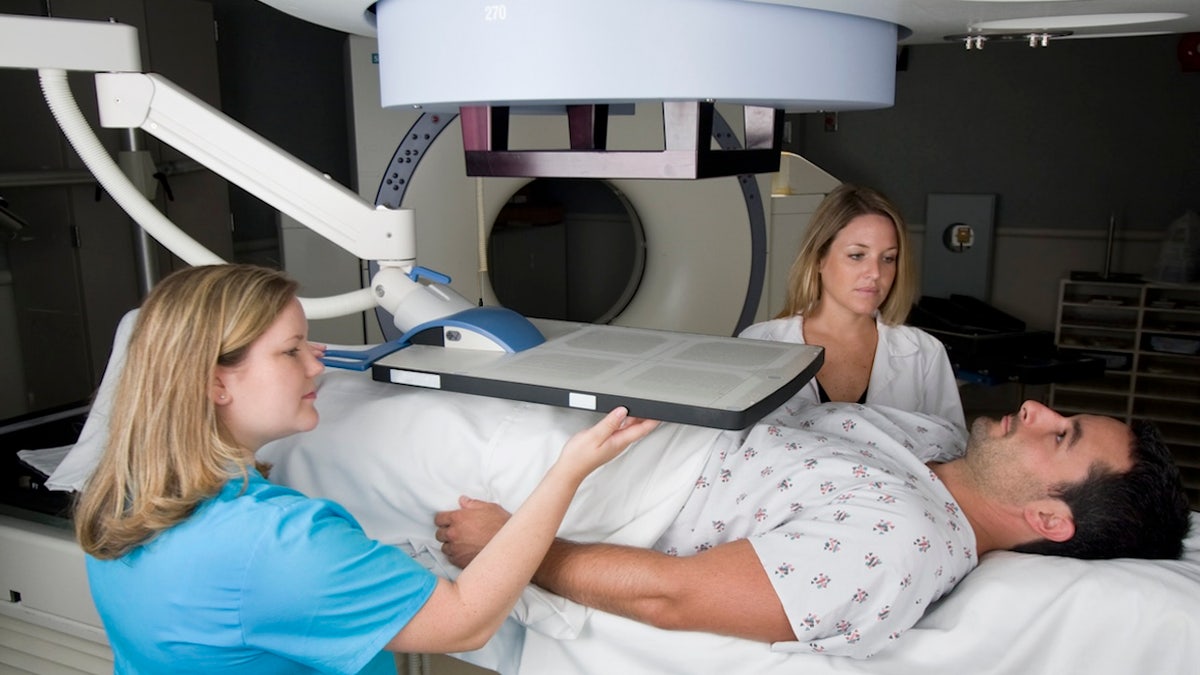
“Antioxidant fruits and vegetables reduce age-related oxidative stress, which can cause wear and tear on cells throughout the body,” he said.
The doctor also recommends minimizing the consumption of processed foods and refined sugars to reduce the risk of developing diabetes, which has been linked to higher chances of dementia.
No. 4: Manage stress
As chronic stress increases the risk for dementia and heart problems, Small recommends incorporating a stress reduction program into the daily routine.
Adopting a stress reduction program can reduce the risk for dementia and heart problems, the doctor said.(iStock)
“Meditation and relaxation exercises support healthy longevity,” he said.
“Just 10 minutes of daily meditation not only improves mood, it also boosts cognitive abilities.”
No. 5: Take care of your health
Common chronic illnesses like high blood pressure and cholesterol levels increase the risk for cognitive decline, heart disease and shorter life expectancy, Small warned.
Some of the most common recommendations include mammograms for breast cancer, colonoscopies for colorectal cancer, skin cancer screenings, sleep health monitoring, cervical cancer screenings, eye exams and prostate checks for men.
House Speaker Mike Johnson (R-La.) had an unusual question for Vice President Kamala Harris as he made “small talk” with her at President Joe Biden’s State of the Union address on Thursday night.
“I asked her if her parents had been alive, did they survive to see her serving as vice president, and she lamented that they had not,” he told Fox News host Sean Hannity.
Harris’ mother, cancer researcher Shyamala Gopalan, died in 2009. Her father, retired economics professor Donald Harris, is very much alive, although the vice president has said the two are not close.
Johnson noted that the two had a lot of time to chat as Biden frequently stopped to greet lawmakers as he made his way to the rostrum.
But his choice of question for that moment left many of his critics perplexed: