United States-based cryptocurrency exchange Kraken said it will share the data of 42,000 users with the U.S. Internal Revenue Service (IRS) in compliance with a court order. The information will be sent to the IRS in early November.
On its support page, Kraken specifies that the summons to produce “a wide range of records and data” on its U.S. clients and pass it to the IRS came in a court order from the U.S. District Court for the Northern District of California in May 2021. The company objected to the IRS’s demands and fought the summons in court, convincing it to “substantially reduce” the number of clients affected and the amount of client data.
The court ordered Kraken to present profile and transaction data for clients who exceeded $20,000 in transactions during any single year from 2016 to 2020. That also includes those who made no transactions but deposits and withdrawals.
Kraken will share data such as names, dates of birth, tax IDs, addresses, contact information and transaction history of the affected customers. Reportedly, there will be around 42,000 accounts whose information will get sent to the IRS.
The U.S. Court of Appeals for the First Circuit is reviewing another case where the IRS demanded users’ data from Coinbase. In 2018, the exchange told its 13,000 affected customers that it would provide the IRS with their taxpayer IDs, names, birth dates, addresses and historical transaction records from 2013 to 2015.
One of those users, James Harper, appealed against the IRS to prevent the U.S. government from having unfettered access to a user’s transaction history. In October 2023, cryptocurrency advocacy group the DeFi Education Fund filed an amicus brief supporting Harper’s appeal.
Thailand’s Kasikornbank, one of the largest banks in the country, is moving into the cryptocurrency industry by acquiring a majority stake in the local crypto business Satang.
Kasikornbank, also known as KBank, acquired 97% of shares in the operator of Thailand’s Satang crypto exchange, according to an announcement published on Oct. 30 on the website of the Stock Exchange of Thailand (SET).
According to Kasikornbank, the acquisition is valued at 3.7 billion Thai baht, or around $103 million. The transaction is being made through K-Bank’s new subsidiary called Unita Capital, which is focused on investment in the digital asset industry, the statement notes.
Following the acquisition, Satang Corporation is set to change its name to Orbix Trade Company Limited. Kasikornbank’s crypto business will have three divisions, including the custody platform Orbix Custodian, the venture arm Orbix Invest and Orbix Technology, a blockchain technology developer.
Satang Corporation is a major cryptocurrency business in Thailand, operating a crypto exchange and other digital asset services. Satang’s founder Poramin Insom is known for launching the privacy-focused cryptocurrency Firo (FIRO), formerly known as Zcoin.
Insom took to Facebook on Oct. 30 to confirm the acquisition by Kasikornbank. “I’ve been at Satang since 2017 until now, six years have passed,” Insom said, adding:
“Currently, Satang on the trading board has already exited according to the news. And there should be an official announcement soon.”
He also mentioned that Satang’s other companies include the blockchain service platform Satang Technology and space-related Satang Space.
“I still continue to do it without being affected. So I reported here. In case Satang’s corporate customers are shocked at what the existing services will be like in the future,” Satang CEO noted.
The announcement comes shortly after KBank launched a $100 million fund targeting Web3, fintech, and artificial intelligence in September 2023. The bank is reportedly Thailand’s second-largest lender by assets, following only Bangkok Bank. According to data from SET, Thai NVDR Company Limited is the largest shareholder of KBank. The Stock Exchange of Thailand owns 99.9% of NVDR’s shares.
The SME Inclusive Leadership Impact Awards honor visionary leaders in Connecticut (CT), New York (NY), and New Jersey (NJ) who have made a profound difference in their workplaces, communities, schools, or non-profit organizations by championing inclusive leadership principles and initiatives.
Norwalk, Connecticut, October 30, 2023, It is with great pleasure that the team at Simone Morris Enterprises reveal the recipients for the First Annual Inclusive Leadership Impact Awards. The winners represent 4 Categories: Youth, Non-Profit, Community and Workplace.
These awards recognize leaders who have transformed their workplaces, communities, schools, or non-profit organizations through their dedication to inclusive leadership practices. Tickets are still available for purchase.
SME sends a big shout-out to the sponsors who helped make all of this possible:
Printing Sponsor:Press 49, an award-winning publishing company. Event Sponsor:Di Dia Diversity Consulting Group, LLC., a multifaceted company designed to partner with you and your team through a wide range of supportive coaching and advisory services.
Without further ado, here are the winners:
Community Award Recipient: Iliana Zúñiga- Miranda – A passionate Diversity and Inclusion leader, Iliana founded Latinos Unidos Norwalk in 2020, now supporting 5,500+ members of the Latino community in Fairfield County, CT. With deep insights into the struggles of the Latino community, she ensures vital resources are accessible during challenging times. A fervent advocate for women’s rights, she’s a core member of Norwalk Women Who Vote and an advisor for Womerang in Mexico.
Workplace Award Recipient: Candace Freedenberg, Founder – Untapped Potential Inc. Candace is a technologist and business leader with experience at Laboratory for Laser Energetics, IBM, Eastman Kodak, and Orafol. Her work, historically at the forefront of new technology and new industries within corporate America, yielded a number of US patents.
Woman-owned Small Business of the Year Award, Woman-CT Woman of Innovation Award, CT Entrepreneur Award, and a reSET Incubator Award. Candace was recently honored by the Girl Scouts of Connecticut for their 27th Annual Breakfast Badge Awards, Honoring Women Who Inspire and Lead. She has championed equity for women as a Keynote, Speaker, Workshop Leader, or Panelist for Diversity Network (a global organization), Community Economic Development Fund, and sheLeadsTECH.
Non-Profit Award Recipient: Lorraine Gibbons – Executive Director of the Cardinal Shehan Center and the McGivney Community Center. She has served in that role since January 2019. Lorraine practices inclusivity by recruiting staff members who are reflective of urban Bridgeport. She also ensures that the thousands of youths served are in a safe environment with caring adults regardless of race or religion.
Youth Award Recipient: The LiveGirl Team – Founded in 2014, LiveGirl, Inc. is a Connecticut-based nonprofit organization that builds confident, inclusive leaders. Their mission is to prepare the next generation of diverse, brave female leaders with the skills, community, and connections so that ALL girls may thrive and make a positive impact on the world.
They provide free-of-charge leadership development, mentorship, and career readiness to girls/young women ages 10-24, centering girls/young women who have been historically underrepresented. They also advocate loudly for policies and practices that open doors for girls & women. Since 2014, LiveGirl has reached over 15,000 girls, including 72% of girls of color.
The members of the LiveGirl Team are:
Veronica DeLandro (Executive Director)
Shamare Holmes (Program Director)
Farrell Lindeman (She Cares Program Manager)
Hannah Jean Pierre (SHE WORKS Program Manager)
Amanda deLauzon (Marketing &. Engagement)
Simone Morris Enterprises is honored to present the esteemed judges for their first annual SME Inclusive Leadership Impact Awards:
Nancy Di Dia – Di Dia Diversity Consulting Group: Nancy J. Di Dia is a PCC certified executive and life coach with more than 30 years of leading and developing talent globally in Fortune 100 Businesses. Nancy’s career spans Financial Services, Pharmaceuticals, Manufacturing, Retail Banking, Sales, Marketing and Operations as well as Information Technology.
LaToya Fernandez – Chief Diversity, Equity and Inclusion Officer City of Norwalk, Connecticut: Educator, Activist, and Community Leader, LaToya Fernandez, dedicates her career to teaching students and communities equity and justice. As a Restorative Justice Coordinator, LaToya has served in schools supporting students, educators and families through cultural responsiveness, restorative practices and community engagement.
Brian Klecatsky – Diversity, Equity & Inclusion (DEI) leader: Brian Klecatsky is a Diversity, Equity & Inclusion (DEI) leader and corporate professional who has worked across a variety of industries including Fashion/Retail, Hospitality, Health Insurance, Consumer Goods, Financial Services, Biotech and Telecommunications.
Ramon Peralta – Founder, CEO & Chief Creative Officer Peralta Design: As Founder, CEO, and Chief Creative Officer at Peralta Design, Ramon Peralta has assembled a multicultural, multi-disciplined, team that brings your brand and business to new heights. Ramon creates an atmosphere of teamwork and success by leading his team with vision and encourages risk-taking while ensuring final projects are approved and meet sky-high design standards.
Joe Santana – Diversity, Equity, and Inclusion (DEI) Futurist: Joseph Santana is a Futurist helping to shape the future of Diversity, Equity, and Inclusion (DEI). He is also a sought-after keynote speaker, author, and the Chairman of the CDO Power Circle, where he’s at the forefront of helping Chief Diversity Officer in highly respected organizations to prepare to address the emerging challenges and opportunities of the 21st century.
Sheri West – Founder & CEO, LiveGirl: Sheri West is a founder & CEO, career-readiness expert, podcast host, speaker, and champion for equity and inclusion. She is a former management executive turned social entrepreneur with over 25 years of corporate and leadership development experience. She founded LiveGirl in 2014 to pay it forward to the next generation of diverse female leaders. LiveGirl has served over 16,000 girls since its founding.
About Simone Morris Enterprises:
Simone Morris Enterprises LLC, headquartered in Norwalk, CT, and servicing customers across the United States, is a certified minority and women-owned business founded in 2015. They uphold a set of core values that guide their work: authenticity, inclusion, accountability, and results. The company’s vision is to foster a more inclusive world by empowering and transforming leaders and workplaces.
Clients leverage their coaching, consulting, and training services to ensure they walk the talk as inclusive leaders. Satisfied customers say the company helps them sleep better at night knowing they’ve got solid plans to win the war on talent, nurture employee engagement, and be prepared for the constant external stressors that rattle the best-laid diversity, equity, and inclusion strategies.
Join SME as they celebrate Inclusive Leadership Excellence Across The Tri-State (CT, NY, and NJ) Tickets are still available. The Inaugural SME Inclusive Leadership Impact Awards are happening on November 2, 2023 at the Carriage Barn Arts Center, New Canaan, CT.
Bitcoin (BTC) starts a new week at comfortable highs as traders square off over BTC price action to come.
As macroeconomic uncertainty continues to grow, Bitcoin is cementing its new trading zone above $30,000.
The highest weekly close since early May 2022 is the latest achievement for bulls, and so far, bid support has allowed the market to avoid a deep retracement after last week’s snap 15% gains.
How could the environment change for BTC/USD this week?
As Bitcoin heads into the October monthly close, would-be volatility catalysts are brewing — not least thanks to the increasing geopolitical instability in the Middle East.
Adding to the hurdles for risk assets to overcome is the United States Federal Reserve, which will decide on interest rate adjustments on Nov. 1.
Under the hood, Bitcoin is looking better than ever, and the numbers prove it — network fundamentals are either at or circling all-time highs, continuing a trend in place for much of this year.
As price survives a mass profit-taking event at the hands of speculators, faith in further upside is proving hard to shake — but for some, the specter of a $20,000 crash is still firmly in play.
Cointelegraph takes a look at these factors and more in the weekly rundown of potential BTC price influencers for the coming days.
Countdown to the end of “Uptober”
After its highest weekly close in 18 months, Bitcoin continues to consolidate near $34,000 as the week begins.
A late-weekend surge took BTC price action to $34,700, helping add to the day’s BTC short liquidations, per data from monitoring resource CoinGlass.
Despite this, the last weekly close of October was a calm event compared to a week prior, and with the monthly close now in focus, market participants will be keen to see if “Uptober” retains its bullish status.
Eyeing relative strength index (RSI) behavior, popular analyst Matthew Hyland was optimistic on the day.
“Current Bitcoin position would eliminate any possibility of bearish divergence forming on the weekly later on off the prior RSI high,” he wrote in an X post.
“This is extremely good for the bullish side and worst possible close for the bearish side.”
An accompanying chart showed RSI hitting higher highs on weekly timeframes. In a previous post, Hyland said that a weekly close at current levels would constitute a wider breakout.
It will potentially confirm a massive breakout of a 6 month+ consolidation
There is also is a chance the weekly RSI will put in a higher high as well and negate any chance at bearish divergence later on pic.twitter.com/WPnkc1e2rE
RSI, which traditionally acts as an overbought signal at a given price when above 70, stood at 69.7 at the time of writing, with BTC/USD at $34,300, per data from Cointelegraph Markets Pro and TradingView.
BTC/USD 1-week chart with RSI. Source: TradingView
Similarly buoyant about what could happen to BTC price strength this week was popular trader Titan of Crypto.
In one of his latest X updates, he used the Ichimoku cloud to argue that a breakout toward $40,000 was on the cards.
#Bitcoin at $40,000 next week? #BTC is trying to breakout from both bullish pennant and the inside bar’s range.
Tenkan starts pointing up ↗️.
If the following conditions are matched : – Kijun followsTenkan. – Daily candle manages to close above the range and stay… pic.twitter.com/qZ7PZ5L9n2
As Cointelegraph reported last week, $40,000 is a popular target for bulls, but some remain notably surprised by the strength of the recent rally.
Trader Bluntz argued that it was “wild that we broke 32k with conviction held and have now found acceptance above 34k.”
“The doubt and disbelief is still lingering,” he continued in part of X commentary, suggesting that many retained a bear market mentality.
$20,000 BTC price dive “worst case scenario”
Despite a week of holding higher levels, Bitcoin is far from convincing everyone that they will endure.
As Cointelegraph continues to report, $20,000 is a crash level which is still very much on the radar for some market participants.
The site of both a CME futures gap and the psychologically significant 2017 all-time high, $20,000 has not left traders’ consciousness seven months after BTC/USD last traded there.
Commenting on the prospect of such a move becoming reality, popular trader and analyst Rekt Capital described it as a “worst case scenario.”
The timeframe for this to occur is the five-and-a-half months remaining until the next block subsidy halving event.
“That would be a -42% drop from here,” he wrote at the weekend.
“How likely is it that this could happen? Worst-case scenarios typically have a low probability of occurring.”
Rekt Capital had previously warned over potential extensive BTC price downside at the hands of a double top pattern for 2023, this subsequently invalidated with last week’s move.
Social media was naturally not short of those disregarding a $20,000 comeback altogether, among them CredibleCrypto, who described the eventuality as “near impossible.”
Bitcoin, he continued on the day, was in line to “melt through” the $40,000 mark.
When I first tweeted this 5 months ago, most disagreed with me.
Others highlighted necessary levels to hold in order to avoid a rapid unwinding of recent progress.
“Looking for Bitcoin to hold this mid range retest and S/R flip,” analyst Mark Cullen wrote alongside a summary chart.
“If it breaks back below then i think the lower sweep could still be on the cards. Bulls don’t really want to see BTC trade for any time back below 32.5k, but a wick below to take liquidity isn’t off the table.”
BTC/USD annotated chart. Source: Mark Cullen/X
Trader Pentoshi meanwhile said that conditions had not changed on longer timeframes.
FOMC rate move due as crypto ditches stocks correlation
With trouble increasing in the Middle East and the impacts of war increasingly being felt outside the region, Bitcoin is seeing its second major conflict of the past two years.
Hodlers have a constant potential source of volatility in the background — something which this week will spar with U.S. macro data.
On Nov. 1, the Fed will meet to decide on whether benchmark interest rates should rise — an event which can form a short-term volatility catalyst in its own right.
Bitcoin has nonetheless dismissed Fed rate decisions in recent months, this despite persistent inflation repeatedly beating market expectations.
Fed target rate probabilities chart. Source: CME Group
Per data from CME Group’s FedWatch Tool, markets currently expect the Federal Open Market Committee (FOMC) to leave rates unchanged this week.
“We have a huge week ahead,” financial commentary resource The Kobeissi Letter wrote in part of a summary.
Kobeissi touched on what could become a fresh BTC price headwind — a correction on the S&P 500. Previously correlated with stocks, Bitcoin’s more recent divergence may be put to the test.
Over the past month, the S&P 500 has lost 4%.
BTC/USD vs. S&P 500 1-day chart. Source: TradingView
In commentary last week, however, research firm Santiment not only confirmed the waning stocks correlation but also said that this in itself was a sign that the crypto bull market was back.
Bitcoin mining difficulty, hash rate top previous peaks
For Bitcoin network fundamentals, there is no reason to pause for thought.
At its latest automated readjustment on Oct. 30, difficulty increased by 2.35% — hitting another all-time high.
Now at 62.46 trillion, difficulty reflects that competition among miners is more intense than ever — as Cointelegraph reported, it has never been so complex to mine a single bitcoin.
Hash rate tells an identical story, this circling 493 exahashes per second (EH/s), according to the latest raw data estimates from statistics resource MiningPoolStats.
Commenting on the performance of both difficulty and hash rate, itself near record highs, James van Straten, research and data analyst at crypto insights firm CryptoSlate, described the latter’s progress as a “surge.”
#Bitcoin will record another positive adjustment tomorrow, over 2%.
In the last few days, we have seen the hash rate knocking on 500 eh/s. Only one day have we seen the hash rate break this record.
This will also be the fourth consecutive positive adjustment, which shows the… pic.twitter.com/H2IZFzNTfm
Jaran Mellerud, a mining analyst at crypto insights firm Arcane Research, predicted that the trend would continue.
“Bitcoin’s hashrate will likely continue surging due to the price pump coupled with the fact that miners are trying to outpace each other in upgrading fleets ahead of the halving,” he argued.
“I wouldn’t be surprised if we see 500 EH/s before the New Year.”
Having lingered in a narrow range for months on end, Fear & Greed staged a firm return in line with Bitcoin’s push higher — but unlike BTC price action, it has returned to November 2021 levels.
The latest data shows the Index hitting 72/100 in recent days. This is firmly within the “greed” category and matches its position just days after Bitcoin hit its most recent all-time highs of $69,000 nearly two years ago.
Fear & Greed tends to reach extreme levels before a significant trend change occurs in price action.
This article does not contain investment advice or recommendations. Every investment and trading move involves risk, and readers should conduct their own research when making a decision.
There are shortages of an RSV vaccine for infants due to supply issues.
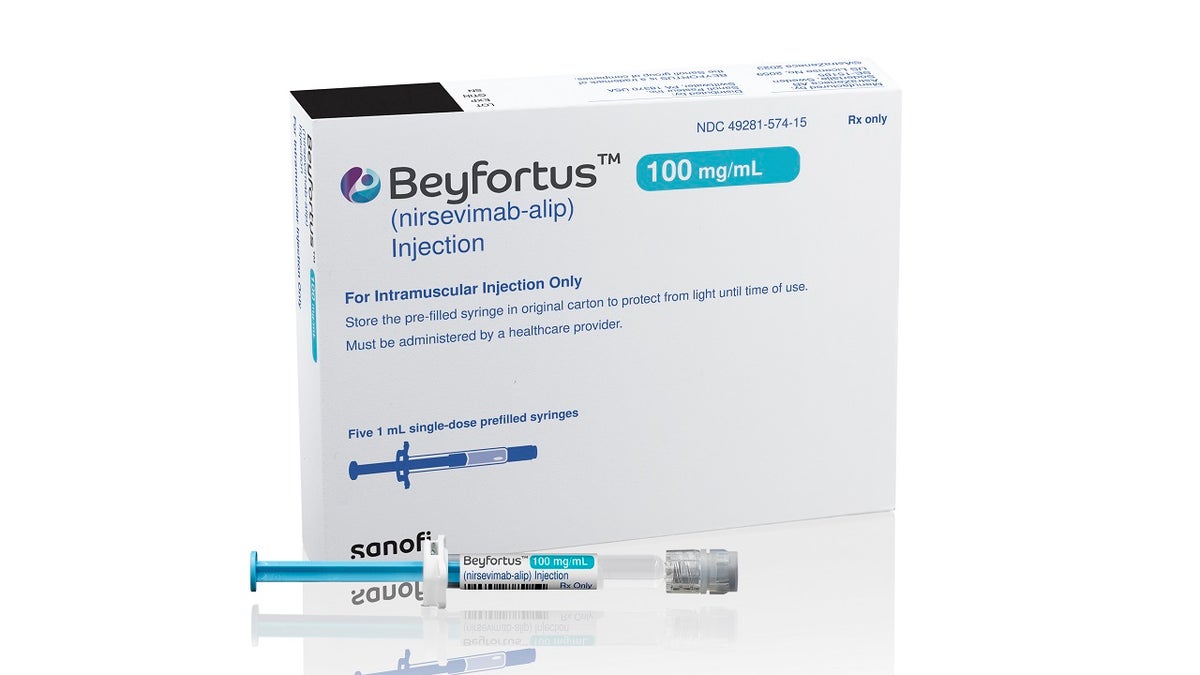
The Centers for Disease Control and Prevention (CDC) released a notice last week citing “limited availability” of the long-acting monoclonal antibody immunization Beyfortus (nirsevimab).
The product is recommended by the CDC for preventing disease from respiratory syncytial virus (RSV) in children up to 24 months of age.
Beyfortus maker Sanofi said in a statement to Fox News Digital that “unprecedented demand” has been higher than anticipated, leading to limited supply.
The shortage primarily affects 100 mg-dose prefilled syringes used for infants weighing less than 11 pounds.
The logo of Sanofi is seen at the French drugmaker’s vaccine unit Sanofi Pasteur plant in Marcy-l’Etoile, near Lyon, France, on Sept. 30, 2023. Sanofi makes the monoclonal antibody immunization Beyfortus (nirsevimab).(REUTERS/Gonzalo Fuentes/File Photo)
“For the first time in history, health care providers are able to help protect an extraordinary number of infants against RSV disease,” a Sanofi spokesperson said.
“Despite an aggressive supply plan built to outperform past pediatric immunization launches, demand for this product, especially for the 100-mg doses used primarily for babies born before the RSV season, has been higher than anticipated,” the spokesperson also said.
Sanofi is working in “close collaboration” with the CDC and its partner, AstraZeneca, to ensure “equitable distribution” of available doses through the Vaccines for Children Program (VFC), the spokesperson added.
This illustration provided by AstraZeneca depicts packaging for the medication Beyfortus.(AstraZeneca/AP)
As supply is short, the CDC recommended prioritizing available 100-mg injections for those who are at the highest risk of severe infection, including infants who are younger than 6 months or who have underlying conditions.
Health care providers should avoid using two 50-mg doses for infants weighing more than 11 pounds to preserve that supply for the babies who weigh less, the agency stated.
The CDC also encouraged suspending the use of nirsevimab in children aged 8 months to 19 months who are eligible to receive the alternative immunization Synagis (palivizumab), which is recommended by the American Academy of Pediatrics (AAP).
The antibodies in injections like nirsevimab last five months, according to a pediatrician.(iStock)
Prenatal care physicians should also inform pregnant patients about the supply concerns and discuss options for them to receive the RSV vaccine during pregnancy, the CDC noted.
Families should be “aware of everyday preventive measures to limit the spread of RSV and other respiratory illnesses” — which includes washing hands, covering coughs and sneezes, and staying home when symptoms occur, the agency said.
What to know about RSV in infants
In very young infants, the symptoms of RSV may be lethargy, trouble breathing and irritability, per the CDC.
Other signs include runny nose, coughing, sneezing, decreased appetite, fever and wheezing.
RSV is common in the fall and winter, Dr. Denise Scott, a JustAnswer expert pediatrician based in Oklahoma, told Fox News Digital.
“As a pediatrician, I have always dreaded RSV season, knowing how much illness it creates in babies and how many hospitalizations.”
For patients who are under 6 months old or who have an underlying heart or lung condition, it can potentially be “very serious, even fatal,” she said.
“Because it is a viral infection, there is no specific treatment or cure, only supportive therapy,” the doctor said.
“The body does not develop immunity to it; however, subsequent infections are usually not as severe as a first-time infection.”
Injections are recommended for infants under 8 months or infants from 8 to 19 months with an underlying condition that puts them at risk for more severe complications, a pediatrician said.(iStock)
RSV infection during infancy can increase the child’s risk for the development of asthma, the pediatrician added.
Zodia, the institutional cryptocurrency custody platform co-owned by British banking giant Standard Chartered, Japanese SBI Holdings and the financial firm Northern Trust, is expanding its services to Hong Kong.
Zodia Custody is launching services in Hong Kong in response to growing demand for crypto from institutions, Zodia CEO Julian Sawyer said, according to a CNBC report on Oct. 29.
According to Sawyer, the crypto demand in Hong Kong is mainly driven by institutional investors rather than retail customers, ideally matching Zodia’s crypto custody offering. He also mentioned that Hong Kong’s stance on crypto aligns with Zodia’s ambitions as the local government “sees digital assets as the future and also wants Hong Kong to be a hub.”
Zodia’s launch in Hong Kong comes as the firm aggressively scales operations in Asia, opening services in Japan, Singapore and Australia in recent months.
“What we’re seeing is there are absolutely clients in all of those four markets who want to do things,” Zodia CEO said, adding:
“We also see a lot of other clients and prospects outside those four jurisdictions that want to come in on the institutional side.”
According to the report, Zodia will gradually roll out its services in Hong Kong, initially offering support for a limited number of cryptocurrency assets. The firm is reportedly in discussions with Hong Kong’s Securities and Futures Commission and Hong Kong Monetary Authority about becoming regulated in the financial district, the report notes.
Gary Gensler once criticized the United States securities regulator for its “inconsistent” approach to spot Bitcoin (BTC) products, according to a resurfaced video of Gensler from 2019.
The video clip, which has recently made the rounds again on social media, shows the pre-SEC Gensler discussing blockchain regulation at the 2019 MIT Bitcoin Expo in a fireside chat with Securities and Exchange Commission (SEC) commissioner Hester Peirce.
“Bitcoin futures, and I think Ethereum futures and so forth, will exist and Bitcoin ETFs have not and that feels a little inconsistent to me […]It feels a little inconsistent,” Gensler said.
“Even though the laws aren’t exactly the same, they’re quite similar,” he added.
Meanwhile, on X (Twitter), the crypto community couldn’t help but highlight the contrast with Gensler’s views toward spot Bitcoin ETFs today.
”Gary Gensler says Gary Gensler is wrong,” market analyst Zack Voell posted. “We missed out on chill and normal Gensler,” another X user remarked.
From as far back as 2017 the SEC has rejected spot Bitcoin ETF applications, a tradition carried on under Gensler who has denied, delayed or pushed back recent spot Bitcoin ETF applications claiming the funds don’t have protections for market manipulation.
Gensler’s SEC was sued by asset manager Grayscale for rejecting its bid to convert its existing Bitcoin trust into a spot ETF.
A court ruled the SEC was “arbitrary and capricious” to reject the application. The SEC did not appeal the decision.
Justin Herbert’s three touchdown passes led the Los Angeles Chargers to a much-needed victory over the Chicago Bears on Sunday night, 30-15, to get back in the win column after back-to-back losses.
Herbert has been scrutinized in recent weeks for missing passes and making it hard for the Chargers to get anything going on offense as he continues to deal with a dislocated finger on his non-throwing hand, but that wasn’t the case on Sunday night.
Herbert completed 15 straight passes in the first half to get his team off to the start head coach Brandon Staley and offensive coordinator Kellen Moore have been waiting for.
Justin Herbert #10 of the Los Angeles Chargers drops back to pass in the third quarter against the Chicago Bears at SoFi Stadium on Oct. 29 in Inglewood, California.(Ronald Martinez/Getty Images)
Herbert, who had his best half of the season in the first against the Bears, orchestrated a 92-yard drive to start his night that ended with a perfectly executed screen to Austin Ekeler, who made one man miss and used a hoard of blockers to comfortably snag a 39-yard catch-and-run.
Ekeler is someone Chargers fans have been waiting to see back to normal following his ankle injury, and the versatile offensive weapon showcased his pass-catching abilities in this matchup.
Ekeler didn’t have the best night on the ground (15 carries, 29 yards), but he was the Chargers’ leading receiver with 94 yards on seven catches, which included that first touchdown. It was his first receiving score of the season, and the Chargers hope there’s many more.
After the Ekeler touchdown drive, Herbert had another passing touchdown, this time finding backup tight end Simi Fehoko for his first of the season.
Herbert would later find Donald Parham Jr. (four catches, 43 yards) toward the end of the first half to collect his third and final touchdown pass of the game, as the big tight end shimmied past one Bears defender and carried a couple into the end zone for his fourth touchdown of the campaign.
Herbert was 31 of 40 for 298 yards with three touchdowns and no interceptions, marking the first time in three weeks he hasn’t thrown a pick.
Tyson Bagent #17 of the Chicago Bears throws a pass during the first quarter against the Los Angeles Chargers at SoFi Stadium on Oct. 29 in Inglewood, California.(Kevin Sabitus/Getty Images)
The Bears’ rookie quarterback Tyson Bagent was a great story this past week as the Division II product from Shepherd University took over for the injured Justin Fields and dominated the Las Vegas Raiders, but Chicago struggled to get things going in this one.
Bagent finished the game 25 of 37 for 232 yards with two interceptions and no touchdown passes.
His favorite target was tight end Cole Kmet, who had 10 catches on all 10 of his targets for 79 yards. Star wide receiver DJ Moore had four catches for 55 yards.
D’Onta Foreman was also a key factor in the Bears’ win last week, scoring three total touchdowns in the game, but he was held to just 34 yards on nine carries Sunday night, as the Chargers held the Bears to just 73 yards rushing.
Bagent did, however, get into the end zone at the very end of the game, sneaking it in on the goal line for his second rushing touchdown of his young career.
Austin Ekeler #30 of the Los Angeles Chargers celebrates a touchdown in the first quarter against the Chicago Bears at SoFi Stadium on Oct. 29 in Inglewood, California.(Meg Oliphant/Getty Images)
With the Chargers snapping their losing streak to get to 3-4 on the year, Herbert and his crew will look to keep the momentum next week on “Monday Night Football” against the New York Jets.
Meanwhile, the Bears will see if Fields is good to go next week against the New Orleans Saints on the road.
Scott Thompson is a sports writer for Fox News Digital.
At least 25 people have reportedly seen $4.4 million in crypto drained from across 80 wallets due to a 2022 data breach that impacted password storage software LastPass.
In an Oct. 27 X (Twitter) post, pseudonymous on-chain researcher ZachXBT said they and MetaMask developer Taylor Monahan tracked the fund movements of at least 80 wallets compromised on Oct. 25.
“Most, if not all, of the victims are longtime LastPass users and/or confirm having stored their [crypto wallet] keys/seeds in LastPass,” Monahan said in an accompanying Chainabuse report.
Just on October 25, 2023 alone another ~$4.4M was drained from 25+ victims as a result of the LastPass hack.
Cannot stress this enough, if you believe you may have ever stored your seed phrase or keys in LastPass migrate your crypto assets immediately. pic.twitter.com/26HsxrlnCb
In December 2022, LastPass disclosed an attacker leveraged information previously stolen in a breach that August to target a LastPass employee, snagging their credentials and decrypting stored customer information.
Also stolen was a backup of encrypted customer vault data which LastPass warned could be decrypted if the attacker brute force guesses the account’s master password.
In a September blog post, cybersecurity journalist Brian Krebs reported some of the LastPass customer vaults had seemingly been cracked and over $35 million worth of crypto had been stolen from around 150 victims.
In January, LastPass was hit with a class-action suit from individuals claiming the August 2022 breach resulted in the theft of around $53,000 worth of Bitcoin (BTC).
In his latest X post, ZachXBT advised anyone who ever stored a wallet seed or private key in LastPass to “migrate your crypto assets immediately.”
El Salvador president Nayib Bukele has filed paperwork to be re-elected in the country’s upcoming 2024 presidential election in February.
Bukele, a Bitcoin advocate, received strong support from the public on Oct. 26 after he was officially nominated by his party to run for re-election.
“Five more [years], five more and not one step back,” Bukele said in a speech in front of thousands of El Salvadorans. “We need five years to continue improving our country,” he added.
| ÚLTIMA HORA: Al grito de “cinco más, cinco más y ni un paso atrás” Nayib Bukele da su discurso delante de miles de Salvadoreños luego de inscribir su candidatura presidencial para la reelección. “Necesitamos 5 años para seguir mejorando nuestro país.” pic.twitter.com/ApaP8yyQBm
Bukele rose to power in 2019 when his political party, Neuva (New) Ideas, broke three decades of two-party dominance between the Nationalist Republican Alliance and the Farabundo Martí National Liberation Front (FMNLB).
However, despite his popularity among the local population, critics such as El Salvadoran lawyer Alfonso Fajardo maintain that the country’s constitution prohibits Bukele isn’t eligible to seek a second consecutive term.
“Today is a good day to remember that immediate presidential re-election is prohibited up to 7 times by the Constitution,” he said on Oct. 26.
Nayib Bukele is running for reelection in El Salvador despite the fact that it’s prohibited in 7 articles of the constitution. The constitution drafted after our peace accords, after our bloody civil war. This is unconstitutional. https://t.co/ordgib7WMq
However, in September 2021, El Salvador’s Supreme Court ruled that presidents can run for consecutive elections.
New Ideas is backed by 70% of the country’s voting population, according to Reuters, which cited a study by an El Salvadoran university. Its closest competitor only received 4% of the total votes.
One of New Ideas’ competitors, FMNLB, filed a lawsuit in June 2021 claiming Bukele’s Bitcoin adoption program is unconstitutional. However, that complaint made little ground as Bukele and El Salvador made Bitcoin legal tender three months later September 2021.
The Bukele government has also implemented other tech-friendly policies aimed at strengthening the country’s economy, such as eliminating all taxes on technological innovations.
Gabor Gurbacs, a VanEck strategy advisor, recently said that El Salvador has the potential to become the “Singapore of the Americas.”
Much of Bukele’s popularity comes from his heavy-handed crackdown against MS-13, a multi-national gang which contributed towards El Salvador recording the highest homicide rates in the world six years ago.
As a result of the crackdown, El Salvador’s homicide rate has fallen a staggering 92.6% from its peak of 106 per 100,000 inhabitants in 2015 to 7.8 in 2022. It now boasts one of the lowest crime rates in Latin America.
However, the United Nations and other critics argue El Salvador breached human rights laws by imprisoning 65,000 without affording them legal rights to defend themselves.
El Salvador’s presidential election will take place on Feb. 4, 2024.