Not all college football Saturdays are created equal.
Fans of the sport are coming off a wonderful Week 8 slate that saw Top 25 matchups in four of the five Power 5 conferences.
The Week 9 schedule is a little lighter. At least on paper.
The beautiful thing about college football is that you never know what to expect from week to week.
DEION SANDERS DOWNPLAYS EFFECTIVENESS OF SIGN-STEALING: ‘YOU’VE STILL GOT TO STOP IT’
Jalen Milroe (4) of the Alabama Crimson Tide lines up the offense against the Tennessee Volunteers during the fourth quarter at Bryant-Denny Stadium Oct. 21, 2023, in Tuscaloosa, Ala. (Kevin C. Cox/Getty Images)
Few, if any, expected 1-5 Virginia to upset No. 10 North Carolina last week, earning the program’s first-ever road win over a top-10 opponent and ending North Carolina’s undefeated start to the year.
So, don’t overlook the Week 9 schedule as conference championship games creep ever closer.
Let’s take a look at a few games to be aware of in Week 9.
Kansas vs. No. 6 Oklahoma – 12 p.m. ET
The Sooners came off a bye week after beating Texas in the Red River Rivalry game and nearly undid all their momentum.
Oklahoma needed to stop a two-point conversation late in the fourth quarter to beat UCF in Week 8, the former team of quarterback Dillon Gabriel.
“It definitely was a personal one because I played there, and it’s just, it’s a part of my journey that I’ll never forget,” Gabriel said. “But, at the end of the day, it wasn’t about me. It was about us as a team finding a way to win.”
The Sooners travel to Lawrence to take on a Kansas team that has lost two of its last three after starting the year 4-0.
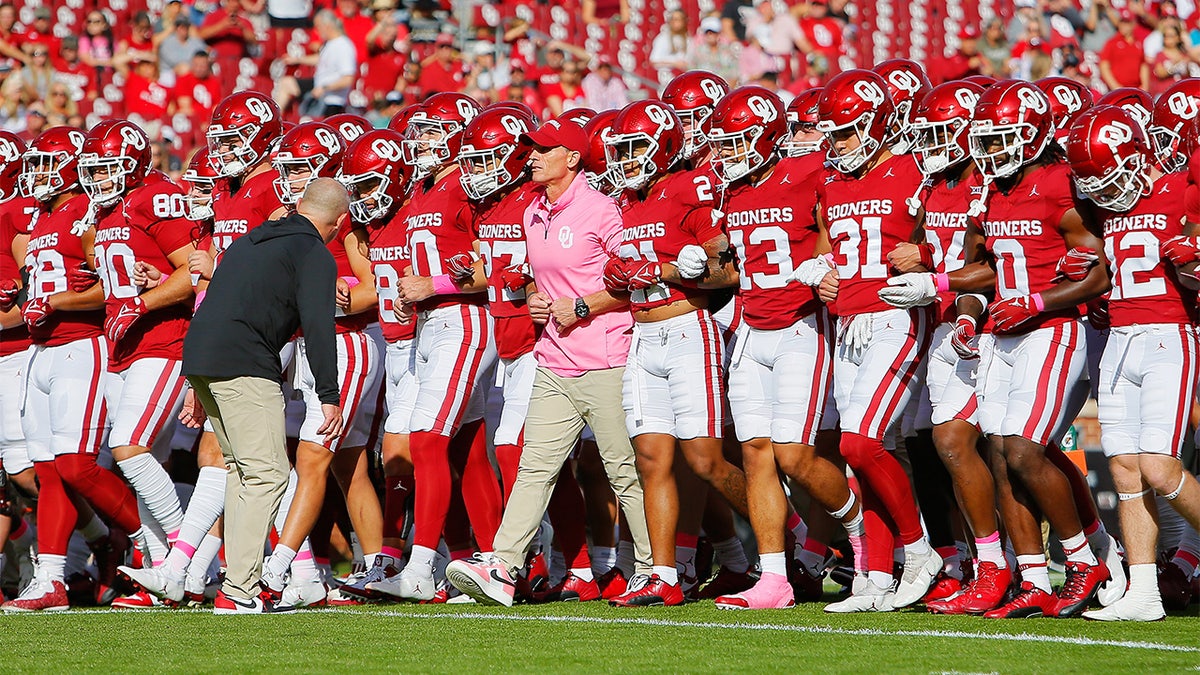
Head coach Brent Venables and quarterback Dillon Gabriel (8) of the Oklahoma Sooners lead the team on a march to the end zone before a game against the UCF Knights at Gaylord Family Oklahoma Memorial Stadium Oct. 21, 2023, in Norman, Okla. (Brian Bahr/Getty Images)
UTSA FOOTBALL COACH SAYS FINGER LOOKS LIKE IT WAS ‘SMASHED BY A HAMMER’ AFTER MOTIVATION TACTIC BACKFIRES
Big 12 preseason Offensive Player of the Year Jalon Daniels has missed the last three games with a back injury and appears doubtful to return in Week 9.
If Daniels is unable to go, sixth-year senior Jason Bean will get the start after throwing for 410 yards, five touchdowns and two interceptions in a loss to Oklahoma State in Week 9.
“He’s doing a great job delivering, and he’s getting the ball to everybody,” OU head coach Brent Venables said of Bean, according to 247 Sports. “He’s able to buy time, keep his eyes down the field, create explosive plays. He had one against Oklahoma State where he’s running to the left, and he had everyone covered and the receiver does a great job of working open.
“He lofts it across his body and hits the guy up the sideline in a really tight window. He makes outstanding plays, and he’s the quote, unquote backup. They’ve done a really good job and have really good quarterbacks.”
Florida vs. No. 1 Georgia – 3:30 p.m. ET
The Bulldogs have been No. 1 in the AP poll 19 consecutive weeks, the third-longest streak in the history of the rankings.
Despite sitting at the top of the poll the entire season, Georgia appears more vulnerable than at any other time during its dominant two-year stretch.
Georgia is coming off its bye week and will be without star tight end Brock Bowers, who underwent ankle surgery after suffering a high ankle sprain against Vanderbilt. Bowers underwent tight rope surgery two days after the injury, a procedure that usually takes 4-6 weeks of recovery.
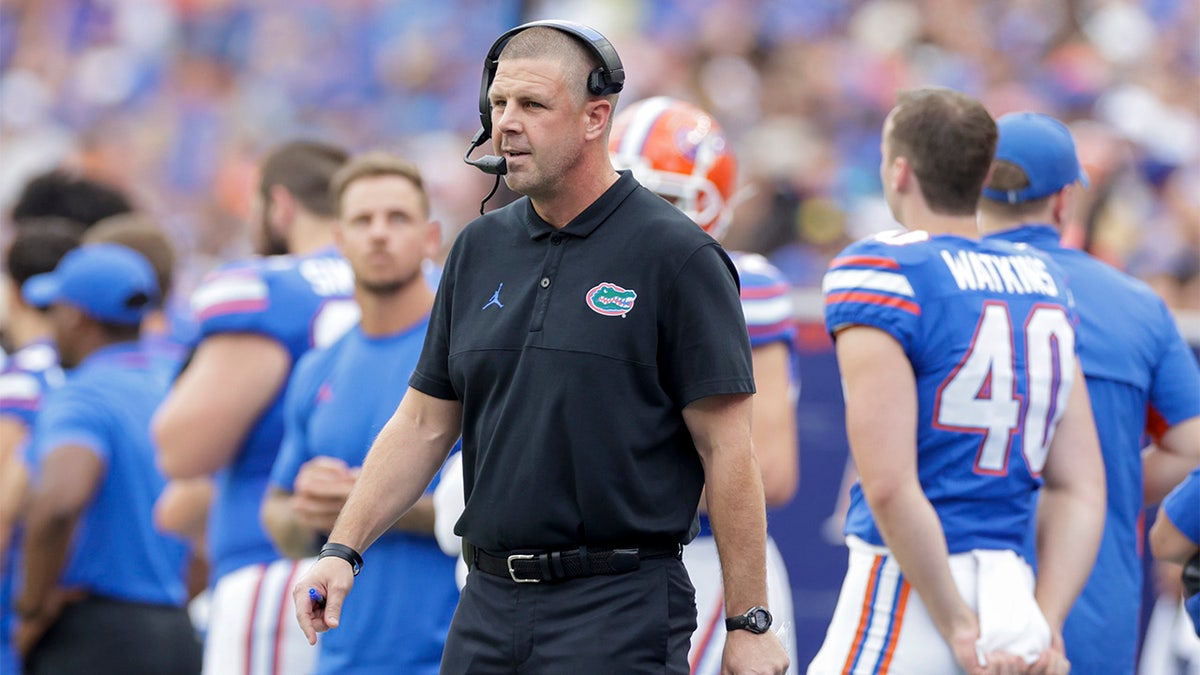
Florida Gators head coach Billy Napier during a game against the Vanderbilt Commodores Oct. 7, 2023, at Ben Hill Griffin Stadium at Florida Field in Gainesville, Fla. (David Rosenblum/Icon Sportswire via Getty Images)
Florida comes in a winner of two straight after victories over Vanderbilt and South Carolina and now faces the difficult part of its schedule.
After taking on the Bulldogs in Jacksonville, Florida will face Arkansas before three straight matchups against top-20 opponents in LSU, Missouri and Florida State.
Georgia has won five of its last six matchups between the two rivals.
UCF RECEIVER BLOWS KISS TO OKLAHOMA SIDELINE WHILE RUNNING FOR 86-YARD TOUCHDOWN
No. 13 Utah vs. No. 8 Oregon – 3:30 p.m. ET
This is a matchup between two teams that cannot afford another conference loss.
The Utes are coming off a massive win over USC on the road, essentially ending USC’s College Football Playoff hopes while keeping theirs alive.
Oregon bounced back in Week 8 with a win over Washington State after losing a thriller to Washington in Week 7.
Both defenses are stout, with Utah and Oregon second and third, respectively, in yards allowed per game in the Pac-12.
While the defenses may be similar, the offenses are in different stratospheres.
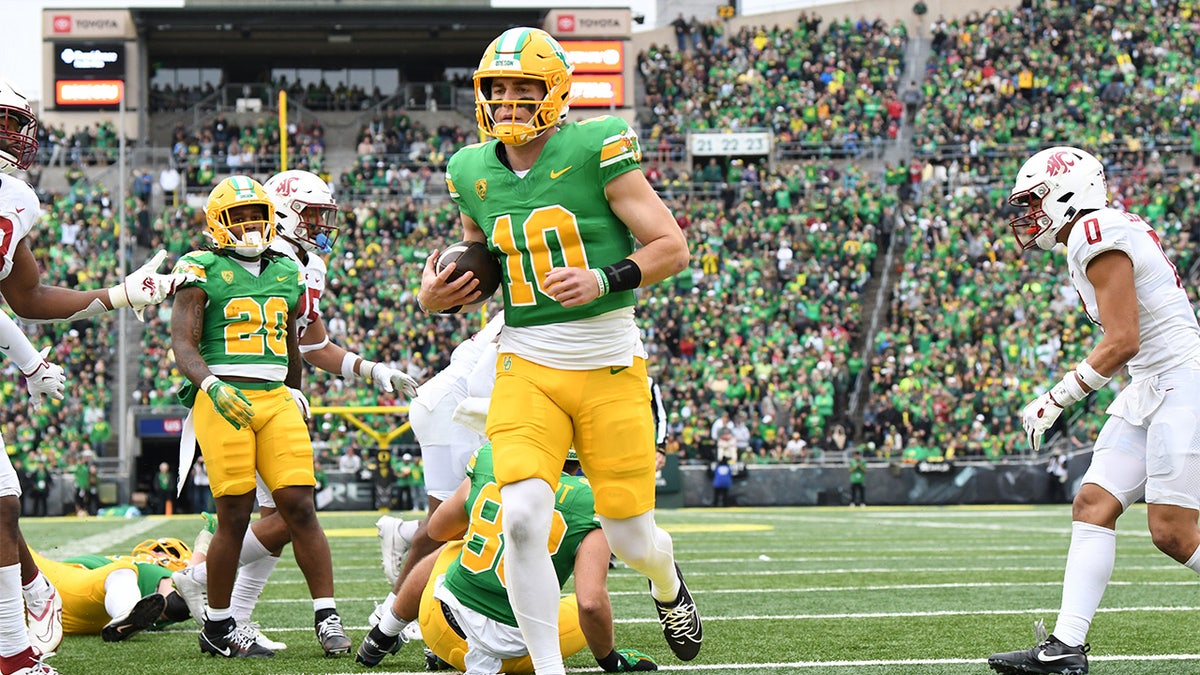
Oregon Ducks quarterback Bo Nix (10) runs for a 2-yard touchdown in the second quarter of a game against the Washington State Cougars Oct, 21, 2023, at Autzen Stadium in Eugene, Ore. (Brian Murphy/Icon Sportswire via Getty Images)
The Ducks, led by Heisman candidate Bo Nix, average 553 yards (first in the nation) and 47 points per game (second in the country), both best in the Pac-12.
Nix has thrown 19 touchdowns with just one interception while leading the Pac-12 in completion percentage (78.4%).
CLICK HERE FOR MORE SPORTS COVERAGE ON FOXNEWS.COM
“The thing I like about him the most is his competitiveness and his leadership,” Utah head coach Kyle Whittingham said of Nix Monday.
“I’ve had a strong opinion of how good he is for several years. To me, that it is the way he leads and competes every week.”
Utah’s offense is on the opposite end of the spectrum, sitting near the bottom of the Pac-12.
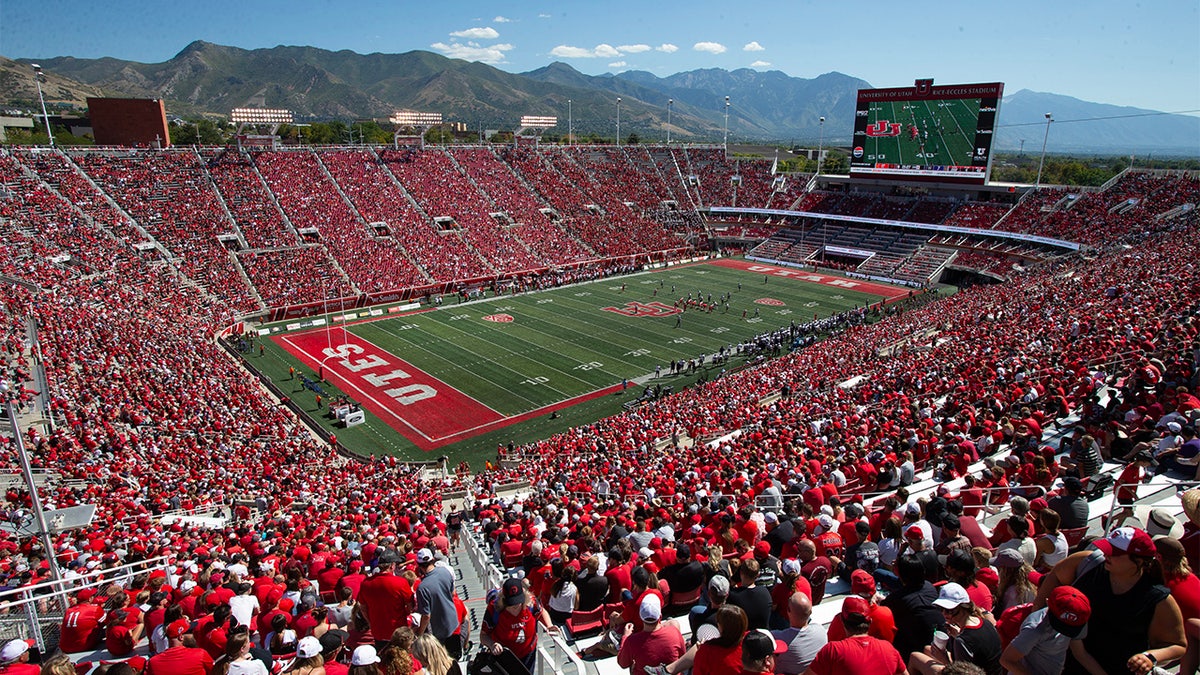
A game between the Utah Utes and the Weber State Wildcats at Rice-Eccles Stadium Sept. 16, 2023, in Salt Lake City. (Chris Gardner/Getty Images)
Without star quarterback Cam Rising, Utah’s passing game has struggled, averaging just 161.7 yards per game through the air, last in the Pac-12 by a wide margin.
But quarterback Bryson Barnes had a breakthrough game against USC, throwing for 235 yards and three touchdowns, adding 57 yards and a score on the ground.
“I think he’s getting more and more comfortable each week. What you appreciate, as a football guy, watching him play, the guy plays tough. I mean, he’s fighting for hard yards there at the end of the game to put their team in position. When he took some big hits, and he got up and kept playing,” Oregon head coach Dan Lanning said of Barnes, according to 247 Sports.
“He’s done a good job of passing the ball. He’s gotten more efficient each week. And you know that they do a great job putting him in position and using his talents.”
No. 18 Louisville vs. No. 20 Duke – 3:30 p.m. ET
Both teams are looking to avoid a second loss in the ACC as they try to keep up with undefeated Florida State.
Duke put up a heck of a fight against the Seminoles in Week 8 before quarterback Riley Leonard reaggravated his high ankle sprain in the second half.
Head coach Mike Elko said Monday his QB will be day-to-day ahead of the Louisville matchup.
Leonard’s status will have a major impact on Saturday’s game at Cardinal Stadium. With Leonard, Duke was able to take a lead late into the third quarter. Without Leonard, the Blue Devils failed to score the rest of the way as the Florida State offense got going.
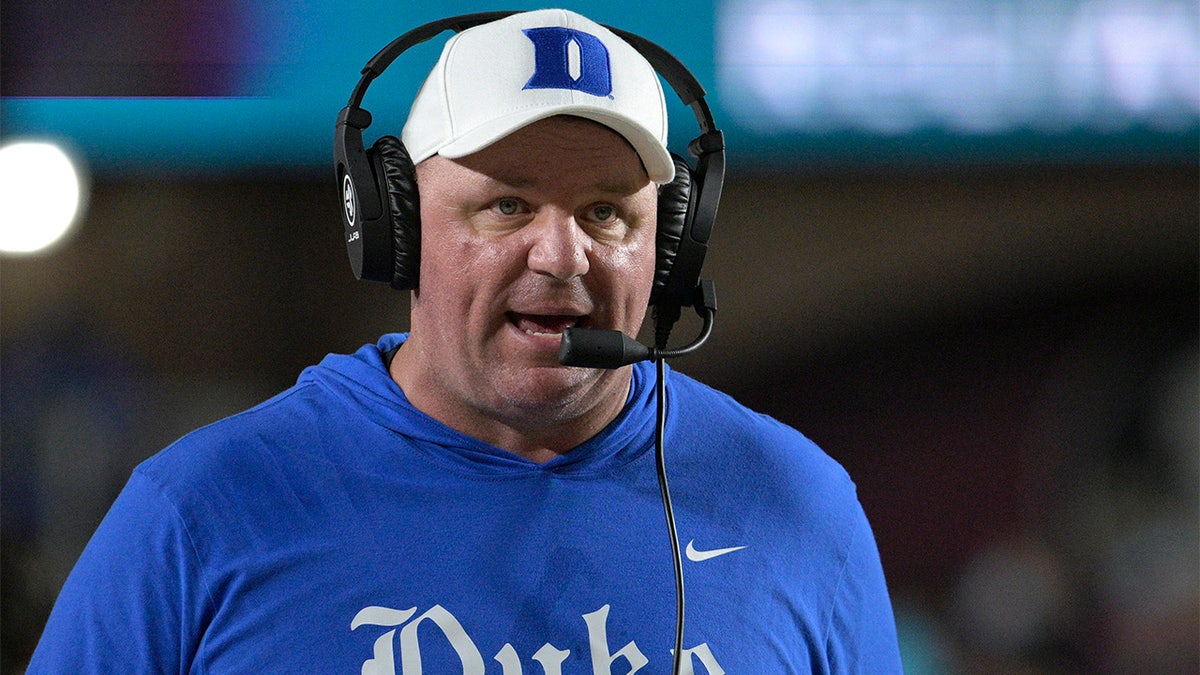
Duke head coach Mike Elko reacts on the sideline during the first half of a game against Florida State Oct. 21, 2023, in Tallahassee, Fla. (AP Photo/Phelan M. Ebenhack)
CLICK HERE TO GET THE FOX NEWS APP
“By and large, we handled it really well for three quarters,” Elko said of his team’s effort against Florida State, per WRAL.com. “I think there’s probably another level that it has to go to in the fourth quarter.”
For Louisville, it’s been an up-and-down three weeks.
The Cardinals put on a dominant performance against Notre Dame in Week 6 before losing to an unranked Pittsburgh team in Week 7. Louisville turned the ball over three times against the Panthers and were without star running back Jawhar Jordan most of the game.
Jordan did not practice during Louisville’s bye week.
“We’ll gauge where he’s at this week,” Louisville head coach Jeff Brohm said of Jordan’s availability for Saturday, according to the Louisville Courier Journal. “I’m always hopeful that we can get him back. But until I see him practice football in a normal setting, I wouldn’t be able to tell you that.”
Joe Morgan is a Sports Reporter for Fox News.