NEWYou can now listen to Fox News articles!
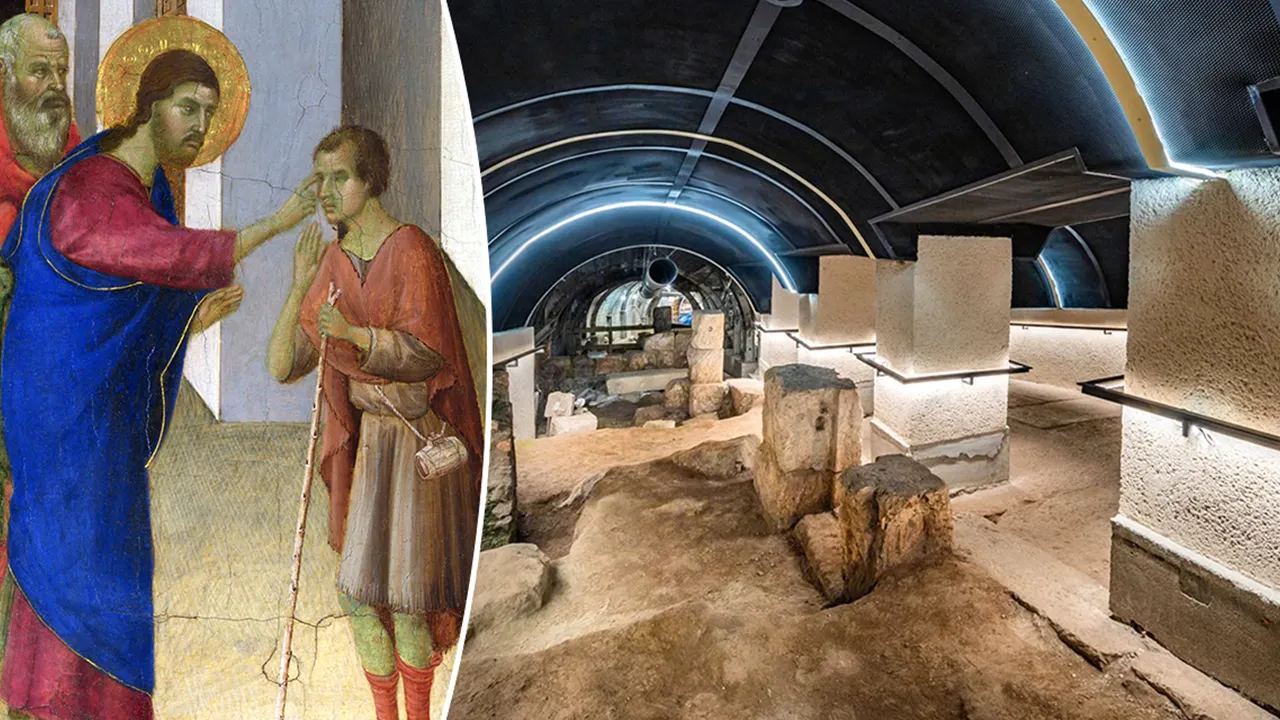
For the first time in 2,000 years, visitors can walk the ancient Pilgrims’ Road — a historic path dating back to the time of Jesus.
Known to archaeologists as the stepped street, Pilgrims’ Road is a path in East Jerusalem that once served as the city’s main thoroughfare.
It connected the Pool of Siloam to the Temple Mount during the Second Temple period, which lasted from 516 B.C. to 70 A.D.
ANCIENT SYNAGOGUE UNCOVERED IN ISRAEL REVEALS JEWISH LIFE ALONGSIDE RISE OF EARLY CHRISTIANITY
Constructed in the first century A.D., the road runs nearly half a mile — about 1,970 feet — through ancient Jerusalem.
Now, tourists can walk in the footsteps of Jesus — and other first-century Jews — thanks to the City of David archaeological site.
The Pilgrims’ Road in Jerusalem has opened to visitors for the first time in 2,000 years, allowing tourists to walk a path dating back to the time of Jesus. (Fine Art Images/Heritage Images/Getty Images; City of David)
In a Feb. 10 statement, the City of David announced that the first tour has concluded, with participants including Israeli President Isaac Herzog and philanthropist Miriam Adelson.
The road served “as a major artery of movement in ancient Jerusalem,” the organization said.
Tourists can walk in the footsteps of Jesus, thanks to the City of David archaeological site.
“Local residents, merchants, visitors and pilgrims passed along this route, arriving in Jerusalem from across the land and from around the world,” the City of David said.
TEST YOURSELF WITH OUR LATEST LIFESTYLE QUIZ
One of the most remarkable things about the road, the statement added, was its well-preserved condition.
The road was abandoned suddenly during the Great Revolt — and it “remained buried beneath layers of Earth for about two millennia.”

Constructed in the first century A.D., the road stretches nearly half a mile, or about 1,970 feet. (City of David)
“The street has not been reconstructed or redesigned,” the statement said.
“It was uncovered exactly as it was [and] left untouched.”
CLICK HERE TO SIGN UP FOR OUR LIFESTYLE NEWSLETTER
Tourists can access the road by visiting the City of David, and both guided and self-guided tours are available.
It begins with an overlook of ancient Jerusalem, proceeds through the underground tunnel and ends at Davidson Archaeological Park, just south of the Temple Mount.

The Pilgrims’ Road dates to the Second Temple period, which ended in 70 A.D. with the destruction of the temple. (The Print Collector/Getty Images)
The tour “lasts approximately two hours and is suitable for families with children, adults and organized groups,” the City of David said.
The statement added, “Its opening enables visitors to walk a street that lay hidden underground for thousands of years and to encounter Jerusalem as it once was — a living, dynamic and bustling city, revealed directly through its authentic remains, without reconstruction.”
CLICK HERE FOR MORE LIFESTYLE STORIES
The route carries weight for both Jews and Christians, an official from City of David told Fox News Digital.
Walking along the path from Pool of Siloam and the Temple Mount is “deeply significant,” the spokesperson said.

The City of David said the street was uncovered exactly as it was and left untouched without reconstruction. (City of David)
“The Jewish connection to the area dates back some four millennia to the time of Abraham, and for Christians, dating back some 2,000 years to the foundational moments of their faith,” he said.
He also emphasized the rarity of the road — both its preservation and its importance.
CLICK HERE TO GET THE FOX NEWS APP
“While there may be other ancient roads from antiquity, both in and outside of Israel, few if any have the significance of the Pilgrimage Road — with meaning to billions, not just millions,” the official added.