The X social media platform has been hit with a “massive cyberattack” that has prevented some users from accessing the site, platform owner Elon Musk confirmed on March 10.
“We get attacked every day, but this was done with a lot of resources. Either a large, coordinated group and/or a country is involved,” Musk said.
Although user functionality was quickly restored, Musk implied that the attack was still ongoing.
At the time of writing, there were more than 33,000 reports of X outages on March 10, according to Downdetector.
Musk confirmed the cyberattack in response to a social media user who detailed a series of attacks against the entrepreneur’s interests, from protests against the Department of Government Efficiency (DOGE) to vandalism of Tesla stores.
As NBC News reported, there have been at least 10 acts of vandalism against Tesla stores and vehicles, likely in response to the billionaire entrepreneur’s involvement in the Trump White House.
Shortly after winning the November presidential election, Donald Trump appointed Musk to head the Department of Government Efficiency with the mandate of reducing wasteful government spending.
So far, Musk’s DOGE claims to have saved $105 billion in taxpayer dollars across 10,492 initiatives, according to a live tracker.
DOGE reportedly has its sights set on the Securities and Exchange Commission (SEC) and has even called on the public to provide examples of “waste, fraud and abuse” at the agency.
Musk previously described the SEC as a “totally broken organization” that, instead of prosecuting real criminals, misallocates its resources on things that don’t matter.
With regard to crypto, the SEC’s mandate under President Trump has changed dramatically.
According to the Harvard Law School Forum on Corporate Governance, “We should expect the SEC under the second Trump administration to scale back rulemakings adopted under the Biden administration and former Chair Gary Gensler that many viewed as increasing impediments to one of the SEC’s core missions of capital formation.”
The state of Maryland has confirmed its first measles case in a Howard County resident who recently traveled internationally.
The Maryland Department of Health (MDH) announced the positive case in a news release on Sunday. It was also confirmed by the Virginia Department of Health and Howard County health officials.
This case is not associated with the outbreaks in Texas or New Mexico, the health department confirmed.
Officials hope to identify people who might have been exposed while traveling at the following specific times and locations.
Travelers at Washington Dulles International Airport may have been exposed to measles on March 5, health officials say.(Craig Hudson for The Washington Post via Getty Images)
March 5, 4 p.m. to 9 p.m.: Washington Dulles International Airport: Terminal A, on transportation to the main terminal and in the baggage claim area
March 7, 3:30 p.m. to 7:30 p.m.: Johns Hopkins Howard County Medical Center Pediatric Emergency Department
The MDH urged residents to check these exposure times, monitor any rising symptoms and get up to date with vaccinations.
Early measles symptoms include a fever over 101, runny nose, cough and red, watery eyes, according to health officials.
A red rash will appear on the face and spread to the rest of the body, typically one to four days after early symptoms, according to the Maryland Department of Health.(iStock)
A red rash will appear on the face and spread to the rest of the body, typically one to four days after early symptoms.
Measles symptoms can develop from seven to 21 days after exposure, but usually appear within 10 to 14 days, the MDH added.
A person is contagious starting four days before the rash appears and up to four days after.
Fox News senior medical analyst Dr. Marc Siegel previously shared with Fox News Digital that measles is highly contagious.
Signs point the way to measles testing in the parking lot of the Seminole Hospital District across from Wigwam Stadium on Feb. 27, 2025, in Seminole, Texas. (Jan Sonnenmair/Getty Images)
“There is a 90% chance you will get it if you are unvaccinated and step into a room where someone with measles was two hours before,” he cautioned.
The best way to prevent measles is to receive the two-dose measles, mumps and rubella (MMR) vaccine, according to the Centers for Disease Control and Prevention and various experts.
The Maryland Department of Health states that pregnant women, infants younger than 1 year old and people who are immunocompromised are at the highest risk of complications from measles.
“People, especially those not vaccinated or otherwise immune to measles, who were at any of these locations during the possible exposure times should monitor themselves for any early symptoms of measles for 21 days after the potential exposure,” the department noted.
River Jacobs, 1, is held by his mother, Caitlin Fuller, while he receives an MMR vaccine from Raynard Covarrubio, at a vaccine clinic put on by Lubbock Public Health Department on March 1, 2025, in Lubbock, Texas.(Jan Sonnenmair/Getty Images)
“People who develop a fever or other symptoms of measles should not go to childcare, school, work or out in public, and should contact their health care provider. They should call their health care provider first rather than showing up in the waiting room or emergency room so that the office can take measures to prevent spread to other patients.”
Asset manager REX-Osprey is seeking to launch an exchange-traded fund (ETF) designed to hold the Movement Network’s native token, MOVE, according to a March 10 announcement.
The filing comes as Movement, a layer-2 (L2) blockchain network, launches its public mainnet beta, Movement said.
It is the latest example of a fund sponsor filing to list an ETF comprising an alternative cryptocurrency, or “altcoin.”
“Traditional investors have expressed keen interest in gaining regulated exposure to emerging blockchain technologies without directly managing tokens,” Cooper Scanlon, Movement Labs’ co-founder, said in a statement.
Movement is an Ethereum L2 blockchain designed using Move, a Rust-based programming language originally developed by Meta.
Its public mainnet has approximately $250 million in total value locked (TVL), according to Movement.
The MOVE token has a fully diluted value of around $5 billion, according to CoinMarketCap.
The US Securities and Exchange Commission authorized ETFs holding Bitcoin (BTC) and Ether (ETH) to list in the US in 2024 but has not yet approved any altcoin ETFs.
“Breaking the pattern of ETFs limited to long-established cryptocurrencies opens doors for institutional capital to support next-generation blockchain innovation,” Rushi Manche, Movement Labs’ co-founder, said in a statement.
Asset managers are seeking the SEC’s approval to list ETFs for holding upward of half a dozen different altcoins.
On March 5, asset manager Bitwise filed to list a spot Aptos ETF in the US — a token created by a team led by two former Facebook (now Meta) employees in 2022.
On Feb. 25, US securities exchange Nasdaq requested to list a Grayscale ETF holding the Polkadot network’s native token, DOT (DOT).
Other altcoin ETFs awaiting approval include those holding Litecoin (LTC), Solana (SOL) and Official Trump (TRUMP), among others.
US President Donald Trump, who started his second term in January, said he wants America to become the “world’s crypto capital” and has appointed pro-crypto leaders to key regulatory agencies, including the SEC.
Bloomberg Intelligence has set the odds of the SEC approving Solana and Litecoin ETFs at 70% and 90%, respectively.
Bitcoin (BTC) bulls tried to push the price above $85,000, but the bears held their ground. A minor positive is that larger investors seem to be accumulating at lower levels.
Research firm Santiment said in a post on X that wallets with 10 BTC or more have bought roughly 5,000 Bitcoin since March 3. The researchers added that if buying by the large players continues, the second half of March could be much better than the recent performance of Bitcoin.
However, not everyone is bullish on Bitcoin in the near term. BitMEX co-founder and Maelstrom chief investment officer Arthur Hayes said in a post on X that Bitcoin could retest $78,000 and even below $75,000.
Meanwhile, short-term investor sentiment remains bearish. According to CoinShares data, cryptocurrency exchange-traded products (ETPs) witnessed $876 million in outflows last week, taking the four-week total outflows to $4.75 billion. Bitcoin ETPs recorded the lion’s share of outflows at $756 million.
Can Bitcoin start a recovery from the current levels, pulling altcoins higher? Let’s analyze the charts to find out.
S&P 500 Index price analysis
The S&P 500 Index (SPX) turned down from the 20-day exponential moving average (5,900) on March 3 and broke below the 5,773 support on March 6, completing a double-top pattern.
The index bounced off the 5,670 level on March 7, but the bears successfully defended the breakdown level of 5,773. The index turned down and broke below the 5,670 support on March 10, opening the doors for a fall to 5,400.
Buyers will have to push and sustain the price above 5,773 to suggest solid demand at lower levels. The index could then rise to the 20-day EMA, which is again expected to act as a strong resistance.
US Dollar Index price analysis
The US Dollar Index (DXY) turned down sharply on March 3 and continued lower, breaking below the 105.42 support on March 5.
The fall below 105.42 suggests that the breakout above 108 may have been a bull trap. Buyers are trying to defend the 103.73 level, but the relief rally is expected to face selling at the 20-day EMA (106.03).
If the price turns down from the current level or the 20-day EMA, it will suggest a negative sentiment. That increases the risk of a break below 103.37. If that happens, the index may plunge to 101.
Buyers have an uphill task ahead of them. They will have to push and maintain the price above the 20-day EMA to clear the path for a rally to 108.
Bitcoin price analysis
BTC price broke below the support line of the symmetrical triangle pattern on March 9, indicating that the sellers have overpowered the buyers.
The bulls are trying to defend the $81,500 to $78,258 support zone, but the recovery attempt faced selling at the breakdown level on March 10. That suggests the bears are trying to flip the support line into resistance. If the price skids below $78,258, the BTC/USDT pair could collapse to $73,777.
Buyers are likely to have other plans. They will try to defend the support zone and push the price above the 20-day EMA ($88,605). If they manage to do that, the pair could rally to the resistance line.
Ether price analysis
Ether (ETH) fell and closed below the vital $2,111 support on March 9, signaling the start of the next leg of the downtrend.
Buyers tried to push the price above $2,111 on March 10, but the long wick on the candlestick suggests solid selling by the bears. There is minor support at $1,993, but if the level cracks, the ETH/USDT pair could sink to $1,750 and eventually to $1,550.
The bulls will have to push and maintain the price above the 20-day EMA ($2,329) to signal that the break below $2,111 may have been a bear trap. The pair could then rally to the 50-day SMA ($2,711).
XRP price analysis
XRP (XRP) continues to slide toward the crucial support at $2, suggesting that the bears are trying to seize control.
A break and close below $2 will complete a bearish head-and-shoulders pattern. There is minor support at $1.77, but the level is likely to be broken. If that happens, the XRP/USDT pair could plunge toward $1.28.
Contrary to this assumption, a solid bounce off $2 will signal that the bulls are vigorously defending this level. The 20-day EMA ($2.40) is likely to act as a stiff hurdle, but if the bulls prevail, the pair could reach $2.80.
BNB price analysis
BNB’s (BNB) failure to rise above the 20-day EMA ($601) attracted another round of selling on March 9, pulling the price below $546.
The down-sloping moving averages and the relative strength index (RSI) in the negative zone suggest that the path of least resistance is to the downside. If the price maintains below $546, the BNB/USDT pair could plummet to $500. Buyers are expected to aggressively defend the zone between $500 and $460.
The 20-day EMA is the first significant resistance to watch out for on the upside. If this level gets taken out, the pair could rise to the 50-day SMA ($633). A close above the 50-day SMA signals a short-term trend change.
Solana price analysis
Solana (SOL) broke below the uptrend line on March 9 and reached the strong support zone between $120 and $110.
The bulls are expected to fiercely defend the support zone, but the relief rally could face selling at the 20-day EMA ($150). If the price turns down sharply from the 20-day EMA, the $110 level will be at risk of breaking down. If that happens, the SOL/USDT pair could decline to $100 and later to $80.
Instead, if the price rises from the current level and breaks above the 20-day EMA, it will suggest solid buying near the support zone. The pair could then climb to the 50-day SMA ($188).
Dogecoin price analysis
Dogecoin (DOGE) fell below the $0.18 support on March 9, indicating the resumption of the downtrend.
The down-sloping moving averages and the RSI in the oversold territory suggest that bears have the upper hand. The 20-day EMA ($0.21) is the critical overhead resistance to watch out for. If the price turns down sharply from the 20-day EMA, the DOGE/USDT pair could sink to $0.14.
Alternatively, a break and close above the 20-day EMA will be the first sign that the selling pressure is reducing. The pair could climb to the 50-day SMA ($0.26), which may also act as a stiff resistance.
Cardano price analysis
Cardano (ADA) fell below the moving averages on March 8, indicating aggressive selling by the bears.
Both moving averages have started to turn down, and the RSI has slipped into negative territory, indicating that the bears have a slight edge. The support on the downside is at $0.58 and then $0.50.
Any relief rally is likely to face selling at the moving averages. Buyers will have to push and maintain the price above the moving averages to signal a comeback. The ADA/USDT pair could then rise toward $1.02.
Pi price analysis
Pi (PI) fell to the 61.8% Fibonacci retracement level of $1.20 on March 9, indicating that the bears have kept up the pressure.
Buyers are trying to start a recovery, but the long wick on the March 10 candlestick shows selling at higher levels. That increases the risk of a break below $1.20. If that happens, the PI/USDT pair could plunge to the 78.6% retracement level of $0.72.
Time is running out for the bulls. To prevent more downside, they will have to quickly push the price above the $2 overhead resistance. If they do that, it will suggest that the correction may be over.
This article does not contain investment advice or recommendations. Every investment and trading move involves risk, and readers should conduct their own research when making a decision.
A new study is revealing which cities in America are considered to be the “happiest,” and the top and bottom spots may or may not surprise you.
WalletHub released its 2025 report after conducting research across 180 major cities. The cities that ranked were based on 29 key metrics, ranging from the depression rate to the income-growth rate and factoring in average leisure time spent per day.
Chip Lupo, a WalletHub analyst, said that salary does have an impact on happiness.
“Research shows that having more money only increases your happiness until you’re making at least $75,000 per year – anything more you earn likely won’t have an impact,” said Lupo.
WalletHub has announced the “happiest” U.S. cities in its 2025 report that ranks 180 cities. (iStock)
“Therefore, when deciding where to live to maximize your happiness, you’ll want to pick a city that offers more than just a decent average income,” he added.
Lupo says, “The ideal city provides conditions that foster good mental and physical health, like reasonable work hours, short commutes, good weather and caring neighbors.”
Freemont, California was the happiest city in Wallethub’s 2025 report.(iStock)
Fremont, California took first place as the happiest city in America. Wallethub notes that “one contributing factor is that the city has the highest share of households with an income above $75,000, at nearly 80%.”
Fremont also has the lowest separation and divorce rate in the country and the lowest share of adults who report having 14 or more mentally unhealthy days per month.
The West Coast city came in sixth place for the most caring city.
San Jose, California
San Jose, California, has the longest average life expectancy in the country, WalletHub reported.(iStock)
San Jose, California took second place with the longest average life expectancy in the country, according to WalletHub’s report.
“San Jose has the third-highest share of households whose annual income is above $75,000, at over 72%. This allows people to afford both necessities and some luxuries, keeping them content,” said WalletHub in a press release.
The city also has the best scores on the health and wellness company Sharecare’s Community Well-Being Index showing residents like where they live, feel safe and have pride in their community.
Irvine, California
Eighty-four percent of Irvine residents participate in physical activities with the seventh-highest life expectancy.(iStock)
Irvine rounded out the top three with more than 88% of adults in the city reporting having good or better health.
It was noted that 84% of residents participate in physical activities with the seventh-highest life expectancy.
“Nearly 68% of households in the city make over $75,000 per year, the income level that’s been demonstrated to maximize happiness,” said the release.
Stocks fell substantially at the open, with the S&P 500 and Nasdaq Composite Index down 2% and 3.5%, respectively.
Reacting, trading resource The Kobeissi Letter said that US government spending cutbacks at the hands of the Department of Government Efficiency (DOGE) played a role in the slump.
“While everyone is focused on the trade war, do not discount the impact of reduced government spending expectations,” it wrote in part of its latest analysis on X.
“Government spending and job growth have been ‘fueling’ the economy. DOGE’s cuts will be felt.”
Kobeissi noted that crypto markets had erased $1 trillion in market cap in just two months.
“The rally after the U.S. Strategic Reserve was announced has been completely erased,” it added on BTC/USD.
Market participants’ views were mixed as it became unclear where BTC price action might put in a more reliable floor.
Popular trader and analyst Rekt Capital advised X followers to look for rising relative strength index (RSI) values against lower prices for reversal cues.
“Going forward, it’ll be worth watching for Bitcoin to form Lower Lows on the price action and Higher Lows on the RSI for a Bullish Divergence to develop,” he wrote about daily timeframes.
BTC/USD 1-day chart with RSI data. Source: Rekt Capital/X
A further post noted that the current bull cycle had produced bounces whenever the daily RSI was below 28.
Specifically, “Bitcoin’s price would either bottom or be between -2% to -8% away from a bottom,” he explained.
Daily RSI stood at 33.2 at the time of writing.
BTC/USD 1-day chart with RSI data. Source: Rekt Capital/X
Bybit hack remains the elephant in the room
Elsewhere, trading firm QCP Capital pinned the blame for the broader crypto market downside on sell-offs tied to last month’s hack of crypto exchange Bybit.
“Today’s price selloff may also be exacerbated by holders preemptively front-running further hacker-driven supply, now that the hackers have shown willingness to cash out rather than risk further losses — having already seen their stolen assets depreciate by 25%,” it wrote in its latest bulletin to Telegram channel subscribers.
“In response, risk reversals have become even more bid for Puts over the past 24 hours, reflecting growing concerns over additional selling pressure.”
QCP data showed market expectations becoming more optimistic only from Q3 onward.
“Until crypto finds a new narrative, we’re likely to see an increased correlation between BTC and equities in the near term,” it concluded, referencing upcoming US macroeconomic data releases.
“Both risk assets are currently trading near their recent lows, and with tariff risks still looming, volatility could pick up heading into key U.S. macro data releases — CPI (Wed) and PPI (Thu).”
This article does not contain investment advice or recommendations. Every investment and trading move involves risk, and readers should conduct their own research when making a decision.
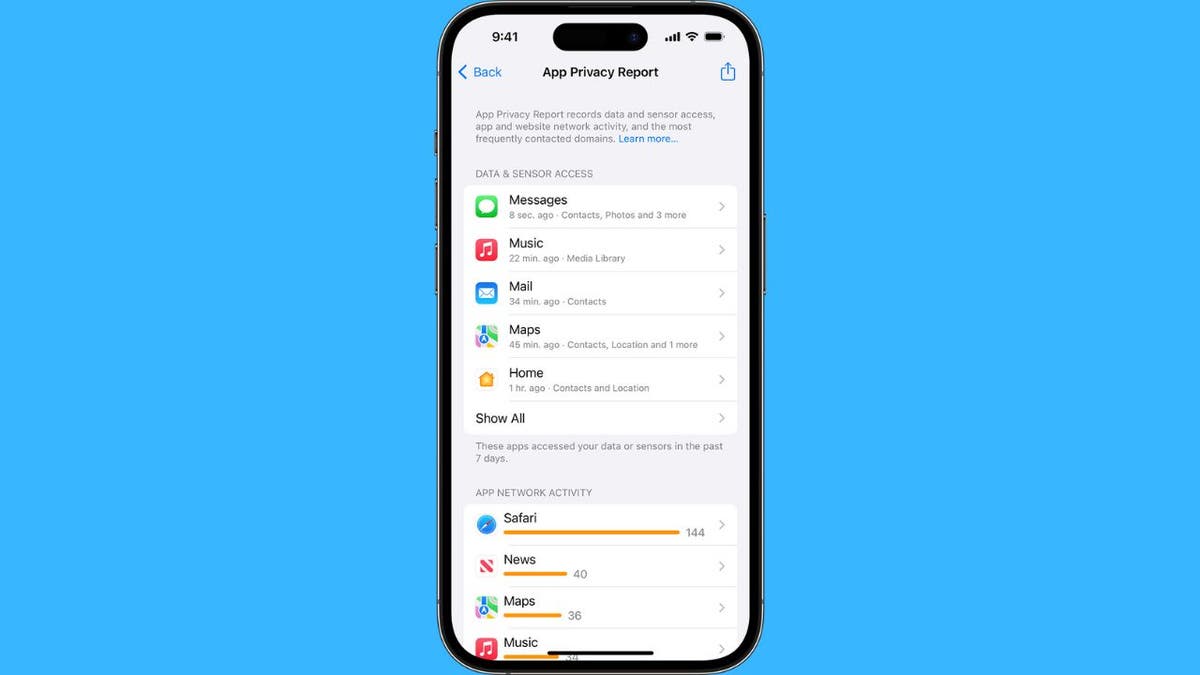
Apple’s App Privacy Report is a powerful tool that allows iPhone users to monitor how apps access their data and interact with third-party services. This feature provides valuable insights into app behavior, helping users make informed decisions about their privacy. Here’s what you need to know about using the App Privacy Report to protect your personal information.
The App Privacy Report is divided into four main sections.
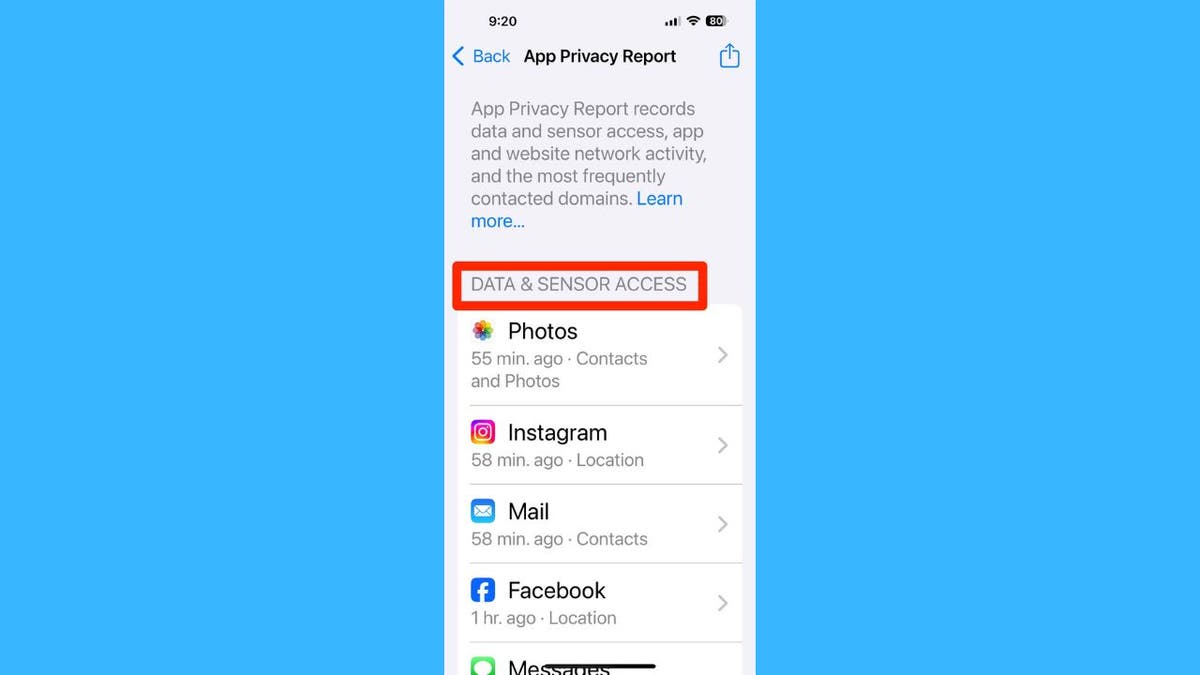
1) Data and sensor access
This section shows which apps have accessed sensitive data such as your location, contacts, photos, camera and microphone. Pay attention to apps that access data when not in use, as this might indicate suspicious behavior.
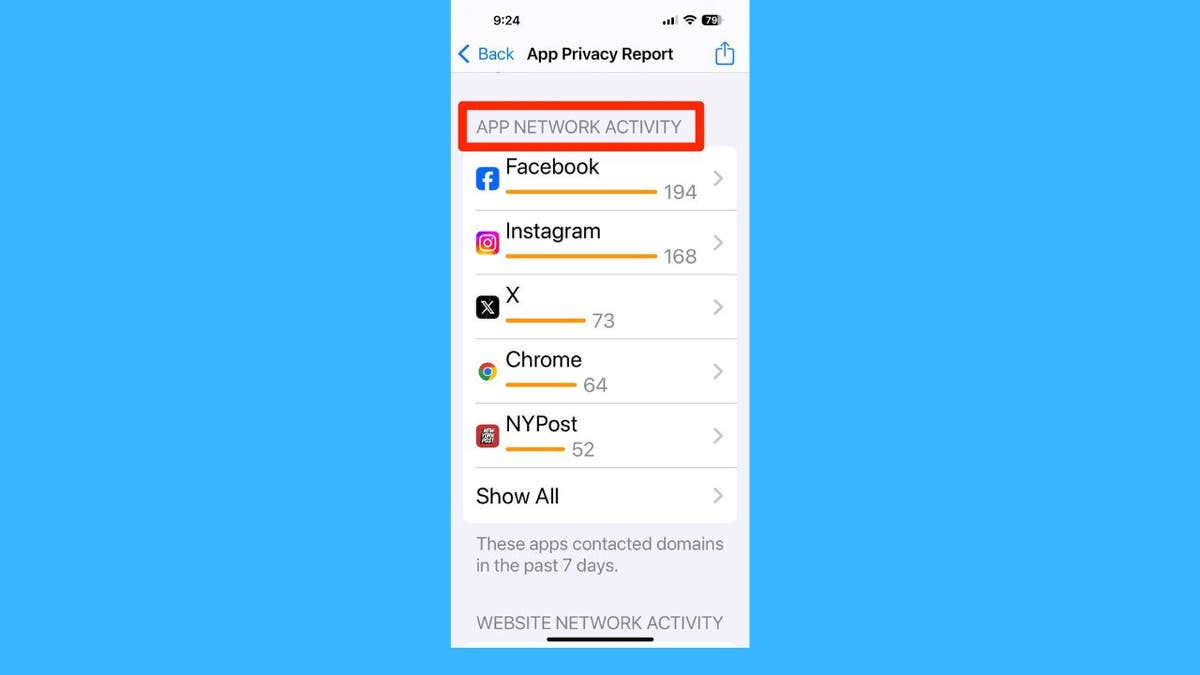
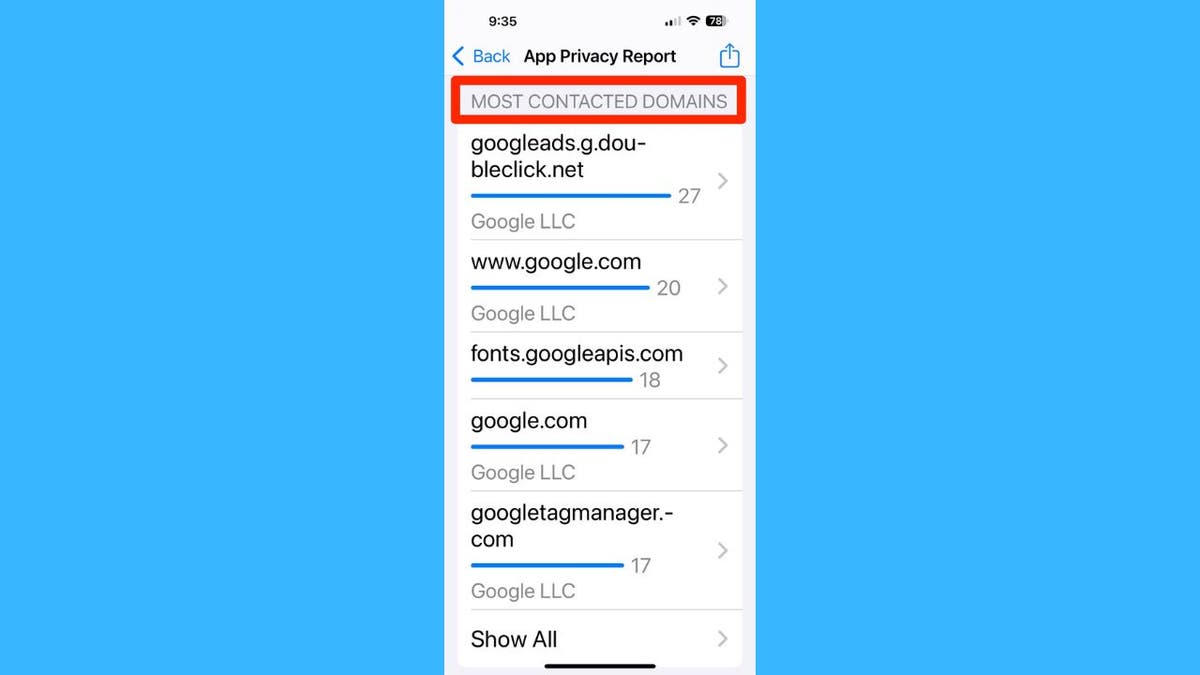
Here, you can see the network traffic generated by apps and the connections they establish with external domains. This information helps identify if and how your data is being shared with third parties.
App network activity(Kurt “CyberGuy” Knutsson)
3) Website network activity
This section provides insights into the network activity of websites you visit within apps.
This part of the report shows which external domains and websites your apps interact with most frequently. It’s particularly useful for understanding where your data might be sent after leaving an app.
After reviewing the App Privacy Report, you can take several steps to protect your privacy:
Revoke unnecessary permissions for apps that access data they don’t need
Disable tracking for apps that engage in excessive data sharing
Uninstall apps that violate your privacy preferences
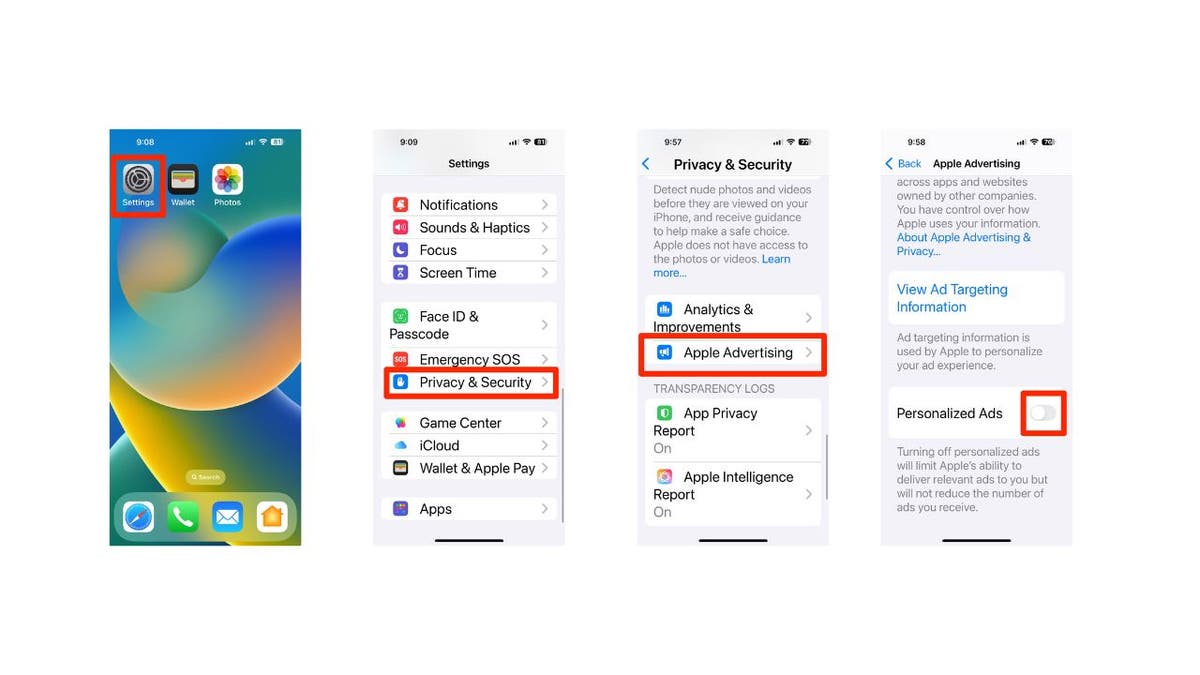
To limit ad tracking:
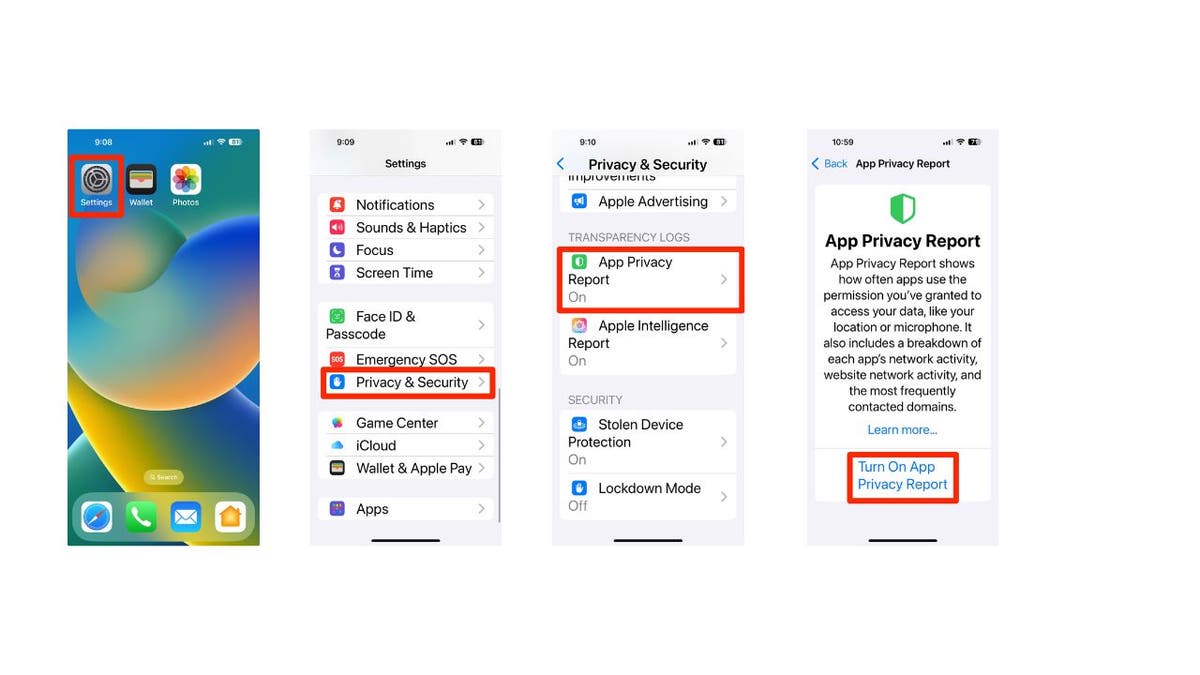
Go to Settings
Tap Privacy & Security
Click Apple Advertising
Turn off Personalized Ads to prevent Apple from using your data for targeted advertising
Steps to turn off personalized ads(Kurt “CyberGuy” Knutsson)
Take your privacy protection even further
Apple’s App Privacy Report is a great starting point, but it doesn’t stop apps, websites and data brokers from tracking you. For full protection, consider using trusted security tools:
1) Install strong antivirus software
Cybercriminals use malware, phishing emails and ransomware scams to steal personal data. A reliable antivirus program can:
Detect and block malicious software before it can harm your device
Alert you to phishing scams designed to steal your personal information
Protect all your devices, including Windows, Mac, Android and iOS, from online threats
Your private information is constantly collected and sold by data brokers, making you a target for scammers and identity theft. A personal data removal service can:
Scan and remove your information from hundreds of online databases
Reduce spam, scam calls and phishing attempts
Continuously monitor and automate data removal over time
While no service can remove all of your data from the internet, ongoing monitoring helps keep your information out of the hands of data brokers.
The App Privacy Report is a valuable tool for iPhone users concerned about their digital privacy. By regularly reviewing this report, you can gain a clearer understanding of how apps handle your personal data and take appropriate actions to protect your privacy. While not all network connections indicate malicious intent, being informed allows you to make conscious decisions about the apps you use and the permissions you grant.
After reviewing your App Privacy Report, were there any app behaviors that surprised or concerned you? Let us know by writing us atCyberguy.com/Contact.
For more of my tech tips and security alerts, subscribe to my free CyberGuy Report Newsletter by heading to Cyberguy.com/Newsletter.
Kurt “CyberGuy” Knutsson is an award-winning tech journalist who has a deep love of technology, gear and gadgets that make life better with his contributions for Fox News & FOX Business beginning mornings on “FOX & Friends.” Got a tech question? Get Kurt’s free CyberGuy Newsletter, share your voice, a story idea or comment at CyberGuy.com.
The United States push to maintain the dollar’s global dominance through stablecoin adoption could have unintended benefits for Bitcoin, as the world’s largest cryptocurrency is emerging as a potential federal reserve asset.
US Treasury Secretary Scott Bessent said the US government will use stablecoins to ensure that the US dollar remains the world’s global reserve currency during the White House Crypto Summit on March 7.
“We are going to put a lot of thought into the stablecoin regime, and as President Trump has directed, we are going to keep the US [dollar] the dominant reserve currency in the world, […]” Bessent said.
Bessent also repeated the Trump administration’s promise to end the war on crypto and committed to rolling back previous Internal Revenue Service guidance and punitive regulatory measures.
President Trump delivers address to White House Crypto Summit. Source: The Associated Press
The comments came just before Trump signed an executive order establishing a Bitcoin (BTC) reserve using cryptocurrency forfeited in government criminal cases. While the order does not involve direct federal Bitcoin purchases, it represents a shift in how the government views BTC.
BTC may benefit from the growing stablecoin adoption and push for more regulatory clarity, according to Omri Hanover, the general manager at Gems Trade blockchain launchpad.
“If Trump’s policy strengthens US financial dominance, Europe’s reluctance and ‘wait-and-see’ approach could weaken its economic leverage,” he told Cointelegraph, adding:
“This divide creates two market realities: US accelerates Bitcoin’s institutional adoption, drawing capital; and EU prioritizes compliance, risking a capital shift to US markets.”
Meanwhile, two major bills await congressional approval: the Stablecoin bill and the Market Structure bill, which aim to help lift the regulatory uncertainty around the US crypto industry.
Growing stablecoin issuer profits may flow into Bitcoin investments
The growing profits of stablecoin issuers could contribute to Bitcoin investments, further strengthening its status as a store of value.
Tether, the issuer of the world’s largest stablecoin, Tether USDt (USDT), said it would invest 15% of its net profit into Bitcoin to diversify its backing assets.
Tether’s Bitcoin holdings have proven to be lucrative when the firm posted a record $4.5 billion profit for the first quarter of 2024.
Approximately $1 billion stemmed from operating profits derived from US Treasury holdings, while the remainder of $3.52 billion comprised the market-to-market gains in the firm’s Bitcoin holdings and gold positions.
Tether’s “bc1q” address currently holds over $6.8 billion worth of Bitcoin, making it the world’s sixth-largest Bitcoin holder, BitInfoCharts data shows.
Tether’s Bitcoin holdings earned the company $5 billion in profits during 2024, from its total $13 billion yearly profit, Cointelegraph reported on Jan. 31.
Ethereum’s native token, Ether (ETH), witnessed its lowest weekly close since November 2023, highlighting just how much the top altcoin has struggled over the past few months.
In the past 83 days, it declined by 51%, translating to an average daily loss of approximately 0.61%. If the losses are compounded daily, the rate increases to about 0.84%.
Ethereum exchange outflows hit 27-month high
According to IntoTheBlock, a crypto analytics platform, Ethereum witnessed significant outflows worth $1.8 billion over the past week. It was the highest weekly outflow since December 2022, and in an X post, the platform added,
“Despite ongoing pessimism around Ether prices, this trend suggests many holders see current levels as a strategic buying opportunity.”
Ethereum net flows on aggregated exchanges. Source: X.com
Fellow onchain data provider CryptoQuant paints a similar picture. The 30-day simple-moving average of Ethereum netflows dropped to roughly 30,000 ETH last week, which was last recorded toward the end of December 2022.
Exchange exchange total netflows. Source: CryptoQuant
Likewise, Ethereum’s MVRV (market value to realized value) ratio dropped to 0.8 for the first time since Oct. 18, 2023, as observed in the chart.
The MVRV ratio is a metric that calculates ETH’s market price to the average price at which all ETH in circulation was last moved.
Ethereum MVRV ratio. Source: CryptoQuant
An MVRV ratio below 1 indicates undervaluation, signaling a potential buying opportunity. For context, when the MVRV ratio dropped to 0.8 on Oct. 18, 2023, Ether registered a local bottom near $1,600, followed by a bullish reversal and the beginning of the 2024 bull run.
Is the Ethereum bottom in?
Ether price is currently consolidating near its psychological level at $2,000, following a steady correction since the beginning of 2025.
With respect to this intraday price action, Mikybull, a technical analyst, points out that Ethereum is “showing a bullish reversal” with a diamond price pattern.
Ethereum 4-hour analysis by Mikybull. Source: X.com
A diamond pattern after a downtrend suggests a potential bullish reversal. Based on this pattern’s measured target, Ether could rebound about 20% to $2,600 from its current price.
On the flip side, Ether’s weekly chart closed below the 200-day EMA level for the first time since October 2023. Since 2020, ETH price has remained under this indicator for less than 15% of the time. Previously, Ether rebounded in the following week every time it dropped below this trendline in 2023.
However, a prolonged period under this line may extend ETH’s bottom price target. Thus, it will be critical for Ethereum to bounce back above this EMA trendline to confirm the bottom over the next few days or weeks.
This article does not contain investment advice or recommendations. Every investment and trading move involves risk, and readers should conduct their own research when making a decision.
Michael Saylor’s Strategy, the world’s largest public corporate Bitcoin holder, is looking to raise up to $21 billion in fresh capital to purchase more BTC.
On March 10, Strategy officially announced that it entered into a new sales agreement that would allow the firm to issue and sell shares of its 8% Series A perpetual strike preferred stock to raise funds for general corporate purposes, including potential Bitcoin (BTC) acquisitions.
As part of the agreement deal, dubbed the “ATM Program,” Strategy expects to make sales “in a disciplined manner over an extended period,” taking into account the trading price and volumes of the perpetual strike preferred stock at the time of sale.
“Strategy intends to use the net proceeds from the ATM Program for general corporate purposes, including the acquisition of Bitcoin and for working capital,” the firm said in the filing with the Securities and Exchange Commission (SEC).
The announcement comes amid Strategy holding 499,096 BTC ($41.2 billion), which it acquired for an aggregate amount of $33.1 billion at an average price of $66,423 per BTC.
The company previously disclosed plans to issue and sell shares of its class A common stock to raise up to $21 billion in equity and $21 billion in fixed-income securities over the next three years in order to accumulate more Bitcoin under its “21/21 plan.”
This is a developing story, and further information will be added as it becomes available.