19 C
New York
Monday, March 9, 2026
Home Blog Page 70

Kodiak autonomous truck system ties top safety score with human fleets

0


NEWYou can now listen to Fox News articles!

A new safety evaluation shows the Kodiak Driver, an autonomous system from Kodiak AI, tied for the top safety score among more than 1,000 commercial fleets run by human drivers. The evaluation came from Nauto, Inc., creator of the Visually Enhanced Risk Assessment, or VERA Score. This system uses AI to measure fleet safety on a scale of 1 to 100.

The Kodiak Driver earned a remarkable score of 98. That result placed it beside the safest human fleets in Nauto’s global network. The findings sparked discussion across the trucking industry and raised new questions about the role of automation in freight transport.

Sign up for my FREE CyberGuy Report

Get my best tech tips, urgent security alerts, and exclusive deals delivered straight to your inbox. Plus, you’ll get instant access to my Ultimate Scam Survival Guide — free when you join my CYBERGUY.COM newsletter.

WILL AUTONOMOUS TRUCKS REPLACE DRIVERS BY 2027?

A Kodiak autonomous semi-truck equipped with AI technology drives along a highway under clear skies.

The Kodiak Driver, an autonomous trucking system powered by AI, earned a top VERA Score of 98 in a new safety evaluation. (Kodiak)

Kodiak Driver’s autonomous truck safety evaluation results

Kodiak’s VERA Score of 98 matched the highest rating among all fleets evaluated. Fleets with Nauto’s safety technology average a score of 78, while those without the technology average only 63.

The Kodiak Driver achieved perfect scores of 100 in inattentive driving, high-risk driving and traffic violations. Its lowest score, 95, came in aggressive driving. The VERA Score combines over 20 vision-based AI variables into one clear safety rating.

Nauto found that every ten-point increase in VERA Score cuts collision risk by about 21 percent. A near-perfect score like Kodiak’s represents a strong improvement over typical human performance on the road.

The strong results didn’t come as a surprise to Kodiak’s leadership. Don Burnette, founder and CEO of Kodiak, told CyberGuy: “Achieving the top safety score among more than 1,000 commercial fleets in Nauto’s Visually Enhanced Risk Assessment (VERA Score®) proprietary safety benchmark is a testament to the Kodiak’s focus on safety. Safety is at the foundation of everything Kodiak builds. Our core value is ‘safety first and always.’ We believe independent safety evaluations like Nauto’s help to validate what we already know: the Kodiak Driver is already among the safest drivers on American highways. They also help to establish and build public awareness around how safe our technology truly is.”

FOX NEWS AI NEWSLETTER: TRUMP, MUSK AIM FOR DOMINANCE

The growing impact of AI on truck driving safety

Nauto equipped the trucks with advanced monitoring and hazard detection systems. These tools track both the driving environment and vehicle behavior in real time. Removing human factors such as distraction, fatigue and delayed reaction directly improves safety.

Burnette said in a company statement that the system “is never drowsy, never drunk, and always paying attention.” That constant awareness allows the Kodiak Driver to operate defensively and predictably, two traits linked to safe driving.

The VERA Score also gives fleets a consistent way to measure safety. Companies can now shift from reacting to crashes to preventing them.

Federal Motor Carrier Safety Administration data support the trend. U.S. commercial truck crashes dropped from more than 124,000 in 2024 to roughly 104,000 this year. Fewer crashes mean fewer fatalities and safer highways overall.

A red Kodiak self-driving semi-truck drives on a highway under a blue sky near an exit sign.

Kodiak’s self-driving trucks combine AI vision and real-time data to reduce risky behavior and improve on-road performance. (Kodiak)

THE ROAD TO PROSPERITY WILL BE PAVED BY AUTONOMOUS TRUCKING

Concerns about autonomous truck safety

Not everyone is ready to hand over the wheel to artificial intelligence. Some industry experts point out that while systems like the Kodiak Driver perform well in controlled evaluations, real-world roads can still pose unpredictable challenges. Weather, human drivers and mechanical issues remain complex variables for autonomous systems to manage.

Others worry about the impact on jobs. As AI takes on more driving responsibilities, professional drivers wonder what the shift will mean for employment and pay across the trucking industry.

Safety advocates also call for clearer regulations and public transparency.

Even supporters of the technology agree that continued oversight, testing and gradual rollout are essential. Progress is promising, but trust takes time.

AI DRONE FINDS MISSING HIKER’S REMAINS IN MOUNTAINS AFTER 10 MONTHS

What this means for you

If you work in logistics, fleet management or transportation tech, this news hits close to home. The Kodiak Driver’s near-perfect score proves that autonomous systems aren’t just catching up to human drivers; they’re starting to edge ahead in safety.

Businesses could see big gains. AI-powered safety tools help cut liability, lower costs and keep fleets running smoothly. The technology doesn’t need rest breaks or reminders to stay focused, which makes every mile more efficient.

Regulators are also paying attention. Verified data like this builds trust and clears the way for safer, wider use of autonomous trucks. It’s proof that technology can deliver real-world safety, not just promise it.

Drivers on everyday roads benefit too. Fewer crashes mean safer highways and more reliable deliveries. When trucks drive smarter, everyone shares the reward. Human drivers aren’t going anywhere soon, but AI is quickly becoming their most reliable partner. It helps prevent fatigue, distraction and those risky split-second decisions that lead to trouble.

A semi truck on a road

AI-driven fleets are proving that technology and human expertise can work together to make highways safer for everyone. (PlusAI)

TESLA’S SELF-DRIVING CARS UNDER FIRE AGAIN

Take my quiz: How safe is your online security?

Think your devices and data are truly protected? Take this quick quiz to see where your digital habits stand. From passwords to Wi-Fi settings, you’ll get a personalized breakdown of what you’re doing right and what needs improvement. Take my quiz here: Cyberguy.com

Kurt’s key takeaways

This study marks a major step in redefining what safe driving means. An autonomous system equaling the best human fleets signals that automation is moving from theory to reality. Still, the shift raises questions. How soon will public trust catch up with technology? Can regulations evolve fast enough to support widespread adoption? Will drivers adapt to sharing the road with machines that never tire or lose focus? What remains certain is that safety innovation is transforming transportation. Autonomous systems like the Kodiak Driver are proving that technology and safety can move forward together.

CLICK HERE TO DOWNLOAD THE FOX NEWS APP

So here’s something to think about: If AI-driven trucks already match the safest human fleets, are we ready to let them take the wheel on our highways? Let us know by writing to us at Cyberguy.com.

Sign up for my FREE CyberGuy Report

Get my best tech tips, urgent security alerts and exclusive deals delivered straight to your inbox. Plus, you’ll get instant access to my Ultimate Scam Survival Guide — free when you join my CYBERGUY.COM newsletter.

Copyright 2025 CyberGuy.com. All rights reserved.



Source link

401(k) catch-up tax changes in 2026 create new scammer opportunities

0


NEWYou can now listen to Fox News articles!

If you’re over 50 and maxing out your 401(k), there’s a big change coming in 2026 that could affect how much tax you pay on your “catch-up contributions.” While it’s mostly about taxes and retirement planning, there’s an unexpected side effect: scammers are circling. Every time your financial habits or personal data become public, it’s a chance for fraudsters to try to exploit you. Here’s what’s changing, why it matters, and how to protect yourself before the scammers come knocking.

Sign up for my FREE CyberGuy Report

Get my best tech tips, urgent security alerts, and exclusive deals delivered straight to your inbox. Plus, you’ll get instant access to my Ultimate Scam Survival Guide – free when you join my CYBERGUY.COM newsletter

What’s changing with 401(k) catch-up contributions

REMOVE YOUR DATA TO PROTECT YOUR RETIREMENT FROM SCAMMERS

Right now, if you’re over 50, you can make extra contributions to your 401(k) on top of the standard annual limit ($23,500 in 2025). These “catch-up” contributions are typically tax-deferred, meaning the money comes out of your paycheck before tax and grows tax-free until retirement.

But starting in 2026, for anyone earning more than $145,000 in the previous year, these catch-up contributions will no longer be tax-deferred. Instead, they’ll become like the Roth 401(k), meaning you pay taxes on the money now, but it grows tax-free and can be withdrawn tax-free in retirement.

That sounds simple, but it creates a ripple effect:

  • High earners will see less take-home pay now.
  • Tax planning gets trickier, and some people may consider restructuring their accounts or investment strategies.
  • And, most importantly for CyberGuy readers: these changes create new opportunities for scammers.
Elderly man using his phone.

Big 401(k) changes in 2026 could leave retirees exposed to new scam risks. (Cyberguy.com)

Why the new rules could attract scammers

FBI WARNS SENIORS ABOUT BILLION-DOLLAR SCAM DRAINING RETIREMENT FUNDS, EXPERT SAYS AI DRIVING IT

Scammers constantly look for financially active retirees. When rules like this change, fraudsters send out emails, calls, or letters pretending to be financial advisors, IRS agents, or plan administrators. Their goal? To trick you into giving away account numbers, Social Security details, or direct-deposit information.

Some common scam tactics to watch for:

  • Fake “plan update” emails claiming you need to verify your 401(k) contributions due to the law change.
  • Roth conversion scam calls claiming you can “avoid extra taxes” by transferring your account through a third-party “advisor.”
  • Urgency and fear tactics, such as “Act now, or lose your retirement benefits!”

Even savvy retirees can be caught off guard, especially when the message sounds official and references real tax law changes.

How to protect yourself from 401(k) scams and data theft

NATIONAL PROGRAM HELPS SENIORS SPOT SCAMS AS LOSSES SURGE

With new 401(k) rule changes taking effect, scammers are using the confusion to trick retirees and workers alike. Follow these steps to stay alert, safeguard your savings, and protect your personal data from being stolen or misused.

1) Know the legitimate changes

Start by understanding Secure 2.0 and how catch-up contributions will be taxed. Reliable sources include your plan administrator, the IRS website, or a licensed tax advisor. Staying informed helps you spot fake claims before they cause harm.

2) Use a personal data removal service

For retirees, this extra layer of protection keeps sensitive information out of reach from scammers who exploit tax changes, Roth conversions, and retirement updates. While you can manually opt out of data brokers and track your information, that process takes time and effort. A personal data removal service automates the task by contacting over 420 data brokers on your behalf. It also reissues removal requests if your data reappears and shows you a dashboard of confirmed removals.

While no service can guarantee the complete removal of your data from the internet, a data removal service is really a smart choice. They aren’t cheap, and neither is your privacy. These services do all the work for you by actively monitoring and systematically erasing your personal information from hundreds of websites. It’s what gives me peace of mind and has proven to be the most effective way to erase your personal data from the internet. By limiting the information available, you reduce the risk of scammers cross-referencing data from breaches with information they might find on the dark web, making it harder for them to target you.

Check out my top picks for data removal services and get a free scan to find out if your personal information is already out on the web by visiting Cyberguy.com

Scam written on a tablet surrounded by cash

Scammers are already targeting retirees with fake “account update” alerts. (Kurt “CyberGuy” Knutsson)

HOW TO SECURE YOUR 401(K) PLAN FROM IDENTITY FRAUD

Get a free scan to find out if your personal information is already out on the web: Cyberguy.com

3) Verify every call and email, plus use antivirus software

If you get a call or email about your 401(k), don’t assume it’s real. Hang up or delete it, then contact your plan administrator directly using official contact details. Avoid clicking links or downloading attachments from unknown messages.

The best way to safeguard yourself from malicious links that install malware, potentially accessing your private information, is to have strong antivirus software installed on all your devices. This protection can also alert you to phishing emails and ransomware scams, keeping your personal information and digital assets safe.

Get my picks for the best 2025 antivirus protection winners for your Windows, Mac, Android & iOS devices at Cyberguy.com

4) Monitor your credit and accounts

Cybercriminals often use personal information from earlier data leaks or data brokers. Watch your credit reports and account activity closely. Early detection can stop suspicious transactions before they escalate.

HOW SCAMMERS EXPLOIT YOUR DATA FOR ‘PRE-APPROVED’ RETIREMENT SCAMS

5) Set up alerts and freezes if necessary

Ask your bank and retirement plan to enable transaction alerts. You can also temporarily freeze your credit to prevent anyone from opening new accounts in your name. This is especially useful during times of financial change.

6) Educate friends and family

Scammers often target retirees and their relatives who help manage finances. Remind your loved ones never to share account details over the phone or email. Protecting everyone in your household keeps scammers from finding weak links.

Man reviews inheritance documents

Stay safe by confirming any 401(k) changes directly with your plan provider. (uchar/Getty Images)

Kurt’s key takeaways

As 2026 approaches, the new 401(k) rule changes will reshape how millions of Americans manage their retirement savings. Staying informed, cautious, and proactive can protect your financial future. Scammers thrive on confusion, but by verifying information, monitoring your accounts, and removing your personal data from risky sites, you can stay one step ahead. Remember, the more control you take over your privacy, the harder it becomes for criminals to exploit it.

CLICK HERE TO DOWNLOAD THE FOX NEWS APP

Have you taken steps to see where your personal data is exposed, and what did you find most surprising when you checked? Let us know by writing to us at Cyberguy.com

Sign up for my FREE CyberGuy Report

Get my best tech tips, urgent security alerts, and exclusive deals delivered straight to your inbox. Plus, you’ll get instant access to my Ultimate Scam Survival Guide – free when you join my CYBERGUY.COM newsletter

Copyright 2025 CyberGuy.com. All rights reserved.


Source link

Capodagli Property Company Names Brian J. Pfistner, CCIM, as Chief Executive Officer

0
brian
Capodagli Property Company Names Brian J. Pfistner, CCIM, as Chief Executive Officer 15

Founded by George M. Capodagli in 1970, CPC is known for revitalizing overlooked corridors and delivering high-quality, attainable multifamily communities.

Linden, New Jersey, October 28, 2025, Capodagli Property Company (“CPC”) today announced that Brian J. Pfistner, CCIM has been promoted to Chief Executive Officer, overseeing the company’s fully integrated development, construction, and property-management platform, including its affiliate Meridia Living. Pfistner’s mandate is clear: double the company’s size over the next five years by accelerating approvals, executing with precision in the field, and elevating the resident experience across the portfolio.

Founded by George M. Capodagli in 1970, CPC is known for revitalizing overlooked corridors and delivering high-quality, attainable multifamily communities. The company’s vertically integrated approach—site selection and entitlements through construction, lease-up, and long-term operations—has enabled CPC to move quickly while maintaining standards for quality, accountability, and service.

“Brian is the right leader for CPC’s next chapter,” said George M. Capodagli, Founder of CPC. “He pairs rigorous operating discipline with a deep commitment to people—residents, partners, and our team. Under his leadership, we will scale responsibly while staying true to our promise of delivering communities that foster belonging.”

As CEO, he will lead a multi-year growth program targeting more than 5,000 additional apartments, guided by streamlined approvals, disciplined execution, and data-informed operations. The plan emphasizes smart capital allocation, strong partner relationships, and a consistent resident-first experience across the portfolio.

“We’ll grow with precision and purpose,” said Brian J. Pfistner, CCIM. “Our focus is simple: protect timelines, deliver on budget, and continuously improve the Meridia resident experience. CPC’s reputation was built on promises made, promises kept—and that will remain our north star as we scale.”

About Capodagli Property Company:

Capodagli Property Company is a premier real estate development, construction, and property management firm specializing in multi-family and mixed-use real estate projects. Founded in 1970, they are recognized for their ability to envision thriving communities on underutilized assets, playing a major role in redeveloping these communities.

Capodagli Property Company develops, owns, and manages over 6,000 rental apartments with over 4,000 units in the pipeline. They are proud of their reputation for building and managing exceptional residential communities under the brand name “Meridia Living.” Meridia Living strives to ensure all the properties they manage are well maintained while instilling a sense of belonging towards their residents.

For more information on Capodagli Property Company and Meridia Living, visit www.capodagli.com

Media Contact:

Capodagli Property
Attn: Media Relations 201 South Wood Ave.
Linden, NJ 07036
973-694-3000
marketing@meridialiving.com

meridia1
Capodagli Property Company Names Brian J. Pfistner, CCIM, as Chief Executive Officer 16

Ancient wine production center discovered in Turkey dates back 1,600 years

0

NEWYou can now listen to Fox News articles!

Archaeologists recently uncovered an ancient wine production center near a castle in Turkey — and it’s believed to date back some 1,600 years.

The excavation was reported by Anadolu Agency (AA), a state-run outlet in Ankara, on Oct. 16. 

The production center was found in a mountainous area in southeastern Turkey, near the village of Oymakli.

CLICK HERE TO SIGN UP FOR OUR LIFESTYLE NEWSLETTER

The site included installations for processing grapes, along with cisterns used to supply water and grinding stones.

The building foundations hint at the site dating to the 4th century A.D., a time when Christianity was spreading in Turkey, and Constantinople was emerging as a new center of power.

Archaeologists in southeastern Turkey uncovered a 4th-century wine production center, revealing ancient grape-processing structures. (Orhan Pehlul/Anadolu via Getty Images)

The excavation was prompted by the discovery of “several fragments considered to be of historical value,” with support from the Turkish Ministry of Culture and Tourism.

The Roman-era settlement spans 37 acres. 

CLICK HERE FOR MORE LIFESTYLE STORIES

It’s located near Kahta Castle, an ancient fortress built during the 2nd century B.C. for the Kingdom of Commagene, a Greek-Iranian monarchy.

The building’s foundations survived “remarkably well.”

Mehmet Alkan, provincial museum director, told AA the building’s foundations survived “remarkably well,” despite being built with irregular stones. 

Archaeologist putting hand in ancient cistern

Excavations revealed grape-crushing installations, cisterns and grinding stones used in ancient winemaking roughly 1,600 years ago. (Orhan Pehlul/Anadolu via Getty Images)

He suggested the site may have operated at an industrial size during the Roman era.

Due to its close location to the castle, Alkan said it may have also served as a residential area at some point.

TEST YOURSELF WITH OUR LATEST LIFESTYLE QUIZ

Officials plan to continue excavating the site and, eventually, register it as a protected archaeological area.

The find is one of many ancient discoveries made in Turkey in recent months.

Official standing near roman structure

Researchers are working to register the site as a protected archaeological area to ensure its preservation. (Orhan Pehlul/Anadolu via Getty Images)

In Olympus, an ancient Lycian port city in the Turkish province of Antalya, archaeologists recently unearthed the remnants of a Christian bishop’s vast bathhouse.

CLICK HERE TO GET THE FOX NEWS APP

Earlier this summer, an ancient Roman bathhouse was uncovered in Turkey, thanks to a gardener who previously discovered a mosaic in the same area.

Sean Duffy’s son-in-law launches GOP bid for Wisconsin Congress seat

0

NEWYou can now listen to Fox News articles!

EXCLUSIVE — Michael Alfonso, the grandson of Cuban refugees who fled communism and who helped pay his way through college by working construction and paving roads, on Wednesday launched a GOP bid for Congress for an open seat in a solidly Republican House district in northern Wisconsin.

“I’m running for Congress because Northern Wisconsin needs to continue to have a representative who will truly put our families, communities, and America first,” Alfonso said in a statement shared first with Fox News Digital.

Alfonso, who his campaign describes as a “pro-Trump conservative,” is the son-in-law of Sean Duffy, who serves as transportation secretary in President Donald Trump‘s administration. And he’s running for the congressional seat that Duffy held for a decade. It’s the same seat currently filled by incumbent Republican Rep. Tom Tiffany, who launched a 2026 campaign for governor last month.

“I was born and raised with the traditional Wisconsin values of faith, community, and hard work — and now I’m ready to give back to the area that gave so much to me,” the 25-year-old Alfonso said.

Republican Michael Alfonso is running for the open GOP-held U.S. House seat in Wisconsin’s 7th Congressional District.  (Alfonso congressional campaign)

He lamented that he’s “watched as the American Dream has continued to slip away from the people who so deserve it.”

And in an accompanying campaign launch video, Alfonso said, “Our district needs to bring in high-paying jobs, so people can plant their roots, raise their families here, and build a future they’re proud of.”

“Because when young people can’t get ahead, they start listening to the lies of socialism,” he added, under pictures of longtime Cuban communist leader Fidel Castro and Cuban Marxist revolutionary Che Guevara that cut back and forth with pictures of progressive champions Sen. Bernie Sanders of Vermont and Rep. Alexandria Ocasio-Cortez of New York, along with democratic socialist Zohran Mamdani, the frontrunner in this year’s race for New York City mayor.

“My grandparents’ decision to flee communist Cuba to ensure a better life for our family should not be in vain. The radical left wants to change this country to be what my grandfather, and many before and after him, fled their home countries to escape,” Alfonso argues in his video. “We cannot let that happen, and I will fight every day to ensure Wisconsin, and this nation, continue to provide us with the freedoms and opportunities that my grandparents came here for.”

Sean Duffy, the secretary of transportation.

Sean Duffy, US secretary of transportation, speaks during a news conference in Washington, D.C., on Tuesday, Aug. 26, 2025.  (Eric Lee/Bloomberg via Getty Images)

Alfonso also pledged that if elected, “I’ll work with President Trump to reform government, keep us safe, and bring down the cost of energy, food and housing.”

The House district, which includes most of northwestern and north central Wisconsin, is solidly red. Trump by 22 points in last year’s presidential election, and Tiffany won re-election to a third term by 27 points.

Rep. Tom Tiffany holds up a fist

Republican Rep. Tom Tiffany of Wisconsin is campaigning for governor instead of bidding for re-election in the 2026 elections. (Tom Williams/CQ-Roll Call, Inc via Getty Images)

Alfonso joins a GOP primary field that includes conservative businessman and attorney Paul Wassgren and public relations professional Jessi Ebben.

CLICK HERE TO DOWNLOAD THE FOX NEWS APP

Business owner Chris Armstrong and former state Rep. Fred Clark have launched campaigns for the Democratic congressional nomination in the district.

5 essential social media safety tips to protect your privacy online

0


NEWYou can now listen to Fox News articles!

Let’s face it: social media can feel like a minefield. Between oversharing personal details, friend requests from strangers and sneaky scams sliding into your DMs, it’s easy to put yourself at risk without realizing it. But staying safe online doesn’t have to be complicated. With a few smart settings and habits, you can enjoy social media without giving away more than you mean to.

Settings and menus on social media platforms can change over time and may vary by device (iOS vs Android vs Web) or region. The steps below were accurate at the time of publishing, but you may see slightly different wording or paths depending on updates, app version or mobile device manufacturer.

Sign up for my FREE CyberGuy Report
Get my best tech tips, urgent security alerts and exclusive deals delivered straight to your inbox. Plus, you’ll get instant access to my Ultimate Scam Survival Guide – free when you join my CyberGuy.com newsletter

1) Turn off Location Sharing

Many apps automatically tag your posts with your location. That can let strangers know your routines or even your home address.

HOW TO REMOVE YOUR PERSONAL INFO FROM PEOPLE-SEARCH SITES

The less you share online, the harder it is for scammers to piece your life together. 

Scammers have a harder time learning about your life the less you share online.    (Kurt “CyberGuy” Knutsson)

How to turn off Location Sharing

On iPhone

  • Go to Settings.
  • Click Privacy & Security.
  • Tap Location Services.
  • Then pick the app.
  • Set it to “Never” or “While Using the App.”

On Android

(Settings may vary depending on your Android phone’s manufacturer.)

  • Go to Settings.
  • Tap Location.
  • Click App permissions.
  • Then select the app and toggle location off or select Don’t allow.

Note: Some apps may still have permission for “While using the app” or “Only this time”. So, you should check each app individually, especially camera and social-media apps, for location permissions.

Pro tip: Even turning off location for just your camera app helps keep photos from carrying hidden location data.

META TO ALLOW TEENS’ PARENTS TO DISABLE PRIVATE CHATS WITH AI AFTER BACKLASH OVER FLIRTY CHATBOTS

A child holds an iPhone at an Apple store on Sept. 25, 2015 in Chicago.

Parents — and even some teens — are growing increasingly concerned about the effects of social media use on young people. (AP Photo/Kiichiro Sato, File)

2) Use a private account

A private account means only people you approve can see your posts and photos. Think of it like putting a lock on your front door.

How to set private accounts

Facebook

  • Go to Settings & Privacy.
  • Tap Settings.
  • Scroll to the Audience & Visibility (or Your Activity) section.
  • Click Posts.
  • Find “Who can see your future posts?” and set it to Friends.

Instagram

  • Tap your profile.
  • Tap the menu (☰).
  • Tap Account Privacy.
  • Toggle on Private account.

TikTok

  • Go to your Profile.
  • Tap the menu (☰).
  • Select Settings and privacy.
  • Tap Privacy.
  • Toggle on Private account.

X (formerly Twitter)

  • Click on your profile icon in the top left of the screen.
  • Open Settings and privacy.
  • Select Privacy and safety.
  • Tap Audience and tagging.
  • Toggle Protect your posts (or Protect your Tweets).
  • Once enabled, only approved followers can see your posts.

Snapchat

  • Open Settings (gear icon).
  • Scroll to Privacy Controls.
  • Under “Who Can,” adjust options like Contact Me, View My Story and See Me in Quick Add to Friends only.

YouTube

  • Go to your YouTube Studio (desktop or mobile app).
  • When uploading, set visibility to Private or Unlisted.
  • For existing videos, open the video’s settings and change visibility as needed.

Note: Entire channels cannot be made private, only individual videos.

LinkedIn

  • Tap your profile photo
  • Settings.
  • Go to Visibility.
  • Under Profile viewing options, select Private mode.
  • You can also control who sees your connections and activity under “Visibility of your LinkedIn activity.”
identity theft tech scam

Identity theft has become so commonplace that it no longer shocks you to hear about the latest scam. (Cyberguy.com)

3) Report suspicious accounts

Fake profiles are everywhere. Scammers may pose as friends, celebrities or even customer service reps. Reporting them helps keep you (and others) safe.

How to report an account

Facebook

  • Go to the fake or impersonating profile.
  • Tap the three-dot menu (Options).
  • Select Find support or report profile.
  • Choose a reason, such as pretending to be someone else.
  • Follow the on-screen prompts to submit the report.

Instagram

  • Go to the profile.
  • Tap the three-dot menu.
  • Select Report.
  • Choose a reason.
  • Follow the on-screen instructions to complete the report.

TikTok

  • Open the profile.
  • Tap the three-dot menu (or sometimes the Share icon).
  • Select Report.
  • Choose Report account.
  • Select the reason.
  • Submit the report.

X (formerly Twitter)

  • Go to the account profile.
  • Tap the three-dot or overflow icon.
  • Select Report.
  • Choose the type of issue.
  • If you’re reporting an entire profile rather than a single post, select Report @username from the profile page.

YouTube

  • Go to the channel page.
  • Tap the About tab (on desktop) or the three-dot menu (on mobile).
  • Select Report.
  • Choose the reason.
  • Submit the report.

Snapchat

  • Go to the user’s profile.
  • Tap the three-dot menu or gear icon.
  • Select Report.
  • Choose the reason.
  • Submit the report.

LinkedIn

  • Visit the fake or suspicious profile.
  • Tap the More button (or three dots).
  • Select Report abuse.
  • Select a reason and follow the prompts.

Pro tip: Don’t just block. Report alerts to the platform so they can remove the account for everyone.

Teenage boy on smartphone

With a few smart settings and habits, you can enjoy social media without giving away more than you mean to. (Thai Liang Lim/Getty Images)

4) Enable two-factor authentication (2FA)

Even if someone steals your password, 2FA makes it harder for them to break in. It adds an extra step, like a code texted to your phone.

How to enable two-factor authentication (2FA)

Facebook

  • Go to the menu and select Settings & Privacy, then Settings.
  • Tap Accounts Center.
  • Then click Password and Security.
  • Tap Two-factor authentication.
  • It may ask you to choose an account to set up two-factor authentication. 
  • Choose your preferred method, such as an authentication app, text message or security key, and follow the on-screen instructions.

Instagram

  • Go to your profile and open Settings.
  • Click Accounts Center. 
  • Select Password and Security.
  • Then Two-Factor Authentication.
  • It may ask you to choose an account to set up two-factor authentication. 
  • Choose your preferred method, such as an authentication app, text message or security key, and follow the on-screen instructions.

TikTok

  • Go to your Profile.
  • Then open the Menu.
  • Select Settings and privacy.
  • Then, Security and permissions.
  • Tap 2-step verification.
  • Choose one or more verification methods, such as text message, email or an authentication app.
  • Click Turn On. 
  • Follow the prompts to finish setup.

X (formerly Twitter)

  • Click on your profile on the upper left of the screen.
  • Open Settings and privacy.
  • Select Security and account access, then Security.
  • Tap Two-factor authentication.
  • Choose your preferred method, such as text message, authentication app or security key.
  • Follow the steps to turn it on.

Note: Text message (SMS) verification on X may only be available for paid (Premium) users or in certain regions. If SMS isn’t available, you can still use an authentication app or a physical security key for two-factor authentication.

Pro tip: Use an authenticator app (like Google Authenticator or Authy) instead of text messages for stronger protection.

5) Check your photos before posting

Your photos may reveal more than you think, house numbers, car license plates or even vacation details that signal you’re away from home.

Quick fixes before posting

  • Crop or blur backgrounds that show personal details.
  • Avoid posting in real time while traveling. Wait until you’re back.
  • Review old posts to make sure you’re not unintentionally sharing private info.

SOCIAL MEDIA VERIFICATION SYSTEMS LOSE POWER AS SCAMMERS PURCHASE CHECKMARKS TO APPEAR LEGITIMATE

Bonus tip: Keep personal info under wraps

Every time you post, share or comment online, you’re leaving small clues about your life, and scammers are great at putting those pieces together. The less information fraudsters can find about you, the weaker their scams become.

Many impersonators use public details like your hometown, workplace or family connections to build fake profiles that seem trustworthy. Even information like your email address or phone number can be exploited if it’s floating around the internet.

A personal data removal service can help reduce that risk by scrubbing your personal details from people-search sites and data brokers. While no solution is perfect, minimizing your digital footprint makes you a much harder target for impersonation and social-engineering scams. These services actively monitor and systematically remove your information from hundreds of sites, saving you time and giving you peace of mind.

Protecting your privacy online isn’t just about what you share on social media; it’s also about controlling what’s out there already. Limiting that data means scammers can’t easily cross-reference your information with data from breaches or the dark web.

Check out my top picks for data removal services and get a free scan to find out if your personal information is already out on the web by visiting CyberGuy.com.

Get a free scan to find out if your personal information is already out on the web: CyberGuy.com.

Kurt’s key takeaways

Staying safe on social media isn’t about deleting your accounts; it’s about taking control of your information. Turning off location sharing keeps your whereabouts private. Switching to a private account gives you more say over who sees your posts. Being cautious with friend requests and DMs helps you avoid scams. And double-checking your photos before posting prevents oversharing. With just a few quick settings and habits, you can enjoy social media with peace of mind.

Have you ever spotted a scam or fake account online? Tell us what happened by writing to us at CyberGuy.com.

Sign up for my FREE CyberGuy Report
Get my best tech tips, urgent security alerts and exclusive deals delivered straight to your inbox. Plus, you’ll get instant access to my Ultimate Scam Survival Guide – free when you join my CyberGuy.com newsletter.

CLICK HERE TO DOWNLOAD THE FOX NEWS APP

Copyright 2025 CyberGuy.com.  All rights reserved.  


Source link

PRIMA implant helps 80% of macular degeneration patients regain vision

0


NEWYou can now listen to Fox News articles!

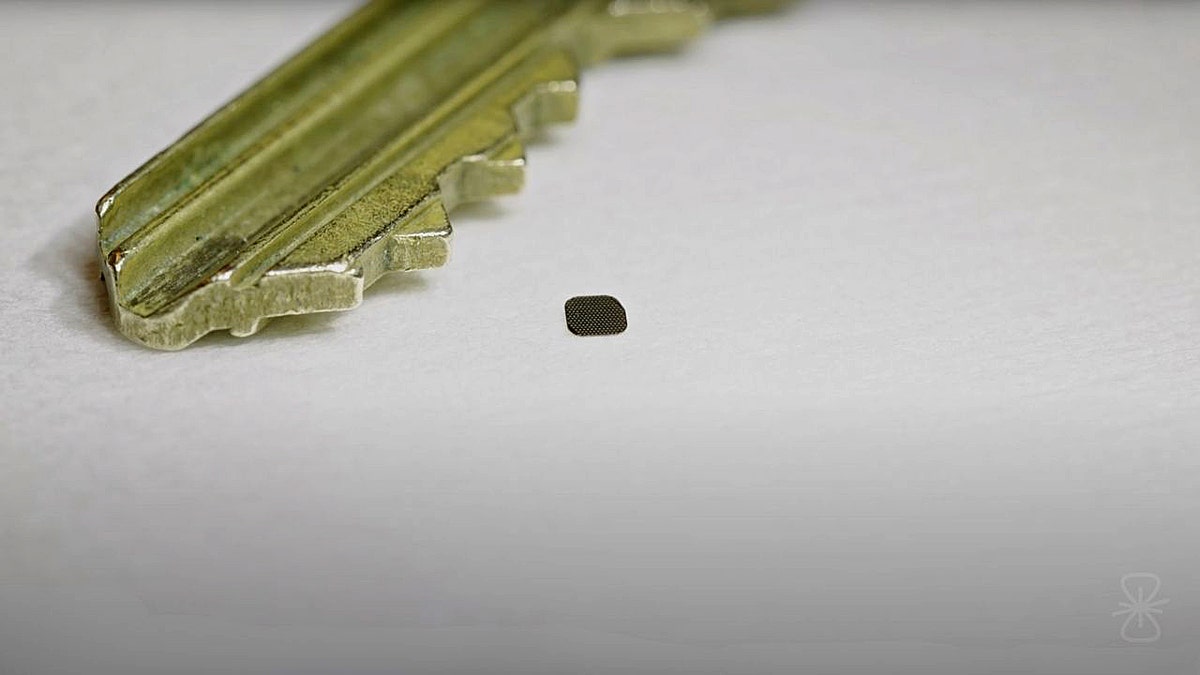
A new study in The New England Journal of Medicine revealed that the PRIMA brain computer interface (BCI) retinal implant helped people with advanced age-related macular degeneration regain some central vision. The device uses a tiny 2 millimeter by 2 millimeter photovoltaic implant that is only 30 micrometers thick, and thinner than a strand of hair. It sits beneath the retina and works with a special pair of smart glasses. The glasses capture images and send them as near-infrared light to the implant. The implant converts that light into small electrical signals that stimulate the optic nerve. This process mimics how healthy retinal cells normally send visual information to the brain.

The study followed thirty-eight participants, thirty-two of whom completed one year of follow-up. Twenty-six patients experienced measurable improvement in vision, which equals about eighty percent of the group. Many participants could read letters, numbers, and even full pages of text again. Although the restored vision is black and white and slightly blurry, the results are remarkable for people who once believed they would never see clearly again.

WORLD’S THINNEST AI GLASSES FEATURE BUILT-IN AI ASSISTANT

Sign up for my FREE CyberGuy Report
Get my best tech tips, urgent security alerts, and exclusive deals delivered straight to your inbox. Plus, you’ll get instant access to my Ultimate Scam Survival Guide — free when you join my CYBERGUY.COM newsletter.

Why this matters for AMD treatment

Age-related macular degeneration, often called AMD, is one of the leading causes of irreversible blindness in older adults. Until now, available treatments could only slow down vision loss. None of them could restore what had already been lost.

A woman wears special glasses

The PRIMA implant works with smart glasses to bring central vision back to life. (PRIMA by Science)

The PRIMA implant takes a different approach. It directly replaces the missing function of the retina by turning light into electrical signals. Patients can still use their natural peripheral vision while the implant restores some central vision. This combination creates a more complete visual experience.

The trial showed that the surgery is generally safe. Most side effects occurred within the first two months and resolved soon after. Importantly, the implant did not reduce the patients’ remaining natural peripheral vision. Researchers call this a major step toward restoring sight rather than only slowing its decline.

The PRIMA implant was developed by Science Corporation, a brain-computer interface company founded by Max Hodak, who previously cofounded Neuralink. Science Corporation acquired the PRIMA technology from the French firm Pixium Vision, continuing its development toward clinical use.

EYE DROPS MAY REPLACE READING GLASSES FOR THOSE STRUGGLING WITH AGE-RELATED VISION LOSS

A visual implant is seen next to a key.

The tiny chip sits under the retina and turns light into visual signals. (PRIMA by Science)

What this means for you

If you or someone you love lives with late-stage AMD, this breakthrough may offer real hope. For the first time, there is a device that can restore some sight instead of only preserving what remains. You may want to talk with your ophthalmologist about upcoming trials or future approval of the PRIMA system in your area. The company behind the technology has already applied for European approval, and a process with the U.S. Food and Drug Administration is underway.

Regaining even partial central vision can make a big difference. Reading text, recognizing faces, or simply moving independently becomes possible again. This progress also shows how fast medical innovation is moving. Patients who were once told that nothing could help may soon have a chance to see again.

It is also a reminder to stay informed. Treatments that were once experimental are becoming available sooner than expected. Discussing new technologies with your doctor helps you understand timing, eligibility, and what kind of results you can realistically expect.

Woman gets eye exam at doctor's office

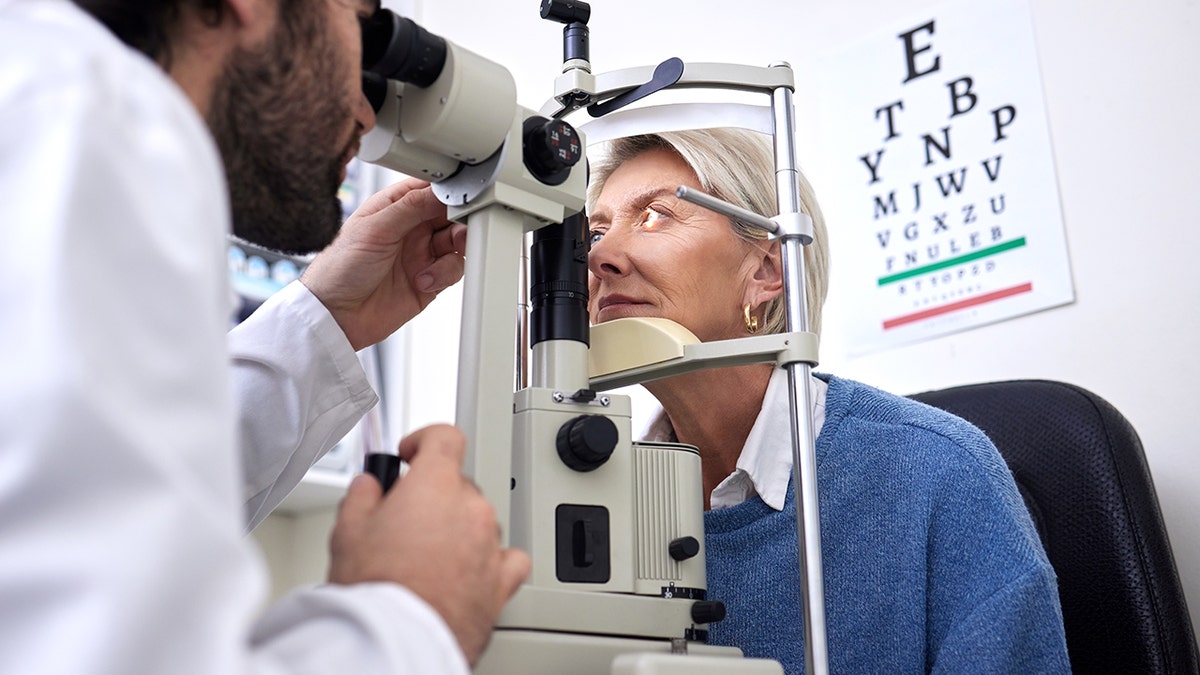
This breakthrough offers new hope for people living with advanced macular degeneration. (PeopleImages/Getty Images)

Take my quiz: How safe is your online security?

Think your devices and data are truly protected? Take this quick quiz to see where your digital habits stand. From passwords to Wi-Fi settings, you’ll get a personalized breakdown of what you’re doing right and what needs improvement. Take my Quiz here: CyberGuy.com.

CLICK HERE TO DOWNLOAD THE FOX NEWS APP

Kurt’s key takeaways

The PRIMA retinal implant represents a shift in how scientists and doctors think about blindness caused by AMD. For decades, the focus was on slowing down the disease. Now, researchers are proving that restoration is possible. While this generation of the implant provides limited black and white vision, it gives real, functional sight to people who had none. That alone changes lives. More work remains to improve image clarity, color perception, and comfort. Still, this is only the beginning. Future versions of the device and smart glasses may make vision restoration even more effective and accessible.

If you could regain even part of your sight through new technology, would you take the opportunity and experience the world in a whole new way?  Let us know by writing to us at CyberGuy.com.

Sign up for my FREE CyberGuy Report
Get my best tech tips, urgent security alerts and exclusive deals delivered straight to your inbox. Plus, you’ll get instant access to my Ultimate Scam Survival Guide — free when you join my CYBERGUY.COM newsletter.

Copyright 2025 CyberGuy.com.  All rights reserved.  



Source link

How to use passkeys on PC without camera or fingerprint reader hardware

0


NEWYou can now listen to Fox News articles!

Keeping your computer secure is more important than ever. Cyberattacks target computers, accounts and sensitive data daily. Traditional passwords have long been the cornerstone of security, but they come with real challenges. Many of us reuse passwords across sites, and even strong passwords can be compromised in data breaches.

Passkeys offer a safer and more convenient way to authenticate. However, they’re still relatively new, and many of us are still trying to figure out how they work. For example, Peter recently reached out asking, “How do I get a passkey from a PC desktop that doesn’t have a camera or fingerprint device?”

That’s a great question, Peter, and you’re not alone in wondering about this. The good news is that passkeys are designed to work on virtually any device, whether or not it has biometric hardware like a fingerprint reader or camera. Let’s explore what passkeys are, why they’re worth using and how to set them up on both Windows and Mac, regardless of your hardware setup.

Sign up for my FREE CyberGuy Report
Get my best tech tips, urgent security alerts and exclusive deals delivered straight to your inbox. Plus, you’ll get instant access to my Ultimate Scam Survival Guide — free when you join my CYBERGUY.COM newsletter.

10 WAYS TO SECURE YOUR OLDER MAC FROM THREATS AND MALWARE

A MacBook

Passkeys make signing in faster and safer by replacing traditional passwords with encrypted keys. (Kurt “CyberGuy” Knutsson)

What are passkeys?

Passkeys use cryptography to prove who you are. When you create a passkey, your device makes two keys, one public and one private. The public key goes to the website, and your private key stays on your device. During login, your device confirms your identity with the private key. The website never sees or stores it.

This process blocks phishing and password theft. It also makes sign-in faster. You don’t need to remember or type long passwords anymore.

While passkeys simplify authentication, they don’t eliminate the need for a secure password manager. Password managers can safely store and sync your passkeys, just as they do with passwords, allowing you to access your credentials across devices and browsers—even if those devices don’t natively sync passkeys, such as between Windows and Apple systems. Using a password manager alongside passkeys creates a bridge between platforms and provides an additional layer of security and convenience.

Can you use passkeys without biometrics?

Yes, you can. A PC or Mac without a camera or fingerprint reader can still use passkeys. On Windows, you unlock them with your Windows Hello PIN. On Apple devices, you can use Touch ID, Face ID or your passcode. The key is having an updated operating system and browser that support passkeys.

If you manage multiple accounts or devices, a password manager that supports passkeys can act as your central vault. This lets you use passkeys even on systems that don’t directly support syncing through iCloud or Google Password Manager. It’s an easy way to ensure you always have access to your credentials, no matter what kind of device you use.

Why you still need passwords

Not every website supports passkeys yet. Some services still rely on passwords. Keep strong, unique passwords for those accounts. Passwords also serve as backup if you lose a device or can’t use your passkey. Over time, more sites will support password-free logins.

This is where password managers continue to play an important role. They bridge the gap between old and new authentication methods, allowing you to store both traditional passwords and passkeys in one secure place. Until the web is fully passkey-ready, combining the two provides both convenience and resilience, giving you a seamless experience across multiple devices and services.

A MacBook

Passkeys also prevent phishing because your private key never leaves your device during sign-in. (Kurt “CyberGuy” Knutsson)

Passkey support by platform 

Windows

  • Works on Windows 10 and 11.
  • Windows 11 version 22H2 (KB5030310+) includes passkey management.
  • Unlock with Windows Hello PIN, face, or fingerprint.

If your browser or operating system doesn’t yet sync passkeys automatically, a third-party password manager with passkey support can store them for cross-platform access.

macOS and iOS

  • Works on macOS 13 Ventura or later and iOS/iPadOS 16 or later.
  • Passkeys sync through iCloud Keychain with end-to-end encryption.
  • Two-factor authentication must be turned on.
  • Use Touch ID, Face ID or your device passcode to confirm logins.

While Apple’s iCloud Keychain handles passkeys securely within its ecosystem, using a password manager that supports passkeys provides extra flexibility, letting you securely access the same credentials on non-Apple devices or browsers outside Safari.

Android

  • Available on Android 9 and later.
  • Android 14 adds third-party passkey manager support.
  • Passkeys sync through Google Password Manager by default.

Alternatively, password managers now integrate passkey syncing, letting you use your passkeys seamlessly on both desktop and mobile devices.

Browsers

  • Chrome, Edge, Safari and Firefox all support passkeys.
  • Keep your browser updated for the best compatibility.

Browser-based password managers can also sync passkeys, adding flexibility if you switch between devices or operating systems.

Major services that support passkeys

As of publishing, these major services offer passkey sign-in:

  • Google
  • Microsoft
  • Apple
  • Amazon
  • PayPal
  • GitHub
  • Uber
  • eBay
  • WhatsApp
  • Facebook

Support continues to expand every month. Most new accounts on these platforms can now use passkeys.

How to set up passkeys on Windows

  • Open Settings → Accounts → Sign-in options.
  • Set up Windows Hello PIN or biometrics.
  • Visit a site that supports passkeys.
  • Choose Create a passkey and confirm with your PIN or biometric.
  • Manage passkeys later under Settings → Accounts → Passkeys on Windows 11.

If your PC lacks biometrics, you can still approve sign-ins using your phone nearby or a synced password manager that supports passkeys.

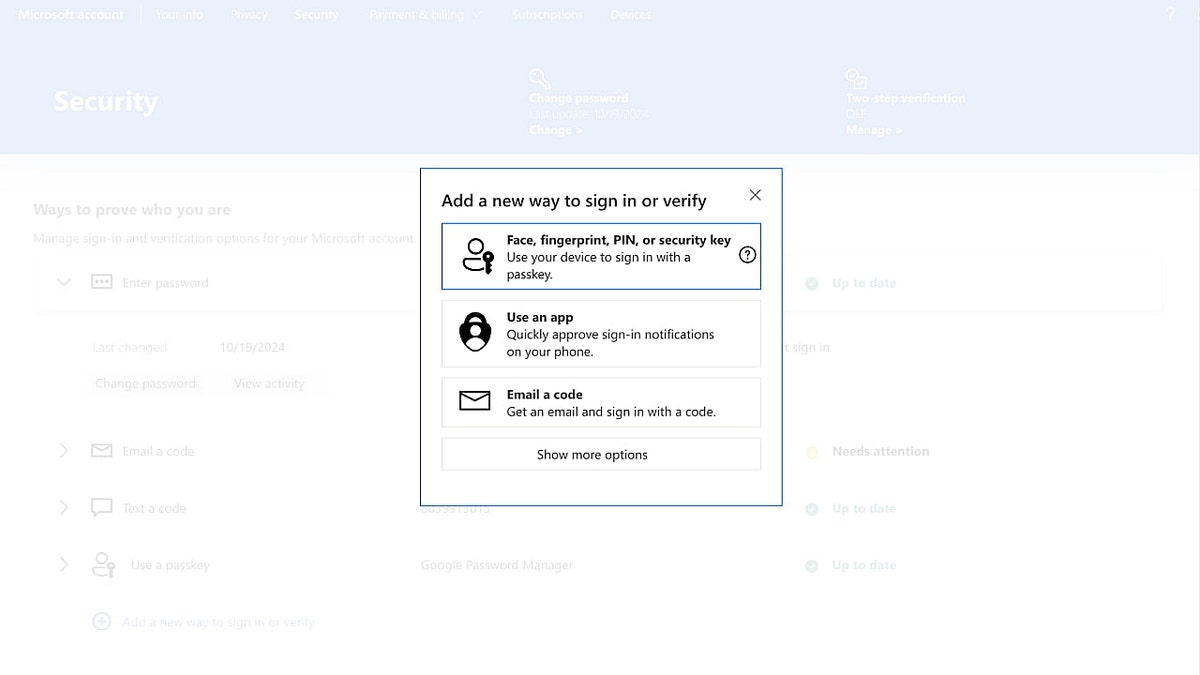
Windows passkey

(Kurt “CyberGuy” Knutsson)

How to set up passkeys on Mac

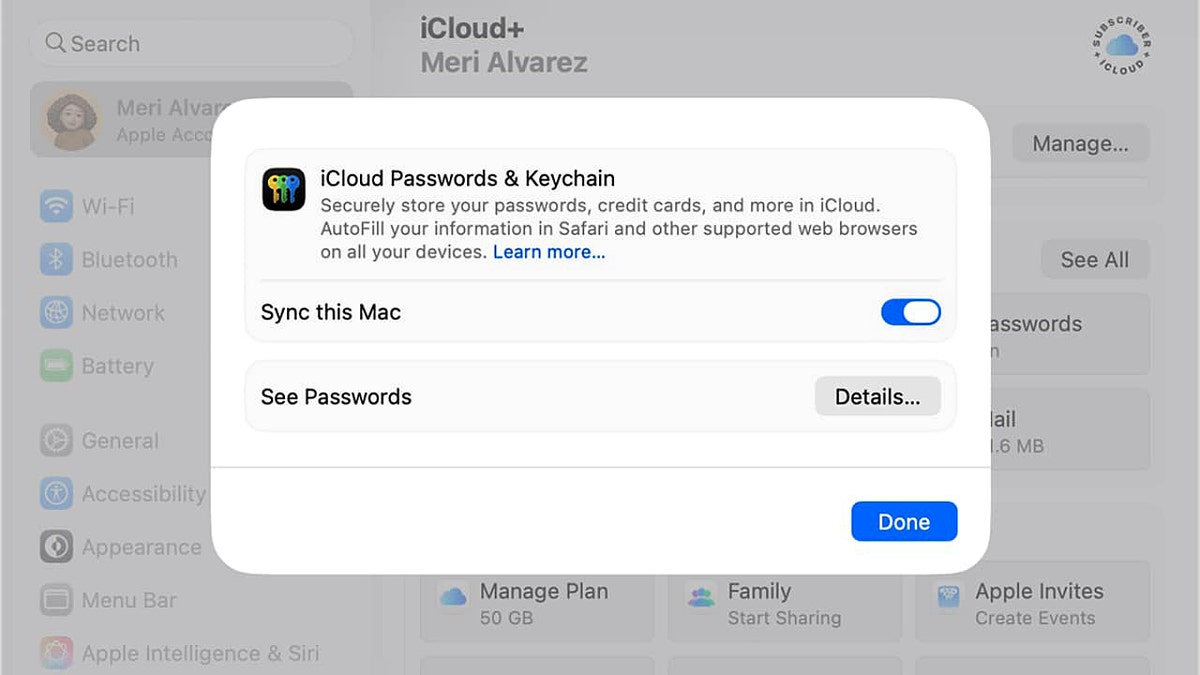
Apple devices also provide a simple and secure way to use passkeys through iCloud Keychain. There’s no separate setup for passkeys if you have iCloud Keychain enabled. Once it’s on, an eligible app or service will ask you to create a passkey at the time of login, and you’ll be able to do so by following the instructions on the screen. Below is how you can enable iCloud Keychain.

  • Go to Apple menu → System Settings → your name → iCloud.
  • Click Passwords and turn on Passwords & Keychain and enable syncing.
  • Visit a site that supports passkeys.
  • Select Create a passkey and confirm with Touch ID or your passcode.
  • Passkeys will sync to your other Apple devices through iCloud Keychain.

You can also approve logins on a non-Apple device using your iPhone nearby, or access them through a password manager that stores both your passkeys and passwords in one place.

iCloud Keychain

On Windows, you can use passkeys with a simple Hello PIN, even without a camera or fingerprint reader. (Kurt “CyberGuy” Knutsson)

Common questions about passkeys

Can I move passkeys between devices?

Yes. iCloud and Google Password Manager sync passkeys securely. For more flexibility, password managers now support passkey portability across different ecosystems, perfect if you use both Mac and Windows, or Android and iPhone.

What if I lose my device?

You can recover passkeys from iCloud, Google, or your password manager. Always keep a backup login method and 2FA enabled. Storing your passkeys in a secure password manager ensures recovery even if you lose access to one platform’s ecosystem.

Are passkeys fully replacing passwords?

Not yet. Many major platforms support them, but full adoption will take time. Until then, password managers remain an essential bridge technology, providing secure storage, synchronization and transition support as passkeys continue to expand.

MICROSOFT SOUNDS ALARM AS HACKERS TURN TEAMS PLATFORM INTO ‘REAL-WORLD DANGERS’ FOR USERS

5 additional steps you can take to keep your computer safe

Even with passkeys and strong passwords, there are other steps you can take to enhance the security of your computer.

1) Use a password manager

Password managers help generate and store strong, unique passwords for every account. This reduces the risk of password reuse and ensures that your backup passwords are secure. Now that many password managers support passkeys, they also act as your universal credential vault, letting you log in with either method depending on what a website supports.

Next, see if your email has been exposed in past breaches. Our #1 password manager (see CyberGuy.com) pick includes a built-in breach scanner that checks whether your email address or passwords have appeared in known leaks. If you discover a match, immediately change any reused passwords and secure those accounts with new, unique credentials. 

Check out the best expert-reviewed password managers of 2025 at CyberGuy.com.

2) Install strong antivirus software

Strong antivirus software protects against malware, ransomware and other threats. The best way to safeguard yourself from malicious links that install malware, potentially accessing your private information, is to have strong antivirus software installed on all your devices. This protection can also alert you to phishing emails and ransomware scams, keeping your personal information and digital assets safe.

Get my picks for the best 2025 antivirus protection winners for your Windows, Mac, Android and iOS devices at CyberGuy.com.

CLICK HERE TO DOWNLOAD THE FOX NEWS APP

3) Keep your system updated

Regular updates fix security vulnerabilities in your operating system and software. Enable automatic updates whenever possible to stay protected.

4) Enable two-factor authentication

Two-factor authentication (2FA) adds a second verification step, usually through a code sent to your phone or email, or through an authentication app. This makes it harder for attackers to access your accounts even if your password or passkey is compromised.

5) Backup your data

Regularly backing up your Mac or PC to a secure cloud service or external drive ensures that you can recover important data in case of hardware failure, malware attack, or accidental deletion.

Kurt’s key takeaway

Passkeys are a major upgrade over traditional passwords, but we’re not living in an all-passkey world just yet. Many sites still rely on passwords, and you’ll need backups if something happens to your device. Supplementing passkeys with a password manager is the best move right now; it lets you store, sync and protect both passkeys and passwords under one roof. The good news is that setting up passkeys takes just a few minutes, and once they’re enabled, logging in becomes faster and more secure.

Have you tried using passkeys yet? Let us know by writing to us at CyberGuy.com.

Sign up for my FREE CyberGuy Report
Get my best tech tips, urgent security alerts and exclusive deals delivered straight to your inbox. Plus, you’ll get instant access to my Ultimate Scam Survival Guide — free when you join my CYBERGUY.COM newsletter.

Copyright 2025 CyberGuy.com.  All rights reserved.



Source link

Archaeologists uncover colonial tavern remains in Lancaster County, Pennsylvania

0

NEWYou can now listen to Fox News articles!

Beneath a pasture in scenic Lancaster County, archaeologists — and archaeologists in training — recently unearthed the likely remains of the county’s oldest tavern, offering a glimpse into colonial American life.

The dig, involving students from Millersville University in Pennsylvania, has yielded thousands of artifacts this autumn.

The excavation site is located north of Marietta at what researchers believe was a tavern called the Galbraith Ordinary, built around 1725.

COUPLE STUNNED AS TUDOR-ERA TREASURE SURFACES BENEATH THEIR BACKYARD GARDEN

Timothy Trussell, an anthropology professor at Millersville University, is leading the project — and the treasures he’s uncovered reveal insight into provincial life. 

Trussell told Fox News Digital the team found “an astounding number of bones and bone types” — all the probable remains of 18th- and 19th-century meals.

Archaeologists and students from Millersville University unearthed thousands of colonial-era artifacts from a Lancaster County tavern site. (Timothy Trussell / Millersville University Archaeology Program)

“Bones identified so far include cow, pig and chicken, but also deer, wild bird — likely wild turkey — and turtle,” he said. 

“This is interesting, as it tells us they were augmenting the traditional ‘barnyard’ animals with wild game, something that is common in pioneer settings.”

Among the thousands of artifacts were shards of ceramics and glass, as well as personal effects like a handmade toothbrush made of bone and glass buttons.

SCIENTISTS SOLVE CENTURIES-OLD MYSTERY OF HOW EASTER ISLAND’S MASSIVE MOAI STATUES GOT THERE

“The ceramics are particularly valuable, since they are easily dated and can be used as time-markers for us to discern when in time a particular soil layer or feature was created,” he said.

Some of the ceramics date back as far as the 17th century, but Trussell placed most of them between 1750 and the 1790s.

“It is genuinely exciting to hold something in your hand and know you are the first person to touch this item in nearly three centuries.”

“This isn’t surprising, because although the tavern was built circa 1725, it was a pioneering, frontier setting in Lancaster County, so people naturally had fewer items,” he said. 

“As wealth grew over time, they began buying more refined ceramics in larger numbers, and those are what we are finding.”

CLICK HERE TO SIGN UP FOR OUR LIFESTYLE NEWSLETTER

Some of the finds that surprised Trussell the most were a series of brass bells that reminded him of Christmas sleigh bells.

“The brass bells that look exactly like antique sleigh bells were especially surprising,” he said. 

Split images of students working in field

Students joined professional archaeologists in the field, helping identify and catalog items from Lancaster County’s colonial frontier. (Timothy Trussell / Millersville University Archaeology Program)

He added, “They likely date a bit later, sometime in the 19th century, but I have never found bells like that before. One was small, roughly the size of a quarter, while the other was quite large, just a bit smaller than a tennis ball.”

Archaeologists were also surprised by what they didn’t find. Given that smoking was a popular leisure activity at taverns, Trussell expected to find numerous clay smoking pipes — but spotted far fewer than expected.

CLICK HERE FOR MORE LIFESTYLE STORIES

“Although we’ve found some pipe fragments, it was not nearly the amount I expected,” he said. 

“Perhaps the Scots-Irish patrons were not big smokers at that time.”

Aerial view of tavern site, archaeologists working

Excavations at the Galbraith Ordinary site shed light on how settlers dined, traded and socialized nearly 300 years ago. (Timothy Trussell / Millersville University Archaeology Program)

Each artifact is being collected, identified and added to a database — and Trussell expects the biggest discoveries to happen in a lab.

He also said the students “really love” going into the field, not just as a departure from typical classroom routines, but for the excitement of uncovering history.

TEST YOURSELF WITH OUR LATEST LIFESTYLE QUIZ

“It is genuinely exciting to hold something in your hand and know you are the first person to touch this item in nearly three centuries,” the archaeologist said. “One cannot help but wonder who last used this cup, how it was broken or what life was like for the person who used it.”

He added, “For every day we spend in the field, we create five days of laboratory work, so the process of analyzing this site is just beginning.”

Birds eye view of archaeological excavation

“For every day we spend in the field, we create five days of laboratory work, so the process of analyzing this site is just beginning,” said Trussell. (Timothy Trussell / Millersville University Archaeology Program)

All in all, Trussell said the project is helping to recover stories lost to time — not just about life in colonial Pennsylvania, but also the trade networks that connected it to the rest of the world.

“On this site alone, we have a Scots Irish tavern owner selling food and drink to German and English settlers, serving them on plates imported from England, paying with silver coin minted in Spanish South American colonies, and serving rum from sugar plantations in the Caribbean,” said Trussell.

CLICK HERE TO GET THE FOX NEWS APP

“The story of these people happened locally, but it was intimately intertwined with a massive geographical area encompassing a complex flow of people and goods across the entire Atlantic World. … It is a fascinating story, and well worth researching!”

I’m Abigail Spanberger. This is why I want Virginia’s vote for governor.

0

NEWYou can now listen to Fox News articles!

Back in May, I spent a morning at a family-owned pharmacy in Hanover County — a locality that voted for President Donald Trump in 2024 by a margin of more than 25 points.

I was there alongside local pharmacists and students, a Hanover County mother whose daughter is battling cancer, and a crush of reporters to roll out my plan to lower Virginians’ healthcare and prescription drug costs as their next governor. The event caught the attention of some community members who greeted me donning red T-shirts, Make America Great Again hats and Trump campaign buttons.

Among the group was a local Tea Party member. After we briefly joked about our party allegiances, the conversation quickly turned to the issues.

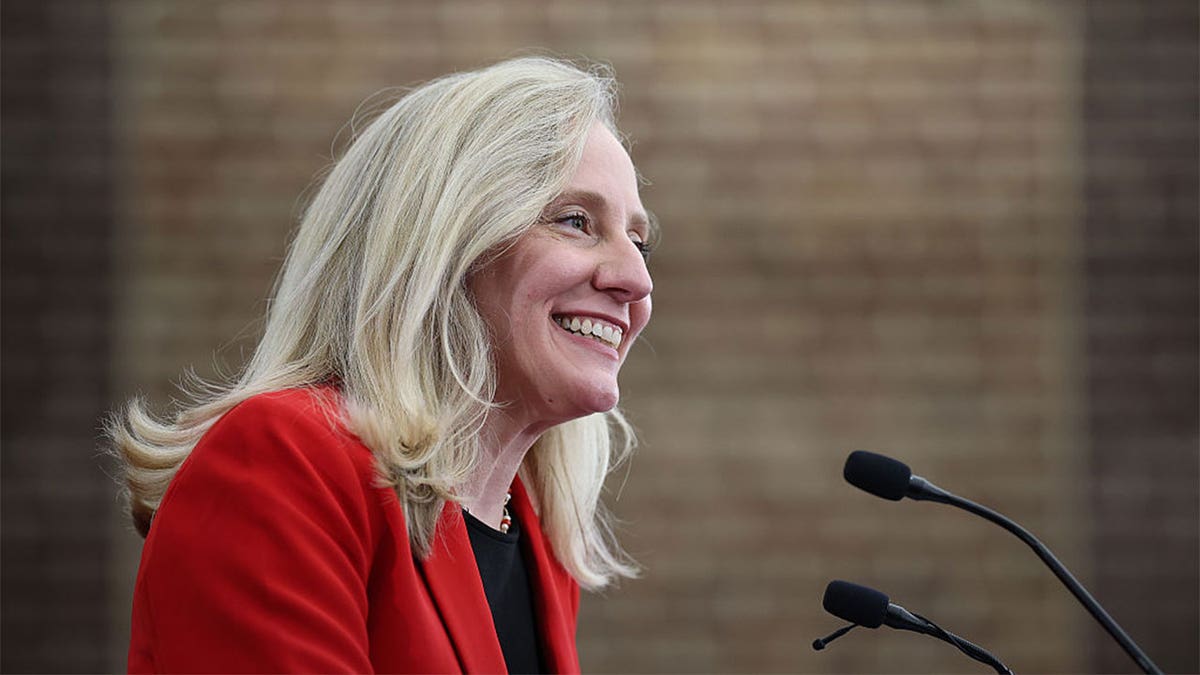
Democratic gubernatorial candidate Abigail Spanberger addresses a get-out-the-vote rally on the first day of early voting outside the Eastern Government Center on Sept. 19, 2025, in Henrico County, Virginia. (Chip Somodevilla/Getty Images)

His daughter, who had been battling cancer, had recently lost her healthcare benefits. As her pile of medical bills and worries grew, so had his frustration.

LOOK BEYOND THE BIG APPLE’S SOCIALIST VICTORY TO FIND DEMOCRATIC PARTY LEADERS IN 2025

What started as him leaving home on a rainy Wednesday morning to hold me accountable turned into a meaningful conversation about one of the challenges I hear about most from families, veterans, seniors and young people across our commonwealth — the rising cost of medical care.

But it’s not just high healthcare costs that are keeping Virginians up at night. Everywhere I travel across the commonwealth — since I first launched my campaign to serve as Virginia’s next governor, the No. 1 challenge Virginians share with me is the squeeze of high costs. Rising rent and mortgage payments, energy bills, and prices at the pharmacy counter are stretching Virginians’ paychecks thin. Virginians who are working hard to get by deserve a governor who is laser-focused on doing everything in her power to deliver them real relief.

Right now, as we race toward Election Day, I’m on the road for my 40-plus-stop, 11-day statewide bus tour. We’re going everywhere from “Where Virginia Begins” in Lee County up to Leesburg, from Norfolk to Nelson County to lay out the stakes in this year’s elections — because this year, Virginians have the opportunity to choose leadership that actually puts our commonwealth first.

Abigail Spanberger campaigns

Virginia Democratic gubernatorial candidate Abigail Spanberger speaks during an Everytown for Gun Safety rally on April 10, 2025, in Alexandria, Virginia. (Win McNamee/Getty Images)

Since that rainy morning in May, I’ve also rolled out my plans to lower Virginians’ housing costs and Virginians’ energy bills. I’ve rolled out my plans to grow workforce training opportunities — because a four-year degree isn’t the right path for everyone. And I’ve rolled out my plan to make sure Virginia’s public schools are the best in the nation. My opponent — Winsome Earle-Sears, the current lieutenant governor of Virginia — has not shown an inkling of interest in tackling these challenges. She’s laid out no real plans to make Virginia more affordable or grow our economy.

WITH LEGACY ON THE LINE, OBAMA HITTING CAMPAIGN TRAIL TO BOOST DEMOCRATS IN KEY GOVERNOR ELECTIONS

Virginians — including the more than 300,000 federal employees who call our commonwealth home — are grappling with the consequences of the Trump administration’s DOGE firings, use of this devastating government shutdown to escalate those firings, and unpredictable tariffs. My opponent dismissed the devastating impacts of these cuts on Virginia’s economy and even mocked Virginians for worrying about losing their jobs. As Virginia’s next governor, I am clear-eyed about threats to our commonwealth — and I will always stand up for Virginians’ jobs and Virginia’s economy.

If you’re a registered voter in Virginia, my name is on your ballot this year. You may still be making your mind up about who to trust with your vote. You might even be reading this right now and thinking, “I’m a Republican, so why would I vote for a Democrat?”

Abigail Spanberger during a rally

Abigail Spanberger, Virginia Democratic Party nominee for governor, speaks at a campaign event in Richmond on April 8, 2025. (Max Posner/The Washington Post/Getty Images)

I won my first campaign in 2018 — in a district that hadn’t elected a Democrat in 50 years — in part because thousands of Virginians asked themselves that very question. And ultimately, those voters believed in electing a leader who would put the people of Virginia — not a political party, not a group of donors and not a president — first.

CLICK HERE FOR MORE FOX NEWS OPINION

Since I first got into politics, I’ve been focused on addressing some of the most pressing issues facing Virginia’s families and businesses — from protecting Virginians’ access to healthcare coverage to bringing down the cost of living to keeping our communities safe. My focus hasn’t changed — and I’m ready to get to work on day one to deliver for Virginians.

And like I always say: I might be a Democrat, but you don’t have to be one to vote for me. I would be honored to earn your vote and grateful to serve as your governor.

CLICK HERE TO GET THE FOX NEWS APP