NEWYou can now listen to Fox News articles!
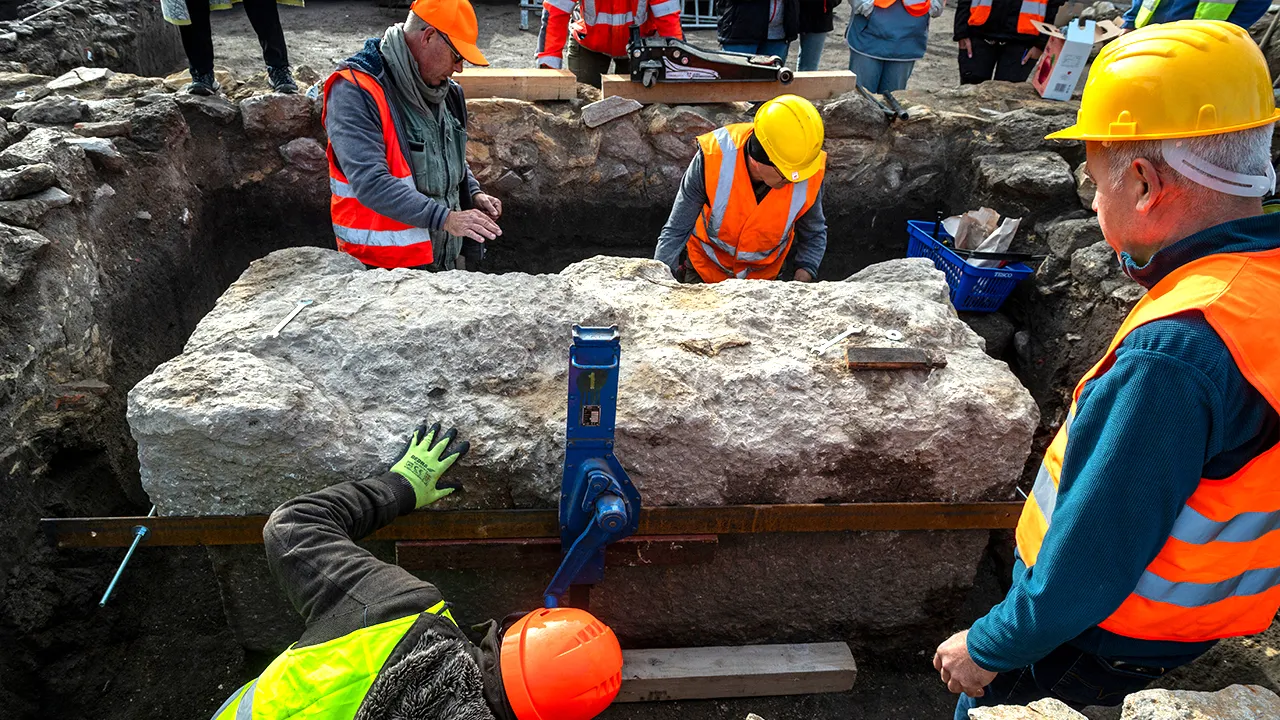
Archaeologists have opened the lid on a rare, untouched Roman sarcophagus in Hungary — the first time it’s been opened in 1,700 years.
The tomb, discovered by archaeologists with the Budapest History Museum, was found in Óbuda, a northern district of Budapest.
Óbuda was known as Aquincum in Roman times, serving as a major settlement located on the banks of the Danube River. The tomb was found in a 3rd-century burial ground, among the ruins of abandoned houses.
MAN STUMBLES ACROSS HOARD OF PRICELESS COINS WHILE OUT FOR NATURE WALK: ‘FACE TO FACE WITH HISTORY’
Remarkably, the tomb hadn’t been opened by looters since it was buried. Its stone lid was secured by molten lead and metal clamps.
Lead archaeologist Gabriella Fényes stressed the undisturbed nature of the findings in comments to The Associated Press.
Archaeologists in Budapest opened a rare Roman sarcophagus after it had been sealed for nearly 1,700 years. (Gabor Lakos, Budapest History Museum via AP)
“The peculiarity of the finding is that it was a hermetically sealed sarcophagus,” she said. “It was not disturbed previously, so it was intact.”
Inside was a complete skeleton and dozens of artifacts, including two glass vessels, bronze figures and 140 coins.
“They must have really loved who they buried here.”
Excavators deduced that the grave belonged to a young woman when they found a hairpin made of bone, amber jewelry and gold-threaded fabric.
CLICK HERE TO SIGN UP FOR OUR LIFESTYLE NEWSLETTER
The items had been “given to the deceased by her relatives for her eternal journey,” Fényes said.
“The deceased was buried very carefully by her relatives,” she said. “They must have really loved who they buried here.”
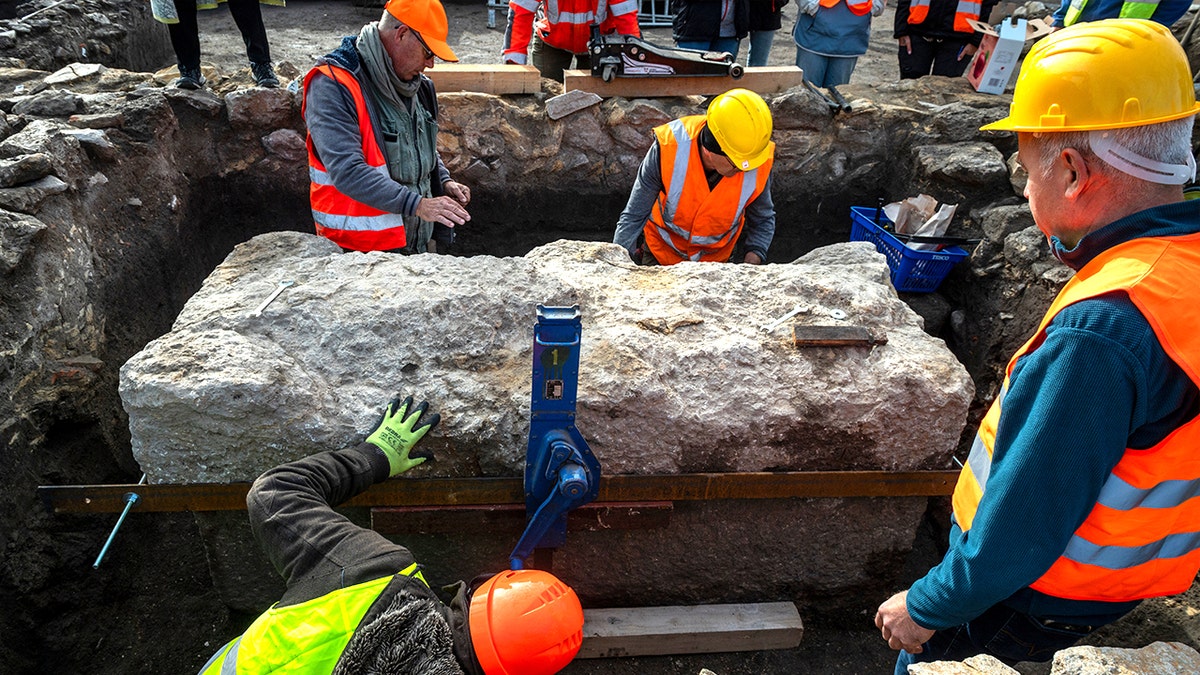
The excavation team uncovered the untouched burial in Óbuda, offering a rare glimpse into Roman-era Aquincum. (Gabor Lakos, Budapest History Museum via AP)
Fényes added that she was “very touched by the care and expression of love that we were able to get a glimpse of.”
CLICK HERE FOR MORE LIFESTYLE STORIES
“Even now, I shudder to think how painful it must have been for the people at that time to bury this young lady,” she added.
Though archaeologists discovered eight other graves nearby, they were struck by the well-preserved condition of the woman’s tomb.
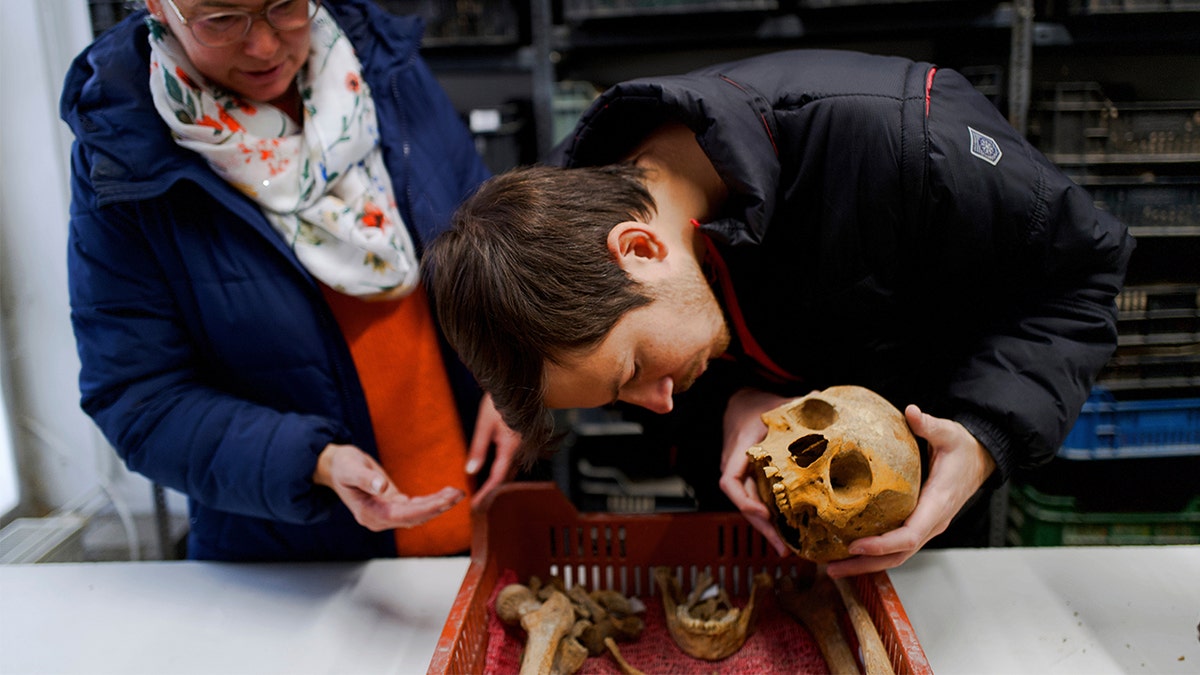
Experts examined artifacts retrieved from the grave, including glass vessels, bronze figures and more than 100 coins. (AP photo/Bela Szandelszky)
Gergely Kostyál, a specialist in Ancient Rome and co-leader of the project, said the tomb’s contents “definitely make it stand out.”
“This probably means that the deceased was well-to-do or of a higher social status,” he told the AP.
TEST YOURSELF WITH OUR LATEST LIFESTYLE QUIZ
“It is truly rare to find a sarcophagus like this, untouched and never used before, because in the 4th century it was common to reuse earlier sarcophagi,” he added.
“It is quite clear that this sarcophagus was made specifically for the deceased.”
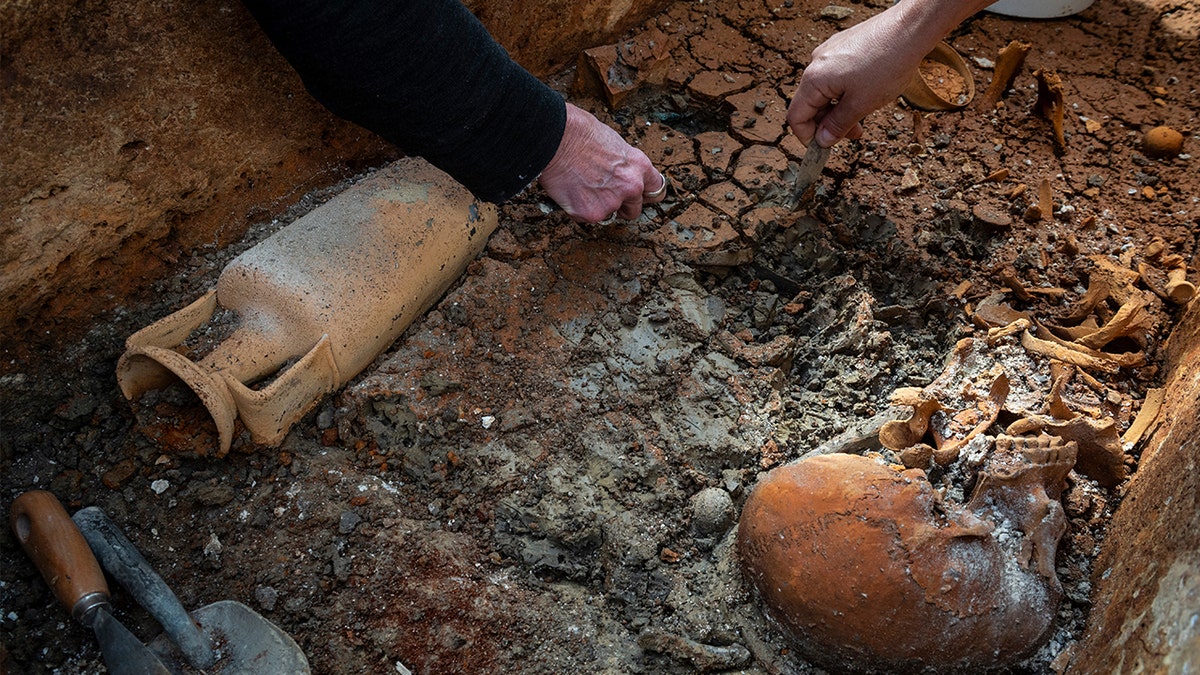
“I suspect we could find jewelry,” Fényes said. (Gabor Lakos, Budapest History Museum via AP)
The grave also contained a thick layer of mud that may hold more treasures, Fényes said.
CLICK HERE TO GET THE FOX NEWS APP
“I suspect we could find jewelry,” she said. “We haven’t found any earrings or other jewelry belonging to the woman, so I hope that these small items will turn up during the sifting of the mud.”
The Associated Press contributed reporting.